30 April 2019

Old Facebook finally wants you to ‘Meet New Friends’


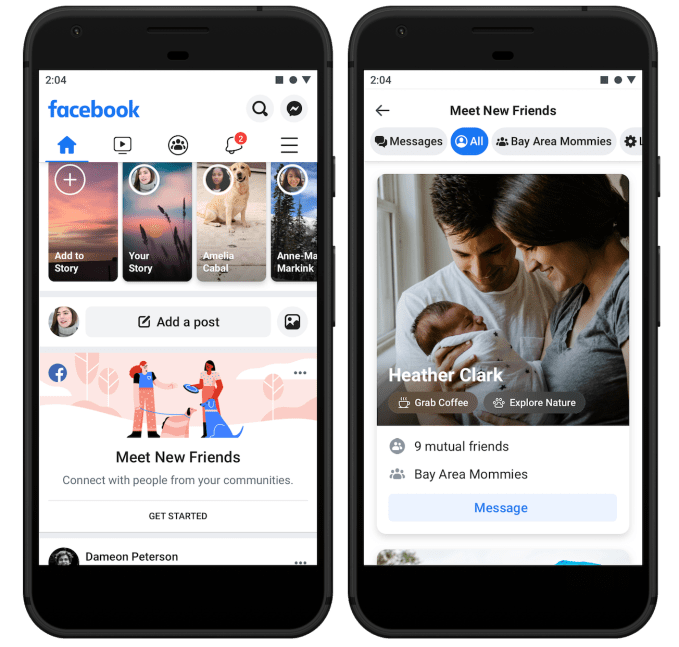
Facebook’s social graph is aging, full of long-lost acquaintances and hometown friends you don’t care much about seeing in the News Feed any more. But Facebook is now testing a pivot away from its core identity of connecting you with existing friends so it can revitalize the social graph and keep people coming back. Facebook’s “Meet New Friends” lets you browse people from shared communities such as your school, workplace or city who’ve also opted in to the feature. It’s now in testing in a few markets before it’s rolled out more widely soon.

Meet New Friends could give people fresh pals to follow in their News Feed, or help recently registered users grow their network until they have access to enough content to keep them busy. And eventually, Facebook could layer on monetization features similar to dating apps where users pay to be shown more prominently to potential connections.

Fidji Simo, the head of Facebook’s main app, tells me Meet New Friends was based on emerging behaviors the company had spotted. “Developing relationships with people they didn’t already know is very different from the core use case of Facebook,” but she notes, “We’ve already seen that naturally happen in Groups, and Meet New Friends will make that a bit easier.”

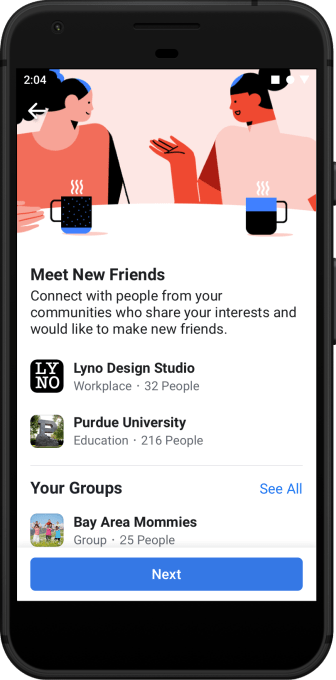
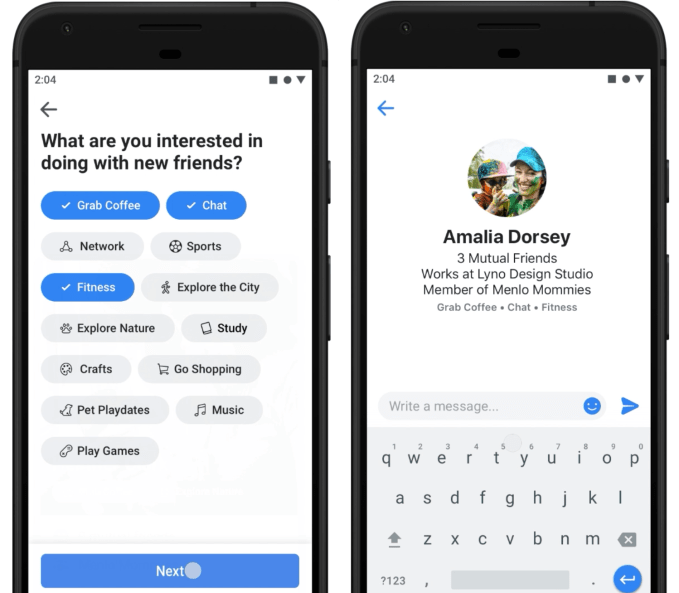
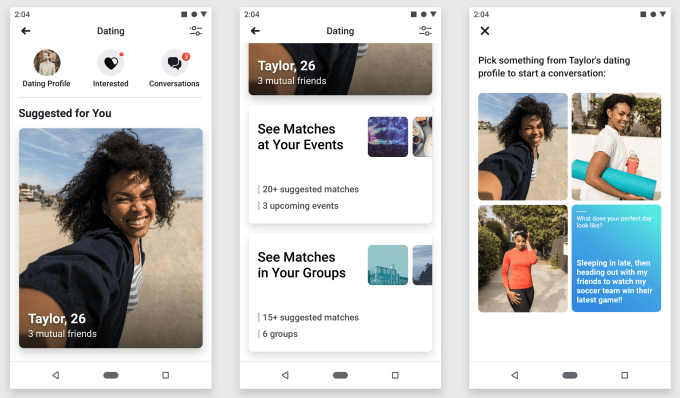
When users open Meet New Friends, they pick the communities through which they’re open to meeting new friends. For now they choose between schools, employers and locations, but Facebook will eventually add Groups too. In that sense it works a bit like Facebook Dating, which rolls out to 14 new countries today and opens to dating friends with its new Secret Crush feature.

Algorithms will sort potential connections by who is most relevant, such as those with mutual friends or shared interests, but you won’t get “matched” where both users have to state their interest in the other. Instead, users can just browse profiles, and then either send people a friend request (which might feel a bit out of the blue), or send them a single text-only message to a recipient’s dedicated Meet New Friends chat inbox. They can’t message that same person again until they respond (to prevent spamming), and the text-only limitation ensures no unsavory photos get blasted around. If they do reply, the thread moves to Facebook Messenger.

Meet New Friends will pit Facebook against a range of other apps, from local-focused Meetup and Nextdoor to verticalized apps like Hey Vina for women only to dating-affiliated apps like Bumble BFF. But Facebook benefits from its ubiquity, so users can try Meet New Friends without feeling embarrassed by downloading an app just to make them less lonely.

For years, the mildly creepy People You May Know feature has been a cornerstone of Facebook’s growth strategy. But it’s still just about recreating your offline social graph online. As Facebook strives to become more meaningful to people’s lives, fostering new friendships could give people a fuzzy feeling about the giant corporation.


Read Full Article

Facebook Dating opens to friends with Secret Crush


Facebook built Dating to be privacy-safe, hoping to avoid the awkwardness of friends or family checking out your romance profile. But now Facebook has found a way to let you silently express your affection for a friend without them knowing unless they reciprocate.

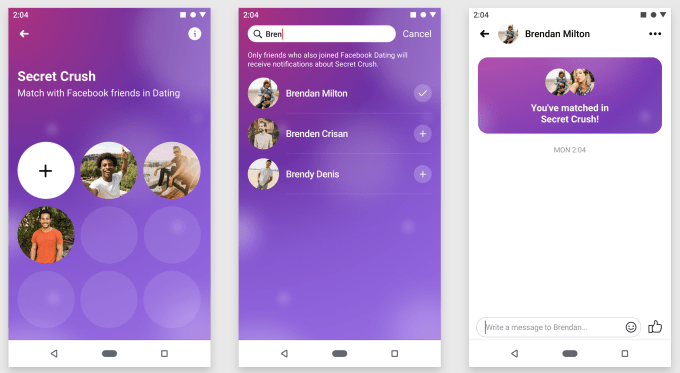
Facebook Dating is opening in 14 more countries, bringing the total to 19. It will launch in the US before the end of the year. Dating brings with it a new feature called Secret Crush that expands it beyond strangers and friends-of-friends. Choose up to 9 friends you like-like. If they’ve opted into Facebook Dating, they’ll get a notification that some friend has a crush on them. If they add you as a Secret Crush too, you’re both notified and can chat on Messenger.

Facebook Dating product manager Charmaine Hung tells me that “I have 2000 Facebook friends. I’m not best friends with all 2000 people, and there’s a good chance that one of that could be a really good match with me. I trust them, I appreciate them, and I know we’re compatible. The only thing missing is knowing if we’re both interested in being more than just friends without the fear of rejection if you were to do this in real life.”

Facebook announced Dating at F8 a year ago and launched it in Colombia in September. Users opt-in, and then browse Events and Groups they’re part of for potential matches. They send them a text-only message based on something in their profile which goes to a special Dating inbox. And if that person reciprocates, they can chat and maybe meet up. Now it’s opening in the Philippines, Vietnam, Singapore, Malaysia, Laos, Brazil, Peru, Chile, Bolivia, Ecuador, Paraguay, Uruguay, Guyana, and Suriname.

One concern with Secret Crush is that users might spam the feature by constantly adding a removing people from their list until they discover a match. That’s why Facebook will only let you sub out one person per day after you reach your initial limit of 9.

Currently there’s still no plan to monetize Dating, but that’s not the point. After years of scandals, Facebook needs to prove it deserves to be your social network. Mindlessly browsing the News Feed has proven to be exhausting and at times detrimental to health. But if the app can introduce you to your future spouse, or even just a summer fling, you might keep a place in your for Facebook too.


Read Full Article

Instagram officially tests hiding Like counts


Would we feel less envious, shameful and competitive if Instagram didn’t tell us how many Likes a post received? That’s the idea behind Instagram now hiding Like counts from both a post’s viewers and its author as part of an experiment in Canada. A post’s creator can still open the Likers window to see the names of everyone who hearted their post, but they’d have to count them manually.

Even though Like totals would still impact how the algorithm ranks a post in the feed, if rolled out, the change would refocus Instagram on self-expression instead of being a popularity contest. Users might be less likely to delete a photo or video because it didn’t get enough Likes, or resort to their Finsta account to post something authentic but less “perfect.” It could make us less likely to envy-spiral because we wouldn’t see friends or influencers getting more Likes than us. And people might be more willing to post what truly represents their complicated identities because they’re not battling for the biggest Like count.

“Later this week, we’re running a test in Canada that removes the total number of likes on photos and video views in Feed, Permalink pages and Profile,” an Instagram spokesperson tells TechCrunch. “We are testing this because we want your followers to focus on the photos and videos you share, not how many likes they get.” The small percentage of Canadian users in the test will see a notice atop their feed warning them of  “a change to how you see Likes.”

One big concern, though, is that influencers often get discovered for paid promotions or have their sponsored content measured by public Like counts or a screenshot of their Liker list. “We understand that this is important for many creators, and while this test is in exploratory stages, we are thinking through ways for them to communicate value to their brand partners,” an Instagram spokesperson tells TechCrunch.

TechCrunch first reported two weeks ago that Instagram had prototyped hiding public Like counts, as spotted by Jane Manchun Wong. The company confirmed the feature had been built but not tested in the wild. The news immediately set off a wave of commentary from users. Many, while initially shocked, thought it would make Instagram usage healthier and cutback on some of the toxic anxiety produced by staring at the little numbers.

So why test in Canada? “Canadians are highly social and tech savvy, with over 24 million people connecting across our family of apps each month. We wanted to test this with a digitally savvy audience that has a thriving community on Instagram,” a company spokesperson told us.

It’s reassuring to see Instagram adding new well-being features after the departure of founders Kevin Systrom and Mike Krieger. Systrom in particular had been a big proponent of reducing envy and inauthenticity on social media, which was part of the impetus for launching Instagram Stories, where users could share unpolished looks at their lives. Before he left in September, Instagram rolled out its Your Activity dashboard showing the average time you spent per day on the app, plus a “You’re All Caught Up” warning that tells users they’ve seen all recent feed posts and can stop scrolling.

A 2013 study by Krasnova et al. discovered that 20 percent of envy-causing situations that experiment participants experienced happened on Facebook. They also determined that Facebook causes toxic envy, noting that “intensity of passive following is likely to reduce users’ life satisfaction in the long-run, as it triggers upward social comparison and invidious emotions.” Instagram, with its focus on imagery and manicured looks at our lives, might cause even more envy. Hiding Likes would be a strong step toward us judging ourselves less.


Read Full Article

Facebook Messenger will get desktop apps, co-watching, emoji status


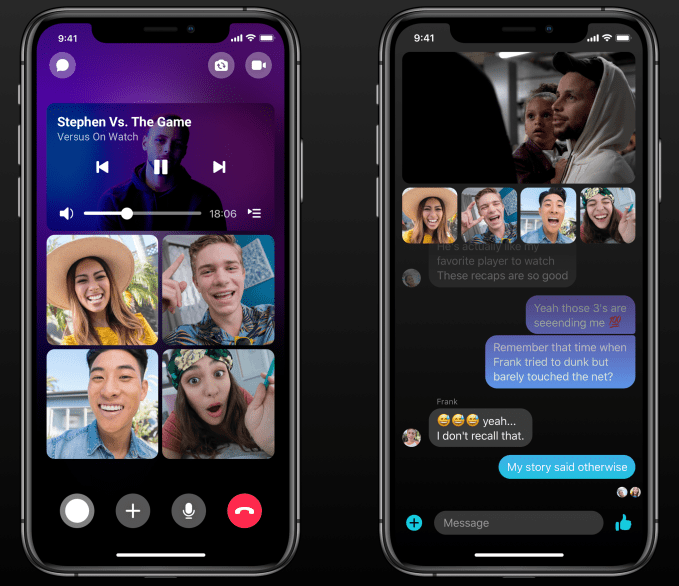
To win chat, Facebook Messenger must be as accessible as SMS, yet more entertaining than Snapchat. Today, Messenger pushes on both fronts with a series of announcements at Facebook’s F8 conference, including that it will launch Mac and PC desktop apps, a faster and smaller mobile app, simultaneous video co-watching and a revamped Friends tab, where friends can use an emoji to tell you what they’re up to or down for.

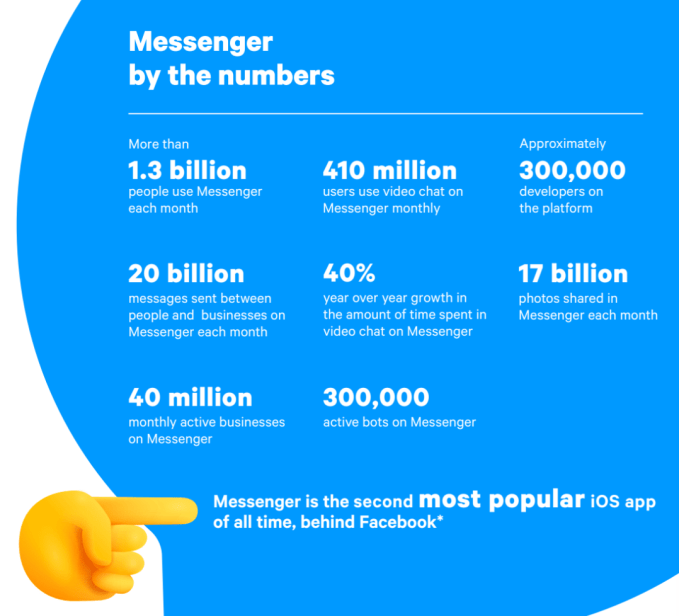
Facebook is also beefing up its tools for the 40 million active businesses and 300,000 businesses on Messenger, up from 200,000 businesses a year ago. Merchants will be able to let users book appointments at salons and masseuses, collect information with new lead generation chatbot templates and provide customer service to verified customers through authenticated m.me links. Facebook hopes this will boost the app beyond the 20 billion messages sent between people and businesses each month, which is up 10X from December 2017.

“We believe you can build practically any utility on top of messaging,” says Facebook’s head of Messenger Stan Chudnovsky. But he stresses that “All of the engineering behind it is has been redone” to make it more reliable, and to comply with CEO Mark Zuckerberg’s directive to unite the backends of Messenger, WhatsApp and Instagram Direct. “Of course, if we didn’t have to do all that, we’d be able to invest more in utilities. But we feel that utilities will be less functional if we don’t do that work. They need to go hand-in-hand together. Utilities will be more powerful, more functional and more desired if built on top of a system that’s interoperable and end-to-end encrypted.”

Here’s a look at the major Messenger announcements and why they’re important:

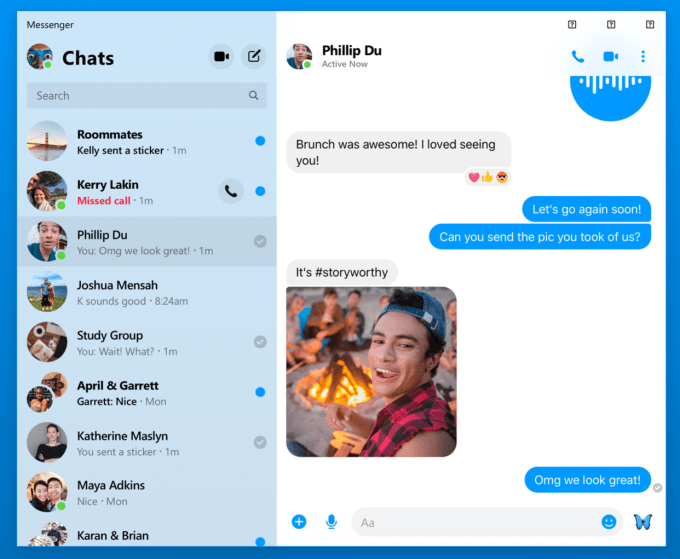
Messenger Desktop – A stripped-down version of Messenger focused on chat, audio and video calls will debut later this year. Chudnovsky says it will remove the need to juggle and resize browser tabs by giving you an always-accessible version of Messenger that can replace some of the unofficial knock-offs. Especially as Messenger focuses more on businesses, giving them a dedicated desktop interface could convince them to invest more in lead generation and customer service through Messenger.

Facebook Messenger’s upcoming desktop app

Project Lightspeed – Messenger is reengineering its app to cut 70 mb off its download size so people with low-storage phones don’t have to delete as many photos to install it. In testing, the app can cold start in merely 1.3 seconds, which Chudnovsky says is just 25 percent of where Messenger and many other apps are today. While Facebook already offers Messenger Light for the developing world, making the main app faster for everyone else could help Messenger swoop in and steal users from the status quo of SMS. The Lightspeed update will roll out later this year.

Video Co-Watching – TechCrunch reported in November that Messenger was building a Facebook Watch Party-style experience that would let users pick videos to watch at the same time as a friend, with reaction cams of their faces shown below the video. Now in testing before rolling out later this year, users can pick any Facebook video, invite one or multiple friends and laugh together. Unique capabilities like this could make Messenger more entertaining between utilitarian chat threads and appeal to a younger audience Facebook is at risk of losing.

Watch Videos Together on Messenger

Business Tools – After a rough start to its chatbot program a few years ago, where bots couldn’t figure out users’ open-ended responses, Chudnovsky says the platform is now picking up steam with 300,000 developers on board. One option that’s worked especially well is lead-generation templates, which teach bots to ask people standardized questions to collect contact info or business intent, so Messenger is adding more of those templates with completion reminders and seamless hand-off to a live agent.

To let users interact with appointment-based businesses through a platform they’re already familiar with, Messenger launched a beta program for barbers, dentists and more that will soon open to let any business handle appointment booking through the app. And with new authenticated m.me links, a business can take a logged-in user on their website and pass them to Messenger while still knowing their order history and other info. Getting more businesses hooked on Messenger customer service could be very lucrative down the line.

Appointment booking on Messenger

Close Friends and Emoji Status – Perhaps the most interesting update to Messenger, though, is its upcoming effort to help you make offline plans. Messenger is in the early stages of rebuilding its Friends tab into “Close Friends,” which will host big previews of friends’ Stories, photos shared in your chats, and let people overlay an emoji on their profile pic to show friends what they’re doing. We first reported this “Your Emoji” status update feature was being built a year ago, but it quietly cropped up in the video for Messenger Close Friends. This iteration lets you add an emoji like a home, barbell, low battery or beer mug, plus a short text description, to let friends know you’re back from work, at the gym, might not respond or are interested in getting a drink. These will show up atop the Close Friends tab as well as on location-sharing maps and more once this eventually rolls out.

Messenger’s upcoming Close Friends tab with Your Emoji status

Facebook Messenger is the best poised app to solve the loneliness problem. We often end up by ourselves because we’re not sure which of our friends are free to hang out, and we’re embarrassed to look desperate by constantly reaching out. But with emoji status, Messenger users could quietly signal their intentions without seeming needy. This “what are you doing offline” feature could be a whole social network of its own, as apps like Down To Lunch have tried. But with 1.3 billion users and built-in chat, Messenger has the ubiquity and utility to turn a hope into a hangout.


Read Full Article

Social media firms agree to work with UK charities to set online harm boundaries


Social media giants, including Facebook-owned Instagram, have agreed to financially contribute to UK charities to fund them making recommendations that the government hopes will speed up decisions about removing content that promotes suicide/self-harm or eating disorders on their platforms.

The development follows the latest intervention by health secretary Matt Hancock, who met with representatives from the Facebook, Instagram, Twitter, Pinterest, Google and others yesterday to discuss what they’re doing to tackle a range of online harms.

“Social media companies have a duty of care to people on their sites. Just because they’re global doesn’t mean they can be irresponsible,” he said today.

“We must do everything we can to keep our children safe online so I’m pleased to update the house that as a result of yesterday’s summit, the leading global social media companies have agreed to work with experts… to speed up the identification and removal of suicide and self-harm content and create greater protections online.”

However he failed to get any new commitments from the companies to do more to tackle anti-vaccination misinformation — despite saying last week that he would be heavily leaning on the tech giants to remove anti-vaccination misinformation, warning it posed a serious risk to public health.

Giving an update on his latest social media moot in parliament this afternoon, Hancock said the companies had agreed to do more to address a range of online harms — while emphasizing there’s more for them to do, including addressing anti-vaccination misinformation.

“The rise of social media now makes it easier to spread lies about vaccination so there is a special responsibility on the social media companies to act,” he said, noting that coverage for the measles, mumps and rubella vaccination in England decreased for the fourth year in a row last year — dropping to 91%.

There has been a rise in confirmed measles cases from 259 to 966 over the same period, he added.

With no sign of an agreement from the companies to take tougher action on anti-vaccination misinformation, Hancock was left to repeat their preferred talking point to MPs, segwaying into suggesting social media has the potential to be a “great force for good” on the vaccination front — i.e. if it “can help us to promote positive messages” about the public health value of vaccines.

For the two other online harm areas of focus, suicide/self-harm content and eating disorders, suicide support charity Samaritans and eating disorder charity Beat were named as the two U.K. organizations that would be working with the social media platforms to make recommendations for when content should and should not be taken down.

“[Social media firms will] not only financially support the Samaritans to do the work but crucially Samaritans’ suicide prevention experts will determine what is harmful and dangerous content, and the social media platforms committed to either remove it or prevent others from seeing it and help vulnerable people get the positive support they need,” said Hancock.

“This partnership marks for the first time globally a collective commitment to act, to build knowledge through research and insights — and to implement real changes that will ultimately save lives,” he added.

The Telegraph reports that the value of the financial contribution from the social media platforms to the Samaritans for the work will be “hundreds of thousands” of pounds. And during questions in parliament MPs pointed out the amount pledged is tiny vs the massive profits commanded by the companies. Hancock responded that it was what the Samaritans had asked for to do the work, adding: “Of course I’d be prepared to go and ask for more if more is needed.”

The minister was also pressed from the opposition benches on the timeline for results from the social media companies on tackling “the harm and dangerous fake news they host”.

“We’ve already seen some progress,” he responded — flagging a policy change announced by Instagram and Facebook back in February, following a public outcry after a report about a UK schoolgirl whose family said she killed herself after being exposed to graphic self-harm content on Instagram.

“It’s very important that we keep the pace up,” he added, saying he’ll be holding another meeting with the companies in two months to see what progress has been made.

“We’ll expect… that we’ll see further action from the social media companies. That we will have made progress in the Samaritans being able to define more clearly what the boundary is between harmful content and content which isn’t harmful.

“In each of these areas about removing harms online the challenge is to create the right boundary in the appropriate place… so that the social media companies don’t have to define what is and isn’t socially acceptable. But rather we as society do.”

In a statement following the meeting with Hancock, a spokesperson for Facebook and Instagram said: “We fully support the new initiative from the government and the Samaritans, and look forward to our ongoing work with industry to find more ways to keep people safe online.”

The company also noted that it’s been working with expert organisations, including the Samaritans, for “many years to find more ways to do that” — suggesting it’s quite comfortable playing the familiar political game of ‘more of the same’.

That said, the UK government has made tackling online harms a stated policy priority — publishing a proposal for a regulatory framework intended to address a range of content risks earlier this month, when it also kicked off a 12-week public consultation.

Though there’s clearly a long road ahead to agree a law that’s enforceable, let alone effective.

Hancock resisted providing MPs with any timeline for progress on the planned legislation — telling parliament “we want to genuinely consult widely”.

“This isn’t really issue of party politics. It’s a matter of getting it right so that society decides on how we should govern the Internet, rather than the big Internet companies making those decisions for themselves,” he added.

The minister was also asked by the shadow health secretary, Jonathan Ashworth, to guarantee that the legislation will include provision for criminal sentences for executives for serious breaches of their duty of care. But Hancock failed to respond to the question. 


Read Full Article

Social media firms agree to work with UK charities to set online harm boundaries


Social media giants, including Facebook-owned Instagram, have agreed to financially contribute to UK charities to fund them making recommendations that the government hopes will speed up decisions about removing content that promotes suicide/self-harm or eating disorders on their platforms.

The development follows the latest intervention by health secretary Matt Hancock, who met with representatives from the Facebook, Instagram, Twitter, Pinterest, Google and others yesterday to discuss what they’re doing to tackle a range of online harms.

“Social media companies have a duty of care to people on their sites. Just because they’re global doesn’t mean they can be irresponsible,” the minister told parliament today.

“We must do everything we can to keep our children safe online so I’m pleased to update the house that as a result of yesterday’s summit, the leading global social media companies have agreed to work with experts… to speed up the identification and removal of suicide and self-harm content and create greater protections online.”

However Hancock failed to get any new commitments from the companies to do more to tackle anti-vaccination misinformation — despite saying last week that he would be heavily leaning on the tech giants to remove anti-vaccination misinformation, warning it posed a serious risk to public health.

Giving an update on his latest social media moot in parliament this afternoon, he said the companies had agreed to do more to address a range of online harms — while emphasizing there’s more for them to do, including addressing anti-vaccination misinformation.

“The rise of social media now makes it easier to spread lies about vaccination so there is a special responsibility on the social media companies to act,” he said, noting that coverage for the measles, mumps and rubella vaccination in England decreased for the fourth year in a row last year — dropping to 91%.

There has been a rise in confirmed measles cases from 259 to 966 over the same period, he added.

With no sign of an agreement from the companies to take tougher action on anti-vaccination misinformation, Hancock was left to repeat their preferred talking point to MPs, segwaying into suggesting social media has the potential to be a “great force for good” on the vaccination front — i.e. if it “can help us to promote positive messages” about the public health value of vaccines.

For the two other online harm areas of focus, suicide/self-harm content and eating disorders, suicide support charity Samaritans and eating disorder charity Beat were named as the two U.K. organizations that would be working with the social media platforms to make recommendations for when content should and should not be taken down.

“[Social media firms will] not only financially support the Samaritans to do the work but crucially Samaritans’ suicide prevention experts will determine what is harmful and dangerous content, and the social media platforms committed to either remove it or prevent others from seeing it and help vulnerable people get the positive support they need,” said Hancock.

“This partnership marks for the first time globally a collective commitment to act, to build knowledge through research and insights — and to implement real changes that will ultimately save lives,” he added.

The Telegraph reports that the value of the financial contribution from the social media platforms to the Samaritans for the work will be “hundreds of thousands” of pounds. And during questions in parliament MPs pointed out the amount pledged is tiny vs the massive profits commanded by the companies. Hancock responded that it was what the Samaritans had asked for to do the work, adding: “Of course I’d be prepared to go and ask for more if more is needed.”

The minister was also pressed from the opposition benches on the timeline for results from the social media companies on tackling “the harm and dangerous fake news they host”.

“We’ve already seen some progress,” he responded — flagging a policy change announced by Instagram and Facebook back in February, following a public outcry after a report about a UK schoolgirl whose family said she killed herself after being exposed to graphic self-harm content on Instagram.

“It’s very important that we keep the pace up,” he added, saying he’ll be holding another meeting with the companies in two months to see what progress has been made.

“We’ll expect… that we’ll see further action from the social media companies. That we will have made progress in the Samaritans being able to define more clearly what the boundary is between harmful content and content which isn’t harmful.

“In each of these areas about removing harms online the challenge is to create the right boundary in the appropriate place… so that the social media companies don’t have to define what is and isn’t socially acceptable. But rather we as society do.”

In a statement following the meeting with Hancock a spokesperson fo Facebook and Instagram said: “We fully support the new initiative from the government and the Samaritans, and look forward to our ongoing work with industry to find more ways to keep people safe online.”

The company also noted that it’s been working with expert organisations, including the Samaritans, for “many years to find more ways to do that” — suggesting it’s quite comfortable playing the familiar political game of ‘more of the same’.

That said, the UK government has made tackling online harms a stated aim and policy priority — publishing a proposal for a regulatory framework intended to address a range of content risks earlier this month, when it also kicked off a 12-week public consultation.

Though there’s clearly a load road ahead to agree a law that’s enforceable, let alone effective.

Hancock resisted providing MPs with any timeline for progress on the planned legislation — telling parliament “we want to genuinely consult widely”.

“This isn’t really issue of party politics. It’s a matter of getting it right so that society decides on how we should govern the Internet, rather than the big Internet companies making those decisions for themselves,” he added.

The minister was also asked by the shadow health secretary, Jonathan Ashworth, to guarantee that the legislation will include provision for criminal sentences for executives for serious breaches of their duty of care. But Hancock failed to respond to the question. 


Read Full Article

Energizer’s massive battery/phone proves a viral hit ≠ crowdfunding success


Oof. This isn’t the sort of thing you want to see when you’re rounding the corner of your crowdfunding campaign:

There are long shots and then there’s coming up with $15,000 of your $1.2 million goal. The Indiegogo page for the Energizer Power Max P18K Pop understandably focused on the viral sensation the ridiculously beefy phone with the 18,000mAh battery spurred at Mobile World Congress this year. There are even photos of the scrum of journalists elbowing to take a shot of the thing at the event.

Understandable that its creators took that approach. Heck, the thing may have outshined all of the foldable and 5G phones that were set to take center stage at the event. We wrote about it. Lucas rightfully called it “basically a giant battery with a smartphone built into it.”

The takeaway seems clear, though. Just because everyone’s talking about a product doesn’t mean that anyone intends to buy it. If anything, the devices seemed more a comment on the state of smartphone battery life than actual enticing product.

And honestly, there’s been a shift in recent years among many smartphone manufacturers to provide power saving options and larger capacity batteries, so this has become less of a problem (though 5G’s approach could aversely impact that). Also, there are eight million power banks, and you can get them pretty cheap these days, making the P18K Pop any even sillier proposition. Not to mention all the things that can go wrong when you buy a phone based on a single feature.

Even so, the product’s creators closed the campaign out on a hopeful note, writing, “Although it didn’t reach its goal, we will work on further improvement on the P18K (design, thickness, etc.) as we do believe there is a rising interest for smartphones with incredible battery life, which can also be used as power banks.”

Certainly features from companies like Samsung and Huawei have proven that power sharing is a compelling feature. It just probably won’t come with Energizer’s name attached.


Read Full Article

Prisma Labs raises $6.7M for its AI-powered approach to visual editing


Remember Prisma? The Moscow-based team behind the app that sparked a style transfer craze in 2016 has raised a €6 million (~$6.7M) Series A, led by early stage artificial intelligence focused VC firm, Haxus.

While two of Prisma’s original co-founders left the company in the middle of last year, to work on building a new social app — the still, as yet, unreleased Capture — co-founder Andrey Usoltsev stayed on to keep developing Prisma Labs, taking up the CEO role.

The Series A funding will go towards expanding Prisma’s 21-strong team and scaling the business by spending on marketing to grow uptake of its apps’ premium subscription offers. These include a subscription layer for its eponymous app which gives users access to styles not available in the free version.

“We’re going to grow rapidly. We’re going to double our team this year and set up the impressive marketing budget,” says Usoltsev.

Late last year the team released a new freemium selfie retouching app, called Lensa, hoping to capture a slice of the beauty filter/photo-editing market. Their twist was to bake in AI smarts that power automatic adjustments — smoothing skin tone, whitening teeth, brightening eyes and so on, at the touch of the in-app camera button — as if by technomagic.

Their pitch for the selfie retoucher is ‘natural’ looking enhancements. And Prisma claims it’s seeing “very high” retention rates for Lensa, more akin to a sticky social network than photo-retouching software.  

They argue the app’s face-retouching machine learning algorithms have benefited from the heap of data amassed from Prisma’s multi-millions of selfie-submitting users. And while there’s certainly no shortage of rival apps out there claiming to make selfies look better, Lensa’s AI-powered retouching does offer — at a glance — less crude/more plausible results than plenty of gimmicky ‘beauty filter’ apps also touting reality-editing wares.

“There is competition [for selfie retouching] and we think that it is good because it shows the size of the market,” says Usoltsev. “It’s huge. There are millions of people using apps like Facetune and what our advantage is is that we have a great technical team, R&D team that creates the best technology on the market in some areas… that trained building Prisma.

“We’re focusing on the quality and the natural look of the results. And some apps on the market didn’t pay as much attention as needed to these two things. We’re going to focus on this. We are not the first in this space but we are going to be the best in this space.”

“Automation is the key,” he adds. “We can now provide users with new kind of product, new kind of photo- and video-editors that automate the routine and requires less effort from the user side to get awesome results.”

Lensa, which launched in December with a subscription offering right off the bat, now has more than 100,000 users, according to Usoltsev — though it’s not breaking out paying subs yet.

The early userbase skews female and young — without, according to Usoltsev, Prisma doing any overt targeting — the main group being 18-24 year old women, somewhat unsurprisingly for a selfie beautifying app.

“The product is not viral, like Prisma, and most of the users are acquired from paid sources like Facebook ads and so on so. We strongly control the amount of users we acquire and now the product is not ready for the real scale,” he continues, noting they’re in the process of tweaking the app to expand the features and improve product market fit.

They’re also playing with the business model, with the initial subscription offering definitely feeling a bit underwhelming vs the core free AI-powered edits. (You can read our first look at Lensa here.)

“Right now we’re very close to start scaling it,” he adds. “We need a couple of more releases to be ready 100% and then we start scaling.

“We’re going to expand the range of features. We’re going to add a video feature because our primary feature — retouching — works in real-time and we tested it even on livestreaming and it works well. We’re working on optimizing it even more, to work faster, and in better quality.”

Other ongoing dev work to polish Lensa’s proposition includes tweaking the auto-adjustments it makes by determining the best settings for portrait-influencing factors, such as exposure, contrast, highlights and shadows. “For each adjustment we use a neural network,” he notes. “They work together… to find the best output result.”

Prisma is also monetizing its namesake original app — which grabbed around 70M downloads in a few months back in 2016, with Usoltsev saying they’re still relying mostly on organic/viral downloads rather than active promotion, riding the Prisma craze’s long viral tail.

They now have more than 100,000 paying subscribers for Prisma, though they’re not breaking out active usage — beyond saying it runs into the “millions”. (Back in 2017 they were reporting active monthly usage for the app of around 10M.) A premium sub offering was switched on in Prisma in January 2018.

“The paying audience is actually diverse. The major group by age I think it’s 24-35 year olds. And men and women is about the same proportion,” he adds.

Last year’s launch of Lensa came despite an earlier focus shift for the startup to b2b, after the style transfer craze that had powered its namesake app’s 2016 virality appeared on the cusp of being crazed (and, well, cloned) to death.

The plan, as it was in 2017, was for Prisma Labs to offer an SDK for computer vision-powered effects that developers could use to enhance their own apps. But the team kept its hand in the consumer space, maintaining their apps as testing grounds. A decision that set them up for what now looks a full reverse pivot back to consumer.

Usoltsev tells us the earlier b2b switch was “mostly” at the behest of Prisma’s investors — and wasn’t something the wider team was keen on.

They’re fully stoked to get back to their consumer roots, he adds.

“It didn’t really resonate with our team experience and our company DNA,” he adds of the b2b phase. “But in the process we figured out this is not what we want to do. We came up with the idea for the new product in the process and came up with the broader vision for the entire company and what we want to do.

“The core team was all about consumer products and b2b was not seen as interesting topic at all.”

So what’s on the slate for the future, as the team thinks about other features and/or consumer apps it might want to launch this year?

“Right now we’re thinking a lot about video,” he says. “Video is so fast growing space right now and we see a lot of new apps that break into the market — like TikTok — that grows insanely and based on video. And we’re going to provide users with automated tools to enhance their videos.

“Videos is more complicated to edit than photos because it requires more skill… to learn how to edit videos. And if your clip is longer than one minute it’s so hard to create it because montage could be a boring process and the longer the video is the more complicated the process is. So we’re going to fix this — and provide users with automated tools to help them create great videos quickly and with no effort, or as little as possible.”

AI-enabled auto video editing is “probably” going to be a standalone app, he says, rather than a feature baked into one of Prisma’s existing apps. But, well, watch this space.


Read Full Article

What Is Pinterest and How Do You Use It?


whats-pinterest

Pinterest has been around for a while, but not everyone has used it. When people think of Pinterest they might also think “aesthetic” or beautiful pictures.

But what is Pinterest? How does Pinterest work? And how do you use Pinterest? This article explains the basics for beginners looking to start using Pinterest.

What Is Pinterest?

What Is Pinterest Main Screen

Pinterest is an image-pinning website that has been around since 2009. Its picture-collecting capabilities are designed to curate and share visual ideas.

On InFront, writer Andy Meng describes Pinterest in the following terms:

…the social network is very much focused on the concept of a person’s lifestyle, allowing you to share your tastes and interests with others and discovering like minded people. The social network’s goal is to “connect everyone in the world through the ‘things’ they find interesting.”

Having used Pinterest myself, I can say there is a lot of truth in this assessment.

You can use Pinterest as a social networking tool, but not everyone does. In fact, it’s more common to use it as a source of inspiration to collect ideas on interior decorating, travel, and fashion.

Additionally, the Pinterest help pages describes Pinterest as a “visual discovery engine”. Again, this is totally correct.

Pinterest helps you quickly find the visual resources you need, whatever your project may be. The ease of it along with its user-friendly interface is why it remains popular. You can literally spend hours just scrolling.

How Does Pinterest Work?

What Is Pinterest How to Pin Search

Pinterest consists of several different elements.

1. Your Home Feed

When you first log in, either as a new or returning user, you’ll see an endless, scrolling wall of pictures related to your interests.

This endless wall of photos is called your Home Feed, and the Home Feed—much like other social networking sites—is where subjects and posts from people you follow are aggregated.

The big difference here is that it’s all visual. No words necessary.

It’s important to note that the subject matter on your Home Feed will change as the algorithm learns what kind of topic you’re currently interested in.

Let’s say I want to make a cake, so I type “chocolate cake” into the search bar to find pictures of them. Along with showing me a million different images of chocolate cake, Pinterest’s algorithm will decide, “Hey, this user likes cake! Maybe they’ll like cupcakes too.”

So the next time I visit my Home Feed, Pinterest will show me multiple images of cake and cupcakes as a result. This is designed to get me to explore further.

2. Your Search Bar

What Is Pinterest Search Bar

At the top of your screen in the left-hand corner, you’ll see the search bar. By typing a keyword into this bar, you can look up particular tags or topics that might not be showing up on your feed.

Once you type in a word, Pinterest will suggest other topics that may be related to it. These topics show up as colored “buttons” beneath it.

3. Your Pins

What Is Pinterest How to Pin

The next most important part of Pinterest is your ability to “pin” or save pinned items. Pinning basically means that you store a collection of images together to form some sort of organization.

That whole Home Feed? Each individual image is a “pin” that someone else has put up.

When you see a picture pop up, either in your Home Feed or on your search bar—and you want to save it to your own board—the way you do this is simple.

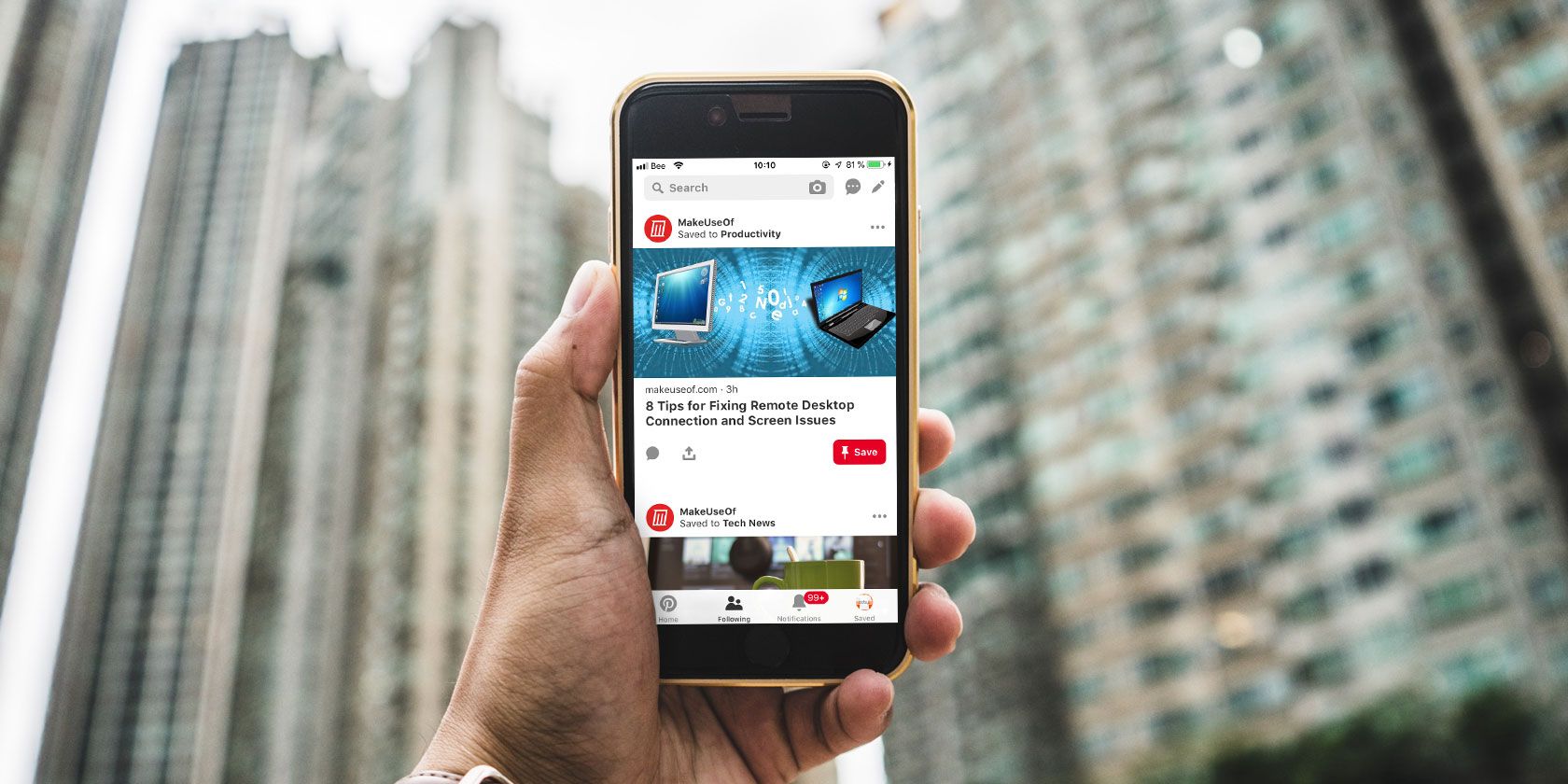
To save a pin, click on the image, then click on the button in the top-right hand corner of the image preview that says Save. It will prompt you to save that picture to one of your boards.

Looking for neat ideas on how you can use this pinning feature? Check out our article on creative ways to use Pinterest.

4. Boards

What is Pinterest Create a Board

The fourth most important aspect of Pinterest are your Boards. Boards are where you store individual pins, either for private use or for the public to show off to others.

To create a board, click on your user name in the top right-hand corner of your screen, next to Following.

When you get to your profile page, click on the + sign, seen here highlighted in Red. Click on Create Board.

You can create a board with a specific theme or purpose, and set it to private or public.

5. Your Profile

What Is Pinterest My Profile

The most important part of Pinterest is your profile itself. This is where anyone who clicks on your name can see your public boards, your avatar, and your links. They can also see your total follower count and the number of people you’re following.

It should be noted that the number of people that follow you versus how many people you’re following can vary drastically from user to user, as people either use Pinterest for personal interest or social networking.

For example: My own use of Pinterest is incredibly private, as I’m only there for mood boards and basic ideas.

However, you can find entire companies creating an ecosystem of curated boards on their profile pages. There’s also an option to upgrade to a professional business account, which gives you access to analytics tools and the ability to pitch ads through the network.

Beware Using Images From Pinterest

Pinterest is an incredibly fun, easy, and stress-free way of looking for inspiration on the internet. With a few simple clicks you can get signed up and started. And now that you know what Pinterest is and how Pinterest works, how to use Pinterest should be much clearer.

However, it should be noted that Pinterest is not a good way to find stock images to use on your blog or website, and we can’t emphasize this enough.

The images that users pin to Pinterest have sometimes been found on Google or another social networking site. A lot of them still have their copyrights attached. If you save these images to your computer and then re-upload them for your own use without seeking permission to do so, you could find yourself in a lot of trouble.

With that in mind, if you are looking for stock images, it’s best to use a stock photo site. Check out this list for the best places to find royalty-free photos.

Read the full article: What Is Pinterest and How Do You Use It?


Read Full Article

Get Three Top IT Certifications With This CompTIA Course Bundle, Now $59


All the best jobs in IT go to people with the right certifications. You don’t need to revisit college to pass these exams, but you do need the right training. If you want to start building a technical career, the CompTIA Certification Prep Bundle is a great place to start. This learning library includes five in-depth courses, helping you prepare for three universally-respected exams. You can get the bundle now for $59 at MakeUseOf Deals.

CompTIA Certification

While certificates are important at any stage of your IT career, they are particularly vital for newcomers. By passing the CompTIA exams, you can prove to recruiters that you know what you’re talking about.

This bundle helps you prepare for the three most important certification exams. You start with the A+ training, which covers all the basics of modern computing. The videos show you how to set up operating systems, update software, troubleshoot Windows computers, and maintain security.

The Security+ course adds to your knowledge, with a look at common threats, attacks and vulnerabilities. Meanwhile, the Network+ course focuses on connectivity — from simple Wi-Fi networks to virtual machines and cloud storage.

The training includes loads of exam prep, plus screencasts, whiteboard tutorials, and labs. Better still, get a $20 voucher towards your CompTIA A+ entry fee.

80 Hours of Training for $59

These courses are worth $1,359.95, but you can grab the bundle now for $59 to get lifetime access.

Read the full article: Get Three Top IT Certifications With This CompTIA Course Bundle, Now $59


Read Full Article

Jungle Ventures hits $175M first close on its third fund for Southeast Asia


Southeast Asia’s startup ecosystem is set to get a massive injection of funds after Jungle Ventures reached a first close of $175 million for its newest fund, TechCrunch has come to learn.

Executives at the Singapore-based firm anticipate that the new fund, which is Jungle’s third to date, will reach a final close of $220 million over the coming few months, a source with knowledge of the fund and its plans told TechCrunch. If it were to reach that figure, the fund would become the largest for startup investments in Southeast Asia.

Jungle Ventures declined to comment.

An SEC filing posted in December suggested the firm was aiming to raise up to $200 million with the fund. Its last fund was $100 million and it closed in November 2016. Founding partners Anurag Srivastava and Amit Anand started the fund way back in 2012 when it raised a (much smaller) $10 million debut fund.

Digging a little deeper, our source revealed that the new Jungle fund includes returning LPs World Bank affiliate IFC and Cisco Investments — both of which invested in Jungle’s $18 million early-stage ‘SeedPlus’ fund — and Singapore sovereign fund Temasek. One new backer that we are aware of is German financier DEG although we understand that Jungle has spent considerable time fundraising in the U.S. market, hence the SEC filing. Beyond Europe and the U.S, the firm is also said to have pitched LPs in Asia — as you’d expect — and the Middle East.

Jungle is focused on Series A and Series B deals in Southeast Asia with the occasional investment in India or the rest of the world where it sees global potential. One such example of that is Engineer.ai, which raised $29.5 million last November in a round led by Jungle and Lakestar with participation from SoftBank’s AI unit DeepCore.

Jungle Ventures founding partners (left to right): Anurag Srivastava and Amit Anand

The meat and drink of the fund is Southeast Asia, and past investments there include cloud platform Deskera (most recent round $60 million), budget hotel network Reddoorz (raised $11 million last year), fintech startup Kredivo (raised $30 million last year) and digital fashion brand Pomelo, which has raised over $30 million from investors that also include JD.com.

In India, it has backed b2b sales platform Moglix and interior design startup Livspace among others. Past exits include Travelmob to HomeAway, Zipdial to Twitter, eBus to IMD and Voyagin to Rakuten.

We understand that the new fund has already completed five deals. Jungle’s pace of dealmaking is typically half a dozen investments per month, and we understand that will continue with fund three.

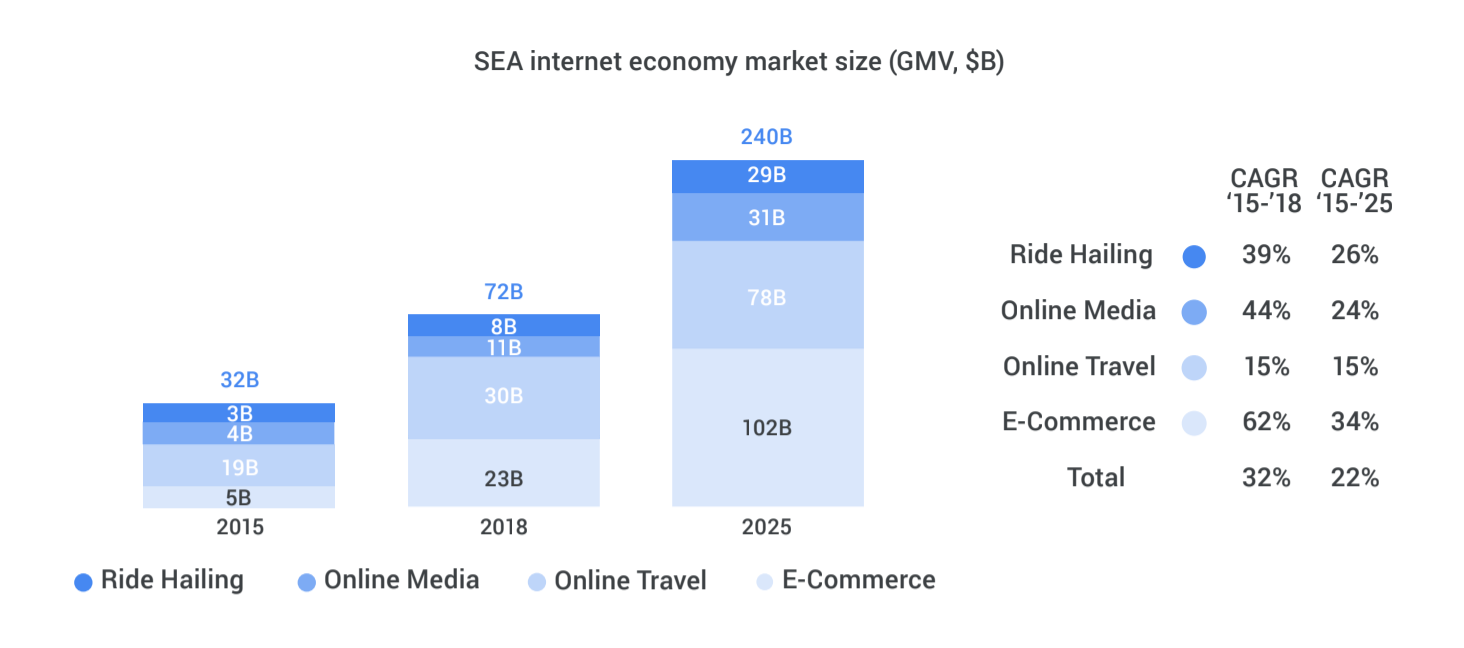
Executives at the fund are bullish on Southeast Asia, which is forecast to see strong growth economic growth thanks to increased internet access and digital spending. A much-cited report from Google and Temasek issued last year predicts that the region’s ‘digital economy’ will triple to reach $240 billion from 2025.

A 2018 report from Temasek and Google predicts significant growth in Southeast Asia’s digital economy

Other major VC funds in Southeast Asia include Vertex Ventures ($210 million fund), Golden Gate Ventures — $100 million and a $200 million growth fund — Openspace Ventures ($135 million), and EV’s $150 million growth fund.

There’s also B Capital from Facebook co-founder Eduardo Saverin which recently passed $400 million for the first close of its second fund, although that doesn’t invest exclusively in Southeast Asia, and Sequoia which has a $695 million fund for India and Southeast Asia. Other global names that you might see cutting deals in the region include Burda, which has a local presence and starts at Series B, TPG Global and KKR.


Read Full Article

Twitter announces new content deals with Univision, The Wall Street Journal and others


Twitter is unveiling a number of new content deals and renewals tonight at its NewFronts event for digital advertisers.

It’s only been two years since Twitter first joined the NewFronts. At the time, coverage suggested that executives saw the company’s video strategy as a crucial part of turning things around, but since then, the spotlight has moved on to other things (like rethinking the fundamental social dynamics of the service).

And yet the company is still making video deals, with 13 of them being unveiled tonight. That’s a lot of announcements, though considerably less than the 30 revealed at last year’s event. The company notes that it has already announced a number of partnerships this year, including one with the NBA.

“When you collaborate with the top publishers in the world, you can develop incredibly innovative ways to elevate premium content and bring new dimensions to the conversations that are already happening on Twitter,” said Twitter Global VP and Head of Content Partnerships Kay Madati in a statement. “Together with our partners, we developed this new slate of programming specifically for our audiences, and designed the content to fuel even more robust conversation on Twitter.”

Here’s a quick rundown of all the news:

  • A partnership with Univision covering Spanish-language sports, news and entertainment content, including 2020 election analysis and reporting.
  • A multi-year extension of Twitter’s deal with the NFL, which includes highlights and analysis.
  • The Players’ Tribune and Twitter are announcing a live talk show called “Don’t @ Me,” where two athletes with debate topics chosen in part by Twitter users.
  • A multi-year extension of Twitter’s deal with Major League Soccer.
  • Continued programming from ESPN, including new ESPN Onsite branding to highlight shows filmed on location at big events.
  • Bleacher Report is bringing “House of Highlights” back for a second season.
  • Blizzard Entertainment will be sharing content from BlizzCon in November, including the entire opening ceremony.
  • The Wall Street Journal is launching WSJ What’s Now, an original video show for Twitter. The deal will also include live-streamed content from Wall Street Journal events.
  • Bloomberg’s TicToc will expand its coverage to include events like the G20 Summit, United Nations General Assembly and World Economic Forum.
  • CNET is announcing a new partnership with Twitter, which will cover major tech industry events.
  • Time is developing new video content for Twitter around the Time Person of the Year and Time 100.
  • Live Nation is bringing a new concert series exclusively to Twitter this fall, with 10 concerts in 10 weeks.
  • At the Video Music Awards, Viacom-owned MTV will offer a Stan Cam where fans can share their own live-streamed reactions to the show. Viacom will also be live-streaming red carpet coverage from its other events.

Read Full Article

Amazon is testing a Spanish-language Alexa experience in the US ahead of a launch this year


Amazon announced today it has begun to ask customers to participate in a preview program that will help the company build a Spanish-language Alexa experience for U.S. users. The program, which is currently invite-only, will allow Amazon to incorporate into the U.S. Spanish-language experience a better understanding of things like word choice and local humor, as it has done with prior language launches in other regions. In addition, developers have been invited to begin building Spanish-language skills, also starting today, using the Alexa Skills Kit.

The latter was announced on the Alexa blog, noting that any skills created now will be made available to the customers in the preview program for the time being. They’ll then roll out to all customers when Alexa launches in the U.S. with Spanish-language support later this year.

Manufacturers who want to build “Alexa Built-in” products for Spanish-speaking customers can also now request early access to a related Alexa Voice Services (AVS) developer preview. Amazon says that Bose, Facebook and Sony are preparing to do so, while smart home device makers, including Philips, TP Link and Honeywell Home, will bring to U.S. users “Works with Alexa” devices that support Spanish.

Ahead of today, Alexa had supported Spanish language skills, but only in Spain and Mexico — not in the U.S. Those developers can opt to extend their existing skills to U.S. customers, Amazon says.

In addition to Spanish, developers have also been able to create skills in English in the U.S., U.K., Canada, Australia, and India; as well as in German, Japanese, French (in France and in Canada), and Portuguese (in Brazil). But on the language front, Google has had a decided advantage thanks to its work with Google Voice Search and Google Translate over the years.

Last summer, Google Home rolled out support for Spanish, in addition to launching the device in Spain and Mexico.

Amazon also trails Apple in terms of support for Spanish in the U.S., as Apple added support for Spanish to the HomePod in the U.S., Spain and Mexico in September 2018.

Spanish is a widely spoken language in the U.S. According to a 2015 report by Instituto Cervantes, the United States has the second highest concentration of Spanish speakers in the world, following Mexico. At the time of the report, there were 53 million people who spoke Spanish in the U.S. — a figure that included 41 million native Spanish speakers, and approximately 11.6 million bilingual Spanish speakers.


Read Full Article

Alphabet cites ‘headwinds’ in smartphone sales, teases I/O hardware announcement


Alphabet’s Q1 earnings were a disappointment for Wall Street, courtesy primarily of ad revenue shortcomings. The hardware team met with some difficulties, as well, owing in part to a stagnating global smartphone market that has impacted virtually all players.

CEO Sundar Pichai cited “year over year headwinds” when referring to the company’s smartphone line, following the release of the Pixel 3 and Pixel 3 XL last fall. The executive rightly referenced the company’s relatively recent entry as a standalone hardware developer and painted a hopeful picture of the industry’s innovations going forward.

“I do continue to be excited to see 5G coming and the early foldable phones, which Android plays a big part in driving,” Pichai said on the call. Google has notably taken an important role developing an Android UI designed for the foldable form factor, along with working closely beside Samsung on its recently delayed foldable.

CFO Ruth Porat echoed Pichai’s comments, while hinting at what’s to come from the company. “While the first quarter results reflect pressure in the premium smartphone industry,” the exec explained, “we are pleased with the ongoing momentum of Assistant-enabled Home devices, particularly the Home Hub and Mini devices and look forward to our May 7 announcement at I/O from our hardware team.”

The reference to “premium smartphone[s]” looks to be a roundabout confirmation of the rumored Pixel 3a. The mid-tier take on the Pixel line is rumored to be a rare I/O hardware debut, coming next month. The arrival of such a device could go a ways toward helping jumpstart slowing sales for the line.

Pichai referenced the company’s newly opened “campus and engineering hub.” A result of the company’s massive deal with struggling handset maker, HTC, the Taipei R&D center will be primarily focused on Google’s smartphone offerings. He also referenced the company’s Amazon-competing Home line as a bright spot for its hardware offerings, particularly the Mini and Hub.

“If you take products like Google Home and Assistant products, we’ve been doing really well,” said Pichai. “We see strong momentum. We’re market leaders in the category, especially when you look at it on a global basis.”


Read Full Article

Alphabet cites ‘headwinds’ in smartphone sales, teases I/O hardware announcement


Alphabet’s Q1 earnings were a disappointment for Wall Street, courtesy primarily of ad revenue shortcomings. The hardware team met with some difficulties, as well, owing in part to a stagnating global smartphone market that has impacted virtually all players.

CEO Sundar Pichai cited “year over year headwinds” when referring to the company’s smartphone line, following the release of the Pixel 3 and Pixel 3 XL last fall. The executive rightly referenced the company’s relatively recent entry as a standalone hardware developer and painted a hopeful picture of the industry’s innovations going forward.

“I do continue to be excited to see 5G coming and the early foldable phones, which Android plays a big part in driving,” Pichai said on the call. Google has notably taken an important role developing an Android UI designed for the foldable form factor, along with working closely beside Samsung on its recently delayed foldable.

CFO Ruth Porat echoed Pichai’s comments, while hinting at what’s to come from the company. “While the first quarter results reflect pressure in the premium smartphone industry,” the exec explained, “we are pleased with the ongoing momentum of Assistant-enabled Home devices, particularly the Home Hub and Mini devices and look forward to our May 7 announcement at I/O from our hardware team.”

The reference to “premium smartphone[s]” looks to be a roundabout confirmation of the rumored Pixel 3a. The mid-tier take on the Pixel line is rumored to be a rare I/O hardware debut, coming next month. The arrival of such a device could go a ways toward helping jumpstart slowing sales for the line.

Pichai referenced the company’s newly opened “campus and engineering hub.” A result of the company’s massive deal with struggling handset maker, HTC, the Taipei R&D center will be primarily focused on Google’s smartphone offerings. He also referenced the company’s Amazon-competing Home line as a bright spot for its hardware offerings, particularly the Mini and Hub.

“If you take products like Google Home and Assistant products, we’ve been doing really well,” said Pichai. “We see strong momentum. We’re market leaders in the category, especially when you look at it on a global basis.”


Read Full Article

Sinden is Bringing Light Gun Games Back to Modern TVs


Do you look back fondly at games like Duck Hunt, Lethal Enforcers, House of the Dead, Virtua Cop, and other light gun games for classic systems? Unfortunately, while there are plenty of ways to go back and play retro games on devices like a Raspberry Pi, there’s no way to go back and play light gun games on modern TVs, as they require tube TVs in order to function.

However, Sinden Technology is looking to bring light gun gaming to the 21st century with a new piece of technology that promises to make the games work on modern displays. Not only does it allow retro games to work, but it even promises to add some new technology that’ll make the experience even better than it was back in the day.

The Sinden Lightgun

Currently, the folks at Sinden have a working prototype for its light gun, which means backers of the Kickstarter will actually be able to get their hands on one fairly soon and start playing games.

However, according to the creator, the actual light gun is “the first part of a larger ambitious project which is to restore the Lightgun genre by removing the technological blockers.” Not only is it a new piece of hardware, but it’s also a completely new technology.

The gun promises to interact directly with the TV without any additional hardware (like the Wii, which requires a sensor bar). It promises to remain accurate even as you move around the room thanks to a new form of tracking.

The prototype is 3D printed and features a high-speed camera, a CPU, USB interface, a trigger, four assignable action buttons, and a pump action reload feature. The final design will have an additional four assignable buttons, bringing the total to eight.

At this time, there are drivers for Windows and Linux (which includes the Raspberry Pi for any Retro Pi users out there). The creator is working on other OSes, but time will tell whether those come to fruition.

For the time being, the device will be used to play retro light gun games, but the creator says his “long term goal is to bring back the Lightgun to the masses and get brand new Lightgun games made.”

Sinden Lightgun Price and Availability

Right now, backers of the project can get a light gun for about $103 (£80). If you want to get one with the additional recoil feature, the price is around $168 (£130). The creator plans to ship the light guns in October 2019.

If you love retro games, check out this list of crazy valuable games for the NES.

Read the full article: Sinden is Bringing Light Gun Games Back to Modern TVs


Read Full Article