09 May 2013

New Interface for Gmail Chat History


Google tests a new interface for the chat logs saved in Gmail. The new interface shows profile images and hides the regular buttons and menus that are displayed for almost all messages and conversations. For some reason, Google removed buttons like "move to inbox", "delete", "labels", the "more" drop-down, the "reply" button and the associated menu. Timestamps are only displayed when you mouse over a chat line.


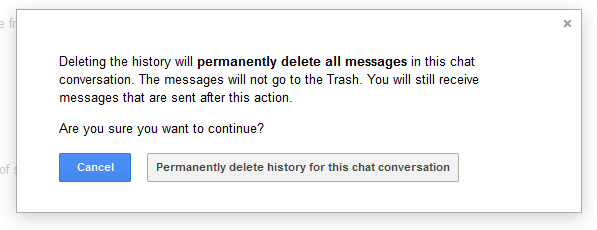
There's a new "resume chat" button and a "delete messages history" button that triggers this warning: "Deleting the history will permanently delete all messages in this chat conversation. The messages will not go to the Trash. You will still receive messages that are sent after this action."


I don't see this new interface in my Gmail account, but maybe you have more luck. You can find Gmail's chat history here: https://mail.google.com/mail/#chats. The interface should only look different for recent conversations, so you can still see the old UI for the other chat conversations.


{ Thanks, Igor Marques. }


Windows 8 Task Manager For Windows 7


CLICK HERE TO SEE FULL POST


Despite the fact that Task Manager is part of Windows operating system for close to two decades, it’s used by a small percentage of Windows users. The Task Manager is generally used to check system status, view and kill applications, stop services, and processes that aren’t responding or can’t be stopped from the desktop. The [...]

How To Use Apple iCloud On Windows PC


CLICK HERE TO SEE FULL POST


If you own a Mac, iPhone, iPod touch, or iPad, chances are that you’re already using the iCloud service to store your photos, contacts, music, and documents. For those who don’t know what iCloud is, it’s a free service built-into all recent iOS devices and Macs to store contents on the cloud and access them [...]

Download your Website Archives from Google Reader


You can download the full archives of your website, or that of any other site, from Google Reader and these may come handy later when you need to recovered a deleted page.


Tweet this Share on Facebook


Digital Inspiration @labnol This story, Download your Website Archives from Google Reader, was originally published at Digital Inspiration on 08/05/2013 under Google Reader, Internet.


Does The Internet Need A ‘Delete’ Button? [We Ask You]


The Internet has grown from a mere concept to an integral part of the everyday lives of most people in developed countries. And in a relatively short space of time. If you’re on the Internet then you’re truly on the Internet, with your name, location, and a host of other data about you following you around the Web like a bad smell; a bad smell that companies such as Google, Facebook, and Microsoft can track.


Most of us are worried about maintaining some level of privacy online, but it’s insanely hard to embrace the new opportunities the Internet presents while anonymously hiding away in a dark recess of the Web. It’s all good until things go pear-shaped, at which point there is really no option left open to you.


This Week’s Question…


We want to know, Does The Internet Need A ‘Delete’ Button? This question is prompted by a discussion between Google Chairman Eric Schmidt and economist Nouriel Roubini at the New York University’s Stern business school, as reported by Fast Company.


Roubini grilled Schmidt about Google’s role in devolving privacy online, with some people suggesting that the search and advertising giant is one of the main offenders eating away at the idea of privacy. Schmidt defended his company, saying, “Let me be very clear that Google is not tracking you … it’s not doing all these things.” But then conceded the point that the Internet represents a challenge to the sense of fairness when it comes to an individual’s right to privacy.


He stated that “[the] lack of a delete button on the Internet is in fact a significant issue,” continuing to say, “there are times when erasure [of data] is the right thing … and there are times when it is inappropriate. How do we decide? We have to have that debate now.” A debate? Now? MakeUseOf delivers.


We want to know whether you believe the Internet needs a ‘Delete‘ button, which obviously wouldn’t be a literal button but an accepted process by which an individual could wipe their online slate clean, removing all traces of themselves and their activities from databases.


Should companies be allowed to track you across the Web as they currently do? Is it our own fault for giving up so much of ourselves to the Web companies that use us as their business models? Do you worry about your privacy on the Internet or do you accept that it’s an outdated concept that those of us who spend our lives attached to Internet-connected devices have given up on?


Drawing Conclusions


All comments will be digested to form conclusions in a follow-up post next week where we will detail what You Told Us. One reader will be chosen for the coveted Comment Of The Week, getting their name up in lights, the respect of other readers, and 150 MakeUseOf points to use for MakeUseOf Rewards. What more motivation than that do you need to respond?


We Ask You is a weekly column dedicated to finding out the opinions of MakeUseOf readers. The questions asked are usually open-ended and likely to necessitate a discussion. Some are opinion-based, while others see you sharing tips and advice, or advocating tools and apps to fellow MakeUseOf Readers. This column is nothing without you, as MakeUseOf is nothing without you.


Image Credit: Matt McGee


The post Does The Internet Need A ‘Delete’ Button? [We Ask You] appeared first on MakeUseOf.


Need Help Fundraising? Here Are 5 Alternatives To The ChipIn Widget


alternatives to chipinFundraising is a difficult task. In the old days, you’d have to throw an event or go door-to-door in hopes of soliciting donations from people in person. That still happens today, but the magic of the Internet has taken the idea of fundraising and elevated it to the next level – crowdsourcing. Never before has fundraising been so easy.


When used in a fundraising context, crowdsourcing is an online method where you set up a central location for your fundraising campaign and point people there, where they can make the choice to donate to your cause or not. It’s the inverse of traditional fundraising; instead of going to them, they come to you. In tandem with other tools like social networking and online marketing, crowdsourcing can be extremely effective at raising lots of money very quickly.


ChipIn used to be my fundraising widget of choice, but on February 4 they announced the discontinuation of their service and on March 7 they shut down completely. That sent me on a wild chase for viable alternatives to ChipIn and here are the 5 best alternatives that I’ve found.


PitchInBox


alternatives to chipin


PitchInBox is eerily similar to ChipIn. The account creation process is the same, the widget looks almost identical in design, the feature sets are as close as can be, and the names even sound the same! Instead of chipping in, people can pitch in to help you with your fundraising. All you need is a website where you can embed the PitchInBox live widget.


Then again, none of that should be a real surprise since the developers of PitchInBox is meant to be a near-perfect substitute for ChipIn. As people make donations using your widget, the money will instantly be added to your PayPal account; there’s no need to meet a minimum goal before you receive your funds. It’s real-time and convenient.


PitchInBox only works with PayPal (no idea if they have plans to expand later) and you’ll incur PayPal-related fees on each donation, but otherwise PitchInBox is entirely free to use.


Kickstarter


chipin widget alternative


I’m not sure Kickstarter even needs an introduction, but those of you who still haven’t heard about this awesome website should pay attention. Kickstarter is probably the most well-known fundraising platform in the world. Launched in 2009, Kickstarter has helped raise over $500 million for over 90,000 creative projects.


Here’s how it works. After you create your project on Kickstarter and set your final goal, users can pledge any amount of money to help you out. However, you only receive your money if the amount of pledges you receive meets your final goal. You can also set certain rewards depending on how much a user pledges. In the end, this system is great motivation for project leaders to work hard while keeping users safe from (most) snatch-and-run scams.


We have a series here on MakeUseOf where we look over various Kickstarter projects with cool concepts and executions. Some of them succeed and some of them fail, but Kickstarter has proven to be a wonderful tool when it comes to crowdsourcing funds.


ImRaising


chipin widget alternative


Like ChipIn, ImRaising provides users with a live donation widget that collects donations and tracks progress on the fly. It’s fast, it’s free, and it’s new (launched in early March of this year), so you can expect nothing but improvements over the next few months. Even though it’s such a recent startup, ImRaising has helped raise over $70,000 already. It works.


At the time of writing this article, there are two widget types available: a Live Bar widget that displays custom donation stats as well as the default ImRaising widget which shows goal information and current progress. In the future, ImRaising will release two more widgets: one for the latest donor comments and one for displaying the top/latest donations made.


ImRaising has a slight fee for private ventures but it’s entirely free for non-profits. Widget appearances are customizable, donation payments are made in real-time, and the widgets work flawlessly on mobile devices. In addition, ImRaising provides you with a donation landing page and provides analytics/reports for your fundraising campaigns.


GoFundMe


chipin widget alternative


GoFundMe is a really nice platform that lets you create your own campaign page for collecting donations. While most donation platforms will be either real-time donation campaigns OR all-or-nothing campaigns, GoFundMe lets you choose which type of campaign you want to run. Plus, there’s a “charity campaign” option where all proceeds are immediately forwarded to a charity of your choice. That’s pretty awesome in my book.


In terms of features, GoFundMe is spectacular. The setup process is extremely easy and you can have it ready to go in less than 5 minutes. The website makes it painless to share your campaign through Facebook and Twitter. And if you’re wary of GoFundMe’s efficacy, there are tons of success stories and testimonials for you to check out.


There is a fee associated with GoFundMe, though: they deduct a 5% fee from every incoming donation. This fee is on top of any fees incurred by your money handler, whether it be WePay or PayPal or whatever else. If you’re a US customer, GoFundMe automatically creates a WePay account for your donation campaign. International customers can use PayPal. I tried to use PayPal as a US customer but I couldn’t figure it out; maybe it’s not possible. And, unfortunately, there’s no live widget option.


PayPal Widget


alternatives to chipin


If you don’t need all of the bells and whistles of a donation platform (like a campaign page), then maybe the official PayPal Widget is the best fit for you. As long as you have a PayPal account, you can easily set up one of these widgets for your website. There are no fees except for the standard PayPal transaction fees so there’s really no reason NOT to use it.


The widget itself has a pleasant design, which is something I find important. After all, nobody likes an ugly widget that detracts from their site aesthetics. The widget makes it easy for your website users to make a donation, which may even increase the number of people willing to chip in for your cause.


If you’re just looking to run a campaign through Facebook or MySpace, you’re in luck. PayPal offers two specific widgets that work specifically for Facebook and MySpace. They’re just as easy to use as the original widget, but if your users are mostly social networkers, then those widgets might be more effective in the long run.


Conclusion


Fundraising is a difficult task, but you can make it much easier and much smoother by utilizing a donation aid. ChipIn may be gone but there are many viable alternatives to ChipIn that can fill the void that’s been left behind. Between the 5 services described above, you should be able to find the perfect solution for your needs.


The post Need Help Fundraising? Here Are 5 Alternatives To The ChipIn Widget appeared first on MakeUseOf.


If Pinterest Doesn’t Interest, Try These Alternatives For Men


male alternative to pinterestPinterest is a fascinating website that reveals the things people like, love, desire, and covet. For those that have so far remained immune to its lure, Pinterest operates on the basis of images found across the Web, with people pinning these images to their boards for others to either drool over or mock. Pinterest is, at heart, a social network, but one which rids itself of everything but pictures… lots and lots of pictures.


There is one small problem with Pinterest – it attracts mostly women. It’s estimated that around 70 percent of the Pinterest user base is female, with men being nothing more than bit-part players on the site. While this should be applauded — after all, the Web needs more corners where women reign supreme – it does mean men and their interests can get crowded out on Pinterest.


Thankfully some enterprising folk saw a gap in the market and seized upon it, and sites which are like Pinterest but aimed solely at men popped up across the InterWebs. What follows is a list of what we consider to be the four best “Pinterest for men” websites, presented in no particular order.


NB: Some of the following sites have been known to contain risque images, so you visit them entirely at your own risk. It should be noted, however, that the images are no worse than you can find from a quick Google search.


Manteresting


male alternative to pinterest


Manteresting clearly exists to offer a place for men to pin images of things that interest them. Rather than “pin” things, you “nail” them to a “workbench.


A quick look at the homepage reveals food, cars, and women seem to be the main focus of Manteresting. Content can be sorted by category, while there is also a ‘Random’ button and lists of the top posts made Today, This Week, This Month, and All Time.


Notable categories include ‘Architecture’, ‘DIY’, ‘Sports’, and the exquisitely titled ‘Manly Things’, but there are many more to choose from. Manteresting is a well-designed, simple-to-use Pinterest-alike.


Gentlemint


alternative to pinterest


Gentlemint looks more akin to the new Digg than Pinterest, but it offers a similar experience to the latter. Rather than “pin” things, you “tack” them, because tacking is more masculine than pinning, I guess.


A quick look at the homepage reveals infographics, memes, and weapons of all kind seem to be the main focus of Gentlemint. Content is sorted by popularity, with posts popular Right Now, This Week, This Month, and All Time.


Notable categories include ‘Cars’, ‘Fitness’, and ‘Popular Culture’… as long as it’s manly then it’s welcome. Gentlemint looks classier than most of the other Pinterest clones, but it essentially does the same thing as the rest of them do.


Dudepins


alternative to pinterest


Dudepins makes no secret of the fact it’s a Pinterest clone, just one that caters solely for men. Women aren’t banned, of course, but the content on offer has an especially manly feel to it. Rather than “pin” things you “pin up” images and videos.


A quick look at the homepage reveals hipsters, interesting designs, and lots of clothes. Which leads me to suspect this is more for refined gentlemen than laddish dudes, despite the name. Content can be sorted by category, with a button specifically bringing that which is trending to the front page.


Notable categories include ‘Animals’, ‘Travel’, and ‘Man Caves, the latter referring to rooms that generally feature lots of hardwood and gadgets. Dudepins is, for my money at least, the best looking of the Pinterest-style sites on this list.


Tapiture


male alternative to pinterest


Tapiture has a distinctly Facebook feel to it, which will immediately put off those people who hate Mark Zuckerberg and co. It’s no surprise to find that joining via Facebook is heavily recommended, though there is an email option as well. Rather than “pin” things you “tap” content, including animated GIFs and SoundCloud audio.


A quick look at the homepage reveals male celebrities that all men aspire to be, and once-in-a-lifetime photo opportunities. Content is sorted by category, with an added option to pare it down to what’s popular.


Notable categories include ‘Body Art’, ‘Science’, and ‘Men’s Style’, the latter of which brings those damn hipsters into focus once more. Tapiture boasts some great content, especially thanks to its embracing of more than just still images.


Conclusions


I feel more manly for having browsed these sites. Pinterest is nice and all, but it definitely has a slightly overpowering feminine touch to it. When I use Pinterest I often come over slightly funny, in exactly the same way I do when I get dragged into a women’s clothes shop. I think it’s the perfume ominously and omnipresently hanging in the air at all times.


These do all feel like Pinterest clones, but they fill a niche that needed filling. Unless and until Pinterest starts to cater for men and women on more of a 50/50 split, then these manly alternatives will continue to breed. As will the websites lightly mocking Pinterest.


What do you think of Pinterest? Does the disparity between the amount of content geared towards men and women bother you? Why do you think Pinterest appeals more to women than it does men? Which of the manly male alternatives to Pinterest listed here do you feel best caters for men? Feel free to let us know your thoughts in the comments section below.


Image Credit: Alan Cleaver


The post If Pinterest Doesn’t Interest, Try These Alternatives For Men appeared first on MakeUseOf.


Display Short URLs of your Web Pages on Mobile Devices


Mobile screens are tiny and they usually cut off the URLs of web pages. You may however use the HTML5 History API to automatically display short URLs on mobile devices.


Tweet this Share on Facebook


Digital Inspiration @labnol This story, Display Short URLs of your Web Pages on Mobile Devices, was originally published at Digital Inspiration on 08/05/2013 under Html5, Web Design, WordPress, Internet.


08 May 2013

Download Viber Client For Windows Desktop


CLICK HERE TO SEE FULL POST


Up until a few hours back, Viber, the popular VoIP service app was available for Android, BlackBerry, iOS, Windows Phone, and other mobile operating systems only. The good news is that Viber users can now make calls from Windows and Mac desktop as well. Yes, Viber today released desktop client for Windows and Mac operating [...]

KeePass Password Safe – The Ultimate Encrypted Password System [Windows, Portable]


keepass password safeSecurely store your passwords. Complete with encryption and a decent password generator – not to mention plugins for Chrome and Firefox – KeePass Password Safe just might be the best password management system out there.


If you read our password management guide you will know the importance of having diverse passwords. Sure, using one password for all of your online services is simple…until someone compromises one of your accounts. If all of your passwords are identical your online life is a house of cards.


KeePass Password Safe is a completely offline approach to password management, though you can combine it with cloud services like Dropbox if you want.


Using KeePass


Before you can use KeePass you need to create a database. You’ll be prompted to do so the first time you run the program, and the main thing you need to do is specify a password.


keepass password safe


Take this password seriously – it’s going to be the one thing protecting your various passwords from anyone who gains physical access to your computer. It’s the key that will encrypt your database, so the longer – and the harder to crack – the better.


Once you’ve set up your account you’ll see the main interface of KeePass – essentially, a list of user accounts.


keepass password keeper


Creating a new entry is simple – just click the new entry button in the toolbar (I, after years of using this, frequently hit the button that creates a new database, but whatever). When you do, you can enter everything you need to know in order to access a particular account:


keepass password keeper


Give the account whatever “title” you want – that’s there for your purposes. You’ll obviously want to include the Username and password, but including the URL can also be helpful – especially if you plan to use browser plugins. More on that later.


Your password will be rated for security, and if you’re having trouble thinking up a secure password there’s a generator. Relying on such services is sometimes not recommended – no such software is perfectly random, meaning hackers could potentially exploit a pattern – but the optional entropy option can help.


keepass password keeper


If you currently use one password for every online account…stop. While you’re setting up KeePass, it is a good time to lock things down, and the password generator can help you make secure passwords. Adding your accounts, one at a time, while changing your passwords, can take a while – but real security takes work.


KeePass doesn’t just store your passwords – it also makes it easy for you to retrieve them. Right-click any entry and you’ll see the option to copy your username, password or URL immediately:


keepass password manager


Learn the keyboard shortcuts indicated here for quick access – you’ll like it.


It’s also worth noting that there’s a search function. If you only use KeePass to store a few passwords this isn’t a big deal, but believe me, when your collection grows to 200 or 1,000 you’ll be thankful this feature is here.


KeePass Plugins


Do you like the idea of offline, encrypted password management, but also want browser integration? KeePass has you covered. A large collection of plugins allows you to automatically fill in forms on Firefox, Chrome and even Internet Explorer – and do a lot more.


keepass password safe


Check out the KeePass plugins here. There’s a lot to explore here, and it goes well beyond browser integration. Be sure to explore if you want additional functionality.


Download KeePass


Ready to check out KeePass Password Safe for Windows? Head to the download page at KeePass.info. You’ll find both an installer (EXE) and a portable version (ZIP). You can also download a portable version at PortableApps.com, if you want.


Other Operating Systems


Are you not a Windows user? Then you should check out KeePassX, which works on Linux and OS X. There are some incompatibilities, so be sure to check out our KeePassX review to work all of that out.


There are other versions of KeePass, including KeePass Android. Check out the download page at KeePass.info for a complete list.


More Tips


Do you love the idea, but wish you could sync your database to other devices? You can easily use Dropbox to sync your database, and because it’s encrypted you’re protected from vulnerability. Any syncing service will do, too – you’re not limited to Dropbox.


Do you know of any other good KeePass Password Safe tips? Share them below, so everyone can benefit. I’m looking forward to reading your ideas.


The post KeePass Password Safe – The Ultimate Encrypted Password System [Windows, Portable] appeared first on MakeUseOf.


Local Reader – 6 Excellent RSS Extensions For Chrome


The RSS game is wide open. RSS aggregators are back in the feeding frenzy. But then, the tribe of feed readers was already there…we mostly had time for the king. Google Reader will be dead in a couple of months. Long live the King! Now, it’s time to look at the princelings. We have looked at quite a few interesting Google Reader alternatives. Feedly is perhaps the heir apparent. Then there are the interesting characters like FeedRoller and FeedBooster. Throw in some slicker Google Reader wannabes and you have your crowd.


With these good feed reading tools, why should we look at specialized RSS extensions (for Chrome)? Maybe, just for the one-click accessibility they bring. Browser extensions like the one we feature on our Best Chrome Extensions page fulfill all our basic browsing needs and then some more. Reading the feeds we subscribe to is a pretty basic day-to-day activity, and you can bet there are enough Chrome extensions for that. Like these six.


RSS Subscription Extension (by Google)


The Chrome extension developed by Google auto-detects RSS feeds on a web page. The extension makes up for Chrome’s lack of RSS support. It displays an RSS icon in the Omnibox which you can click to subscribe to the feed. You have the option of two feed readers – Bloglines and My Yahoo, with the third option of adding any online feed reader of your choice to the list. For any other feed reader apart from the two predefined in the dropdown, you will need to copy the URL from the respective feed reader’s website. For Feedly users, the URL would be – http://www.feedly.com/home#subscription/feed/%s


Points of Note:


  • It saves you the bother of hunting for RSS feeds.

  • Download a forked extension that gives you predefined options for Feedly, NewsBlur, and The Old Reader.


Foxish live RSS


Let’s admit it; there are some things that Firefox does better than Chrome. Handling feed subscriptions is one of them. With Live Bookmarks, you can easily subscribe to and be up to date with your favorite websites. Chrome doesn’t have native RSS handling capabilities, so we look towards the Web Store for replacements. The Foxish live RSS extension replicates Firefox’s functionality by auto-detecting and syncing RSS feeds with bookmark folders at configured intervals. I won’t get into the nitty-gritty here as Justin showed us how to add Firefox-Style RSS feeds with Foxish. The extension sets up folders for individual website under Chrome’s bookmarks, and populates them with the maximum feed items you specify in the Options.


Points of Note:


  • Foxish live RSS is customizable. You can set the parent folders, the poll interval, and the maximum feed items to include in the folders.

  • Import/export of feeds from other RSS readers using OPML.


Slick RSS


On the face of it, Slick RSS is a simple in-browser feed reader sans any frills. But go under the hood and it gives you quite a few customization options without betraying its simplicity. You can import and export OPML files. Slick RSS has in place some feed display options like the choice between summaries or full-content; viewing embedded videos; and loading links in the background. You can set the maximum items you want to display per feed and set the options which allow you to mark what’s read or unread. I found the refresh speed to be slightly slow, but that could be my connection too.


Points of Note:


  • Slick RSS has an option that allows for marking an item to be read later.

  • The Slick RSS: Feed Finder extension is an optional install for auto-detecting RSS and atom feeds on web pages.


RSS Feed Reader


RSS Feed Reader is a simple and elegant solution for reading RSS and Atom feeds in the browser. It is designed to give you an overview of your RSS account and track your read and unread counts. It syncs with Google Reader but that’s not going to matter. You can directly add your RSS/Atom feeds through the interface and also import your OPML file. Feed Reader helps you to easily subscribe to feeds from any site by clicking on the browser icon. A range of feed customization options are available – choose how many posts to display or change the title of the feeds. You can rearrange your feeds into distinct folders by dragging and dropping them right from within the browser.


Points of Note:


  • Change the theme by choosing between – Dark, Mint or Light.

  • Feed update status notifications can be enabled for select feeds.


RSS Social Analyzer


If you are into SEO or are a web developer, then RSS Social Analyzer is a Chrome extension that’s just the right fit for you. It is a smart analytical tool that gives you the social sharing metrics of any website with a RSS feed to its name. After installing the extension, it will auto-detect the RSS feed. With a click, it redirects you to a web tool that’s essentially a social analyzer using Linkscape’s API. Social shares are broken down by networks as you can see in the screenshots.


Points of Note:


  • The ten most recent posts are analyzed and presented according to their social shares.

  • The extension is a shortcut to the analyzing website, but it speeds up the process and helps to auto-detect RSS feeds.


Revolver RSS


As the name suggests, Revolver RSS takes a single RSS feed of any website and automatically rotates the pages that fall under the particular feed. It is slightly limiting because it works with a single RSS feed. On the other hand it can be useful if you want to set up an unattended display of “revolving” web pages for a single website.


Points of Note:


  • Go into the options to set the full RSS feed URL for a website.

  • You can set the interval between the pages and the maximum pages to display.


The usual suspects like Feedly missing? Well, they have been comprehensively covered before and I am betting as a RSS junkie, you probably are already on it. If you are starting to miss Google Reader, you can use the Feedly Reader extension to turn Feedly into a Google Reader clone. With the help of these extensions and so many other RSS and Atom tools, it is time to bid adieu to Google Reader with a comforting thought. As we have seen, these browser extensions not only let us read our RSS and Atom feeds but also interact with them in other ways.


Is there any super extension that’s missing from this list? I would also be interested to know about your current choice for a feed reader. Drop in and comment.


The post Local Reader – 6 Excellent RSS Extensions For Chrome appeared first on MakeUseOf.


Maps Engine Lite and the New Google Maps


The new Google Maps interface is not yet available, but you can try an application that has a lot of things in common with the new Google Maps. It's called Maps Engine Lite and it will probably replace the My Maps feature.


Full-screen map, interface elements overlaid on top of the map, the same search box and zoom buttons. It's consistent with the new Google Maps interface.


"We're launching Google Maps Engine Lite (Beta), so any mapping enthusiast can now create and share robust custom maps using this powerful, easy-to-use tool. You can import small spreadsheets of locations onto a comprehensive map, visualize those places through a variety of styling and drawing options, and organize and compare up to three different data sets for your non-business purposes," informed Google back in March.


Here's a diagram from a Google Maps support page that shows the current interface:


And here's a similar diagram for the new Google Maps:


The new interface is a lot cleaner and there are fewer features, but it's not clear how many features are missing.


Street View Images in Google Maps OneBoxes


When you search for an address using Google, you'll usually see a Google Maps result with a static map and links for directions. If your address is very specific and includes a street number, Google will also show a Street View thumbnail that lets you quickly access Google's panoramic street-level imagery.


For example, a search for [1600 Amphitheatre Parkway Mountain View] shows the Street View image, but a search for [Amphitheatre Parkway Mountain View] doesn't. Sometimes you need to include the zip code: [1 infinite loop cupertino ca 95014] works, but [1 infinite loop cupertino ca] doesn't.


{ Thanks, Jérôme. }