Popular travel app Kayak has put augmented reality to clever use with a new feature that lets you measure the size of your carry-on bag using just your smartphone. Its updated iOS app now takes advantage of Apple’s ARKit technology to introduce a new Bag Measurement tool that will help you calculate your bag’s size so you can find out if it fits in the overhead bin – you know, before your trip.
The tool is handy because the dimensions of permitted carry-on luggage can differ from airline to airline, Kayak explains, so it’s not as simple these days to figure out if your bag will fit.
In the new Kayak iOS app, you can access the measurement tool through the Flight Search feature.
The app will first prompt you to scan the floor in order to calibrate the measurements. You then move your phone around the bag to capture its size. Kayak’s app will do the math and return the bag’s size, in terms of length, width, and height.
And it will tell you if the bag “looks good” or not to meet the carry-on size requirements.
Plus, the company says it compares all the airlines’ baggage size requirements in one place, so you’ll know for sure if it will be allowed by the airline you’re flying.
Augmented reality applications, so far, have been a mixed bag. (Sorry).
Some applications can be fairly useful – like visualizing furniture placed in a room or trying on new makeup colors. (Yes, really. I’m serious). But others are more questionable – like some AR gaming apps, perhaps. (For example, how long would you play that AR slingshot game?)
But one area where AR has held up better is in helping you measure stuff with your phone – so much so that even Apple threw in its own AR measuring tape with iOS 12.
Kayak’s tool, also timed with the release of iOS 12, is among those more practical applications.
The company says the AR feature is currently only live on updated iOS devices.
Fortnite has taken the world by storm. In fact, the game is so popular that Epic has released versions for PC, Xbox, PS4, iOS, Android and the Nintendo Switch, making the game about as accessible as possible.
The popularity of the game stems from the general popularity of the Battle Royale genre and popular streamers like Ninja, who have made the game so much fun to watch. But it also comes from the fun, and often fleeting, skins, dances and pick axes the game offers in its Item Shop.
On October 5th, folks interested in the Switch can pick up some extra Fortnite swag.
Nintendo is releasing a bundle that will include an exclusive Fortnite skin, glider and pick-axe, as well as an extra 1,000 V-Bucks. To be clear, 1,000 V-bucks is the equivalent of $10 and won’t get you much from the Item Shop.
Plus, as pointed out by the Verge, Nintendo has offered several different bundles which would allow customers to pick up a Switch for $329 alongside one of a few games. In most cases, those games cost money, whereas Fortnite is a free to play game.
But the Nintendo Switch bundle is the only way to get your hands on the Switch gear that comes with it.
This isn’t the first time that Epic has given out exclusive gear to players using different hardware or services. There is an exclusive Twitch Prime skin, a Sony PS4 skin, and even a skin for Galaxy Note 9 owners.
Accelerated Mobile Pages, or AMP, has been a controversial project since its debut. The need for the framework has been clear: the payloads of mobile pages can be just insane, what with layers and layers of images, Javascript, ad networks, and more slowing down page rendering time and costing users serious bandwidth on metered plans.
Even more controversially, as part of making pages faster, the AMP project uses caches of pages on CDNs — which are hosted by Google (and also Cloudflare now). That meant that Google’s search results would direct a user to an AMP page hosted by Google, effectively cutting out the owner of the content in the process.
The project has been led by Malte Ubl, a senior staff engineer working on Google’s Javascript infrastructure projects, who has until now held effective unilateral control over the project.
In the wake of all of this criticism, the AMP project announced today that it would reform its governance, replacing Ubl as the exclusive tech lead with a technical steering committee comprised of companies invested in the success in the project. Notably, the project’s intention has an “…end goal of not having any company sit on more than a third of the seats.” In addition, the project will create an advisory board and working groups to shepherd the project’s work.
The project is also expected to move to a foundation in the future. These days, there are a number of places such a project could potentially reside, including the Apache Software Foundation and the Mozilla Foundation.
While the project has clearly had its detractors, the performance improvements that AMP has been fighting for are certainly meritorious. With this more open governance model, the project may get deeper support from other browser makers like Apple, Mozilla, and Microsoft, as well as the broader open source community.
And while Google has certainly been the major force behind the project, it has also been popular among open source software developers. Since the project’s launch, there have been 710 contributors to the project according to its statistics, and the project (attempting to empathize its non-Google monopoly) notes that more than three quarters of those contributors don’t work at Google.
Nonetheless, more transparency and community involvement should help to accelerate Accelerated Mobile Pages. The project will host its contributor summit next week at Google’s headquarters in Mountain View, where these governance changes as well as the technical and design roadmaps for the project will be top of mind for attendees.
Accelerated Mobile Pages, or AMP, has been a controversial project since its debut. The need for the framework has been clear: the payloads of mobile pages can be just insane, what with layers and layers of images, Javascript, ad networks, and more slowing down page rendering time and costing users serious bandwidth on metered plans.
Even more controversially, as part of making pages faster, the AMP project uses caches of pages on CDNs — which are hosted by Google (and also Cloudflare now). That meant that Google’s search results would direct a user to an AMP page hosted by Google, effectively cutting out the owner of the content in the process.
The project has been led by Malte Ubl, a senior staff engineer working on Google’s Javascript infrastructure projects, who has until now held effective unilateral control over the project.
In the wake of all of this criticism, the AMP project announced today that it would reform its governance, replacing Ubl as the exclusive tech lead with a technical steering committee comprised of companies invested in the success in the project. Notably, the project’s intention has an “…end goal of not having any company sit on more than a third of the seats.” In addition, the project will create an advisory board and working groups to shepherd the project’s work.
The project is also expected to move to a foundation in the future. These days, there are a number of places such a project could potentially reside, including the Apache Software Foundation and the Mozilla Foundation.
While the project has clearly had its detractors, the performance improvements that AMP has been fighting for are certainly meritorious. With this more open governance model, the project may get deeper support from other browser makers like Apple, Mozilla, and Microsoft, as well as the broader open source community.
And while Google has certainly been the major force behind the project, it has also been popular among open source software developers. Since the project’s launch, there have been 710 contributors to the project according to its statistics, and the project (attempting to empathize its non-Google monopoly) notes that more than three quarters of those contributors don’t work at Google.
Nonetheless, more transparency and community involvement should help to accelerate Accelerated Mobile Pages. The project will host its contributor summit next week at Google’s headquarters in Mountain View, where these governance changes as well as the technical and design roadmaps for the project will be top of mind for attendees.
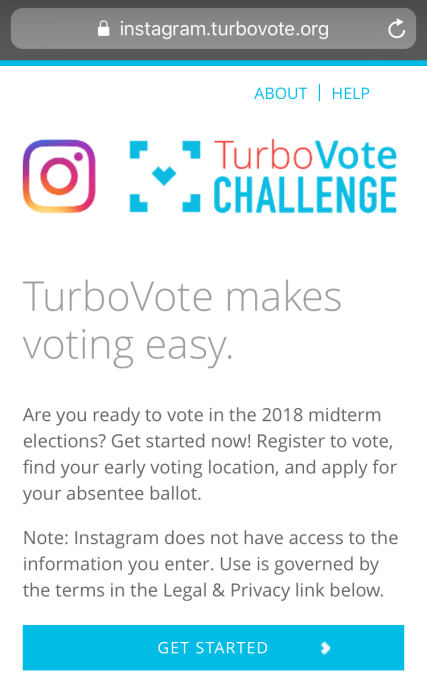
Facebook is getting ready to purposefully influence the U.S. mid-term elections after spending two years trying to safeguard against foreign interference. Instagramplans to run ads in Stories and feed powered by TurboVote that will target all US users over 18 and point them towards information on how to get properly registered and abide by voting rules. Then when election day arrives, users will be able to add an “I Voted” sticker to their photos and videos that link to voting info like which polling place to go to.
Combined, these efforts could boost voter turnout, especially amongst Instagram’s core audience of millenials. If one political party’s base skews younger, they could receive an advantage. “Ahead of National Voter Registration Day, we are helping our community register to vote and get to the polls on November 6th” Instagram writes. “From today, Instagram will connect US voters with the information they need to get registered.”
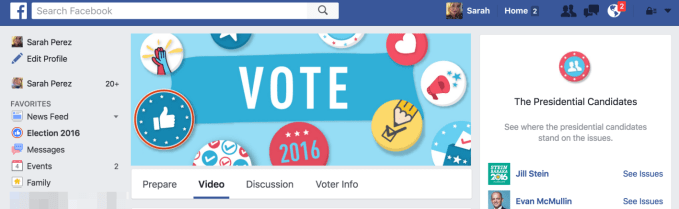
In 2010, a non-partisan “Get out the vote” message atop the Facebook News Feed was estimated to have driven 340,000 additional votes. The study by Nature suggested that “more of the 0.6% growth in turnout between 2006 and 2010 might have been caused by a single message on Facebook”. That’s significant considering the 2000 election had a margin of just 0.1 percent of voters.
You can watch Instagram’s video ads for voting below, which feature a cartoony purple Grimace character and are clearly aimed at a younger audience. They purposefully avoid any Democrat or Republican imagery, but also stick to a polished and American style that could ensure the clips aren’t mistaken for Russian propaganda.
Earlier this year, the company admitted that 120,000 Instagram posts by the Russian military intelligence group the Internet Research Agency reached 20 million Americans in an attempt to sow discord surrounding the 2016 Presidential election. They used a variety of image memes about polarizing social issues to try to divide the country. Facebook has since doubled its security staff to 20,000, required identity verification for political advertisers, and has stepped up its effort to delete scores of fake accounts associated with election interference.
The Russian disinformation attacks could still make users weary to learn about voting from social media. But more turnout means a more democratic society, so it’s easy to see the positive impact of Instagram efforts here. The question remains whether this voter drive will end up the subject of congressional scrutiny at another enevitable hearing on social media and political bias.
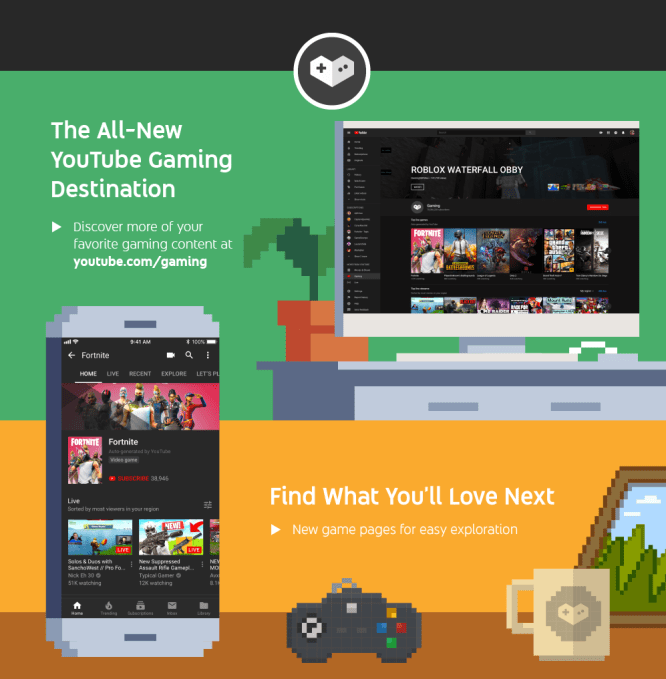
YouTube will no longer maintain a separate app targeting gaming and live game streaming, the company announced today. The YouTube Gaming app, which first arrived in 2015, will be sunset sometime next spring as its host of features make their way over to YouTube’s main site.
Over the years, the YouTube Gaming app has been a place where YouTube experimented with features catering to game creators and viewers who like to watch live and recorded esports. Here, it tested things like Game Pages to make games more discoverable, Super Chat, and Channel Memberships – features which the Amazon-owned game streaming site Twitch had also popularized among the game community.
Some of YouTube Gaming’s features became so well-received that the company brought them to YouTube. For example, this June YouTube introduced channel memberships to its main site. And before that, it had brought Super Chat – a way for creators to make money from live streams – to its broader community, as well.
But while gaming remains one of YouTube’s top verticals, no one was really using the standalone YouTube Gaming app, the company says.
“We have 200 million people that are logged in, watching gaming content every single day,” Ryan Wyatt, YouTube’s Director of Gaming Content and Partnerships, tells TechCrunch. “And the majority of them, quite frankly, are just not using the YouTube Gaming app for their gaming experiences,” he says.
However, data from Sensor Tower shows the app had over 11 million installs across iOS and Android, and those installs have remained consistent over time. That indicates a large number of people were at least willing to try the app. But the firm also found that its daily users were a “tiny fraction” of Twitch’s on iOS, which confirms Wyatt’s point about lack of usage.
Instead, gamers are logging into YouTube to watch gaming, Wyatt explains.
They watch a lot of gaming, too – over the last twelve months, fans streamed more than 50 billion hours of gaming content, and YouTube has over 500,000 quarterly active live gaming streamers.
In other words, YouTube’s decision to sunset the standalone app should not be seen as an admission that it’s ceding this space to Twitch – rather, that it’s now deciding to use the power of YouTube’s flagship app to better compete.
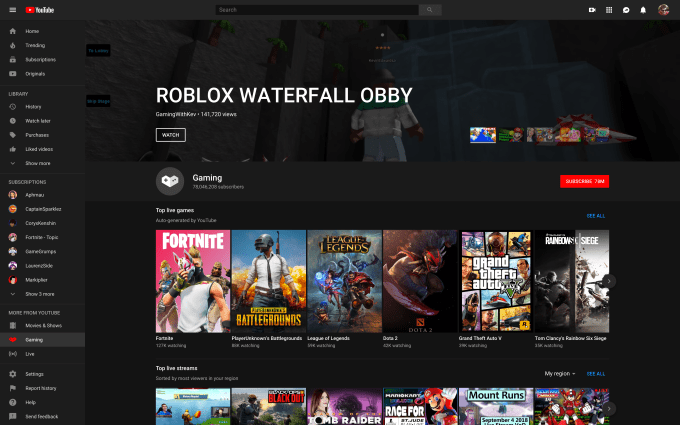
On that front, the company is today launching a new YouTube Gaming destination at youtube.com/gaming. The destination is first available in the U.S., and will roll out globally in the months ahead.
A link to the new vertical will appear in the left-side navigation bar, where you find other top-level sections like Trending and Subscriptions.
The Gaming destination will feature personalized content at the top of the page, based on what you like to watch, along with top live games, the latest gaming videos from your subscriptions, and dedicated shelves for live streams and trending videos.
Another feature, “gaming creator on the rise,” will highlight up-and-coming gaming creators who are still trying to build an audience. That’s something that many say is still an issue on Amazon-owned Twitch – often, their early days are spent streaming to no one. They soon find that they need the blessing of an existing influencer to bring more viewers to their channel.
Wyatt points out, too, that YouTube Gaming won’t be all about live streams.
“The other thing that we learned through this process was that the gaming app, and the narrative around it, was very heavily live-focused. Everybody always talked about all the live streaming and live gaming,” he says. “But what that did was underserve the vast gaming
business. So by moving it over to YouTube main, you have this beautiful combination of both the living gaming streams that are continuing to grow massively on YouTube, as well as all the other VOD content on the platform.”
There are several things that YouTube’s new Gaming destination still lacks, however. Most notably, the ability to live stream gameplay right from your phone.
That’s why the YouTube Gaming app won’t immediately disappear. Instead, it will stick around until March or maybe even April 2019, while YouTube works on porting the experience over to its main site and app.
“We’re still working through that,” Wyatt admits, when asked how the live streaming component will come to YouTube proper. “We haven’t made a decision on if [live game streaming] will be in there by March, but we do need to have a solution for easy mobile capture from the phone,” he says.
The YouTube Gaming app was never a global release, as it was only live in select markets, we should note. YouTube’s Gaming vertical will eventually be launched worldwide. That could make it more of a challenge to Twitch, as it taps into the eyeballs of YouTube’s 1.8 billion users, while also expanding to take advantage of other new YouTube features like Premieres or Merchandise.
“It’s a great opportunity to use those features,” Wyatt notes, regarding the shift from YouTube Gaming to YouTube proper. “And we’re going to keep creating more features that will that will really lend themselves to live, but ultimately we’ll be thinking about really unique ways to apply them to VOD as well,” he says.
Facebook is getting ready to purposefully influence the U.S. mid-term elections after spending two years trying to safeguard against foreign interference. Instagramplans to run ads in Stories and feed powered by TurboVote that will target all US users over 18 and point them towards information on how to get properly registered and abide by voting rules. Then when election day arrives, users will be able to add an “I Voted” sticker to their photos and videos that link to voting info like which polling place to go to.
Combined, these efforts could boost voter turnout, especially amongst Instagram’s core audience of millenials. If one political party’s base skews younger, they could receive an advantage. “Ahead of National Voter Registration Day, we are helping our community register to vote and get to the polls on November 6th” Instagram writes. “From today, Instagram will connect US voters with the information they need to get registered.”
In 2010, a non-partisan “Get out the vote” message atop the Facebook News Feed was estimated to have driven 340,000 additional votes. The study by Nature suggested that “more of the 0.6% growth in turnout between 2006 and 2010 might have been caused by a single message on Facebook”. That’s significant considering the 2000 election had a margin of just 0.1 percent of voters.
You can watch Instagram’s video ads for voting below, which feature a cartoony purple Grimace character and are clearly aimed at a younger audience. They purposefully avoid any Democrat or Republican imagery, but also stick to a polished and American style that could ensure the clips aren’t mistaken for Russian propaganda.
Earlier this year, the company admitted that 120,000 Instagram posts by the Russian military intelligence group the Internet Research Agency reached 20 million Americans in an attempt to sow discord surrounding the 2016 Presidential election. They used a variety of image memes about polarizing social issues to try to divide the country. Facebook has since doubled its security staff to 20,000, required identity verification for political advertisers, and has stepped up its effort to delete scores of fake accounts associated with election interference.
The Russian disinformation attacks could still make users weary to learn about voting from social media. But more turnout means a more democratic society, so it’s easy to see the positive impact of Instagram efforts here. The question remains whether this voter drive will end up the subject of congressional scrutiny at another enevitable hearing on social media and political bias.
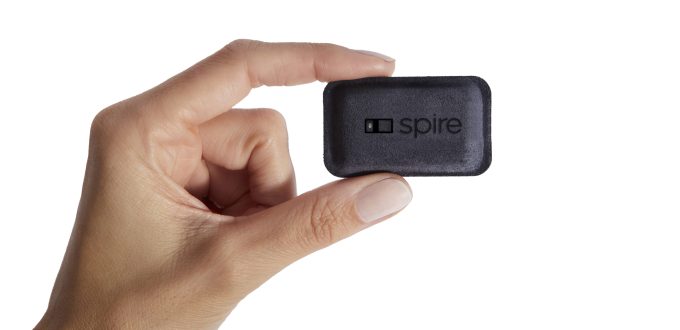
Spire’s Health Tags, the dark and tiny devices you stick on your clothes to gather all sorts of health data from your steps, heartbeat and stress levels is now available at your local Apple Store.
The company started out with a breath tracking device to detect when you are feeling tense and help calm you down. But four years in and its now all about the wearable “tags” you stick on items of clothing like your pants or sports bra.
Yes, yes, there are lots of gadgets out there to gather similar information — the Apple Watch will now even detect if you have a fall or something is wrong with your heart — but the Spire health tag is nothing like a Fitbit or Apple Watch, according to the company. For one, there’s zero need to charge the device. One tag’s battery will last a year and a half before dying out. They’re also machine washable. You just pick a few outfits and stick a tag on each of them.
Of course a few other startups out there are working on making smart, washable, data-gathering clothes. Enflux makes the clothing and then sews in the motion sensor to tell you if you are lifting correctly. Vitali is a “smart” bra with a built-in sensor to detect stress. Then there’s OmSignal, which makes body-hugging workout clothes that gather “medical-grade biometric data to achieve optimal health.” But these tiny health tags are different in that they allow you to choose the clothes you want to adhere the monitor to.
Like Spire’s first product, the Stone, which earned more than $8 million in sales, according to the company, the tags will also pick up on times of stress and help calm you down through a series of breaths and focus on the app.
“Continuous health data will revolutionize health and wellness globally, but early incarnations have been hampered by poor user experiences and a focus on the hardware over the outcomes that the hardware can create,” Spire’s founder Jonathan Palley said. “By making the device ‘disappear’, we believe Health Tag is the first product to unlock the potential.”
Spire’s Health Tags will be sold in Apple Stores as a three-pack for $130, six-pack for $230 and an eight-pack for $300, with additional pack sizes available on the company’s website.
Facebook’s ad platform is facing charges that it has enabled gender-based discrimination against millions of women in a class action suit filed on behalf of three female workers and backed by the American Civil Liberties Union (ACLU).
The legal action also names ten employers who are alleged to have used the social media giant’s platform to exclusively and unlawfully target job adverts at male Facebook users, thereby excluding women and non-binary users from receiving the ads.
The ACLU, law firm Outten & Golden LLP, and the Communications Workers of America have filed charges with the Equal Employment Opportunity Commission.
BREAKING: We've filed charges against @Facebook and 10 employers for using the platform to target their job ads — for positions in male-dominated fields — only to younger men.
Facebook is violating federal civil rights law. Period.
The ten employers and employment agency advertisers named in the suit, which the charges allege ran discriminatory jobs in “mostly” male-dominated fields, include a police department, multiple retailers, a software development firm and various installation, repair and remodelling companies. (All ten named in the suit are listed in the ACLU’s press release.)
“I’ve heard stories about when people looked for jobs in the classified ads and big bold letters read ‘help wanted-male’ or ‘help wanted-female.’ I was shocked to find that this discrimination is still happening, just online instead of in newspapers,” said Bobbi Spees, a job-seeker and lead complainant in the case, commenting in a statement. “I shouldn’t be shut out of the chance to hear about a job opportunity just because I am a woman.”
“The internet did not erase our civil rights laws. It violates the law if an employer uses Facebook to deny job ads to women,” added Peter Romer-Friedman, an attorney at Outten & Golden, in another supporting statement. “The last time I checked, you don’t have to be a man to be a truck driver or a police officer. But Facebook and employers are acting like it’s the 1950s, before federal employment law banned sex discrimination.”
The charges allege that Facebook, via its platform, delivers job ads selectively based on age and sex categories that employers expressly choose, and that it earns revenue from placing job ads that exclude women and older workers from receiving the ads.
The ACLU notes that targeting job ads by sex is unlawful under federal, state, and local civil rights laws, including Title VII of the Civil Rights Act of 1964.
“Sex segregated job advertising has historically been used to shut women out of well-paying jobs and economic opportunities,” said Galen Sherwin, senior staff attorney at the ACLU Women’s Rights Project, in another supporting statement. “We can’t let gender-based ad targeting online give new life to a form of discrimination that should have been eradicated long ago.”
While online platforms are not as heavily regulated as publishing platforms the lawsuit argues that Facebook can be held legally responsible for:
creating and operating the system that allows and encourages employers to select the gender and age of the people who get their job ads, including providing employers with data on users’ gender and age for targeting purposes;
delivering the gender- and age-based ads based on employers’ preferences; and
acting as a recruiter connecting employers with prospective employees
We’ve reached out to Facebook for comment on the lawsuit.
It’s by no means the first time the company has faced civil rights complaints related to its ad platform.
Back in 2016 ProPublica exposed how Facebook’s ad tools could be used to exclude users based on their “ethnic affinity” — including in protected categories such as housing, employment and credit opportunities which prohibit discriminatory advertising.
The company responded by saying it would build tools to prevent advertisers from applying ethnic affinity targeting in the protected categories. And also by rewording its ad policies to more clearly prohibit discrimination.
But the following year another ProPublica investigation showed it was still failing to block discriminatory ads — leaving Facebook to apologize for failing to effectively enforce its own policies (hmmm, now where else have we heard the company accused of that… ), and saying: “Our systems continue to improve but we can do better.”
Around about the same time that Facebook was facing renewed criticism over ethnic affinity targeting on its platform being used as a tool for racial discrimination, the company said it would also take a look at how advertisers are using exclusion targeting across other “sensitive segments” — such as those relating to members of the LGBTQ community and people with disabilities.
It’s not clear whether Facebook included gender-based discrimination in those 2017 self reviews too. (We’ve asked and will update this post with any response.)
Either way, it appears Facebook has failed to pick up on the potential for gender-based discrimination to be carried out via its ad platform.
And given all the attention its ad tools have attracted lately as a vector for discrimination and other types of abuse that looks careless to say the least.
Facebook’s ad platform has faced additional criticism in Europe for sensitive inferences it makes about users — given the platform allows advertisers to target people based on political and religious interests, meaning Facebook’s platform is quietly making sensitive inferences about individuals.
Privacy experts argue this modus operandi entails Facebook processing the sensitive personal data of individuals without explicitly asking people for their upfront consent (as would be required under EU law when you’re processing sensitive personal data such as political or religious affiliation).
An opinion on a person is still personal data of that person, they contend.
Facebook disagrees, disputing that the inferences its ad platform makes about users (based off of its tracking and data-mining of people) constitutes personal data. But it’s yet another bone of legal contention now being lobbed at the company.
It seems the lesson Netflix teaches us is: don’t grow too attached to anything. To make space for new productions, the streaming service has become notorious for axing some of its best series.
So, should you invest your time in any of these cancelled Netflix Originals? We’ve scoured the yard and found shows that are still worth watching even though no more episodes are being made.
Looking for a good scare? Then enter the spooky town of Hemlock Grove, Pennsylvania.
Two teenage girls have been murdered. But this isn’t one of those typical crime dramas. The suspect is a boy who might just be a werewolf. With the assistance of a member of the town’s richest family, the lycanthrope must find the secrets at the heart of Hemlock Grove.
Running for three seasons between 2013 and 2015, the show received mixed reviews, but gained a dedicated fanbase similar to that of Twin Peaks. Famke Janssen (The Blacklist), Bill Skarsgård (Deadpool 2), and Dougray Scott (Mission: Impossible 2) head an impressive cast.
Sadly, this drama only lasted one season. Fortunately, that seems to have been the plan all along, meaning its 11 episodes gives you the complete story.
The Get Down is a nostalgia fix for those wanting to remember the birth of hip-hop and disco music; specifically, this is seen through the eyes of a group of teenagers in the Bronx, New York City. A time-jump splits the season in two, with the second half catching up with the teens a year after Episode Six.
Baz Luhrmann co-created the series, so fans of Moulin Rouge! and The Great Gatsby will know what they’re getting into. Expect stunning cinematography, melodramatic romance, and a great score. Luhrmann planned the story for some 10 years, so this really is a labor of love.
Here’s another done-in-one-season narrative, albeit more hard-hitting. Seven Seconds is a real tour-de-force.
Peter Jablonkski (Beau Knapp), a white police officer, accidentally hits Brenton Butler (Daykwon Gaines), a 15-year-old African American, with his car. But when his colleagues arrive at the scene, they assume this is racially-motivated and initiate a cover-up.
Seven Seconds isn’t based on a real-life incident, but creator, Veena Sud was inspired by current events. This includes the tale of the real Brenton Butler, who was arrested for a murder he didn’t commit and whose confession was reportedly a result of physical abuse.
There was massive uproar when Netflix axed this science fiction series—so much so that a Sense8 finale was commissioned to appease fans and bring the narrative to a proper conclusion.
Sense8 examines a sudden psychic and emotional link between eight strangers across the world.
The show is created by sci-fi heavy-hitters, Lana and Lilly Wachowski (The Matrix; Cloud Atlas), and J. Michael Straczynski (Babylon 5; The Amazing Spider-Man comic). Like all the best sci-fi, the series uses its simple premise to look at global issues: politics, religion, and love. As such, it was praised for its representation of LGBTQ relationships in particular.
When it comes to Netflix’s historical dramas, The Crown is the jewel in the… well, you get the idea. Nonetheless, the streaming service provides further adventure for anyone who thinks the past is a world worth exploring.
Netflix lavished a lot of cash on Marco Polo, yet it only lasted two seasons before the axe fell. Perhaps its slow pace put some viewers off. Still, it built a cult following and explores an era often overlooked.
You’ll know the titular hero’s journey on the Silk Road; this series looks at his time at the court of Kublai Khan (played superbly by Doctor Strange’s Benedict Wong).
Looking for a good laugh? The critically-acclaimed Unbreakable Kimmy Schmidt is arguably Netflix’s highest-profile comedy—yet its premise is remarkably grim.
Ellie Kemper stars as Schmidt, a 29-year-old who must readjust to life after being held captive for 15 years by cultist, Reverend Richard Wayne Gary Wayne (Jon Hamm). Despite this, her cheery personality coupled with the show’s quick wit makes for a joyful experience.
We go from a headline-grabbing comedy to a show that’s largely remained under the radar. Everything Sucks! didn’t gain a mass following, but its charm will certainly entice anyone who grew up in the 1990s.
This coming-of-age story doesn’t boast the most original concept. A group of teenagers attending the Boring High School (a fictional institution, located in the real-life town of Boring, Oregon) make a movie about their lives. Complications ensue.
Nevertheless, a likeable cast make this easy watching, and you’ll soon be gripped by their puppy-love antics.
As with Unbreakable Kimmy Schmidt, the basis of Lady Dynamite is serious. Based on the life of Maria Bamford, who plays a fictionalized version of herself, the series finds the comedian-turned-actor rebuilding her life after suffering from bipolar disorder.
Instead, the situation is mined for comedy value in a similar way to the best British comedies. This results in a feel-good surreal show that remains a solid catalyst for mental health discussions.
It came as quite a shock when Netflix cancelled Lady Dynamite after just two seasons. Then again, it’s always best to leave people wanting more.
This isn’t a conventional Netflix Original. In fact, it began on AMC, but suffered two cancellations under the network.
It does, however, demonstrate Netflix’s appreciation of its audience, because the company picked up The Killing for a final fourth season to finish the story properly.
The gritty crime drama is based on the Danish series, but relocates the action to Seattle. Here, the body of a girl is found in a car registered to the campaign committee for mayoral candidate, Darren Richmond (Billy Campbell).
Once more, this isn’t your typical Netflix Original. It’s a great fusion between a crime drama and a black comedy. Lilyhammer premiered on the Norwegian Broadcasting Corporation’s main station, NRK1. Its first episode was watched by a fifth of the country’s population, and was swiftly added to Netflix, giving audiences in North America exclusive access to the show.
Lilyhammer is essential viewing for anyone pining for The Sopranos.
Steven Van Zandt is Frank Tagliano, an American Mafia boss who testifies against his peers and is subsequently relocated to Lillehammer, Norway. Across three seasons, his past transgressions catch up with him and his relationships unravel—all in a gloriously deadpan fashion!
Delve Into Netflix’s Back Catalog
You might be aghast at how many series are axed by Netflix, especially when they show so much potential for more.
Are you looking for responsive, beautiful and professional looking HTML templates for your next website but don’t have the budget? Well, here are a couple of free resources on the Internet where you can regularly find good templates for use in your web projects without restrictions.
Dribble is a popular community of designers for them to showcase their work online. In addition to posting screenshots of their work, designers also upload the HTML / CSS version of their projects for anyone to use. You should bookmark the freebie and the freebies tag on Dribble to never miss these projects.
Creative Market is a marketplace for website templates, themes, fonts and other design assets. It is a paid store but if you join their email newsletter, they’ll send you free design stuff every week in your inbox that can be downloaded directly to your Dropbox. And they are mostly good.
HTML5 UP is created by the same developer that built Carrd, one of the most useful websites on the Internet. HTML5 UP is a treasure house of beautiful templates built sans the heavy Bootstrap or Material framework. All web templates are available in the Creative Commons license so can you can use them in any way with attribution.
Envato’s Themes Forest is a premium marketplace for website templates but if create a free account with them, you get to download all the freebies that are published on their homepage every few weeks. These are paid items that the authors have made free only during the duration of the promotion to gain visibility in the marketplace.
OnePageLove is a curated directory of single page websites and they have a dedicated section for HTML templates that are free to download.
UpLabs is another online marketplace and community where creative designers share their work. The “web” section offers a variety of HTML templates that are free for both personal and commercial use.
Manoela Ilic’s Codrops houses the most creative collection of work for web designers as well as developers. Every single project on this site, be it an image slider or a checkout page, is unlike anything you’ve seen before and the source code is up for grabs on Github.
Freebiesbug, as the name suggests, curates web freebies including fonts, PSD designs, stock photos and, of course, HTML templates. Look for the “exclusive” tag and you’ll discover HTML/CSS templates that the designers have chosen to share exclusively on this website.
And the final resource in my list that is worth adding to your bookmarks is Codepen. Chris Coyier started Codepen as a playground for writing HTML, CSS and JavaScript in the web browser but the project has evolved into a huge community of front-end developers that are putting the code in public which are free to fork and download.
PS: If you are aware of any good resource for free web templates that we missed in the above list, please let me know at amit@labnol.org – thanks!
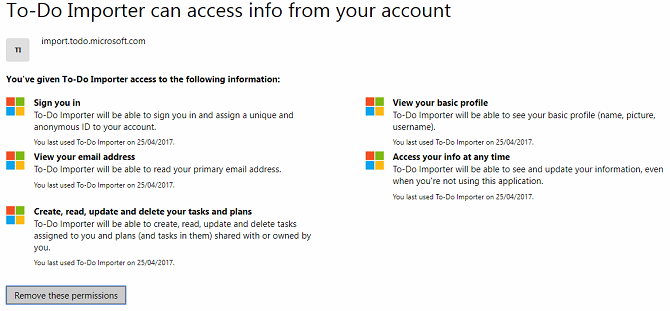
Sometimes, the apps and services will integrate with your account in some way. For example, you can connect your Google and Microsoft accounts so you can sync your emails and calendars between the two services.
However, if you’ve been using your Microsoft credentials as a way to access third-party services for a few years, you probably have a long list of connected apps that you no longer use.
From a security standpoint, that’s not a great situation. Often, you’ll have granted those apps various reading and editing capabilities. If an old app changes hands, the new owner could use those access rights in nefarious ways.
To remedy the situation, you need to do a bit of housekeeping: revoke the third-party access of apps you no longer use.
How to Revoke Access to Your Microsoft Account
To revoke an app’s third-party access to your Microsoft Account:

 In 2010, a non-partisan “Get out the vote” message atop the Facebook News Feed was estimated to have driven 340,000 additional votes.