10 April 2018

Google Home and Google Home Mini smart speakers go on sale in India


Google’s two smart speaker products — the Google Home and Google Home Mini — and its Pixel 2 and Pixel 2 XL smartphones are now available in India following a launch event in the country.

The devices are priced at Rs 9,999 ($154), and Rs 4,499 ($69), respectively, and Google confirmed that they are available for purchase online via Flipkart and offline through over 750 retailer stores, including Reliance Digital, Croma and Bajaj Electronics.

The Google smart speakers don’t cater to India’s multitude of local languages at this point, but the U.S. company said that they do understand “distinctly” India voices and “will respond to you with uniquely Indian contexts,” such as answering questions about local sport, cooking or TV shows.

For a limited time, Google is incentivizing early customers who will get six months of Google Play Music alongside offers for local streaming services Saavn and Gaana when they buy the Home or Home Mini.

Google Home and Home Mini were first announced at Google I/O in 2016. The company said recently that it has sold “tens of millions” of speakers, with more than seven million sales between October 2017 and January 18.

Still, it’s been a long time coming to India, which has allowed others to get into the market first. Amazon, which is pouring considerable resources into its India-based business to battle Flipkart, brought its rival Echo smart devices to India last October.


Read Full Article

Tribe combines arcade games with group video chat


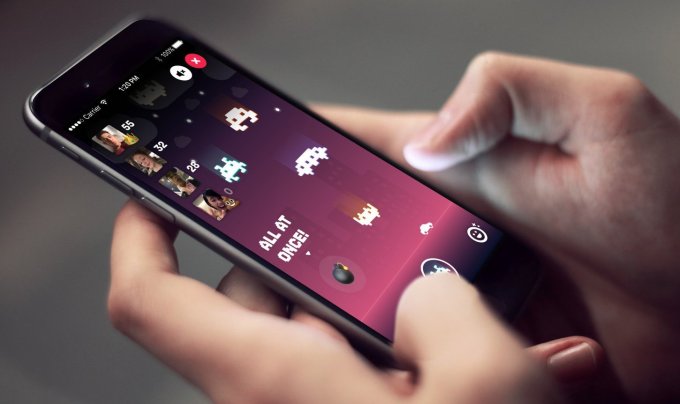
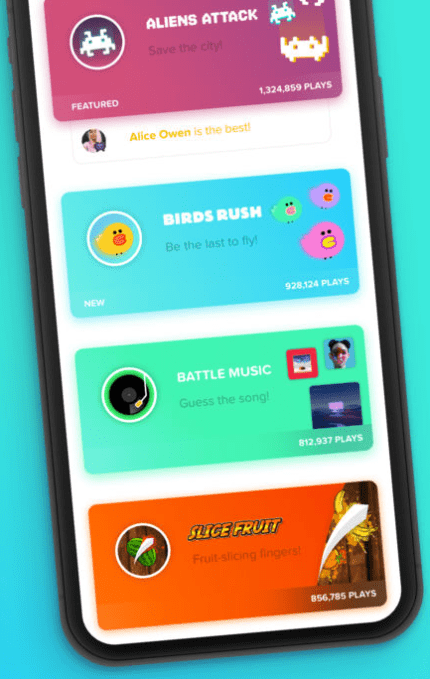
Sick of chatting but want to stay connected? Tribe‘s app lets you play clones of Space Invaders, Flappy Bird, Fruit Ninja, Name That Tune and more while video chatting with up to 7 friends or strangers. Originally a video messaging app, Tribe failed to gain traction in the face of Snapchat and Facebook Messenger. But thanks to a $3 million funding round led by Kleiner Perkins in June, Tribe had the runway to pivot into video chat gaming that could prove popular, even if not in its app.

“As we all know, Messaging is a super crowded area” says Tribe co-founder Cyril Paglino. “If you look closely, very few communication products have been blowing up in the past three years.” Now, he says “we’re building a ‘Social Game Boy.'”

A former breakdancer, Paglino formed his team in France before renting a “hacker house” and moving to San Francisco. They saw traction in late 2016, hitting 500,000 downloads. Tribe’s most innovative feature was speech recognition that could turn a mention of “coffee” into a pre-made calendar request, a celebrity’s name into a link to their social media accounts, locations into maps, and even offer Spotify links to songs playing in the background.

The promise of being the next hit teen app secured Tribe a $500,000 pre-seed from Kima and Ludlow Ventures in 2015, a $2.5 million seed in 2016 led by prestigious fund Sequoia Capital, and then the June 2017 $3 million bridge from KPCB and others. But that $6 million couldn’t change the fact that people didn’t want to sign up for a new chat app when their friends were already established on others.

Luckily, Tribe saw a new trend emerging. Between HQ Trivia’s rise, the Apple App Store adding a Gaming tab, celebrities like Drake streaming their gameplay, and Snapchat acquiring 3D gaming engine PlayCanvas, the Tribe team believed there was demand for a new way to play.

Tribe’s rebuilt iOS and Android apps let you rally a crew of friends or join in with strangers to play one of its old school games. You’ll hear their voices and see their faces in the corner of the screen as everyone in your squad vies for first place. It’s like Houseparty’s group video chat, but with something to do. Facebook Messenger has its own gaming platform, but the games are largely asynchronous. That means you play separately and merely compare scores. That’s a lot less fun than laughing it up together as one of your buddies runs their race car off the road or gets attacked by an alien.

The only problem is that since your friends probably aren’t on Tribe already, the app is vulnerable to cloning by its bigger competitors. Paglino cited technical challenges his team has overcome, its young demographic, and lessons learned from 18 months of iterations as what could keep Tribe from being easily co-opted. But as even public companies like Snapchat have learned, it can be tough to stay ahead of tech giants like Facebook with huge development teams, plenty of cash, and apps that are already popular.
Tribe’s games are legitimately fun, and the video chat makes them feel a lot more like hanging out with friends and less like a waste of time. Even if Tribe isn’t the one to make mobile group video chat gaming ubiquitous, it could see its idea entertain millions…just in someone else’s app.

Read Full Article

First look at Instagram Nametags, its clone of Snapchat QR codes


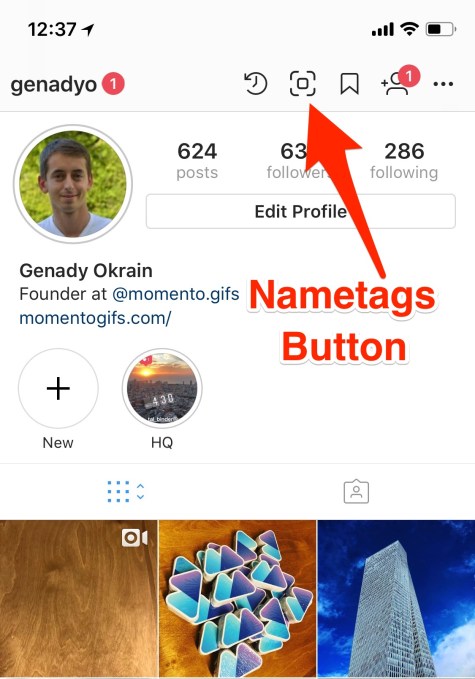
Instagram is preparing to launch a feature called Nametags that lets you create a special image that people can scan with the Instagram Stories camera to follow you. TechCrunch broke the news of Nametags code in Instagram’s Android APK last month. But now thanks to reader Genady Okrain we have screenshots and more details of the Instagram Nametags feature.

Nametags could make it easier for people to visually promote their Instagram account. It could make it simple to follow a friend you just met by having them open their Nametag and then you scanning it. Meanwhile, businesses and social media stars could post their Nametag across other social media handles, print it onto posters or handbills or even make merchandise out of it.

We’ve asked for comment from Instagram and will update here if we hear back. Instagram’s been spotted doing a flurry of feature development lately. TechCrunch has reported that code for an Instagram Video Calling feature was found in its Android APK. Meanwhile, it’s testing a Portrait mode feature called Focus.

Once users have access, they’ll be able to hit a QR scanner button on their profile to bring up the Nametag editor. They can then choose from a purple Instagram color gradient background, a pattern of one emoji they choose or a selfie they can jazz up with augmented reality face filters that then becomes an emoji pattern. The user’s Instagram username appears in the center. For now, users in the test group can’t share or scan Nametags. But the code we discovered explains that users can scan them to follow people.

Snapchat in January 2015 launched its own Snapcodes that work similarly, meaning Instagram took its time copying this feature. But with social media stars and businesses banished to Snapchat’s Discover channel, those accounts might be looking to prioritize promoting their Instagram accounts. If creators find it easier to build an audience on Instagram and get more engagement there, they could give the Facebook-owned app their first-run content. The eventual launch of Nametags could give them one more reason to use Snapchat copycat Instagram Stories instead of the original.

For more on upcoming Instagram features, check out our other stories on Focus and Video Calling


Read Full Article

First look at Instagram Nametags, its clone of Snapchat QR codes


Instagram is preparing to launch a feature called Nametags that lets you create a special image that people can scan with the Instagram Stories camera to follow you. TechCrunch broke the news of Nametags code in Instagram’s Android APK last month. But now thanks to reader Genady Okrain we have screenshots and more details of the Instagram Nametags feature.

Nametags could make it easier for people to visually promote their Instagram account. It could make it simple to follow a friend you just met by having them open their Nametag and then you scanning it. Meanwhile, businesses and social media stars could post their Nametag across other social media handles, print it onto posters or handbills or even make merchandise out of it.

We’ve asked for comment from Instagram and will update here if we hear back. Instagram’s been spotted doing a flurry of feature development lately. TechCrunch has reported that code for an Instagram Video Calling feature was found in its Android APK. Meanwhile, it’s testing a Portrait mode feature called Focus.

Once users have access, they’ll be able to hit a QR scanner button on their profile to bring up the Nametag editor. They can then choose from a purple Instagram color gradient background, a pattern of one emoji they choose or a selfie they can jazz up with augmented reality face filters that then becomes an emoji pattern. The user’s Instagram username appears in the center. For now, users in the test group can’t share or scan Nametags. But the code we discovered explains that users can scan them to follow people.

Snapchat in January 2015 launched its own Snapcodes that work similarly, meaning Instagram took its time copying this feature. But with social media stars and businesses banished to Snapchat’s Discover channel, those accounts might be looking to prioritize promoting their Instagram accounts. If creators find it easier to build an audience on Instagram and get more engagement there, they could give the Facebook-owned app their first-run content. The eventual launch of Nametags could give them one more reason to use Snapchat copycat Instagram Stories instead of the original.

For more on upcoming Instagram features, check out our other stories on Focus and Video Calling


Read Full Article

Conserve the Sound is an archive of noises from old tape players, projectors, and other dying tech


All of us grew up around tech different from what we have today, and many of us look back on those devices with fondness. But can you recall the exact sound your first Casio keyboard made, or the cadence of a rotary phone’s clicks? Conserve the Sound aims to, well, conserve the sound of gadgets like these so that future generations will know what it sounded like to put a cartridge in the NES.

It’s actually quite an old project at this point, having been funded first in 2013, but its collection has grown to a considerable size. The money came from German art institution Film & Medienstiftung NRW; the site was created (and is maintained) by creative house Chunderksen.

The whole thing is suitably minimal, much like an actual museum: you find objects either by browsing randomly or by finding a corresponding tag, and are presented with some straightforward imagery and a player loaded with the carefully captured sound of the device being operated.

Though the items themselves are banal, listening to these sounds of a bygone age is strangely addictive. They trigger memories or curiosity — was my Nintendo that squeaky? Didn’t my rotary phone click more? What kind was it anyway? I wonder if they have my old boombox… oh! A Viewmaster!

The collection has grown over the years and continues to grow; it now includes interviews with experts in various subjects on the importance of saving these sounds. You can even submit your own, if you like. “We welcome suggestions in general, sound suggestions, stories, anecdotes and of course collaborations,” write the creators.

I for one would love to revisit all the different modems and sounds I grew up using. 2400, 9600, 14.4, 28.8, all the way up to 56.6. Not exactly pleasant noises, admittedly, but I anticipate they will bring back a flood of memories, Proust-style, of BBSes, hours-long download times, and pirated screen savers.


Read Full Article

Congress should demand Zuckerberg move to “one share, one vote”


Mark Zuckerberg is an autocrat, and not hypothetically. Through his special voting rights held in FB’s Class B shares, he wields absolute command of the company, while owning just a handful of percentage points of the company’s equity.

Like any autocrat, he has taken extraordinary measures to maintain control over his realm. He produced a plan exactly two years ago that would have zeroed out the voting rights for everyday shareholders with a new voteless Class C share, only to pull back at the last minute as a Delaware court case was set to begin. He has received the irrevocable proxies of many Facebook insiders, allowing him to control their votes indefinitely. Plus, any Class B shares that are sold are converted to Class A shares, allowing him to continue to consolidate power as people leave.

And now, borrowing a page straight out of George Orwell’s 1984, he has even tried to retract and disappear his own messages to others on his platform (which has now been retracted itself after it became public).

While Congress is right to focus on Cambridge Analytica, and electoral malfeasance, and political ads, and a whole crop of other controversies surrounding Facebook, it should instead direct its attention to the single solution that would begin to solve all of this: dissolve Facebook’s dual-class share structure and thereby democratize its ownership.

Just as congressmen are elected under the principle of “one man, one vote,” it should demand that Facebook follow the highest standards used by most other publicly-listed companies and return to “one share, one vote.”

Zuckerberg himself should certainly agree with this. After all, the original logic of creating a voteless share class was that the company’s financial performance was strong and Zuckerberg needed to be protected to continue it that way. The plan was announced the same quarter that Facebook crushed its financial results, and there was an absolutely implied connection between those results and the controlling stake held by Zuckerberg.

Yet in the two months, from its intraday peak at a share price of $195.32 on February 1, 2018 to today’s price of $160, Facebook has lost more than $100 billion in its market cap. If Congressional inquiries eventually lead to further regulation, it could further erode the value of the stock. It’s easy to argue that a chief executive should be protected when the performance of a company is rocketing up. It’s much harder when everything is crumbling and no one is being held accountable.

Shareholders may have been blinded by Facebook’s dizzying growth over the past few years, but we now know that the edifice of that growth is far more tenuous than we ever knew before. Zuckerberg’s 15-year apology tour can no longer sustain the view that corporate governance should be ignored for the good of the share price.

There’s just one problem though, and it is the problem that confronts any country with a tyrant: shareholders have no power here to affect change. They can’t change the composition of the board, they can’t change the management team. They can’t change anything at all, since one person controls the realm with an iron fist. A proposal back in 2015 to move to “one share, one vote” was struck down at Facebook’s shareholder meeting.

I am not asking for Zuckerberg to be fired, or to resign. I think people should clean up their own messes, and few people have the means to clean up Facebook right now other than him. But I do think there should be consequences, and so far, there have been exactly zero. Zuckerberg has to personally relinquish his control, and no act of mea culpa would better show that he understands the consequences of his actions.

There is a counter-argument, which is that ravenous mobs of private investors would swoop into Facebook and force the company to steal even more data from users to sell to advertisers if Zuckerberg lost control. I am wholly unconvinced though, mostly because Facebook has basically done precisely that over its entire history. Plus, any further deterioration of trust with users would strike at the heart of its financial results.

Zuckerberg says in his prepared statement that, “My top priority has always been our social mission of connecting people, building community and bringing the world closer together.” There are few things he could do to build the community around Facebook’s leadership than sharing the burdens and the responsibilities with a wider, more diverse set of people. Take a page from American history, and abolish the discrimination inherent in the dual-class share vote.


Read Full Article

HQ Trivia finally gets social with ‘Friends on HQ’ update


The popular quiz startup HQ Trivia is beginning to roll out the first of many new social features to its app focused on leveraging competition with friends and family during game time.

HQ Trivia has managed to bring people together in real life to play the game on their phones, but the startup has done surprisingly little when it comes to bringing social interactions to the app itself. Today, HQ is launching a new feature called “Friends on HQ,” which will roll out to U.K. users for today’s game, with a U.S. launch to follow “soon after,” the company says.

The feature lets users search for and connect with friends and family inside the app. Once users connect, they’ll be able to keep track of how everyone is doing and which friends of theirs are playing in any given quiz match. It’s a very easy move for HQ that adds some familial familiarity to the game’s battle royale quiz format.

Building these connections will be important to strengthening its core group of players, which has grown to the millions. HQ Trivia has begun chasing sponsorship deals with companies like Warner Bros. and Nike. As the startup looks to experiment more with monetization, having a user base that is devoted enough to deal with some of these changes will be essential.

This update is far from a one-off and seems to signify a shift for the app. According to a spokesperson, “this update forms the basis of a variety of new features that HQ will be rolling out soon, leveraging friends’ connections.”


Read Full Article

HQ Trivia finally gets social with ‘Friends on HQ’ update


The popular quiz startup HQ Trivia is beginning to roll out the first of many new social features to its app focused on leveraging competition with friends and family during game time.

HQ Trivia has managed to bring people together in real life to play the game on their phones, but the startup has done surprisingly little when it comes to bringing social interactions to the app itself. Today, HQ is launching a new feature called “Friends on HQ,” which will roll out to U.K. users for today’s game, with a U.S. launch to follow “soon after,” the company says.

The feature lets users search for and connect with friends and family inside the app. Once users connect, they’ll be able to keep track of how everyone is doing and which friends of theirs are playing in any given quiz match. It’s a very easy move for HQ that adds some familial familiarity to the game’s battle royale quiz format.

Building these connections will be important to strengthening its core group of players, which has grown to the millions. HQ Trivia has begun chasing sponsorship deals with companies like Warner Bros. and Nike. As the startup looks to experiment more with monetization, having a user base that is devoted enough to deal with some of these changes will be essential.

This update is far from a one-off and seems to signify a shift for the app. According to a spokesperson, “this update forms the basis of a variety of new features that HQ will be rolling out soon, leveraging friends’ connections.”


Read Full Article

09 April 2018

Facebook shut down Russian APT28 trolls before the 2016 U.S. election


The most interesting part of Mark Zuckerberg’s prepared testimony for congress that was released today shows that Facebook has been fighting Russian election interferences since before the 2016 U.S. presidential race. Facebook shut down accounts related to Russian GRU military intelligence-linked group APT28, also known as Fancy Bear, which had created an organization called DCLeaks run by fake personas to seed stolen information to journalists.

Wired detailed the methods of the “Advanced Persistent Threat 28” group in January 2017. APT28 uses zero-day exploits, malware-equipped spearfishing emails, publicly known but unfixed vulnerabilities in computer systems, and malicious iFrames embedded in hacked websites to steal people’s files. The group has been connecte to attacks on NATO, French television station TV5Monde, and the World Anti-Doping Agency.

The Washington Post reported in September 2017 that Facebook had detected the APT28 accounts in June 2016 and reported their activity to the FBI, but didn’t detail that Facebook had fought back directly by shutting down their accounts.

Here’s Zuckerberg’s full explanation of the situation:

“Elections have always been especially sensitive times for our security team, and the 2016 U.S. presidential election was no exception. Our security team has been aware of traditional Russian cyber threats — like hacking and malware — for years. Leading up to Election Day in November 2016, we detected and dealt with several threats with ties to Russia. This included activity by a group called APT28, that the U.S. government has publicly linked to Russian military intelligence services. But while our primary focus was on traditional threats, we also saw some new behavior in the summer of 2016 when APT28-related accounts, under the banner of DC Leaks, created fake personas that were used to seed stolen information to journalists. We shut these accounts down for violating our policies.”

The Post reported that APT28 were known for stealing data and military plans from political targets, leading Facebook’s security team to assume it was planning traiditional espionage rather than a more public-facing disinformation campaign to skew the election. But they did share their findings with the FBI. Later when Facebook discovered APT28 had created the the Guccifer 2.0 hacker persona and DCLeaks Facebook to deliver stolen emails and documents to journalists, Facebook contacted the FBI again.

Now Zuckerberg’s testimony indicates Facebook didn’t just hand off responsibility to the FBI, but worked to combat the trolls on its own.

This information could give Facebook and Zuckerberg a better defense as he’s questioned by the U.S. Senate Judiciary and Commerce committees Tuesday, then the U.S. House Energy and Commerce Committee on Wednesday. If Facebook can demonstrate that it wasn’t completely asleep at the wheel regarding election interference, it could get softer treatment than if Congress thinks it was caught completely off-guard.

You can see Zuckerberg’s full prepared testimony below:

Zuckerberg Statement to Congress by Jordan Crook on Scribd


Read Full Article

This is Mark Zuckerberg’s prepared statement for Congress


Ahead of Mark Zuckerberg’s testimony before Congress on Wednesday, the House Energy and Commerce Committee has released the Facebook CEO’s prepared statement.

In it, Zuckerberg explains that Facebook has always been an optimistic organization, focusing on connecting people and giving them a voice. But Zuckerberg also admits that the idealist train of thought might have blinded the company to potential misuses of Facebook’s toolset.

But it’s clear now that we didn’t do enough to prevent these tools from being used for harm as well. That goes for fake news, foreign interference in elections, and hate speech, as well as developers and data privacy. We didn’t take a broad enough view of our responsibility, and that was a big mistake. It was my mistake, and I’m sorry. I started Facebook, I run it, and I’m responsible for what happens here.

The statement also goes over both the Cambridge Analytica scandal and Russian election interference, thoroughly explaining what happened in each situation and what Facebook is doing to solve these problems.

Zuckerberg is set to testify before the Senate tomorrow and before Congress on Wednesday. We’ll be covering both hearings.

You can read the full statement embedded below.


Read Full Article

Facebook will tell you today if Cambridge Analytica had access to your data


Last week, Facebook revealed that 87 million or so users potentially had their data improperly shared with Cambridge Analytica — and you’ve no doubt been wondering if yours is among them. Today the site will share that information with users.

The disclosure arrives by way of a new “protecting your information” link set to appear at the top users’ feeds. The landing page lets users manage the third-party apps using the site to log-in and lets them know whether that information has been improperly shared with Cambridge Analytica

“We have banned the website ‘This Is Your Digital Life,’ which one of your friends used Facebook to log into,” the note is set to read. “We did this because the website may have misused some of your Facebook information by sharing it with a company called Cambridge Analytica.”

The news was announced last week, as part of a larger data privacy push for the site, which has scrambled to rehabilitate its image in the wake of political upheaval tied to information sharing. The slate of announcements also included new restrictions to Events, Groups and Pages APIs, along with Facebook log in, among others.

Earlier today, the site announced that it is working with nonprofits to improve the study of the ways in which its data is being used to impact elections.


Read Full Article

Google launches an improved speech-to-text service for developers


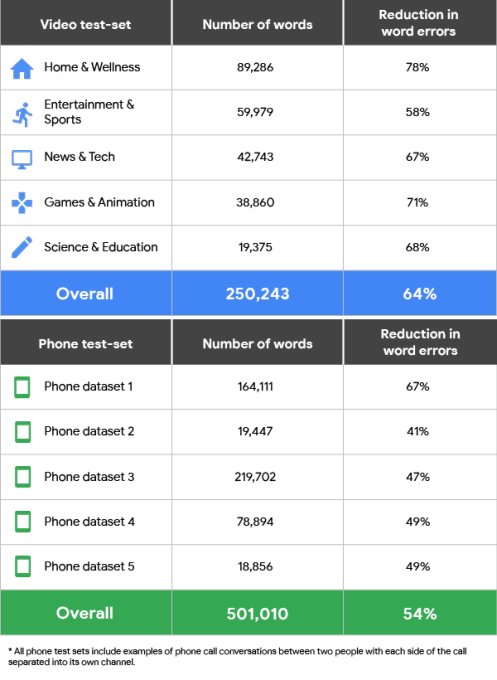
Only a few weeks after launching a major overhaul of its Cloud Text-to-Speech API, Google today also announced an update to that service’s Speech-to-Text voice recognition service. The new and improved Cloud Speech-to-Text API promises significantly improved voice recognition performance. The new API promises a reduction in word errors around 54 percent across all of Google’s tests, but in some areas the results are actually far better than that.

Part of this improvement is a major new feature in the Speech-to-Text API that now allows developers to select between different machine learning models based on this use case. The new API currently offers four of these models. There is one for short queries and voice commands, for example, as well as one for understanding audio from phone calls and another one for handling audio from videos. The fourth model is the new default, which Google recommends for all other scenarios.

In addition to these new speech recognition models, Google is also updating the service with a new punctuation model. As the Google team admits, its transcriptions have long suffered from rather unorthodox punctuation. Punctuating transcribed speech is notoriously hard though (just ask anybody who has ever tried to transcribe a speech by the current U.S. president…). Google promises that its new model results in far more readable transcriptions that feature fewer run-on sentences and more commas, periods and question marks.

With this update, Google now also lets developers tag their transcribed audio or video with some basic metadata. There is no immediate benefit to the developer here, but Google says that it will use the aggregate information from all of its users to decide on which new features to prioritize next.

Google is making a small change to how it charges for this service. Like before, audio transcripts cost $0.006 per 15 seconds. The video model will cost twice as much, though, at $0.012 per 15 seconds, though until May 31, using this new model will also cost $0.006 per 15 seconds.


Read Full Article

Facebook teams with nonprofits to launch election research commission


Facebook’s post-Cambridge Analytica apology tour continues this morning with the announcement of an initiative aimed at helping social science researchers gauge the site’s impact on key political events.

In a post issued this morning, the company’s Vice President of Communications and Public Policy Director of Research outlined the plan and hammered home its focus on impartial data collection. “Facebook will not have any right to review or approve their research findings prior to publication,” the pair writes.

The initiative is backed by a who’s who of nonprofit foundations that will sound familiar to anyone who’s spent any time with the dial tuned to NPR. The group hopes lessons learned from Brexit and the presidential election will help shed some light on how the social media behemoth could potentially impact upcoming elections like U.S. midterms, Brazil, India and Mexico — a pretty aggressive timeframe for this kind of work.

“[W]e think it’s an important new model for partnerships between industry and academia,” the pair writes. “Second, the last two years have taught us that the same Facebook tools that help politicians connect with their constituents — and different communities debate the issues they care about — can also be misused to manipulate and deceive.” 

If you've followed me for a while, you know one of my top priorities for 2018 in making sure Facebook prevents…

Posted by Mark Zuckerberg on Monday, April 9, 2018

Mark Zuckerberg addressed the creation of the commission in a post today that once again acknowledged that Facebook’s response time could have been better. The site has gotten pushback from nearly all sides on its handling of the issue, including a recent dressing down from the U.S. Senate.

“Looking back, it’s clear we were too slow identifying election interference in 2016, and we need to do better in future elections,” the CEO writes. “This is a new model of collaboration between researchers and companies, and it’s part of our commitment to protect the integrity of elections around the world.”

No word yet on the timeframe for all of this, but Zuckerberg promised an update “soon.”


Read Full Article

App downloads and revenue again broke records in the first quarter of 2018


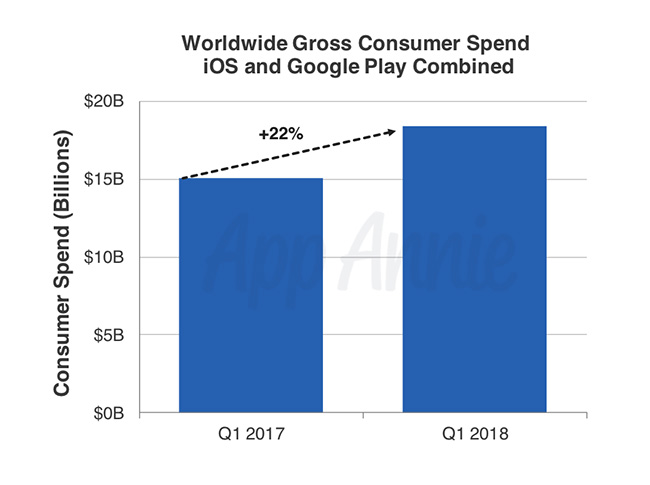
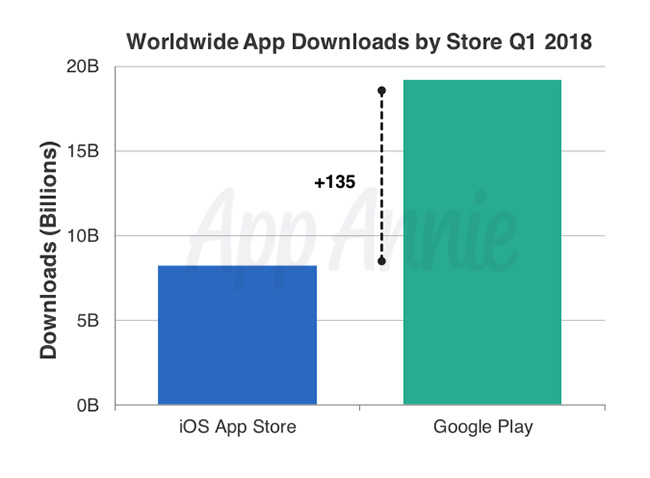
Global app downloads and consumer spending in apps had yet another record quarter, according to a new report from App Annie, out on Monday. In the first quarter of 2018, iOS and Google Play downloads grew more than 10 percent year-over-year to reach 27.5 billion – the highest figure to date. In addition, consumer spending on iOS and Google Play grew 22 percent year-over-year to reach $18.4 billion – also a record number.

The download figure is especially notable because App Annie is not counting app updates or re-installs. That means someone re-downloading an app on a new phone – like one received as a gift over the holidays – wouldn’t have been counted here. Only new app installs were counted.

Plus, the report points out that the total dollar amount to the app economy is much higher than the $18.4 billion reported for Q1, as App Annie only takes into account paid apps, in-app purchases, and subscriptions. It’s not measuring things like in-app advertising, the commerce taking place in apps (e.g. shopping and ride-sharing), or the money being made on the third-party Android app stores around the world.

This is not the first time App Annie has reported record numbers for downloads and consumer spending. The app marketplaces have continued to see steady growth, even as reports of app saturation in the U.S. circulate.

In Q4 2017 – the busy holiday quarter – the app stores had also broken these same records around downloads and revenues. Specifically, Google Play saw its highest downloads to date in the fourth quarter. The app stores had a record-breaking Q3 2017, too – something App Annie attributed then to the growth of the app market in China, India, and other Southeast Asian nations.

This time, App Annie pointed to India, Indonesia and Brazil’s impact on the year-over-year growth in Google Play downloads, and the U.S., Russia and Turkey’s impact on the growth of iOS downloads.

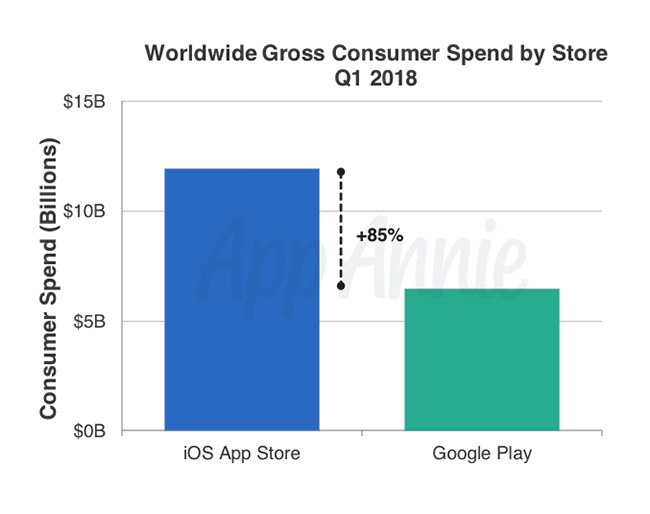
Also notable is that Google Play achieved another record of its own in Q1 2018, with record growth in consumer spend thanks to the U.S, followed by Japan and the Philippines. The Play Store grew 25 percent year-over-year, versus iOS’s 20 percent growth. Despite this, iOS continued to have a large lead in terms of total dollars spent.

Music & Audio along with Entertainment apps had a big impact on Google Play spending, the report noted, both on a quarter-over-quarter and year-over-year basis. This is attributed to the rise in music and video subscription services delivered via apps. App Annie isn’t the only one to spot this trend – app store intelligence firm Sensor Tower had previously found that top subscription video on demand apps grew by 77 percent in 2017, reaching $781 million in revenues across iOS and Google Play. And Netflix became 2017’s top non-game app by revenue.

App Annie said also that iOS spending in Q1 2018 benefitted from subscriptions to health and fitness apps, driven by New Year’s Resolutions and people’s embrace of the subscription model. The U.S., followed by the U.K. then Germany saw the largest market share growth quarter-over-quarter and year-over-year.

Combined, Google Play and the iOS App Store offered 6.2 million apps by the end of Q1 2018, with games driving downloads across both stores during the quarter. PUBG Mobile and Fortnite were especially big, App Annie noted.

Shopping apps also saw large year-over-year growth in market share, the report found.

More broadly, the new report is yet another example of how big a role emerging markets are having on app downloads and the app economy. This trend, while still remarkable, is not all that new. In 2016, China overtook the U.S. in App Store revenue, and App Annie has continued to note China, India and other emerging markets as key drivers of growth in its quarterly and annual reports.


Read Full Article

Bots on Twitter share two-thirds of links to popular websites: Pew


It’s official: Bots are doing a lot of PR grunt work on Twitter — especially when it comes to promoting porn websites.

That perhaps unsurprising conclusion about what automated Twitter accounts are link sharing comes courtesy of a new study by the Pew Research Center which set out to quantify one aspect of bot-based activity in the Twittersphere.

Specifically the researchers wanted to know what proportion of tweeted links to popular websites are posted by automated accounts, rather than by human users?

The answer they came up with is that around two-thirds of tweeted links to popular websites are posted by bots rather than humans.

The researchers say they were interested in trying to understand a bit more about how information spreads on Twitter. Though for this study they didn’t try to delve directly into more tricky (and sticky) questions about bots — like whether the information being spread by these robots is actually disinformation.

Pew’s researchers also didn’t try to determine whether the automated link PR activity actually led to significant levels of human engagement with the content in question. (Something that can be difficult for external researchers to determine because Twitter does not provide full access to how it shapes the visibility of tweets on its platform, nor data on how individual users are making use of controls and settings that can influence what they see or don’t on its platform).

So, safe to say, many bot-related questions remain to be robustly investigated.

But here at least is another tidbit of intel about what automated accounts are up to vis-a-vis major media websites — although, as always, these results are qualified as ‘suspected bots’ as a consequence of how difficult it is to definitively identify whether an online entity is human or not. (Pew used Indiana University’s Botometer machine learning tool for identifying suspected bots; relying on a score of 0.43 or higher to declare likely automation — based on a series of their own validation exercises.)

Pew’s top-line conclusion is that suspected automated accounts played a prominent role in tweeting out links to content across the Twitter ecosystem — with an estimated 66% of all tweeted links to the most popular websites likely posted by automated accounts, rather than human users.

The researchers determined website popularity by first conducting an analysis of 1.2 million English-language tweets containing links (pulling random sample tweet data via Twitter’s streaming API) — which they boiled down to a list of 2,315 popular sites, i.e. once duplicates and dead links were weeded out.

They then categorized these into content domains, with any links that pointed to any other content on Twitter (i.e. rather than externally) collected into a single Twitter.com category.

After that they were able to compare how (suspected) bots vs (probable) humans were sharing different categories of content.

Below are the results for content being PRed by suspected bots — as noted above it’s unsurprisingly dominated by adult content. Though bots were found to be responsive for the majority of link shares to popular websites across the category board. Ergo, robots are already doing a major amount of PR grunt work…
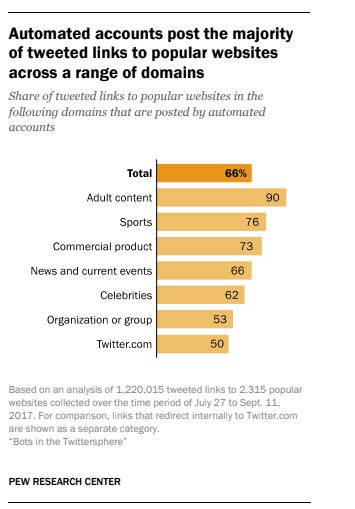
 

(Looking at that, a good general rule of thumb seems to be that if a Twitter account is sharing links to porn sites it’s probably not human. Or, well, it’s a human’s account that’s been hacked.)

The researchers also found that a relatively small number of automated accounts were responsible for a substantial share of the links to popular media outlets on Twitter. “The 500 most-active suspected bot accounts alone were responsible for 22% of all the links to these news and current events sites over the period in which this study was conducted. By contrast, the 500 most-active human accounts were responsible for just 6% of all links to such sites,” they write.

Clearly bots aren’t held back by human PR weaknesses — like needing to stop working to eat or sleep.

Pew says its analysis also suggests that certain types of news and current events sites appear “especially likely” to be tweeted by automated accounts. “Among the most prominent of these are aggregation sites, or sites that primarily compile content from other places around the web. An estimated 89% of links to these aggregation sites over the study period were posted by bot accounts,” they write.

tl;dr: Bots appear to be less interested in promo-ing original reporting. Or, to put it another way, bot grunt work is often being deployed to try to milk cheap views out of other people’s content.

Another interesting observation: “Automated accounts also provide a somewhat higher-than-average proportion of links to sites lacking a public contact page or email address for contacting the editor or other staff.

“The vast majority (90%) of the popular news and current events sites examined in this study had a public-facing, non-Twitter contact page. The small minority of sites lacking this type of contact page were shared by suspected bots at greater rates than those with contact pages. Some 75% of links to such sites were shared by suspected bot accounts during the period under study, compared with 60% for sites with a contact page.”

Without reading too much into that finding, it’s possible to theorize that sites without any public content page or email might be more likely to be hosting disinformation. (Pew’s researchers don’t go as far as to join those dots exactly — but they do note: “This type of contact information can be used to submit reader feedback that may serve as the basis of corrections or additional reporting.”)

That said, Pew also found political content to be of relatively lower interest to bots vs other types of news and current affairs content — at least judging by this snapshot of English-language tweets (taken last summer).

“[C]ertain types of news and current events sites receive a lower-than-average share of their Twitter links from automated accounts,” the researchers write. “Most notably, this analysis indicates that popular news and current events sites featuring political content have the lowest level of link traffic from bot accounts among the types of news and current events content the Center analyzed, holding other factors constant. Of all links to popular media sources prominently featuring politics or political content over the time period of the study, 57% are estimated to have originated from bot accounts.”

The researchers also looked at political affiliation — to try to determine whether suspected bots skew left or right in terms of the content they’re sharing.

(To determine the ideological leaning of the content being linked to on Twitter Pew says they used a statistical technique known as correspondence analysis — examining the media link sharing behavior of publications’ Twitter audience in order to score the content itself on an idealogical spectrum ranging from “very liberal” to “most conservative”.)

In fact they found automated accounts posting a greater share of content from sites that have “ideologically mixed or centrist human audiences”. At least where popular news and current events sites “with an orientation toward political news and issues” are concerned.

“The Center’s analysis finds that suspected autonomous accounts post a higher proportion of links to sites that are primarily shared by human users who score near the center of the ideological spectrum, rather than those shared more often by either a more liberal or a more conservative audience,” they write. “Automated accounts share roughly 57% to 66% of the links to political sites that are shared by an ideologically mixed or centrist human audience, according to the analysis.”

Pew adds that right-left differences in the proportion of bot traffic were “not substantial”.

Although, on this, it’s worth emphasizing that this portion of the analysis is based on a pretty small sub-set of an already exclusively English-language and US-focused snapshot of the Twittersphere. So reading too much into this portion of the analysis seems unwise.

Pew notes: “This analysis is based on a subgroup of popular news and current events outlets that feature political stories in their headlines or have a politics section, and that serve a primarily U.S. audience. A total of 358 websites out of our full sample of 2,315 popular sites met these criteria.”

Really the study underlines a core truth about Twitter bots: They’re often used for spam/PR purposes — to try to drive traffic to other websites. The substance of what they’re promoting varies, though it can clearly often be adult content.

Bots are also often used to try to cheaply drive clicks to a cheap content aggregator site so that external entities can cheaply cash in thanks to boosted ad views and revenue.

Political disinformation campaigns may well result in a lower volume of bot-generated spam/PR than porn or content farms. Though the potential damage — to democratic processes and societal institutions — is arguably way more serious. As well as being very difficult to quantify.

And where the influence of bots is concerned, we still have many more questions than answers.


Read Full Article

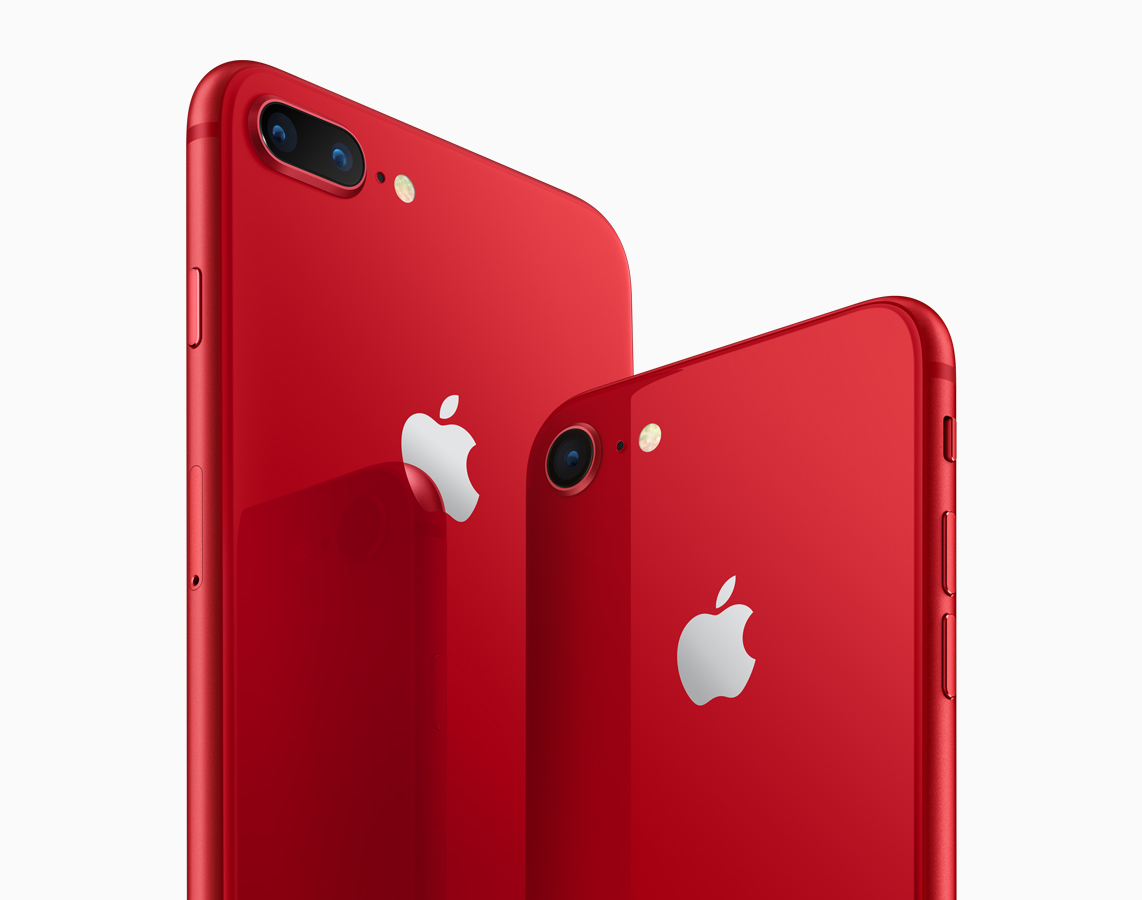
Apple releases a red iPhone 8


Apple is doing it again. The company just unveiled a new version of the iPhone 8 and iPhone 8 Plus. It has a bright red enclosure and a black front. A portion of Apple’s proceeds will fund HIV/AIDS grants from the Global Fund.

Other than that, it’s an iPhone 8. You’ll get the exact same features and components as the ones in other iPhone 8 models. The iPhone 8 is also available in gold, silver and (“space”) gray. Alas, there’s still no rose gold option.

When Apple unveiled the red version of the iPhone 7, many people didn’t understand why Apple put white bezels at the front of the device. Red and black seem like a good match. That’s why some people even bought screen protectors with black borders to fix this.

This year, Apple is switching to black. It’s interesting to see that Apple waits around 6 months before launching red versions of its iPhones. It could be a way to foster sales in the middle of a product cycle.

The red iPhone 8 is going to start at $699 with 64GB just like regular iPhone 8 models. There will be 256GB versions too. Pre-orders start tomorrow and you’ll be able to buy it in Apple stores on Friday.

For iPhone X users, Apple is launching a dark red leather folio. Apple is also sharing some numbers about its partnership with (PRODUCT)RED. Since 2006, Apple has donated $160 million to the Global Fund through limited edition iPods, iPhones and accessories.


Read Full Article

SNL roasts Mark Zuckerberg on Weekend Update


The role of Mark Zuckerberg went to Alex Moffat this weekend on Saturday Night Live’s Weekend Update.

While some bits were harmless and hilarious — “Poke! Poke! Remember that feature?” asked Moffat as he poked Jost in the shoulder. “Poke! It was flirting for cowards.” — the Facebook CEO probably didn’t laugh much on Saturday night.

Alex Moffat, playing Zuckerberg, shrieked with laughter, struggled with eye contact, and rebuked any notion that users’ should have control over their own data on Facebook.

When asked if users would be able to delete their own data, the Zuck character simply replied: “Psh, no! Because it’s mine. You gave it to me. No backsies.”

This all comes amidst the Cambridge Analytica scandal, wherein third-party apps scraped data of more than 50 million users on behalf of consultancy firm Cambridge Analytica. This has left Facebook trying to recover trust with the public, all while having lost more than $80 billion in market value since the scandal broke.

This also comes a few short days before Zuckerberg appears in Washington D.C. for both a Senate hearing on April 10 and a House Energy and Commerce hearing on April 11.

You can watch the full SNL segment below:


Read Full Article

’90s kids rejoice! Microsoft releases the original Windows 3.0 File Manager source code


Microsoft has released the source code for the original, 1990s-era File Manager that is so familiar to all of us who were dragging and dropping on Windows 3.0. The code, which is available on Github under the MIT OSS license, will compile under Windows 10.

File Manager uses the multiple-document interface or MDI to display multiple folders inside one window. This interface style, which changed drastically with later versions of Windows, was the standard for almost a decade of Windows releases.

These little gifts to the open source community are definitely fun but not everyone is happy. One Hacker News reader noted that “Most of the MSFT open source stuff is either trash or completely unmaintained. Only a couple of high profile projects are maintained and they jam opt-out telemetry in if you like it or not (despite hundreds of comments requesting them to go away). Even Scott Hanselman getting involved in one of our tickets got it nowhere. Same strong arming and disregard for customers.”

Ultimately these “gifts” to users are definitely a lot of fun and a great example of nostalgia-ware. Let me know how yours compiles by Tweeting me at @johnbiggs. I’d love to see it running again.


Read Full Article

James Murray from the Impractical Jokers talks about the future of VR


James Murray is a funny man. A producer, actor, and writer, Murray is best known as Murr on the show Impractical Jokers. I spoke to him for a Technotopia interview about the future of TV, VR, and media and he has a lot to say.

His dream? To offer immersive experiences to his audiences using VR, a dream that he thinks is still far off. Until the VR experience is out-of-the-box easy, he said, there isn’t much hope for the medium. He’s a funny guy and this is one of my favorite interviews.

Technotopia is a podcast by John Biggs about a better future. You can subscribe in Stitcher, RSS, or iTunes and listen the MP3 here.


Read Full Article