19 February 2020

Google Cloud opens its Seoul region


Google Cloud today announced that its new Seoul region, its first in Korea, is now open for business. The region, which it first talked about last April, will feature three availability zones and support for virtually all of Google Cloud’s standard service, ranging from Compute Engine to BigQuery, Bigtable and Cloud Spanner.

With this, Google Cloud now has a presence in 16 countries and offers 21 regions with a total of 64 zones. The Seoul region (with the memorable name of asia-northeast3) will complement Google’s other regions in the area, including two in Japan, as well as regions in Hong Kong and Taiwan, but the obvious focus here is on serving Korean companies with low-latency access to its cloud services.

“As South Korea’s largest gaming company, we’re partnering with Google Cloud for game development, infrastructure management, and to infuse our operations with business intelligence,” said Chang-Whan Sul, the CTO of Netmarble. “Google Cloud’s region in Seoul reinforces its commitment to the region and we welcome the opportunities this initiative offers our business.”

Over the course of this year, Google Cloud also plans to open more zones and regions in Salt Lake City, Las Vegas and Jakarta, Indonesia.


Read Full Article

TikTok introduces parental controls with new ‘Family Safety Mode’ feature, launching first in U.K.


TikTok announced today the introduction of a new set of parental controls, called “Family Safety Mode,” designed to let parents set limits on their teenage children’s use of the TikTok mobile app. The suite of features includes screen time management controls, limits on direct messages, and a restricted mode that limits the appearance of inappropriate content.

According to TikTok, parents who want to enable Family Safety Mode must first create their own account on the app, which is then linked to the teen’s account. Once enabled, parents will be able to control how long the teen can spend on the app every day; turn off or limit who the teen can direct message; and choose to turn on TikTok’s “restricted” mode that will limit inappropriate content.

These features were already available in the app for users to set for themselves, to be clear. The new Family Safety Mode just puts a parent or guardian in charge of toggling the switches on or off for their teens, and prevents the settings from being changed without parents’ involvement.

It’s not clear how well TikTok’s restricted mode works, as TikTok doesn’t explain the screening process it uses. For an app of this scale, it’s likely based in large part on users flagging inappropriate videos, however. Parents should be aware, then, that restricted mode is not going to be a foolproof means of controlling the user experience.

The new set of parental controls is actually only a subset of the controls users can enable for themselves. For example, users can also choose to make their accounts private, turn off commenting, or control who’s allowed to duet with them, among other things.

But the controls do tackle some of parents’ largest concerns around the addictive nature of TikTok’s app, the content being delivered, and the private messages that parents can’t monitor.

The launch timing follows increased scrutiny by government regulators of TikTok, owned by Beijing-based ByteDance.

In 2019, the U.S. Federal Trade Commission fined the app Musical.ly (which had acquired by ByteDance. ), $5.7 million for violation of U.S. children’s privacy law COPPA. And in the U.K., TikTok has been under investigation by the U.K.’s Information Commissioner’s Office (ICO) for potential GDPR violations around the protection of children’s data.

Not coincidentally, TikTok says the new parental controls are first available in the U.K., starting today. They’ll roll out to other markets in the weeks ahead, TikTok says but didn’t indicate which ones.

The parental controls, however, have been designed with European law in mind. In the U.S., TikTok offers the age-gate for younger users, but not controls for parents like this.

In addition to the launch of Family Safety mode, TikTok parented with creators to produce a series of safety videos about screen time management to encourage users to take a break from their phone. These are being added to the TikTop Tips video series and will also roll out in the app starting first in the U.K. today.


Read Full Article

The beautiful, hard work of co-parenting | Joel Leon

The beautiful, hard work of co-parenting | Joel Leon

"Co-parenting" isn't a buzzword -- it's a way of showing up for your family openly, consistently and lovingly, says storyteller and father Joel Leon. In this moving talk, he challenges all parents to play an equal, active role in their children's daily lives, even in a world that often places the weight of sacrifice on mothers alone. Leon encourages nuanced conversations about parenting and reminds us that being a parent isn't a responsibility -- it's an opportunity.

Click the above link to download the TED talk.

Google Cloud acquires mainframe migration service Cornerstone


Google today announced that it has acquired Cornerstone, a Dutch company that specializes in helping enterprise migrate their legacy workloads from mainframes to public clouds. Cornerstone, which provides very hands-on migration assistance, will form the basis of Google Cloud’s mainframe-to-GCP solutions.

This move is very much in line with Google Cloud’s overall enterprise strategy, which focuses on helping existing enterprises move their legacy workloads into the cloud (and start new projects as cloud-native solutions from the get-go).

“This is one more example of how Google Cloud is helping enterprise customers modernize their infrastructure and applications as they transition to the cloud,” said John Jester, VP of Customer Experience at Google Cloud. “We’ve been making great strides to better serve enterprise customers, including introducing Premium Support, better aligning our Customer Success organization, simplifying our commercial contracting process to make it easier to do business with Google Cloud, and expanding our partner relationships.”

A lot of businesses still rely on their mainframes to power mission-critical workloads. Moving them to the cloud is often a very complex undertaking, which is where Cornerstone and similar vendors come in. It doesn’t help that a lot of these mainframe applications were written in Cobol, PL/1 or assembly. Cornerstone’s technology can automatically break these processes down into cloud-native services that are then managed within a containerized environment. It can also migrate databases as needed.

It’s worth noting that Google Cloud also recently introduced support for IBM Power Systems in its cloud. This, too, was a move to help enterprises move their legacy systems into the cloud. With Cornerstone, Google Cloud adds yet another layer on top of this by providing even more hands-on migration assistance for users who want to slowly modernize their overall stack without having to re-architect all of their legacy applications.


Read Full Article

How to Scrape Reddit with Google Scripts


Reddit offers a fairly extensive API that any developer can use to easily pull data from subreddits. You can fetch posts, user comments, image thumbnails, votes and most other attributes that are attached to a post on Reddit.

The only downside with the Reddit API is that it will not provide any historical data and your requests are capped to the 1000 most recent posts published on a subreddit. So, for instance, if your project requires you to scrape all mentions of your brand ever made on Reddit, the official API will be of little help.

You have tools like wget that can quickly download entire websites for offline use but they are mostly useless for scraping Reddit data since the site doesn’t use page numbers and content of pages is constantly changing. A post can be listed on the first page of a subreddit but it could be pushed to the third page the next second as other posts are voted to the top.

Reddit Data in Google Sheets

Download Reddit Data with Google Scripts

While there exist quite a Node.js and Python libraries for scraping Reddit, they are too complicated to implement for the non-techie crowd. Fortunately, there’s always Google Apps Script to the rescue.

Here’s Google script that will help you download all the user posts from any subreddit on Reddit to a Google Sheet. And because we are using pushshift.io instead of the official Reddit API, we are no longer capped to the first 1000 posts. It will download everything that’s every posted on a subreddit.

  1. To get started, open the Google Sheet and make a copy in your Google Drive.
  2. Go to Tools -> Script editor to open the Google Script that will fetch all the data from the specified subreddit. Go to line 55 and change technology to the name of the subreddit that you wish to scrape.
  3. While you are in the script editor, choose Run -> scrapeReddit.

Authorize the script and within a minute or two, all the Reddit posts will be added to your Google Sheet.

Technical Details - How to the Script Works

The first step is to ensure that the script not hitting any rate limits of the PushShift service.

const isRateLimited = () => {
  const response = UrlFetchApp.fetch('https://api.pushshift.io/meta');
  const { server_ratelimit_per_minute: limit } = JSON.parse(response);
  return limit < 1;
};

Next, we specify the subreddit name and run our script to fetch posts in batches of 1000 each. Once a batch is complete, we write the data to a Google Sheet.

const getAPIEndpoint_ = (subreddit, before = '') => {
  const fields = ['title', 'created_utc', 'url', 'thumbnail', 'full_link'];
  const size = 1000;
  const base = 'https://api.pushshift.io/reddit/search/submission';
  const params = { subreddit, size, fields: fields.join(',') };
  if (before) params.before = before;
  const query = Object.keys(params)
    .map(key => `${key}=${params[key]}`)
    .join('&');
  return `${base}?${query}`;
};

const scrapeReddit = (subreddit = 'technology') => {
  let before = '';
  do {
    const apiUrl = getAPIEndpoint_(subreddit, before);
    const response = UrlFetchApp.fetch(apiUrl);
    const { data } = JSON.parse(response);
    const { length } = data;
    before = length > 0 ? String(data[length - 1].created_utc) : '';
    if (length > 0) {
      writeDataToSheets_(data);
    }
  } while (before !== '' && !isRateLimited());
};

The default response from Push Shift service contains a lot of fields, we are thus using the fields parameter to only request the relevant data like post title, post link, date created and so on.

If the response contains a thumbnail image, we convert that into a Google Sheets function so you can preview the image inside the sheet itself. The same is done for URLs.

const getThumbnailLink_ = url => {
  if (!/^http/.test(url)) return '';
  return `=IMAGE("${url}")`;
};

const getHyperlink_ = (url, text) => {
  if (!/^http/.test(url)) return '';
  return `=HYPERLINK("${url}", "${text}")`;
};

Bonus Tip: Every search page and subreddit on Reddit can be converted into JSON format using a simple URL hack. Just append .json to the Reddit URL and you have a JSON response.

For instance, if the URL is https://www.reddit.com/r/todayIlearned, the same page can be accessed in JSON format using the URL https://www.reddit.com/r/todayIlearned.json.

This works for search results as well. The search page for https://www.reddit.com/search/?q=india can be downloaded as JSON using https://www.reddit.com/search.json?q=india.


Facebook backs Indian education startup Unacademy


Unacademy, one of India’s fastest growing education startups, has just received the backing of a major technology giant: Facebook.

The social juggernaut has participated in the four-year-old Indian startup’s Series E financing round, sources familiar with the matter told TechCrunch.

General Atlantic is leading the round, the size of which is about $100 million, the sources said. It wasn’t immediately clear to us exactly how big of a check Facebook has cut, but one of the sources said it was under $20 million. The round values the startup, which had raised $90 million prior to the ongoing round, at over $400 million, the source said.

Unacademy is aimed at students who are preparing for competitive exams to get into a college and those who are pursuing graduation-level courses. It allows students to watch live classes from educators and later engage in sessions to review topics in more detail.

A year ago, the startup launched a subscription service that offers students access to all live classes. Gaurav Munjal, co-founder and chief executive of Unacademy, tweeted earlier this month that the subscription service had become a $30 million ARR business.

This is the second time Facebook is investing in an Indian startup. Last year, it participated in social commerce Meesho’s $125 million financing round led by Prosus Ventures.

Facebook and Unacademy did not respond to a request for comment.

Ajit Mohan, VP and managing director of Facebook India, told TechCrunch in an interview last year that the company was open to engaging with startups that are building solutions for the Indian market.

“Wherever we believe there is opportunity beyond the work we do today, we are open to exploring further investment deals,” he said.

Indian newspaper Mint first reported in December that Unacademy was in talks with General Atlantic and GGV Capital to raise as much as $100 million. TechCrunch understands that GGV Capital, which earlier this month invested in edtech startup Vedantu, is not participating in Unacademy’s funding round.

Vedantu and Unacademy compete with Byju’s, an Indian startup that counts General Atlantic as an investor and is valued at $8 billion. Chan Zuckerberg Initiative has invested in Byju’s, but has sold at least some of its stake, according to a regulatory filing analyzed by business outlet Entrackr.

As India’s startup ecosystem begins to mature, it has started to attract corporate giants. Google, Amazon and Twitter also have made investments in Indian startups. While Twitter has backed social platform ShareChat, Google has invested in hyperlocal concierge app Dunzo.


Read Full Article

What Is Bitcoin, How Is it Worth So Much, and How Can You Spend It?


This week’s Really Useful Podcast takes a look at Bitcoin and cryptocurrency. You’ve seen it on the news and on the financial pages of newspapers. It’s linked to crime and people seem to be able to actually make it using their computers.

But what is Bitcoin? How does it work, what is it worth, and are cryptocoins worth your time? To find out, we welcome regular contributor James Frew, who also contributes to the Blocks Decoded website. Christian Cawley hosts the show and asks the questions.

Really Useful Podcast Season 5 Episode 3 Shownotes

Help us help more people by leaving a review on Apple Podcasts. In just a few seconds you can help us find a bigger audience and with a higher rating we can help more listeners. We’ll also read out some of the reviews you leave.

Don’t miss the Really Useful Podcast—subscribe for automatic downloads and notifications:

See you next week!

Read the full article: What Is Bitcoin, How Is it Worth So Much, and How Can You Spend It?


Read Full Article

Ring Makes Two-Factor Authentication Mandatory


Ring is finally making two-factor authentication mandatory. In addition, Ring is also giving users more control over the third-party services which can access their information. This applies to both analytics and advertising. Which is a good first step.

Ring Has Been Getting a Lot of Criticism

While lots of people are buying, using, and loving their Ring doorbells and other products, the company has been criticized for some of its security practices. Especially the lack of mandatory two-factor authentication and poor password management.

The EFF has also criticized Ring for the amount of information the Ring app shares with third-parties. This includes customers’ personally identifiable information (PII) being shared with Facebook, mixpanel.com, appsflyer.com, and branch.io.

What Ring Is Doing to Secure Your Account

Now, as outlined in a post on The Ring Blog, Ring is promising to make changes. The first of which is making two-factor authentication mandatory. This means that not only is 2FA required rather than users opting-in, opting-out is no longer an option.

2FA means that every time you log in to your Ring account, you’ll receive a one-time, six-digit code via email or SMS. This “helps prevent unauthorized users from gaining access to your Ring account, even if they have your username and password.”

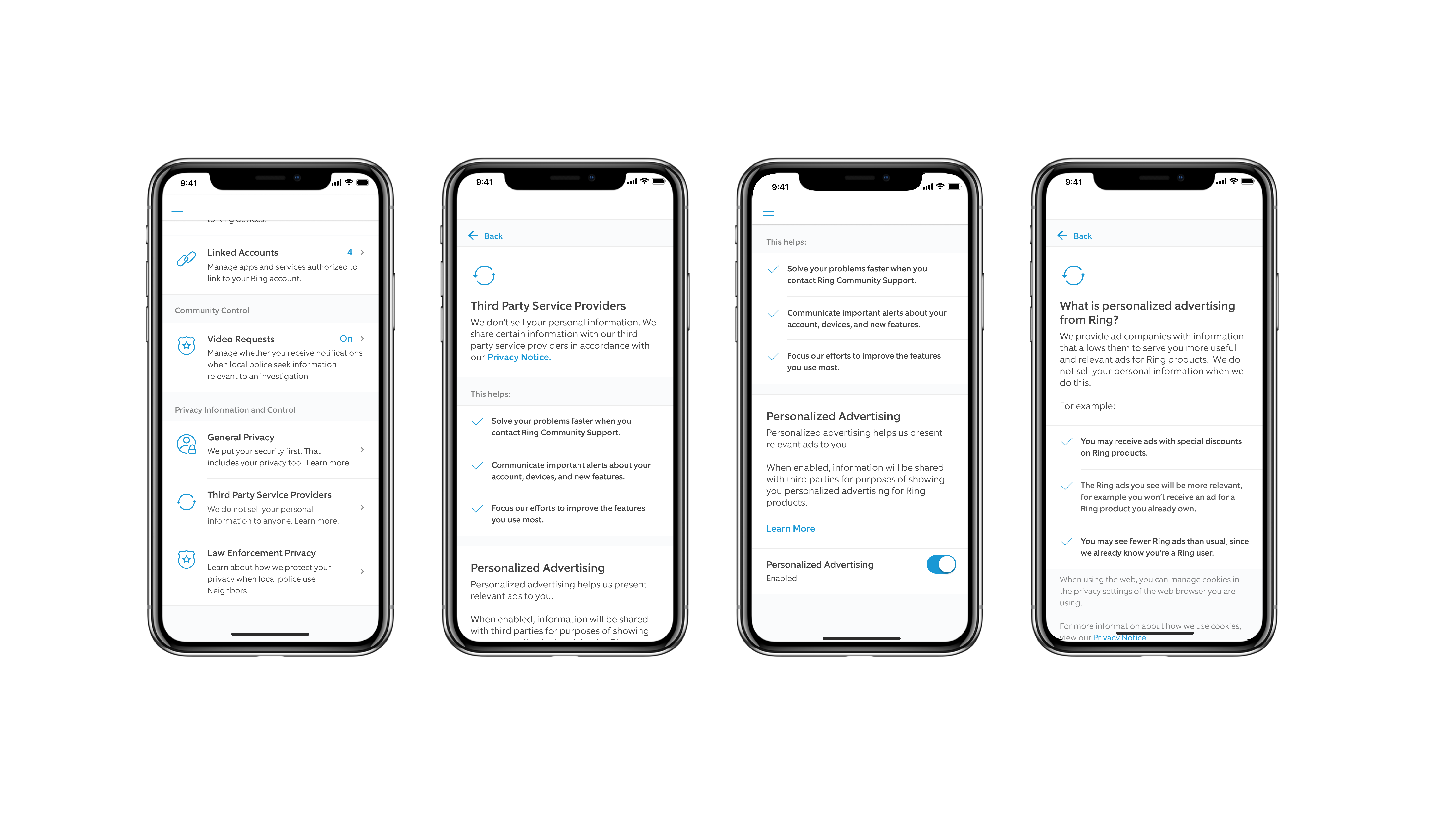
Ring is also launching tools to manage third-party service providers. This means you can now “opt out of sharing your information with third-party service providers for the purpose of receiving personalized ads.” You may still see ads, but they won’t be personalized.

It’s also working on “providing users with more abilities to opt out” and “limit sharing information with third-party service providers.” And in the meantime it’s “temporarily pausing the use of most third-party analytics services in the Ring apps and website”.

Is Ring Making Your Home More Secure?

This won’t go far enough for those who have found Ring’s systems wanting in recent months. However, it’s a start, and Ring users should make use of the new tools. Especially as there’s a case to be made that your Ring device is making your home less safe.

Read the full article: Ring Makes Two-Factor Authentication Mandatory


Read Full Article

Do trade shows still matter in the age of online business?


The death of Mobile World Congress 2020 started as a trickle.

First, it was an understandably nervous ZTE. As a Chinese company, it was undoubtedly going to receive extra scrutiny — never mind that ZTE’s Shenzhen headquarters are a two-hour flight from Wuhan. Soon enough, South Korea’s LG backed out, followed by Nvidia and Ericsson.

By the weekend, as deaths from the coronavirus rose to more than 800 (surpassing SARS in the process), event organizers GSMA put strict guidelines in place for approximately 100,000 expected attendees:

  • No travelers from the Hubei province would be permitted access.
  • Attendees were required to prove that they were outside China for 14 days prior to the event (passport stamp, health certificate).
  • Temperature screening was to be implemented.
  • Attendees needed to self-certify they had not been in contact with anyone infected.

Ultimately, it was too late. Soon enough, Amazon was out and the list ballooned to dozens of companies, including AT&T, Intel, Nokia, Sony and Vodafone. Each offered a similar boilerplate response, noting the cost-benefit analysis for sending staff to a large international show amid concerns of a global epidemic.

PCMag’s Sascha Segan wrote a piece worth reading on “snowballing hysteria” around a trade show killed in a country that only had two reported cases at the time of cancellation. It’s a valid point, though speaking purely pragmatically, I can understand why companies felt obligated to back out.

If you want to give them the benefit of the doubt, there are some valid concerns about sending employees into the petri dish of colds and flus that is basically every trade show, coupled with the novelty of a new and still not completely understood virus. It can be difficult to balance concerns for employee safety with the need to resist panicking over media reports that tend to overemphasize threats.


Read Full Article

A brief tour of the last 4 billion years (dinosaurs not included) | Lauren Sallan

A brief tour of the last 4 billion years (dinosaurs not included) | Lauren Sallan

In this hilarious, whirlwind tour of the last four billion years of evolution, paleontologist and TED Fellow Lauren Sallan introduces us to some of the wildly diverse animals that roamed the prehistoric planet (from sharks with wings to galloping crocodiles and long-necked rhinos) and shows why paleontology is about way more than dinosaurs.

Click the above link to download the TED talk.

Secret’s founder returns with anti-loneliness app Ikaria


“I don’t feel good about that. That sucks” Chrys Bader-Wechseler reflects when asked about the bullying that went down on the anonymous app Secret he co-founded in 2013. After $35 million raised, 15 million users, and a spectacular flame out two years later, the startup was dead. “Since I left secret I feel alive and aligned with my values and my purpose again.” 

But there was one bright side to Secret letting you post without a name or consequences. People opened up, got vulnerable, and felt less alone when comments revealed they weren’t the only person dealing with a certain struggle. What Bader learned from watching Secret’s users “do this in the dark” was the realization that “actually, we need to learn to do this in the light, to have that same kind of dialogue, but do it openly with each other.”

So began the journey to Bader’s new startup Ikaria that’s exclusively revealing itself to the world today on TechCrunch. It’s a different kind of chat app, named after the Greek island where close-knit community helps extend people’s lifespans. The 6-person Santa Monica team is funded by a $1.5 million seed round led by Initialized Capital and Fuel Capital. People can sign up for early beta access here.

During a long interview about the startup, Bader and his co-founder Sean Dadashi were cagey about exactly how Ikaria works since it’s still in development. Amidst all the philosophical context about the app’s intention, I was able to pull out a few details about what the product will actually look like.

“Basically, since 2004, technology has created this monumental shift in the human social experience. We’re more connected than ever technically but all the studies show we’re lonelier than ever.” Bader explains. “It’s like eating McDonald’s to get healthy. It’s not the right source of nutrition for our social well-being because true connection requires a level of vulnerability, presence, self-disclosure, and reciprocity that you don’t really get on these platforms.”

Ikaria isn’t another feed. It’s a safe space where you can chat with close friends & family, or people going through similar life challenges. Members of these group chats will optionally go through guided experiences that help them reflect on and discuss what’s going on in their hearts and minds. This could become a whole new media format where outside creators or mental health professionals could produce and contribute their own guided experiences.
“Part of the reason we’re announcing this is that . . . it’s a call to action to involve all these practitioners and people who are doing these types of things and giving them a platform to allow them to facilitate these kind of group bonding experiences through a platform where they can extend their practices into the digital world” Bader tells me. What Calm and Headspace did for making meditation more mainstream and accessible, Ikaria wants to do for mental health through online togetherness.

Ikaria already has a sizable closed beta going which the startup plans to continue until it finds product fit, and it hopes to know its official release timeline by the end of the year. “We’re not going to launch this until we know 40% of people would be disappointed if they couldn’t use it.”

Rather than monetizing by exploiting people’s attention, Ikaria plans to develop a ‘customer relationship’ with users, which could mean subscription access or in-app payments for buying content. Perhaps one user could act as the sponsor and purchase an experience for their whole group chat. Until then, it’s got its seed funding from Initialized, Fuel Capital, F7 Ventures, Ryan Hoover’s Weekend Fund, Backend Capital, Day One Ventures, Shrug, Todd Goldberg, and Superhuman’s Rahul Vohra.

“The hope is that eventually this would be an app you use instead of iMessage, to increase your sense of presence” Bader explains, revealing its grand ambitions. Why would we need to replace our core chat apps? Well for one thing, they don’t understand who really matters to you. If an app understood who your mom is, it could give her messages special prevalence or remind you to contact her.

Bader met Dadashi through an offline men’s group for discussing life, love, and everything in the wake of Secret’s collapse and a rough romantic breakup. After just a few weeks of these meetups, they say they felt closer to each other than to most of their friends. Only later did Bader, a designer by trade, discover that Dadashi was a coder who’d been CTO of electronics company MHD Enterprises before starting a travel and lifestyle startup for mental wellness called Somatic Studios. They tried working together on an app for sharing quotes from your friends but scrapped it.

Together, the pair went on to research the rapid rise of other vulnerability-focused meetup organizations like the one where they met, including Evryman, ManKind Project, Quilt, Authentic Relating, Circling, and T-Groups. Though they knew that to have a chance at impact at scale, they’d need to build a mobile app familiar enough to get people over the hurdle of starting a mindfulness practice. They laid out a few principles to build by: a focus on relationships instead of Likes and followers, conscious design that won’t exploit people’s attention or weaknesses, no ads, and keeping all data private and in control of the user.
There are other startups hoping to address the sad state of mental health from different angles. Talkspace offers a mobile connection to licensed therapists, though it can be pricey at $65 to $99 per week. 7 Cups and TalkLife makes peer-to-peer counseling from volunteers free, though these aren’t professionals. There are also plenty of journaling products, gratitude practice app, and wellness podcasts out there. But Ikaria’s approach combining mental health content with group chats of people you trust feels unique.

Having known Bader since the Secret days, it’s obvious that working with Dadashi has made him happier and more centered. Ikaria is an app he can wake up feeling good about each day. “You know, I don’t like to speak ill of David [Byttow, Secret’s CEO who sources say was abusive to employees], but that relationship was very, very toxic and taxing for me. And this time around with Sean, as I’m sure you can tell, is the polar opposite.”

If Ikaria can help people develop the open and honest relationships with friends or peers like building it has done for Bader and Dadashi, it could be a beacon amidst a sea of time unwell spent.


Read Full Article

Secret’s founder returns with anti-loneliness app Ikaria


“I don’t feel good about that. That sucks” Chrys Bader-Wechseler reflects when asked about the bullying that went down on the anonymous app Secret he co-founded in 2013. After $35 million raised, 15 million users, and a spectacular flame out two years later, the startup was dead. “Since I left secret I feel alive and aligned with my values and my purpose again.” 

But there was one bright side to Secret letting you post without a name or consequences. People opened up, got vulnerable, and felt less alone when comments revealed they weren’t the only person dealing with a certain struggle. What Bader learned from watching Secret’s users “do this in the dark” was the realization that “actually, we need to learn to do this in the light, to have that same kind of dialogue, but do it openly with each other.”

So began the journey to Bader’s new startup Ikaria that’s exclusively revealing itself to the world today on TechCrunch. It’s a different kind of chat app, named after the Greek island where close-knit community helps extend people’s lifespans. The 6-person Santa Monica team is funded by a $1.5 million seed round led by Initialized Capital and Fuel Capital. People can sign up for early beta access here.

During a long interview about the startup, Bader and his co-founder Sean Dadashi were cagey about exactly how Ikaria works since it’s still in development. Amidst all the philosophical context about the app’s intention, I was able to pull out a few details about what the product will actually look like.

“Basically, since 2004, technology has created this monumental shift in the human social experience. We’re more connected than ever technically but all the studies show we’re lonelier than ever.” Bader explains. “It’s like eating McDonald’s to get healthy. It’s not the right source of nutrition for our social well-being because true connection requires a level of vulnerability, presence, self-disclosure, and reciprocity that you don’t really get on these platforms.”

Ikaria isn’t another feed. It’s a safe space where you can chat with close friends & family, or people going through similar life challenges. Members of these group chats will optionally go through guided experiences that help them reflect on and discuss what’s going on in their hearts and minds. This could become a whole new media format where outside creators or mental health professionals could produce and contribute their own guided experiences.

“Part of the reason we’re announcing this is that . . . it’s a call to action to involve all these practitioners and people who are doing these types of things and giving them a platform to allow them to facilitate these kind of group bonding experiences through a platform where they can extend their practices into the digital world” Bader tells me. What Calm and Headspace did for making meditation more mainstream and accessible, Ikaria wants to do for mental health through online togetherness.

Ikaria already has a sizable closed beta going which the startup plans to continue until it finds product fit, and it hopes to know its official release timeline by the end of the year. “We’re not going to launch this until we know 40% of people would be disappointed if they couldn’t use it.”

Rather than monetizing by exploiting people’s attention, Ikaria plans to develop a ‘customer relationship’ with users, which could mean subscription access or in-app payments for buying content. Perhaps one user could act as the sponsor and purchase an experience for their whole group chat. Until then, it’s got its seed funding from Initialized, Fuel Capital, F7 Ventures, Ryan Hoover’s Weekend Fund, Backend Capital, Day One Ventures, Shrug, Todd Goldberg, and Superhuman’s Rahul Vohra.

“The hope is that eventually this would be an app you use instead of iMessage, to increase your sense of presence” Bader explains, revealing its grand ambitions. Why would we need to replace our core chat apps? Well for one thing, they don’t understand who really matters to you. If an app understood who your mom is, it could give her messages special prevalence or remind you to contact her.

Bader met Dadashi through an offline men’s group for discussing life, love, and everything. After just a few weeks of these meetups, they say they felt closer to each other than to most of their friends. Only later did Bader, a designer by trade, discover that Dadashi was a coder who’d been CTO of electronics company MHD Enterprises before starting a travel and lifestyle startup for mental wellness called Somatic Studios.

Together, they researched the rapid rise of other vulnerability-focused meetup organizations like Evryman, ManKind Project, Quilt, Authentic Relating, Circling, and T-Groups. But they knew that to have a chance at impact at scale, they’d need to build a mobile app familiar enough to get people over the hurdle of starting a mindfulness practice. They laid out a few principles to build by: a focus on relationships instead of Likes and followers, conscious design that won’t exploit people’s attention or weaknesses, no ads, and keeping all data private and in control of the user.

There are other startups hoping to address the sad state of mental health from different angles. Talkspace offers a mobile connection to licensed therapists, though it can be pricey at $65 to $99 per week. 7 Cups and TalkLife makes peer-to-peer counseling from volunteers free, though these aren’t professionals. There are also plenty of journaling products, gratitude practice app, and wellness podcasts out there. But Ikaria’s approach combining mental health content with group chats of people you trust feels unique.

Having known Bader since the Secret days, it’s obvious that working with Dadashi has made him happier and more centered. Ikaria is an app he can wake up feeling good about each day. “You know, I don’t like to speak ill of David [Byttow, Secret’s CEO who sources say was abusive to employees], but that relationship was very, very toxic and taxing for me. And this time around with Sean, as I’m sure you can tell, is the polar opposite.”

If Ikaria can help people develop the open and honest relationships with friends or peers like building it has done for Bader and Dadashi, it could be a beacon amidst a sea of time unwell spent.


Read Full Article

18 February 2020

Daily Crunch: Apple blames coronavirus for revenue miss


Apple says the coronavirus outbreak will hurt its manufacturing and sales, Jeff Bezos makes a big commitment to fighting climate change and SpaceX launches more Starlink satellites. Here’s your Daily Crunch for February 18, 2020.

1. Apple will miss revenue forecast as coronavirus impacts its manufacturing and sales

In a letter to investors, Apple said that it “do[es] not expect to meet the revenue guidance we provided for the March quarter” due to impacts stemming from the coronavirus that has shuttered large parts of China, and is reverberating through the global economy.

As China’s return to work has proved halting, and the coronavirus itself more intractable than some anticipated, the company’s change in guidance is almost unsurprising — but that hasn’t stopped Apple’s stock price from falling this morning.

2. Jeff Bezos announced a $10 billion fund to fight climate change

Jeff Bezos announced on Instagram that he’s creating a $10 billion fund to combat climate change. He said the Bezos Earth Fund will finance “scientists, activists, NGOs — any effort that offers a real possibility to help preserve and protect the natural world.”

3. SpaceX successfully launches 60 more Starlink satellites but misses booster landing

SpaceX has launched a batch of 60 Starlink satellites into orbit, marking its fifth overall launch of a group of 60 of the small spacecraft, and its third this year alone. This launch brings the total Starlink constellation to 300 satellites in orbit, extending SpaceX’s lead as the largest commercial satellite operator in the world.

4. Redbox enters the free, ad-supported streaming market

Oddly, Redbox Free Live TV isn’t live at all — at least, not in the way that you’d get with a TV streaming service like YouTube TV or Hulu with Live TV. Instead, it offers a curated set of ad-supported movies and TV shows, similar to The Roku Channel, IMDb TV or TiVo Plus.

5. How TikTok decides who to make famous

The co-founders of video startup Trash take a deep dive into the TikTok ecosystem, particularly its extensive content moderation. (Extra Crunch membership required.)

6. Atomico raises new $820M fund to back ‘mission-driven’ European founders at Series A and beyond

The London-headquartered VC firm’s previous fund closed at $765 million, so this is an increase over three years ago. However, the remit remains largely the same. Atomico says it plans to double down on its strategy of backing “mission-driven” European founders at Series A, but with the ability to invest in what it calls “breakout” companies at the Series B and C stage.

7. Black haircare startup Naza Beauty just raised $1 million from Alexis Ohanian’s Initialized Capital

At its most basic level, it’s like Drybar — with a menu of styles — but for women of color. On the tech side, Naza’s software functions as a booking and payments platform, which also learns the styles of each customer and then makes product recommendations.

The Daily Crunch is TechCrunch’s roundup of our biggest and most important stories. If you’d like to get this delivered to your inbox every day at around 9am Pacific, you can subscribe here.


Read Full Article

How Spotify ran the largest Google Dataflow job ever for Wrapped 2019


In early December, Spotify launched its annual personalized Wrapped playlist with its users’ most-streamed sounds of 2019. That has become a bit of a tradition and isn’t necessarily anything new, but for 2019, it also gave users a look back at how they used Spotify over the last decade. Because this was quite a large job, Spotify gave us a bit of a look under the covers of how it generated these lists for its ever-growing number of free and paid subscribers.

It’s no secret that Spotify is a big Google Cloud Platform user. Back in 2016, the music streaming service publicly said that it was going to move to Google Cloud, after all, and in 2018, it disclosed that it would spend at least $450 million on its Google Cloud infrastructure in the following three years.

It was also back in 2018, for that year’s Wrapped, that Spotify ran the largest Google Cloud Dataflow job ever run on the platform, a service the company started experimenting with a few years earlier. “Back in 2015, we built and open-sourced a big data processing Scala API for Apache Beam and Google Cloud Dataflow called Scio,” Spotify’s VP of Engineering Tyson Singer told me. “We chose Dataflow over Dataproc because it scales with less operational overhead and Dataflow fit with our expected needs for streaming processing. Now we have a great open-source toolset designed and optimized for Dataflow, which in addition to being used by most internal teams, is also used outside of Spotify.”

For Wrapped 2019, which includes the annual and decadal lists, Spotify ran a job that was five times larger than in 2018 — but it did so at three-quarters of the cost. Singer attributes this to his team’s familiarity with the platform. “With this type of global scale, complexity is a natural consequence. By working closely with Google Cloud’s engineering teams and specialists and drawing learnings from previous years, we were able to run one of the most sophisticated Dataflow jobs ever written.”

Still, even with this expertise, the team couldn’t just iterate on the full data set as it figured out how to best analyze the data and use it to tell the most interesting stories to its users. “Our jobs to process this would be large and complex; we needed to decouple the complexity and processing in order to not overwhelm Google Cloud Dataflow,” Singer said. “This meant that we had to get more creative when it came to going from idea, to data analysis, to producing unique stories per user, and we would have to scale this in time and at or below cost. If we weren’t careful, we risked being wasteful with resources and slowing down downstream teams.”

To handle this workload, Spotify not only split its internal teams into three groups (data processing, client-facing and design, and backend systems), but also split the data processing jobs into smaller pieces. That marked a very different approach for the team. “Last year Spotify had one huge job that used a specific feature within Dataflow called “Shuffle.” The idea here was that having a lot of data, we needed to sort through it, in order to understand who did what. While this is quite powerful, it can be costly if you have large amounts of data.”

This year, the company’s engineers minimized the use of Shuffle by using Google Cloud’s Bigtable as an intermediate storage layer. “Bigtable was used as a remediation tool between Dataflow jobs in order for them to process and store more data in a parallel way, rather than the need to always regroup the data,” said Singer. “By breaking down our Dataflow jobs into smaller components — and reusing core functionality — we were able to speed up our jobs and make them more resilient.”

Singer attributes at least a part of the cost savings to this technique of using Bigtable, but he also noted that the team decomposed the problem into data collection, aggregation and data transformation jobs, which it then split into multiple separate jobs. “This way, we were not only able to process more data in parallel, but be more selective about which jobs to rerun, keeping our costs down.”

Many of the techniques the engineers on Singer’s teams developed are currently in use across Spotify. “The great thing about how Wrapped works is that we are able to build out more tools to understand a user, while building a great product for them,” he said. “Our specialized techniques and expertise of Scio, Dataflow and big data processing, in general, is widely used to power Spotify’s portfolio of products.”


Read Full Article

Spotify mimics Apple’s design with new podcast show page updates


Spotify’s ongoing investments in the podcast-streaming side of its business helped boost podcast listening on its service by 200% last year. But today, only 16% of Spotify’s monthly listeners are engaging with podcats — a number the company today hopes to nudge higher by redesigning the podcast side of its streaming app. The new layout now makes it easier to view information about podcasts and improves discovery of new shows.

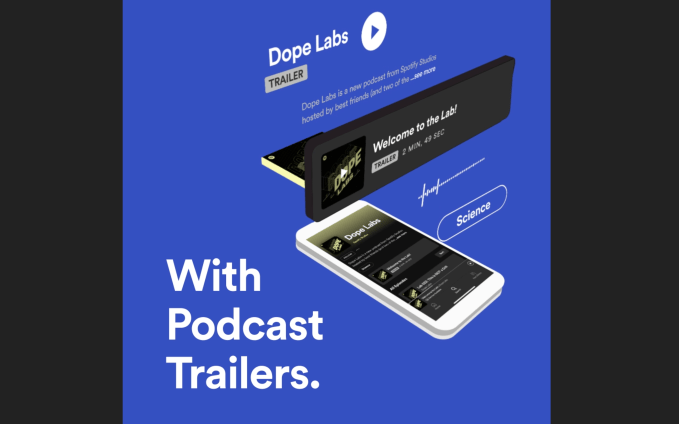
In particular, Spotify has given podcast show trailers a more prominent position in its app.

Show trailers help podcasts find new listeners by offering a concise introduction to the podcast and its creators. A good trailer hooks listeners on the show’s concept by selling its strengths, or even by offering a snippet of content that makes listeners hungry to hear more.

In the updated version of Spotify’s app, these trailers are labeled “trailer” and are highlighted at the top of the episode list, separated from the content as Apple does in its own podcasts app.

The belief here is that listeners need an easier way to check out the different podcasts out there, without having to commit to full episodes. That’s more important than ever as Spotify’s podcast library expands. The app’s catalog now has over 700,000 podcasts across all sorts of topics — a figure that’s growing quickly. In January, Spotify was at the Consumer Electronics Show touting its “over 500,000” podcasts. By the time of this month’s earnings, it was using the higher number.

Also to aid in discovery, Spotify is adding descriptive show categories underneath the show’s description. These will be simple labels, like “true crime,” “personal stories,” “travel,” “relationships,” and more. This change is also focused on catching up with market leader Apple Podcasts, which already categorizes its podcasts in a similar way.

The other major change is to the landing page for podcast shows in Spotify, which are getting a revamp to be more readable at a glance.

The updated layout has moved the descriptions up to the top of the page, so you don’t have to swipe on a show to read about it. Before, Spotify would display the podcast’s thumbnail image at the top, and you’d swipe left to view the description. Now, the layout looks more like — yes, you guessed it — Apple Podcasts.

The combined changes do make Spotify’s app more usable for podcast listening and discovery — especially for people who are used to Apple Podcasts’ design and layout, but are now making the jump to Spotify. However, Spotify’s real advantage in podcasts isn’t just how it can mimic Apple’s better design, but how it’s catering to creators, investing in originals and exclusives, personalizing its recommendations, and now, its ads.

Spotify says the redesign is rolling out to its mobile app, starting today.


Read Full Article

Facebook prototypes tabbed News Feed with Most Recent & Seen


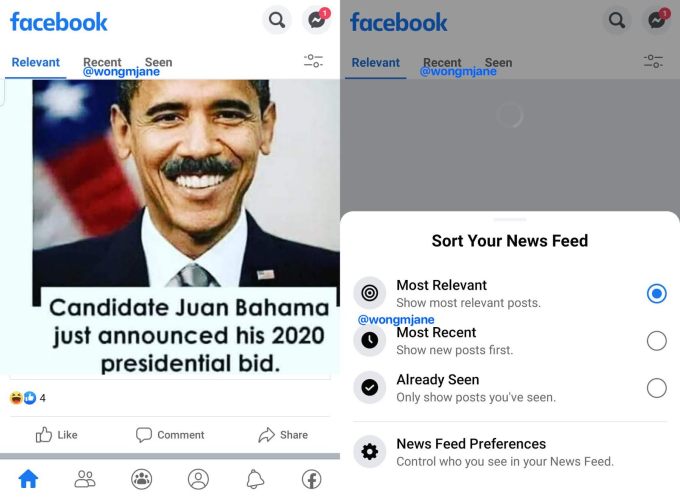
Facebook may make it easier to escape its ranking algorithm and explore the News Feed in different formats. Facebook has internally prototyped a tabbed version of the News Feed for mobile that includes that the standard Most Relevant feed, the existing Most Recent feed of reverse chronological posts that was previously buried as a sidebar bookmark, and an Already Seen feed of posts you’ve previously viewed feed that historically was only available on desktop via the largely unknown URL facebook.com/seen

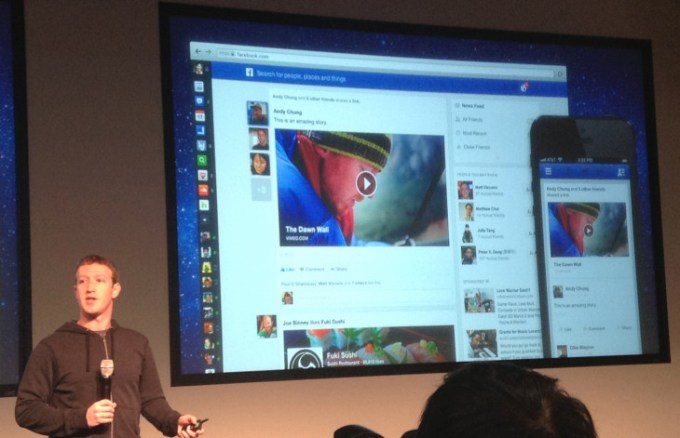
The tabbed feed is currently unlaunched, but If Facebook officially rolls it, it could make the social network feel more dynamic and alive since it’d be easier to access Most Recent to view what’s happening in real time. It could also help users track down an important post they lost that they might want to learn from or comment on. The tabbed interface would be the biggest change to News Feed since 2013 when Facebook announced but later scrapped the launch of a multi-feed with side bar options for just exploring Music, Photos, Close Friends, and more.

The tabbed News Feed prototype was spotted in the Facebook for Android code by master reverse engineering specialist Jane Manchun Wong who’s provided tips on core of new features to TechCrunch in the past. She was able to generate these screenshots that show the tabs for Relevant, Recent, and Seen above the News Feed. Tapping these reveals a Sort Your News Feed configuration window where you can choose between the feeds, see descriptions from them, or dive into the existing News Feed preferences about who you block or see first.

CEO Mark Zuckerberg reveals the later-scrapped multi-feed

When asked by TechCrunch, a Facebook spokesperson confirmed this is something it’s considering testing externally, but it’s just internally available for now. It’s exploring whether the tabbed interface would make Most Recent and Seen easier to access. “You can already view your Facebook News Feed chronologically. We’re testing ways to make it easier to find, as well as sort by posts you’ve already seen” the spokesperson tells TechCrunch.

Offering quicker ways to sort the feed could keep users scrolling longer. If they encounter a few boring posts chosen by the algorithm, want to see what friends are doing right now, or want to enjoy posts they already interacted with, a tabbed interface would give them an instant alternative beyond closing the app. While likely not the motive of this experiment, increasing time spent across these feeds could boost Facebook’s ad views at a time when it’s been hammered by Wall Street for slowing profit growth.

To many, Facebook’s algorithm can feel like an inscrutable black box that decides their content destiny. Feed it the wrong signals with pity Likes or guilty-pleasure video views and it can get confused about what you want. Facebook may finally deem us mature enough to have readily available controls over what we see.


Read Full Article

Facebook prototypes tabbed News Feed with Most Recent & Seen


Facebook may make it easier to escape its ranking algorithm and explore the News Feed in different formats. Facebook has internally prototyped a tabbed version of the News Feed for mobile that includes that the standard Most Relevant feed, the existing Most Recent feed of reverse chronological posts that was previously buried as a sidebar bookmark, and an Already Seen feed of posts you’ve previously viewed feed that historically was only available on desktop via the largely unknown URL facebook.com/seen

The tabbed feed is currently unlaunched, but If Facebook officially rolls it, it could make the social network feel more dynamic and alive since it’d be easier to access Most Recent to view what’s happening in real time. It could also help users track down an important post they lost that they might want to learn from or comment on. The tabbed interface would be the biggest change to News Feed since 2013 when Facebook announced but later scrapped the launch of a multi-feed with options for just exploring Music, Photos, Close Friends, and more.

The tabbed News Feed prototype was spotted in the Facebook for Android code by master reverse engineering specialist Jane Manchun Wong who’s provided tips on core of new features to TechCrunch in the past. She was able to generate these screenshots that show the tabs for Relevant, Recent, and Seen above the News Feed. Tapping these reveals a Sort Your News Feed configuration window where you can choose between the feeds, see descriptions from them, or dive into the existing News Feed preferences about who you block or see first.

When asked by TechCrunch, a Facebook spokesperson confirmed this is something it’s considering testing externally, but it’s just internally available for now. It’s exploring whether the tabbed interface would make Most Recent and Seen easier to access. “You can already view your Facebook News Feed chronologically. We’re testing ways to make it easier to find, as well as sort by posts you’ve already seen” the spokesperson tells TechCrunch.

Offering quicker ways to sort the feed could keep users scrolling longer. If they encounter a few boring posts chosen by the algorithm, want to see what friends are doing right now, or want to enjoy posts they already interacted with, a tabbed interface would give them an instant alternative beyond closing the app. While likely not the motive of this experiment, increasing time spent across these feeds could boost Facebook’s ad views at a time when it’s been hammered by Wall Street for slowing profit growth.

To many, Facebook’s algorithm can feel like an inscrutable black box that decides their content destiny. Feed it the wrong signals with pity Likes or guilty-pleasure video views and it can get confused about what you want. Facebook may finally deem us mature enough to have readily available controls over what we see.


Read Full Article

For the love of fangirls | Yve Blake

For the love of fangirls | Yve Blake

When you think of fangirls, what comes to mind: large swaths of fandom (usually for a boyband) whose feelings culminate in tears and joyful screams? Perhaps you grimace or roll your eyes at the thought. In this fun, lively talk, playwright Yve Blake asks us to reevaluate our reaction to the misunderstood passion and power of fangirls, emphasizing why we should all embrace our own unbridled enthusiasm.

Click the above link to download the TED talk.

Ring slightly overhauls security and privacy, but it’s still not enough


Security camera maker Ring is updating its service to improve account security and give more control when it comes to privacy. Once again, this is yet another update that makes the overall experience slightly better but the Amazon-owned company is still not doing enough to protect its users.

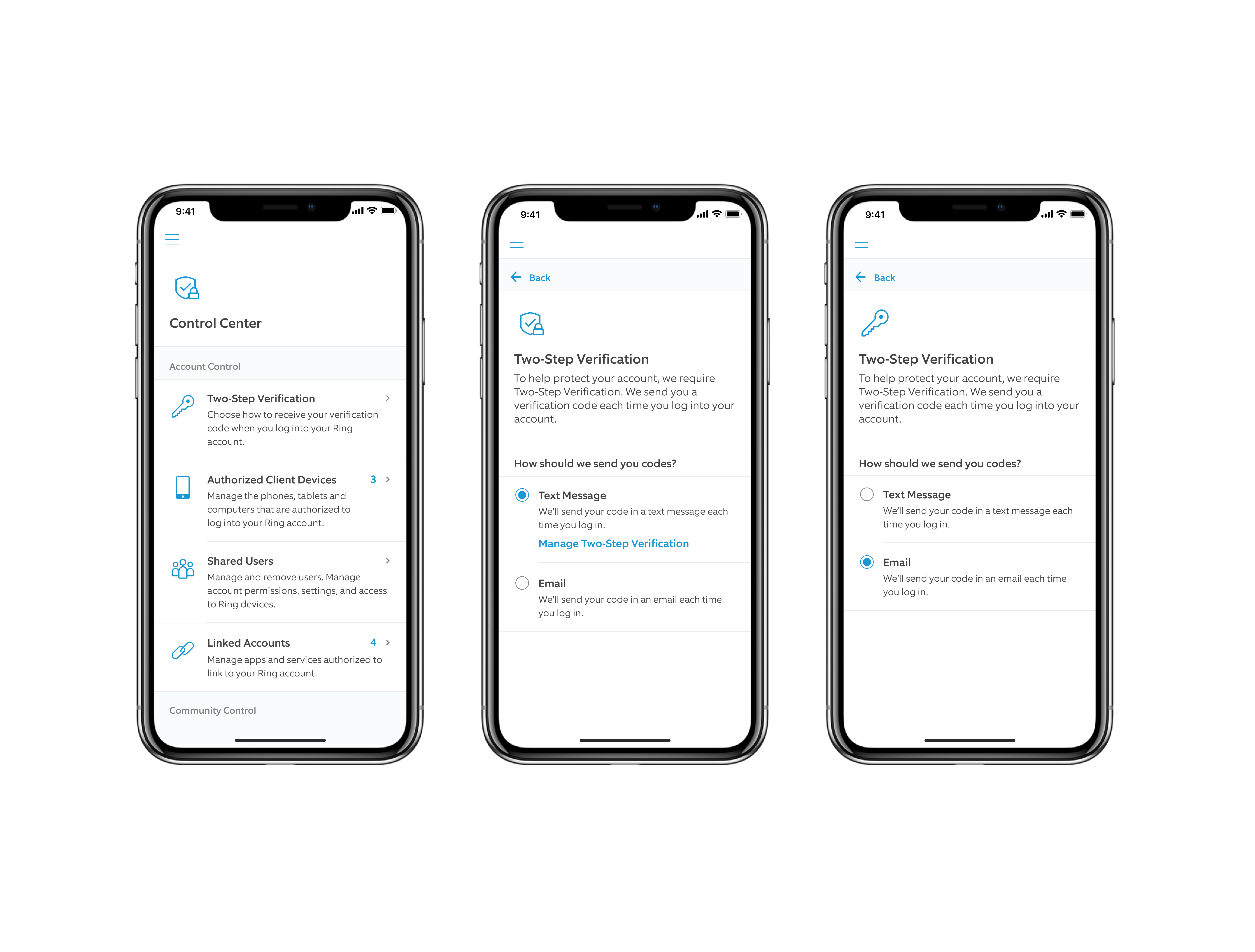
First, Ring is reversing its stance when it comes to two-factor authentication. Two-factor authentication is now mandatory — you can’t even opt out. So the next time you login on your Ring account, you’ll receive a six-digit code via email or text message to confirm your login request.

This is very different from what Ring founder Jamie Siminoff told me at CES in early January:

“So now, we’re going one step further, which is for two-factor authentication. We really want to make it an opt-out, not an opt-in. You still want to let people opt out of it because there are people that just don’t want it. You don’t want to force it, but you want to make it as forceful as you can be without hurting the customer experience.”

Security experts all say that sending you a code by text message isn’t perfect. It’s better than no form of two-factor authentication, but text messages are not secure. They’re also tied to your phone number. That’s why SIM-swapping attacks are on the rise.

As for sending you a code via email, it really depends on your email account. If you haven’t enabled two-factor authentication on your email account, then Ring’s implementation of two-factor authentication is basically worthless. Ring should let you use app-based two-factor with the ability to turn off other methods in your account.

And that doesn’t solve Ring’s password issues. As Motherboard originally found out, Ring doesn’t prevent you from using a weak password and reusing passwords that have been compromised in security breaches from third-party services.

A couple of weeks ago, TechCrunch’s Zack Whittaker could create a Ring account with “12345678” and “password” as the password. He created another account with “password” a few minutes ago.

When it comes to privacy, the EFF called out Ring’s app as it shares a ton of information with third-party services, such as branch.io, mixpanel.com, appsflyer.com and facebook.com. Worse, Ring doesn’t require meaningful consent from the user.

You can now opt out of third-party services that help Ring serve personalized advertising. As for analytics, Ring is temporarily removing most third-party analytics services from its apps (but not all). The company plans on adding a menu to opt out of third-party analytics services in a future update.

Enabling third-party trackers and letting you opt out later isn’t GDPR compliant. So I hope the onboarding experience is going to change as well as the company shouldn’t enable these features without proper consent at all.

Ring could have used this opportunity to adopt a far stronger stance when it comes to privacy. The company sells devices that you set up in your garden, your living room and sometimes even your bedroom. Users certainly don’t want third-party companies to learn more about your interactions with Ring’s services. But it seems like Ring’s motto is still: “If we can do it, why shouldn’t we do it.”


Read Full Article