22 June 2018

Bag Week 2008: Why I still love the Peak Design Everyday Backpack


Welcome to Bag Week 2018. Every year your faithful friends at TechCrunch spend an entire week looking at bags. Why? Because bags — often ignored but full of our important electronics — are the outward representations of our techie styles, and we put far too little thought into where we keep our most prized possessions.

A few months back I declared the Peak Design Everyday Backpack the best thing at CES 2018. It was a silly comment since the bag was released a couple years back but it was new to me. I had purchased the bag from Best Buy a few days prior and was in love with the bag and had to tell the world. I’m happy to report that after carrying the bag around several more conferences and a family trip to Disney World, I’m comfortable declaring it the best backpack I’ve ever used.

The company recently released a black version and sent me one to test. It looks mean. It’s the backpack Darth Vader would carry if he needed to tout around a full frame DSLR, a couple lenses and a MacBook Pro.

[gallery ids="1661479,1661478,1661477,1661475,1661476,1661480,1661482"]

The bag’s main clasp is wonderful. It’s designed in such a way that the wearer can quickly open and securely close it. Just pull down and away to open the bag. To close it, pull down so the top is tight, place the clasp next to the metal rungs and let go. Magnets hold the clasp next to the bag and the tension on the top causes the clasp to find the next available rung. Try it and you’ll love it. I do.

Peak Design equipped the bag with solid hardware. All the clasps are metal and the zippers are durable. I don’t think there’s plastic anywhere on the bag.

Like I said several months ago, the bag is best described as smart and solid. It’s a confident design with just enough pockets and storage options. The bag features one, large pocket that makes up most of the bag. Foldable dividers allow the wearer to customize the bag as needed. And quickly, too. These dividers fold in several ways, allowing the bag to hold, say, a large telephoto lens or several smaller lens.

The bag is packed full of surprises, too. Straps are hidden throughout allowing it to hold a surprising amount of items even a drone.

Small packing cubes make the Peak Design Everyday Backpack a storage cabinet. This is my bag while traveling overseas.

Peak Design positions this bag as a camera bag, but it can be so much more with some little bags. I use these and they fit perfectly in both the 20L and 30L bag. It lets me keep things organized and separated in a way that I’ve haven’t found possible in other bags. Peak Design should look at making a series of these bags. I would be all over them if they did.

The bag I bought back before CES was the 20L. It’s the smallest option though far from small. My 15-inch MacBook Pro squeezes into the laptop compartment and the bag has yet to feel too small even when it’s holding a camera, a couple books and a travel pillow.

The new black bag looks amazing but it seems to show scuffs and dirt more than my grey one. That’s a shame, too. I throw my bags around and expect a lot out of them. This black bag looks more dirty after one oversea trip than my grey one does after six months of use.

Just like I said back at CES, I’m not going to run through all the details of this bag. A few more are worth calling out: The sternum strap is fantastic. It uses clips without moving parts so it should last a lifetime. The shoulder straps are attached to the bag with a rivet that allows the straps to swivel as needed — it’s a smart advancement in the design of a backpack. And inside the laptop sleeve is a small pocket that is absolutely perfect to hold a Traveler’s Notebook and a pen.

As backpacks go, the Peak Design Everyday Backpack costs more than most. The smaller 20L is $260 and the 30L is $290. To me, the higher price is justified and if there’s a backpack worth the extra cost, it’s this one. I highly recommend this bag.


Bag design with Peak Design


Folks, it’s Bag Week! Tito Hamze visits Peak Design’s HQ in San Francisco to learn about the company and how they create their bags. From humble beginnings starting with a clip to hold your camera to a full-fledged accessory company, this outfit is growing and creating quality products — all while never having taken any traditional VC funding.

bag week 2018


Read Full Article

Messenger Kids expands outside the U.S., rolls out ‘kindness’ features


Facebook’s kid-friendly messaging app, Messenger Kids, is expanding to its first countries outside the U.S. today, with launches in Canada and Peru. It’s also introducing French and Spanish versions of its app, and rolling out a handful of new features focused on promoting respect and empathy, including a “Messenger Kids Pledge” and something called “Kindness Stickers,” which are meant to inspire more positive emotions when communicating online.

The stickers say things like “MY BFF” or “Well Done!” or “Best Artist,” and are designed to be placed on shared photos.

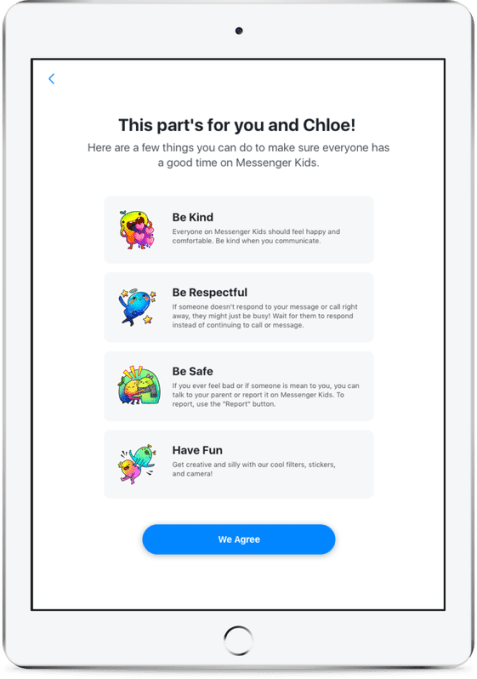
Also helpful is the new “Messenger Kids Pledge,” which is designed for both parents and children to read together, and includes some basic guidelines about how to be behave online. For example, it reminds everyone to “be kind when you communicate,” and to “be respectful,” explaining also that when someone doesn’t respond right away, they may just be too busy. “Be safe” and “have fun” are also a part of the guidelines.

This seems like a small addition, but it’s the kind of thing parents should already be doing with their kids when they introduce new technology – and many do not. Some parents don’t even know what apps kids are using, which has allowed those less secure apps to become hunting grounds for predators.

Messenger Kids works differently, as it requires parental involvement. Kids can’t add any friends without parental approval, and the app can be managed directly from parents’ Facebook.

While it’s understandable that people have a hard time trusting Facebook these days, there isn’t any viable alternative that allows kids to “practice” communicating or socializing online in a more controlled environment. Kids instead beg for apps aimed at adults and older teens, like Snapchat, Instagram, and Musical.ly – apps I personally won’t install for a “tween.”

Messenger Kids at least gives kids a way to privately socialize with approved people – kids whose parents you know and trust, and family members on Facebook. They’re at an age where you can still look over their shoulder, and correct bad behavior as it arises.

The alternative to using Messenger Kids is what a lot parents do – they refuse all social apps until kids reach a certain age, then throw them to the wolves on the internet. Is that really better?

Despite its sandboxed nature, kids like Messenger Kids because it has the features they actually want from the adult-oriented apps – like photo filters and stickers. (If the app would please add Facebook’s new lip-sync feature so I could stop hearing the begs for Musical.ly on a daily basis, I’d be much appreciative.)

Related to its push for kindness and respect, Messenger Kids will also soon roll out an interactive guide within its app called the “Appreciation Mission” which will encourage kids to discover and express appreciation for their friends and family. This will live in the “Mission” section of the app, where kids learn how to use features, like starting a video call or sending a photo.

Facebook says it consults with the Yale Center for Emotional Intelligence and a global group of advisors on the development of the features focused on these principles of social and emotional learning. (The Yale Center is a paid advisor.)

Come to think of it, a lot of adults could benefit from these sorts of features, too. Maybe Facebook and Twitter should add their own in-app kindness reminders, as well?

Messenger Kids also added support for two parents to manage kids’ accounts, based on customer feedback.

The app is a free download on iOS and Android.


Messenger Kids I Safer Messaging and Video Chat

Messenger Kids is a free, safer messaging and video chat app that provides more control for parents and more fun for kids.

Posted by Messenger Kids on Tuesday, June 19, 2018


Read Full Article

The 7 Best GitHub Alternatives for Hosting Your Project’s Source Code


github-alternatives

Ever since Microsoft purchased GitHub, many people have been searching for alternative places to host and share their code.

Is switching from GitHub absolutely necessary? Probably not. But Microsoft brings with it a reputation for the occasional takeover disaster, as well as some privacy concerns. So if you’re looking to jump ship, we don’t blame you.

Whether you’re trying to evade Microsoft or you just want to try something new, here are some of the best GitHub alternatives that provide similar functionality.

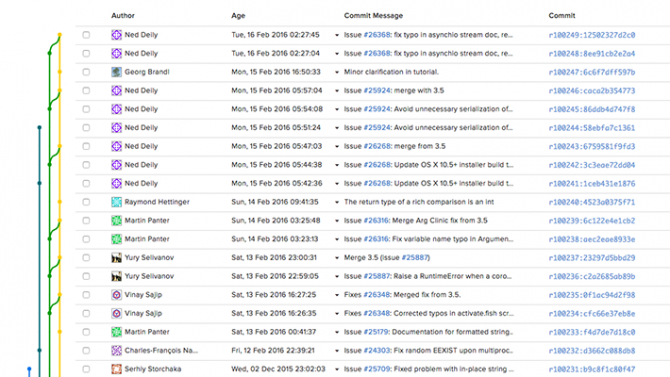
1. GitLab

As one of GitHub’s most significant competitors, GitLab is having a field day with the GitHub exodus. They’ve even made it easy to migrate projects from GitHub:

As it’s designed for the entire DevOps cycle, GitLab lets you do everything from plan to release to monitor your software. Powerful planning tools mean you don’t need to use another system to keep everyone on track. And GitLab’s branching system makes it easy to design, test, and manage code.

You can download an instance to host on your own server or use GitLab’s SaaS hosting. Both options have different price points ranging from $0 to $99 per user.

This pricing system gives you more flexibility than you get with GitHub, and allows GitLab to provide full DevOps capability to any company. You might end up paying more, but you’ll get everything you need.

2. BitBucket

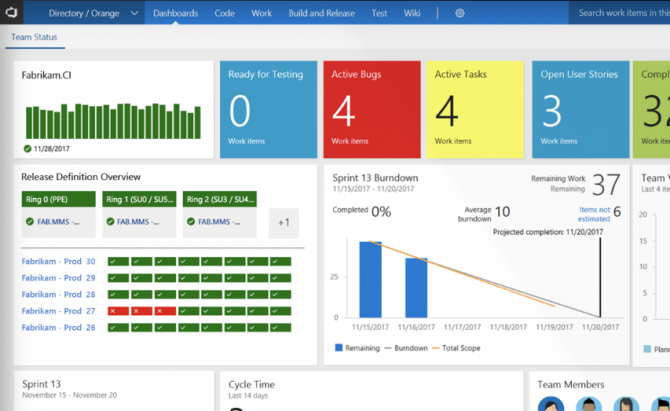
best github alternatives host source code

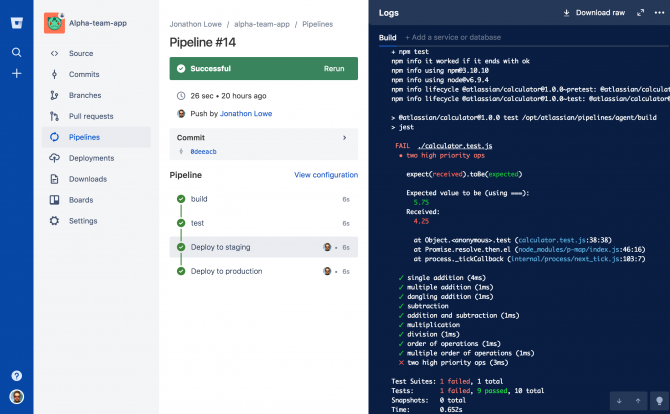
Atlassian’s Git-based repository system integrates with its other products, like Trello and Jira. This can be a huge bonus to teams that are already using these apps (which are common in the development world).

It also integrates with Slack and HipChat. Developers can create their own integrations within the user interface, adding more flexibility. Two-factor authentication and Soc 2 Type II security keep your code secure.

And if you’re already using GitHub, BitBucket has a walkthrough for importing your repositories.

BitBucket offers a wide range of pricing options for both self-hosted and cloud instances, including one-time and yearly payment plans. You can also pay extra to scale your build minutes and storage if you need more without adding more users.

Also, BitBucket has a free plan for small groups.

3. Beanstalk

best github alternatives host source code

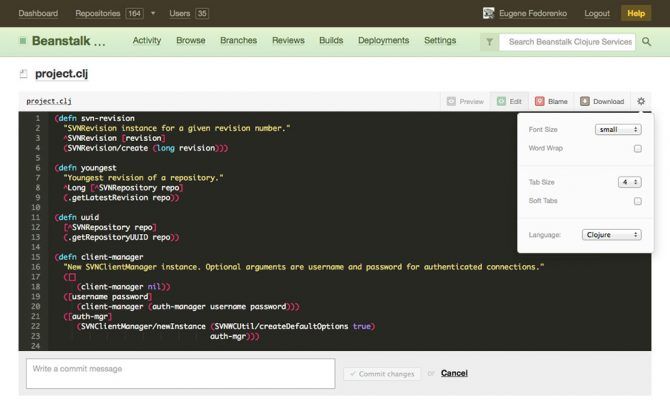
With support for both Subversion and Git, Beanstalk is a versatile platform. And because you can create branches and edit directly in your browser, it’s good for developers on the go.

Beanstalk also has robust code review options and reports that tell you how much of your repository has been reviewed. This can be especially useful for teams that contract with outside coders.

No necessary client means Beanstalk makes life easier for highly mobile teams. And there are enough security features that large corporations like Philips, Intel, and Whole Foods feel safe storing their data on the company’s servers.

4. AWS CodeCommit

Amazon’s Git-based source control service is a solid choice for companies that are already using other AWS services. With scalable cloud storage and no size limits, it’s also a good choice for anyone who’s likely to need a lot more server space in the near future.

CodeCommit has the advantage of an extremely straightforward pricing system. The first five users are free, and after that, you’ll pay $1 per user per month. That comes with 10GB per month of storage and 2,000 Git requests per active user.

If you need more storage of requests, you can easily pay for them. CodeCommit is also part of the AWS Free Tier, so you can try it out and get used to it before fully committing.

5. Visual Studio Team Services

best github alternatives host source code

Microsoft’s Visual Studio Team Services (VSTS) lets you collaborate, store, review, and deploy your code. Of course, if you’re leaving GitHub because you don’t like Microsoft, you’re not likely to want to use Visual Studio.

Still, VSTS aims to help you with a wider variety of development tasks. It provides Kanban boards for agile planning, support for Scrum, testing and deployment infrastructure, and package sharing.

Guaranteed uptime, 24/7 support, and a regular update schedule are all perks of working with VSTS. Up to five users can work with VSTS for free, and you’ll pay a monthly fee based on the number of users beyond that.

6. RhodeCode

best github alternatives host source code

If your organization uses different version control technologies, RhodeCode might be a good choice. It supports Mercurial, Git, and Subversion, giving you the widest variety of options on this list.

Code review, workflow automation, and permission management help you monitor and run DevOps in your group. And the built-in SVN-to-Git migration is a great help when transitioning your team.

RhodeCode’s Community Edition is totally free, while the Enterprise Edition gives you integration with enterprise tools, premium support, more collaboration features and multiple instances. The Enterprise Edition is $75 per user per year, and licenses are offered in 10-packs.

7. SourceForge

There’s a good chance that you’ve downloaded free software from SourceForge sometime in the past. And if you’re working on an open-source project, it’s a great alternative to GitHub.

There’s not much in the way of features, and the site itself is pretty strange (there are articles about cloud storage and business VoIP on the front page), but it’s also free. So if you’re on a shoestring budget and developing an open-source app, it’s worth considering.

SourceForge has caused some controversy in the past when they bundled their own software with open-source downloads. They seem to have cleaned up their act, but it also appears to be somewhat cyclical. Check their current practices before hosting your code there.

Choosing the Right GitHub Alternative for You

With all of these choices, it can be tough to find the best alternative to GitHub. But because most services offer either a free plan or a free trial, you can check them out to see which one works best.

If you just want basic functionality, and you aren’t worried too much about the interface or enterprise features, choosing one based on your budget is a viable option as well.

And don’t forget that version control can be used for more than code.

Read the full article: The 7 Best GitHub Alternatives for Hosting Your Project’s Source Code


Read Full Article

Twitter buys a startup to battle harassment, e-cigs are booming, and a meditation app is worth $250M


Hello and welcome back to Equity, TechCrunch’s venture capital-focused podcast where we unpack the numbers behind the headlines. This week TechCrunch’s Silicon Valley Editor Connie Loizos and I jammed out on a couple topics as Alex Wilhelm was out managing his fake stock game spreadsheets or something. (The jury is out on whether this was a good or bad thing.)

First up is Twitter buying Smyte, a startup targeting fixes for spam and abuse. This is, of course, Twitter’s perennial problem and it’s one that it’s been trying to fix for some time — but definitely not there yet. The deal terms weren’t disclosed, but Twitter to its credit has seen its stock basically double this year (and almost triple in the past few years). Twitter is going into a big year, with the U.S. midterm elections, the 2018 World Cup, and the Sacramento Kings probably finding some way to screw up in the NBA draft. This’ll be a close one to watch over the next few months as we get closer to the finals for the World Cup and the elections. Twitter is trying to bill itself as a home for news, focusing on live video, and a number of other things.

Then we have Juul Labs, an e-cigarette company that is somehow worth $10 billion. The Information reports that the PAX Labs spinout from 2015 has gone from a $250 million valuation all the way to $10 billion faster than you can name each scooter company that’s raising a new $200 million round from Sequoia that will have already been completed by the time you finish this sentence. Obviously the original cigarette industry was a complicated one circa the 20th century, so this one will be an interesting one to play out over the next few years.

Finally, we have meditation app Calm raising a $27 million round at a $250 million pre-money valuation. Calm isn’t the only mental health-focused startup that’s starting to pick up some momentum, but it’s one that’s a long time coming. I remember stumbling upon Calm.com back in 2012, where you’d just chill out on the website for a minute or so, so it’s fun to see a half-decade or so later that these apps are showing off some impressive numbers.

That’s all for this week, we’ll catch you guys next week. We apologize in advance if Alex makes it back on to the podcast.

Equity  drops every Friday at 6:00 am PT, so subscribe to us on Apple PodcastsOvercast, Pocketcast, Downcast and all the casts.


Read Full Article

How to Send Free SMS Texts From a PC Using Android Messages


windows-send-sms

Apps for texting from your PC like MightyText and Pushbullet always come up when discussing ways to send SMS messages from your PC. But they tend to limit your monthly texts unless you pay for a costly Pro subscription. Pulse, one of the best alternative apps to SMS text messaging, lets you text from your PC but it costs a few dollars per year.

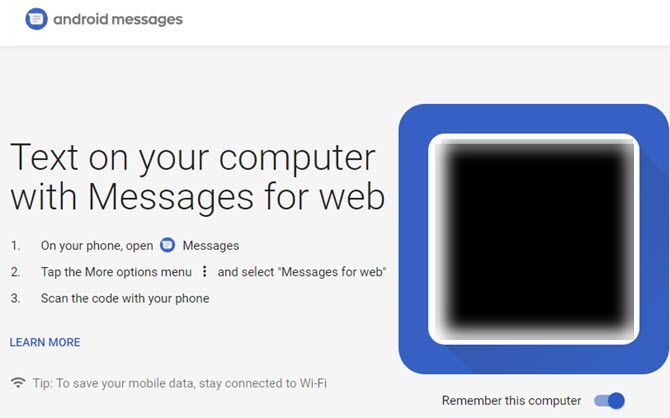
Android-Messages-Web-Text

Thankfully, Google has updated it Messages app to finally include free and unlimited texting from your PC. Here’s how to use it:

  1. Make sure you’ve updated to the latest version of Android Messages and open it on your phone. It’s pre-installed on many devices, but you can download it from the Play Store if you don’t have it. You’ll also need to set it as your default SMS app for full functionality.
  2. Tap the three-dot Menu in the upper-right corner of Messages and choose Messages for web. If you don’t see this yet, you’ll need to wait for the update to roll out to you.
  3. Open Google’s Messages for Web page on your computer’s browser (it won’t work with internet Explorer).
  4. If you want to stay signed in, enable the Remember this device slider. Then tap Scan QR code on your phone, and use your device’s camera to scan the code on your PC screen.
  5. Once it completes, your latest conversations will appear on your PC. Google says that they’re encrypted and cached in your browser. If you don’t access this for 14 days, Google will automatically sign you out for security.
  6. If you want to use a dark theme on the website, open Menu > Settings > Enable dark theme.

You can pair with multiple computers, but only your current one will be active at a time. And since this goes through your phone, it won’t work when your phone is off.

For convenience, you can use Chrome to create a pseudo-app for this on your PC. While on the Messages page, go to Menu > More tools > Create shortcut. Give it a name and check Open as window to add a link to it on your Taskbar. Then you can access your messages in a dedicated window.

If you’re not tied to SMS texting, check out the best messaging apps that work on both your phone and computer.

Read the full article: How to Send Free SMS Texts From a PC Using Android Messages


Read Full Article

The Best Way to Find College Admissions Info on Google

How to Back Up and Restore Adobe Lightroom Catalogs


lightroom-photographers

Photos are precious. Photos you have worked on with painstaking edits are even more valuable. That’s why it’s a good habit to get familiar with how Adobe Lightroom backs up and restores its catalog of photos.

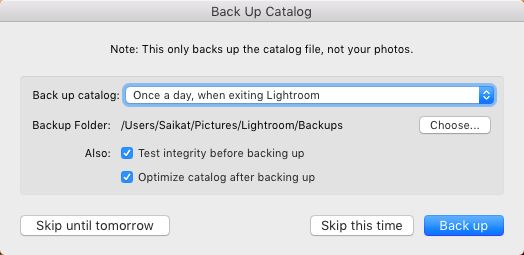
Note that Lightroom Classic CC backs up the catalog and not the photos themselves. You need to backup photos separately using a different strategy not covered in this article.

How to Back Up an Adobe Lightroom Catalog

The Lightroom catalog is a database that includes all the information related to the photo. It not only tracks the location of each photo but all the edits it has gone through in Lightroom. So, regular catalog backups on a schedule can save your work in case of a crash.

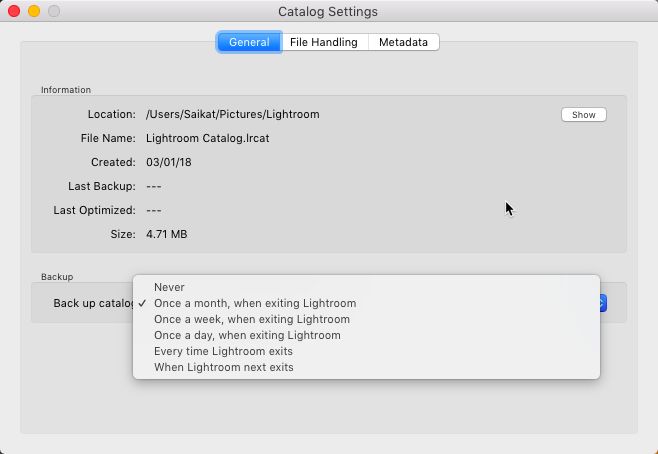
Lightroom catalog settings

You can tell Lightroom Classic CC to backup the catalog automatically every time you quit the software:

  1. Go to Edit > Catalog Settings (Windows) or Lightroom > Catalog Settings (Mac OS).
  2. Choose a backup option from the dropdown for Back up catalog.

Lightroom Catalog When Exiting

The Catalog Settings screen also shows the location of the catalog file and the backup meta-data. You can also exercise your backup options when quitting Lightroom.

  1. Exit Lightroom.
  2. In the Back Up Catalog dialog box, click Back Up to back up the catalog at the default location and exit Lightroom Classic CC.
  3. You can again select a backup schedule and a different location before you click Back Up.
  4. If you don’t want to back up this time, postpone the back up with a click on Skip this time or Skip until tomorrow. The command will vary according to the choice of the backup schedule you have chosen in the dropdown.

How to Restore an Adobe Lightroom Catalog Backup

Restoring a backed-up Lightroom catalog is easy and can save you from potential disasters like a hard drive crash.

  1. Choose File > Open Catalog.
  2. Browse to the location of your backed up catalog file.
  3. Select and open the backed up .LRCAT file.
  4. You can also copy the backed up catalog to the location of the original catalog and replace it.

Not backing up your photos is one of the photo management mistakes you want to avoid right from the beginning of your photography journey. There is no reason not to do it because Lightroom makes it so easy to backup your catalog.

Read the full article: How to Back Up and Restore Adobe Lightroom Catalogs


Read Full Article

WhatsApp Will Soon Stop Working on These Phones: Is Yours on the List?


If you use an old phone, or if you’ve never bothered to upgrade to the latest version of your phone’s operating system, it’s time to pay attention:

WhatsApp might stop working on your phone soon.

(Oh, and you really should upgrade your mobile OS anyway, you’re asking for a security breach if you don’t).

Which Phones Will Stop Supporting WhatsApp?

Estimates suggest more than 20 million handsets will be affected in total.

Any phone running one of the following operating systems will no longer be supported. WhatsApp will stop working in the coming days:

  • Android versions older than 2.3.3
  • Windows Phone 8.0 and older
  • iPhone iOS 6
  • Nokia Symbian S60
  • BlackBerry OS and BlackBerry 10

Worse still, WhatsApp will stop working on several more common handsets in February 2020. They are any devices running:

  • Android versions 2.3.7 and older
  • iOS 7 and older

Lastly, support for the app on the Nokia S40 will end in December 2018.

We know what you’re thinking: “Those dates are still a long time away, it doesn’t matter.” Perhaps, but in a blog post on the matter, WhatsApp said that users on those operating systems could lose functionality at any time between now and then.

Sure, it’s unlikely that the basic text messaging capabilities will stop functioning before the cut-off in 2020, but what about the ability to send photos and videos? And are you confident that video and voice calling will continue to work?

More importantly, users on any device listed above will no longer be able to create new WhatsApp accounts. That applies to the devices that lose support in 2020, as well as the devices that are set to lose support in the coming days.

The best solution is to update your Android or update your iPhone as soon as possible. And if your device is so old that you cannot upgrade it, perhaps it’s time to look for a new smartphone entirely.

Read the full article: WhatsApp Will Soon Stop Working on These Phones: Is Yours on the List?


Read Full Article

21 June 2018

Google adds a search feature to account settings to ease use


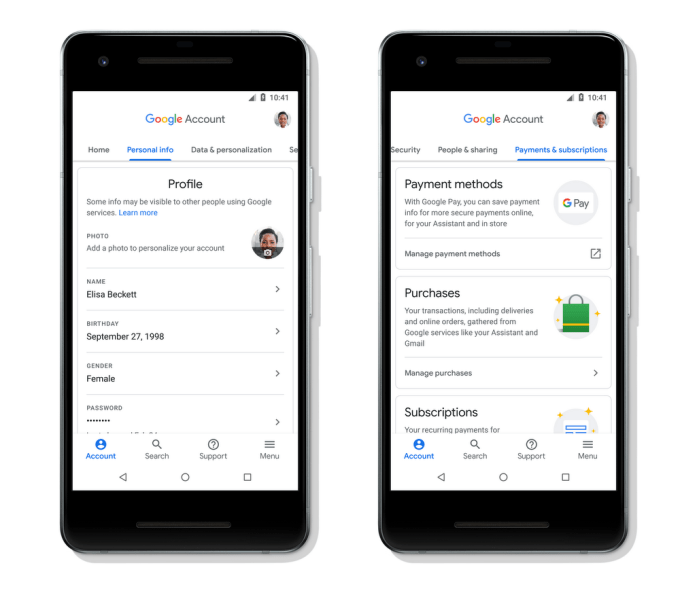
Google has announced a refresh of the Google Accounts user interface. The changes are intended to make it easier for users to navigate settings and review data the company has associated with an account — including information relating to devices, payment methods, purchases, subscriptions, reservations, contacts and other personal info.

The update also makes security and privacy options more prominent, according to Google.

“To help you better understand and take control of your Google Account, we’ve made all your privacy options easy to review with our new intuitive, user-tested design,” it writes. “You can now more easily find your Activity controls in the Data & Personalization tab and choose what types of activity data are saved in your account to make Google work better for you.

“There, you’ll also find the recently updated Privacy Checkup that helps you review your privacy settings and explains how they shape your experience across Google services.”

Android users will get the refreshed Google Account interface first, with iOS and web coming later this year.

Last September the company also refreshed Google Dashboard — to make it easier to use and better integrate it into other privacy controls.

While in October it outed a revamped Security Checkup feature, offering an overview of account security that includes personalized recommendations. The same month it also launched a free, opt-in program aimed at users who believe their accounts to be at particularly high risk of targeted online attacks.

And in January it announced new ad settings controls, also billed as boosting transparency and control. So settings related updates have been coming pretty thick and fast from the ad targeting tech giant.

The latest refresh comes at a time when many companies have been rethinking their approach to security and privacy as a result of a major update to the European Union’s data protection framework which applies to entities processing EU people’s data regardless of where that data is being crunched.

Google also announced a raft of changes to its privacy policy as a direct compliance response with GDPR back in May — saying it was making the policy clearer and easier to navigate, and adding more detail and explanations. It also updated user controls at that time, simplifying on/off switches for things like location data collection and web and app activity.

So that legal imperative to increase visibility and user controls at the core of digital empires looks to be generating uplift that’s helping to raise the settings bar across entire product suites. Which is good news for users.

As well as rethinking how Google Account settings are laid out, the updated “experience” adds some new functions intended to make it easier for people to find the settings they’re looking for too.

Notably a new search functionality for locating settings or specific info within an account — such as how to change a password. Which sounds like a really handy addition. There’s also a new dedicated support section offering help with common tasks, and answers from community experts.

And while it’s certainly welcome to see a search expert like Google adding a search feature to help people gain more control over their personal data, you do have to wonder what took it so long to come up with that idea.

Controls are only as useful as they are easy to use, of course. And offering impenetrable and/or bafflingly complex settings has, shamefully, been the historical playbook of the tech industry — as a socially engineered pathway to maximize data gathering via obfuscation (and obtain consent by confusion).

Again, the GDPR makes egregious personal data heists untenable over the long term — at least where the regulation has jurisdiction.

And while built-in opacity around technology system operation is something regulators are really only beginning to get to grips with — and much important work remains to be done to put vital guardrails in place, such as around the use of personal data for political ad targeting, for instance, or to ensure AI blackboxes can’t bake in bias — several major privacy scandals have knocked the sheen off big tech’s algorithmic Pandora’s boxes in recent years. And politicians are leaning into the techlash.

So, much like all these freshly redesigned settings menus, the direction of regulatory travel looks pretty clear — even if the pace of progress is never as disruptive as the technologies themselves.


Read Full Article

What Being a Freelance Programmer Is REALLY Like: The Pros and Cons

Fb Messenger auto-translation chips at US/Mexico language wall


Facebook’s been criticized for tearing America apart, but now it will try to help us forge bonds with our neighbors to the south. Facebook Messenger will now offer optional auto-translation of English to Spanish and vice-versa for all users in the United States and Mexico. It’s a timely launch given the family separation troubles at the nations’ border.

The feature could facilitate cross-border and cross-language friendships, business, and discussion that might show people in the two countries that deep down we’re all just human. It could be especially powerful for US companies looking to use Messenger for conversational commerce without having to self-translate everything.

Facebook tells me “we were pleased with the results” following a test using AI to translate the language pair in Messenger for US Facebook Marketplace users in April.

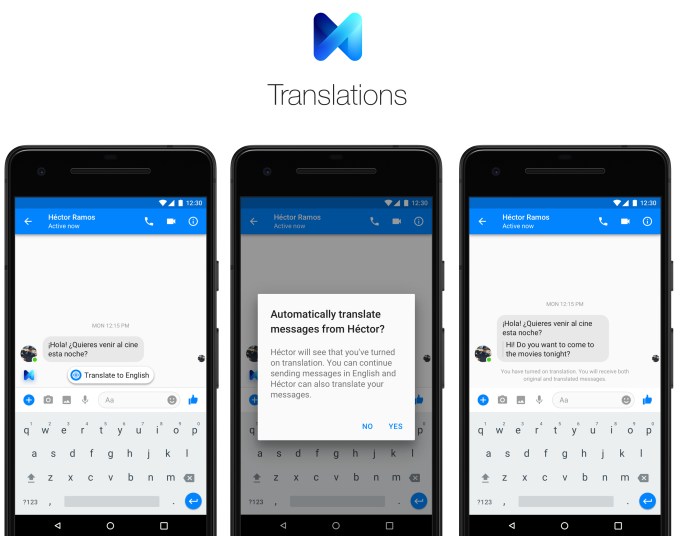
Now when users receive a message that is different from their default language, Messenger’s AI assistant M will ask if they want it translated. All future messages will in that thead will be auto-translated unless a user turns it off. Facebook plans to bring the feature to more language pairs and countries soon.

A Facebook spokesperson tells me “The goal with this launch is really to enable people to communicate with people they wouldn’t have been able to otherwise, in a way that is natural and seamless.”

Starting in 2011, Facebook began offering translation technology for News Feed posts and comments. For years it relied on Microsoft Bing’s translation technology, but Facebook switched to its own stack in mid-2016. By then it was translating 2 billion pieces of text a day for 800 million users.

Conversational translation is a lot tougher than social media posts, though. When we chat with friends, it’s more colloquial and full of slang. We’re also usually typing in more a hurry and can be less accurate. But if Facebook can reliably figure out what we’re saying, Messenger could become the modern day Babel Fish. At 2016’s F8, Facebook CEO Mark Zuckerberg through shade on Donald Trump saying “instead of building walls, we can build bridges.” Trump still doesn’t have that wall, and now Zuck is building a bridge with technology.


Read Full Article

Fb Messenger auto-translation chips at US/Mexico language wall


Facebook’s been criticized for tearing America apart, but now it will try to help us forge bonds with our neighbors to the south. Facebook Messenger will now offer optional auto-translation of English to Spanish and vice-versa for all users in the United States and Mexico. It’s a timely launch given the family separation troubles at the nations’ border.

The feature could facilitate cross-border and cross-language friendships, business, and discussion that might show people in the two countries that deep down we’re all just human. It could be especially powerful for US companies looking to use Messenger for conversational commerce without having to self-translate everything.

Facebook tells me “we were pleased with the results” following a test using AI to translate the language pair in Messenger for US Facebook Marketplace users in April.

Now when users receive a message that is different from their default language, Messenger’s AI assistant M will ask if they want it translated. All future messages will in that thead will be auto-translated unless a user turns it off. Facebook plans to bring the feature to more language pairs and countries soon.

A Facebook spokesperson tells me “The goal with this launch is really to enable people to communicate with people they wouldn’t have been able to otherwise, in a way that is natural and seamless.”

Starting in 2011, Facebook began offering translation technology for News Feed posts and comments. For years it relied on Microsoft Bing’s translation technology, but Facebook switched to its own stack in mid-2016. By then it was translating 2 billion pieces of text a day for 800 million users.

Conversational translation is a lot tougher than social media posts, though. When we chat with friends, it’s more colloquial and full of slang. We’re also usually typing in more a hurry and can be less accurate. But if Facebook can reliably figure out what we’re saying, Messenger could become the modern day Babel Fish. At 2016’s F8, Facebook CEO Mark Zuckerberg through shade on Donald Trump saying “instead of building walls, we can build bridges.” Trump still doesn’t have that wall, and now Zuck is building a bridge with technology.


Read Full Article

The iPhone Camera Roll: 8 Tips and Fixes for Common Issues

How Can Neural Network Similarity Help Us Understand Training and Generalization?


In order to solve tasks, deep neural networks (DNNs) progressively transform input data into a sequence of complex representations (i.e., patterns of activations across individual neurons). Understanding these representations is critically important, not only for interpretability, but also so that we can more intelligently design machine learning systems. However, understanding these representations has proven quite difficult, especially when comparing representations across networks. In a previous post, we outlined the benefits of Canonical Correlation Analysis (CCA) as a tool for understanding and comparing the representations of convolutional neural networks (CNNs), showing that they converge in a bottom-up pattern, with early layers converging to their final representations before later layers over the course of training.

In “Insights on Representational Similarity in Neural Networks with Canonical Correlation” we develop this work further to provide new insights into the representational similarity of CNNs, including differences between networks which memorize (e.g., networks which can only classify images they have seen before) from those which generalize (e.g., networks which can correctly classify previously unseen images). Importantly, we also extend this method to provide insights into the dynamics of recurrent neural networks (RNNs), a class of models that are particularly useful for sequential data, such as language. Comparing RNNs is difficult in many of the same ways as CNNs, but RNNs present the additional challenge that their representations change over the course of a sequence. This makes CCA, with its helpful invariances, an ideal tool for studying RNNs in addition to CNNs. As such, we have additionally open sourced the code used for applying CCA on neural networks with the hope that will help the research community better understand network dynamics.

Representational Similarity of Memorizing and Generalizing CNNs
Ultimately, a machine learning system is only useful if it can generalize to new situations it has never seen before. Understanding the factors which differentiate between networks that generalize and those that don’t is therefore essential, and may lead to new methods to improve generalization performance. To investigate whether representational similarity is predictive of generalization, we studied two types of CNNs:
  • generalizing networks: CNNs trained on data with unmodified, accurate labels and which learn solutions which generalize to novel data.
  • memorizing networks: CNNs trained on datasets with randomized labels such that they must memorize the training data and cannot, by definition, generalize (as in Zhang et al., 2017).
We trained multiple instances of each network, differing only in the initial randomized values of the network weights and the order of the training data, and used a new weighted approach to calculate the CCA distance measure (see our paper for details) to compare the representations within each group of networks and between memorizing and generalizing networks.

We found that groups of different generalizing networks consistently converged to more similar representations (especially in later layers) than groups of memorizing networks (see figure below). At the softmax, which denotes the network’s ultimate prediction, the CCA distance for each group of generalizing and memorizing networks decreases substantially, as the networks in each separate group make similar predictions.
Groups of generalizing networks (blue) converge to more similar solutions than groups of memorizing networks (red). CCA distance was calculated between groups of networks trained on real CIFAR-10 labels (“Generalizing”) or randomized CIFAR-10 labels (“Memorizing”) and between pairs of memorizing and generalizing networks (“Inter”).
Perhaps most surprisingly, in later hidden layers, the representational distance between any given pair of memorizing networks was about the same as the representational distance between a memorizing and generalizing network (“Inter” in the plot above), despite the fact that these networks were trained on data with entirely different labels. Intuitively, this result suggests that while there are many different ways to memorize the training data (resulting in greater CCA distances), there are fewer ways to learn generalizable solutions. In future work, we plan to explore whether this insight can be used to regularize networks to learn more generalizable solutions.

Understanding the Training Dynamics of Recurrent Neural Networks
So far, we have only applied CCA to CNNs trained on image data. However, CCA can also be applied to calculate representational similarity in RNNs, both over the course of training and over the course of a sequence. Applying CCA to RNNs, we first asked whether the RNNs exhibit the same bottom-up convergence pattern we observed in our previous work for CNNs. To test this, we measured the CCA distance between the representation at each layer of the RNN over the course of training with its final representation at the end of training. We found that the CCA distance for layers closer to the input dropped earlier in training than for deeper layers, demonstrating that, like CNNs, RNNs also converge in a bottom-up pattern (see figure below).
Convergence dynamics for RNNs over the course of training exhibit bottom up convergence, as layers closer to the input converge to their final representations earlier in training than later layers. For example, layer 1 converges to its final representation earlier in training than layer 2 than layer 3 and so on. Epoch designates the number of times the model has seen the entire training set while different colors represent the convergence dynamics of different layers.
Additional findings in our paper show that wider networks (e.g., networks with more neurons at each layer) converge to more similar solutions than narrow networks. We also found that trained networks with identical structures but different learning rates converge to distinct clusters with similar performance, but highly dissimilar representations. We also apply CCA to RNN dynamics over the course of a single sequence, rather than simply over the course of training, providing some initial insights into the various factors which influence RNN representations over time.

Conclusions
These findings reinforce the utility of analyzing and comparing DNN representations in order to provide insights into network function, generalization, and convergence. However, there are still many open questions: in future work, we hope to uncover which aspects of the representation are conserved across networks, both in CNNs and RNNs, and whether these insights can be used to improve network performance. We encourage others to try out the code used for the paper to investigate what CCA can tell us about other neural networks!

Acknowledgements
Special thanks to Samy Bengio, who is a co-author on this work. We also thank Martin Wattenberg, Jascha Sohl-Dickstein and Jon Kleinberg for helpful comments.


Bag Week 2018: The Nomadic NF-02 keeps everything in its right place


Nomadic, a Japanese brand sold by JetPens in the US, makes some of my favorite bags and backpacks. The Wise Walker Toto was an amazing little bag and I’ve always enjoyed the size, materials, and design. The $89 Nomadic NF-02 is no different.

The best thing about this 15×7 inch backpack is the compact size and internal pouches. The Nomadic can hold multiple pens, notebooks, and accessories, all stuck in their own little cubbies, and you can fit a laptop and a few books in the main compartment. This is, to be clear, not a “school” backpack. It’s quite compact and I doubt it would be very comfortable with a much more than a pair of textbooks and a heavier laptop. It’s definitely a great travel sack, however, and excellent for the trip from home to the office.

The bag comes in a few colors including turquoise and navy and there is a small hidden pouch for important papers and passports. There is a reflective strip on the body and it is water repellent so it will keep your gear dry.

Again, my favorite part of this bag are the multiple little pockets and spaces. It’s an organizer’s dream and features so many little spots to hide pens and other gear that it could also make an excellent tourist pack. It is small enough for easy transport but holds almost anything you can throw at it.

Nomadic is a solid backpack. It’s small, light, and still holds up to abuse. I’m a big fan of the entire Nomadic line and it’s great to see this piece available in the US. It’s well worth a look if you’re looking for a compact carrier for your laptop, accessories, and notebooks.

bag week 2018


Read Full Article

4 Tools to Back Up Your Android Device to Your PC

Bag Week 2018: WP Standard’s Rucksack goes the distance


WP Standard – formerly called Whipping Post Leather – makes rugged leather bags, totes, and briefcases and their Rucksack is one of my favorites. Designed to look like something a Pony Express rider would slip on for a visit to town, this $275 is sturdy, handsome, and ages surprisingly well.

There are some trade-offs, however. Except for two small front pouches there are no hidden nooks and crannies in this spare 15×15 inch sack. The main compartment can fit a laptop and a few notebooks and the front pouches can hold accessories like mice or a little collection of plugs. There is no fancy nylon mesh or gear organizers here, just a brown expanse of full grain leather.

I wore this backpack for a few months before writing this and found it surprisingly comfortable and great for travel. Because it is so simple I forced myself to pare down my gear slightly and I was able to consolidate my cables and other accessories into separate pouches. I could fit a laptop, iPad Pro, and a paperback along side multiple notebooks and planners and I could even overstuff the thing on long flights. As long as I was able to buckle the front strap nothing fell out or was lost.

This bag assumes that you’re OK with thick, heavy leather and that you’re willing to forgo a lot of the bells and whistles you get with more modern styles. That said, it has a great classic look and it’s very usable. I suspect this bag would last decades longer than anything you could buy at Office Depot and it would look good doing it. At $275 it’s a bit steep but you’re paying for years – if not decades – of regular use and abuse. It’s worth the investment.

bag week 2018


Read Full Article

Google Assistant’s ‘Continued Conversation’ feature is now live


Google I/O was awash with Assistant news, but Duplex mystery aside, Continued Conversation was easily one of the most compelling announcements of the bunch. The feature is an attempt to bring more naturalized conversation to the AI — a kind of holy grail with these sorts of smart assistants.

Continued Conversation is rolling out to Assistant today for users in the U.S. with a Home, Home Mini and Home Max. The optional setting is designed to offer a more natural dialogue, so users don’t have to “Hey Google” Assistant every time they have a request. Google offers the following example in a blog post that just went up,

So next time you wake up and the skies are grey, just ask “Hey Google, what’s the weather today?”… “And what about tomorrow?”… “Can you add a rain jacket to my shopping list”… “And remind me to bring an umbrella tomorrow morning”…“Thank you!”

You’ll need to access the Assistant settings on an associated device in order to activate the feature. And that initial “Ok Google” or “Hey Google” will still have to be spoken to trigger the Assistant. From there, it will stay listening for up to eight seconds without detecting any speech. It’s not exactly a dialogue, so much as a way of easing the awkward interaction of having to repeat the same command over and over again. 

Given all of the recent privacy concerns that have arisen as smart speakers and the like have exploded in popularity, it’s easy to see why Google’s gone and taken all of these safeguards to assure users that the devices aren’t listening for anything beyond a wake word.

An extra eight seconds isn’t much, but those who are already skeptical about product privacy might want to keep it off, for good measure.


Read Full Article

Facebook expands fact-checking program, adopts new technology for fighting fake news


Facebook this morning announced an expansion of its fact-checking program and other actions it’s taking to combat the scourge of fake news on its social network. The company, which was found to be compromised by Russian trolls whose disinformation campaigns around the November 2016 presidential election reached 150 million Americans, has been increasing its efforts at fact-checking news through a combination of technology and human review in the months since.

The company began fact-checking news on its site last spring, with help from independent third-party fact-checkers certified through the non-partisan International Fact-Checking Network. These fact checkers rate the accuracy of the story, allowing Facebook to take action on those rated false by lowering them in the News Feed, and reduced the distribution of those Pages that are repeat offenders.

Today, Facebook says it has since expanded this program to 14 countries around the world, and plans to roll it out to more countries by year-end. It also claims the impact of fact-checking reduced the distribution of fake news by an average of 80 percent.

The company also announced the expansion of its program for fact-checking photos and video. First unveiled this spring, Facebook has been working to fact-check things like manipulated  videos or misused photos where images are taken out of context in order to push a political agenda. This is a huge issue, because memes have become a popular way of rallying people around a cause on the internet, but they often do so by completely misrepresenting the facts by using images from different events, places, and times.

One current example of this is the photo used by Drudge Report showing young boys holding guns in a story about the U.S.-Mexico border battle. The photo was actually taken nowhere near the border, but rather was snapped in Syria in 2012 and was captioned: “Four young Syrian boys with toy guns are posing in front of my camera during my visit to Azaz, Syria. Most people I met were giving the peace sign. This little city was taken by the Free Syrian Army in the summer of 2012 during the Battle of Azaz.”

Using fake or misleading images to stoke fear, disgust, or hatred of another group of people is a common way photos and videos are misused online.

Facebook also says it’s taking advantage of new machine learning technology to help it find duplicates of already debunked stories, and will working with fact-checking partners to use Schema.org‘s Claim Review, an open-source framework that will allow fact-checkers to share ratings with Facebook so the company can act more quickly, especially in times of crisis.

And the company says it will expand its efforts in downranking fake news by using machine learning to demote foreign Pages that are spreading financially-motivated hoaxes to people in other countries.

In the weeks ahead, an elections research commission working in partnership with Facebook to measure the volume and effect of misinformation on the social network will launch its website and its first request for proposals.

The company had already announced its plans to further investigate the role social media plans in elections and in democracy. The commission will receive access to privacy-protected data sets with a sample of links that people engaged with on Facebook, which will allow it to understand what sort of content is being shared. Facebook says the research will “help keep us accountable and track our progress.”


Read Full Article

MacBook vs. iMac: A Comparison Guide to Help You Decide


macbook-vs-imac

If you need a portable Mac, you buy a MacBook. If you want the most powerful Mac experience, you buy an iMac—right?

Deciding between a desktop and a laptop isn’t quite as simple as you might think. We have to balance our expectations, real-world requirements, and a realistic budget before taking the plunge.

So we’ve done the agonizing for you. Here’s how two of Apple’s flagship machines stack up and a guide to deciding whether a MacBook or an iMac would be better suited to your needs.

Comparing MacBook vs. iMac

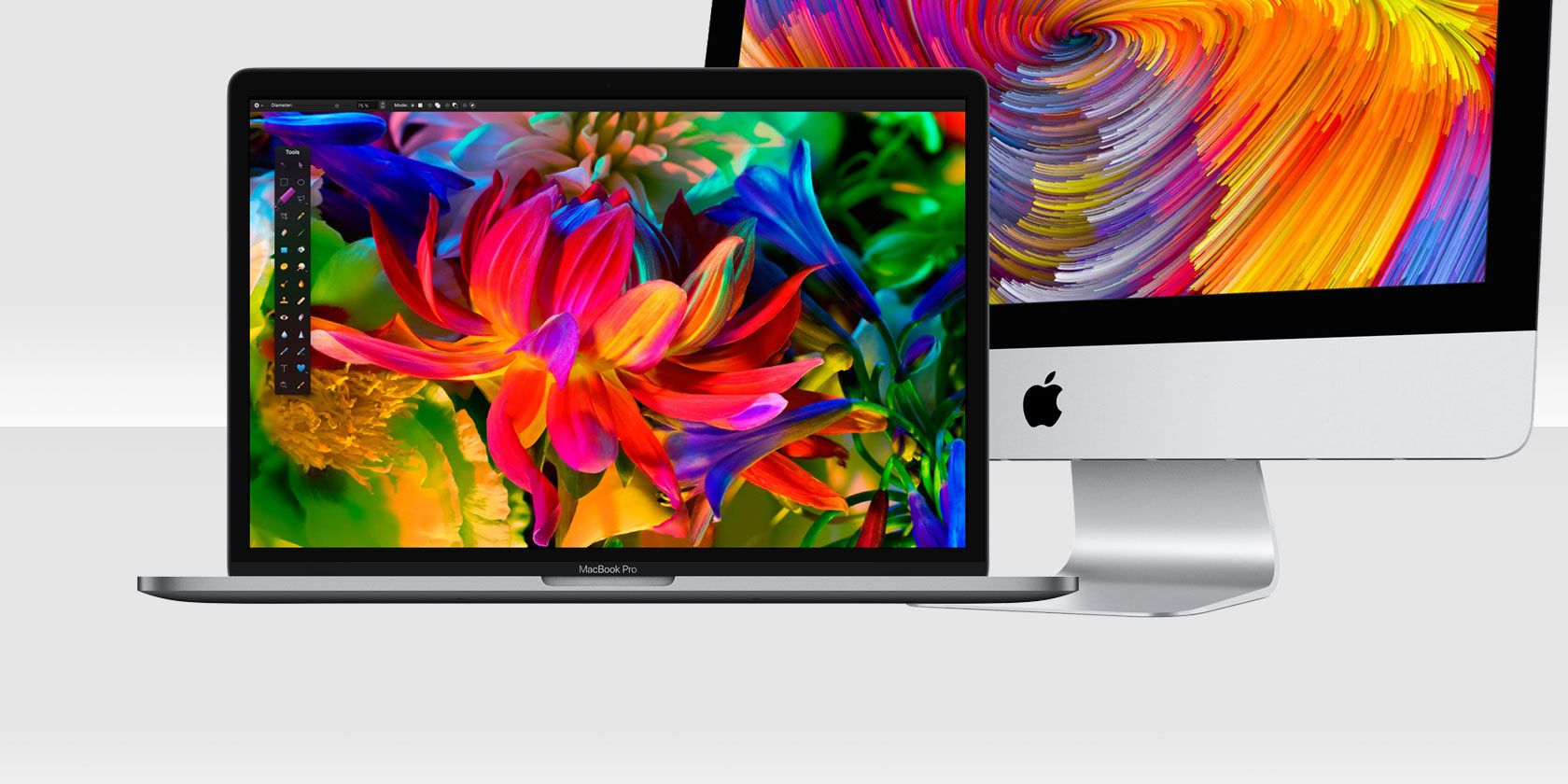
For the purpose of this comparison, we’ll look at the top-end 27-inch iMac model and its closest competitor, the fastest 15-inch MacBook Pro. You’ll likely have your own wishlist, but this comparison is fairly representative of the differences between the models whatever your budget.
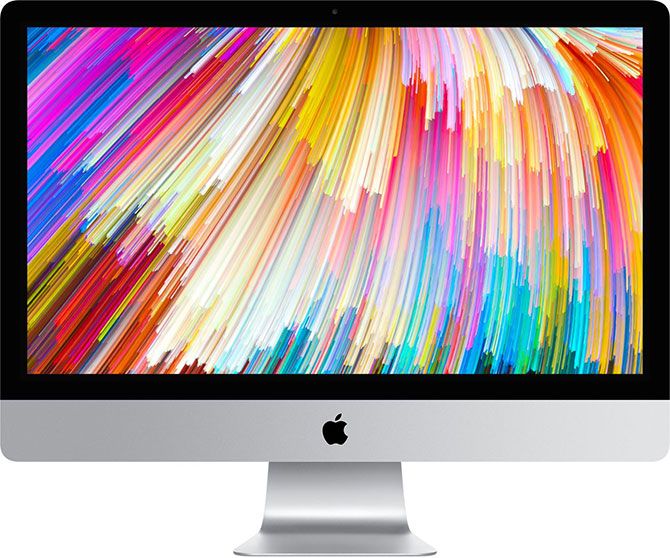
iMac 27

Even at this stage, it’s worth thinking about the lifespan of the product. Of the many reasons why people buy Macs, hardware reliability and longevity is perhaps the most important. Make sure whatever you choose will fit the bill for a few years. This is especially true when it comes to storage capacity, since Apple’s machines are less upgradeable than ever before.
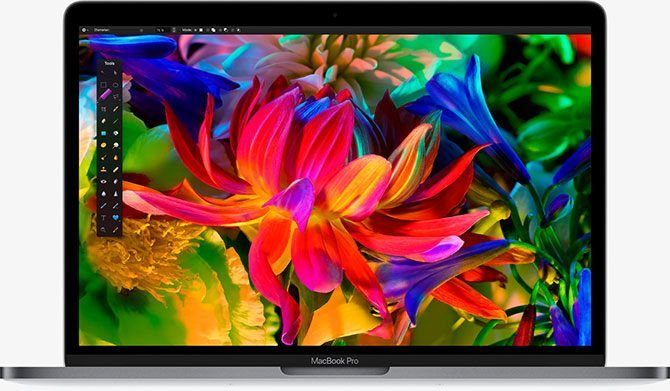
MacBook Pro with Touch Bar 15-inch

Now let’s take a look at each aspect of Apple’s computers by directly comparing hardware, and ultimately value for money.

MacBook vs. iMac: CPU and RAM

There once was a time when the desktop variants would run away with the show here. But thanks to the ever-shrinking silicon chip, it’s far less clear-cut than it once was. Mobile chips need to be efficient, which means you’re unlikely to see comparable clock speeds. This doesn’t necessarily translate into a black and white performance deficit, though.

iMac options

The top-tier 27-inch iMac comes with a 3.8GHz Intel Core i5 processor. You can upgrade this to an i7 4.2GHz processor for an extra $200. The MacBook Pro has an Intel Core i7 processor that tops out at 2.9GHz, with an upgrade to the 3.1GHz model available for another $200.

In terms of processing power, while the iMac has the advantage due to higher clock speeds, you’re unlikely to notice the difference in daily use. When it comes to RAM, it’s a similar state of affairs.

The top-tier MacBook Pro comes with 16GB of RAM onboard, compared to the iMac’s 8GB. You can upgrade the iMac to 16GB ($200), 32GB ($400), or 64GB ($1,200). However, you can’t upgrade a MacBook Pro beyond 16GB.

MacBook Pro options

But the iMac has another trick up its sleeve: a slot at the back of the unit which allows you to upgrade the RAM yourself. This is not possible on the MacBook Pro, but it’s a nice option for iMac users who want to save some money today and upgrade in the future.

Conclusion: Processing power is comparable, though the iMac just tips it which makes the MacBook Pro even more impressive. User-expandable memory and more options at checkout further give the iMac the edge here.

MacBook vs. iMac: GPU and Display

Both the MacBook Pro and iMac have comparable displays. Each is Retina quality, which means the pixel density is high enough that you can’t make out individual pixels. Both have a brightness of 500 nits, and both use the P3 wide color gamut offering 25 percent more colors compared to standard RGB.
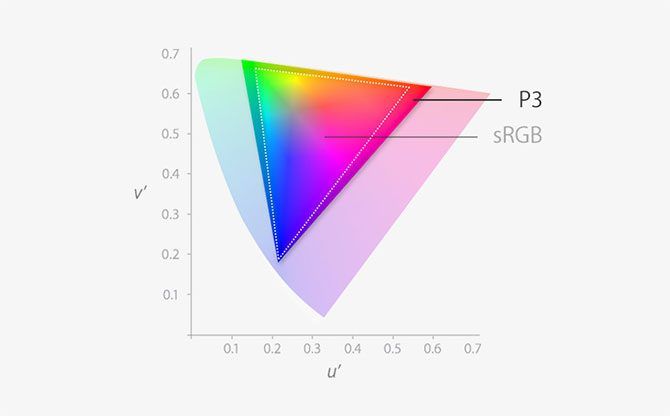
P3 vs RGB

The most obvious difference is size, with a top-end iMac coming in at 27-inch compared to the MacBook Pro at 15-inch. And while the MacBook Pro manages a native resolution of 2880×1800, the iMac has a native 5K display at a jaw-dropping resolution of 5120×2880.

Both will make your videos and photos pop and the hours you spend staring at your screen more pleasant. There really is something to be said for the iMac’s massive 5K screen, though you’ll need to sacrifice portability for the privilege.

Powering those displays is no small feat, which is why Apple opted for dedicated Radeon Pro graphics chips from AMD for both models. The MacBook Pro puts up a good fight with its Radeon Pro 560 and 4GB of dedicated VRAM, but it comes up short against the Radeon Pro 580 and its 8GB of VRAM.

iMac 27 Display

You’re certainly not going to see double the performance on the iMac, but there’s no mistaking the fact that the best visual performance is found on the desktop. This is further compounded by the heat generated by GPUs under load, which is far more noticeable on a laptop than it is on a desktop.

That added heat might limit your use of the MacBook under extreme load. If you’re going to stress the GPU regularly with lengthy video editing or gaming sessions, the iMac will provide a more pleasant base of operation. You’ll also have a lot more screen real estate at your disposal.

Conclusion: The MacBook Pro’s top-tier discrete graphics chips are a force to be reckoned with, but the iMac is still faster (and cooler).

MacBook vs. iMac: Storage, SSDs, and Fusion Drive

Here’s where the comparison starts to get really interesting, since the MacBook range led the SSD revolution many years ago with the arrival of the MacBook Air. SSDs (solid-state drives) are storage devices that use memory chips rather than moving parts to store data. This results in much faster read and write times, and they’re a lot tougher.

MacBook Pro storage

Every MacBook, MacBook Air, and MacBook Pro comes with an SSD. Most start at 256GB, but you can still find the odd 128GB option around. By comparison, all iMac models come with a Fusion Drive.

Apple’s Fusion Drive is two drives—an SSD and a standard spinning HDD—that appear as a single volume. Core system files and often-used resources reside on the SSD for speed, while documents, media, and long-term storage defaults to the slower HDD.

The SSD is faster than the Fusion Drive, but SSDs are also more limited in space. This is why the top-tier MacBook Pro comes with 512GB, and the top-tier iMac comes with 2TB. You can upgrade that MacBook to a 1TB SSD for an additional $400, and you can make the same swap in your iMac for $600.
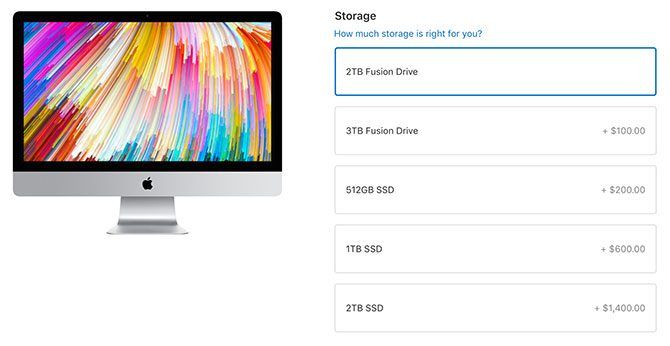
iMac storage

Conclusion: You’ll get more space for your money in an iMac, but it won’t be as fast as the MacBook’s all-SSD approach. If money is no object, you can upgrade both models to a 2TB SSD and laugh all the way home.

It comes down to performance, and the tradeoff you make between convenience and speed. One word of advice: always buy more storage than you think you need.

MacBook vs. iMac: Ports and Portability

If you’ve followed Apple’s hardware decisions of late, you’ll know that the current generation MacBook has fewer ports than any that came before it. Apple decided to strip all but a stereo output and four USB-C ports (capable of USB 3.1 gen 2 and Thunderbolt 3) from the MacBook Pro.
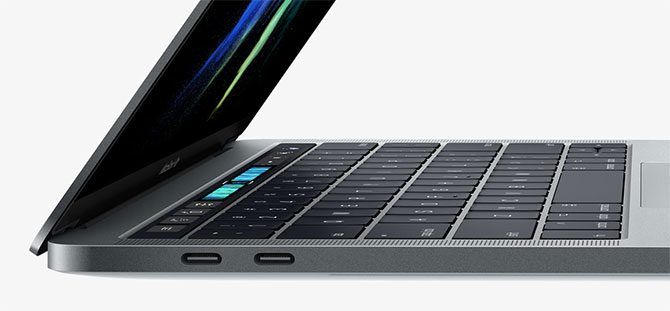
MacBook Pro connections and ports

This means you’ll need to rely on adapters and docks if you want to use regular USB type-A connectors, drive an HDMI monitor, plug in a memory card, or connect to a wired network. The new MacBook Pro is even powered via USB-C, with an 87W USB-C power adapter included in the box.

Conversely, the iMac has a port for almost anything. You’ll get two of those fancy USB-C ports that can handle USB 3.1 gen 2 and Thunderbolt 3. You’ll also get four regular USB 3.0 type-A connectors, for all your old hard drives and peripherals.

Then there’s an SDXC card slot on the back, for connecting SD, SDHC, SDXC and microSD (via adapters) directly to your Mac. The iMac even delivers a gigabit Ethernet port, something the MacBook range dropped years ago.
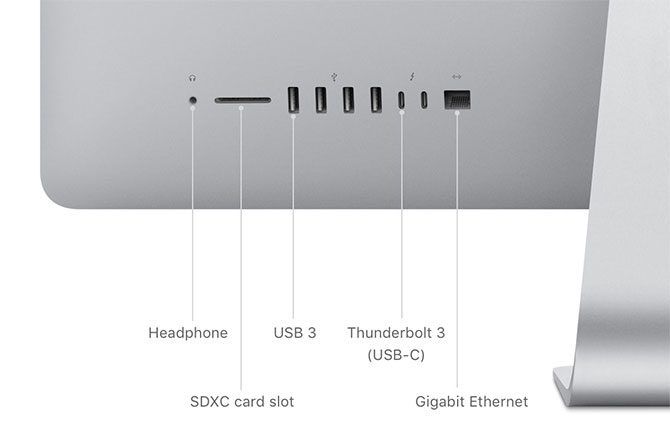
iMac connection ports

The iMac is also compatible with the same adapters and docks, enabling HDMI and DVI out, or compatibility with Mini DisplayPort and Thunderbolt 2 devices with an adapter. You won’t have to carry this adapter with you either, since your iMac lives on a desk.

Conclusion: The MacBook drops the ball in this department, with its stubborn USB-C approach. As for the iMac, we’re shocked Apple still builds a computer with an Ethernet port!

MacBook vs. iMac: Everything Else

There are a few other areas you might not consider when shopping, and though they’re not deal-breakers (to us), they’re still worth highlighting.

Keyboard

While the MacBook Pro has a built-in keyboard, the iMac comes with Apple’s Magic Keyboard. You can also opt to ditch these and plug in any keyboard you want, something that makes more sense on the iMac.
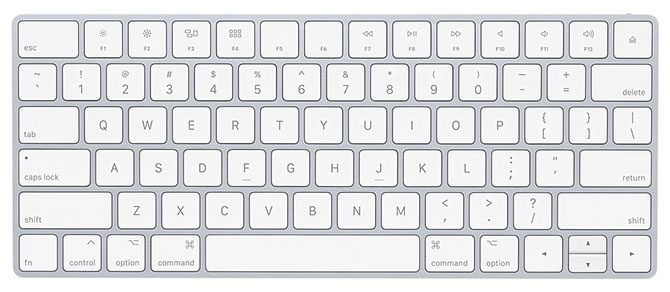
Apple Magic Keyboard

Some users have reported issues with Apple’s “butterfly” key mechanism on the latest MacBook models. There have been reports of broken keys that have prompted several class-action lawsuits, as well as the keyboard having a different “feel” to previous Apple keyboards.

You’ll probably want to try out the MacBook before you buy if you plan to do a lot of typing (and even if you’re not, since a dud key compromises the entire laptop’s purpose).

Mice, Trackpads, and Touch Gestures

Apple has designed macOS with a number of touch-based gestures in mind. These include two-finger scrolling, swipes from left to right to change between desktop spaces, and quick reveal gestures for running apps and the desktop. macOS is better with a trackpad than it is with a mouse.

Magic TrackPad 2

The MacBook Pro has a giant trackpad front and center. Force Touch means you can press harder to access a third context-dependent input, just like 3D Touch on the iPhone.

The iMac comes with a Magic Mouse 2, probably because Apple has a big dusty warehouse full of them. If you want the best macOS experience, you’ll need to upgrade to a Magic Trackpad 2 for $50 at checkout.

Touch Bar and Touch ID

The Touch Bar and Touch ID fingerprint scanner are both present (and non-negotiable) on the top-tier MacBook Pro models. This replaces the function keys with a touch-sensitive OLED panel. The panel adapts to whatever you’re doing and shows you relevant app controls, emoji, and traditional media key functions.
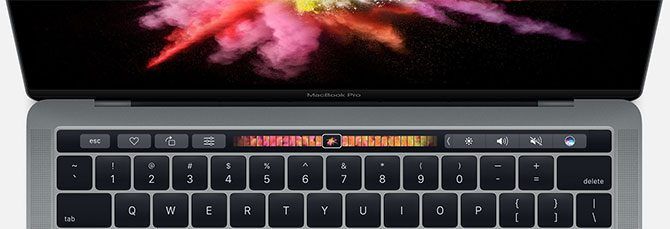
MacBook Pro TouchBar

Touch ID is a fingerprint scanner that works just like Touch ID on iOS. You can use your fingerprint to store login credentials, unlock your Mac, and generally speed up daily authorization events. It’s a great convenience, but probably won’t tip your decision either way.

Some users have complained that the Touch Bar is a gimmick that doesn’t really solve any problems. If you feel the same you can disable the Touch Bar entirely, though you’ll have to live with touch-based function keys.

MacBook vs. iMac: Which One Should You Get?

A top-of-the-line iMac is cheaper than a comparable MacBook Pro. It packs a marginally faster processor, better graphics capabilities, a bigger screen, more storage space, and an array of ports a MacBook owner could only dream of. It lacks the 16GB of RAM, but it’s got a port that you can use to upgrade it yourself.

But the top-end MacBook Pro isn’t a weak option. You’ve got a strong Core i7 processor, a powerful GPU that can handle 4K video editing, a blisteringly fast SSD on every model, and that all-important portable form factor. Ultimately though, you’ll pay more for a less capable machine compared to the iMac.

For pricing, Apple’s best base MacBook Pro (without any upgrades) costs $2,799 compared to $2,299 for a top-end base iMac. When you’re paying $500 more for a less capable machine, you might want to ask yourself: do you really need all that power in a portable machine? Or is portability worth the premium to you?

iMac and MacBook Pro

If you need as much power in the field as possible, then the MacBook Pro is your best bet at this stage. Just make sure you opt for a large enough SSD to see you through to your next upgrade.

But if like me, you’re replacing an old MacBook, you might want to opt for the iMac. You can make your old Mac feel like new, then use it as a light mobile office of sorts. Offload your resource-intensive tasks to the iMac at home, and you’ve got the best of both worlds.


Read the full article: MacBook vs. iMac: A Comparison Guide to Help You Decide


Read Full Article