09 January 2020

Pro-privacy search engine Qwant announces more exec changes — to ‘switch focus to monetization’


More changes have been announced in the senior leadership of French pro-privacy search engine, Qwant.

President and co-founder, Eric Leandri (pictured above), will be moving from an operational to a strategic role on January 15, the company said today — while current deputy managing director for sales and marketing, Jean-Claude Ghinozzi, is being promoted to president.

Leandri will leave the president role on January 15 , although he is not departing the business entirely but will instead shift to chair a strategic and scientific committee — where he says he will focus on technology and “strategic vision”.

This committee will work with a new governance council, also being announced today, which will be chaired by Antoine Troesch, investment director of Qwant investor, Banque des Territories, per the PR.

At the same time, Mozilla veteran Tristan Nitot — who was only promoted to a new CEO role at Qwant in September — is returning to his prior job as VP of advocacy. Although Leandri told us that Nitot will retain the spokesman component of the CEO job, leaving Ghinozzi to focus on monetization — which he said is Qwant’s top priority now.

“[Nitot] is now executive VP in charge of communications and media,” Leandri told TechCrunch. “He has to take care of company advocacy. Because of my departure he will have now to represent Qwant in [the media]. He will be the voice of Qwant. But that position will give him not enough space and time to be the full-time CEO of the company — doing both is quite impossible. I have done that for years… but it’s very complicated.”

“We will now need to focus a lot on monetization and on our core business… to create a real ad platform,” he added, by way of explaining the latest round of exec restructuring. “This needs to have somebody in charge of doing that monetization process — that execution process of the scale of Qwant.”

Ghinozzi will be responsible for developing a “new phase” for the search engine so it can scale its business in Europe, Leandri also said, adding: “For my part I take on the strategy and the tech, and I’m a member of the board.”

The search engine company is also announcing that it’s closing a new funding round to support infrastructure and scaling — including taking in more financing from existing backers Banque des Territories and publishing giant Axel Springer — saying it expects this to be finalized next month.

Leandri would not provide details on the size of the round today but French news website Liberation is reporting it as €10M, citing a government source. (Per other reports in the French media Qwant has been losing tens of millions of euros per year.)

Qwant’s co-founder did trail some “very good announcements” he said are coming imminently on the user growth front in France, related to new civil companies switching to the search engine. But again he declined to publicly confirm full details at this stage — saying the news would be confirmed in around a week’s time.

Liberation‘s report points to this being confirmation that the French state will go ahead with making Qwant the default search engine across the administration — giving its product a boost of (likely) millions more regular users, and potentially unlocking access to more government funding.

The move by the French administration aligns with a wider push for digital sovereignty in a bid to avoid being too reliant on foreign tech giants. However, in recent months, doubt had been thrown on the government’s plan to switch wholesale from Google’s search engine to the homegrown search alternative — after local media raised questions over the quality of Qwant’s search results.

The government has been conducting its own technical audit of Qwant’s search engine. But, per Liberation — which says it obtained an internal government memo earlier this month — the switch will go ahead, and is slated to be completed by the end of April.

Qwant has faced further uncomfortable press scrutiny on its home turf in recent months, with additional reports in French media suggesting the business has been facing a revenue crunch — after its privacy-respecting search engine generated lower than expected revenues last year.

On this Leandri told us Qwant’s issue boils down to a lack of ad inventory, saying it will be Ghinozzi’s job to tackle that by making sure it can monetize more of the current impressions it’s generating — such as by focusing on serving more ads against shopping-related searches, while continuing to preserve its core privacy/non-tracking promise to users.

The business was focused last year on putting in place search engine infrastructure to prepare for scaling user growth in Europe, he suggested — meaning it was spending less time on monetizing user searches.

“We started to refocus on the monetization in November and December,” he said. “So we have lost some months in terms of monetization… Now we have started to accelerate our monetization phase and we need now to make it even better in shopping, for example.”

Leandri claims Qwant has already seen “a very good ramp up”, after turning its attention back to monetization these past two months — but says beefing up ad inventory including by signing up more ad partners and serving its own ads will now be “the focus of the company”.

“For example today on 100 queries we were sometime during the year at 20 ads, just 20% of coverage,” he told us, noting that some ‘iPhone 11’ searches done via Qwant haven’t resulted in any ads being served to users in recent times. “We need to go to 30%-40%… We need to make it better on the shopping queries, brining new customers. We need to do all these things.

“Right now we have signed with Havas and Publicis in France for Europe but we need to ad more partners and start adding our own ads, our own shopping ads, our own technology for ads. That’s the new focus.”

Additionally, there have also been a number of reports in French media that have alleged HR problems within Qwant. Articles — such as this one by Next Inpact — have reported at length on claims by some employees that Leandri’s management style created a toxic workplace culture in which staff were subject to verbal abuse, threats and bullying.

Qwant disputes these reports but it’s notable that the co-founder is stepping back from an operation role at a time when both he and the business are facing questions over a wave of negative domestic press, and with investors also being asked to plough in fresh financing as a key strategy customer (the French government) is scrutinizing the product and the business.

The health of workplace culture at technology companies and high pressure startups has come in for increasing attention in recent years, as workplace expectations have shifted with the generations and digital technologies have encouraged greater openness and provided outlets for people who feel unfairly treated to make their grievances more widely known.

Major scandals in the tech industry in recent years include Uber being publicly accused of having a sexist and bullying workplace culture by a former engineer — and, more recently, travel startup Away whose CEO stepped down in December after a bombshell report in the press exposing a toxic culture.


Read Full Article

The Wacom One Tablet Is an Affordable Option for Designers and Artists


At CES, Wacom unveiled its fantastic new tablet at a very affordable price. The Wacom One Drawing Tablet is the cheapest tablet in Wacom’s line. This makes it perfect for entry-level artists and designers, as well as social media gurus. It also makes a great purchase for someone who’s simply interested in drawing.

For $400, Wacom gives you a beautiful tablet with a 13-inch display. The Wacom One also offers an HD resolution of 1920 x 1080, as well as 72 percent NTSC color. That said, you’ll instantly notice how crisp and clean the tablet’s display looks.

Wacom One Tablet CES Drawing

Fortunately, the Wacom One’s performance is just as amazing as it looks. The device comes with a cordless pen that requires no charging. With a whopping 4,096 different pen pressure levels, you can execute precise photo edits and drawings that can take the form of sketches or even paintings. As soon as the stylus touches the tablet, you’ll notice how responsive it is—you’ll feel as if you’re drawing on a physical piece of paper.

You don’t even have to use Wacom’s included pen. It’s actually compatible with some of the most popular pen brands. The compatible pens include the Staedtler Noris Digital, Lamy Al-Star Black EMR, Mistubishi 9800 Pencil, Raytrektab DG-D08IWP, and even the Samsung Galaxy Note and Tab S Pen.

Speaking of compatibility, the Wacom One tablet isn’t just compatible with Windows and Mac either—it also works with Android. So far, you can link up your Wacom One with your newer Samsung phone (anything from the Samsung 8 to Note 10+), along with some Huawei phone models.

Want even more features alongside your Wacom One tablet? The Wacom One comes with a bonus pack that includes exceptional creative tools. When you buy the Wacom One, you’ll get a bonus pack with Clip Studio Paint, Bamboo Paper, and Adobe Premiere Rush CC. In the future, this pack will also include the Adobe Fresco drawing software.

Whether you’re a budding designer or interested in the artistic field, the Wacom One Drawing Tablet is definitely worth it for the price! This versatile tablet is on sale now, so make sure to get your hands on it.

Read the full article: The Wacom One Tablet Is an Affordable Option for Designers and Artists


Read Full Article

Become a Creative Genius With 64 Hours of Adobe CC Training for $39


For most professional artists, designers, and photographers, the Adobe Creative Cloud is an essential toolkit. If you want to work in the creative industries, you really need to know this software. The Complete 2020 Adobe CC Certification Bundle provides a great introduction, with nine video courses covering Photoshop, Illustrator, Premiere Pro, and other top apps. You can currently get the training for just $39 via MakeUseOf Deals.

Creative Masterclass

As with any professional tool, Adobe software can be a little daunting when you first get started. This bundle offers a guided tour, along with advanced tips and tricks from the pros.

Along the way, you discover how to edit images with Lightroom; design stunning logos and graphics with Photoshop and Illustrator; and produce eye-catching videos with Premiere Pro and After Effects.

While most of the courses aim to provide a broad education, some focus on individual skills. For instance, you can learn how to design flyers with InDesign or edit vlogs in Premiere Pro.

You get 64 hours of video tutorials in total, including many hands-on projects and exercises. Just as importantly, each course offers a certificate of completion to prove your new skills.

64 Hours for $39

This training is worth $1,800, but you can get the bundle now for just $39 with lifetime access included.

Prices subject to change

Read the full article: Become a Creative Genius With 64 Hours of Adobe CC Training for $39


Read Full Article

Mudra Mouse: Wearable Bracelet Gesture Mouse


mudra mouse ces 2020 wearable mouse

The Mudra wearable mouse and media remote can control your devices with a wave of the hand or pinch of the fingers. Unlike other wearable control devices that convert hand motion into cursor movement, the Mudra Mouse uses a relatively unused approach called SNC. SNC is like electrocardiography except that it measures the electrical impulses that travel between the wearer’s brain to their hand.

mudra mouse on the television screen

The Mudra comes equipped with a range of conductive sensors. These conductive pieces of metal function like the ECG sensors on the Apple Watch. In other words, the Mudra measures surface-of-the-skin electrical impulses running through the wearer’s wrist. After measuring those impulses, the Mudra then uses deep-learning algorithms to turn the analog wave forms into binary inputs, such as left or right-mouse clicks, scrolling, changing songs, and more.

For example, if you wear the mouse and want to left-click, the user makes an okay-sign with their fingers. By going through the mental processes to form a sign-language letter F, the Mudra software instantiates a left-click. Users than make a pinching motion in the air and then drag their hand. In the Windows operating system, this means that the user has clicked and dragged.

mudra mouse demonstration at ces 2020

If the Mudra does launch in 2020, it would enter a market with little competition. As of January 2020, only a handful of wireless (but not Bluetooth) competitors exist: the now ancient Mycestro. The Mycestro does not allow for Bluetooth pairing, although it uses Bluetooth as its underlying wireless connection standard. If the Mudra ever releases, it will enter an almost empty market with the Mycestro mouse (our Mycestro mouse competitor) as the only competitor. (There is a knock-off of the Mycestro that sells on Amazon and from other retailers, but I would not recommend it.)

In 2020, the Padrone Ring mouse might have relaunched its rescinded 2019 Kickstarter campaign. According to Padrone Ring founder Marc Speck, there remain a few technical issues that need to be solved before they can produce the ring. The device may appear at Mobile World Congress in 2020 but nothing is yet certain.

The Tactigon Skin offers a similar degree of functionality to the Mudra Mouse, except it uses a combination of sensors ranging from an accelerometer to a gyroscopic sensor. Like the Mudra Mouse, the Tactigon Skin claims to offer a number of applications to real-world devices. One unique use case is as a control device for drones and other remote-control devices. However, the Tactigon Skin hasn’t released yet and may still be vaporware. It was successfully funded though.

The downside of the technology behind all sensor-based mouse-like input devices is battery life. Because wearable, “air mice” (because they function in the air) require constant sensor readings, it also consumes a great deal of power. And because the devices are wearable, they require light batteries. The combination of high drain with light batteries results in, unfortunately, short battery life. Whether we see Mudra’s technology in smartphones may rest entirely on refinements that improve on power consumption.

Read the full article: Mudra Mouse: Wearable Bracelet Gesture Mouse


Read Full Article

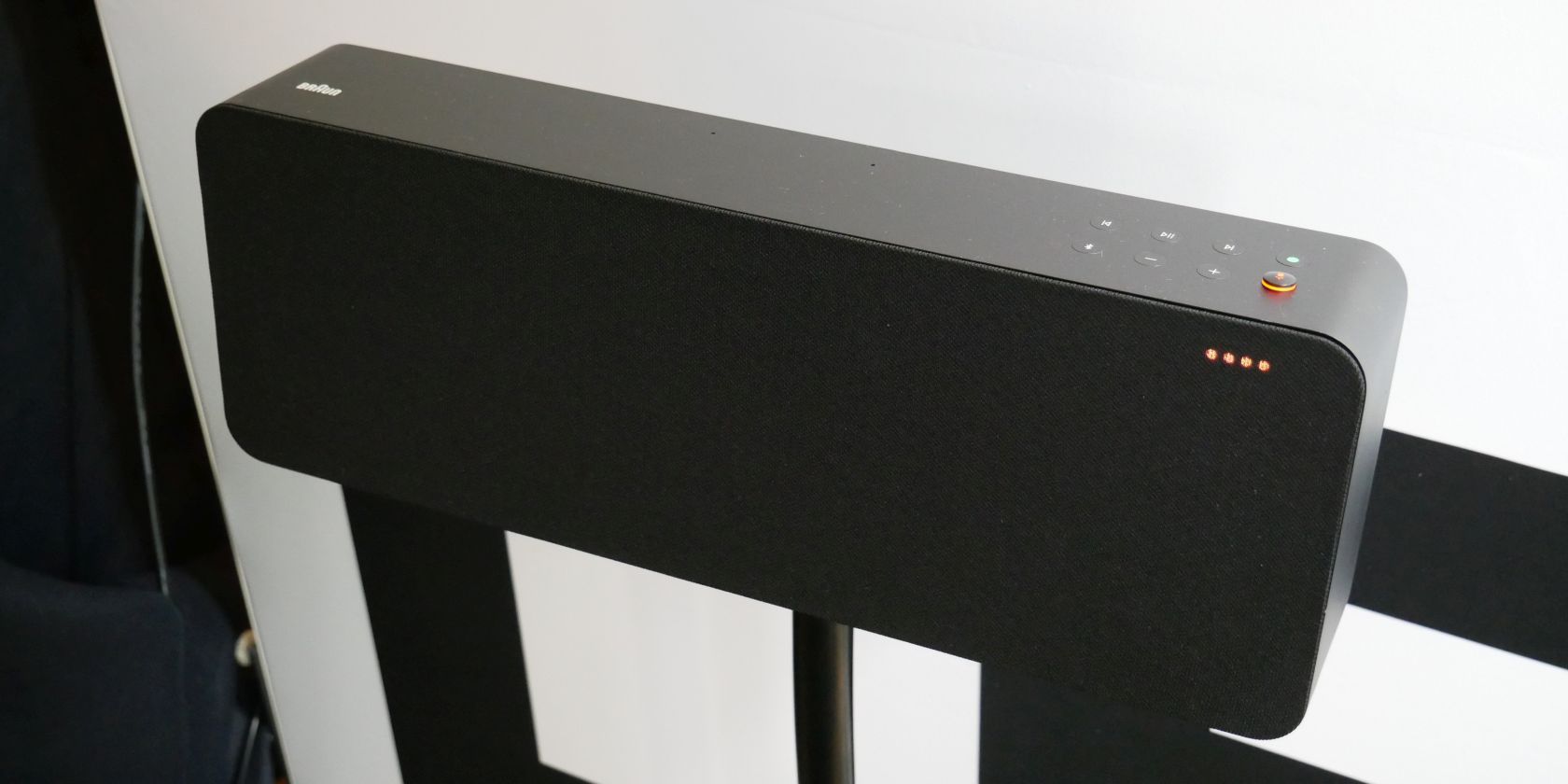
Braun’s New LE Speakers Offer Smart Features With Iconic Design


Braun Audio LE speaker series

Quality speakers with modern features that fit your interior design and home size can be hard to come by. Braun Audio’s new LE series may be just what you need. Not only do they look and sound great, they also come with support for Google Assistant. We had a chance to check them out at CES.

Braun’s iconic LE speaker originally launched in 1959. Dieter Rams, the lead designer at the time, took the Bauhaus idea of “less is more” and turned it into his own mission of “less but better”. In the 1970s, after creating a series of groundbreaking designs, such as the first mobile music player, he formulated his ten principles for good design, which later inspired Apple’s product designs:

Good design is innovative, makes a product useful, is aesthetic, makes a product understandable, is unobtrusive, is honest, is long-lasting, is thorough down to the last detail, is environmentally friendly, is as little design as possible. –Dieter Rams

Today, Braun isn’t the company it used to be decades earlier and Dieter Rams has long since retired. Nevertheless, the people behind the reincarnation of Braun Audio honor his design principles.

UK-based Pure Audio has licensed the Braun Audio brand from Procter & Gamble. They have worked with Braun’s Frankfurt-based design team to revive Dieter Rams’s original LE speaker design, but the audio engineering was done in the UK.

The new LE speaker series are smart speakers that closely resemble the 1959 design, although more compact and with modern technology inside. They come in three different sizes and in either black or white frames.

Braun Audio LE01, LE02, and LE03 smart speakers.

The LE01, the biggest of the three speakers, contains three Tectonic BMRs (balanced mode radiators) that offer a 360° dispersion of sound, which makes for a pleasant listening experience, no matter where you stand or sit in a room. The low frequency bass is driven by two custom-designed aluminum cone high-excursion fast-transient woofers with NdFe motors. The 32-bit ARM core digital signal processor ensures that Google Assistant picks up on your commands with high accuracy.

To control the speakers, you can either use Google Assistant or a minimal set of physical buttons. Notably, the speakers do not contain a power switch. Instead, Braun Audio went with a mute button that physically disconnects the microphone. This mic drop function guarantees total privacy.

Braun Audio LE01 speaker controls with mic drop feature.

All speakers support input from Apple Airplay 2, Chromecast, Bluetooth, and they have a 3.5mm Aux-in jack for your record player or stereo system. You can stream audio in 96kHz/24-bit HD in a wide selection of formats, including HE-AAC, LC-AAC, MP3, Vorbis, WAV LPCM), FLAC, and Opus.

So where can you place these speakers in your home? You can either get a stand or you can save space and mount the speakers to the wall. All three speakers can be paired to work in stereo mode. For this purpose, you can have the LE01 and LE02 set up vertically, rather than horizontally.

Braun Audio LE speaker stand supports vertical or horizontal orientation.

The LE speakers will be available in Europe at the end of January and at selected retail outlets in the US in Q2 2020. In February, however, they will pre-launch at the Museum of Modern Art in New York. The LE01 will retail for $1199, the LE02 will be $799, and the LE03 will cost $379.

Read the full article: Braun’s New LE Speakers Offer Smart Features With Iconic Design


Read Full Article

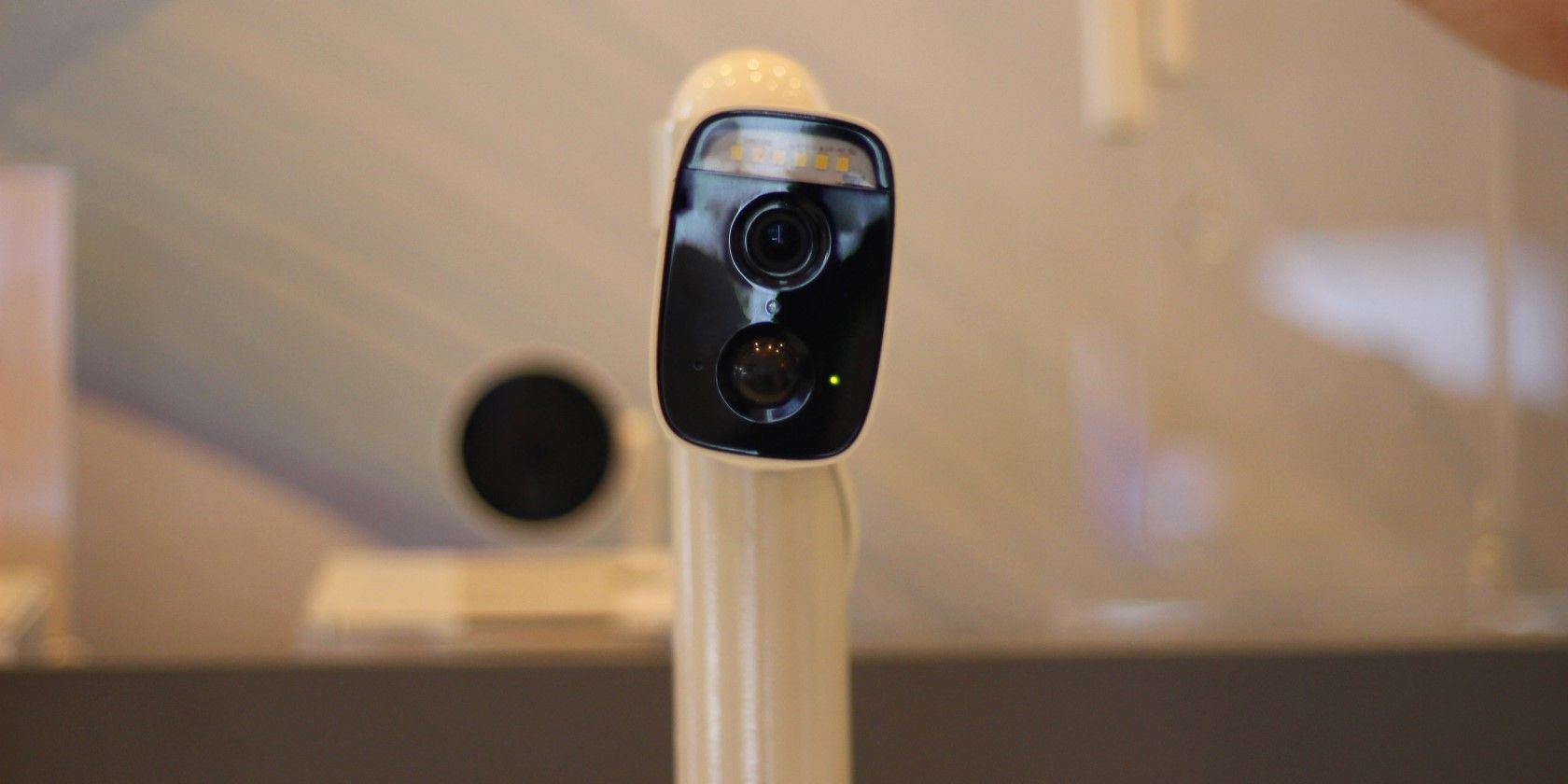
D-Link’s New Line of AI Security Cameras Offer Smarter Detection


D-Link Cameras Line CES 202

D-Link has just announced its brand new line of security cameras at CES. However, these indoor and outdoor cameras aren’t your typical run-of-the-mill devices. The four new cameras have different specs, but they all have overarching features that make these security cameras stand out from the rest.

What’s the common quality that all of D-Link’s newest cameras share? They each have AI-powered edge-based person detection, which makes for much smarter surveillance. This means that these cameras can tell the difference between humans and objects, so they won’t get triggered by a branch or car that comes in the frame. Plus, they all have Alexa and Google Assistant integration that only make the devices easier to use.

D-Link Security Camera Mini CES 2020

The Mini Full HD Wi-Fi Camera is compact enough for discreet, indoor recording. Despite its small size, it still records footage in HD, has night vision, utilizes edge-based person detection, as well as has sound and motion detection.

D-Link Security Camera Full HD CES 2020

The next device in D-Link’s lineup, the Full HD Pan and Tilt Pro Wi-Fi Camera, is a cutting-edge indoor camera. Unlike the Mini Wi-Fi Camera, this device supports a full 360-degree view of the room, along with a 340-degree pan and 100-degree tilt feature.

In addition to tracking motion automatically, the camera also uses night vision. Better yet, a two-way audio system with a built-in microphone and speaker can help you communicate with anyone in the room. An ethernet port is located on the device for a more stable connection.

D-Link Security Camera Indoor/Outdoor CES 2020

For more versatility, check out the Full HD Indoor and Outdoor Pro Wi-Fi Camera. You can place this camera inside or outside your house. While it doesn’t come with pan and tilt capabilities, it’s still a strong contender among the bunch.

This camera also uses the smart edge-based person detection and has an Ethernet port for an optional wired connection. With two-way audio, a piercing siren, and a spotlight, you’ll definitely deter any intruders from entering your home.

D-Link Security Cameras CES 2020 Outdoor

The Full HD Outdoor Wi-Fi Spotlight Camera is loaded with even more features. This camera comes equipped with a 400-lumen LED spotlight that allows the camera to record colored night vision. It even has a 90 dB speaker, along with a siren, waterproof housing, and a PIR sensor. Not to mention that it can detect the sound of glass breaking.

You can expect to see D-Link’s security cameras on sale later this year. These cameras are definitely worth a look if you want to make your home security system even smarter.

Read the full article: D-Link’s New Line of AI Security Cameras Offer Smarter Detection


Read Full Article

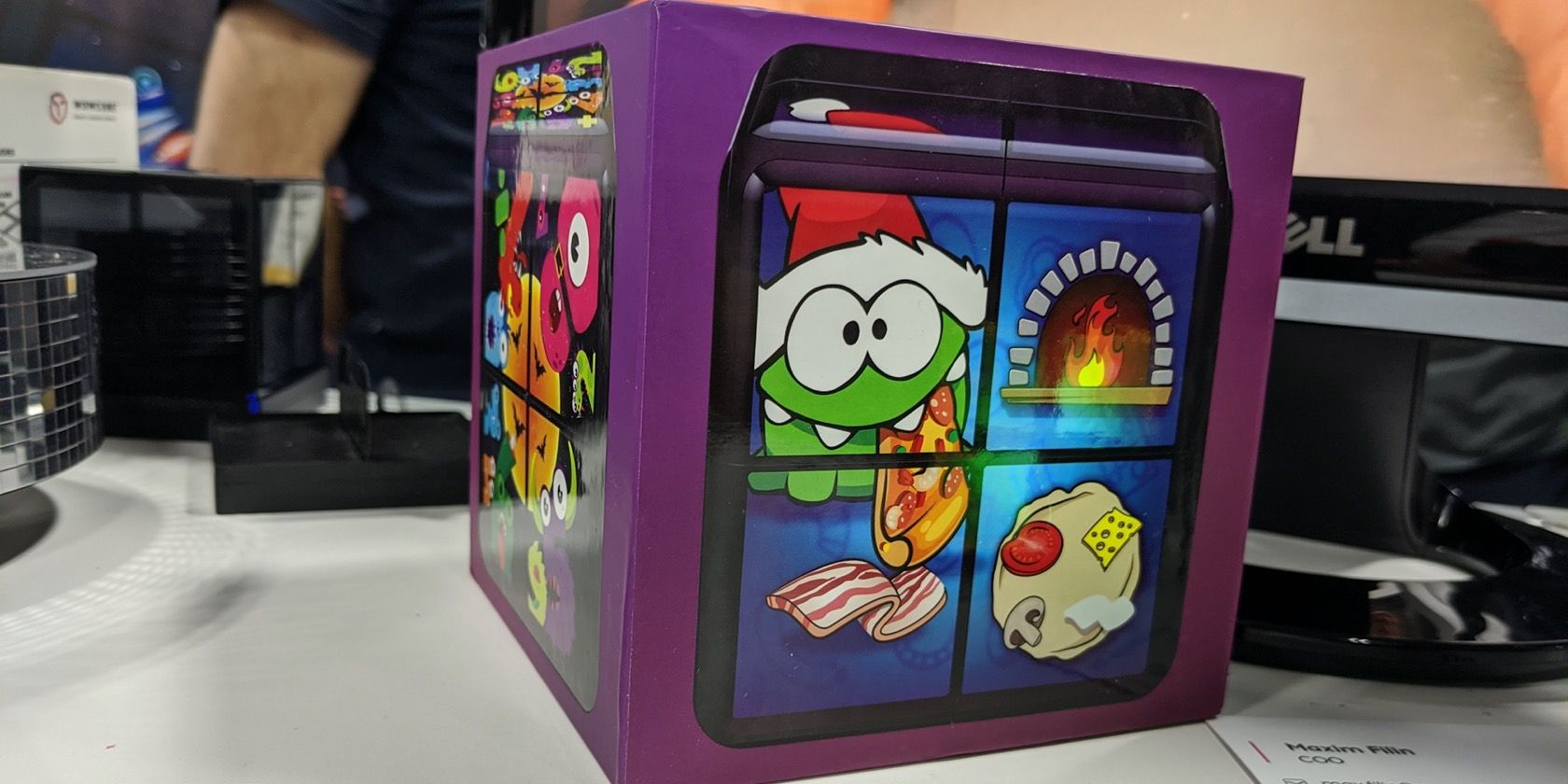
At CES, the WOWCube Brings the Rubik’s Cube Into the 21st Century


WOWCube-CES2020-Featured

Everyone knows about the classic Rubik’s Cube. But what if this decades-old puzzle was updated for modern times? It would look something like the WOWCube, which we took a look at during CES 2020.

The WOWCube is a six-sided device that contains four small screens on each side, for a total of 24 displays. Though it looks and feels like a Rubik’s Cube, the device is capable of so much more. It comes pre-loaded with games that take advantage of the unique setup.

For example, we were shown a game where you had to roll a ball from a starting point to the objective by turning the device in your hands. To complete it, you also need to twist the cube to access different screens so that the ball can roll to safety. This keeps your hands and mind both engaged and challenges you to think about 3D space.

WOWCube-CES2020-02

This device is primarily aimed at children. The team explained to us that they wanted to create an alternative to smartphone games, which require you to hold the phone close to your face. The games on the WOWCube combine the fun of electronic titles with the practical benefits of physically turning the cube and focusing on different points with your eyes.

What’s more, the WOWCube isn’t just for games. While it’s charging or stationary, it can also display different information on its screens, such as weather or stock data. For children, the device can even act as a smart night light. This makes it a handy device to have around, even when it’s just sitting on your desk.

In addition to the bundled content, the WOWCube offers an open SDK and app store. This allows developers to create games for the device, which anyone can download to expand their options with it.

WOWCube-CES2020-01

Our time with the device included a few hiccups, including having to reboot some of the games. I also accidentally removed one of the mini-cubes while playing—after doing so, I was told that the cubes are modular. Thus, you can remove one of them without affecting any of the others.

Despite a few minor bumps, we think that the WOWCube has a lot of potential as a new platform. It’s expected to release later in 2020 at a cost of $249.

Read the full article: At CES, the WOWCube Brings the Rubik’s Cube Into the 21st Century


Read Full Article

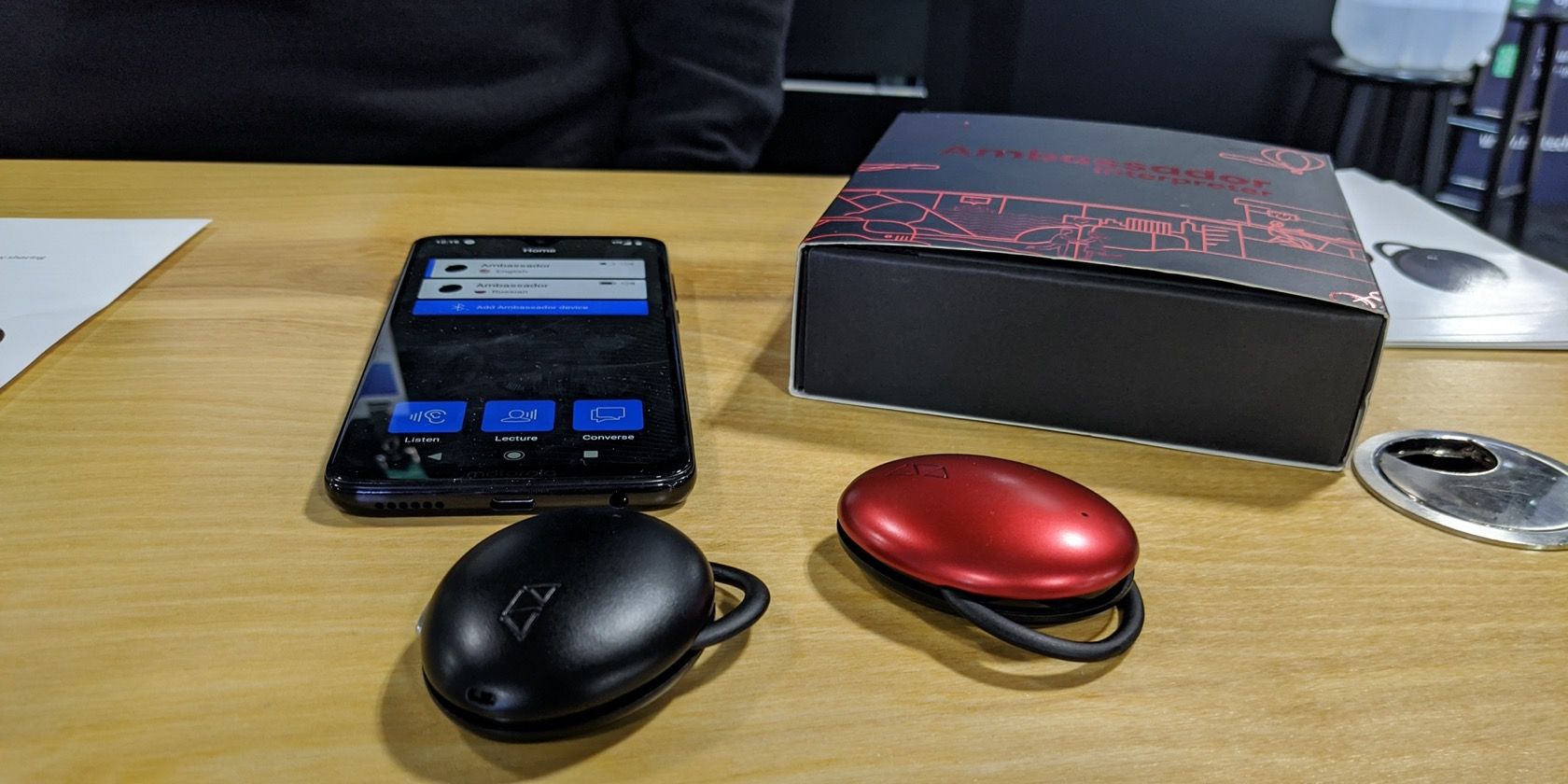
Converse in Any Language With the Ambassador Interpreter From Waverly Labs


Ambassador-Interpreter-CES2020-Featured

Waverly Labs attended CES 2020 to show off its upcoming Ambassador Interpreter device. This exciting tool allows you to converse fluidly with people who speak other languages using just an earpiece and smartphone app.

We spoke with one of the developers at CES using the app and found the experience to be quite fluid. He spoke in his native Russian and we heard the English translation within a moment. The screen also displays a transcription of the text in the speaker’s language.

Ambassador-Interpreter-CES2020-01

This short delay was likely due to the poor internet speed on the CES showfloor; he assured us that the translation is near-instantaneous on a better connection. This is because the translation takes place in the cloud, not on the device itself.

At launch, the translator will support 20 languages, including the following:

  • English
  • French
  • German
  • Spanish
  • Arabic
  • Russian
  • Japanese
  • Korean
  • Dutch
  • Hebrew

In addition to these languages, 42 dialects work with the device. This means it can distinguish between US English and UK English, for example.

On the technical side, the device comes in black and red colors. It features both continuous and push-to-talk translation modes. Waverly Labs states the device lasts for up to six hours on a single charge. And if you like, you can even use up to four units to converse in four different languages.

Whether you’re a professional who needs to work with people who speak other languages or are traveling to a foreign country for pleasure, you’ll appreciate this device. When we spoke the developer at CES, he mentioned that his idea for the device came from his journey to learn English.

Ambassador-Interpreter-CES2020-02

The company expects to ship the Ambassador Interpreter in March of 2020 at a retail price of $199. This will include two units. A free smartphone app is also required, which will offer all of its primary features for free. A subscription will only be required for supplemental features, like downloading a transcription of the conversation.

Whether you need to speak in other languages for work or wish you were bilingual for fun, this is an exciting device!

Read the full article: Converse in Any Language With the Ambassador Interpreter From Waverly Labs


Read Full Article

Hands-On With HyperX’s New PC Gaming Peripherals at CES 2020


HyperX-Desktop-CES2020-Featured1

At CES 2020, gaming peripheral provider HyperX announced a new line of products aimed at the PC market.

The first is the Cloud Flight S, a headset. It’s notable for being the first PC gaming headset to offer Qi wireless charging. Simply set the earcup on a compatible charging pad to charge up the cans. However, you won’t have to do this often, as the headset offers a solid 30 hours of battery life.

HyperX-Desktop-CES2020-01

Another notable feature of this headset is its red LED indicator on the detachable microphone. This lets you know when you’ve muted the mic, allowing you to easily confirm that other can’t hear you. We appreciated this feature as well as the comfortable feel during our demo.

The Cloud Flight S will launch in February 2020 at a price of $159.99.

HyperX also unveiled the Alloy Origins mechanical gaming keyboard, which uses custom HyperX Aqua switches. This model contains all the standard features you’d expect from a gaming keyboard, including adjustable brightness and customizable lighting. Notably, you can also choose to tweak the lighting effects on a single key.

HyperX-Desktop-CES2020-02

When we took a look at this keyboard, we were amazed at how stunning it looked. The keycaps are replaceable, allowing you to create a black-on-white or white-on-black look for your board. Expect to see the Allow Origins keyboard this March, arriving at a price of $109.99.

That’s not all we saw from HyperX at CES 2020. The company also showed off a new Pulsefire Raid mouse, which features 11 customizable buttons. Like other HyperX products, it interfaces with the HyperX NGENUITY software for user customization.

This mouse will be available shortly, in January 2020, and retails for $59.99.

HyperX-Desktop-CES2020-03

Finally, the FURY Ultra mousepad includes a full 360-degree light ring and RGB light that you can customize as you wish. The pad has a hard surface with micro textures for comfortable mouse movement. Expect to see this in January 2020 for $54.99.

HyperX-Desktop-CES2020-04

Overall, we’re happy with what HyperX had to show at CES. The company has a reputation for offering reputable products at a fair price, and these all look like fine additions to that lineup. Give these a try if you’re in the market for a new PC gaming peripheral.

Read the full article: Hands-On With HyperX’s New PC Gaming Peripherals at CES 2020


Read Full Article

Healium Helps You Reduce Stress With Its AR and VR Apps


Healium App CES 2020 AR Smartphone

We’ve all experienced it. You’re wracked with stress, anxiety, and bouts of negativity, resulting in unpleasant physical symptoms. By the end of the day, you’re feeling worn out and sick. These feelings might warrant a trip to the doctor’s office.

If you’ve been searching for a drugless way to avoid stress and the physical symptoms that come along with it, Helium has your answer. Healium hopes to reduce your trips to the doctor’s office with its innovative apps that integrate the Muse brain-sensing headband, the Oculus Go, your Apple Watch, and your phone.

Keep in mind that you can use this product with either its VR or AR app. It’s up to you to decide which one to use.

If you decide to try it with VR, you’ll slide on the EEG-detecting headband and VR goggles. From your Oculus Go menu screen, head to your Healium app and select one of many environments. You’ll soon get transported to a totally different world.

As your thoughts race, and your brain sends electrical signals, the environment in front of you will change. It’s your job to use the power of positive thinking to beautify or alter your world. You’ll also see a realtime chart of your brainwaves, which you must strive to keep at a steady, relaxed rate.

Healium AR App CES 2020

Don’t want to use a VR headset? You can get a similar experience on your smartphone using Healium’s AR technology and an Apple Watch. Simply put on the headband and strap on your smartwatch. Select the Healium app on your phone to begin your journey. Through your phone’s screen, you’ll view an AR version of your surroundings.

Healium’s AR app works much like the VR version. As your thoughts become more positive, the objects on the screen will change. Whether you use your thoughts or heartrate to hatch butterflies or brighten the solar system, you’ll still have a relaxing experience.

Healium App CES Apple Watch

Currently, Healium is available in two different packages. One includes a subscription to Healium’s software for $29.00 per month. For the Oculus Go VR goggles, as well as Healium’s software, expect to pay $84.00 for four months, and then $29 after that period. You’ll have to buy the Muse EEG-detecting headband and Apple Watch separately, so keep that in mind as well.

Healium has plenty of studies backing it up. If you’re longing for a form of gamified meditation, the subscription is worth it.

Read the full article: Healium Helps You Reduce Stress With Its AR and VR Apps


Read Full Article

Lenovo ThinkBook Plus: A Laptop with an External E-Ink Display


Lenovo never seems to run out of ways to change the laptop game. At CES 2020, the company announced the ThinkBook Plus, a reasonably-priced laptop with an e-ink display on the outside.

When opened up, it looks like any other Lenovo ThinkBook—there’s a 13.3-inch FHD screen, a keyboard, and a trackpad.

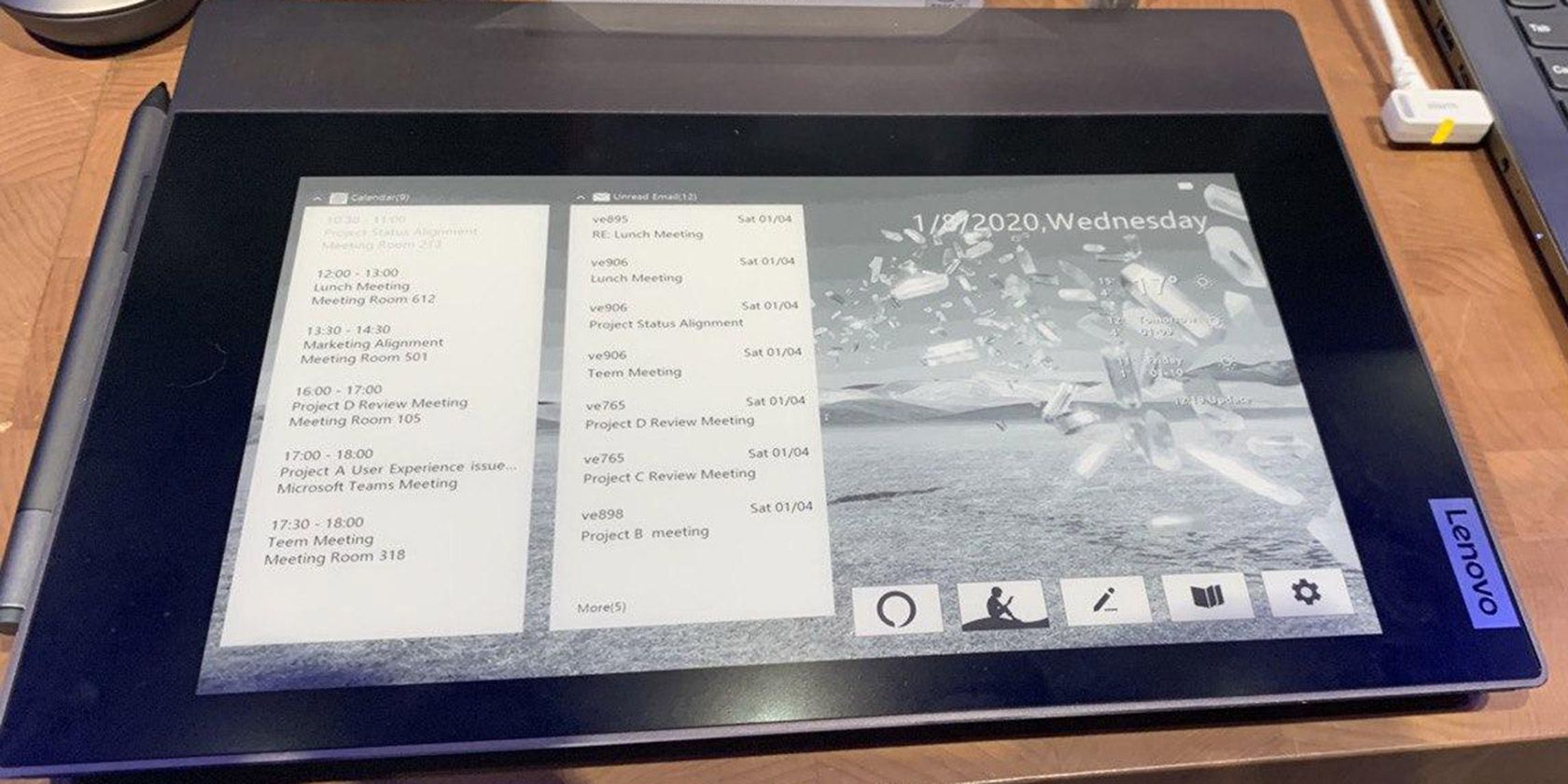
Where the laptop really gets interesting is when the screen is closed, as there’s a 10.8-inch e-ink touchscreen that can be used for a wide range of tasks.

During our demo, we flipped between calendar and emails seamlessly. We also saw support for Kindle and Alexa, all without opening up the laptop.

Another cool thing we observed was the ability to use the outside touchscreen to make notes on a document using the included stylus, and then quickly flip the laptop open to continue working with the more traditional keyboard and mouse functionality.

The main benefit of the e-ink display is the battery life, as Lenovo claims it can last for up to 20 hours (the traditional laptop is rated to last about 10 hours), so if you just need to do quick tasks like check your email or see when your next appointment is, you can easily use the outside screen and keep your device running longer.

As far as the specs go, Lenovo will offer the laptop in different configurations. The company said that it will be available with up to a 10th generation Intel Core i7, 8GB or 16GB DDR4 memory, and a 256 or 512GB SSD.

Because the laptop features a screen on the outside, Lenovo is including a slick case that’ll protect it when you need to toss it in your bag with your other stuff. It’s a small detail, but it’s nice that the company realized that there is a certain amount of risk that comes with having an exposed screen.

Lenovo actually plans to release this dual-display laptop in March, so if the idea of longer-laster e-ink screen on the outside of your computer sounds appealing, lots of patience isn’t required. Also, the price is pretty modest for what’s on offer, as the company has stated that it’ll start at $1,199.

Read the full article: Lenovo ThinkBook Plus: A Laptop with an External E-Ink Display


Read Full Article

TC Sessions: Mobility 2020: Boris Sofman of Waymo and Nancy Sun of Ike


You have might heard: a mobility revolution is in the making. TechCrunch is here for it — and we’re not just along for the ride. We’re here to uncover new ideas and startups, root out vaporware and dig into the tech and people spurring this change.

In short, we’re helping drive the conversation around mobility. And it’s only fitting we have an event dedicate to the topic. TC Sessions: Mobility — a one-day event on May 14, 2020 in San Jose, Calif., that’s centered around the future of mobility and transportation— is back for a second year and we’re already putting together a fantastic group of the brightest engineers, investors, founders and technologists.

TechCrunch is excited to announce our first two guests for TC Sessions: Mobility.

Drum roll, please …..

We’re excited that Boris Sofman, engineering director at Waymo and former co-founder and CEO of Anki, will join us on stage. But wait there’s more. TechCrunch is also announcing Nancy Sun, the co-founder and chief engineer of Ike Robotics, will be a guest at TC Sessions: Mobility.

Here’s a bit about these bright and accomplished people.

Sofman is leading the engineering for trucking at Waymo, the former Google self-driving project that is now a business under Alphabet. Sofman came to Waymo from consumer robotics company Anki, which shut down in April 2019. Nearly the entire technical team at Anki headed over to Waymo and

Anki built several popular products, starting with Anki Drive in 2013 and later the popular Cozmo robot. The Bay Area-startup had shipped more than 3.5 million devices with annual revenues approaching $100 million.

Previously, Sofman worked on off-road autonomous vehicles and ways to leverage machine learning approach to improve navigational capabilities in real-time.

Sun has also had an incredibly interesting ride in the world of automated and robotics. She is chief engineer and co-founder of Ike, the self-driving truck startup. Prior to Ike, Sun was the senior engineering manager of self-driving trucks at Uber ATG, a company she came to through the acquisition of Otto.

Prior to Otto, Sun was engineering manager of Apple’s secretive special projects group.

Stay tuned to see who we’ll announce next.

$250 Early-Bird tickets are now on sale — save $100 on tickets before prices go up on April 9 when you book today.

Students, you can grab your tickets for just $50 here.


Read Full Article

Paytm targets merchants to fight back Google and Walmart in India’s crowded payments field


Paytm today announced two new features for businesses as the financial services firm looks to expand its reach in the nation that has quickly become one of the world’s most crowded and competitive payments markets.

The Noida-headquartered firm, which raised $1 billion in late November, said its app for businesses now features an “all-in-one” QR code system to accept payments from multiple platforms, including mobile wallets (that act as an intermediary between a user and their bank but provide convenience) and those that are powered by UPI, a payments infrastructure built by a coalition of banks that has been widely adopted by the industry players.

Merchants had expressed an interest in having one QR code that could understand any payments app, said Vijay Shekhar Sharma, the founder and chief executive of Paytm’s parent firm One97 Communications. In addition to supporting mobile wallet apps, and UPI-powered payment apps, Paytm’s new QR codes also support payments through popular Rupay cards.

Merchants can also stick these QR codes on devices such as battery packs and chargers to enable quick transaction from users, Sharma explained at a press conference today.

Bookkeeping for merchants and small businesses

The nation’s highest-valued startup (at around $16 billion) also announced a bookkeeping feature for businesses to help them maintain their daily records. The feature is already rolling out to merchants, Sharma told TechCrunch.

Dubbed Paytm Business Khata, the feature will help merchants manage payments, record transactions and secure loans and insurance. The service will also enable them to set a reminder for credit transactions, get an audio alert when they have received new payment, and send links to their customers to easily pay their dues, said Sharma.

Hundreds of millions of Indians, many in small towns and villages, came online for the first time in the last decade thanks to the proliferation of cheap Android smartphones and the availability of some of the world’s cheapest mobile data plans.

In recent years, millions of merchants and small businesses have also started to accept digital payments and listed them on the web for the first time. But most of them are still offline. Scores of startups and heavily backed firms such as Google, Walmart and Amazon are chasing this untapped market.

Google, which has amassed more than 67 million users on its payments app in India, last year announced a range of offerings to allow businesses to easily start accepting payments online. In the past, the company also launched tools to help mom and pop stores build presence on the web.

A number of startups today, including Bangalore-based Instamojo, Khatabook (which raised $25 million in October last year and counts GGV Capital, Sequoia Capital India and Tencent among its investors) and Lightspeed-backed OkCredit, which raised $67 million in August last year, offer bookkeeping features and allow their consumers to enable easier payment options.

Google Pay or GPay sticker pasted on the glass of a car in New Delhi India on 18 September 2019 (Photo by Nasir Kachroo/NurPhoto via Getty Images)

Paytm’s Sharma claimed that his business app has already amassed more than 10 million merchant users, a number he expects to more than double by next year.

The announcements today illustrate how aggressively Paytm, which once led the mobile payments market in India, is expanding its service. Some critics have cautioned that the firm, which counts SoftBank, Alibaba and T. Rowe Price among its key investors and has raised over $3.3 billion to date, is quickly losing its market share and chasing opportunities that could significantly increase its expenses and losses. According to several industry estimates, Google Pay and Walmart’s PhonePe now lead the mobile payments market in India.

Paytm lost more than half a billion dollars in the financial year that ended in March 2019. The trouble for the company is that there is currently little money to be made in the payments market because of some of the local guidelines set by the government.

“The current Paytm’s potential is a pale shadow of its former self. And to stay relevant, the company is entering new businesses (and failing spectacularly in some) at a pace that shows both a lack of clarity and urgency. Paytm is stuck between a glorious past that was built on the back of digital payments and a future that doesn’t look anything like Jack Ma’s Alibaba, one of Paytm’s largest investors and Sharma’s inspiration,” wrote Ashish Mishra, a long-time journalist, in a scathing post (paywalled).

Sharma said today that the company plans to offer services such as stock brokerage and insurance brokerage in the coming months. At stake is India’s payments market that is estimated to be worth $1 trillion in the next four years, up from about $200 billion currently, according to Credit Suisse. And that market is only going to get more crowded when WhatsApp, which has amassed over 400 million users in India, rolls out its payments service to all its users in the country in the coming months.


Read Full Article

08 January 2020

India’s Reliance Jio rolls out Wi-Fi calling feature


Two of the top three telecom operators in India are beginning to address one of the biggest challenges hundreds of millions of their subscribers face in the country each day: poor call quality and abrupt voice drops.

Reliance Jio, India’s second largest telecom operator, announced today that it now supports voice and video calling functionality over Wi-Fi networks. The 4G-only network said it has started to roll out the feature to all of its subscribers in India and expects to reach all of its 360 million consumers by next week.

The rollout of calls over Wi-Fi functionality on Jio comes weeks after Airtel, India’s third largest telecom operator with more than 260 million subscribers, began to support this feature in select places in the country. Neither of the operators are levying any additional fee for this feature and say that their subscribers can place phone calls over Wi-Fi across the networks.

Wi-Fi calling is a popular feature that enables users to latch onto their wireless internet connection to make phone calls. These calls tend to be of much better quality than those that rely on traditional telecom infrastructure. In the U.S., T-Mobile, Verizon (which owns TechCrunch) and AT&T began to offer this feature in late 2015 and early 2016.

In many markets such as India, calls over internet began to gain traction four to five years ago after services such as WhatsApp enabled such functionality. In the years since, telecom operators have also rolled out support for calls over LTE networks.

Airtel currently supports Wi-Fi calling in select circles — such as Mumbai, Kolkata, Andhra Pradesh, Karnataka and Tamil Nadu — and requires its users to be a subscriber of Airtel broadband service. It also works only on a handful of smartphone models.

Reliance Jio, on the other hand, supports more than 150 smartphone models, including several recent iPhone generations and a wide range of mid-tier and high-end Android smartphones. A Reliance Jio spokesperson told TechCrunch that Jio’s Wi-Fi calling functionality works on any Wi-Fi network.

Akash Ambani, director of Jio, said Reliance Jio consumers already use more than 900 minutes of voice calling every month. “The launch of Jio Wi-Fi Calling will further enhance every Jio consumer’s voice-calling experience, which is already a benchmark for the industry with India’s-first all VoLTE network,” he said in a statement.

Vodafone, which at the last count (PDF) was ahead of Reliance Jio by a few million subscribers, is yet to offer this functionality. The announcement follows price hikes by all the top three telecom networks in India.


Read Full Article

The secret weapon that let dinosaurs take over the planet | Emma Schachner

The secret weapon that let dinosaurs take over the planet | Emma Schachner

We've all heard the theories on how the dinosaurs died -- but why did they come to dominate the earth for so long in the first place? (Hint: it has nothing to do with their size, speed, spikes or fantastic feathers.) Travel back in time to 200 million years before their extinction with paleontologist Emma Schachner for a breath of fresh air on dinosaur history.

Click the above link to download the TED talk.

Facebook and eBay pledge to do more to tackle trade in fake reviews after pressure from UK regulator


Facebook and eBay have made commitments to do more to stop fake reviews being sold on their platforms after coming under pressure from a UK markets regulator — even as fresh examples of the problem have been found on Facebook-owned Instagram.

Last June the Competition and Markets Authority (CMA) warned the two platform that they must do more to prevent the sale of fake reviews on their platforms, saying it had found “troubling evidence” of a “thriving marketplace for fake and misleading online reviews.”

The regulator estimates that more than three-quarters of UK shoppers are influenced by reviews when they shop online, with billions of pounds being spent every year based on write-ups of products or services — which in turn encourages an illegal trade in fake and misleading reviews.

A few months after the CMA’s warning UK consumer rights group Which? released the results of its own investigation of the problem — singling out Facebook for having failed to move the needle (while finding eBay had made progress).

Today the CMA says Facebook has removed a total of 188 groups and disabled 24 user accounts as a result of its investigation. While eBay has permanently banned 140 users after the intervention.

The regulator said both companies have now pledged to put measures in place to “better identify, investigate and respond to” the trade in fake reviews, and help prevent such content from appearing in the future — with Facebook agreeing to introduce “more robust systems” to detect and remove such content; and eBay saying it has improved its existing filters to “better identify and block listings” for the sale or trade of online reviews.

Commenting in a statement, CMA chief executive Andrea Coscelli said: “We’re pleased that Facebook and eBay are doing the right thing by committing to tackle this problem and helping to keep their sites free from posts selling fake reviews.”

“Fake reviews are really damaging to shoppers and businesses alike. Millions of people base their shopping decisions on reviews, and if these are misleading or untrue, then shoppers could end up being misled into buying something that isn’t right for them – leaving businesses who play by the rules missing out,” he added. 

The CMA’s press release does not contain any detail of the kinds of improvements the pair have agreed to but Facebook told us it’s looking into developing automated technology to help detect and remove the bogus content.

Commenting in a statement, a Facebook spokesperson said:

Fraudulent activity is not allowed on Facebook or Instagram, including offering or trading fake reviews. While we have invested heavily to prevent this kind of activity across our services, we know there is more work to do and are working with the CMA to address this issue. Since we were first contacted by the CMA, we have identified and removed over 180 groups and 24 accounts for violating our rules and have taken robust steps to prevent this type of fraudulent activity from re-appearing on our platforms. This includes exploring the use of automated technology to help us detect and remove this content quickly, before people see it and report it to us.

An eBay spokesperson also told us: “We maintain zero tolerance for fake or misleading reviews and will continue to take action against any seller that breaches our user polices. We welcome today’s CMA report, as well as their acknowledgement of our ongoing enforcement work on this issue.”

Despite the CMA chalking up the platforms’ pledge to ‘do more’ as a win for consumers, it also reveals it’s found fresh examples of fake reviews traded on Facebook-owned Instagram — suggesting the game of whack-a-fake goes on. And will go on, unless or until platforms face more robust regulation and enforcement vis-a-vis the content they spread and monetize.

The CMA notes that websites have a responsibility to ensure that unlawful and harmful content isn’t advertised or sold through their platforms. However, as it stands, there’s little real punishment for failing to tackle the trade in bogus reviews — beyond reputational damage (and the slow burn of user trust).

The UK government recently proposed legislation to tackle a range of online harms, setting out a safety-first plan to regulation Internet firms last year — which could mean more stringent controls on platform content in future. For now, though, regulators only really have tough words in their toolbox to try to make tech giants clean up their act.

The CMA says it reported the instances of fake reviews that it found being traded on Instagram to Facebook, adding: “Facebook has committed to investigate the issue” — and saying it “will be seeking a commitment from Facebook to take action to tackle these further issues.”


Read Full Article

Everything You Need to Know About Twitter DMs


twitter-dms

Twitter is a social media site that has active communities based around niche interests. These communities are in constant communication with each other, and one of the ways they talk to each other is through Twitter DMs.

In this article we explore everything there is to know about Twitter DMs. Including the basics, such as how to send and receive Twitter DMs. And then how to delete all of your Twitter DMs using a Twitter DM cleaner.

What Are Twitter DMs?

dm inbox twitter

Twitter DMs are “direct messages” that you send to other users. These DMs are private and are held between you and one other person. They can also be a conversation between you and a small group of people instead of an individual user, depending on how many people are added to the DM.

Through Twitter DMs, you can talk to people, send GIFs, or add pictures to your messages. Twitter is a very public forum—if you’re a user with an unlocked account, everyone can see your posts—so this DM option is an attractive alternative for a lot of people.

NB: It’s considered bad manners to “slide into someone’s DMs” if you don’t know them. However, between friends and acquaintances, it’s a good way to catch up.

If you want to know more about user etiquette on the website, here’s a list of unwritten Twitter rules you’re probably breaking. We recommend reading up on it if you’re worried about committing a direct message “faux pas.”

How to Send and Receive Twitter DMs

Send Twitter DM

You can send Twitter DMs in a couple of different ways.

If You’re Using Twitter Through a Web Browser

  • Go to a person’s profile, and click on the envelope icon.
  • You can also go to your inbox, click the envelope icon within that inbox, and start a new message with a new user by searching their username.

If You’re Using Twitter Through the Mobile App

  • Tap on the envelope icon in the bottom right-hand corner of your app.
  • Tap the “new message” icon above it. It should look like an envelope with a plus sign.

Additionally—if you’re on a web browser or mobile app—you can send public posts directly to a person’s DMs by tapping on the “upload” symbol on the bottom right-hand corner of each post.

Send Twitter Post to DM

After that, click Send via Direct Message in the pop-up window. You can choose a person to send it to by searching for their username.

Additional Information

On both the mobile app and web browsers, you cannot send a Twitter DM to someone if:

  • They are not following you.
  • They have a setting called Receive messages from anyone turned off at the same time.

You also can’t message a person if they’ve blocked you.

If you’re messaging a person for the first time, and they do accept DMs from strangers, your message will be filtered into a Message requests section instead of their inbox. From there, a person can decide whether or not to respond.

Do you want to receive DMs from other people? Make sure the Receive messages from anyone option is turned on. When you receive a DM, go to your inbox, and click on the message to read it.

How to Delete Twitter DMs

How Do I Delete Twitter DMs

The first thing you should know is that you can’t actually “delete” your Twitter DMs, whether you’re using a Twitter DM cleaner or not. You can hide DMs from your side of the conversation, but according to The Verge, Twitter stores deleted messages “for years.”

Additionally, the recipient on the other end of the conversation will still have a copy. This copy will remain in their possession unless they manually remove your messages with a Twitter DM deleter, too.

To Delete a Twitter DM Through a Web Browser

  • Click on a conversation in your inbox.
  • Click on a message you sent.
  • Select the option Delete for you.

To Delete a Twitter DM Through the Mobile App

  • Tap on a conversation in your inbox.
  • Tap on a message within that conversation.
  • Select the option Delete message for you.

To Delete an Entire Conversation Through a Web Browser

  • Go to your Twitter inbox.
  • Click on a conversation that you want to delete.
  • Click on the i icon in the top right-hand corner of the conversation.
  • Choose Leave conversation.
  • When you choose Leave conversation, a warning sign will pop up. This warning will remind you that the person on the other end will retain a copy.
  • Click Leave again.
  • The conversation will be deleted from your inbox.

To Delete an Entire Conversation Through the Mobile App

  • Tap on a conversation in your inbox.
  • Press the i icon in the top right-hand corner of the conversation.
  • Select the option Delete conversation.

Once again, you will be given a warning that the other person in the conversation will still retain a copy.

What Happened to Twitter InboxCleaner?

Inbox Cleaner Twitter

In 2010, we wrote about a Twitter DM cleaner called InboxCleaner. It was a tool that helped you manage your Twitter inbox and delete Twitter DMs.

InboxCleaner used Twitter’s oAuth access to log into your account, and it was free, with no sign-up required. Through InboxCleaner, you could organize your Twitter messages or click a button to delete all your messages in one go.

Unfortunately—since we first wrote about it—the tool no longer seems to be working with any consistency. The website and Twitter account are still there, but both have been inactive since 2017.

So we suggest deleting your Twitter DMs manually instead. If may be a little more work, but it shouldn’t take long.

Useful Twitter Accounts to Follow for Life Hacks

Twitter is a great tool for connecting you with other people to talk about a variety of different subjects. Its direct messaging system is also pretty easy to use. Especially if you follow the above advice.

However, sending messages is just one of the many things you can do on Twitter. Following interesting accounts is another. And with that in mind here are some useful Twitter accounts to follow for life hacks.

Read the full article: Everything You Need to Know About Twitter DMs


Read Full Article