03 November 2020

Twitter hides Trump tweet attacking Supreme Court’s decision on Pennsylvania ballots


In an election eve preview of what to expect in the coming days, President Trump pushed the limits on Twitter’s election-specific policies Monday night.

In a tweet, Trump railed against the Supreme Court’s decision to allow Pennsylvania officials to count ballots postmarked by Election Day. The Republican Party has waged a brazen legal onslaught against voting rights throughout key states in recent weeks, a cynical effort designed to better the sitting president’s reelection chances.

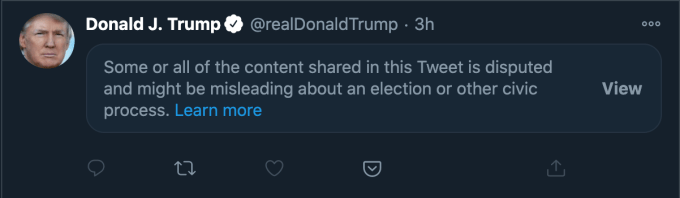
Twitter pushed back on the president’s false claim about Pennsylvania mail-in ballots, hiding it behind a misinformation warning that calls the tweet “disputed.” Twitter also disabled non-quote retweets, likes and replies for the hidden tweet, which remains viewable but restricted.

Image Credits: Twitter

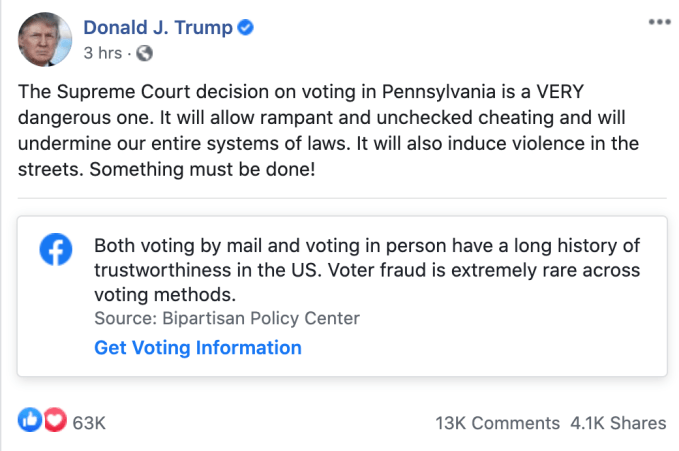
“The Supreme Court decision on voting in Pennsylvania is a VERY dangerous one,” Trump tweeted. “It will allow rampant and unchecked cheating and will undermine our entire systems of laws. It will also induce violence in the streets. Something must be done!”

Facebook did not remove the reposted message, but did add a label emphasizing the trustworthiness of voting systems. Three hours after it was published, Trump’s Facebook post had collected 63,000 likes and 13,000 comments.


Read Full Article

PayPal details its digital wallet plans for 2021, including crypto, Honey integration and more


PayPal this week laid out its vision for the future of its digital wallet platform and its PayPal and Venmo apps. During its third-quarter earnings on Monday, the company said it plans to roll out substantial changes to its mobile apps over the next year to integrate a range of new features including enhanced direct deposit, check cashing, budgeting tools, bill pay, crypto support, subscription management, buy now/pay later functionality, and all of Honey’s shopping tools.

While PayPal had spoken in the past about bringing Honey’s capabilities into PayPal, CEO Dan Schulman detailed the integrations PayPal has in store for the deal-finding platform it bought last year for $4 billion, as well as a time table for both this and the other app updates it has in store.

The Honey acquisition had brought 17 million monthly active users to PayPal. These users turned to Honey’s browser extension and mobile app to find the best savings on items they want to buy, track prices and more.

But today, the Honey experience still remains separate from PayPal itself. That’s something the company wants to change next year.

According to Schulman, the company’s apps will be updated to include Honey’s shopping tools like its Wish List feature that allows you to track items you want to buy, price monitoring tools that alert you to savings and price drops, plus its deals, coupons and rewards. These tools will become part of PayPal’s checkout solution itself.

That means the company will be able to track the customer from the initial deal-hunting phase where they’re indicating their interest in a certain product, target them with savings and offers, then guide them through its checkout experience all in one place.

PayPal will also provide “anonymous demand data” to merchants based on consumer engagement with Honey’s tools to help them drive sales, the company said.

What’s more, PayPal put timeline on the Honey integrations and the other updates it plans to roll out over the course of the next year.

Bill Pay will start to roll out this month, PayPal said, with a large redesign of the digital wallet experience expected for the first half of 2021. Much of the new functionality will be arriving in the second quarter and the second half of the year, with a goal of having the majority of the changes rolled out by the end of next year.

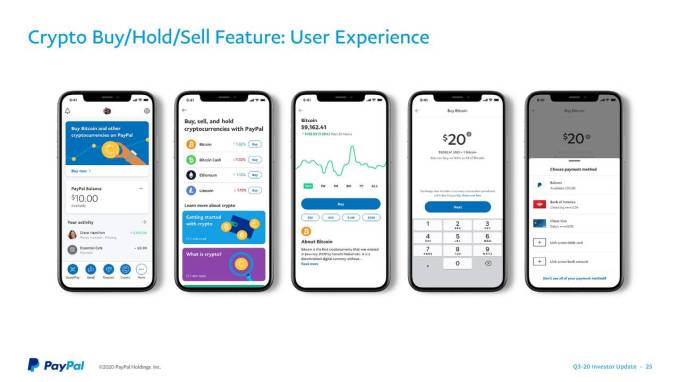
This also includes PayPal’s plans for cryptocurrencies, announced at the end of October. The company aims to support Bitcoin, Ethereum, Bitcoin Cash and Litecoin at first, initially in the U.S.

Speaking to investors during the earnings call, Schulman also noted when PayPal plans to bring crypto to more users and geographies. He said the ability to buy, sell and hold cryptocurrencies will first arrive in the U.S., then will roll out to international markets and the Venmo app in the first half of next year. (Currently, PayPal is offering U.S. users to join a waitlist for the new crypto features in-app).

Image Credits: PayPal

This change will allow PayPal’s users to shop using cryptocurrencies across the company’s 28 million merchants without requiring additional integrations on merchants’ part. The company explained this is due to how it will handle the settlement process, where users will be able to instantaneously transfer crypto into fiat currency at a set rate when checking out with PayPal merchants.

PayPal also recently joined the “buy now, pay later” race with its new “Pay in 4” installment program that lets consumers split purchases into 4 payments. This debuted in France ahead of its late August U.S. launch and has since rolled out to the U.K. (as Pay in 3). This too, will become more integrated into the company’s apps in the months ahead.

Venmo — which the company expects to reach $900 million in revenues next year — will see the expansion of business profiles, and will gain crypto capabilities, more basic financial tools and shopping tools, as well as a revamp of the “Pay with Venmo” checkout experience.

Schulman referred to the company’s plans to overhaul its Venmo and PayPal apps as a “fundamental transformation,” due to how much new functionality they will include as the changes roll out over the next year as well as the new user experience — basically, a redesign — that will allow people to move easily from one experience to the next instead of having to change apps or use a desktop browser, for example.

PayPal’s earnings hadn’t excited Wall St. investors this week, sending the stock down on its lack of 2021 guidance. But the year ahead for PayPal’s digital wallet apps looks to be an interesting one.


Read Full Article

Mobile Betting Apps Give A Major Edge To Sports Betting Enthusiasts – Know-How


In previous years, placing a bet required a person to reach out to any bookmaker, and they had to wait for their turn. It was indeed time-taking. However, today advanced technology is making everything better and easier for everyone. Thanks to the internet, now you can place bets online anytime and anywhere. If you have […]

The post Mobile Betting Apps Give A Major Edge To Sports Betting Enthusiasts – Know-How appeared first on ALL TECH BUZZ.


What social networks have learned since the 2016 election


On the eve on the 2020 U.S. election, tensions are running high.

The good news? 2020 isn’t 2016. Social networks are way better prepared to handle a wide array of complex, dangerous or otherwise ambiguous Election Day scenarios.

The bad news: 2020 is its own beast, one that’s unleashed a nightmare health scenario on a divided nation that’s even more susceptible now to misinformation, hyper-partisanship and dangerous ideas moving from the fringe to the center than it was four years ago.

The U.S. was caught off guard by foreign interference in the 2016 election, but shocking a nation that’s spent the last eight months expecting a convergence of worst-case scenarios won’t be so easy.

Social platforms have braced for the 2020 election in a way they didn’t in 2016. Here’s what they’re worried about and the critical lessons from the last four years that they’ll bring to bear.

Contested election results

President Trump has repeatedly signaled that he won’t accept the results of the election in the case that he loses — a shocking threat that could imperil American democracy, but one social platforms have been tracking closely. Trump’s erratic, often rule-bending behavior on social networks in recent months has served as a kind of stress test, allowing those platforms to game out different scenarios for the election.

Facebook and Twitter in particular have laid out detailed plans about what happens if the results of the election aren’t immediately clear or if a candidate refuses to accept official results once they’re tallied.

On election night, Facebook will pin a message to the top of both Facebook and Instagram telling users that vote counting is still underway. When authoritative results are in, Facebook will change those messages to reflect the official results. Importantly, U.S. election results might not be clear on election night or for some days afterward, a potential outcome for which Facebook and other social networks are bracing.
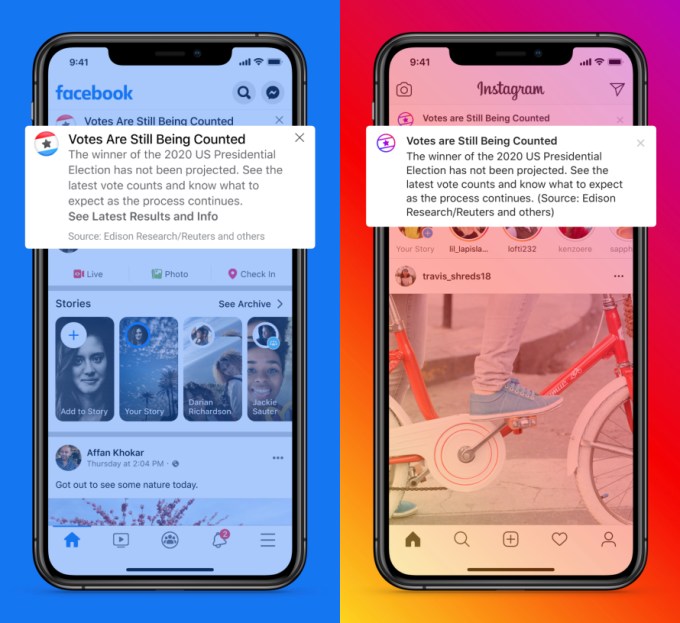
Facebook election message

Image via Facebook

If a candidate declared victory prematurely, Facebook doesn’t say it will remove those claims, but it will pair them with its message that there’s no official result and voting is still underway.

Twitter released its plans for handling election results two months ago, explaining that it will either remove or attach a warning label to premature claims of victory before authoritative election results are in. The company also explicitly stated that it will act against any tweets “inciting unlawful conduct to prevent a peaceful transfer of power or orderly succession,” a shocking rule to have to articulate, but a necessary one in 2020.

On Monday, Twitter elaborated on its policy, saying that it would focus on labeling misleading tweets about the presidential election and other contested races. The company released a sample image of a label it would append, showing a warning stating that “this tweet is sharing inaccurate information.”

Last week, the company also began showing users large misinformation warnings at the top of their feeds. The messages told users that they “might encounter misleading information” about mail-in voting and also cautioned them that election results may not be immediately known.

According to Twitter, users who try to share tweets with misleading election-related misinformation will see a pop-up pointing them to vetted information and forcing them to click through a warning before sharing. Twitter also says it will act on any “disputed claims” that might cast doubt on voting, including “unverified information about election rigging, ballot tampering, vote tallying, or certification of election results.”

One other major change that many users probably already noticed is Twitter’s decision to disable retweets. Users can still retweet by clicking through a pop-up page, but Twitter made the change to encourage people to quote retweet instead. The effort to slow down the spread of misinformation was striking, and Twitter said it will stay in place through the end of election week, at least.

YouTube didn’t go into similar detail about its decision making, but the company previously said it will put an “informational” label on search results related to the election and below election-related videos. The label warns users that “results may not be final” and points them to the company’s election info hub.

Foreign disinformation

This is one area where social networks have made big strides. After Russian disinformation took root on social platforms four years ago, those companies now coordinate with one another and the government about the threats they’re seeing.

In the aftermath of 2016, Facebook eventually woke up to the idea that its platform could be leveraged to scale social ills like hate and misinformation. Its scorecard is uneven, but its actions against foreign disinformation have been robust, reducing that threat considerably.

A repeat of the same concerns from 2016 is unlikely. Facebook made aggressive efforts to find foreign coordinated disinformation campaigns across its platforms, and it publishes what it finds regularly and with little delay. But in 2020, the biggest concerns are coming from within the country — not without.

Most foreign information operations have been small so far, failing to gain much traction. Last month, Facebook removed a network of fake accounts connected to Iran. The operation was small and failed to generate much traction, but it shows that U.S. adversaries are still interested in trying out the tactic.

Misleading political ads

To address concerns around election misinformation in ads, Facebook opted for a temporary political ad blackout, starting at 12 a.m. PT on November 4 and continuing until the company deems it safe to toggle them back on. Facebook hasn’t accepted any new political ads since October 27 and previously said it won’t accept any ads that delegitimize the results of the election. Google will also pause election-related ads after polls close Tuesday.

Facebook has made a number of big changes to political ads since 2016, when Russia bought Facebook ads to meddle with U.S. politics. Political ads on the platform are subject to more scrutiny and much more transparency now and Facebook’s ad library emerged as an exemplary tool that allows anyone to see what ads have been published, who bought them and how much they spent.

Unlike Facebook, Twitter’s way of dealing with political advertising was cutting it off entirely. The company announced the change a year ago and hasn’t looked back since. TikTok also opted to disallow political ads.

Political violence

Politically motivated violence is a big worry this week in the U.S. — a concern that shows just how tense the situation has grown under four years of Trump. Leading into Tuesday, the president has repeatedly made false claims of voter fraud and encouraged his followers to engage in voter intimidation, a threat Facebook was clued into enough that it made a policy prohibiting “militarized” language around poll watching.

Facebook made a number of other meaningful recent changes, like banning the dangerous pro-Trump conspiracy theory QAnon and militias that use the platform to organize, though those efforts have come very late in the game.

Facebook was widely criticized for its inaction around a Trump post warning “when the looting starts, the shooting starts” during racial justice protests earlier this year, but its recent posture suggests similar posts might be taken more seriously now. We’ll be watching how Facebook handles emerging threats of violence this week.

Its recent decisive moves against extremism are important, but the platform has long incubated groups that use the company’s networking and event tools to come together for potential real-world violence. Even if they aren’t allowed on the platform any longer, many of those groups got organized and then moved their networks onto alternative social networks and private channels. Still, making it more difficult to organize violence on mainstream social networks is a big step in the right direction.

Twitter also addressed the potential threat of election-related violence in advance, noting that it may add warnings or require users to remove any tweets “inciting interference with the election” or encouraging violence.

Platform policy shifts in 2020

Facebook is the biggest online arena where U.S. political life plays out. While a similar number of Americans watch videos on YouTube, Facebook is where they go to duke it out over candidates, share news stories (some legitimate, some not) and generally express themselves politically. It’s a tinderbox in normal times — and 2020 is far from normal.

While Facebook acted against foreign threats quickly after 2016, the company dragged its feet on platform changes that could be perceived as politically motivated — a hesitation that backfired by incubating dangerous extremists and allowing many kinds of misinformation, particularly on the far-right, to survive and thrive.

In spite of Facebook’s lingering misguided political fears, there are reasons to be hopeful that the company might avert election-related catastrophes.

Whether it was inspired by the threat of a contested election, federal antitrust action or a possible Biden presidency, Facebook has signaled a shift to more thoughtful moderation with a flurry of recent policy enforcement decisions. An accompanying flurry of election-focused podcast and television ads suggests Facebook is worried about public perception too — and it should be.

Twitter’s plan for the election has been well-communicated and detailed. In 2020, the company treats its policy decisions with more transparency, communicates them in real time and isn’t afraid to admit to mistakes. The relatively small social network plays an outsized role in publishing political content that’s amplified elsewhere, so the choices it makes are critical for countering misinformation and extremism.

The companies that host and amplify online political conversation have learned some major lessons since 2016 — mostly the hard way. Let’s just hope it was enough to help them guide their roiling platforms through one of the most fraught moments in modern U.S. history.


Read Full Article
Election Impact Score Sheet


Election Impact Score Sheet

Booming edtech M&A activity brings consolidation to a fragmented sector


As the COVID-19 pandemic continues to force teachers, students and parents to adopt new technologies, edtech’s total addressable market has massively grown in the last several months. The shift has urged venture capitalists to pour money into the sector accordingly, ushering a number of startups into the unicorn club.

But maturation doesn’t just mean bigger checks and high-flying unicorns — it also brings exits.

Edtech M&A activity is buzzier than usual: In the last week, Course Hero, a startup that sells Netflix-like subscriptions to students looking for learning and teaching content, bought Symbolab, an artificial intelligence-powered calculator. Saga Education, a tutoring nonprofit backed by Comcast, the Bill & Melinda Gates Foundation and others, acquired math software platform Woot Math. We also saw PowerSchool, which sells a suite of software services to manage schools, scoop up Hoonuit, a data management and analytics tool for educators. Finally, K-12 curriculum company Discovery Education bought K-5 science and stem curriculum upstart Mystery Science.

It’s a lot of news in a short period of time. Luckily, these consolidations offer some directional guidance regarding where some edtech businesses think the future of their industry is headed.

Smart content as a competitive advantage

Content, to an extent, is commoditized. If you can find a free tutorial on Youtube or Khan Academy, buy a subscription to an edtech platform that offers the same solution? The commodification of education is good for end-users and is often why startups have a freemium model as a customer acquisition strategy. To convert free users into paying subscribers, edtech startups need to offer differentiated and targeted content.

The Course Hero and Mystery Science deals show us that edtech businesses are hungry for personalized, targeted content. Course Hero’s acquisition of Symbolab was essentially a deal for more than a decade’s worth of data that captured which math questions students found hardest.

Symbolab is a math calculator that is set to answer over 1 billion questions this year. With each answer, Symbolab adds information to its algorithm regarding students’ most common pain points and confusion. Course Hero, in contrast, is a broader service that focuses on Q&A from a variety of subjects. CEO Andrew Grauer says Symbolab’s algorithm isn’t something that Course Hero, which has been operating since 2006, can drum up overnight. That’s precisely why he “decided to buy, instead of build.”

“It made a lot of sense to move fast enough so it wouldn’t take up multiple years to get this technology,” Grauer said. The deal was made as big companies get in the Q&A game too, he noted. Google acquired homework helper app Socratic in 2019 and Microsoft built Microsoft Solver in the same year.

Discovery Education, a curriculum provider for K-12 classrooms, acquired San Francisco-based K-5 STEM curriculum provider, Mystery Science. Discovery Education has launched a series of other products focused on science education, including Discovery Education Experience, the Science Techbook series and STEM Connect.  However, Mystery Science is largely focused on offering a creative digital solution to science education. The programming, a mix of videos, prompts and projects, cover a range of questions such as, “Where do rivers flow?” and “Could a volcano pop up where you live?” for young students.

Mystery Science CEO and founder Keith Schact explained how his product focuses on kids and educators, while Discovery Education focuses on educators and districts, making the deal feel like a “natural marriage.” Even as edtech goes directly to consumers, Schact remains bullish on the role that institutions play in true adoption of technology.

“You can go straight to teachers and get a certain market share,” he said. “But the institutions still do have a big role.” The founder likened the dynamic to the state of media: With the rise of blogs, you can publish directly and reach an engaged audience, but writers who want a bigger positioning tend to join larger platforms to grow their overall reach. Edtech is the same, in that some startups need an official sign-off from schools before they can reach venture-scale returns.

According to a source familiar with the transaction, Mystery Science was sold for $175 million after only raising $4 million in venture financing.

Using data management and analytics to improve student outcomes

Rocket Lab’s next launch will deliver 30 satellites to orbit – and a 3D-printed gnome from Gabe Newell


Rocket Lab’s next mission will put dozens of satellites into orbit using the launch company’s Kick Stage “space tug,” as well as a 3D-printed garden gnome from Valve Software’s Gabe Newell. The latter is a test of a new manufacturing technique, but also a philanthropic endeavor from the gaming industry legend.

Scheduled for no earlier than November 15 (or 16 at the New Zealand launch site), the as-yet-unnamed launch — Rocket Lab gives all of their missions cheeky names — will be the company’s “most diverse ever,” it said in a press release.

A total of 30 satellites will be deployed using Rocket Lab’s own Kick Stage deployment platform, which like other “space tugs” detaches from the second stage once a certain preliminary orbit is reached and then delivers its payloads each at their own unique trajectory. That’s the most individual satellites every taken up at once by Rocket Lab.

24 of them are Swarm Technologies’ tiny SpaceBEEs, the sandwich-sized communications satellites it will be using to power a low-cost, low-bandwidth global network for Internet of Things devices.

The most unusual payload, however, is certainly “Gnome Chompski,” whose passage was paid by Valve president Newell: a 3D-printed figure that will remain attached to the Kick Stage until it burns up on reentry. The figure, a replica of an item from the popular Half-Life series of PC games, was made by Weta Workshop, the effects studio behind Lord of the Rings and many other films. It’s both a test of a potentially useful new component printing technique and “an homage to the innovation and creativity of gamers worldwide.”

More importantly, Newell will donate a dollar to Starship Children’s Hospital for every viewer of the launch, so you’ll definitely want to tune in for this one. (I’m waiting to find out more from Newell, if possible.)

The launch will also deliver satellites for TriSept, Unseenlabs, and the Auckland Space Institute — the last will be New Zealand’s first student-built spacecraft.

Rocket Lab has worked hard to make its launch platform all-in-one, so prospective customers don’t have to shop around for various services or components. Ideally, the company’s CEO has said, anyone should be able to come to the company with the barebones payload and the rest is taken care of.

Image Credits: Rocket Lab

“Small satellite operators shouldn’t have to compromise on orbits when flying on a rideshare mission, and we’re excited to provide tailored access to space for 30 satellites on this mission. It’s why we created the Kick Stage to enable custom orbits on every mission, and eliminate the added complexity, time, and cost of having to develop your own spacecraft propulsion or using a third-party space tug,” Beck said in the press release.

Rocket Lab recently launched its own home-grown satellite, First Light, to show that getting to orbit doesn’t have be such a “pain in the butt,” as Beck put it then.


Read Full Article

02 November 2020

How Wi-Fi Booster Can Enhance Your Gaming Experience


Wi-Fi connection failed – These are the words which can irritate you and ruin your mood. A slow internet connection can bring delays in your work. It’s something that you just can’t afford in a world where everything has been taken online. The frustration of a poor internet connection is all more frustrating for you […]

The post How Wi-Fi Booster Can Enhance Your Gaming Experience appeared first on ALL TECH BUZZ.


The radical act of choosing common ground | Nisha Anand

The radical act of choosing common ground | Nisha Anand

To achieve lasting change sometimes requires the hard, even radical, choice of partnering with people you'd least expect. Justice reform advocate Nisha Anand shares her story of working with her ideological opposite to make history and save lives -- and urges us all to widen our circles in order to make progress with purpose.

https://ift.tt/34NkNiQ

Click this link to view the TED Talk

Twitter explains how it will handle misleading tweets about the US election results


Twitter recently updated its policies in advance of the U.S. elections to include specific rules that detailed how it would handle tweets making claims about election results before they were official. Today, the company offered more information about how it plans to prioritize the enforcement of its rules and how it will label any tweets that fall under the new guidelines.

In September, Twitter said it would either remove or attach a warning label to any premature claims of victory, with a focus on tweets that incite “unlawful conduct to prevent a peaceful transfer of power or orderly succession,” the company had explained.

This morning, Twitter added that it will prioritize labeling tweets about the presidential election and any other “highly contested races” where there may be significant issues with misleading information.

The company says tweets are eligible to be labeled if the account has a U.S. 2020 candidate label, including presidential candidates and campaigns — meaning the Trump and Biden campaigns will not be immune to the new policies.

Tweets can also be labeled if the account is U.S.-based with more than 100,000 followers or if they have significant engagement with the tweet — the threshold is either 25,000 Likes or 25,000 Quote Tweets plus Retweets, the company says. This latter guideline aims to clamp down on allowing misinformation to go viral, even if the tweet in question was initiated by a smaller account.

Twitter also explained how it will determine if an election result is considered “official,” saying that the result will need to be announced by a state election official. Alternately, Twitter may consider an election result official if at least two of a select list of national news outlets make the call. These outlets include ABC News, The Associated Press, CBS News, CNN, Decision Desk HQ, Fox News, and NBC News.

If a tweet is labeled as being “misleading information” under this new policy, users will be shown a prompt pointing them to credible information before they’re able to retweet or further amplify the post on Twitter. However, Twitter won’t stop retweets from being posted.

Twitter, however, recently made it more difficult to blindly retweet, by forcing retweets to go through “Quote Tweet” user interface instead. This change aims to slow people down from quickly retweeting posts without adding their own commentary.

In addition to labeling tweets with misleading information, Twitter says if it sees content “inciting interference with the election, encouraging violent action or other physical harms,” it may take additional measures, including adding a warning or even removing the tweet.

Issues around a contested election have been of increased concern, following reports that said President Trump has a plan to declare victory on Tuesday night if it looks like he’s ahead. Trump denied these claims on Sunday, but added he thinks it’s a “terrible thing when states are allowed to tabulate ballots for a long period of time after the election is over,” Axios reported.


Read Full Article

Europe Booms With New Casinos And Here’s Why


An interesting trend is these years flooding the casino and gambling industry. More and more of the gambling money are these days spent on online casinos instead of the classical physical casinos and this is a trend we are going to see more of in the future. Europe is experiencing a boom in its gambling […]

The post Europe Booms With New Casinos And Here’s Why appeared first on ALL TECH BUZZ.


Raspberry Pi Foundation announces the cute little Raspberry Pi 400


This is the Atari 400 Raspberry Pi 400. The Raspberry Pi Foundation is launching a new product today — and it’s a brand new device. As you can see on the photo, the Raspberry Pi 400 is a computer integrated in a compact keyboard that costs $70.

And it is the easiest way to get started with a Raspberry Pi. If you’re not familiar with the Raspberry Pi, it’s a single-board computer with a lot of connectors that is the size of a deck of cards.

You can give it to a kid so that they can play around with a terminal, you can use it for your weekend projects as the computing brain or you can give it to your grandparents to replace their slow Windows XP computer that they use to receive emails.

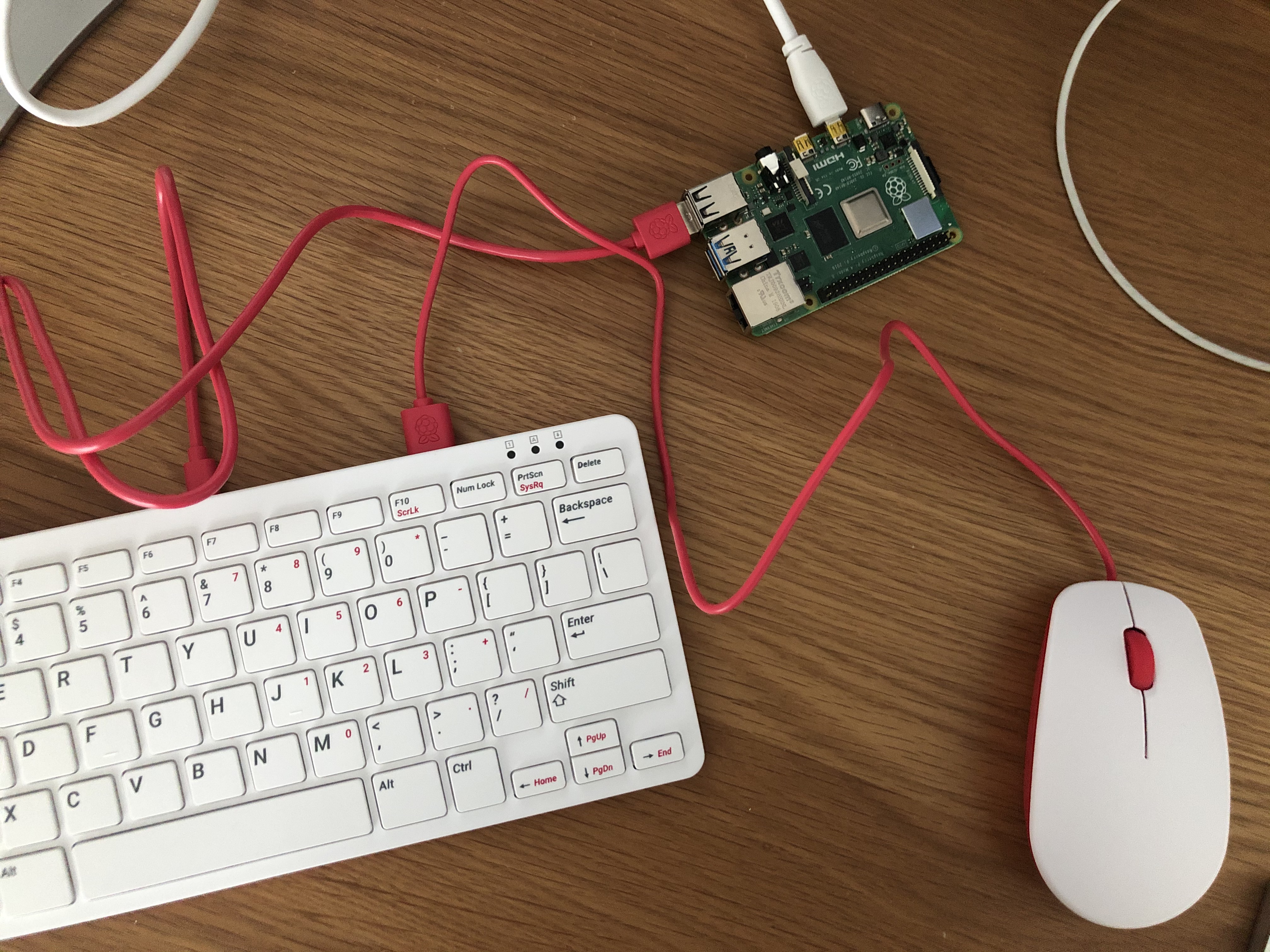
Last year, when the Raspberry Pi Foundation introduced the Raspberry Pi 4, the foundation also used this opportunity to release a cute mouse and a keyboard. Of course, you could use these accessories with a Raspberry Pi. And your basic setup would look something like this:

Image Credits: Romain Dillet / TechCrunch

Those are great goodies for Raspberry Pi fans. And yet, there are many, many keyboard and mouse manufacturers out there. Building their own mouse and keyboard didn’t really make sense.

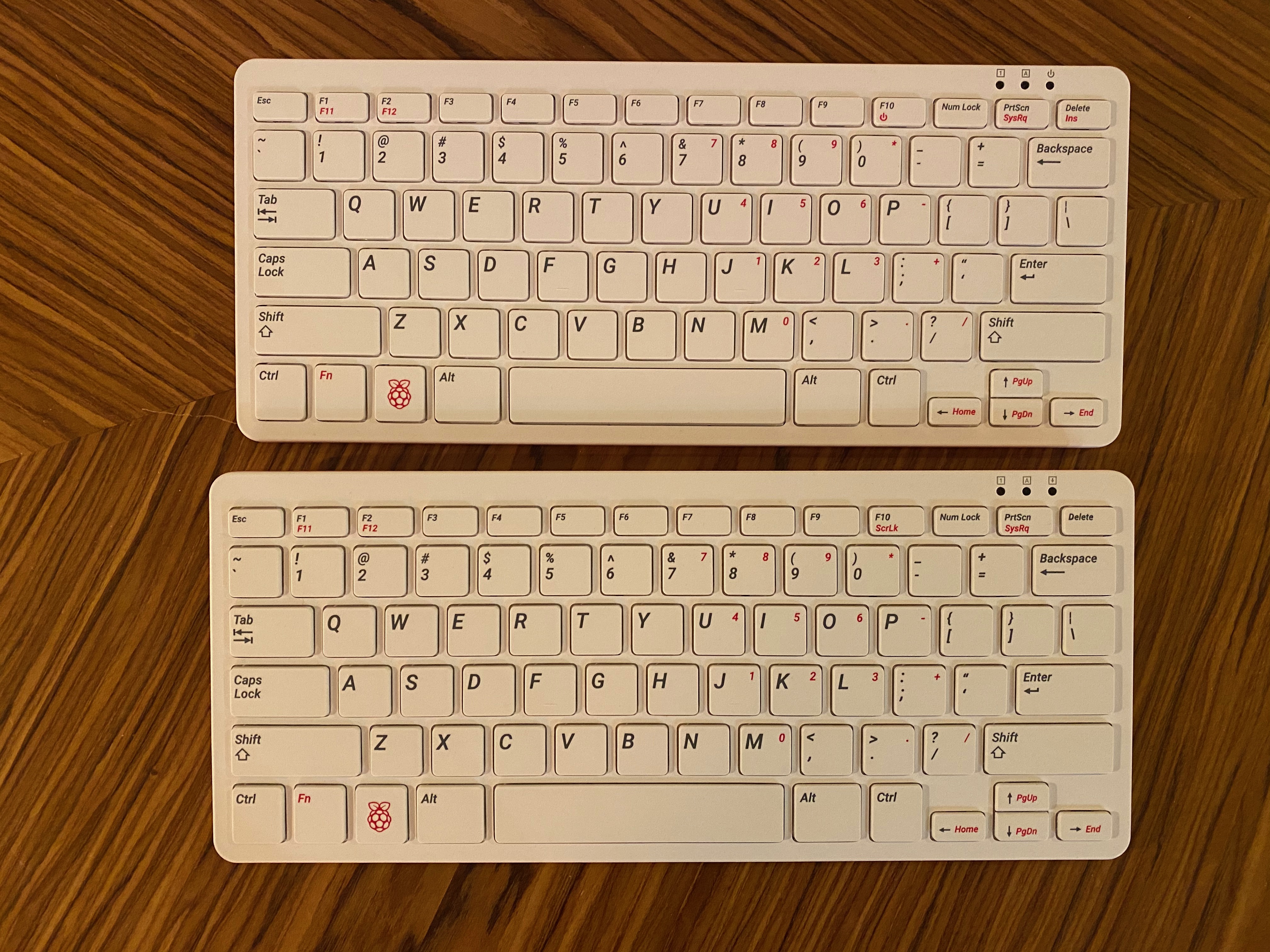
It turns out that the Raspberry Pi Foundation had another idea in mind. The Raspberry Pi 400 is essentially the exact same keyboard — but with an integrated Raspberry Pi. Their next project has been sitting there right in front of us for the past year.

Raspberry Pi 400 (top) and Raspberry Pi keyboard (bottom). Image Credits: Romain Dillet / TechCrunch

The Raspberry Pi Foundation has already sent me a Raspberry Pi 400 to try it out. While many of my colleagues are excited about the PlayStation 5 and the Xbox Series X, I was also really excited about receiving this new device.

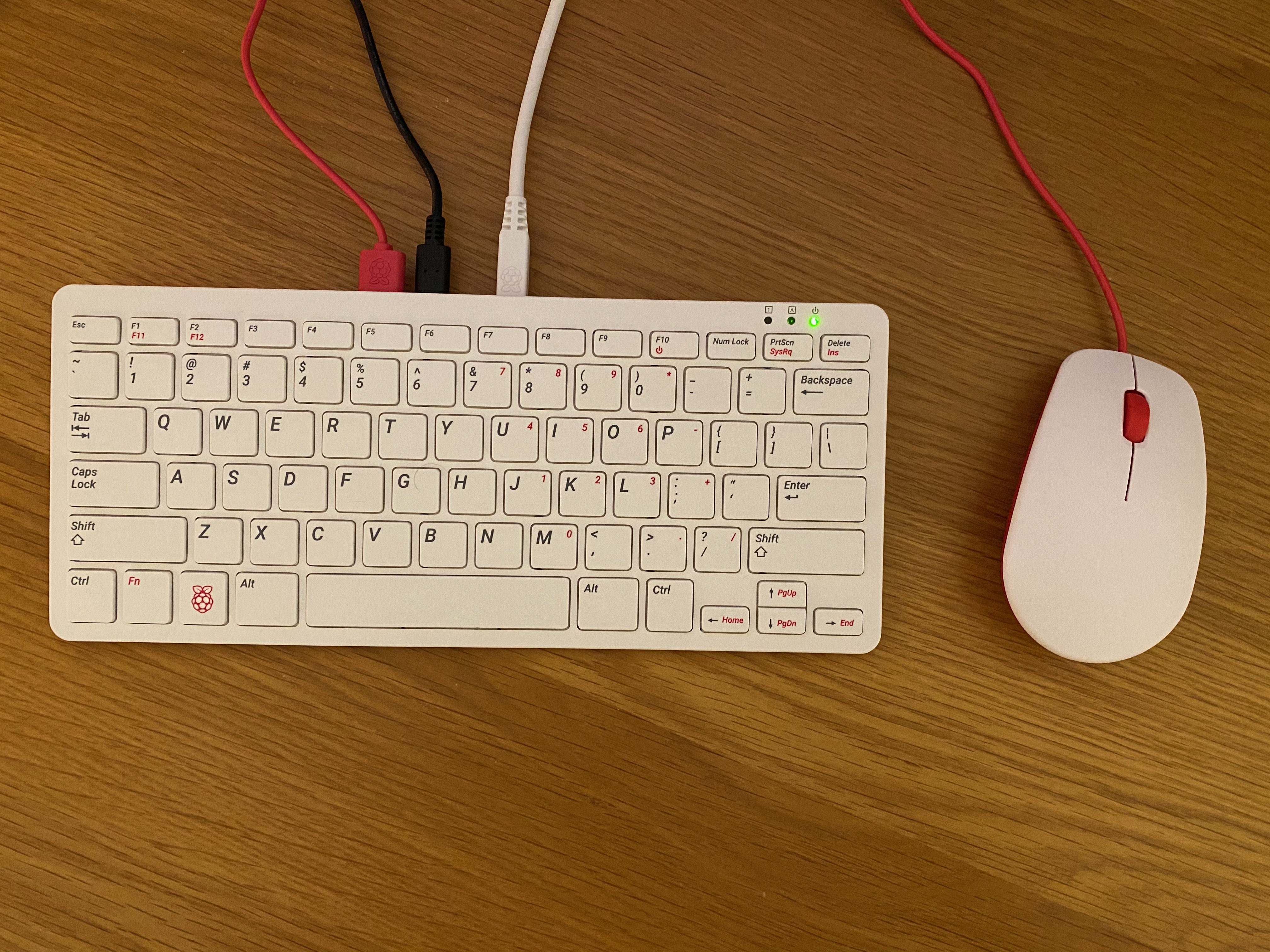
Because, yes, the Raspberry Pi 400 (or, as TechCrunch’s Brian Heater called it, the PiStation) looks really cute. You plug a couple of cables and you’re ready to go. As far as I can see, it’s a fanless device so it doesn’t make any sound when it’s on.

Image Credits: Romain Dillet / TechCrunch

Putting a computer inside a keyboard is nothing new. You could even say that personal computers started this way. Back in the 1980s, you could plug your computer-in-a-keyboard to your TV and get started right away.

At some point, computers became more complicated. You had to buy a computer tower, a display, a mouse, a keyboard, etc. Laptops reversed this trend by packing everything you need in one device. But laptops aren’t perfect either.

The Raspberry Pi 400 is a great device for kids. In many ways, it’s much more powerful than a Chromebook. You can learn a lot more about computers and you feel less restricted in what you can do.

I could see it in schools, at home in the play room or on a shelf waiting to be plugged to a display. This is a great way to get started playing around with computers.

Image Credits: Romain Dillet / TechCrunch

It gets more interesting when you think about older kids. Many people have said that closed schools have been particularly challenging this year, especially because you don’t necessarily have enough computers for everyone in your home.

If your kid is old enough to get a smartphone, that doesn’t mean they have a comfortable setup for remote classes. The Raspberry Pi 400 is a cheap device that could fill that gap. Moreover, the Raspberry Pi 400 could be a good way to separate school from leisure activities (and social networks).

Now let’s talk about specifications. The Raspberry Pi 400 is pretty similar to a Raspberry Pi 4, but not exactly. It has an ARM-based system on a chip (64-bit quad-core ARM Core-A72 at 1.8GHz for those who are curious). It comes with 4GB of RAM, Wi-Fi, Bluetooth 5.1, Bluetooth Low Energy and Gigabit Ethernet.

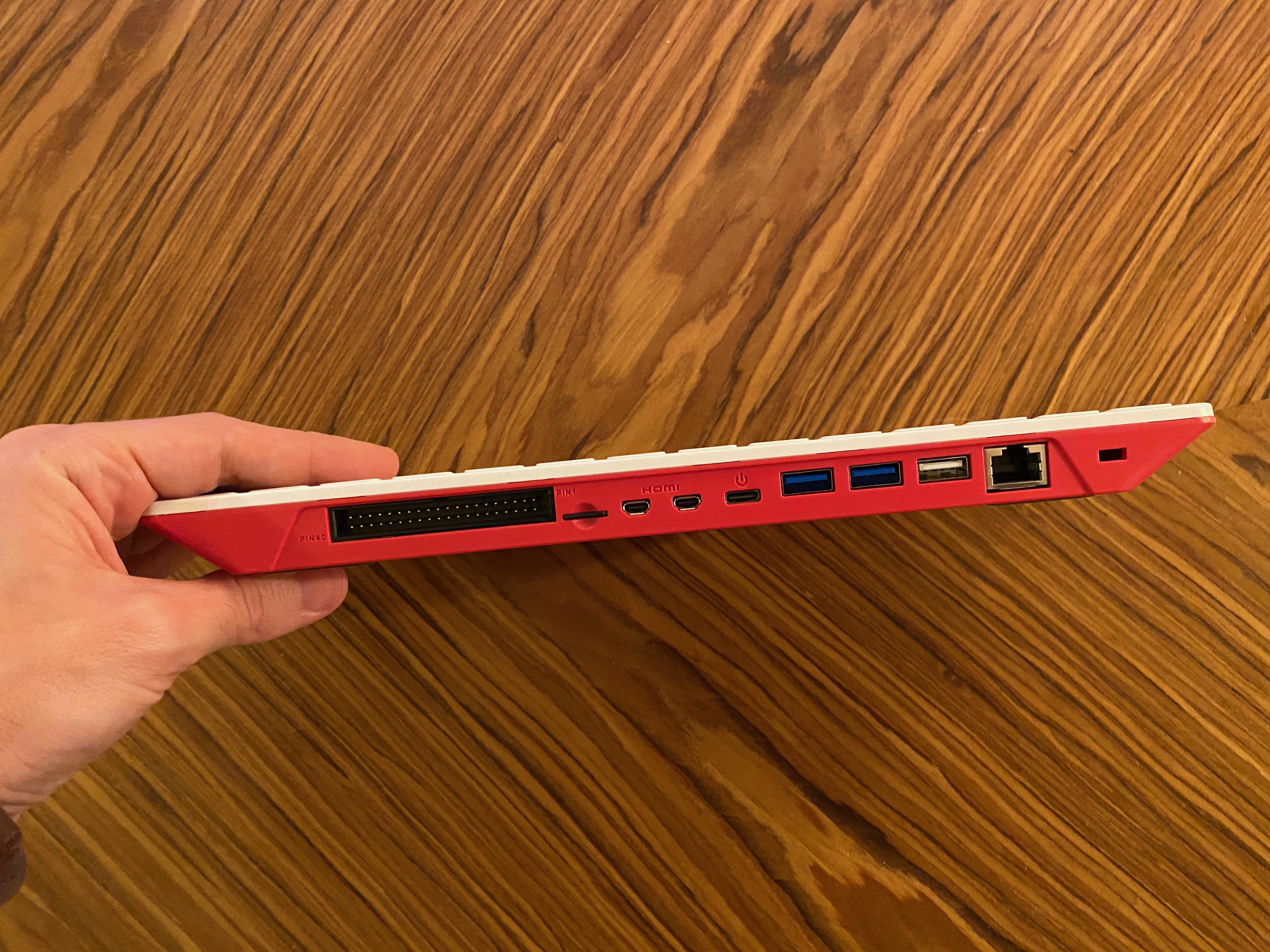
When it comes to ports, you get two micro-HDMI ports, which means that you can plug two 4K displays in case you really need a lot of screen real estate. There are two USB 3.0 ports, one USB 2.0 port and a USB-C port for the power brick.

Like other Raspberry Pi devices, it uses microSD cards for the operating system and to store your data. You can use Raspberry Pi Desktop, a Debian-based Linux operating system, or a third-party operating system, such as Ubuntu.

Image Credits: Romain Dillet / TechCrunch


Read Full Article
31 October 2020

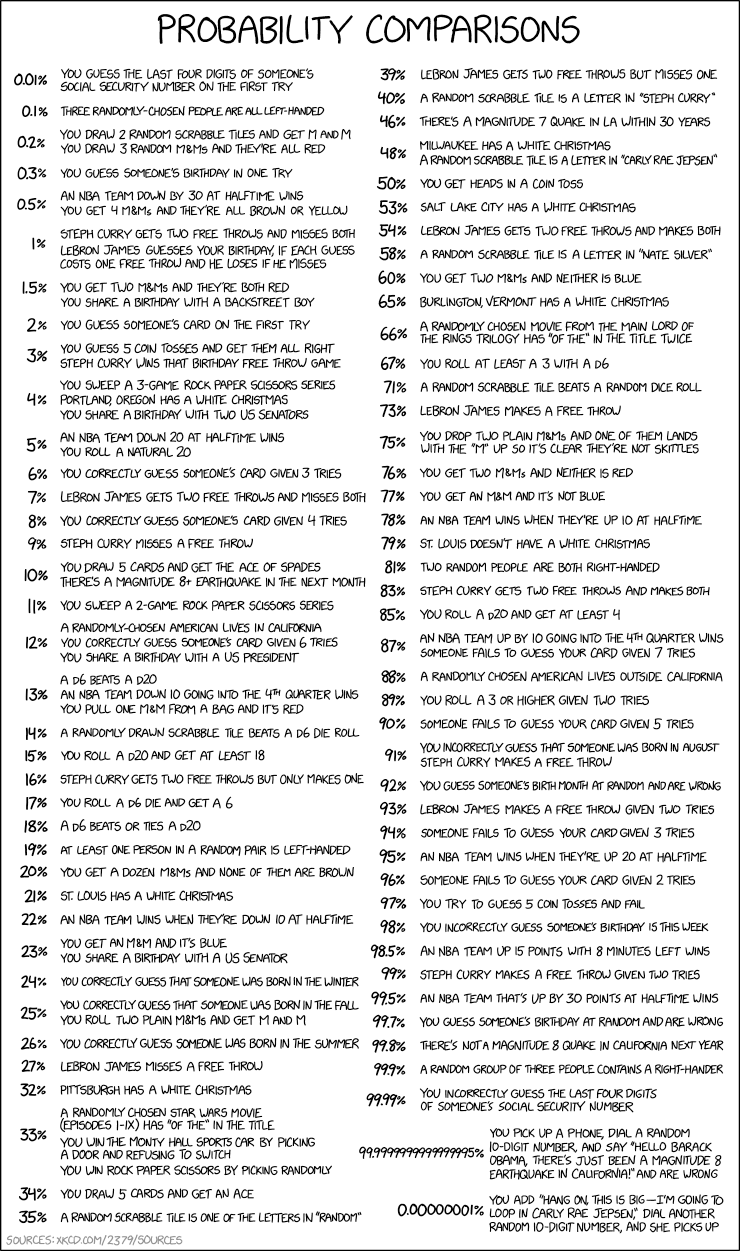
Probability Comparisons


Probability Comparisons

TikTok stars got a judge to block Trump’s TikTok ban


TikTok has won another battle in its fight against the Trump administration’s ban of its video-sharing app in the U.S. — or, more accurately in this case, the TikTok community won a battle. On Friday, a federal judge in Pennsylvania issued an injunction that blocked the restrictions that would have otherwise blocked TikTok from operating in the U.S. on November 12.

This particular lawsuit was not led by TikTok itself, but rather a group of TikTok creators who use the app to engage with their million-plus followers.

According to the court documents, plaintiff Douglas Marland has 2.7 million followers on the app; Alec Chambers has 1.8 million followers; and Cosette Rinab has 2.3 million followers. The creators argued — successfully as it turns out — that they would lose access to their followers in the event of a ban, as well as the “professional opportunities afforded by TikTok.” In other words, they’d lose their brand sponsorships — meaning, their income.

This is not the first time that the U.S. courts have sided with TikTok to block the Trump administration’s proposed ban over the Chinese-owned video sharing app. Last month, a D.C. judge blocked the ban that would have removed the app from being listed in U.S. app stores run by Apple and Google.

That ruling had not, however, stopped the November 12 ban that would have blocked companies from providing internet hosting services that would have allowed TikTok to continue to operate in the U.S.

The Trump administration had moved to block the TikTok app from operating in the U.S. due to its Chinese parent company, ByteDance, claiming it was a national security threat. The core argument from the judge in this ruling was the “Government’s own descriptions of the national security threat posed by the TikTok app are phrased in the hypothetical.”

That hypothetical risk was unable to be stated by the government, the judge argued, to be such a risk that it outweighed the public interest. The interest, in this case, was the more than 100 million users of TikTok and the creators like Marland, Chambers and Rinab that utilized it to spread “informational materials,” which allowed the judge to rule that the ban would shut down a platform for expressive activity.

“We are deeply moved by the outpouring of support from our creators, who have worked to protect their rights to expression, their careers, and to help small businesses, particularly during the pandemic,” said Vanessa Pappas, Interim Global Head of TikTok, in a statement. “We stand behind our community as they share their voices, and we are committed to continuing to provide a home for them to do so,” she added.

The TikTok community coming to the rescue on this one aspect of the overall TikTok picture just elevates this whole story. Though the company has been relatively quiet through this whole process, Pappas has thanked the community several times for its outpouring of support. Though there were some initial waves of “grief” on the app with creators frantically recommending people follow them on other platforms, that has morphed over time into more of a “let’s band together” vibe. This activity coalesced around a big swell in voting advocacy on the platform, where many creators are too young to actually participate but view voting messaging as their way to participate.

TikTok has remained active in the product department through the whole mess, shipping elections guides and trying to ban QAnon conspiracy spread, even as Pakistan banned and then un-banned the app.


Read Full Article

TikTok stars got a judge to block Trump’s TikTok ban


TikTok has won another battle in its fight against the Trump administration’s ban of its video-sharing app in the U.S. — or, more accurately in this case, the TikTok community won a battle. On Friday, a federal judge in Pennsylvania has issued an injunction that blocked the restrictions that would have otherwise blocked TikTok from operating in the U.S. on November 12.

This particular lawsuit was not led by TikTok itself, but rather a group of TikTok creators who use the app to engage with their million-plus followers.

According to the court documents, plaintiff Douglas Marland has 2.7 million followers on the app; Alec Chambers has 1.8 million followers; and Cosette Rinab has 2.3 million followers. The creators argued – successfully as it turns out — that they would lose access to their followers in the event of a ban, as well as the “professional opportunities afforded by TikTok.” In other words, they’d lose their brand sponsorships — meaning, their income.

This is not the first time that the U.S. courts have sided with TikTok to block the Trump administration’s proposed ban over the Chinese-owned video sharing app. Last month, a D.C. judge blocked the ban that would have removed the app from being listed in U.S. app stores run by Apple and Google.

That ruling had not, however, stopped the Nov. 12 ban that would have blocked companies from providing internet hosting services that would have allowed TikTok to continue to operate in the U.S.

The Trump administration had moved to block the TikTok app from operating in the U.S. due to its Chinese parent company, ByteDance, claiming it was a national security threat. The core argument from the judge in this ruling was the “Government’s own descriptions of the national security threat posed by the TikTok app are phrased in the hypothetical.”

That hypothetical risk was unable to be stated by the Government, the Judge argued, to be such a risk that it outweighed the public interest. The interest, in this case, was the over 100 million users of TikTok and the creators like Marland, Chambers and Rinab that utilized it to spread “informational materials,” which allowed the Judge to rule that the ban would shut down a platform for expressive activity.

“We are deeply moved by the outpouring of support from our creators, who have worked to protect their rights to expression, their careers, and to help small businesses, particularly during the pandemic,” said Vanessa Pappas, Interim Global Head of TikTok, in a statement. “We stand behind our community as they share their voices, and we are committed to continuing to provide a home for them to do so,” she added.

The TikTok community coming to the rescue on this one aspect of the overall TikTok picture just elevates this whole story. Though the company has been relatively quiet through this whole process, Pappas has thanked the community several times for its outpouring of support. Though there were some initial waves of ‘grief’ on the app with creators frantically recommending people follow them on other platforms, that has morphed over time into more of a ‘let’s band together’ vibe. This activity coalesced around a big swell in voting advocacy on the platform, where many creators are too young to actually participate but view voting messaging as their way to participate.

TikTok has remained active in the product department through the whole mess, shipping elections guides and trying to ban Qanon conspiracy spread. Even as Pakistan banned and then un-banned the app.


Read Full Article

Facebook hits pause on algorithmic recommendations for political and social issue groups


With just days to go before the U.S. election, Facebook quietly suspended one of its most worrisome features.

During Wednesday’s Senate hearing, Senator Ed Markey asked Facebook CEO Mark Zuckerberg about reports that his company has long known its group recommendations push people toward more extreme content. Zuckerberg responded that the company had actually disabled that feature for certain groups — a fact Facebook had not previously announced.

“Senator, we have taken the step of stopping recommendations in groups for all political content or social issue groups as a precaution for this,” Zuckerberg told Markey.

TechCrunch reached out to Facebook with questions about what kind of groups would be affected and how long the recommendations would be suspended at the time but did not receive an immediate response. Facebook first confirmed the change to BuzzFeed News on Friday.

“This is a measure we put in place in the lead up to Election Day,” Facebook spokesperson Liz Bourgeois told TechCrunch in an email. “We will assess when to lift them afterwards, but they are temporary.”

The cautionary step will disable recommendations for political and social issue groups as well as any new groups that are created during the window of time. Facebook declined to provide additional details about the kinds of groups that will and won’t be affected by the change or what went into the decision.

Researchers who focus on extremism have long been concerned that algorithmic recommendations on social networks push people toward more extreme content. Facebook has been aware of this phenomenon since at least 2016, when an internal presentation on extremism in Germany observed that “64% of all extremist group joins are due to our recommendation tools.” In light of the feature’s track record, some anti-hate groups celebrated Facebook’s decision to hit the pause button Friday.

“It’s good news that Facebook is disabling group recommendations for all political content or social issue groups as a precaution during this election season. I believe it could result in a safer experience for users in this critical time,” Anti-Defamation League CEO Jonathan A. Greenblatt told TechCrunch. “And yet, beyond the next week, much more needs to be done in the long term to ensure that users are not being exposed to extremist ideologies on Facebook’s platforms.”

On Facebook, algorithmic recommendations can usher users flirting with extreme views and violent ideas into social groups where their dangerous ideologies can be amplified and organized. Before being banned by the social network, the violent far-right group the Proud Boys relied on Facebook groups for its relatively sophisticated national recruitment operation. Members of the group that plotted to kidnap Michigan Governor Gretchen Whitmer also used Facebook groups to organize, according to an FBI affidavit.

While it sounds like Facebook’s decision to toggle off some group recommendations is temporary, the company has made an unprecedented flurry of choices to limit dangerous content in recent months, possibly in fear that the 2020 election will again plunge it into political controversy. Over the last three months alone, Facebook has cracked down on QAnon, militias and language used by the Trump campaign that could result in voter intimidation — all surprising postures considering its longstanding inaction and deep fear of decisions that could be perceived as partisan.

After years of relative inaction, the company now appears to be taking seriously some of the extremism it has long incubated, though the coming days are likely to put its new set of protective policies to the test.


Read Full Article

iPhones can now tell blind users where and how far away people are


Apple has packed an interesting new accessibility feature into the latest beta of iOS: a system that detects the presence of and distance to people in the view of the iPhone’s camera, so blind users can social distance effectively, among many other things.

The feature emerged from Apple’s ARKit, for which the company developed “people occlusion,” which detects people’s shapes and lets virtual items pass in front of and behind them. The accessibility team realized that this, combined with the accurate distance measurements provided by the lidar units on the iPhone 12 Pro and Pro Max, could be an extremely useful tool for anyone with a visual impairment.

Of course during the pandemic one immediately thinks of the idea of keeping six feet away from other people. But knowing where others are and how far away is a basic visual task that we use all the time to plan where we walk, which line we get in at the store, whether to cross the street, and so on.

The new feature, which will be part of the Magnifier app, uses the lidar and wide-angle camera of the Pro and Pro Max, giving feedback to the user in a variety of ways.

The lidar in the iPhone 12 Pro shows up in this infrared video. Each dot reports back the precise distance of what it reflects off of.

First, it tells the user whether there are people in view at all. If someone is there, it will then say how far away the closest person is in feet or meters, updating regularly as they approach or move further away. The sound corresponds in stereo to the direction the person is in the camera’s view.

Second, it allows the user to set tones corresponding to certain distances. For example, if they set the distance at six feet, they’ll hear one tone if a person is more than six feet away, another if they’re inside that range. After all, not everyone wants a constant feed of exact distances if all they care about is staying two paces away.

The third feature, perhaps extra useful for folks who have both visual and hearing impairments, is a haptic pulse that goes faster as a person gets closer.

Last is a visual feature for people who need a little help discerning the world around them, an arrow that points to the detected person on the screen. Blindness is a spectrum, after all, and any number of vision problems could make a person want a bit of help in that regard.

The system requires a decent image on the wide-angle camera, so it won’t work in pitch darkness. And while the restriction of the feature to the high end of the iPhone line reduces the reach somewhat, the constantly increasing utility of such a device as a sort of vision prosthetic likely makes the investment in the hardware more palatable to people who need it.

This is far from the first tool like this — many phones and dedicated devices have features for finding objects and people, but it’s not often that it comes baked in as a standard feature.

People detection should be available to iPhone 12 Pro and Pro Max running the iOS 14.2 release candidate that was just made available today. Details will presumably appear soon on Apple’s dedicated iPhone accessibility site.


Read Full Article

iPhones can now tell blind users where and how far away people are


Apple has packed an interesting new accessibility feature into the latest beta of iOS: a system that detects the presence of and distance to people in the view of the iPhone’s camera, so blind users can social distance effectively, among many other things.

The feature emerged from Apple’s ARKit, for which the company developed “people occlusion,” which detects people’s shapes and lets virtual items pass in front of and behind them. The accessibility team realized that this, combined with the accurate distance measurements provided by the lidar units on the iPhone 12 Pro and Pro Max, could be an extremely useful tool for anyone with a visual impairment.

Of course during the pandemic one immediately thinks of the idea of keeping six feet away from other people. But knowing where others are and how far away is a basic visual task that we use all the time to plan where we walk, which line we get in at the store, whether to cross the street, and so on.

The new feature, which will be part of the Magnifier app, uses the lidar and wide-angle camera of the Pro and Pro Max, giving feedback to the user in a variety of ways.

The lidar in the iPhone 12 Pro shows up in this infrared video. Each dot reports back the precise distance of what it reflects off of.

First, it tells the user whether there are people in view at all. If someone is there, it will then say how far away the closest person is in feet or meters, updating regularly as they approach or move further away. The sound corresponds in stereo to the direction the person is in the camera’s view.

Second, it allows the user to set tones corresponding to certain distances. For example, if they set the distance at six feet, they’ll hear one tone if a person is more than six feet away, another if they’re inside that range. After all, not everyone wants a constant feed of exact distances if all they care about is staying two paces away.

The third feature, perhaps extra useful for folks who have both visual and hearing impairments, is a haptic pulse that goes faster as a person gets closer.

Last is a visual feature for people who need a little help discerning the world around them, an arrow that points to the detected person on the screen. Blindness is a spectrum, after all, and any number of vision problems could make a person want a bit of help in that regard.

The system requires a decent image on the wide-angle camera, so it won’t work in pitch darkness. And while the restriction of the feature to the high end of the iPhone line reduces the reach somewhat, the constantly increasing utility of such a device as a sort of vision prosthetic likely makes the investment in the hardware more palatable to people who need it.

This is far from the first tool like this — many phones and dedicated devices have features for finding objects and people, but it’s not often that it comes baked in as a standard feature.

People detection should be available to iPhone 12 Pro and Pro Max running the iOS 14.2 release candidate that was just made available today. Details will presumably appear soon on Apple’s dedicated iPhone accessibility site.


Read Full Article

Q3 earnings find Apple and Google looking to the future for hardware rebounds


“5G is a once-in-a-decade kind of opportunity,” Tim Cook told the media during the Q&A portion of Apple’s Q3 earnings call. “And we could not be more excited to hit the market exactly when we did.”

The truth of the matter is its timing was a mixed bag. Apple was, by some accounts, late to 5G. By the time the company finally announced that it was adding the technology across its lineup of iPhone 12 variants, much of its competition had already beat the company to the punch. Of course, that’s not a huge surprise. Apple’s strategy is rarely a rush to be first.

5G networks are only really starting to come into their own now. Even today, there are still wide swaths of users who will have to default to an LTE connection the majority of the time they use their handsets. The arrival of 5G on the iPhone was really as much about future-proofing this year’s models as anything. Consumers are holding onto phones longer, and in the three or four years before it’s time for another upgrade, the 5G maps will look very different.

Clearly, the new iPhone didn’t hit the market exactly when Apple had hoped; the pandemic saw to that. Manufacturing bottlenecks in Asia delayed the iPhone 12’s launch by a month. That’s going to have an impact on the bottom line of your quarterly earnings. The company saw a 20% drop for the quarter, year-over-year. That’s hugely significant, causing the company’s stock to drop more than 4% in extended trading.

Apple’s diverse portfolio helped curb some of those revenue slides. While the pandemic has generally had a profound impact on consumer spending on “non-essentials,” changing where and how we work has helped bolster Mac and iPad sales, which were up 28% and 46%, respectively, year-over-year. It wasn’t enough to completely stop the iPhone stumble, but it certainly brings the importance of a diverse hardware portfolio into sharp relief.

China was a big issue for the company this time around — and the lack of a new, 5G-enabled iPhone was a big contributor. In greater China (including Taiwan and Hong Kong), the company saw a 28% drop in sales. There are a number of reasons to be hopeful about iPhone sales in Q4, however.

As I noted this morning, smartphone shipments were down almost across the board in China for Q3, per new figures from Canalys. Much of that can be chalked up to Huawei’s ongoing issues with the U.S. government. Long the dominant manufacturer in mainland China, the company has been hamstrung by, among other things, a ban on access to Android and other U.S.-made technologies. Apple’s numbers remained relatively steady compared to the competition and Huawei’s issues could present a big hole in the market. With 5G on its side, this next quarter could prove a banner year for the company.


Read Full Article

Google reveals a new Windows zero-day bug it says is under active attack


Google has dropped details of a previously undisclosed vulnerability in Windows, which it says hackers are actively exploiting. As a result, Google gave Microsoft just a week to fix the vulnerability. That deadline came and went, and Google published details of the vulnerability this afternoon.

The vulnerability has no name but is labeled CVE-2020-17087, and affects at least Windows 7 and Windows 10.

Google’s Project Zero, the elite group of security bug hunters which made the discovery, said the bug allows an attacker to escalate their level of user access in Windows. Attackers are using the Windows vulnerability in conjunction with a separate bug in Chrome, which Google disclosed and fixed last week. This new bug allows an attacker to escape Chrome’s sandbox, normally isolated from other apps, and run malware on the operating system.

In a tweet, Project Zero’s technical lead Ben Hawkes said Microsoft plans to issue a patch on November 10.

Microsoft didn’t independently confirm this date when asked, but said in a statement: “Microsoft has a customer commitment to investigate reported security issues and update impacted devices to protect customers. While we work to meet all researchers’ deadlines for disclosures, including short-term deadlines like in this scenario, developing a security update is a balance between timeliness and quality, and our ultimate goal is to help ensure maximum customer protection with minimal customer disruption.”

But it’s unclear who the attackers are or their motives. Google’s director of threat intelligence Shane Huntley said that the attacks were “targeted” and not related to the U.S. election.

A Microsoft spokesperson also added that the reported attack is “very limited and targeted in nature, and we have seen no evidence to indicate widespread usage.”

It’s the latest in a list of major flaws affecting Windows this year. Microsoft said in January that the National Security Agency helped find a cryptographic bug in Windows 10, though there was no evidence of exploitation. But in June and September, Homeland Security issued alerts over two “critical” Windows bugs — one which had the ability to spread across the internet, and the other could have gained complete access to an entire Windows network.

Updated with comment from Microsoft.


Read Full Article