29 April 2020

Apple and Google release first seed of COVID-19 exposure notification API for contact tracing app developers


Apple and Google have released the very first version of their exposure notification API, which they previously called the contact tracing API. This is a developer-focused release, and is a seed of the API in development with the primary intent of collecting feedback from developers who will be using the API to create new contract tracing and notification apps on behalf of public health agencies.

Last week, Apple CEO Tim Cook told EU Commissioner Thierry Breton that the API would be arriving shortly, and this version is indeed now available – albeit to a specific and limited group that includes select developers working on behalf of public health authorities globally, according to the companies. This is a test release that’s intended to provide the opportunity for development and feedback in advance of the API’s public release in mid-May, at which time developers will be able to use the software feature on devices with publicly available apps released through the iOS and Google software stores, respectively.

Apple and Google say they will be providing additional details this coming Friday about the API and its release, including sample code to show how it operates in practice. Both are intent on providing updates to the documentation as they become available, and in adding access to new developers throughout testing, though this will be gated because the companies are limiting access to this API to authorized public health authorities only.

Already, Apple and Google have made available documents that describe the specification in detail on its respective developer websites, and it provided an update with improvements to the tech’s functioning, including in terms of its protection of user privacy, and the ease with which developers can deploy it within their apps, as discussed during a press call last week.

This update includes an added ability for health authorities to define and calcite an exposure risk level for individuals based on their own criteria, since that varies organization to organization. This will be variable based on approximate distance of an individual to a confirmed exposed COVID-19 patient, as well as the duration of that exposure. Developers can customize notification messaging based on their defined exposure levels to ensure alerts correspond correctly to calculated risk.

Apple and Google first announced the combined API and eventual system-level contact tracing feature on April 10, and intend to release the first version of the API publicly in mid-May, with the system-level integration to follow in the coming months. The tech is designed to be privacy-preserving, ensuring that contact IDs are rotating and randomized, and never tied to an individual’s specific identifying information.


Read Full Article

Fairphone teams up with /e/OS on a box-fresh ‘deGoogled’ handset


The makers of the world’s most ethical smartphone, the Fairphone 3, have teamed up for a version of the device with even less big tech on board.

The Netherlands-based device maker has partnered with France’s /e/OS to offer a ‘de-Googled’ version of its latest handset, running an Android AOSP fork out of the box that’s itself built atop a fork of CyanogenMod (remember them?) — called LineageOS (via Engadget).

“The deGoogled Fairphone 3 is most likely the first privacy conscious and sustainable phone,” runs the blurb on /e/OS’ website. “It combines a phone that cares for people and planet and an OS and apps that care for your privacy.”

A pithy explainer of its “privacy by design ecosystem” — and the point of “Android without Google” — further notes: “We have removed many pieces of code that send your personal data to remote servers without your consent. We don’t scan your data in your phone or in your cloud space, and we don’t track your location hundred times a day or collect what you’re doing with your apps.”

When the Fairphone 3 launched last September it came with Android 9 preloaded. But the company touted a post-launch update that would make it easy for buyers to wipe Google services off their slate and install the Android Open Source Project, which it recommended for advanced users.

The new /e/OS flavor offers a third OS option.

Per Engadget, Fairphone said it polled members of its community asking which alternative OS to offer and /e/OS got more votes than a number of others. The company also highlighted /e/OS’ privacy by design as a factor in the choice, lauding how it shuts down “unwanted data flows”, meaning users have more control over what their phone is doing.

The e/OS flavor of the Fairphone 3 ships from May 6, priced at just under €480 — a €30 premium on the Googley flavor of Android you get on the standard Fairphone 3.

Existing owners of Fairphone’s third gen handset can manually install /e/OS gratis via an installer on its website.

When the Fairphone 3 launched last year the company told us only around 5% of Fairphone users opt to go full open source — which suggests the /e/OS Fairphone 3 will be a niche choice for even these discerning buyers.


Read Full Article

Daily Crunch: Google Meet goes free for everyone


Google is making a big push for its Zoom competitor, Samsung outlines how COVID-19 is reshaping consumer demand and Ford delays its autonomous vehicle plans.

Here’s your Daily Crunch for April 29, 2020.

1. Google is making Meet free for everyone

Meet is Google’s video meeting tool for businesses. (Hangouts is the company’s free consumer equivalent.) Until now, you could participate in a Meet call without being a paying user, but you needed a paid G Suite account to start calls.

Meanwhile, Google’s parent company Alphabet reported that its business grew more than expected in the first quarter of the year — but with a “significant slowdown” in March.

2. Samsung expects COVID-19 to hurt smartphone and TV sales, but increase demand for memory

More earnings news: In its first-quarter report, Samsung said it expects the COVID-19 pandemic to continue impacting its business for the rest of the year, cutting into sales for smartphones and TVs, but increasing demand for PCs, servers and memory chips as people continue to work or study from home.

3. Ford postpones autonomous vehicle service until 2022

“Understanding customer behavior is a critically important part of building a new mobility service built around trust and making people’s lives easier,” the company said. In fact, Ford said COVID-19 has already affected consumer behavior in China, prompting the automaker to turn to online sales.

4. As COVID-19 misinformation grows, YouTube brings video fact-checking to the US

Fact-check articles will begin appearing in relevant search results, using information pulled from a dozen or so third-party publishers, including The Dispatch, FactCheck.org, PolitiFact and The Washington Post Fact Checker.

5. A conversation with Sasha Astafyeva, Atomico’s new consumer-focused investment partner

We caught up with Astafyeva for a conversation that spanned the coronavirus crisis’ impact on her area of interest, new trends during and potentially after lockdown and how it feels to be a consumer-focused investor in turbulent times. (Extra Crunch membership required.)

6. Spotify Q1 beats on sales of $2B with monthly active users up 31% to 286M

The coronavirus may be decimating some corners of the economy, but the impact on the digital music — as evidenced by the world’s biggest music streaming company — appears to be minimal.

7. Smart contact lens startup Mojo Vision raises $51M

Mojo Vision’s technology still felt early-stage when we met with the company back at CES — but the demos we did see were enough to convince us that there really could be something to the California startup’s smart content lens technology.

The Daily Crunch is TechCrunch’s roundup of our biggest and most important stories. If you’d like to get this delivered to your inbox every day at around 9am Pacific, you can subscribe here.


Read Full Article

Google Cloud opens its Las Vegas region


Google Cloud today announced the official opening of its Las Vegas data center region. With this, Google Cloud now operates four regions in the western U.S., with Las Vegas complementing Google Cloud’s existing data centers in Los Angeles, California; The Dalles, Oregon and its recently opened Salt Lake City, Utah region.

In total, Google now offers its customers the option to host their applications in 23 regions globally and with the opening of this new region, it now has seven U.S. regions.

Like all of Google’s new regions, Las Vegas will offer three availability zones and access to most of Google Cloud’s services. In Vegas, though, developers won’t be able to use relatively new services like Cloud Functions and Cloud Run yet. Some other features, including Cloud HSM and Secret Manager, are also not available yet either.

The company first announced the Vegas expansion in July 2019. And while it’s eerily quiet in Las Vegas right now, the idea behind these new regions is always to give companies the option to be close to their customers and offer them low-latency access to their applications, as well as the ability to distribute workloads across a wider geographic region.

Earlier this year, Google also announced that it would open its regions in Jakarta, Seoul and Warsaw over the course of 2020. So far, it doesn’t look like the COVID-19 pandemic is slowing these plans down.

For Las Vegas, Google’s launch partner is Aristocrat, which fittingly offers digital products for the gambling industry.

“Cloud technologies enable two important outcomes for us,” said James Alverez, CIO of Aristocrat. “First the ability to securely, consistently and immediately enable and disable game development platforms; and second, our ability to expand and contract our infrastructure based on demand. Both of these capabilities allow us to flex our technology to fully support the demands of our customers and our business. The Las Vegas region gives us the opportunity to more directly engage Google Cloud services and take advantage of an entry point into the network.”


Read Full Article

Fairphone teams up with /e/OS on a box-fresh ‘deGoogled’ handset


The makers of the world’s most ethical smartphone, the Fairphone 3, have teamed up for a version of the device with even less big tech on board.

The Netherlands-based device maker has partnered with France’s /e/OS to offer a ‘de-Googled’ version of its latest handset, running an Android AOSP fork out of the box that’s itself built atop a fork of CyanogenMod (remember them?) — called LineageOS (via Engadget).

“The deGoogled Fairphone 3 is most likely the first privacy conscious and sustainable phone,” runs the blurb on /e/OS’ website. “It combines a phone that cares for people and planet and an OS and apps that care for your privacy.”

A pithy explainer of its “privacy by design ecosystem” — and the point of “Android without Google” — further notes: “We have removed many pieces of code that send your personal data to remote servers without your consent. We don’t scan your data in your phone or in your cloud space, and we don’t track your location hundred times a day or collect what you’re doing with your apps.”

When the Fairphone 3 launched last September it came with Android 9 preloaded. But the company touted a post-launch update that would make it easy for buyers to wipe Google services off their slate and install the Android Open Source Project, which it recommended for advanced users.

The new /e/OS flavor offers a third OS option.

Per Engadget, Fairphone said it polled members of its community asking which alternative OS to offer and /e/OS got more votes than a number of others. The company also highlighted /e/OS’ privacy by design as a factor in the choice, lauding how it shuts down “unwanted data flows”, meaning users have more control over what their phone is doing.

The e/OS flavor of the Fairphone 3 ships from May 6, priced at just under €480 — a €30 premium on the Googley flavor of Android you get on the standard Fairphone 3.

Existing owners of Fairphone’s third gen handset can manually install /e/OS gratis via an installer on its website.

When the Fairphone 3 launched last year the company told us only around 5% of Fairphone users opt to go full open source — which suggests the /e/OS Fairphone 3 will be a niche choice for even these discerning buyers.


Read Full Article

UK privacy and security experts warn over coronavirus app mission creep


A number of UK computer security and privacy experts have signed an open letter raising transparency and mission creep concerns about the national approach to develop a coronavirus contacts tracing app.

The letter, signed by 177 academics, follows a similar letter earlier this month signed by around 300 academics from across the world, who urged caution over the use of such tech tools and called for governments that choose to deploy digital contacts tracing to use privacy-preserving techniques and systems.

We urge that the health benefits of a digital solution be analysed in depth by specialists from all relevant academic disciplines, and sufficiently proven to be of value to justify the dangers involved,” the UK academics write now, directing their attention at NHSX, the digital arm of the National Health Service which has been working on building a digital contacts tracing app since early March. 

It has been reported that NHSX is discussing an approach which records centrally the de-anonymised ID of someone who is infected and also the IDs of all those with whom the infected person has been in contact. This facility would enable (via mission creep) a form of surveillance.”

Yesterday the NHSX’s CEO, Matthew Gould, was giving evidence to the UK parliament’s Science and Technology committee. He defended the approach it’s taking — claiming the forthcoming app uses only “a measure of centralization”, and arguing that it’s a “false dichotomy” to say decentralized is privacy secure and centralized isn’t.

He went on to describe a couple of scenarios he suggested show why centralizing the data is necessary in the NHSX’s view. But in the letter the UK academics cast doubt on the validity of the central claim, writing that “we have seen conflicting advice from different groups about how much data the public health teams need“.

We hold that the usual data protection principles should apply: collect the minimum data necessary to achieve the objective of the application,” they continue. “We hold it is vital that if you are to build the necessary trust in the application the level of data being collected is justified publicly by the public health teams demonstrating why this is truly necessary rather than simply the easiest way, or a ‘nice to have’, given the dangers involved and invasive nature of the technology.”

Europe has seen fierce debate in recent weeks over the choice of app architecture for government-backed coronavirus contacts tracing apps — with different coalitions forming to back decentralized and centralized approaches and some governments pressuring Apple over backing the opposing horse with a cross-platform API for national coronavirus contacts tracing apps it’s developing with Android-maker Google.

Most of the national apps in the works in the region are being designed to use Bluetooth proximity as a proxy for calculating infection risk — with smartphone users’ devices swapping pseudonymized identifiers when near each other. However privacy experts are concerned that centralized stores of IDs risk creating systems of state surveillance as the data could be re-identified by the authority controlling the server.

Alternative decentralized systems have been proposed, using a p2p system with IDs stored locally. Infection risk is also calculated on device, with a relay server used only to push notifications out to devices — meaning social graph data is not systematically exposed.

Although this structure does require the IDs of people who have been confirmed infected to be broadcast to other devices — meaning there’s a potential for interception and re-identification attacks at a local level.

At this stage it’s fair to say that the momentum in Europe is behind decentralized approaches for the national contacts tracing apps. Notably Germany’s government switched from previously backing a centralized approach to decentralized earlier this week, joining a number of others (including Estonia, Spain and Switzerland) — which leaves France and the UK the highest profile backers of centralized systems for now.

France is also seeing expert debate over the issue. Earlier this week a number of French academics signed a letter raising concerns about both centralized and decentralized architectures — arguing that “there should be important evidence in order to justify the risks incurred” of using any such tracking tools.

In the UK, key concerns being attached to the NHSX app are not only the risk of social graph data being centralized and reidentified by the state — but also scope/function creep.

Gould said yesterday that the app will iterate, adding that future versions could ask people to voluntarily give up more data such as their location. And while the NHSX has said use of the app will be voluntary, if multiple functions get baked in that could raise questions over the quality of the consent and whether mission creep is being used as a lever to enforce public uptake.

Another concern is that a public facing branch of the domestic spy agency, GCHQ, has also been involved in advising on the app architecture. And yesterday Gould dodged the committee’s direct questions on whether the National Cyber Security Centre (NCSC) had been involved in the decision to select a centralized architecture.

There may be more concerns on that front, too. Today the HSJ reports that health secretary Matt Hancock recently granted new powers to the UK’s intelligence agencies which mean they can require the NHS to disclose any information that relates to “the security” of the health service’s networks and information systems during the pandemic.

Such links to database-loving spooks are unlikely to quell privacy fears.

There is also concern about how involved the UK’s data watchdog has been in the detail of the app’s design process. Last week the ICO’s executive director, Simon McDougall, was reported to have told a public forum he had not seen plans for the app, although the agency put out a statement on April 24 saying it was working with NHSX “to help them ensure a high level of transparency and governance”.

Yesterday Gould also told the committee the NHSX would publish data protection impact assessments (DPIAs) for each iteration of the app, though none has yet been published.

He also said the software would be “technically” ready to launch in a few weeks’ time — but could not confirm when the code would be published for external review.

In their letter, the UK academics call on NHSX to publish a DPIA for the app “immediately”, rather than dropping it right before deployment, to allow for public debate about the implications of its use and in order that that public scrutiny can take place of the claimed security and privacy safeguards.

The academics are also calling for the unit to publicly commit to no database or databases being created that would allow de-anonymization of users of the system (other than those self reporting as infected), and which could therefore allow the data to be used for constructing users’ social graphs.

They also urge the NHSX to set out details on how the app will be phased out after the pandemic has passed — in order “to prevent mission creep”.

Asked for a commitment on the database point, an NHSX spokesman told us that’s a question for the UK’s Department of Health and Social Care and/or the NCSC — which won’t salve any privacy concerns around the governments’ wider plans for app users’ data.

We also asked when the NHSX will be publishing a DPIA for the app. At the time of writing we were still waiting for a response.


Read Full Article

Twitter says Elon Musk’s tweets advocating against expert COVID-19 guidance don’t violate its rules


Twitter has said that tweets posted early Tuesday morning by Tesla and SpaceX CEO Elon Musk that irresponsibly call for restrictions put in place to defend against the spread of COVID-19 don’t violate its guidelines around inaccurate or disputed information about the coronavirus that could cause harm. Musk tweeted a series of things on Tuesday, including an endorsement of a controversial Wall Street Journal op-ed with the caption “Give people their freedom back!”

A Twitter spokesperson told TechCrunch that these tweets, which also include an urging to “FREE AMERICA NOW,” are “not currently in violation of the Twitter rules. According to the company, it has said previously that it’s not enforcing punitive or corrective action on each instance of tweets about COVID-19 that don’t provide a full picture or that appear to contain info that’s disputed by other sources.

Twitter says that it has removed over 2,400 Tweets since March 18 when it implemented its new policy, and that it’s automated filtering systems have addressed in some way or another as many as 3.4 million accounts which seemed to be spamming or providing manipulative info regarding COVID-19 discussions. Thus far, however, some of the most influential sources of have not been subject to punitive or corrective action under the policy.

President Trump’s tweets calling to “liberate” states, for instance, which bear a content and formatting similarity to the new tweets by Musk, have not been removed or disputed by the social network, and Twitter provided a similar statement about those missives not currently violating its rules.

Trump and Musk represent some of the most influential Twitter users, with 78.9 million and 33.3 minion users respectively, so their voices have outweighed impact on the community and public discourse relative to spam or automated misinformation accounts. In both cases, these messages indirectly seek to encourage the curtailing or disruption of social distancing, isolation and quarantine measures, even as the U.S. surged past 1 million diagnosed cases this week, with many more likely undiagnosed and therefore unaccounted for in the total.

States are already beginning to ease restrictions, and seeing resurgences in case numbers. Some more rural states that previously seemed less impacted are seeing spikes, even as they began to partially reopen, including Iowa. Leading experts including Dr. Anthony Fauci of the U.S. federal coronavirus task force have warned against the consequences of relaxing rules too soon, and the WHO and CDC are still warning of the impact of opening up too soon as well.


Read Full Article

Google is shutting down Shoelace, the social app you’ve probably never heard of


You know that old saying, “you don’t know what you’ve got until it’s gone?” Sometimes that’s quite literally true. Take Shoelace, a social app introduced by Google’s Area 120 incubator last summer. There are a number of reasons you likely haven’t heard of the thing. For starters, it was considered an “early experiment” by Google. Also, it was limited to New York City users with an invite.

In her writeup, Sarah described the project as, “ a bit like a mashup of Facebook Events with a WhatsApp group chat, perhaps. But it’s wrapped in a clean, modern design that appeals more to the millennial or Gen Z user.”

And now it’s gone. It is, after all, easy come, easy go in the world of social app. And in the world of Google social apps in particular, it’s seemingly more go than anything. Of course, while the company has had a rocky history with social networks like Google+, the on-going COVID-19 pandemic has caused a many to reprioritize their life and work.

The Shoelace team suggests that that’s ultimately what caused Google to pump the brakes on this experiment. Understandably, an app built around fostering in-person meetings is also probably not anyone’s top priority, these days.

“Like all projects within Area 120, Shoelace was an experiment,” the company writes on its Google Doc. “We’re proud of the work that we accomplished and the community that we built, but given the current health crisis, we don’t feel that now is the right time to invest further in this project.”

The team has no plans to revive the product after the COVID crisis.


Read Full Article

Video app Marco Polo adds a subscription option amid coronavirus-led boost in usage


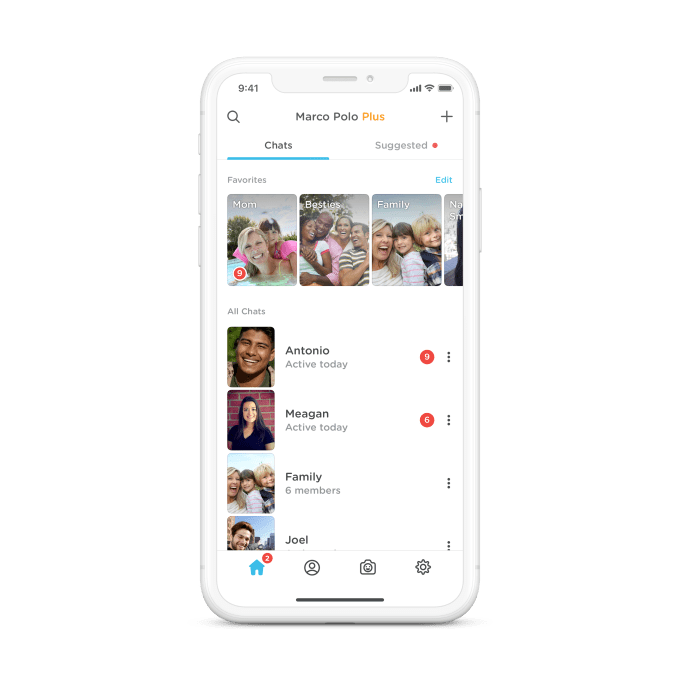
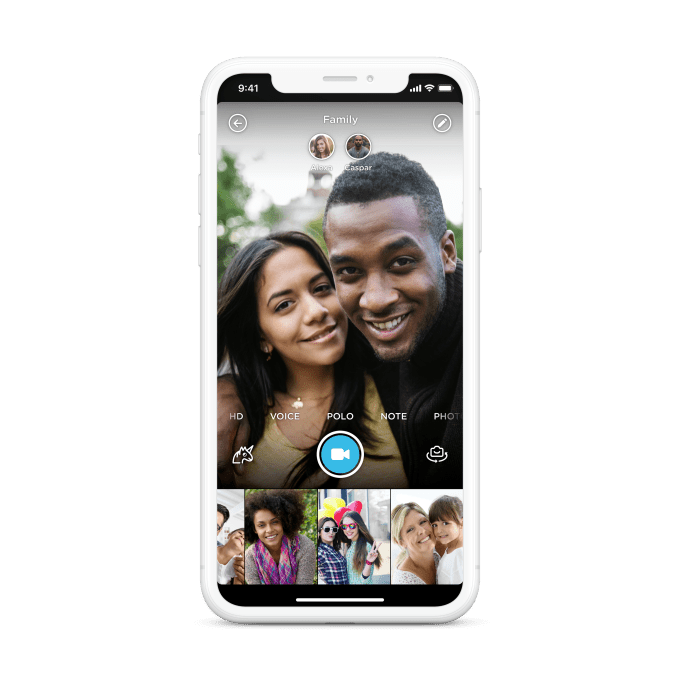
The coronavirus pandemic has sent record numbers of new users to video chat apps. Now, video messaging app Marco Polo aims to capitalize on the increases it’s also seeing to launch its new subscription business, Marco Polo Plus. The service delivers a handful of new features — including support for HD video, voice-only messaging options, custom emoji, expanded speed controls and more — for $5 per month with an annual subscription of $59.99.

On a monthly basis, the service costs $10 per month.

Marco Polo had already carved out its own space on the market before the coronavirus outbreak. Instead of focusing on live video calls or group video chats, Marco Polo focuses on asynchronous communication. That is, users leave a video message for friends and family, which the other party can watch at their convenience, then reply to.

This works particularly well for people who have different work schedules or those who are spread out among various timezones. It also works for adults who have less free time to chat than the teens who virtually “hang out” in group video chat apps, like Houseparty.

With the new Marco Polo Plus subscription, the company is offering an expanded feature set that will appeal to its most frequent users. However, it will remain an optional upgrade — free users will still be able to use Marco Polo as before.

Subscribers, meanwhile, will be able to message their friends and family in HD or have the option to respond using only their voice, for those times you’re not camera-ready.

The subscription will also expand its set of built-in reaction emoji, which today includes a smiley face, sad face, heart, prayer hands, and thumbs up — to now include support for adding any emoji from your keyboard.

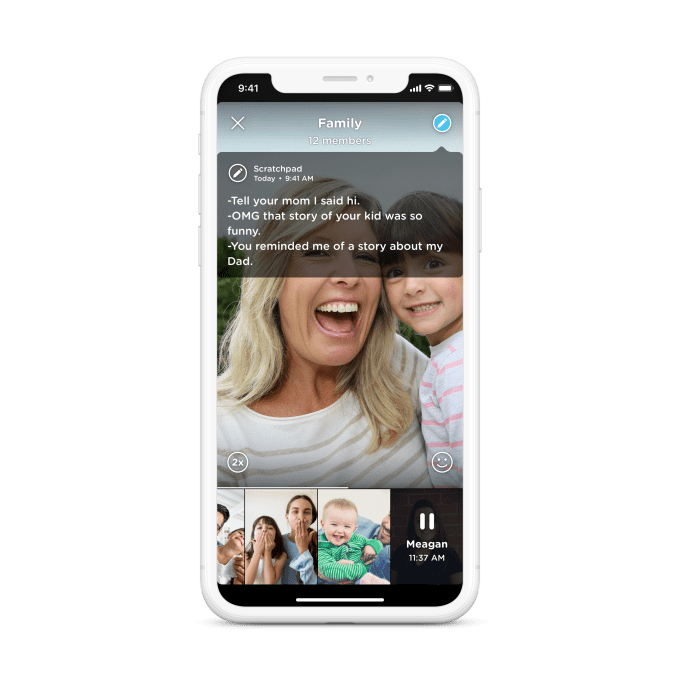
In addition, subscribers will have more granular control over playback speed. While free users can choose to 2x their video messages, paying users will be able to access speed control options of anywhere between 1.5x and 3x speed.

They’ll also gain a time scrubber for more easily moving to different parts of the video and a scratchpad for personal notes. The latter is especially helpful for jotting down the different parts of the message you want to respond to — something that can be hard to remember after listening to a long video.

Subscribers will be able to share their $5 per month subscription in the form of “Plus Passes” you can dole out to friends and family, as well.

Like many apps in the space, Marco Polo has seen a sizable jump in usage due to the COVID-19 pandemic, it says.

In March 2020, Marco Polo saw a 16x increase in new sign-ups for its service and a 3x increase in activity versus the prior month. In one 24-hour period in April, Marco Polo even saw a record 20 million video messages shared in its app. And its social media campaign designed at reaching out to others, #PoloTogether, resulted in over 1 million check-ins.

According to data from Sensor Tower, Marco Polo has seen nearly 56 million lifetime installs across iOS and Android since January 2014. Publicly, Marco Polo says it has “millions” of users and 3 billion messages sent to date. Across its 1.7 million user reviews on both app stores, the app averages a 4.8 rating.

The new subscription program is only one way Marco Polo is working to gain traction for its app in the coronavirus era.

The company also recently launched a program called Channels by Marco Polo into beta testing, which allows creators to reach fans through the Marco Polo platform, but via a dedicated app.

The program is aimed at those with a following — like leaders, speakers, facilitators, creators, fitness instructors, and health and career coaches — who want to offer their content to a paid membership base.

While these creators could publish to social media platforms and then try to monetize in other ways, like through ads or brand deals, Marco Polo offers a way to facilitate more private one-to-many interactions.

The advantages of this program is that the content won’t be at the mercy of changing algorithms or interrupted with ads. However, as a paid membership program, it limits exposure. That means it would likely only supplement the efforts creators made across social media to raise awareness of their offerings and their personal brand, in order to gain new subscribers.

The program is not broadly available, but is being used by a handful of testers today.

The Channels program is also aimed at helping Marco Polo generate revenue, as the company takes a 10% cut of the monthly membership fees charged by the creators.

The new Marco Polo Plus subscription service replaces an older, less feature-rich service that never gained traction. Along with the new Channels program, the company hopes stay ad-free and turn a profit.

“From the time Marco Polo was founded, we’ve never shown ads in the app. We will never use social comparisons or manipulate algorithms, as so many social networking companies must do for their business model,” explains CEO and co-founder Vlada Bortnik. “We believe that Marco Polo Plus is the best version of our app to date, and subscription is an important part of our strategy to achieve profitability. Based on our early pilot of Channels by Marco Polo, we’re optimistic that it also has the potential to contribute significantly to our monetization goals,” she continued.

“I know we can become a sustainable business in a way that feels true to our brand values of authenticity and trust,” Bortnik added.

Marco Polo’s parent company Joya Communications has raised at least $25 million in funding from investors including Benchmark, Stanford’s StartX Fund, Matrix Partners, Battery Ventures, Altos Ventures, Evolve Ventures, and others, according to Crunchbase. The company declined to comment its total raise or investor lineup, however.


Read Full Article

Google is making Meet free for everyone


Google today announced that it is making Meet, its video meeting tool for businesses that directly competes with the likes of Zoom, available for free to everyone. Until now, you could participate in a Meet call without being a paying user, but you needed a paid G Suite account to start calls.

You won’t be able to schedule free Meet calls right away, though. Google is opening up access to Meet to free users gradually, starting next week. It may take a few weeks before everybody has access to it.

After September, free accounts will be limited to meetings that don’t run longer than 60 minutes, but until then, you can chat for as long as you want. The only other real limit is that meetings can’t have more than 100 participants. You still get screen sharing, real-time captions and the new tiled layout the company introduced only a few days ago.

Users will need a Google account to participate in meetings, though, which isn’t likely to be a major barrier for most people, but it does add more friction than simply clicking on a Zoom link.

Google argues that in return, you get a safer platform, not just because it’s hard to guess meeting codes for Meet (which makes “Meet-bombing” a non-starter), but also because Meet runs in the browser and is hence less vulnerable to security threats.

“With COVID, video conferencing is really becoming an essential service and we have seen video conferencing usage really go up,” Smita Hashim, the Director of Product Management at Google Cloud, told me. Because the need for these tools continues to increase, Google decided to bring Meet to individual users now, though Hashim noted that some of this had been on the company’s roadmap before.

“We are accelerating what we are doing, given the crisis and given the need for video conferencing at this point,” she said. “We still have the Google Hangouts product but Google Meet availability we are accelerating. This is a newer product designed to scale to many more participants and that has features like closed captioning and those kinds of things.”

So for the time being, Hangouts for consumers and also Google Duo aren’t going away. But at least for consumer Hangouts, which has been on life support for a long time, this move may accelerate its deprecation.

Clearly, Google saw that Zoom caught on among consumers and that Microsoft announced plans for a consumer edition of Teams. Without a free and easily accessible version of Meet, Google wasn’t able to fully capitalize on what has become a breakout time for video conferencing tools, so it makes sense for the company to make a push to get this new edition out of the door as fast as possible.

“From a leadership perspective, the message was really: how can Google be more and more helpful,” Hashim said when I asked her what the discussion about this move was like inside the company. “That was the direction we got. So from our side, video conferencing is the product which is really hugely accelerated usage and Google Meet in particular. So that’s why we first launched the advanced features, then we did the safety controls and then we said, okay, let’s accelerate some of these other features, but we kept seeing that need so it felt like a very natural next step for us to take and make it available to all our users.”

In addition to free access to Google Meet for everyone, Google is also launching a new edition of G Suite, dubbed G Suite Essentials. This new edition, which is meant for small teams and includes access to Google Drive, Docs, Sheet, Slides and, of course, Meet, will be available for free until September 30. After that, Google will start charging, but as Hashim told me, the company hasn’t decided on pricing yet.

For enterprise users, Google is also adding a few perks through September 30. These include free access to advanced Meet features for all G Suite customers, including the ability to live stream to up to 100,000 viewers within their domains, as well as free additional Meet licenses without the need for an amended contract, and free G Suite Essentials for enterprise customers.

Google also used today’s announcement to share a few new stats around Meet. As of last week, Meet’s daily meeting participants surpassed 100 million, for example, and with that, Meet now plays host to 3 billion minutes of video meetings. Daily peak usage is up 30x since January. That’s a lot of time spent in meetings.


Read Full Article

Your Nintendo Switch Won’t Connect to the Internet? Here’s What to Do


Are you having network problems with your Nintendo Switch? Whether you can’t get your system online at all, keep seeing an error code, or have disconnection issues when trying to play a certain game online, these problems can be frustrating.

In this article, we walk you through several steps to hopefully fix your Nintendo Switch internet problems and get you back online and playing games again.

1. Restart Your Nintendo Switch

Like any electronic device, restarting your Switch is an important first step to clear up temporary issues. Pressing the power button on your Switch only puts it into sleep mode, however, so there’s a good chance you haven’t power-cycled your system in some time.

To fully shut down your Switch, press and hold the physical Power button on the top-left of the system for several seconds. On the resulting menu, select Power Options and then Restart.

Switch Power Menu

After a few seconds, the system will reboot. Give it a moment, then see if it reconnects to the internet.

2. Reboot Your Networking Equipment

After rebooting your Switch, you should next power cycle your modem and router. Simply pull the plug on both devices (if you don’t have a combo unit), wait a minute, then plug them back in.

3. Make Sure You’re Not in Airplane Mode

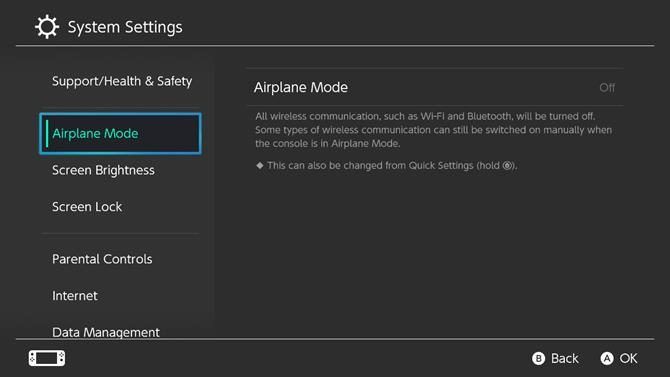
When you put your Switch in Airplane Mode, it disables all wireless communication. While this helps you save battery when using the system on-the-go, it obviously keeps you from getting online, too.

You’ll know the system is in airplane mode if you see an airplane icon in the top-right corner of the homescreen. To toggle it, go to Settings > Airplane Mode. You can also hold the Home button to open the Quick Settings and change it from there.

Switch Airplane Mode

Note that the Switch doesn’t let you enter airplane mode while docked.

4. Review Your Switch Network Settings

If you still can’t get online at all, it’s worth checking your Switch’s internet connection options so you can determine where the problem lies. Open the Settings menu from the homescreen and head to the Internet tab. Select Test Connection to run through a quick check and see if everything is correct.

Switch Network Test

If you don’t see the Connection test was successful message, take note of any error codes, as you may need to research them online later. You should walk through the Internet Settings on the previous page to make sure you’ve set up everything correctly.

Select your network and choose Change settings to make sure the info is up-to-date. You can also erase the connection and set it up anew if you prefer. A common reason for network issues is mistyping the Wi-Fi password, for example.

At this point, you should also test other devices on your network to make sure they can get online. If they can’t, follow our general guide to troubleshooting network issues.

5. Check Nintendo’s Network Maintenance Page

There’s a chance that Nintendo’s online services could be experiencing an issue. Have a look at Nintendo’s Network Maintenance Information page for notices about any ongoing problems.

This page shows a message stating All servers are operating normally if the online services are working properly. Further down the page, you’ll see any scheduled maintenance windows where network services may be affected.

Nintendo Network Status Page

6. Install System and Game Updates

If you can’t get your Switch online, you, of course, won’t be able to download new system updates. However, there’s a chance that your system already downloaded an update but hasn’t installed it yet.

Applying that could fix your issue, so it’s worth checking now. Head to Settings > System and choose System Update to check.

Switch Install System Update

Online games won’t let you use network services unless the game is updated to the latest version. If you’re only having an issue with one game, you should check for updates to it. Games will usually check automatically when you launch them, but you can also do so manually.

Press the Plus or Minus button when highlighting a game, then go to Software Update > Via the Internet. If you’re around someone else who has a Switch and an updated copy of the game, select Match Version with Local Users instead. There you can create a group and install the update locally through someone else’s Switch.

Switch Install Game Update

7. Reduce Wi-Fi Interference

The Switch doesn’t have a super powerful Wi-Fi chip, so you may experience connection issues if you’re far away from your router. Keep an eye on the Wi-Fi indicator in the top-right of your Switch’s home screen to see how strong your connection is.

If possible, move closer to your router for a more stable connection. You should also try to reduce interference by moving other electronics and metal objects outside of the path between your Switch and router.

8. Purchase the Switch Ethernet Adapter

If you have serious connection problems when on Wi-Fi, you should consider purchasing the officially licensed HORI Ethernet adapter for the Nintendo Switch.

Nintendo Switch Wired Internet LAN Adapter by HORI Nintendo Switch Wired Internet LAN Adapter by HORI Buy Now On Amazon $29.99

This plugs into one of the USB ports on the console’s dock and lets you connect the system to your network with an Ethernet cable. A wired connection is much more stable than a wireless connection, so you should have fewer issues with this solution.

If connecting your Switch to your router directly isn’t an option, check out powerline adapters, which let you run Ethernet connections over the power lines in your house.

9. Perform Advanced Router Tweaks

If you continue to have issues even after all of these steps, Nintendo’s NAT troubleshooting page recommends looking into advanced settings on your router. These include connecting your Switch to the 5GHz band instead of 2.4GHz, putting your system in the DMZ, and more.

Since these settings vary greatly on different routers, discussing them is beyond the scope of this guide. Most people shouldn’t need to worry about them, but you can have a look at our router tips for gamers for more advice.

Get Your Switch Back Online

We’ve looked at the most important troubleshooting tips for Nintendo Switch connection issues. Whether you can’t get online at all or experience poor online performance, working your way through this list should fix your issue in almost all cases.

For more help, we’ve looked at how to test your home network speed and decipher the results.

Image Credits: Kyli Petersen/Shutterstock, SimpleIcon/Wikimedia Commons

Read the full article: Your Nintendo Switch Won’t Connect to the Internet? Here’s What to Do


Read Full Article

8 Life Skills That Video Games Can Teach You


kids-playing-video-games

Video games can help you succeed at life. That might sound crazy to say, especially when some people believe that video games cultivate immaturity, violence, and even addiction. However, like most kinds of media, video games can be both good and bad.

Video games can help shape you into a more productive member of society. They can teach you good traits, skills, and knowledge that you will carry with you for the rest of your life. So, here are the life skills that you can learn from playing video games.

1. Patience

Zen rocks
Image Credit: EliasSch/Pixabay

Old arcade games forced you to suffer through tons of repetitive gameplay to see how far you could go. Role-playing games with a level-up mechanic often encouraged repetitive monster fights to grow stronger. MMORPGs cemented the grinding concept while the free-to-play craze perfected it.

The ability to endure routine and repetition is one that will come in handy no matter what you pursue: grinding through homework, work projects, or money for a vacation.

Or in other words, the ability to suffer through something that’s unpleasant right now in order to secure for yourself something even better in the future. Some call it delayed gratification. Others call it patience and perseverance. Either way, life requires it.

2. Strategic Planning

Planning
Image Credit: Pexels/Pixabay

Puzzle games and strategy games will never go out of style and reach an even wider audience now thanks to mobile gaming. There are even puzzle games to play in your browser. Both casual and hardcore gamers love and appreciate the kind of gameplay that stimulates planning and strategy.

It doesn’t take much imagination to see why this is such a valuable life skill. Can anyone argue against the practicality of planning income vs. expenditure? Of laying out a realistic five-year plan? Of navigating a fulfilling career path? As long as these aren’t taken to the extreme, they can be very helpful.

But even more so, this kind of thinking a few steps ahead is immensely important in social contexts. Should I say what I’m about to say? If I do, what are the potential consequences? What’s the right way to approach a tense subject or situation? Again, don’t let it paralyze or overwhelm you, but it’s a good skill to have in moderation.

3. Socialization

Pair of friends
Image Credit: Free-Photos/Pixabay

Perhaps the most popular gaming stereotype is the antisocial gamer who resides in a basement. Look past the stereotype and gaming is just another outlet, rather than a fallback, for social interaction.

Starting with the earliest consoles, before broadband allowed online play to take off, gaming with friends involved a physical gathering in front of a single TV. Even in today’s climate of online multiplayer gaming, gamers can communicate over voice and video chat.

It could be argued that gaming enables stereotypically introspective individuals to be more social, ultimately improving social skills.

In the case of guilds and clans, socialization can evolve into leadership. It may sound silly, but there’s a lot of overlap between managing a guild and, say, managing a project team. Synchronizing schedules, mobilizing people towards a goal, inspiring motivation, and resolving interpersonal conflicts are all skills that can be learned from gaming and applied to real life.

4. Mental Prowess

Chess
Image Credit: jarmoluk/Pixabay

There are games specifically designed to train and improve brain functionality—Nintendo’s Brain Age was one of the biggest mainstream hits. It offered plenty of activities that help with mental math, reading speed, and concentration.

But brain training isn’t limited to games that explicitly train the brain. Sudoku is all about logical deduction. Tetris helps develop pattern recognition skills. In fact, there are plenty of mobile games that make you smarter by exercising memory, matching, and thinking outside the box.

Like muscles, the brain will atrophy if you don’t work it. The interactivity of games is one way to exercise your mind while having fun.

5. Empathy

Holding hands
Image Credit: Pexels/Pixabay

Game designers are really starting to explore and incorporate the emotional elements that exist in other forms of media; the most important element being narrative. Some of the most groundbreaking and revolutionary titles ever are those emotionally weighty games that jerk at your heartstrings.

These types of games force you to relate to the characters and imagine yourself in their shoes, even if their experience isn’t something you’ve personally lived through. Sometimes you are given a choice where there is seemingly no right or good outcome. These situations develop a player’s sense of sympathy and empathy.

6. Literacy

Reading
Image Credit: StockSnap/Pixabay

Video games that have a heavy narrative focus can help people learn languages and improve their literacy, even introducing them to words they might not come across elsewhere.

Classic point-and-click adventure games are the perfect example of this, where you had to read the dialog between characters in order to understand the story and often understand culture-specific phrases and jokes.

Games like Minecraft and The Sims also get people interested in telling their own stories. This can then leap off the screen onto the page, with many gamers inspired to write their own fan fiction based on their favorite series or even a new creation of their own.

These text-based adventure games are great examples of titles that improve literacy.

7. Hand-Eye Coordination

Archery
Image Credit: irinakeinanen/Pixabay

To play even the most basic video game, you need good hand-eye coordination. Whether that’s moving a character around or just clicking on something, the ability to synchronize your eye and hand movements is vital.

Of course, the better you are at this, the better you will be at some video games. Improve your hand-eye coordination and you won’t have to look down to see what button to press. Your reaction times will improve too.

Studies have shown that games help strengthen our hand-eye coordination. There’s so much that this skill helps with outside of games, whether it’s in sport, music, or just basic day-to-day tasks.

8. Observation

Binoculars
Image Credit: Free-Photos/Pixabay

You need to be aware of your surroundings in a game. Perhaps you’re on the battlefield and an enemy just landed in the distance or maybe you’re a detective and notice a vital bit of evidence in the corner of the room.

Some games take this further and are built around the concept of observation. For example, L.A. Noire requires you to study the expressions of people you interview to try to determine if they’re telling the truth or not.

In the real world, these observation skills can be used to inform us about our environment and the motives of other people.

How to Make a Living Playing Video Games

These are some of the many life skills that you can learn from video games. Obviously, constantly playing video games with no other interests or hobbies isn’t going to turn you into a well-rounded person, but they can support a varied lifestyle.

Plus, if you work hard and get lucky, you may even be able to earn a living from your hobby. With that in mind, here are some ways to make money playing video games.

Read the full article: 8 Life Skills That Video Games Can Teach You


Read Full Article

Can API vendors solve healthcare’s data woes?


A functioning healthcare system depends on caregivers having the right data at the right time to make the right decision about what course of treatment a patient needs.

In the aftermath of the COVID-19 epidemic and the acceleration of the consumer adoption of telemedicine, along with the fragmentation of care to a number of different low-cost providers, access to a patient’s medical records to get an accurate picture of their health becomes even more important.

Opening access to developers also could unlock new, integrated services that could give consumers a better window into their own health and consumer product companies opportunities to develop new tools to improve health.

While hospitals, urgent care facilities and health systems have stored patient records electronically for years thanks to laws passed under the Clinton administration, those records were difficult for patients themselves to access. The way the system has been historically structured has made it nearly impossible for an individual to access their entire medical history.

It’s a huge impediment to ensuring that patients receive the best care they possibly can, and until now it’s been a boulder that companies have long tried to roll uphill, only to have it roll over them.

Now, new regulations are requiring that the developers of electronic health records can’t obstruct interoperability and access by applications. Those new rules may unlock a wave of new digital services.

At least that’s what companies like the New York-based startup Particle Health are hoping to see. The startup was founded by a former emergency medical technician and consultant, Troy Bannister, and longtime software engineer for companies like Palantir and Google, Dan Horbatt.

Particle Health is stepping into the breach with an API-based solution that borrows heavily from the work that Plaid and Stripe have done in the world of financial services. It’s a gambit that’s receiving support from investors including Menlo Ventures, Startup Health, Collaborative Fund, Story Ventures and Company Ventures, as well as angel investors from the leadership of Flatiron Health, Clover Health, Plaid, Petal and Hometeam.

Image via Getty Images / OstapenkoOlena

“My first reaction when I met Troy, and he was describing what they’re doing, was that it couldn’t be done,” said Greg Yap, a partner with Menlo Ventures, who leads the firm’s life sciences investments. “We’ve understood how much of a challenge and how much of a tax the lack of easy portability of data puts on the healthcare system, but the problem has always felt like there are so many obstacles that it is too difficult to solve.”

What convinced Yap’s firm, Menlo Ventures, and the company’s other backers, was an ability to provide both data portability and privacy in a way that put patients’ choice at the center of how data is used and accessed, the investor said.

“[A service] has to be portable for it to be useful, but it has to be private for it to be well-used,” says Yap. 

The company isn’t the first business to raise money for a data integration service. Last year, Redox, a Madison, Wis.-based developer of API services for hospitals, raised $33 million in a later-stage round of funding. Meanwhile, Innovaccer, another API developer, has raised more than $100 million from investors for its own take.

Each of these companies is solving a different problem that the information silos in the medical industry presents, according to Patterson. “Their integrations are focused one-to-one on hospitals,” he said. Application developers can use Redox’s services to gain access to medical records from a particular hospital network, he explained. Whereas using Particle Health’s technology, developers can get access to an entire network.

“They get contracts and agreements with the hospitals. We go up the food chain and get contracts with the [electronic medical records],” said Patterson.

One of the things that’s given Particle Health a greater degree of freedom to acquire and integrate with existing healthcare systems is the passage of the 21st Century Cures Act in 2016. That law required that the providers of electronic medical records like Cerner and EPIC had to remove any roadblocks that would keep patient data siloed. Another is the Trusted Exchange Framework and Common Agreement, which was just enacted in the past month.

“We don’t like betting on companies that require a change in law to become successful,” said Yap of the circumstances surrounding Particle’s ability to leapfrog well-funded competitors. But the opportunity to finance a company that could solve a core problem in digital healthcare was too compelling.

“What we’re really saying is that consumers should have access to their medical records,” he said.

Isometric Healthcare and technology concept banner. Medical exams and online consultation concept. Medicine. Vector illustration

This access can make consumer wearables more useful by potentially linking them — and the health data they collect — with clinical data used by physicians to actually make care and treatment decisions. Most devices today are not clinically recognized and don’t have any real integration into the healthcare system. Access to better data could change that on both sides.

“Digital health application might be far more effective if it can take into context information in the medical record today,” said Yap. “That’s one example where the patient will get much greater impact from the digital health applications if the digital health applications can access all of the information that the medical system collected.” 

With the investment, which values Particle Health at roughly $48 million, Bannister and his team are looking to move aggressively into more areas of digital healthcare services.

“Right now, we’re focusing on telemedicine,” said Bannister. “We’re moving into the payer space… As it stands today we’re really servicing the third parties that need the records. Our core belief is that patients want control of their data but they don’t want the stewardship.”

The company’s reach is impressive. Bannister estimates that Particle Health can hit somewhere between 250 and 300 million of the patient records that have been generated in the U.S. “We have more or less solved the fragmentation problem. We have one API that can pull information from almost everywhere.”

So far, Particle Health has eight live contracts with telemedicine and virtual health companies using its API, which have pulled 1.4 million patient records to date.

The way it works right now, when you give them permission to access your data it’s for a very specific purpose of use… they can only use it for that one thing. Let’s say you were using a telemedicine service. I allow this doctor to view my records for the purpose of treatment only. After that we have built a way for you to revoke access after the point,” Bannister said.

Particle Health’s peers in the world of API development also see the power in better, more open access to data. “A lot of money has been spent and a lot of blood and sweat went into putting [electronic medical records] out there,” said Innovaccer chief digital officer Mike Sutten.

The former chief technology officer of Kaiser Permanente, Sutten knows healthcare technology. “The next decade is about ‘let’s take advantage of all of this data.’ Let’s give back to physicians and give them access to all that data and think about the consumers and the patients,” Sutten said.

Innovaccer is angling to provide its own tools to centralize data for physicians and consumers. “The less friction there is in getting that data extracted, the more benefit we can provide to consumers and clinicians,” said Sutten.

Already, Particle Health is thinking about ways its API can help application developers create tools to help with the management of COVID-19 populations and potentially finding ways to ease the current lockdowns in place due to the disease’s outbreak.

“If you’ve had an antibody test or PCR test in the past… we should have access to that data and we should be able to provide that data at scale,” said Bannister. 

“There’s probably other risk-indicating factors that could at least help triage or clear groups as well… has this person been quarantined has this person been to the hospital in the past month or two… things like that can help bridge the gap,” between the definitive solution of universal testing and the lack of testing capacity to make that a reality, he said. 

“We’re definitely working on these public health initiatives,” Bannister said. Soon, the company’s technology — and other services like it — could be working behind the scenes in private healthcare initiatives from some of the nation’s biggest companies as software finally begins to take bigger bites out of the consumer health industry.


Read Full Article

Don’t Buy a Gaming Keyboard Until You’ve Seen The Azeron! (Review and Giveaway)


azeron gaming keypad featured
Our verdict of the Azeron Classic Gaming Keypad:
To take your gaming to the next level, the Azeron offers a highly customizable gaming controller to replace your keyboard. It's more comfortable, faster and more responsive–and will give you a competitive advantage.
910

Everyone knows a mouse and keyboard is superior to a console controller: you just can’t match the accuracy and speed a mouse offers for aiming. But the keyboard part of that equation is not as great as it could be, and many just prefer the more logical movement of a thumbstick. With a keyboard, you need to keep your fingers on the WASD keys, which means attempting to press a myriad of other keys sometimes just isn’t possible without lifting your movement fingers off first. What if you could have the best of both worlds though? You can.

The Azeron gaming keypad isn’t a keypad at all–it’s more like an ergonomic extension of your fingers, with buttons plastered all over it, and a thumbstick for movement. Every button is conveniently placed, and there’s very little effort needed to travel between keys. Let’s take a closer look, and at the end of this review we’ll have a competition to win your own custom Azeron keypad for yourself.

Azeron Specifications At a Glance

  • 19 fingertip switches
  • Thumbstick (clickable)
  • 4-way digital hat (clickable)
  • Thumb switch
  • 2 onboard switchable profiles
  • Portable (no drivers needed)
  • Priced from €150

Customize All The Things

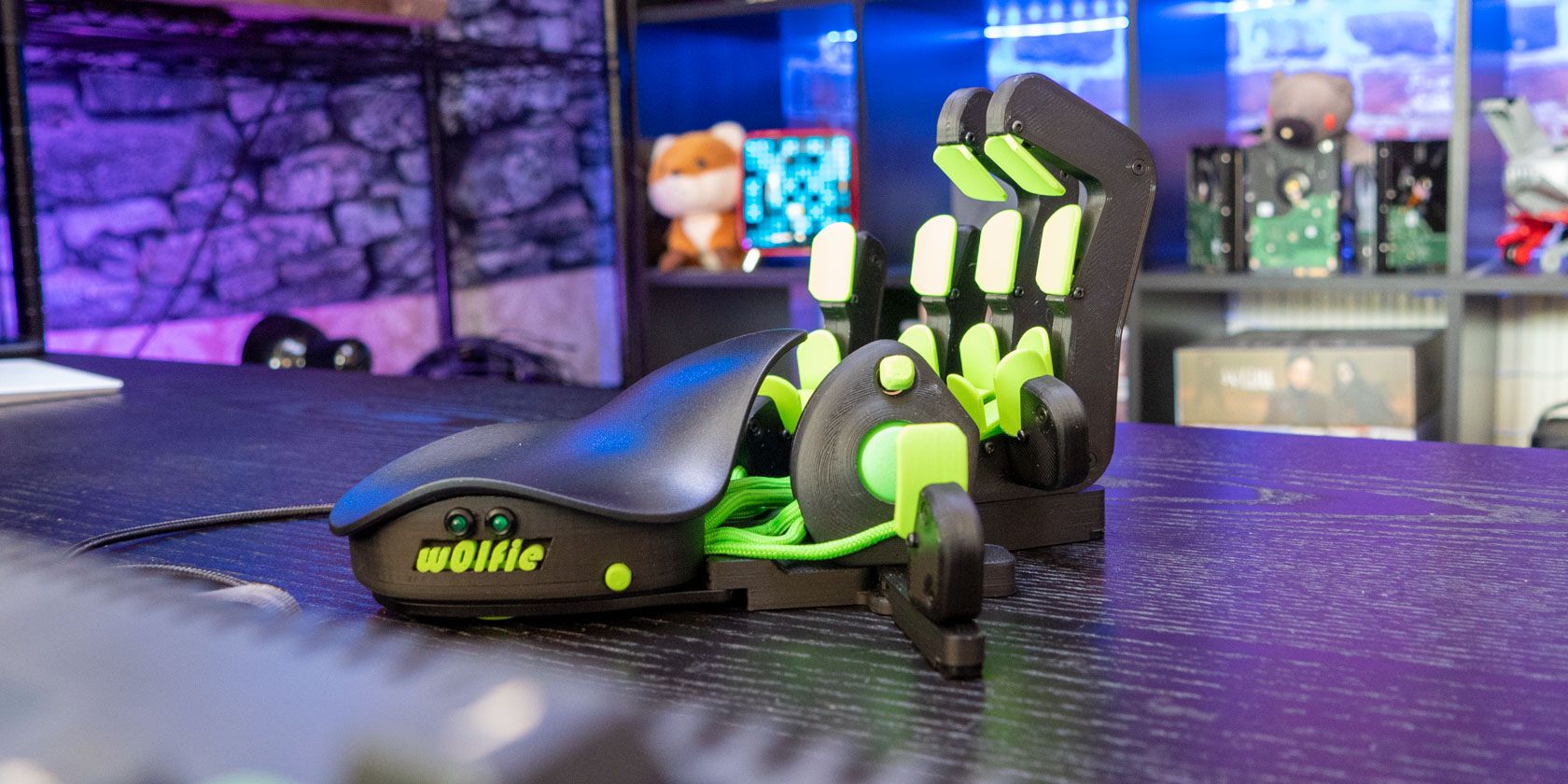
The Azeron is customizable in a number of ways. First, you can opt for either the full-size Classic Azeron or the smaller Compact model (both are priced the same). The Classic has the most keys, so I opted for that. Then, of course, you can choose either left or right-handed versions (right-handed is a little more expensive), and either a small or large, depending on your hand size. You can choose between a flat or curved palm rest (the flat being a little better for larger hands). There’s a wide range of colors to choose, too. The configuration I chose was large with a curved handrest in neon green, and that’s what you’ll see pictured throughout the review.

You can also specify up to 8 characters to be printed (literally 3D printed, more on that later) on the size of the device instead of the standard “Azeron”. This is fantastic for streamers or just anyone who wants to show off a little bling. I chose to have a shortened version of my gamer handle (w0lfie).

azeron gamign keypad side profile custom text
You can have up to 8 characters custom printed on the side instead of Azeron.

Yes, It’s 3D Printed

The small Latvian team that designs and makes the Azeron is able to achieve such a high degree of customization by 3D printing the majority of the Azeron device. Only the handrest, baseplate, and electronics are made with standard manufacturing processes. The rest of the shell and fingertip switches is entirely 3D printed. This means the final product isn’t quite as polished as something you’d buy off the shelf, but you’d be doing yourself a great disservice if you let this put you off. While some layer lines are visible remnants of the printing process, the Azeron feels incredibly well-built and engineered to last. If anything, being 3D printed means it’ll have a longer life than off-the-shelf products, since components can be more easily replaced or user-serviceable.

azeron 3d printd gaming keypad

However, do bear in mind that being a complete customized and 3D printed product will result in a higher than normal delivery time; and that’s on top of any inherent delays international shipping as a result of the current pandemic. Ours arrived in just over a week, but yours may take longer and will depend on demand.

underside of the azeron keypad

Using the Azeron

Before you can use your Azeron, you’ll need to adjust the fit. On the underside you’ll find some small hex screws holding each finger and the thumbpad in place; unscrew all of these using the provided tool if they aren’t already loose. Then find the angle and distance that you find most comfortable, and lock each finger off one by one.

fitting azeron keypad

There are an absurd number of keys on the Azeron Classic, many of which you might not use depending on the game.

Each finger has at least 4 buttons: one directly beneath it, like a traditional keyboard; one that you pull into; one you can push into; and another on the row above. Your Index and first finger have a further key that’s curled over the top; while your first finger has a bonus key just to the right of it. That’s 19 keys literally at your fingertips. Then you have the thumbstick, digital hat (both of which can also be pushed), and bonus thumb button.

You’ll probably find yourself tweaking your key profiles often as you first start to use the Azeron. I started by assigning rows of keys to logical functions, like a set of weapons. But then moved to a more per-finger approach, such as my first finger for special movements; Index finger for grenades and deployable equipment; and third-finger for squad actions like marking targets.CAll

Configuring the Azeron

Although no drivers are required to use the Azeron, it does require some software to program what each key does. The software is simple, uncluttered, and incredibly easy to use.

The main screen shows a preview of each button, and what key or function it’s assigned to. Press any key on the Azeron to get immediate visual feedback, or click on a button to reassign it. Just click, then press the new button. Buttons can either send a standard keyboard signal (or combination, such as “Ctrl-F”), joystick, or controller command. The thumbstick can also be configured to send WASD instead of a joystick axis.

Compared to the typical bloated gaming peripheral software, it’s a breath of fresh air. I found it was really easy mid-game to Alt-Tab out, assign a keyboard key I forgot about, then head back in within seconds. If only all gaming peripherals were as easy to use as this.

screenshot of azeron software

New features are being added all the time, but the current software version is officially defined as an Early Pre-Alpha (and being updated often). Be sure to copy your current profile to the software memory before updating firmware, as your onboard profiles will be deleted. Hopefully, Azeron will keep the same sleek and simple interface as the software develops.

While you can create more than one profile using the software and dynamically load it, only two profiles can be stored on the Azeron’s onboard memory. You can switch between those at any point using the button on the side, and another LED will light up to indicate when you’ve activated the alternative profile. These are stored on the device itself, so you can unplug it, carry it to someone’s house or a tournament, and still have your Azeron set up precisely as you like it.

Is This Cheating?

There are no custom drivers needed to use the Azeron–it’s sending standard keyboard or joystick command codes. You should be completely safe when playing any online game. Whether it gives you a competitive advantage is another question: it undoubtedly does. Once you’ve adjusted to the new input method and developed the muscle memory, the speed at which you can navigate keyboard commands will give you a competitive edge, for sure.

Should You Buy the Azeron?

For both casual and serious gamers, the Azeron is an incredible device to elevate your game. It may also find niche uses in the VR community for seated games like flight and space sims that need multiple keyboard buttons that are otherwise difficult to locate while wearing a headset.
There will be a period of adjustment though. For the first week or so you’ll be tweaking your profile and learning an entirely new set of muscle memories. This means you’ll likely play worse for a while than you did with a keyboard. But after that, you’ll play faster and more responsive than ever, never struggling to find the right key again.

Will it be comfortable in the long term? That’s difficult to tell after only a few weeks with the device. I haven’t experienced any cramping yet, but I’m not usually prone to cramping. Nor do I play very long sessions–up to an hour or so at most. The Azeron does lock your hand into a claw-like position, so you should take frequent short breaks to between games. If you have a history of issues with even a regular keyboard and mouse, I don’t think the Azeron will be a good fit for you. While a device that makes you move your hand and fingers less might be fantastic for your gaming performance, it certainly won’t help any underlying physical conditions you already suffer from. If you’re worried, opt for the flat palm rest which is apparently more accommodating of large hands and offers a little more flexibility with placement.

At this point, I would struggle to go back to a normal keyboard for gaming.

Win an Azeron

Enter the competition below for a chance to win your own Azeron keypad. We’ll be sending a 100% coupon to one lucky reader so they can buy their own completely customized device. Good luck!

Enter the Competition!

Azeron Gaming Keypad Giveaway

Read the full article: Don’t Buy a Gaming Keyboard Until You’ve Seen The Azeron! (Review and Giveaway)


Read Full Article