12 August 2018

Openbook is the latest dream of a digital life beyond Facebook


As tech’s social giants wrestle with antisocial demons that appear to be both an emergent property of their platform power, and a consequence of specific leadership and values failures (evident as they publicly fail to enforce even the standards they claim to have), there are still people dreaming of a better way. Of social networking beyond outrage-fuelled adtech giants like Facebook and Twitter.

There have been many such attempts to build a ‘better’ social network of course. Most have ended in the deadpool. A few are still around with varying degrees of success/usage (Snapchat, Ello and Mastodon are three that spring to mine). None has usurped Zuckerberg’s throne of course.

This is principally because Facebook acquired Instagram and WhatsApp. It has also bought and closed down smaller potential future rivals (tbh). So by hogging network power, and the resources that flow from that, Facebook the company continues to dominate the social space. But that doesn’t stop people imagining something better — a platform that could win friends and influence the mainstream by being better ethically and in terms of functionality.

And so meet the latest dreamer with a double-sided social mission: Openbook.

The idea (currently it’s just that; a small self-funded team; a manifesto; a prototype; a nearly spent Kickstarter campaign; and, well, a lot of hopeful ambition) is to build an open source platform that rethinks social networking to make it friendly and customizable, rather than sticky and creepy.

Their vision to protect privacy as a for-profit platform involves a business model that’s based on honest fees — and an on-platform digital currency — rather than ever watchful ads and trackers.

There’s nothing exactly new in any of their core ideas. But in the face of massive and flagrant data misuse by platform giants these are ideas that seem to sound increasingly like sense. So the element of timing is perhaps the most notable thing here — with Facebook facing greater scrutiny than ever before, and even taking some hits to user growth and to its perceived valuation as a result of ongoing failures of leadership and a management philosophy that’s been attacked by at least one of its outgoing senior execs as manipulative and ethically out of touch.

The Openbook vision of a better way belongs to Joel Hernández who has been dreaming for a couple of years, brainstorming ideas on the side of other projects, and gathering similarly minded people around him to collectively come up with an alternative social network manifesto — whose primary pledge is a commitment to be honest.

“And then the data scandals started happening and every time they would, they would give me hope. Hope that existing social networks were not a given and immutable thing, that they could be changed, improved, replaced,” he tells TechCrunch.

Rather ironically Hernández says it was overhearing the lunchtime conversation of a group of people sitting near him — complaining about a laundry list of social networking ills; “creepy ads, being spammed with messages and notifications all the time, constantly seeing the same kind of content in their newsfeed” — that gave him the final push to pick up the paper manifesto and have a go at actually building (or, well, trying to fund building… ) an alternative platform. 

At the time of writing Openbook’s Kickstarter crowdfunding campaign has a handful of days to go and is only around a third of the way to reaching its (modest) target of $115k, with just over 1,000 backers chipping in. So the funding challenge is looking tough.

The team behind Openbook includes crypto(graphy) royalty, Phil Zimmermann — aka the father of PGP — who is on board as an advisor initially but billed as its “chief cryptographer”, as that’s what he’d be building for the platform if/when the time came. 

Hernández worked with Zimmermann at the Dutch telecom KPN building security and privacy tools for internal usage — so called him up and invited him for a coffee to get his thoughts on the idea.

“As soon as I opened the website with the name Openbook, his face lit up like I had never seen before,” says Hernández. “You see, he wanted to use Facebook. He lives far away from his family and facebook was the way to stay in the loop with his family. But using it would also mean giving away his privacy and therefore accepting defeat on his life-long fight for it, so he never did. He was thrilled at the possibility of an actual alternative.”

On the Kickstarter page there’s a video of Zimmermann explaining the ills of the current landscape of for-profit social platforms, as he views it. “If you go back a century, Coca Cola had cocaine in it and we were giving it to children,” he says here. “It’s crazy what we were doing a century ago. I think there will come a time, some years in the future, when we’re going to look back on social networks today, and what we were doing to ourselves, the harm we were doing to ourselves with social networks.”

“We need an alternative to the social network work revenue model that we have today,” he adds. “The problem with having these deep machine learning neural nets that are monitoring our behaviour and pulling us into deeper and deeper engagement is they already seem to know that nothing drives engagement as much as outrage.

“And this outrage deepens the political divides in our culture, it creates attack vectors against democratic institutions, it undermines our elections, it makes people angry at each other and provides opportunities to divide us. And that’s in addition to the destruction of our privacy by revenue models that are all about exploiting our personal information. So we need some alternative to this.”

Hernández actually pinged TechCrunch’s tips line back in April — soon after the Cambridge Analytica Facebook scandal went global — saying “we’re building the first ever privacy and security first, open-source, social network”.

We’ve heard plenty of similar pitches before, of course. Yet Facebook has continued to harvest global eyeballs by the billions. And even now, after a string of massive data and ethics scandals, it’s all but impossible to imagine users leaving the site en masse. Such is the powerful lock-in of The Social Network effect.

Regulation could present a greater threat to Facebook, though others argue more rules will simply cement its current dominance.

Openbook’s challenger idea is to apply product innovation to try to unstick Zuckerberg. Aka “building functionality that could stand for itself”, as Hernández puts it.

“We openly recognise that privacy will never be enough to get any significant user share from existing social networks,” he says. “That’s why we want to create a more customisable, fun and overall social experience. We won’t follow the footsteps of existing social networks.”

Data portability is an important ingredient to even being able to dream this dream — getting people to switch from a dominant network is hard enough without having to ask them to leave all their stuff behind as well as their friends. Which means that “making the transition process as smooth as possible” is another project focus.

Hernández says they’re building data importers that can parse the archive users are able to request from their existing social networks — to “tell you what’s in there and allow you to select what you want to import into Openbook”.

These sorts of efforts are aided by updated regulations in Europe — which bolster portability requirements on controllers of personal data. “I wouldn’t say it made the project possible but… it provided us a with a unique opportunity no other initiative had before,” says Hernández of the EU’s GDPR.

“Whether it will play a significant role in the mass adoption of the network, we can’t tell for sure but it’s simply an opportunity too good to ignore.”

On the product front, he says they have lots of ideas — reeling off a list that includes the likes of “a topic-roulette for chats, embracing Internet challenges as another kind of content, widgets, profile avatars, AR chatrooms…” for starters.

“Some of these might sound silly but the idea is to break the status quo when it comes to the definition of what a social network can do,” he adds.

Asked why he believes other efforts to build ‘ethical’ alternatives to Facebook have failed he argues it’s usually because they’ve focused on technology rather than product.

“This is still the most predominant [reason for failure],” he suggests. “A project comes up offering a radical new way to do social networking behind the scenes. They focus all their efforts in building the brand new tech needed to do the very basic things a social network can already do. Next thing you know, years have passed. They’re still thousands of miles away from anything similar to the functionality of existing social networks and their core supporters have moved into yet another initiative making the same promises. And the cycle goes on.”

He also reckons disruptive efforts have fizzled out because they were too tightly focused on being just a solution to an existing platform problem and nothing more.

So, in other words, people were trying to build an ‘anti-Facebook’, rather than a distinctly interesting service in its own right. (The latter innovation, you could argue, is how Snap managed to carve out a space for itself in spite of Facebook sitting alongside it — even as Facebook has since sought to crush Snap’s creative market opportunity by cloning its products.)

“This one applies not only to social network initiatives but privacy-friendly products too,” argues Hernández. “The problem with that approach is that the problems they solve or claim to solve are most of the time not mainstream. Such as the lack of privacy.

“While these products might do okay with the people that understand the problems, at the end of the day that’s a very tiny percentage of the market. The solution these products often present to this issue is educating the population about the problems. This process takes too long. And in topics like privacy and security, it’s not easy to educate people. They are topics that require a knowledge level beyond the one required to use the technology and are hard to explain with examples without entering into the conspiracy theorist spectrum.”

So the Openbook team’s philosophy is to shake things up by getting people excited for alternative social networking features and opportunities, with merely the added benefit of not being hostile to privacy nor algorithmically chain-linked to stoking fires of human outrage.

The reliance on digital currency for the business model does present another challenge, though, as getting people to buy into this could be tricky. After all payments equal friction.

To begin with, Hernández says the digital currency component of the platform would be used to let users list secondhand items for sale. Down the line, the vision extends to being able to support a community of creators getting a sustainable income — thanks to the same baked in coin mechanism enabling other users to pay to access content or just appreciate it (via a tip).

So, the idea is, that creators on Openbook would be able to benefit from the social network effect via direct financial payments derived from the platform (instead of merely ad-based payments, such as are available to YouTube creators) — albeit, that’s assuming reaching the necessary critical usage mass. Which of course is the really, really tough bit.

“Lower cuts than any existing solution, great content creation tools, great administration and overview panels, fine-grained control over the view-ability of their content and more possibilities for making a stable and predictable income such as creating extra rewards for people that accept to donate for a fixed period of time such as five months instead of a month to month basis,” says Hernández, listing some of the ideas they have to stand out from existing creator platforms.

“Once we have such a platform and people start using tips for this purpose (which is not such a strange use of a digital token), we will start expanding on its capabilities,” he adds. (He’s also written the requisite Medium article discussing some other potential use cases for the digital currency portion of the plan.)

At this nascent prototype and still-not-actually-funded stage they haven’t made any firm technical decisions on this front either. And also don’t want to end up accidentally getting into bed with an unethical tech.

“Digital currency wise, we’re really concerned about the environmental impact and scalability of the blockchain,” he says — which could risk Openbook contradicting stated green aims in its manifesto and looking hypocritical, given its plan is to plough 30% of its revenues into ‘give-back’ projects, such as environmental and sustainability efforts and also education.

“We want a decentralised currency but we don’t want to rush into decisions without some in-depth research. Currently, we’re going through IOTA’s whitepapers,” he adds.

They do also believe in decentralizing the platform — or at least parts of it — though that would not be their first focus on account of the strategic decision to prioritize product. So they’re not going to win fans from the (other) crypto community. Though that’s hardly a big deal given their target user-base is far more mainstream.

“Initially it will be built on a centralised manner. This will allow us to focus in innovating in regards to the user experience and functionality product rather than coming up with a brand new behind the scenes technology,” he says. “In the future, we’re looking into decentralisation from very specific angles and for different things. Application wise, resiliency and data ownership.”

“A project we’re keeping an eye on and that shares some of our vision on this is Tim Berners Lee’s MIT Solid project. It’s all about decoupling applications from the data they use,” he adds.

So that’s the dream. And the dream sounds good and right. The problem is finding enough funding and wider support — call it ‘belief equity’ — in a market so denuded of competitive possibility as a result of monopolistic platform power that few can even dream an alternative digital reality is possible.

In early April, Hernández posted a link to a basic website with details of Openbook to a few online privacy and tech communities asking for feedback. The response was predictably discouraging. “Some 90% of the replies were a mix between critiques and plain discouraging responses such as “keep dreaming”, “it will never happen”, “don’t you have anything better to do”,” he says.

(Asked this April by US lawmakers whether he thinks he has a monopoly, Zuckerberg paused and then quipped: “It certainly doesn’t feel like that to me!”)

Still, Hernández stuck with it, working on a prototype and launching the Kickstarter. He’s got that far — and wants to build so much more — but getting enough people to believe that a better, fairer social network is even possible might be the biggest challenge of all. 

For now, though, Hernández doesn’t want to stop dreaming.

“We are committed to make Openbook happen,” he says. “Our back-up plan involves grants and impact investment capital. Nothing will be as good as getting our first version through Kickstarter though. Kickstarter funding translates to absolute freedom for innovation, no strings attached.”

You can check out the Openbook crowdfunding pitch here.


Read Full Article

11 August 2018

5 Medicine Reminder Apps to Identify Pills and Remember to Take Them


Medicine-Reminder-Apps-Featured

Technology and advances in science are rapidly changing the field of medicine. But no matter what we can cure or alleviate, it’s only effective if you take your dosage on time. Instead of trying to remember every pill, use apps and services to remind you.

Please make sure you see a doctor to get prescriptions. While there are safe ways to research health issues online, you still shouldn’t take any medication without consulting a medical professional. In fact, the wrong medication might cause more problems than you foresee.

My Therapy (Android, iOS): Simplest Pill Tracker, With History Logs

Those who want a clean, light and simple app should first check out My Therapy. It is the app for anyone who wants to add the name of a medication, measurement, lab value, activity, or symptom check.

You don’t get to add other information in My Therapy, such as what the pill looks like. There are other apps for that. My Therapy keeps it much simpler, with just a name and an alarm. Keep taking your medicine and doing your other health checks, and the app will record all the data.

You can see your weekly history for free, but monthly and annual history needs a premium account. You can also add friends and doctors to the app, generate email reports, and do a lot more. But honestly, if you want all those features, the premium version of MediSafe might be better for you. My Therapy is ideal as a free pill reminder.

Download: My Therapy for Android | iOS (Free)

MediSafe (Android, iOS): Track Your Pills, and Others’ Dosage Too

Veteran technology journalist David Pogue conducted the most extensive review of pill reminder apps. After checking out 47 different apps, he thinks MediSafe is the best, so who are we to disagree?

MediSafe does everything right. It’s simple to use and to set up, you can add the pill’s shape and color too, and get that reminder at the right time. You can even snooze reminders to pop up again an hour later, in case you’re not able to take your pills at the exact time of the reminder.

But MediSafe’s best part is that it allows you to add “dependents” and their dosage. So if your loved ones are bad at taking their medicine on time, create a profile for them and add their schedule. You can even install MediSafe on their phone and link both your apps, so you can set up the alerts, while the reminder notifications pop up on both phones.

Some of MediSafe’s features are only available in the premium version, and if you are taking charge of medicines for your entire family, it would be worth it. But nonetheless, try the free version first.

Download: MediSafe for Android | iOS (Free)

Mango Health (Android, iOS): Earn Points and Rewards

Gamification is the process of trying to lead your daily life as if it were a game. So you earn points for doing the right thing and lose points for messing up. Gamification can change your life for the better, so Mango Health is bringing it to the process of taking medicine on time.

Once you set up adding your medicine, it will send reminders like any other such app. Confirm and get points every time you take the medicine on time or even do other healthy habits like checking your blood pressure, drinking water, etc. You also get a neat history of every task you have or haven’t done. The points you earn can be encashed in gift cards, or donated to charitable organizations. These are just some of the features that make Mango Health one of the best medicine reminders for iPhone and Apple Watch.

For American users, Mango Health also warns you when you add two medications that can react with each other. But this works only with American drugs, mind you.

Download: Mango Health for Android | iOS (Free)

ID My Pill (iOS): Identify Pills With a Photo

Don’t you love it when technology makes your life easier in a magical way? If you have a pill that you can’t identify, you don’t need to go to the pharmacy anymore. Just point your phone’s camera at it.

ID My Pill is exactly what you expect it to be. Put a pill on a blank surface, take a photo with the app, and it will give you possible names for what the pill could be. The smart app basically identifies the shape, color, and imprint of the pill, and matches it with a database. You won’t always get a 100% match, but you can narrow down what it is with a little common sense.

It’s one of the easiest ways to identify different types of drugs, especially since most websites make you type out the text, shape, and color of the pill. Unfortunately, none of the Android apps we tried were good enough to pass this test, so this feature is for iPhone users only, for now.

Download: ID My Pill for iOS (Free)

Any.Do or Todoist (All Platforms): Regular Reminder Apps Still Help

Specialized pill tracking apps are great, but they are completely dependent on your phone. I didn’t find any app that was available on a phone as well as a computer. At best, some of them offered email reminders, but can you imagine how annoying that would make your inbox?

That’s why you should still consider using a plain old to-do list or reminder app, like MakeUseOf favorites Any.Do or Todoist. When you’re at work and put your phone on silent, it would be nice to get a quick notification in Chrome or a desktop app that tells you to take your pills.

Use any app you want, but make sure it works across all the platforms you use. You want to get a notification when it’s time to take your pills, and not miss out because your phone wasn’t at hand.

Before You Buy Medicines Online

Much like everything else, you can now purchase medicines online and have them delivered to your home. You don’t need to go to your local pharmacist. But while this is convenient, it is fraught with its own risks. Before you buy medicines online, read these safety tips.

Image Credit: yacobchuk1/Depositphotos

Read the full article: 5 Medicine Reminder Apps to Identify Pills and Remember to Take Them


Read Full Article

Facebook is the recruiting tool of choice for far-right group the Proud Boys


Twitter may have suspended the Proud Boys and their controversial leader Gavin McInnes, but it was never their platform of choice.

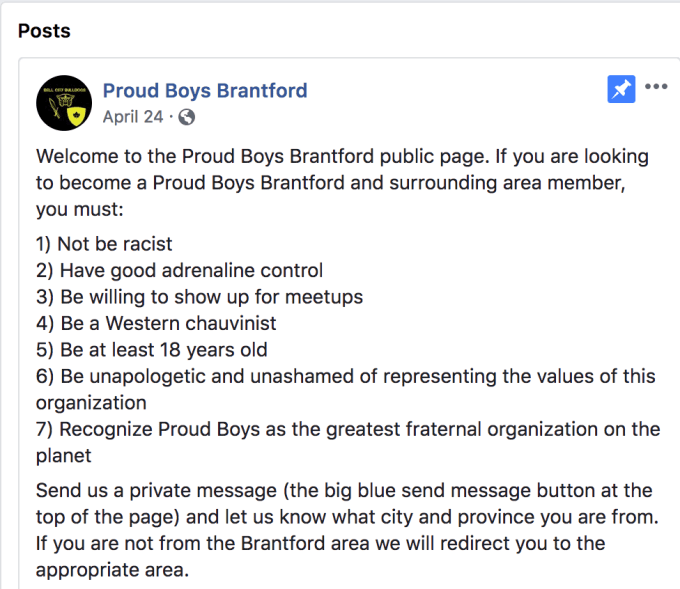
The Proud Boys, a self described “Western chauvinist” organization that often flirts with more hard-line groups of the far right, runs an elaborate network of recruiting pages on Facebook to attract and initiate members. While McInnes maintained a presence on many platforms, Facebook is the heart of the group’s operations. It’s there that the Proud Boys boast more than 35 regional and city-specific groups that act as landing pages for vetting thousands of new members and feeding them into local chapters.

When it comes to skirting the outer boundaries of social acceptability, McInnes could teach a master class. The Vice founder and Canadian citizen launched his newest project in 2016, capturing a groundswell of public political activity on the far right and launching the Proud Boys, a men’s club allied around the mantra “West is best,” its dedication to Trump and a prohibition against flip-flops and porn.

Facebook recruiting

The group makes national headlines for its involvement in violent dust-ups between the far right and far left and has a robust recruitment network centered on initiating members through Facebook groups. As for where it fits into the far right’s many sub-factions, McInnes objects to the term alt-light, sometimes used to describe far right group that oppose some mainstream conservative ideals but don’t openly endorse white nationalism. “Alt Light is a gay term that sounds like a diet soda in bed w Alt Right,” he said on Twitter last year. “We’re “The New Right.”

To that end, most regional affiliate pages run a message outlining some ground rules, including a declaration that its members not be racist or homophobic — a useful disclaimer for making the group more palatable than many of its less clever peers.

The Proud Boys’ agenda is less explicitly race-based than many groups it has affiliations with, espousing instead a broad sort of antagonism to perceived enemies on the political left and a credo of “western chauvinism.” The language is cleaned up, but it’s one degree removed from less palatable figures, including Unite the Right leader Jason Kessler. McInnes hosted Kessler on his own talk show just days after Kessler led the Charlottesville rally that left counter-protester Heather Heyer dead. In the segment, McInnes tried to create space between Kessler and the Proud Boys, though it wasn’t Kessler’s first time on the show or his only affiliation with the Proud Boys.

The Proud Boys also coordinates with the Vancouver, Washington-based group known as Patriot Prayer, another fairly social media-savvy far right organization that doesn’t openly endorse explicitly white nationalist groups, but still welcomes them into the fold during demonstrations that often turn violent.

Who are the Proud Boys?

Like much of the young, internet-fluent alt-right, the Proud Boys intentionally don’t take themselves too seriously, a strategy that conveniently opens the door for them to denounce any kind of controversy that might arise. They show up to protests wearing black and gold Fred Perry polo shirts, have a whole charter’s worth of inside jokes and in general seem a bit more media and internet savvy than hardline white nationalist groups, some of which Facebook has managed to clear out in the last year.

Unlike some less strategic and internet-savvy portions of the far right, McInnes and his Proud Boys are careful not to openly encourage preemptive violence. Still, the Proud Boys do encourage retaliatory violence, going so far as to enshrine physical altercations in its organizational hierarchy.

To earn their “first degree,” Proud Boys must openly declare their allegiance to the group’s ideals, usually in a Facebook vetting group.

To earn the second, they have to get beaten up by other members while naming five breakfast cereals (maybe a loose tie-in to the group’s mantra against masturbation). To earn the third degree they have to get a Proud Boys tattoo. The fourth degree is reserved for members who get in a brawl sufficient for the honor:

“You can’t plan getting a fourth degree. Its a consolation prize for engaging in a major conflict for the cause. Being arrested is not encouraged, although those who are immediately become fourth degree because the court has registered a major conflict. Serious physical fights also count and it’s up to each chapter to decide how serious the conflict must be to determine a fourth degree.”

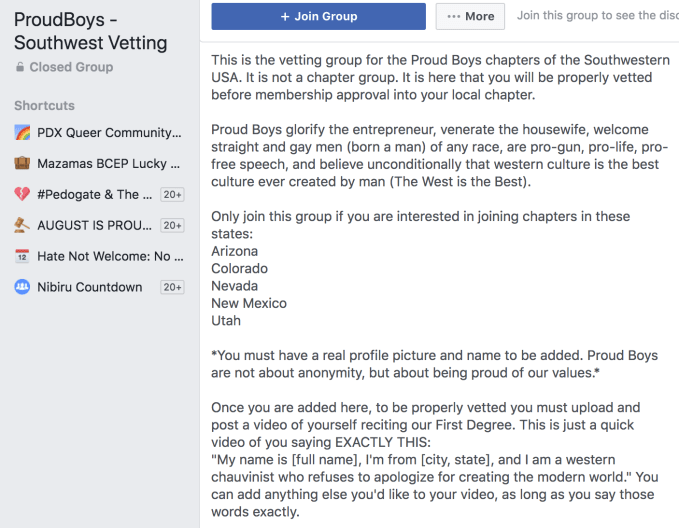
That’s where the Proud Boys Facebook network comes in. To get accepted into a local chapter, prospective members join specific vetting groups and are asked to upload a video of them meeting their “first degree” requirements:

“Once you are added here, to be properly vetted you must upload and post a video of yourself reciting our First Degree. This is just a quick video of you saying EXACTLY THIS:

“My name is [full name], I’m from [city, state], and I am a western chauvinist who refuses to apologize for creating the modern world.” You can add anything else you’d like to your video, as long as you say those words exactly.

YouTube is full of first and second degree videos depicting the usually short half-ironic hazing ceremonies.

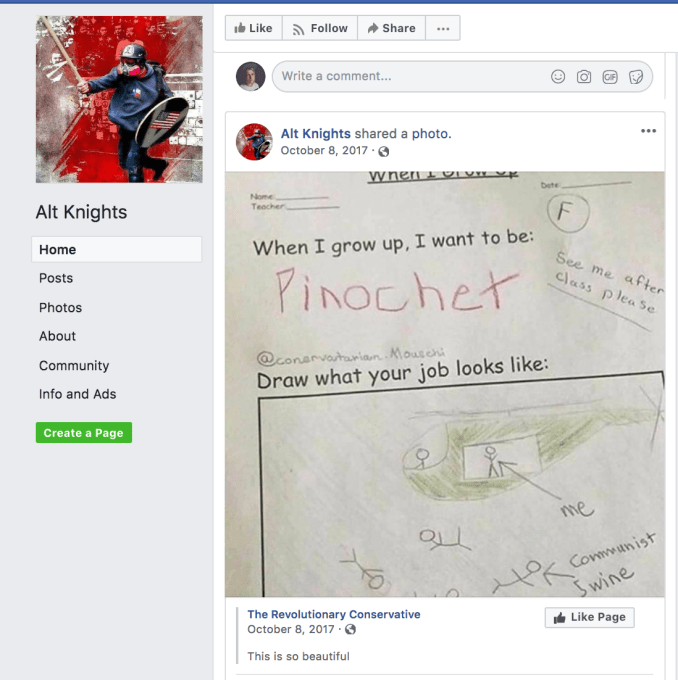
Facebook also hosts pages dedicated to the Fraternal Order of the Alt-Knights, a new-ish subdivision of the Proud Boys and its paramilitary wing. The Alt-Knights, also known as FOAK, are led by Kyle Chapman, a.k.a. “Based Stickman,” a far right figure who grew to fame after beating political enemies with a stick at a 2017 Berkeley protest. The Alt-Knights aren’t always quite as careful to denounce violence.

Whether the Proud Boys are in violation of Facebook’s unevenly enforced and sometimes secretive policies or not, the organization is making the most of its time on the platform. Facebook has rules against organizing harm or credible violence that the Proud Boys’ brawling ethos and alt-knights would seem to run afoul of, but the group stands by the useful mantra “We don’t start fights, we finish them.”

TechCrunch reached out to the Proud Boys to get an idea of their membership numbers and will update this story if we receive a reply. An analysis of affiliated pages shows that Proud Boys groups have added hundreds of members in the last 30 days across many chapters.

With a second Unite the Right rally around the corner and the ugly reality of more real-life violence organized on social media looming large, platforms are on their toes for once. Facebook has cleaned up some of the rampant racism that stemmed from the extreme right presence on its platform, but savvier, self-censoring groups like the Proud Boys are likely to be the real headache as Facebook, Twitter and Google trudge through an endless minefield of case-by-case terms of service violations, drawing sharp criticism from both sides of the political spectrum no matter where they choose to place their feet.


Read Full Article

Samsung Galaxy Note 9 review


There are no secrets in consumer electronics anymore. Sometimes it’s the fault of flubs and flaws and leakers. Sometimes it’s by design. In the case of the Galaxy Note 9, it’s a little bit of both.

The Galaxy S9 wasn’t the blockbuster Samsung’s shareholders were expecting, so the company understandably primed the pump through a combination of teasers and leaks — some no doubt unintentional and others that seemed suspiciously less so.

By the time yesterday’s big event at Brooklyn’s house that Jay-Z built rolled around, we knew just about everything we needed to know about the upcoming handset, and virtually every leaked spec proved accurate. Sure, the company amazingly managed to through in a surprise or two, but the event was all about the Note.

And understandably so. The phablet, along with the Galaxy S line, forms the cornerstone of Samsung’s entire consumer approach. It’s a portfolio that expands with each event, to include wearables, productivity, the smart home, automotive, a smart assistant and now the long-awaited smart speaker. None of which would make a lick of sense without the handsets.

If the Galaxy S is Samsung’s tentpole device, the Note represents what the company has deemed its “innovation brand,” the uber-premium device that allows the company to push the limits of its mobile hardware. In past generations, that’s meant the Edge display (curving screen), S-Pen, giant screen and dual-camera. That innovation, naturally, comes at a price.

Here it’s $1,000. It’s a price that, until a year ago seemed impossibly steep for a smartphone. For the Galaxy Note 9, on the other hand, that’s just where things start. Any hopes that the new model might represent a move toward the mainstream for the line in the wake of an underwhelming S9 performance can be put to rest here.

The Note is what it’s always been and will likely always continue to be: a device for the diehard. A very good device, mind, but one for those with an arm and or a leg to spare. Most of the good new features will trickle their way down the food chain to the company’s more mainstream device. At $720/$840, the S9 isn’t a budget phone by any stretch of the imagination, but at the very least, keeping it to three digits seems a little more palatable.

A good rule of thumb for a hardware review is incorporating the product into one’s own life as much as possible. It’s a pretty easy ask with a device like the Note 9, which has the advantage of great hardware and software design built upon the learnings and missteps of several generations.

It’s still not perfect by any means, and the company’s everything-and-the-kitchen-sink approach to the line means there are plenty of features that never really made their may into my routine. And while, as the largely unchanged product design suggests — the Note 9 doesn’t represent a hugely significant milestone in the product line — there are enough tweaks throughout the product to maintain its place toward the top of the Android heap.

All charged up

Let’s address the gorilla in the room here. Two years ago, Galaxy Notes started exploding. Samsung recalled the devices, started selling them, more exploded and they recalled them again, ultimately discontinuing the product.

Samsung apologized profusely and agreed to institute more rigorous safety checks. For the next few devices, the company didn’t rock the boat. Battery sizes on Galaxy products stayed mostly the same. It was a combination of pragmatism and optics. The company needed time to ensure that future products wouldn’t suffer the same fate, while demonstrating to the public and shareholders that it was doing due diligence.

“What we want to do is a tempered approach to innovation any time,” Samsung’s director of Product Strategy and Marketing told me ahead of launch, “so this was the right time to increase the battery to meet consumer needs.”

Given Samsung’s massive business as a component manufacturer, the whole fiasco ultimately didn’t dent the bottom line. In fact, in a strange way, it might ultimately be a net positive. Now it can boast about having one of the most rigorous battery testing processes in the business. Now it’s a feature, not a bug.

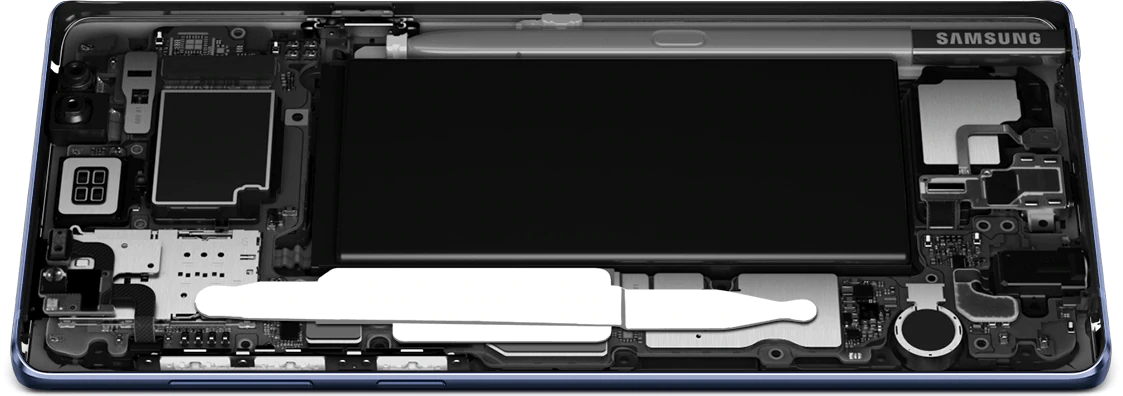
At 4,000mAh, the Note 9 features a 700mAh increase above its predecessor. It’s not an unprecedented number — Huawei’s already hit the 4,000 mark — but it’s the largest ever on a Note device, putting the handset in the top percentile.

As far as how that actually translates to real-world usage, Samsung’s not giving a number yet. The company simply says “all day and all night” in its release. I found that to be pretty close to the truth. I unplugged the handset at 100 percent yesterday afternoon. I texted, listened to Spotify, took photos, downloaded and just generally attempted to live my life on the damn thing.

Just under 22 hours later, it gave up the ghost and after much notification-based consternation about a critically low battery, the screen went black. Like I said, it’s not crazy battery life, but going most of a full day and night without a charge is a nice little luxury — and the sort of thing all phone makers should strive to achieve on their flagship products.

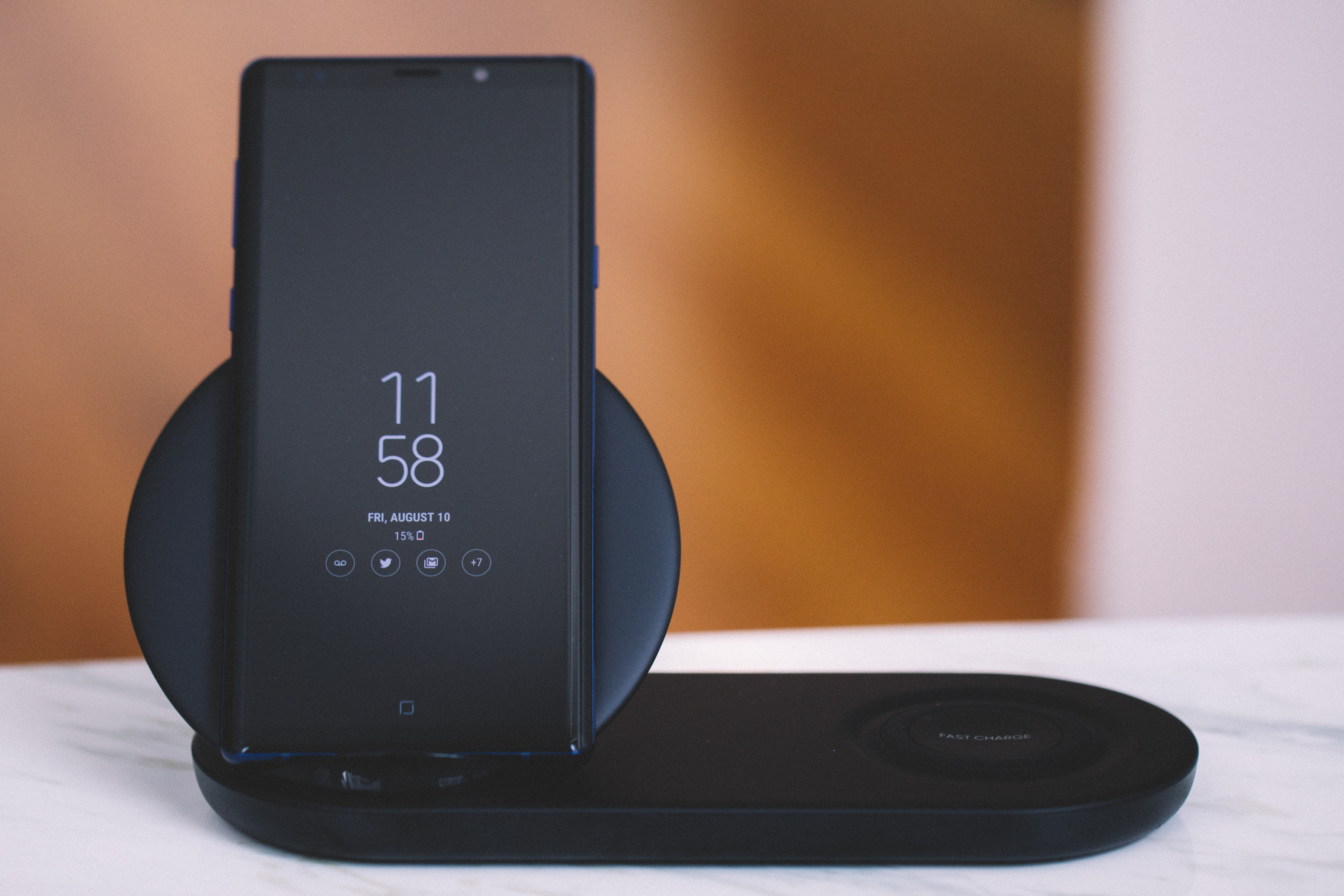
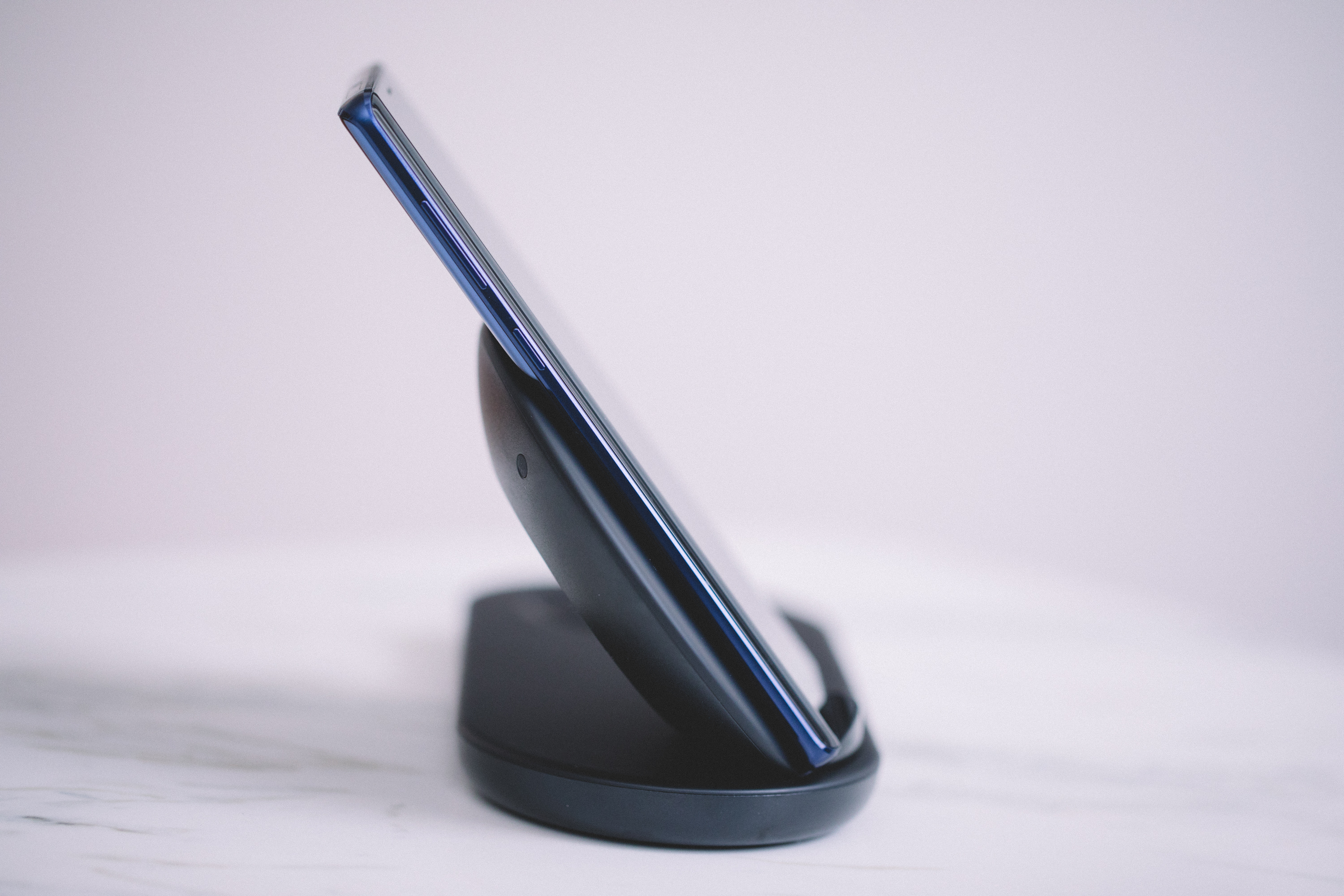
The company also, kindly, included the new Wireless Charging Duo. The charging pad is not quite as ambitious as the AirPower, but unlike that product, introduced nearly a year ago by Apple, I have this in my hands right now. So, point: Samsung. Charging the device from zero to 100 percent took three hours on the dot with the $120 “Fast Charge” pad. And it’s nice and toasty now.

Memories

Okay, about that price. Again, we’re talking $999.99 to start. There’s also a second SKU. That one will run you $1,295.99. Take a moment if you need to.

That’s a silly amount of money if you’re not the starting point guard for the Golden State Warriors. So much for the rumors that the company would be working to make its devices more economically accessible. And while the premium hardware has always meant that the Galaxy line is going to remain on the pricey side, I can’t help but point out that a few key decisions could have kept the price down, while maintaining build quality.

Storage is arguably the primary culprit. The aforementioned two SKUs give you either 6GB of RAM with 128GB or 8GB of RAM with 512GB. With cloud syncing and the rest, it’s hard to imagine I would come close to that limit in the two or so years until the time comes to upgrade my handset.

I’m sure those sorts of crazy media-hoarding power users do, in fact, exist in the world, but they’re undoubtedly a rarity. Besides, as Samsung helpfully pointed out, 512GB SD cards already exist in the world. Sure, that’s another $350 tacked onto the bottom line, but it’s there, if you need it. For most users, it’s hard to see Samsung’s claim of having “the world’s first 1TB-ready smartphone” (512GB+512GB) exists for little more reason than racking up yet another flashy claim for the 1960s Batman utility belt of smartphones.

Sure, Samsung no doubt gets a deal on Samsung-built hard drives, but the component has to be a key part in what’s driving costs up. For a company as driven by choice as Samsung, I’m honestly surprised we’re not getting more options up front here in the States.

Remote control

Confession: After testing many Galaxy Note models over the course of many years, I’ve never figured out a great use for the S-Pen. I mean, I’m happy that people like it, and obviously all of the early skepticism about the return of the stylus was quickly put to rest, as the company has continued to go back to the well, year after year.

But all of the handwritten note taking and animated GIF drawing just isn’t for me, man. I also recently spoke to an artist friend who told me that the Note doesn’t really cut it for him on the drawing front, either. Again, if you like or love it, more power to you, but it’s just not for me.

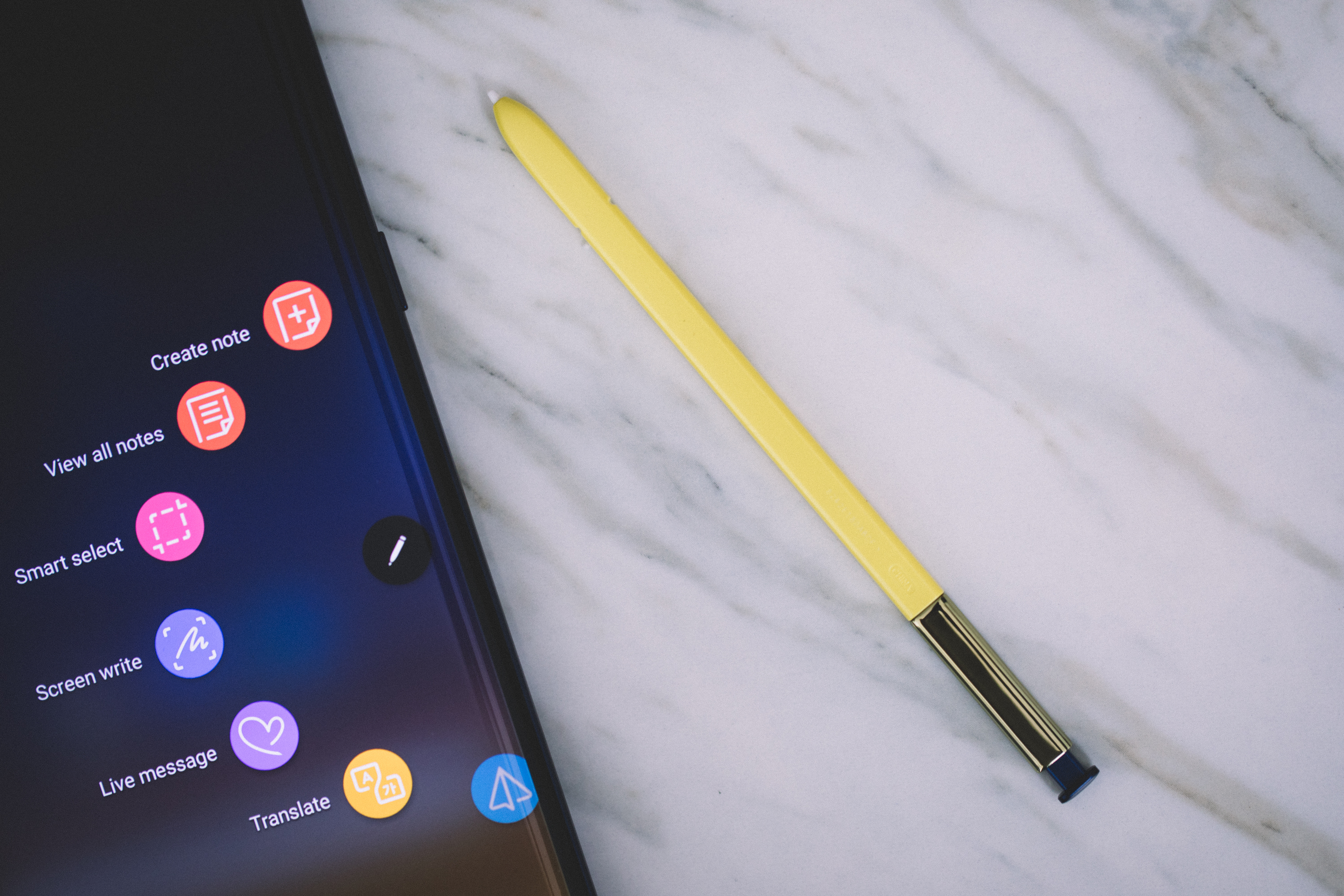
As silly as the idea of using the S-Pen as a remote control might appear at first glance, however, it’s clear to me that this is the first use of the built-in accessory I could honestly see using on a daily basis. It’s handy once you get beyond the silliness of holding a stylus in your hand while running, and serves as a handy surrogate for those who don’t own a compatible smartwatch.

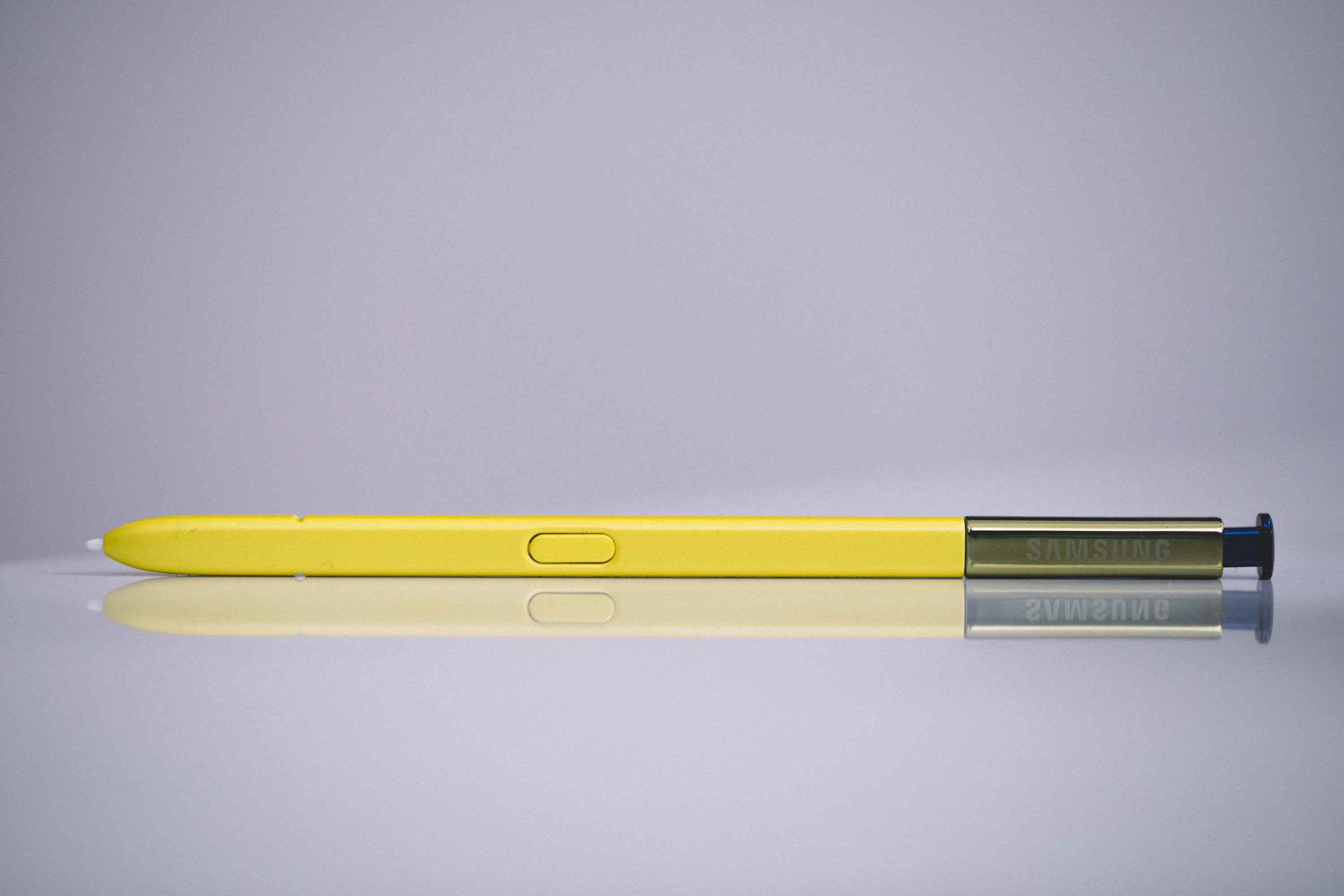
The S-Pen now sports Bluetooth Low Energy, allowing it to control different aspects of phone use. Low Energy or not, that tech requires power, so the stylus now contains a super conductor, which charges it when slotted inside the phone; 40 seconds of charging should get you a healthy 30 minutes of use. Even so, the phone will bug you to remind you that you really ought to dock the thing when not in use.

The compatible apps are still fairly limited at launch, but it’s enough to demonstrate how this could be a handy little addition. Of the bunch, I got the most out of music control for Spotify. One click plays/pauses a song, and a double-click extends the track. Sure, it’s limited functionality, but it saved me from having to fiddle with the phone to change songs went I went for my run this morning.

You’ll need to be a bit more creative when determining usefulness in some of the other apps. Using it as a shutter button in the camera app, for instance, could be a useful way to take a selfie without having to hold the phone at arms’ length.

The entire time, I wondered what one might be able to accomplish with additional buttons (volume/rewind/gameplay)? What about a pedometer to track steps when you’re running on the treadmill without it in the pocket? Or even a beacon to help absent-minded folks like myself find it after we invariably drop it between couch cushions.

But yeah, I understand why the company would choose to keep things simple for what remains a sort of secondary functionality. Or, heck, maybe the company just needs to hold some features for the Note 10 (Note X?).

Oh, and the Blue and Lavender versions of the phone come in striking yellow and purple S-Pens, with lock-screen ink color to match. So that’s pretty fun.

Hey man, nice shot

Nowhere is the Note’s cumulative evolution better represented than the camera. Each subsequent Galaxy S and Note release seem to offer new hardware and/or software upgrades, giving the company two distinct opportunities per year to improve imaging for the line. The S9, announced back in February, notably brought improved low-light photography to the line. The dual aperture flips between f/1.5 and f/2.4, to let in more light.

It’s a neat trick for a smartphone. Behold, a head to head between the Note 9 (left) and iPhone X (right):

Here’s what we’re dealing with on the hardware front:

  • Rear: Dual Camera with Dual OIS (Optical Image Stabilization)
  • Wide-angle: Super Speed Dual Pixel 12MP AF, F1.5/F2.4, OIS
  • Telephoto: 12MP AF, F2.4, OIS
  • 2X optical zoom, up to 10X digital zoom
  • Front: 8MP AF, F1.7

This time out, the improvements are mostly on the software side of things. Two features in particular stand out: Scene Optimizer and Flaw Detection. The first should prove familiar to those who’ve been paying attention to the smartphone game of late. LG is probably the most prominent example.

Camera hardware is pretty great across the board of most modern smartphone flagships. As such, these new features are designed to eliminate the current weakest link: human error. Scene Optimizer saves amateur photographers from having to futz with more advanced settings like white balance and saturation.

The feature uses AI to determine what the camera is seeing, and adjusts settings accordingly. There are 20 different settings, including: Food, Portraits, Flowers, Indoor scenes, Animals, Landscapes, Greenery, Trees, Sky, Mountains, Beaches, Sunrises and sunsets, Watersides, Street scenes, Night scenes, Waterfalls, Snow, Birds, Backlit and Text.

Some are pretty general, others are weirdly specific, but it’s a good mix, and I suspect Samsung will continue to add to it through OTA updates. That said, the function itself doesn’t need a cloud connection, doing all of the processing on-board. The feature worked well with most of the flowers and food I threw at it (so to speak), popping up a small icon in the bottom of the screen to let me know that it knows what it’s looking at. It also did well with book text.

The success rate of other things, like trees, were, unsurprisingly, dependent on context. Get just the top part and it identifies it as “Greenery.” Flip the phone to portrait mode and get the whole of the trunk and it pops up the “Tree” icon. I did get a few false positives along the way; the Note 9 thought my fingers were food, which is deeply disturbing for any number of reasons.

[Without Scene Optimizer – left, With Scene Optimizer – right]

Obviously, it’s not going to be perfect. I found, in the case of flowers that it has the tendency to oversaturate the colors. If you agree, you can disable the feature in settings. However, you have to do this before the shot is taken. There’s no way to manually override the feature to tell it what kind of object you’re shooting. That seems like a bit of a no-brainer addition.

[Super slow-mo matcha under the flicking lights]

Flaw Detection serves a similar role as Scene Optimizer, helping you avoid getting in your own way as an amateur photog. The feature is designed to alert you if a shot is blurry, if there’s a smudge on the screen, if the subject blinked or if backlighting is making everything look crappy. In the case of lens smudging and backlighting, it only bothers with a single alert every 24 hours.

The blink detection worked well. Blur detection, on the other hand, was a bit more of a crap shoot for subjects in motion and those that were too close to the lens to get a good focus. The feature could use a bit of work, but I still think it’s one of the more compelling additions on the whole of the device and anticipate a lot of other companies introducing their own versions in the coming year.

[gallery ids="1689899,1689901,1689903,1689904,1689932"]

Design Note

The more the Note changes, the more it stays the same, I suppose. As expected, the design language hasn’t changed much, which is no doubt part of what made Samsung CEO DJ Koh think he could get away with using the device in public ahead of launch. The footprint is virtually the same in spite of the ever-so-slightly larger screen (6.3 > 6.4-inches, same 2,960 x 1,440 resolution) — from 162.5 x 74.8 x 8.6 mm on the 8, to 161.9 x 76.4 x 8.8 mm on the 9.

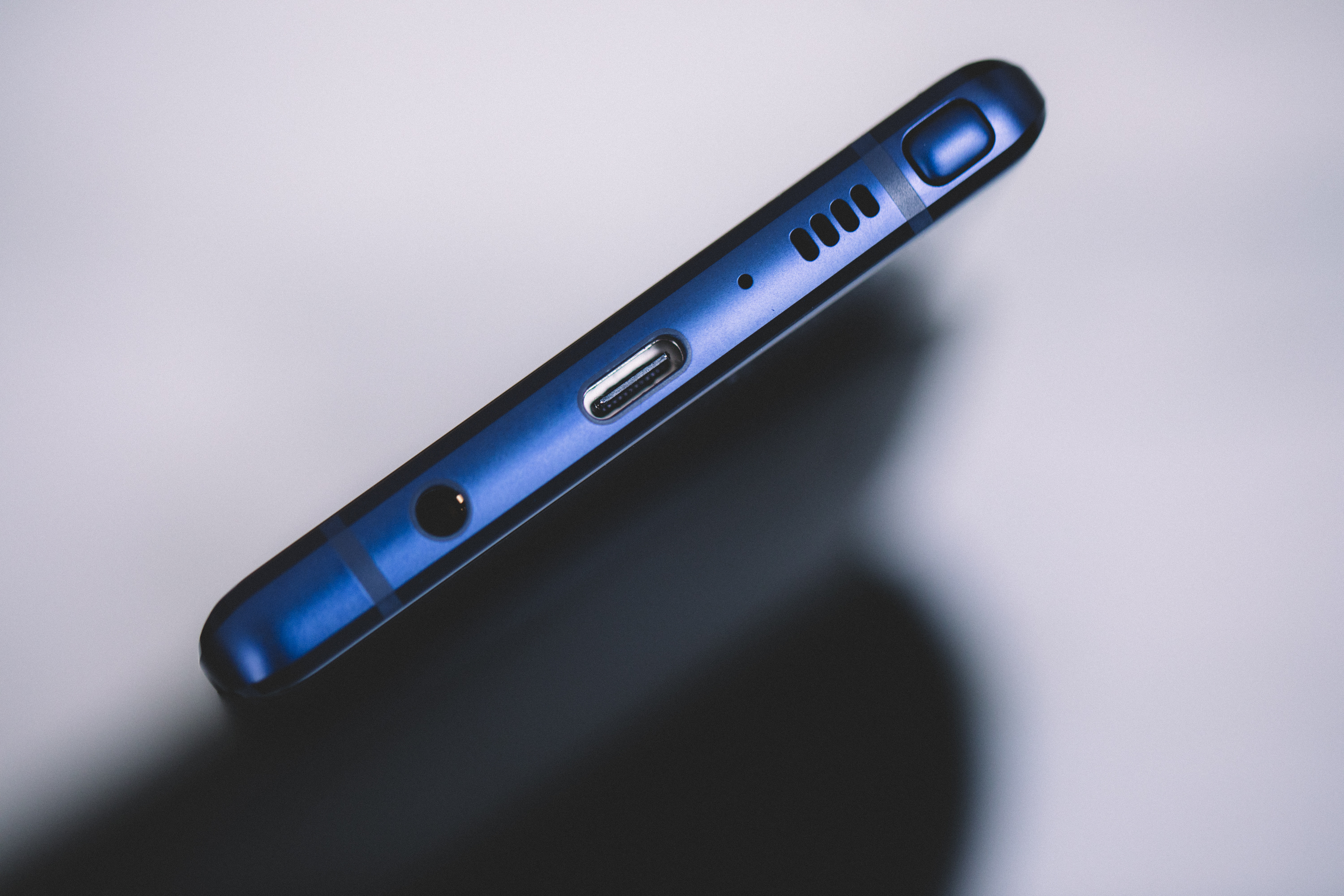
That’s perfectly fine. Samsung’s done an impressive job cramming a lot of screen into a manageable footprint over the past several gens. The only major change (aside from the lovely new blue and purple paint jobs) is the migration of the fingerprint sensor from the side of the camera to underneath it.

This was a clear instance of Samsung responding to feedback from users frustrated by all the times they mistook the camera for the fingerprint reader. The new placement helps a bit, though it’s still fairly close to the camera, and the fact that both are similar shapes doesn’t help matters. Thank goodness for that new smudge detector.

Oh, and the headphone jack is still present, because of course it is. For Samsung, it’s an important way to distinguish the product and approach from a world gone dongle mad.

Note on Notes

Oh Bixby, you eternal bastion of unfulfilled potential. A full rundown of new features can be found here. Overall, the smart assistant promises to be more conversational, with better concierge features. That said, Samsung’s once again tweaking it until the last moment, so I can’t offer you a full review until closer to the phone’s August 24 street date.

So stay tuned for that, I guess. I will say that the setup process can be a bit of a slog for a feature designed to make everything easier. Playing with Bixby voice required me to navigate several pages in order to connect the two. Thankfully, you should only have to deal with that the one time.

Samsung’s continuing to tweak the internals to make its device more suitable for gaming. The water-carbon cooling system tweaks the liquid cooling system found on the device since the S7, to help diffuse heat more efficiently. The large, bright screen meanwhile, is well-suited to mobile gaming, and the 6GB model handled Fortnite fairly well.

A final note

The next smartphone revolution always seems to be a year away. The potential arrival of a Samsung device with a foldable display makes the notion of carrying a massive device around in one’s pocket almost quaint. For the time being, however, the Note remains one of the best methods for transporting a whole lot of screen around on your person.

A lot has changed about the Note in the past seven years, but the core of the device is mostly the same: big screen and stylus coming together to walk the line between productivity and entertainment. It’s big, it’s bold, it’s too expensive for a lot of us. But it remains the phablet to beat.


Read Full Article
Founder Zain Jaffer may be looking to take back control of Vungle


Zain Jaffer may be gearing up for a fight to take back control of Vungle, the mobile ad company he founded.

Jaffer was removed from his role as CEO last fall following his arrest on charges of assault with a deadly weapon and performing a lewd act on a child.

However, a San Mateo County judge subsequently dismissed the charges. The district attorney’s office released a statement offering more context for the dismissal, saying that they did not believe there was any sexual conduct on the evening in question, and that “the injuries were the result of Mr. Jaffer being in a state of unconsciousness caused by prescription medication.”

So what’s next for Jaffer and Vungle? There are hints in a recent letter from Jaffer’s attorney, John Pernick, which was sent to current Vungle CEO Rick Tallman.

TechCrunch has obtained a copy of the letter, which requests access to Vungle’s records, specifically the names and addresses of company shareholders. Pernick’s letter suggests that this could be a prelude to further action (emphasis added):

Mr. Jaffer is considering various options with respect to Vungle and his shares of Vungle. He has considered selling some portion of his Vungle shares. However, he is also considering pursuing a leadership change at Vungle through calling for a shareholders meeting for the purpose of voting on a new board of directors and/or purchasing shares of additional Vungle stock. Communicating with Vungle shareholders with respect to their interest in purchasing or selling Vungle stock or in a change in the board of directors is an entirely proper purpose for Mr. Jaffer’s request to inspect the shareholder information that will enable him to make these communications.

When TechCrunch contacted Pernick, he confirmed the authenticity of the letter but declined to comment further. A spokesperson for Jaffer also declined to comment, and Vungle did not respond to our inquiries.

As you can see in the quote above, the letter indicates that Jaffer is considering multiple courses of action.

But if he decides to pursue a leadership change at Vungle, either by winning over existing shareholders or by purchasing a controlling stake in the company, it sounds like there are investors willing to back him — for starters, Jun Hong Heng at Crescent Cove Capital Management confirmed that his firm is working with Jaffer.

“We think Zain and Vungle have incredible potential,” Heng said in a statement. “We look forward to working with Zain and giving him the support he needs to help him regain control of his company.”

We also reached out to Anne-Marie Roussel, who recently resigned from Vungle’s board of directors. Roussel said via email that “the Vungle controversy is an interesting proxy for a much larger debate: the fuzziness surrounding ethical conduct in the tech industry.”

She added, “My personal prediction is that boards of tech companies will be held increasingly accountable for the ethics of the key decisions they make.” As for how that applies to Vungle, she said:

How does it reflect on ethical values when a CEO is dismissed based on presumption of guilt? Don’t we live in a democracy where one of the key legal right is “presumption of innocence” (as in a defendant is innocent until proven guilty). Upholding that principle by collaborating with his defense team was what led to my resignation from Vungle’s board.

Letter to Vungle by TechCrunch on Scribd


Read Full Article

The Top 7 Photography Tips for Absolute Beginners

The 11 Best Tools for Ripping DVDs and Blu-rays to Your Computer

Google will lose $50 million or more in 2018 from Fortnite bypassing the Play Store


When Fortnite Battle Royale launched on Android, it made an unusual choice: it bypassed Google Play in favor of offering the game directly from Epic Games’ own website. Most apps and games don’t have the luxury of making this choice – the built-in distribution Google Play offers is critical to their business. But Epic Games believes its game is popular enough and has a strong enough draw to bring players to its website for the Android download instead. In the process, it’s costing Google around $50 million this year in platform fees, according to a new report.

As of its Android launch date, Fortnite had grossed over $180 million on iOS devices, where it had been exclusively available since launching as an invite-only beta on March 15th, before later expanding to all App Store customers.

According to data from app store intelligence firm Sensor Tower, the game has earned Apple more than $54 million thanks to its 30 percent cut of all the in-app spending that takes place on apps distributed in its store.

That’s money Epic Games isn’t apparently willing to give up to Google, when there’s another way.

Unlike Apple, which only allows apps to be downloaded from its own storefront, Google’s platform is more open. There’s a way to adjust an Android device’s settings to download apps and games from anywhere on the web. Of course, by doing so, users are exposed to more security risks, malware infections, and other malicious attacks.

For those reasons, security researchers are saying that Epic Games’ decision sets a dangerous precedent by encouraging people to remove the default security protections from their devices. They’re also concerned that users who look for the game on Google Play could be fooled into downloading suspicious copycat apps that may be trying to take advantage of Fortnite’s absence to scam mobile users.

Google seems to be worried about that, too.

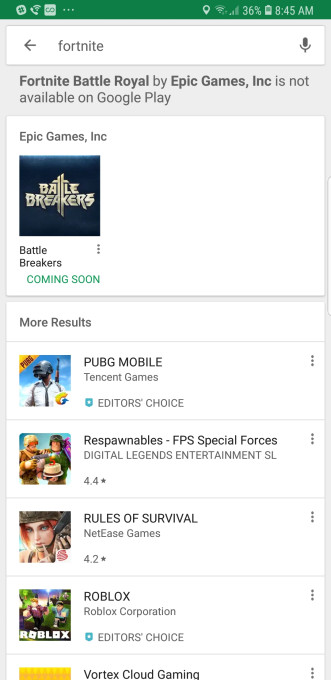
For the first time ever, the company is informing Google Play users that a game is not available for download.

Now, when users search for things like “Fortnite” or “Fortnite Battle Royale,” Google Play will respond that the app is “not available on Google Play.” (One has to wonder if Google’s misspelling of “Royale” as “Royal” in its message was a little eff u to the gamemakers, or just a bit of incompetence.)

In any event, it’s an unusual response on Google’s part – and one it can believably claim was done to serve users as well as protect them from any potential scam apps.

However, the message could lead to some pressure on Epic Games, too. It could encourage consumer complaints from those who want to more easily (or more safely) download the game, as well as from those who don’t understand there’s an alternative method or are confused about how that method works.

In addition, Google is serving up the also hugely popular PUBG Mobile at the top of Fortnite search results followed by other games. In doing so, it’s sending users to another game that can easily eat up users’ time and attention.

For Google, the move by Epic Games is likely troubling, as it could prompt other large games to do the same. While one odd move by Epic Games won’t be a make or break situation for Google Play revenue (which always lags iOS), if it became the norm, Google’s losses could climb.

At present, Google is missing out on millions that will now go directly to the game publisher itself.

Over the rest of 2018, Sensor Tower believes Fortnite will have gained at least $50 million in revenues that would otherwise have been paid out to Google.

The firm expects that when Fortnite rolls out to all supported Android devices, its launch revenue on the platform will closely resemble the first several months of Apple App Store player spending.

It may even surpass it, given the game’s popularity continues growing and the standalone download allows it to reach players in countries where Google Play isn’t available.

Meanwhile, there have been concerns that the download makes it more difficult on users with older Android devices to access the game, because the process for sideloading apps isn’t as straightforward. But Sensor Tower says this will not have a large enough impact to affect Fortnite’s revenue potential in the long run.


Read Full Article

Skype Video Not Working? How to Test and Troubleshoot Your Camera


skype-in-browser

It can be very frustrating when Skype video is not working. Especially because productivity and communication tools like Skype are such an integral part of our everyday lives.

Occasionally, people seem to have difficulty configuring their webcam and video to work properly with the Skype software. No matter what they try, there’s no video stream on display. If you’re experiencing this, this short list solves the problems of no video stream from either your webcam or from the person you’re calling.

Before going through this checklist, download the latest version of Skype for either Windows, Mac, or Linux. This will ensure that you have the latest bug fixes and patches installed. For that matter, if you’re having a problem with the video stream from the person you’re trying to call, make sure they have the latest version of Skype as well!

1. Check Your Drivers

Update your video device software to the latest version. Check with the manufacturer website of your webcam for the latest driver update, and of course, doing a Windows update can’t hurt (usually).

Check your current driver version by going into the device manager. For most versions of Windows, that’s in the Control Panel > System and Security > System Device Manager.

A yellow exclamation mark on the webcam indicates your issue is a resource conflict with another device.

Fixing that is beyond the scope of this article, but it would at least indicate the source of Skype having no video. If things appear fine, then right-click on your webcam device and select Properties. Then click on the Driver tab.

Here, you can see the driver date, and if it’s fairly old (as mine is), you may want to click on Update Driver and search the internet for the latest version.

Checking the Copyright under Driver Details will also provide you with the name of the company that wrote the software. You can use this to download the latest driver version yourself, from that company’s website, if you need to.

You’ll also want to download the latest version of DirectX as well (you’ll need at least version 9.0 for Skype video to work). Click on the Windows Start icon, type Run and then type dxdiag in the Run dialog to double check your DirectX version.

2. Configure Skype Properly

It’s a good computer habit to keep your drivers updated. But, if this doesn’t solve the video problem in Skype, then you should double check your Skype video settings to be sure that they’re set up properly.

When you have Skype open, click on the three-dot icon to open the menu and select Settings. Click the dropdown for the Audio & Video section, and you’ll see which of your camera devices is selected.

If this is set to an incorrect camera, such as your built-in USB camera that might have a tape over it, that will explain your Skype video issues.

If Skype is configured to use the correct webcam, then you may have an issue with the webcam itself. The first thing to try is simply starting up the software that came with your webcam and using it to switch your webcam on (or if your webcam has a hardware switch, turn it on).

Go back into the Preferences or Settings area (depending on your webcam software). Even though your webcam video is displayed, don’t celebrate yet! Take a look at the settings under every tab. Your webcam software may have a special configuration for sharing video to Skype. Or it may require permission for any external application to use it.

Browse through the setting screens and just make sure anything that needs to be enabled is enabled.

The software may also come with a feature to update the driver software if there’s a newer version available. Do update the driver if you didn’t do it above in the device manager.

Once you make sure the webcam is turned on and the software settings are all correct, you may have to restart Skype for it to recognize your active webcam.

3. Make Sure You Aren’t Hidden

Once you start a video chat with your friend, make sure that the webcam is not disabled. This is the case if the camera icon is crossed out, as shown below.

The option depends on the version of Skype you’re using, but even if it’s accidentally selected, then obviously your video stream will be blank. If your friend’s stream is blank rather than yours, ask them to check this icon as well. If it’s crossed out, then the webcam stream is disabled. Yes, sometimes it’s that simple!

4. Are Other Programs Using Your Webcam?

Check if you have other applications running in the background that could be capturing the data stream from the webcam. This is an often overlooked step when troubleshooting Skype video problems.

Was the light was on even before you started Skype? The lit webcam light is a clear sign something is already running that’s using your webcam. This may cause issues with Skype capturing the same stream. Try closing down all your other applications, especially any other IM and internet applications, and then restart Skype again.

If all else fails—it’s very possible that you (or your friend) could have an older webcam that just isn’t compatible with Skype. That’s a signal to replace your outdated cam with a new one that is guaranteed to work!

The latest version of Skype has plenty of bells and whistles. But there are plenty of other free video conference software alternatives out there if you to try out something other than Skype.

Read the full article: Skype Video Not Working? How to Test and Troubleshoot Your Camera


Read Full Article

NASA’s Parker Solar Probe launches tonight to “touch the sun”


NASA’s ambitious mission to go closer to the Sun than ever before is set to launch in the small hours between Friday and Saturday — at 3:33 AM Eastern from Kennedy Space Center in Florida, to be precise. The Parker Solar Probe, after a handful of gravity assists and preliminary orbits, will enter a stable orbit around the enormous nuclear fireball that gives us all life and sample its radiation from less than 4 million miles away. Believe me, you don’t want to get much closer than that.

If you’re up late tonight (technically tomorrow morning), you can watch the launch live on NASA’s stream.

This is the first mission named after a living researcher, in this case Eugene Parker, who in the ’50s made a number of proposals and theories about the way that stars give off energy. He’s the guy who gave us solar wind, and his research was hugely influential in the study of the sun and other stars — but it’s only now that some of his hypotheses can be tested directly. (Parker himself visited the craft during its construction, and will be at the launch. No doubt he is immensely proud and excited about this whole situation.)

“Directly” means going as close to the sun as technology allows — which leads us to the PSP’s first major innovation: its heat shield, or thermal protection system.

There’s one good thing to be said for the heat near the sun: it’s a dry heat. Because there’s no water vapor or gases in space to heat up, find some shade and you’ll be quite comfortable. So the probe is essentially carrying the most heavy-duty parasol ever created.

It’s a sort of carbon sandwich, with superheated carbon composite on the outside and a carbon foam core. All together it’s less than a foot thick, but it reduces the temperature the probe’s instruments are subjected to from 2,500 degrees Fahrenheit to 85 — actually cooler than it is in much of the U.S. right now.

Go on – it’s quite cool.

The car-sized Parker will orbit the sun and constantly rotate itself so that the heat shield is facing inwards and blocking the brunt of the solar radiation. The instruments mostly sit behind it in a big insulated bundle.

And such instruments! There are three major experiments or instrument sets on the probe.

WISPR (Wide-Field Imager for Parker Solar Probe) is a pair of wide-field telescopes that will watch and image the structure of the corona and solar wind. This is the kind of observation we’ve made before — but never from up close. We generally are seeing these phenomena from the neighborhood of the Earth, nearly 100 million miles away. You can imagine that cutting out 90 million miles of cosmic dust, interfering radiation, and other nuisances will produce an amazingly clear picture.

SWEAP (Solar Wind Electrons Alphas and Protons investigation) looks out to the side of the craft to watch the flows of electrons as they are affected by solar wind and other factors. And on the front is the Solar Probe Cup (I suspect this is a reference to the Ray Bradbury story, “Golden Apples of the Sun”), which is exposed to the full strength of the sun’s radiation; a tiny opening allows charged particles in, and by tracking how they pass through a series of charged windows, they can sort them by type and energy.

FIELDS is another that gets the full heat of the sun. Its antennas are the ones sticking out from the sides — they need to in order to directly sample the electric field surrounding the craft. A set of “fluxgate magnetometers,” clearly a made-up name, measure the magnetic field at an incredibly high rate: two million samples per second.

They’re all powered by solar panels, which seems obvious, but actually it’s a difficult proposition to keep the panels from overloading that close to the sun. They hide behind the shield and just peek out at an oblique angle, so only a fraction of the radiation hits them.

Even then, they’ll get so hot that the team needed to implement the first ever active water cooling system on a spacecraft. Water is pumped through the cells and back behind the shield, where it is cooled by, well, space.

The probe’s mission profile is a complicated one. After escaping the clutches of the Earth, it will swing by Venus, but not to get a gravity boost, but “almost like doing a little handbrake turn,” as one official described it. It slows it down and sends it closer to the sun — and it’ll do that 7 more times, each time bringing it closer and closer to the sun’s surface, ultimately arriving in a stable orbit 3.83 million miles above the surface — that’s 95 percent of the way from the Earth to the sun.

On the way it will hit a top speed of 430,000 miles per hour, which will make it the fastest spacecraft ever launched.

Parker will make 24 total passes through the corona, and during these times communication with Earth may be interrupted or impractical. If a solar cell is overheating, do you want to wait 20 minutes for a decision from NASA on whether to pull it back? No. This close to the sun even a slight miscalculation results in the reduction of the probe to a cinder, so the team has imbued it with more than the usual autonomy.

It’s covered in sensors in addition to its instruments, and an onboard AI will be empowered to make decisions to rectify anomalies. That sounds worryingly like a HAL 9000 situation, but there are no humans on board to kill, so it’s probably okay.

The mission is scheduled to last 7 years, after which time the fuel used to correct the craft’s orbit and orientation is expected to run out. At that point it will continue as long as it can before drift causes it to break apart and, one rather hopes, become part of the sun’s corona itself.

The Parker Solar Probe is scheduled for launch early Saturday morning, and we’ll update this post when it takes off successfully or, as is possible, is delayed until a later date in the launch window.


Read Full Article

10 August 2018

What the Facebook Crypto team could build


Facebook is invading the blockchain, but how? Back in May Facebook formed a cryptocurrency team to explore the possibilities, and today it removed a roadblock to revealing its secret plans.

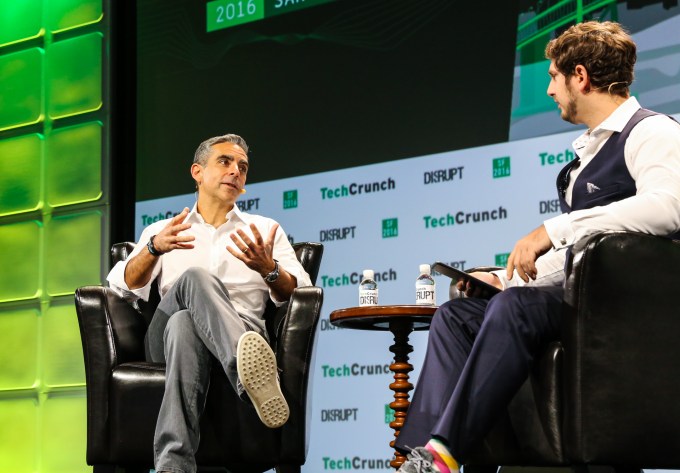
Former head of Messenger David Marcus who leads the Facebook Crypto team today announced he was stepping down from the board of Coinbase, the biggest crypto startup. Marcus was formerly the president of PayPal and helped Facebook Messenger adopt chatbot commerce and peer-to-peer payments, so he was both a natural choice for Coinbase’s board and Facebook’s blockchain skunklabs.

Facebook told CoinDesk this was to avoid the appearance of a conflict of interest, which is exactly what it was. Marcus provided a statement to TechCrunch explaining he was stepping down “because of the new group I’m setting up at Facebook around blockchain” noting that “Getting to know Brian [Armstrong, CEO of Coinbase], who’s become a friend, and the whole Coinbase leadership team and board has been an immense privilege. I’ve been thoroughly impressed by the talent and execution the team has demonstrated during my tenure, and I wish the team all the success it deserves going forward.”

Now Facebook is cleared to start publicly talking about its plans, though it hasn’t yet. So what could Facebook be building? I see three main opportunities:

3% Off With FaceCoin

Facebook could build a cryptocurrency wallet with its own token that people could use to pay for things with partnered businesses or that they discover through Facebook ads. Since blockchain can make transactions free or very cheap, Facebook and its partners could sidestep the typical credit card processing fees. That would potentially allow Facebook to offer users  “3% off purchases made with FaceCoin” or a similar promotion. 

Discounts like this could draw users into Facebook’s cryptocurrency feature. It’s well positioned to run such the scheme thanks to its extensive connections with over six million advertisers and 65 million businesses that have Facebook Pages. The social network could eat the costs of running the program, passing the transaction fee savings on to the users, while touting partnerships with Facebook Crypto as ways to boost sales for businesses. That could in turn get clients to spend more money on Facebook ads, as the discounts would enhance conversion rates and drive sales.

P2P and Micropayments

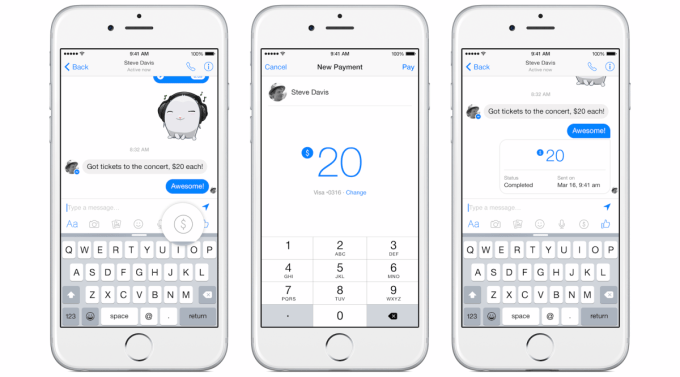
Facebook already lets you send friends money through Messenger for free, but only with a connected debit card or PayPal account. Facebook could offer cryptocurrency-based payments between friends to let a wider range of users settle debts for shared dinners or taxis through Messenger. Users might fund their Facebook Crypto wallet once with a payment, possibly with a one-time transaction fee, and then they could send and receive the tokens for free from then on. Blockchain becoming the backbone of peer-to-peer payments could further increase engagement with Messenger for its 1.3 billion users.

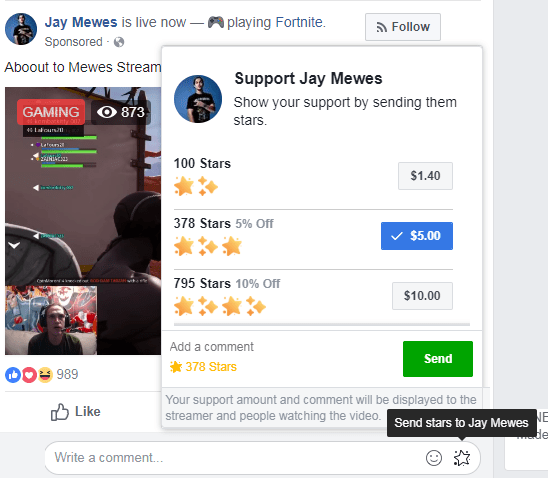
Meanwhile, Facebook could also potentially use cryptocurrency to let fans send micropayments to their favorite creators, like video stars and game streamers. Facebook recently debuted its own virtual (not crypto) currency called Facebook Stars that users can buy and send to creators, who can then cash them out for one cent each. Facebook takes an undisclosed cut but gives the majority of what users spend on Stars to the creator.

Facebook could potentially undergird this system with cryptocurrency to alleviate transaction fees and let people tip creators smaller amounts of cash for exclusive content or just to show their appreciation. Facebook started with a minimum of $3 tips at a time so that transaction fees wouldn’t be too high of a percentage of the total purchase. A cryptocurrency solution could let users efficiently tip much smaller amounts, which could lure people towards the behavior. The more money Facebook can deliver to internet celebrities, the more popular ones it can recruit to live on its platform and the more content they’ll produce.

Facebook Stars. Image via KiwiFarm

Facebook Connect For Crypto

A top problem in the world of decentralized blockchain apps is how you bring your identity with you. Securely connecting your wallet, blockchain-based virtual goods, and biographical info to new dApps can be a laborious process. Users typically have to type in long, complicated alphanumeric keys that are tough to remember and annoying to input. User experience design around identity in the blockchain space lags far behind what we’re used to with mainstream social apps like Facebook Connect, which uses a OAuth single sign-on to let you instantly join apps without creating a new username and password, or filling out a profile and uploading a photo.

Facebook could use its expertise in operating a popular identity platform to ease login to dApps. While the company has faced plenty of privacy issues and attacks on election integrity, Facebook has a strong record of not being traditionally hacked. It hasn’t suffered a massive user data breach like LinkedIn, Twitter, and other social networks. Using an overtly centralized identity system to connect with decentralized apps might be counterintuitive, but Facebook could deliver the UX convenience necessary to unlock a new wave of blockchain utility.

For now it’s unclear if Facebook will end up directly competing with Coinbase in the exchange and wallet space, or if it might instead partner with the blockchain mainstay to accelerate its efforts. But with deep pockets, tons of tech talent, and ubiquity amongsts social networkers and businesses, Facebook Crypto’s primary limits are its ambitions and the extent of user trust.


Read Full Article

New material design stores energy like an eagle


Auxetics are materials that store energy internally rather than bulging out. In this way they can store more energy when squeezed or struck and disperse it more regularly. Historically, however, these materials have had sharp corners that could break easily with enough pressure. Now researchers at Queen Mary University of London and University of Cambridge have discovered a way to use auxetics in a more efficient and less fragile way. In this way you can create systems that store energy and release it mechanically multiple thousands of times.

“The exciting future of new materials designs is that they can start replacing devices and robots. All the smart functionality is embedded in the material, for example the repeated ability to latch onto objects the way eagles latch onto prey, and keep a vice-like grip without spending any more force or effort,” said Queen Marry University’s Dr. Stoyan Smoukov. For example, a robot using this system can close it’s hand over and object and keep it closed until its time to let go. There is no need to continue sending power to the claw or hand until it is time to open up and drop the object.

“A major problem for materials exposed to harsh conditions, such as high temperature, is their expansion. A material could now be designed so its expansion properties continuously vary to match a gradient of temperature farther and closer to a heat source. This way, it will be able to adjust itself naturally to repeated and severe changes,” said Eesha Khare, an undergrad who worked on the project.

The project used 3D printing to make small clips that grab a toothed actuator. To release the energy, you pull on the opposite sides of the object to release the teeth. While the entire thing looks quite simple the fact that this object stores energy without bulging is important. The same technology can be used to “grab” bullets as they strike armor, resulting in better durability.


Read Full Article