11 April 2018

The 10 Best Plex Plugins for Power Users


If you’re a casual user, Plex will virtually work straight out of the box. You just need to spend a litte time learning how to set up Plex and add your media.

But after you’ve used Plex for a while, you might notice a missing feature, or wish for some extra functionality. Which is where third-party plugins come into play.

There are hundreds of Plex plugins out there; many of them aren’t worth your time. But some are absolute must-haves.

If you’d like to know which third-party Plex tools can turn you into to a power user, keep reading.

1. Tautulli

plex plugins for power users - tautulli

Formerly known as PlexPy, Tautulli is an essential add-on for anyone who shares their Plex library with other people.

The add-on focuses on providing statistics about your Plex server. The stats include what programs have been watched, who watched them, and when and where they were watched.

It’s also a powerful notifications tool. You can alert other people when you add new content to your library, receive an alert if your server goes down, and many more.

Lastly, this add-on allows you to use custom scripts. These let you expand the functionality considerably. For example, you could kill a stream if a user is outside of your local network, or automatically add a label to recently added library items.

2. Web Tools

Web Tools is perhaps the most commonly-used Plex add-on.

It includes the popular Unsupported Appstore (which includes a host of unofficial Plex channels and user-generated content), as well as logging tools, a subtitle management module, a playlist management module, and a tool that can scan for missing or unmatched media.

Depending on which operating system you’re running, installing the add-on can be a bit complicated. Luckily, we’ve explained how to unlock Plex channels elsewhere on the site.

3. Sub-Zero

Plex can handle subtitles natively, but it comes with a few caveats. You only have access to a couple of subtitles libraries, and the tool doesn’t retrospectively add subtitles to existing media.

Sub-Zero offers a more holistic way of managing subtitles.

It will automatically scan eight repositories to find the best subtitles for your video, it can scan your media for missing subtitles files, and it offers many customization tools such as color, timing offset, and the removal of HI tags for people with impaired hearing.

4. Plex2Netflix

plex plugins for power users - plex2netflix

Unfortunately, there is no way to watch Netflix from within the Plex app. However, Plex2Netflix does offer an easy way to see how much of your existing library is available on the popular streaming service.

It’s useful if you’re running short of space and want to delete some content. You’ll also find it useful if you’re wondering whether you need to spend the time downloading a new show.

For each library item, the add-on will tell you what percentage of the show is available. For example, perhaps you have five series of your favorite comedy saved locally, but only the first three series are available on Netflix.

5. Plex Export

Would you like to show other people what content is on your Plex server without giving them access to the server itself? Plex Export is the add-on you need. It lets you produce an interactive HTML page that anyone can browse.

Your media is shown by section, and the HTML page includes live filters so viewers can quickly establish what’s available. You can filter by most metadata fields, including genre, actor, year, rating, and more.

6. TheaterTrailers

plex plugins for power users - theatertrailers

Some people like to try and make their Plex server replicate the movie-going experience as closely as possible. A big part of that is watching pre-movie trailers for films that haven’t yet hit theaters.

The TheaterTrailers add-on can pull in trailers that are currently airing in cinemas and broadcast them before your video starts. When the films eventually become available to the public, the app will automatically delete its trailer.

7. Plex-Sync

Plex-Sync lets you automatically sync the watched status between multiple Plex servers. It’s useful if you have separate servers running in different locations—for example, at your house and in the office.

The tool can also sync between different users. If you and your partner watch some episodes of a show together but others when you’re apart, it will ensure you’re both on the same page when you next log in.

You can sync your content via both HTTPS and ports.

8. Transmogrify

plex plugins for power users - transmogrify

Transmogrify is a browser extension. If you access Plex via a web browser rather than through the desktop client, the tool will introduce several useful new features.

The additional features include a server statistics page, a way to see any missing seasons or episodes in TV shows, actor profiles, and a randomizer for movies and TV series.

The extension will also add several new links to the Plex interface. Examples include a “view trailer” button, a link to a movie’s IMDb page, and a Rotten Tomatoes link.

9. IPTV

Many TV networks around the world broadcast their shows via IPTV. Using the IPTV channel, you can access those feeds (assuming they’re not encrypted or geo-blocked).

To add content to the app, you’ll need to get your hands on a streaming URL or an M3U playlist. A quick Google search will reveal hundreds of playlists you can choose from.

The app supports on-screen program guides, channel categories, and custom channel logos. If you’ve never used IPTV before, make sure you check out the add-on’s wiki. It has all the information you need to get started.

10. Trakt Scrobbler

plex plugins for power users - trakt

For those who don’t know, Trakt is like the Last.fm of the video world. It automatically logs everything you’ve been watching to your online profile.

Kodi has a Trakt add-on, so if you split your time between the two popular apps, this is an essential tool to keep on of what you’ve been watching. It will sync your watch history between the two apps so you don’t become confused.

Like Last.fm, Trakt will also make recommendations based on your viewing habits. It can even tell you which services and apps offer the show or movie you want to watch. Other features include a TV calendar and customizable watchlists.

Helping You Become a Plex Power User

Of course, installing these plugins won’t suddenly make you a Plex power user. If you want to get the most out of Plex, you’ll benefit from reading some of the other articles we’ve previously published on MakeUseOf.

Start off by learning some essential Plex tips and tricks, then decide whether or not you need a Plex Pass. Finally, you should find out how to watch Plex using virtual reality.


Read Full Article

6 Simple Tips to Shoot Better Video

How to watch Zuckerberg’s congressional testimony online


Mark Zuckerberg today begins his second day of testimony.

The Facebook CEO spent more than five hours yesterday answering the questions of U.S. Senators, and will now testify before the House Energy and Commerce Committee.

As was the case with the Senate, we expect to hear plenty about the Cambridge Analytica scandal and Russian election meddling. Zuckerberg’s prepared statement was released to the public on Monday, which you can read here.

The congressional hearing begins at 10am ET.

You can watch it here.


Read Full Article

How to View All Recently Updated Drivers in Windows


Windows 10 automatically updates the drivers for your hardware. While these forced updates are convenient, they also come with some drawbacks. On the one hand, you don’t have to manually update your drivers all the time. On the other hand, a buggy or poorly-timed driver update can cause your system to crash or devices to malfunction.

If you start having issues with a device, Windows 10’s automatic driver updates could be at fault. Here’s how to review them.

How to View All Recently Updated Drivers in Windows

Windows 10 Recent Driver Updates

  1. Open the Settings app, using the keyboard shortcut Win + I.
  2. Select the Update & Security entry.
  3. On the Windows Update tab, you’ll see an Update status header at the top. Click the View installed update history link below it.
  4. Here, you’ll see a list of all updated Windows has installed. Use the arrows to collapse all categories except for Driver Updates.
  5. You’ll see your most recently installed drivers, including their date and version number.

Clicking on an update’s information should bring you to an informational page on Microsoft’s website. However, it seems the company has not properly implemented this feature yet.

If you see a driver that failed to install repeatedly, or notice that a device you’re having trouble with recently had a driver update, that’s a good sign that you need to troubleshoot it.

Windows 10 Disable Driver Updates

To disable automatic updates, open the Control Panel and click the System entry. Select Advanced system settings on the left side, and choose the Hardware tab in the resulting window. Click the Device Installation Settings button, and select No.

Check our guide to taking back control of driver updates for more information, as well as how to roll back drivers you’re having an issue with.


Read Full Article

How to Cancel an Office 365 Subscription and Get a Refund


Office 365 isn’t for everyone. Some people will balk at the idea of paying a monthly subscription for an office productivity suite, especially as there are so many excellent free alternatives out there.

And even if you want to use Microsoft’s famous suite, you might still decide that buying the software with a one-off payment makes more financial sense for your usage patterns.

But just because you signed up for Office 365 once doesn’t mean you’re stuck with the service forever. You can easily cancel your subscription. Let’s look at how to cancel your service and what will happen to the apps on your machine.

How to Cancel an Office 365 Subscription

To cancel your Office 365 subscription, follow the instructions below:

  1. Go to account.microsoft.com/services and enter your login credentials.
  2. In the Services & subscriptions section, locate your subscription.
  3. Click on Manage.
  4. Select Cancel.
  5. In the popup box, select Confirm cancellation.

If you bought an annual subscription with the last 30 days, or you have a monthly subscription and cancel within 30 days of your last renewal, you are entitled to a refund.

Should you claim a refund, your Office apps will immediately go into a reduced functionality mode. You will still be able to open documents and print them, but you will not be able to edit anything.

If you don’t claim a refund, your apps will continue to work until the end of the subscription period for which you have paid.

Remember, canceling your subscription will mean you also lose the other benefits of your Office 365 account, such as extra OneDrive storage space and free Skype minutes. Other people that you have shared your subscription with will also lose access to their apps and benefits.

If you’d like more help determining whether you should subscribe to Office 365 or a pay a one-off fee, check out our guide on the subject.


Read Full Article

Insurance giant Allianz confirms $35M investment in Asian ride-sharing unicorn Go-Jek


German insurance giant Allianz is following Google and Tencent by backing Go-Jek, the Indonesia-based ride-hailing and local services company valued at over $4.5 billion, after it announced an investment.

The money comes from Allianz X, the firm’s digital investment arm, which confirmed it put in $35 million in what is its first deal in Southeast Asia. The group has previously backed startups like European challenger bank N26 (alongside Tencent), and emerging market micro-insurance service provider Bima.

Allianz participated in an estimated $1.5 billion Go-Jek funding round that includes participation from the likes of Google, Tencent, Chinese e-commerce giant JD.com, China-based delivery service Meituan and others. The round opened last year when Tencent, the $500 billion Chinese firm, made an investment, but we understand that it is now closed at a valuation that exceeds $4.5 billion. Go-Jek has yet to officially announce or confirm the funding, however.

Go-Jek and Allianz have had a relationship for the past two years, with Allianz Indonesia supporting the company by offering health insurance for Go-Jek drivers and their families. The insurance company said it has plans to “increase access to insurance products and services” for Go-Jek partners and customers. That makes sense given that Go-Jek is moving into financial services products in Indonesia.

“Go-Jek has demonstrated a track record of success within the transportation, logistics and payment sectors and we look forward to supporting their continued growth,” Nazim Cetin, CEO of Allianz X, said in a statement.

Hot on the heels of Grab’s acquisition of Uber Southeast Asia, Go-Jek is working to move into four new marks during April. TechCrunch understands that it has hired country management and operational teams in the Philippines, Thailand and Vietnam, while it is also looking into options in Singapore.

Go-Jek started out operating a bike taxi on-demand service, but it has since added taxi and private car options, a mobile payment business and local services on-demand, such as groceries, massages and more. The company is widely-heralded as the market leader in Indonesia, which is Southeast Asia’s largest economy and the world’s fourth biggest country with a population of over 260 million.

Indonesia is expected to be the main growth driver for Southeast Asia’s ride-hailing industry, which is forecast to see revenue jump from $5 billion in 2017 to over $20 billion in 2025, according to a recent report from Google and Singapore-based fund Temasek.


Read Full Article

3 Reasons to Start Using Multiple Catalogs in Lightroom


It used to be that multiple catalogs were a necessity in Adobe Lightroom. If you didn’t create multiple catalogs you could be faced with a pretty slow program. Or with regular use, you’d hit a limit.

That’s no longer the case, but that doesn’t mean there aren’t plenty of reasons to hold onto this habit, especially if you’re saving a large number of photographs on a regular basis, and want to keep your photos organized.

What Is a Lightroom Catalog?

A Lightroom catalog is NOT where your actual photo files are stored. When you import photos into Lightroom, the files remain in the folder they were imported from. The catalog actually references the original locations of photos and doesn’t duplicate them. Any changes you make to a photo are stored separately, then combined when you actually export the image.

To create a new catalog, just go to File > New Catalog.

Why You Should Use Multiple Catalogs

  1. Silos: If you’re using one computer for both personal and work tasks or several people are working on one machine, you can keep your sets of photos separate with the use of catalogs. If you have several clients that you work with on a regular basis, you can create a catalog for each one. This will make it easier to find what you’re looking for and keep you focused.
  2. Ease of Use: Lightroom offers many ways to keep your photos organized. You can tag them or you can organize them in folders and smart collections. But at the end of the day, nothing could be easier than creating multiple catalogs if you want to stay organized and don’t want to create an elaborate system.
  3. Easy Transfer: Because each catalog is smaller and more manageable, it will be easier and faster to transfer or backup to another location if necessary.

If you’re an amateur photographer or aren’t taking photos on a regular basis and simply don’t expect to end up with large catalogs associated with each shoot or client, using a single catalog might be a better option for you.

Multiple catalogs is a particularly good approach if you’re a photographer using Lightroom on a professional level.


Read Full Article

Zuckerberg’s boring testimony is a big win for Facebook


Mark Zuckerberg ran his apology scripts, trotted out his lists of policy fixes and generally dulled the Senate into submission. And that constitutes success for Facebook.

Zuckerberg testified before the joint Senate judiciary and commerce committee today, capitalizing on the lack of knowledge of the politicians and their surface-level questions. Half the time, Zuckerberg got to simply paraphrase blog posts and statements he’d already released. Much of the other half, he merely explained how basic Facebook functionality works.

The senators hadn’t done their homework, but he had. All that training with D.C. image consultants paid off.

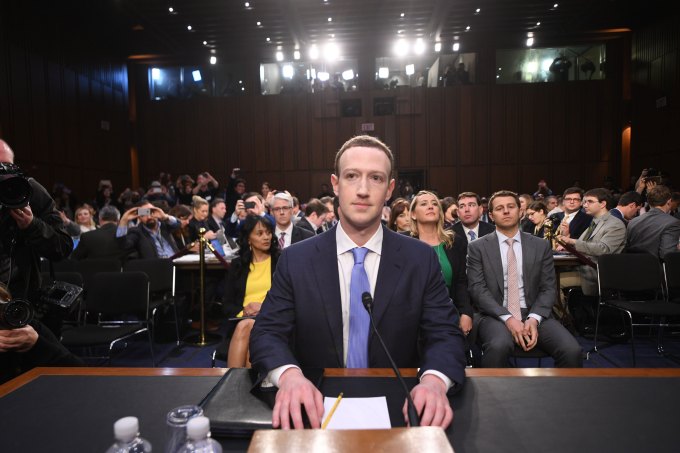
Facebook CEO Mark Zuckerberg arrives to testify before a joint hearing of the US Senate Commerce, Science and Transportation Committee and Senate Judiciary Committee on Capitol Hill, April 10, 2018 in Washington, DC. (Photo: JIM WATSON/AFP/Getty Images)

Sidestepping any gotcha questions or meme-worthy sound bites, Zuckerberg’s repetitive answers gave the impression that there’s little left to uncover, whether or not that’s true. He made a convincing argument that Facebook is atoning for its sins, is cognizant of its responsibility and has a concrete plan in place to improve data privacy.

With just five minutes per senator, and them each with a queue of questions to get through, few focused on the tougher queries, and even fewer had time for follow-ups to dig for real answers.

Did Facebook cover up the Cambridge Analytica scandal or decide against adding privacy protections earlier to protect its developer platform? Is it a breach of trust for Zuckerberg and other executives to have deleted their Facebook messages out of recipients’ inboxes? How has Facebook used a lack of data portability to inhibit the rise of competitors? Why doesn’t Instagram let users export their data the way they can from Facebook?

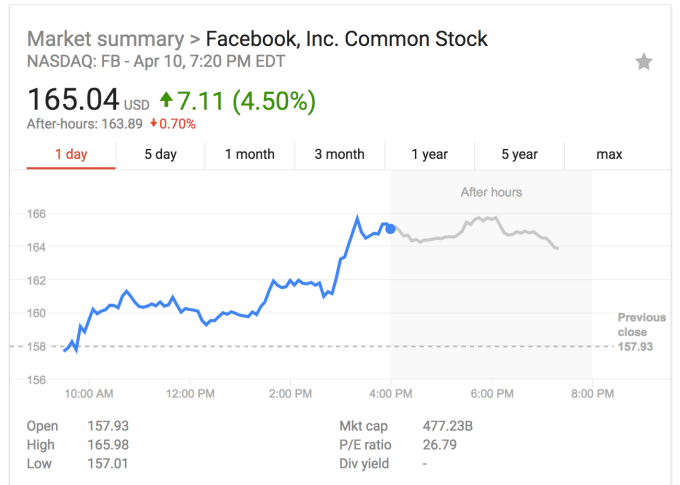
The public didn’t get answers to any of those questions today. Just Mark’s steady voice regurgitating Facebook’s talking points. Investors rewarded Facebook for its monotony with a 4.5 percent share price boost.

That’s not to say today’s hearing wasn’t effective. It’s just that the impact was felt before Zuckerberg waded through a hundred photographers to take his seat in the Senate office.

Facebook knew this day was coming, and worked to build Zuckerberg a fortress of facts he could point to no matter what he got asked:

  • Was Facebook asleep at the wheel during the 2016 election? Yesterday it revealed it had deleted the accounts of Russian GRU intelligence operatives in June 2016.
  • How will Facebook prevent this from happening again? Last week it announced plans to require identity and location verification for any political advertiser or popular Facebook Page, and significantly restricted its developer platform.
  • Is Facebook taking this seriously? Zuckerberg wrote in his prepared testimony for today that Facebook is doubling its security and content moderation team from 10,000 to 20,000, and that “protecting our community is more important than maximizing our profits.”
  • Is Facebook sorry? “We didn’t take a broad enough view of what our responsibility is and that was a huge mistake. That was my mistake,” Zuckerberg has said, over and over.

Facebook may never have made such sweeping changes and apologies had it not had today and tomorrow’s testimony on the horizon. But this defensive strategy also led to few meaningful disclosures, to the detriment of the understanding of the public and the Senate — and to the benefit of Facebook.

WASHINGTON, DC – APRIL 10: Facebook co-founder, Chairman and CEO Mark Zuckerberg testifies before a combined Senate Judiciary and Commerce committee hearing in the Hart Senate Office Building on Capitol Hill April 10, 2018 in Washington, DC. Zuckerberg, 33, was called to testify after it was reported that 87 million Facebook users had their personal information harvested by Cambridge Analytica, a British political consulting firm linked to the Trump campaign. (Photo by Chip Somodevilla/Getty Images)

We did learn that Facebook is working with Special Counsel Robert Mueller on his investigation into election interference. We learned that Zuckerberg thinks it was a mistake not to suspend the advertising account of Cambridge Analytica when Facebook learned it had bought user data from Dr. Aleksandr Kogan. And we learned that the senate will “haul in” Cambridge Analytica for a future hearing about data privacy.

None of those are earth-shaking.

Perhaps the only fireworks during the testimony came when Senator Ted Cruz laid into Zuckerberg over the Gizmodo report citing that Facebook’s trending topics curators suppressed conservative news trends. Cruz badgered Zuckerberg about whether he believes Facebook is politically neutral, whether Facebook has ever taken down Pages from liberal groups like Planned Parenthood or MoveOn.org, if he knows the political leanings of Facebook’s content moderators and whether Facebook fired Oculus co-founder Palmer Luckey over his [radical conservative] political views.

Zuckerberg maintained that he and Facebook are neutral, but that last question was the only one of the day that seemed to visibly perturb him. “That is a specific personnel matter than seems like it would be inappropriate…” Zuckerberg said before Cruz interrupted, pushing the CEO to exasperatedly respond, “Well then I can confirm that it was not because of a political view.” It should be noted that Cruz has received numerous campaign donations from Luckey.

This was the only time Zuckerberg seemed flapped, because he knows the stakes of the public perception of Facebook’s political leanings. Zuckerberg, many Facebook employees and Facebook’s home state of California are all known to lean left. But if the company itself is seen that way, conservative users could flee, shattering Facebook’s network effect. Yet again, Zuckerberg nimbly avoided getting cornered here, and was aided by the bell signaling the end of Cruz’s time. He never noticeably raised his voice, lashed back at the senators or got off message.

By the conclusion of the five hours of questioning, the senators themselves were admitting they hadn’t watched the day’s full testimony. Viewers at home had likely returned to their lives. Even the press corps’ eyes were glazing over. But Zuckerberg was prepared for the marathon. He maintained pace through the finish line. And he made it clear why marathons aren’t TV spectator sports.

The question is no longer what revelations would come from Mr. Zuckerberg going to Washington. Tomorrow’s testimony is likely to go similarly. It’s whether Facebook can coherently execute on the data privacy promises it made leading up to today. This will be a “never-ending battle” as Zuckerberg said, dragging out over many years. And again, that’s in Facebook’s interest. Because in the meantime, everyone’s going back to scrolling their feeds.


Read Full Article

Zuckerberg’s boring testimony is a big win for Facebook


Mark Zuckerberg ran his apology scripts, trotted out his lists of policy fixes and generally dulled the Senate into submission. And that constitutes success for Facebook.

Zuckerberg testified before the joint Senate judiciary and commerce committee today, capitalizing on the lack of knowledge of the politicians and their surface-level questions. Half the time, Zuckerberg got to simply paraphrase blog posts and statements he’d already released. Much of the other half, he merely explained how basic Facebook functionality works.

The senators hadn’t done their homework, but he had. All that training with D.C. image consultants paid off.

Facebook CEO Mark Zuckerberg arrives to testify before a joint hearing of the US Senate Commerce, Science and Transportation Committee and Senate Judiciary Committee on Capitol Hill, April 10, 2018 in Washington, DC. (Photo: JIM WATSON/AFP/Getty Images)

Sidestepping any gotcha questions or meme-worthy sound bites, Zuckerberg’s repetitive answers gave the impression that there’s little left to uncover, whether or not that’s true. He made a convincing argument that Facebook is atoning for its sins, is cognizant of its responsibility and has a concrete plan in place to improve data privacy.

With just five minutes per senator, and them each with a queue of questions to get through, few focused on the tougher queries, and even fewer had time for follow-ups to dig for real answers.

Did Facebook cover up the Cambridge Analytica scandal or decide against adding privacy protections earlier to protect its developer platform? Is it a breach of trust for Zuckerberg and other executives to have deleted their Facebook messages out of recipients’ inboxes? How has Facebook used a lack of data portability to inhibit the rise of competitors? Why doesn’t Instagram let users export their data the way they can from Facebook?

The public didn’t get answers to any of those questions today. Just Mark’s steady voice regurgitating Facebook’s talking points. Investors rewarded Facebook for its monotony with a 4.5 percent share price boost.

That’s not to say today’s hearing wasn’t effective. It’s just that the impact was felt before Zuckerberg waded through a hundred photographers to take his seat in the Senate office.

Facebook knew this day was coming, and worked to build Zuckerberg a fortress of facts he could point to no matter what he got asked:

  • Was Facebook asleep at the wheel during the 2016 election? Yesterday it revealed it had deleted the accounts of Russian GRU intelligence operatives in June 2016.
  • How will Facebook prevent this from happening again? Last week it announced plans to require identity and location verification for any political advertiser or popular Facebook Page, and significantly restricted its developer platform.
  • Is Facebook taking this seriously? Zuckerberg wrote in his prepared testimony for today that Facebook is doubling its security and content moderation team from 10,000 to 20,000, and that “protecting our community is more important than maximizing our profits.”
  • Is Facebook sorry? “We didn’t take a broad enough view of what our responsibility is and that was a huge mistake. That was my mistake,” Zuckerberg has said, over and over.

Facebook may never have made such sweeping changes and apologies had it not had today and tomorrow’s testimony on the horizon. But this defensive strategy also led to few meaningful disclosures, to the detriment of the understanding of the public and the Senate — and to the benefit of Facebook.

WASHINGTON, DC – APRIL 10: Facebook co-founder, Chairman and CEO Mark Zuckerberg testifies before a combined Senate Judiciary and Commerce committee hearing in the Hart Senate Office Building on Capitol Hill April 10, 2018 in Washington, DC. Zuckerberg, 33, was called to testify after it was reported that 87 million Facebook users had their personal information harvested by Cambridge Analytica, a British political consulting firm linked to the Trump campaign. (Photo by Chip Somodevilla/Getty Images)

We did learn that Facebook is working with Special Counsel Robert Mueller on his investigation into election interference. We learned that Zuckerberg thinks it was a mistake not to suspend the advertising account of Cambridge Analytica when Facebook learned it had bought user data from Dr. Aleksandr Kogan. And we learned that the senate will “haul in” Cambridge Analytica for a future hearing about data privacy.

None of those are earth-shaking.

Perhaps the only fireworks during the testimony came when Senator Ted Cruz laid into Zuckerberg over the Gizmodo report citing that Facebook’s trending topics curators suppressed conservative news trends. Cruz badgered Zuckerberg about whether he believes Facebook is politically neutral, whether Facebook has ever taken down Pages from liberal groups like Planned Parenthood or MoveOn.org, if he knows the political leanings of Facebook’s content moderators and whether Facebook fired Oculus co-founder Palmer Luckey over his [radical conservative] political views.

Zuckerberg maintained that he and Facebook are neutral, but that last question was the only one of the day that seemed to visibly perturb him. “That is a specific personnel matter than seems like it would be inappropriate…” Zuckerberg said before Cruz interrupted, pushing the CEO to exasperatedly respond, “Well then I can confirm that it was not because of a political view.” It should be noted that Cruz has received numerous campaign donations from Luckey.

This was the only time Zuckerberg seemed flapped, because he knows the stakes of the public perception of Facebook’s political leanings. Zuckerberg, many Facebook employees and Facebook’s home state of California are all known to lean left. But if the company itself is seen that way, conservative users could flee, shattering Facebook’s network effect. Yet again, Zuckerberg nimbly avoided getting cornered here, and was aided by the bell signaling the end of Cruz’s time. He never noticeably raised his voice, lashed back at the senators or got off message.

By the conclusion of the five hours of questioning, the senators themselves were admitting they hadn’t watched the day’s full testimony. Viewers at home had likely returned to their lives. Even the press corps’ eyes were glazing over. But Zuckerberg was prepared for the marathon. He maintained pace through the finish line. And he made it clear why marathons aren’t TV spectator sports.

The question is no longer what revelations would come from Mr. Zuckerberg going to Washington. Tomorrow’s testimony is likely to go similarly. It’s whether Facebook can coherently execute on the data privacy promises it made leading up to today. This will be a “never-ending battle” as Zuckerberg said, dragging out over many years. And again, that’s in Facebook’s interest. Because in the meantime, everyone’s going back to scrolling their feeds.


Read Full Article

Zuckerberg tells Congress Facebook is not listening to you through your phone


Facebook CEO Mark Zuckerberg officially shot down the conspiracy theory that the social network has some way of keeping tabs on its users by tapping into the mics on people’s smartphones. During Zuckerberg’s testimony before the Senate this afternoon, Senator Gary Peters had asked the CEO if the social network is mining audio from mobile devices – something his constituents have been asking him about, he said.

Zuckerberg denied this sort of audio data collection was taking place.

The fact that so many people believe that Facebook is “listening” to their private conversations is representative of how mistrustful users have grown of the company and its data privacy practices, the Senator noted.

“I think it’s safe to say very simply that Facebook is losing the trust of an awful lot of Americans as a result of this incident,” said Peters, tying his constituents’ questions about mobile data mining to their outrage over the Cambridge Analytica scandal.

Questions about Facebook’s mobile data collection practices aren’t anything new, however.

In fact, Facebook went on record back in 2016 to state – full stop – that it does not use your phone’s microphone to inform ads or News Feed stories.

Despite this, it’s something that keeps coming up, time and again. The Wall St. Journal even ran an explainer video about the conspiracy last month. And yet none of the reporting seems to quash the rumor.

People simply refuse to believe it’s not happening. They’ll tell you of very specific times when something they swear they only uttered aloud quickly appeared in their Facebook News Feed.

Perhaps their inability to believe Facebook on the matter is more of an indication of how precise – and downright creepy – Facebook’s ad targeting capabilities have become over the years.

Peters took the opportunity today to ask Zuckerberg this question straight on today, during Zuckerberg’s testimony.

“Something that I’ve been hearing a lot from folks who have been coming up to me and talking about a kind of experience they’ve had where they’re having a conversation with friends – not on the phone, just talking. And then they see ads popping up fairly quickly on their Facebook,” Peters explained. “So I’ve heard constituents fear that Facebook is mining audio from their mobile devices for the purposes of ad targeting – which I think speaks to the lack of trust that we’re seeing here.”

He then asked Zuckerberg to state if this is something Facebook did.

“Yes or no: does Facebook use audio obtained from mobile devices to enrich personal information about its users?,” Peters asked.

Zuckerberg responded simply: “no.”

The CEO then added that his answer meant “no” in terms of the conspiracy theory that keeps getting passed around, but noted that the social network does allow users to record videos, which have an audio component. That was a bit of an unnecessary clarification, though, given that the question was about surreptitious recording, not something users were explicitly recording media to share.

“Hopefully that will dispel a lot of what I’ve been hearing,” Peters said, after hearing Zuckerberg’s response.

We wouldn’t be too sure.

There have been a number of lengthy explanations of the technical limitations regarding a project of this scale, which have also pointed out how easy it would be to detect this practice, if it were true. But there are still those people out there who believe things to be true because they feel true.

And at the end of the day, the fact that this conspiracy refuses to die says something about how Facebook users view the company: as a stalker that creeps on their privacy, and then can’t be believed when it tells you, “no, trust me, we don’t do that.”


Read Full Article

Zuckerberg tells Congress Facebook is not listening to you through your phone


Facebook CEO Mark Zuckerberg officially shot down the conspiracy theory that the social network has some way of keeping tabs on its users by tapping into the mics on people’s smartphones. During Zuckerberg’s testimony before the Senate this afternoon, Senator Gary Peters asked the CEO if the social network is mining audio from mobile devices – something his constituents have been asking him about, he said.

The fact that so many people believe that Facebook is “listening” to their private conversations is representative of how mistrustful users have grown of the company and its data privacy practices, the Senator noted.

“I think it’s safe to say very simply that Facebook is losing the trust of an awful lot of Americans as a result of this incident,” said Peters, tying his constituents’ questions about mobile data mining to their outrage over the Cambridge Analytica scandal.

But questions about Facebook’s mobile data collection practices aren’t anything new.

In fact, Facebook went on record back in 2016 to state – full stop – that it does not use your phone’s microphone to inform ads or News Feed stories.

Despite this, it’s something that keeps coming up, time and again. The Wall St. Journal even ran an explainer video about the conspiracy last month, and yet none of the reporting seems to quash the rumor.

People simply refuse to believe it’s not happening. They’ll tell you of very specific times when something they swear they only uttered aloud quickly appeared in their Facebook News Feed. Perhaps their inability to believe Facebook on the matter is more of an indication of how precise – and downright creepy – Facebook’s ad targeting capabilities have become over the years.

Peters took the opportunity today to ask Zuckerberg this question straight on today, during Zuckerberg’s testimony.

“Something that I’ve been hearing a lot from folks who have been coming up to me and talking about a kind of experience they’ve had where they’re having a conversation with friends – not on the phone, just talking. And then they see ads popping up fairly quickly on their Facebook,” Peters explained. “So I’ve heard constituents fear that Facebook is mining audio from their mobile devices for the purposes of ad targeting – which I think speaks to the lack of trust that we’re seeing here.”

He then asked Zuckerberg to state if this is something Facebook did.

“Yes or no: does Facebook use audio obtained from mobile devices to enrich personal information about its users?,” Peters asked.

Zuckerberg responded simply: “no.”

The CEO then added that his answer meant “no” in terms of the conspiracy theory that keeps getting passed around, but noted that the social network does allow users to record videos, which have an audio component. That was a bit of an unnecessary clarification, however, given that the question was about surreptitious recording, not something users were explicitly recording media to share.

“Hopefully that will dispel a lot of what I’ve been hearing,” Peters said, after hearing Zuckerberg’s response.

We wouldn’t be too sure.

There have been a number of lengthy explanations of the technical limitations regarding a project of this scale, which have also pointed out how easy it would be to detect this practice, if it were true. But there are still those people out there who believe things to be true because they feel true.

And at the end of the day, the fact that this conspiracy refuses to die says something about how Facebook users view the company: as a stalker that creeps on their privacy, and then can’t be believed when it tells you, “no, trust me, we don’t do that.”


Read Full Article

Cambridge Analytica may have accessed some Facebook users’ messages


The app permissions that led to 87 million Facebook users’ data being harvested and sold to Cambridge Analytica may have also allowed access to those users’ inboxes, the company confirmed today. This wasn’t achieved by any underhanded means, exactly, but people might not have realized that they were granting permission to read and record their private messages as well as more public data like location and interests.

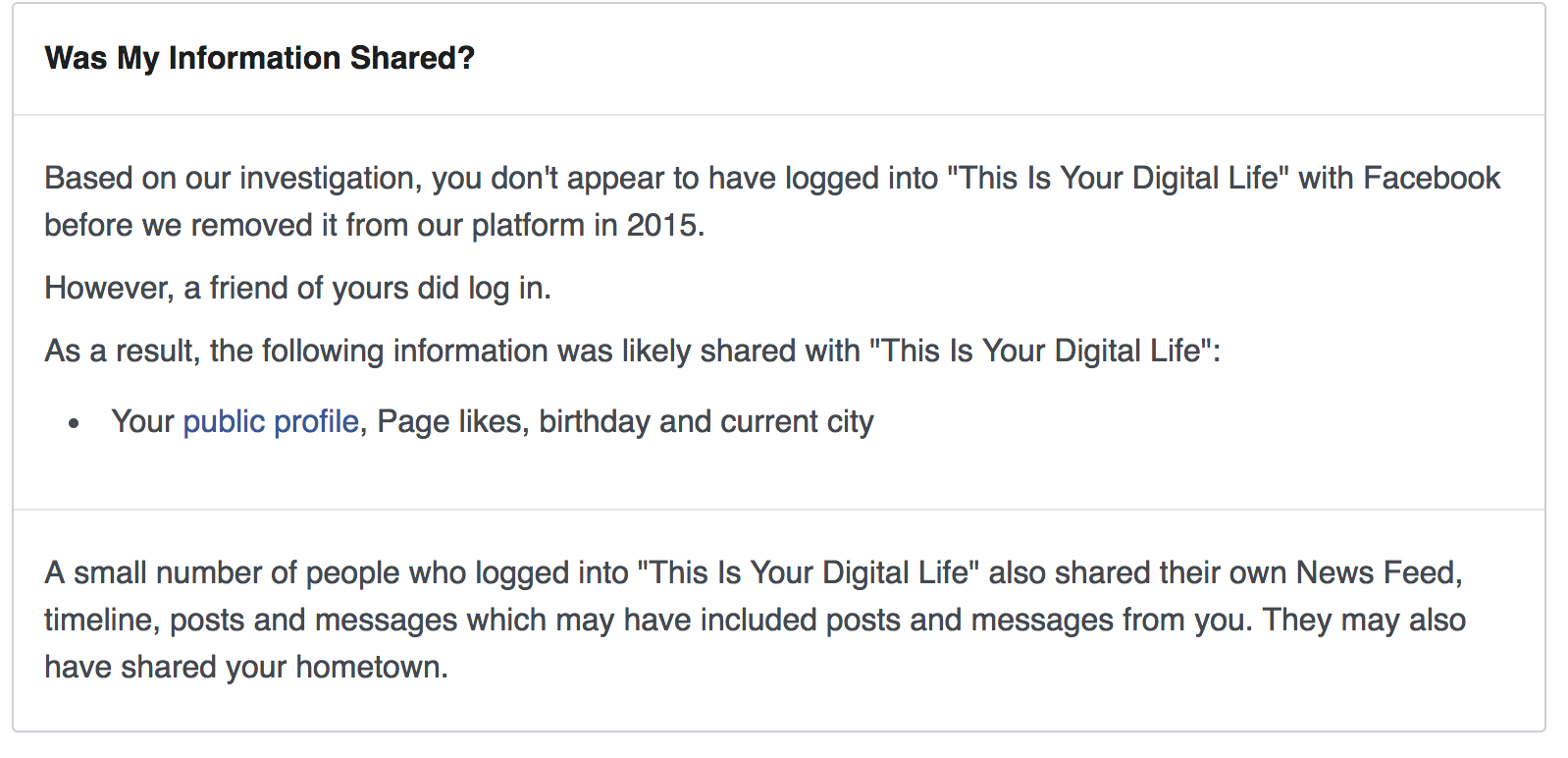
That messages may have been collected by CA was revealed first by Facebook itself as part of its warning issued to the 87 million users in question. “A small number of people who logged into ‘This Is Your Digital Life’ also shared their own News Feed, timeline, posts and messages which may have included posts and messages from you,” reads the warning.

Access to messages had not been previously disclosed. And of course if someone affected had chatted with you, then your messages would also have been collected.

The permission used to do this was called “read_mailbox,” though it would have been put in more everyday terms when a user was agreeing to it. The dialog box would have said something along the lines of, “This app will be able to access your wall posts, friend list, contacts, messages…” in bullet points.

This Is Your Digital Life, the app created by researcher Aleksandr Kogan which served as the harvester for all this data, requested “read_mailbox” privileges for some period and, as Facebook tells Wired, a total of 1,500 people granted that permission.

It’s unclear why the number is so low if hundreds of thousands agreed to the terms, but the app may only have requested messaging access for a brief period — stopping, perhaps, upon finding that people balked at granting it.

Still, even if only 1,500 people had their messages collected directly, the number of people whose messages were indirectly collected could be orders of magnitude higher. After all, look at your inbox, if you have one — there are likely dozens of conversations, perhaps with hundreds of people. So that 1,500 could balloon to 150,000 real fast.

I’ve asked Facebook for clarification on how the 1,500 number was determined and what the number of secondary affected users is.


Read Full Article

Mark Zuckerberg: “We do not sell data to advertisers”


While many of us in the tech world are familiar with Facebook’s business model, there is a common misconception among people that Facebook collects information about you and then sells that information to advertisers.

Zuckerberg wants everyone (especially the U.S. Senate) to know that’s not the case, and has laid forth the most simple example to explain it.

During his testimony, the Facebook CEO clarified to Senator John Cornyn that Facebook does not sell data.

There is a very common misconception that we sell data to advertisers, and we do not sell data to advertisers. What we allow is for advertisers to tell us who they want to reach and then we do the placement. So, if an advertiser comes to us and says, ‘Alright, I’m a ski shop and I want to sell skis to women,’ then we might have some sense because people shared skiing related content or said they were interested in that. They shared whether they’re a woman. And then we can show the ads to the right people without that data ever changing hands and going to the advertiser. That’s a very fundamental part of how our model works and something that is often misunderstood.

While, again, this may seem straightforward to many of us, Zuckerberg found himself having to explain more than once that Facebook does not sell data during his Senate testimony.


Read Full Article

HBO Rickrolls Reddit Over Westworld Spoilers


HBO, home of some amazing TV shows, may have just killed the Rickroll. This is because the showrunners for Westworld, Jonathan Nolan and Lisa Joy, have Rickrolled Reddit. And they pulled their publicity stunt off in spectacular style.

What Is Rickrolling?

If you’re very young or simply new to the internet, you may not be aware of Rickrolling. It’s a simple concept where you’re invited to click a link, and instead of opening the site or story you were expecting, you hear “Never Gonna Give You Up” by Rick Astley.

Rickrolling has been around since May 2007, when the music video for “Never Gonna Give You Up” was touted as the trailer for Grand Theft Auto IV. Rickrolling then became a thing across the internet, and out of touch brands continue to use it to this day.

Which brings us onto HBO, Nolan and Joy, and their Rickrolling of Reddit.

The Day HBO Rickrolled Reddit

Ahead of the second season of Westworld, Jonathan Nolan and Lisa Joy took part in a Reddit AMA. During this AMA the showrunners announced that they were willing to post a video showing the entire plot of Season 2 in an attempt to reduce the impact of spoilers.

Redditors lapped it up, upvoting the suggestion to ensure Nolan and Joy followed through. However, while some Westworld fans were keen to see spoilers, others expressed their disagreement with the plan. Regardless, the votes racked up and the video was uploaded.

As you can see, this video starts out delivering what it promised, with Jeffrey Wright, who plays Bernard, describing how Westworld Season 2 opens. And then, just as you think it’s legit, Evan Rachel Wood, who plays Dolores, sings “Never Gonna Give You Up”.

After a brief message informing Reddit they just got pwned, the rest of the video shows a dog sitting at a piano as the Westworld theme plays out. It closes with a tribute to Bento, better known to Reddit et al as Keyboard Cat.

Spoiling for a Fight

Is this important in the big scheme of things? No, of course not. However, the internet is responsible for spoiling lots of big shows, including Game of Thrones, so this suggests HBO is at least a little concerned about the same thing happening to Westworld.


Read Full Article

Palmer Luckey, political martyr?


In the middle of testimony over Facebook’s privacy scandal, Sen. Ted Cruz of Texas took a moment to grill Mark Zuckerberg over his company’s political loyalties.

In the course of a testy exchange between Sen. Cruz and Zuckerberg, the senator brought up the dismissal of Palmer Luckey, the controversial founder of virtual reality tech development pioneer, Oculus.

It was part of Cruz’s broader questioning about whether or not Facebook is biased in the ways it moderates the posts and accounts of members — and in its staffing policies.

Here’s the exchange:

Cruz: Do you know the political orientation of those 15 to 20,000 people engaged in content review?

Zuckerberg: No senator, we do not generally ask people about their political orientation when they’re joining the company.

Cruz: So, as CEO Have you ever made hiring or firing decisions based on political positions or what candidates they supported?

Zuckerberg: No.

Cruz: Why was Palmer Luckey fired?

Zuckerberg: That is a specific personnel matter that seems like it would be inappropriate to speak to here.

Cruz: You just made a specific representation that you didn’t make decisions based on political views, is that accurate?

Zuckerberg: I can commit that it was not because of a political view.

Luckey left Facebook last March, after reports surfaced that he was a member of a pro-Trump troll farm called Nimble America.

Luckey’s departure follows a lengthy period of absence from public view brought about by a Daily Beast piece revealing his involvement and funding of a pro-Trump troll group called Nimble America. News of his support came during a time when very few figures in Silicon Valley were publicly showing support for candidate Trump, the most notable being Peter Thiel, an early investor in Facebook who started the VC firm Founders Fund, which backed Oculus, as well.

Though Luckey initially denied funding the group, he ultimately took to social media to apologize in the midst of an upheaval that had many developers threatening to leave the platform. His last public statement (on Facebook, of course) was a mixture of regret and defense, reading, in part, “I am deeply sorry that my actions are negatively impacting the perception of Oculus and its partners. The recent news stories about me do not accurately represent my views… my actions were my own and do not represent Oculus. I’m sorry for the impact my actions are having on the community.”


Read Full Article

Facebook share price climbs as Zuckerberg gets grilled by the Senate


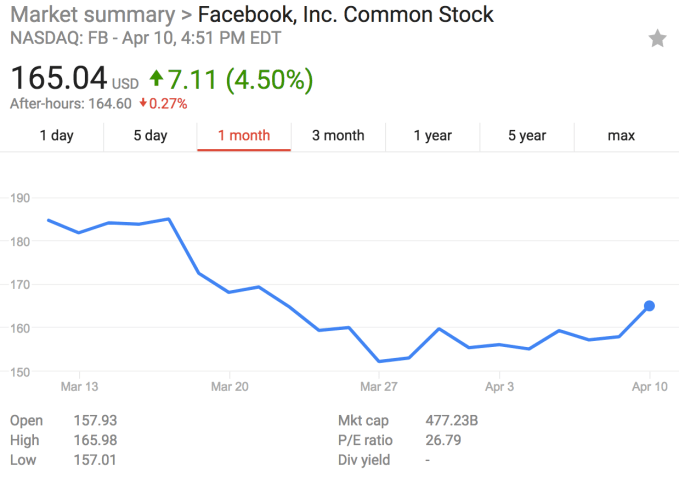
Shareholders seemed to have incredibly low expectations of Facebook CEO Mark Zuckerberg’s ability to handle a Senate testimony, because Facebook stock climbed 4.5 percent Tuesday with the bulk of the gains coming during his televised testimony.

Though the markets closed nearly an hour ago, Zuckerberg is still being peppered by Senators in an hours-long testimony session where the group is aiming to hear more from the company’s CEO and founder about data protection in the wake of the Cambridge Analytica controversy.

While there have been tough questions from several senators, rhetoric regarding government regulation of internet companies like Facebook was not overly pronounced in opening statements, though several Senators did directly address it in their questioning.

While Zuckerberg’s apology tour of the Capitol building seems to have largely been devoted to rehashing the major changes they’ve announced in recent days and weeks, he did reveal that the number of Facebook accounts with ties to Russian Intelligence could be in the “tens of thousands,” an admission that greatly exceeds the several hundred that Facebook had previously disclosed.

Facebook’s gains Tuesday brought the company’s share price to close above $165, a number it has not closed above in nearly three weeks. Facebook is still far below the $185 share price it was above before Cambridge Analytica reports were shared from a number of publications in mid-March.


Read Full Article

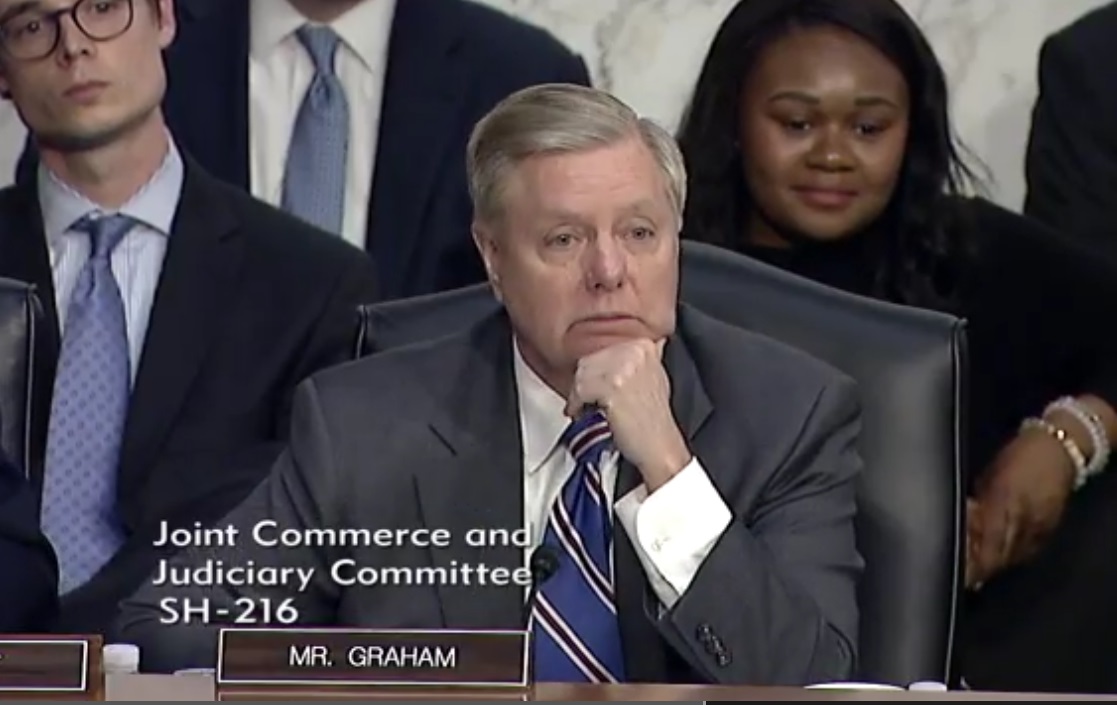
‘You don’t think you have a monopoly?’ Read Sen. Graham’s delightful grilling of Zuckerberg


Today’s testimony by Mark Zuckerberg in front of a Senate joint committee was often boring or redundant with previous statements. But there was an exchange near the two hour mark that was pleasantly refreshing: Senator Lindsey Graham (R-SC) doggedly pursuing a common-sense answer from Zuckerberg on the question of whether it had any real competition.

Graham doesn’t let Zuckerberg employ his spin on the admittedly complex question of what Facebook’s competitors are. Demanding a simpler answer by employing a folksy car-buying metaphor, he makes it clear that at least from one perspective, Facebook is more or less without a real competitor — with the possible exception of Instagram, which it of course opted to buy for a fortune rather than allow it to exist as a credible rival.

The Senator also makes it clear that he doesn’t think Facebook should be allowed to self-regulate — but his invitation to Zuckerberg to collaborate on rules sure sounds like he wants the company to have a say in how it should or should not be bound by law.

I’ve transcribed the exchange below:

Graham: Who’s your biggest competitor?
Zuckerberg: Senator, we have a lot of competitors.
Graham: Who’s your biggest?
Zuckerberg: Mmm… I think the categories of… do you want just one? I’m not sure i can give one. But can I give a bunch?
Graham: Mmhm.
Zuckerberg: So there are three categories I would focus on. One are [sic] the other tech platforms, so Google, Apple, Amazon, Microsoft, we overlap with them in different ways.
Graham: Do they do, do they provide the same service that you provide?
Zuckerberg: Um, in different ways, different parts of it yes.
Graham: Let me put it this way. If I buy a Ford and it doesn’t work well and I don’t like it, I can buy a Chevy. If I’m upset with Facebook, what’s the equivalent product that i can go sign up for?
Zuckerberg: Ah well, the second category that i was going to talk about was…
Graham: I’m not talking about categories. I’m talking about is there real competition you face. Because car companies face a lot of competition. If they make a defective car, it gets out in the world, people stop buying that car, they buy another one. Is there an alternative to Facebook in the private sector?
Zuckerberg: Yes Senator, the average American uses 8 different apps…
Graham: OK.
Zuckerberg: …to communicate with their friends and stay in touch with people, ranging from text to email.
Graham: OK, which is the same service that provide.
Zuckerberg: Well, we provide a number of different services.
Graham: Is twitter the same as what you do?
Zuckerberg: It overlaps with a portion of what we do.
Graham: You don’t think you have a monopoly?
Zuckerberg: (long pause) Ah, it certainly doesn’t feel like that to me! (laughter)
Graham: OK, so it doesn’t. So, Instagram. You bought Instagram. Why did you buy Instagram?
Zuckerberg: Because they were very talented app developers who were making good use of our platform and understood our values.
Graham: It was a good business decision. My point is that one way to regulate a company is through competition, through government regulation. Here’s the question that all of us got to answer. What do we tell our constituents, given what’s happened here, why we should let you self-regulate? What would you tell people in South Carolina, that given all the things we’ve just discovered here, it’s a good idea for us to rely on you to regulate your own business practices?
Zuckerberg: Well Senator, my position is not that there should be no regulation. I think the internet is increasing in…
Graham: Mmkay. You’d embrace regulation?
Zuckerberg: i think the real question as the internet becomes more important in people’s lives, is what is the right regulation, not whether there should be regulation.
Graham: But you as a company welcome regulation?
Zuckerberg: I think if it’s the right regulation then yes.
Graham: Do you think the Europeans have it right?
Zuckerberg: Ah, I think that they get… things right.
Graham: Have you ever submitted… (laughter) That’s true. So would you work with us in terms of what regulations you think are necessary in your industry?
Zuckerberg: Absolutely.
Graham: OK, would you submit to us and propose regulations?
Zuckerberg: Yes and I’ll have my team follow up with you so that way we can have this discussion across the different categories where I think this discussion needs to happen.
Graham: Looking forward to it.

While it’s admittedly not the toughest questioning, it does baldly address the simple idea that Graham and others consider Facebook effectively a monopoly and intend to craft regulations or legislation to remedy what they perceive as a regulatory gap.


Read Full Article

Zuckerberg urges privacy carve outs to compete with China


Facebook’s founder said last month that the company is open to being regulated. But today he got asked by the US senate what sort of legislative changes he would (and wouldn’t) like to see as a fix for the problems that the Cambridge Analytica data scandal has revealed.

Zuckerberg’s response on this — and on another question about his view on European privacy regulations — showed in the greatest detail yet how he’s hoping data handling and privacy rules evolve in the US, including a direct call for regulatory carve outs to — as he couched it — avoid the US falling behind Chinese competitors.

Laying out “a few principles” that he said he believes would be “useful to discuss and potentially codify into law”, Zuckerberg first advocated for having “a simple and practical set of ways that you explain what you’re doing with data”, revealing an appetite to offload the problem of tricky privacy disclosures via a handy universal standard that can apply to all players.

“It’s hard to say that people fully understand something when it’s only written out in a long legal document,” he added. “This stuff needs to be implemented in a way where people can actually understand it.”

He then talked up the notion of “giving people complete control” over the content they share — claiming this is “the most important principle for Facebook”.

“Every piece of content that you share on Facebook, you own and you have complete control over who sees it and how you share it — and you can remove it at any time,” he said, without mentioning how far from that principle the company has been at earlier times in its history.

“I think that that control is something that’s important — and I think should apply to every service,” he continued, making a not-so-subtle plea for no other platforms to be able to leak data like Facebook’s platform historically has (and thus to close any competitive loopholes that might open up as a result of Facebook tightening the screw on developer access to data now in the face of a major scandal).

His final and most controversial point in response to the legislative changes question was about what he dubbed “enabling innovation”.

“Some of these use cases that are very sensitive, like face recognition for example,” he said carefully. “And I think that there’s a balance that’s extremely important to strike here where you obtain special consent for sensitive features like facial recognition. But don’t — but that we still need to make it so that American companies can innovate in those areas.

“Or else we’re going to fall behind Chinese competitors and others around the world who have different regimes for different, new features like that.”

Zuckerberg did not say which Chinese competitors he was thinking of specifically. But earlier this week ecommerce giant Alibaba announced another major investment in a facial recognition software business, leading a $600M Series C round in Hong Kong-based SenseTime — as one possible rival example.

A little later in the session, Zuckerberg was also directly asked whether European privacy regulations should be applied in the US. And here again he showed more of his hand — once again refusing to confirm if Facebook will implement “the exact same regulation” for North American users, as some consumer groups have been calling for it to.

“Regardless of whether we implement the exact same regulation — I would guess it would be somewhat different because we have somewhat different sensibilities in the US, as do other countries — we’re committed to rolling out the controls and the affirmative consent, and the special controls around sensitive types of technologies like face recognition that are required in GDPR, we’re doing that around the world,” he reiterated.

“So I think it’s certainly worth discussing whether we should have something similar in the US but what I would like to say today is that we’re going to go forward and implement that [the same controls and affirmative consent] regardless of what the regulatory outcome is.”

Given that’s now the third refusal by Facebook to confirm GDPR will apply universally, it looks pretty clear that users in North American will get some degree of second tier privacy vs international users — unless or until US lawmakers forcibly raise standards on the company and the industry as a whole.

That is perhaps to be expected. But it’s still a tricky PR message for Facebook to be having to deliver in the midst of a major data scandal — hence Zuckerberg’s attempt to reframe it as a matter of domestic vs foreign “sensibilities”.

Whether North American Facebook users buy into his repackaging of coach class privacy standards vs the rest of the world as just a little local flavor remains to be seen.


Read Full Article

Zuckerberg admits it was a mistake not to ban Cambridge Analytica’s ads


Facebook didn’t ban Cambridge Analytica when it found out in 2015 that it had received user data from Dr. Aleksandr Kogan, and Zuckerberg called that a mistake during his testimony before the Senate. Cambridge Analytica has since been banned.

Zuckerberg explained that “I want to correct one thing that I said earlier in response to a question from Senator Leahy. He had asked why we didn’t ban Cambridge Analytica at the time when we learned of them in 2015. And I answered that what my understanding was was that they were not on the platform, were not an app developer or advertiser. When I went back and met with my team afterwards, they let me know that Cambridge Analytica acutally did start as an advertiser later in 2015, so we could have in theory banned them back then and made a mistake by not doing so.”

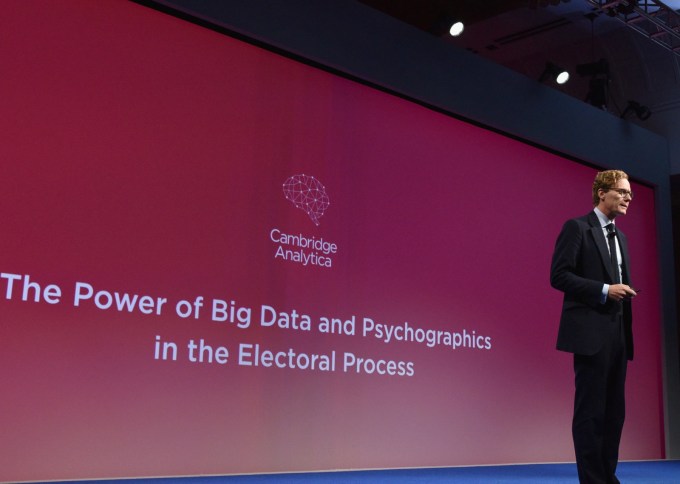
NEW YORK, NY – SEPTEMBER 19: CEO of Cambridge Analytica Alexander Nix speaks at the 2016 Concordia Summit – Day 1 at Grand Hyatt New York on September 19, 2016 in New York City. (Photo by Bryan Bedder/Getty Images for Concordia Summit)

When the Guardian informed Facebook about Kogan sharing user data to Cambridge Analytica, Facebook banned Kogan, and required Cambridge Analytica to formally certify that it had deleted all the improperly attained user data. Cambridge Analytica did so, Zuckerberg confirmed in his prepared testimony for today. But Facebook then stopped short of blocking Cambridge Analytica from buying ads on its platform. The company went on to work with the Trump campaign to help it optimize political messaging and ad targeting.

Had Facebook banned Cambridge Analytica at the time, it wouldn’t have been able to buy ads directly on behalf of political campaigns it worked with. However, the company might still have been able to help these campaigns to optimize their ads, so a 2015 ban wouldn’t have necessarily prevented second-hand use of improperly attained data.


Read Full Article

Zuckerberg admits it was a mistake not to ban Cambridge Analytica’s ads


Facebook didn’t ban Cambridge Analytica when it found out in 2015 that it had received user data from Dr. Aleksandr Kogan, and Zuckerberg called that a mistake during his testimony before the Senate. Cambridge Analytica has since been banned.

Zuckerberg explained that “I want to correct one thing that I said earlier in response to question from Senator Leahy. He had asked why we didn’t ban Cambridge Analytica at the time when we learned of them in 2015. And I answered that what my understanding was was that they were not on the platform, were not an app developer or advertiser. When I went back and met with my team afterwards, they let me know that Cambridge Analytica acutally did start as an advertisers later in 2015, so we could have in theory banned them back then and made a mistake by not doing so.”

When the Guardian informed Facebook about Kogan sharing user data to Cambridge Analytica, Facebook banned Kogan, and required Cambridge Analytica to formally certify that it had deleted all the improperly attained user data. Cambridge Analytica did so, Zuckerberg confirmed in his prepared testimony for today. But Facebook then stopped short of blocking Cambridge Analytica from buying ads on its platform. The company went on to work with the Trump campaign to help it optimize political messaging and ad targeting.

Had Facebook banned Cambridge Analytica at the time, it wouldn’t have been able to buy ads directly on behalf of political campaigns it worked with. However, the company might still have been able to help these campaigns to optimize their ads, so a 2015 ban wouldn’t have necessarily prevented second-hand use of improperly attained data.


Read Full Article