17 October 2020

Google Assistant, Maps, and Search can now help you figure out where to vote


Election Day approaches! Still not sure where the nearest polling place or ballot drop box is? Google wants to help.

This morning the company rolled out a handful of features across Google Assistant, Google Maps, and Google Search, all meant to kick in when a user seems to be looking for information on voting locations.

On Google Search, for example, a search for “ballot drop boxes near me” will now bring up a dedicated tool for finding just that — punch in the address where you’re registered to vote, and it’ll help you find a drop box or polling place accordingly. The same tool will also pop up when you search for things like “how to find polling place” or “where to vote”, so there’s some flexibility in it.

Or if you’ve got an Assistant-powered device nearby (like a Nest Mini, Nest Hub, or an Android phone), you can say “Hey Google, where do I vote?” and Assistant should be able to figure it out accordingly based on your current location (with Assistant assuming, as it’ll note in its response, that your current location is where you’re registered to vote.)

The Maps integration is a bit more limited, but it gets the job done. Searching for “where do I vote” in the Google Maps mobile app results in a prompt that will toss you into the above web-based Google Search flow. Once you’ve found your location, tapping the “Directions” button will swing you back into the Maps app.

Google says it’s pulling its polling location information from the Voting Information Project as part of a partnership with Democracy Works. The company says they’ll be adding more polling places leading up until Election Day, expecting to have over 200,000 in the system when all is said and done.

Don’t want to get your polling place details from Google, or just want to double check things? There’s always sites like Vote.org (which, if you’re curious, is what Siri recommends when prompted with the “Where do I vote?” question), which also provides info on checking your voter registration status, becoming a poll worker, etc.


Read Full Article

Trump’s latest immigration restrictions are bad news for American workers


I’m an immigrant, and since arriving from India two decades ago I’ve earned a Ph.D., launched two companies, created almost 100 jobs, sold a business to Google and generated a 10x-plus return for my investors.

I’m grateful to have had the chance to live the American dream, becoming a proud American citizen and creating prosperity for others along the way. But here’s the rub: I’m exactly the kind of person that President Trump’s added immigration restrictions that require U.S. companies to offer jobs to U.S. citizens first and narrowing the list of qualifications to make one eligible for the H-1B visa, is designed to keep out of the country.

In tightening the qualifications for H-1B admittances, along with the L visas used by multinationals and the J visas used by some students, the Trump administration is closing the door to economic growth. Study after study shows that the H-1B skilled-worker program creates jobs and drives up earnings for American college grads. In fact, economists say that if we increased H-1B admittances, instead of suspending them, we’d create 1.3 million new jobs and boost GDP by $158 billion by 2045.

Barring people like me will create short-term chaos for tech companies already struggling to hire the people they need. That will slow growth, stifle innovation and reduce job creation. But the lasting impact could be even worse. By making America less welcoming, President Trump’s order will take a toll on American businesses’ ability to attract and retain the world’s brightest young people.

Consider my story. I came to the United States after earning a degree in electrical engineering from the Indian Institute of Technology (IIT), a technical university known as the MIT of India. The year I entered, several hundred thousand people applied for just 10,000 spots, making IIT significantly more selective than the real MIT. Four years later, I graduated and, along with many of the other top performers in my cohort, decided to continue my studies in America.

Back then, it was simply a given that bright young Indians would travel to America to continue their education and seek their fortune. Many of us saw the United States as the pinnacle of technological innovation, and also as a true meritocracy — somewhere that gave immigrants a fair shake, rewarded hard work and let talented young people build a future for themselves.

I was accepted by 10 different colleges, and chose to do a Ph.D. at the University of Illinois because of its top-ranked computer science program. As a grad student, I developed new ways of keeping computer chips from overheating that are now used in server farms all over the world. Later, I put in a stint at McKinsey before launching my own tech startup, an app-testing platform called Appurify, which Google bought and integrated into their Cloud offerings.

I spent a couple of years at Google, but missed building things from scratch, so in 2016 I launched atSpoke, an AI-powered ticketing platform that streamlines IT and HR support. We’ve raised $28 million, hired 60 employees and helped companies including Cloudera, DraftKings and Mapbox create more efficient workplaces and manage the transition to remote working.

Stories like mine aren’t unusual. Moving to a new country takes optimism, ambition and tolerance for risk — all factors that drive many immigrants to start businesses of their own. Immigrants found businesses at twice the rate of the native born, starting about 30% of all new businesses in 2016 and more than half of the country’s billion-dollar unicorn startups. Many now-iconic American brands, including Procter & Gamble, AT&T, Google, Apple, and even Bank of America, were founded by immigrants or their children.

We take it for granted that America is the destination of choice for talented young people, especially those with vital technical skills. But nothing lasts forever. Since I arrived two decades ago, India’s tech scene has blossomed, making it far easier for kids to find opportunities without leaving the country. China, Canada, Australia and Europe are also competing for global talent by making it easier for young immigrants to bring their talent and skills, often including an American education, to join their workforces or start new businesses.

To shutter employment-based visa programs, even temporarily, is to shut out the innovation and entrepreneurialism our economy desperately needs. Worse still, though, doing so makes it harder for the world’s best and brightest young people to believe in the American dream and drives many to seek opportunities elsewhere. The true legacy of Trump’s executive order is that it will be far harder for American businesses to compete for global talent in years to come — and that will ultimately hamper job creation, slow our economy and hurt American workers.


Read Full Article

Engageli comes out of stealth with $14.5M and a new approach to teaching by video remotely


Zoom, Microsoft Teams and Google Meet have become standard tools for teachers who have had to run lessons remotely since the start of the Covid-19 pandemic. But they’re not apps necessarily designed for classrooms, and that fact has opened a gap in the market for those looking to build something more fit to the purpose.

Today, a startup called Engageli is coming out of stealth with a service that it believes fills that need. A video conferencing tool designed from the ground up more as a digital learning platform, with its own unique take on virtual classrooms, Engageli is aiming first at higher education, and it is launching with $14.5 million in seed funding from a Benchmark partner and others.

If that sounds like a large seed round for a startup that is still only in pilot mode (you can contact the company by email to apply to join the pilot), it might be due in part to who is behind Engageli.

The startup is co-founded by Dan Avida, Serge Plotkin, Daphne Koller and Jamie Nacht Farrell. Avida is a general partner at Opus Capital who in the past co-founded (and sold, to NetApp) an enterprise startup called Decru with Plotkin, who himself is a Stanford emeritus professor. Koller is one of the co-founders of Coursera and also an adjunct professor at Stanford. And Farrell is a former executive from another pair of major online learning companies, Trilogy and 2U.

Avida and Koller, as it happens, are also married, and it was observing their kids in the last school year — when they were both in high school (the oldest is now in her first year at UC Berkeley) — that spurred them to start Engageli.

“The idea for this started in March when our two daughters found themselves in ‘Zoom School.’ One of them watched a lot of Netflix, and the other, well, she really improved her high scores in a lot of games,” he said wryly.

The problem, as he and Koller saw it, was that the format didn’t do a good enough job of connecting with individual students, checking in with them to make sure they were paying attention, understanding, and actually interested in what was being taught.

“The reason teachers and schools are using conferencing systems is because that was what was out there,” he said. But, based on the team’s collective experiences across past e-learning efforts at places like Coursera — which built infrastructure to run university courses for mass audiences online — and Trilogy and 2U (which are now one company that covers both online learning for universities and boot camps), “we thought we could build a better system from the ground up.”

Even though the idea was inspired by what the pair saw playing out with their high school-attending children, Engageli made the decision to focus first on higher education because that was where it was getting the most interest from would-be customers to pilot the service. But also, Avida believes that because higher ed not already has a big market for remote learning, it represents a more significant opportunity.

“K-12 schools will eventually go back to normal,” he said, “but we’re of the opinion that higher education will be a blend with more and more online learning,” one of the reasons also for the founding of the likes of Coursera, Trilogy and 2U. “Younger kids need face-to-face contact, but in college, many students are now juggling work, family and studying, and online can be much more convenient.”

Also there is a very practical selling point to providing better tools to university classrooms: “People pay those tuitions to have access to professors and other students, and this is a way to provide that in a remote world,” he said.

[gallery ids="2060568,2060569,2060570"]

As it appears now, Engageli lets teachers build and run both synchronous (live) and asynchronous (recorded) lessons, giving students and teachers the option to catch up or replace a live lesson if necessary.

The startup’s idea is also to make it as easy to integrate into existing workflows as possible: no need to install special desktop or mobile apps, as the platform works in all major browsers, and Avida notes that it’s also designed to integrate with the software systems that many universities are already using to organise their educational content and track students’ progress. (Making the barrier to entry low is not a bad idea also considering that many institutions are already using other products, making them more entrenched and increasing the challenges of getting them to migrate to something else.)

But perhaps Engageli’s most unique feature is how it views the virtual classroom.

The platform lets teachers create “tables” where students sit together in smaller groups, where they can work together. With tables, the idea is that either an instructor — or in the case of large classes as you might get with university seminars, teaching assistants assigned to tables — can engage with students in a more personalised way.

When a class is delivered asynchronously (that is, recorded), it means that students sitting at a table can still partly be involved in a “live” experience where they can talk about the work with others in their groups. The tables are also opened up before a class starts, and students can go from one to the other to chat with others before the class begins.

On top of the tools that Engageli has built to record and consume lessons, it’s also building a set of analytics that lets professors (or their assistants) monitor how well audio and video and working both for themselves as we as for their audience, and also collect other kinds of “engagement” information, which could come in the form of getting people to ask or answer questions or take polls and other interactive media.

Together, these features create better feedback to make sure that everyone is getting as much out of the remote experience as possible.

Education has not always been one of the buzziest areas in the world of startups — it’s been something of a boring cousin to more headline-grabbing segments like social media, or those taking on giants like Amazon and Google.

But the pandemic has thrown a spotlight on the opportunities in the field, both to fill a sudden surge of demand for remote learning tools, and to create more innovative approaches to doing so, as Engageli is doing here.

Just yesterday, Kahoot — a platform for building and using gamified learning apps — raised $215 million from SoftBank; and other recent rounds have included Outschool (which raised $45 million and is now profitable), Homer (raised $50 million from an impressive group of strategic backers), Unacademy (raised $150 million) and the Indian juggernaut Byju’s (most recently picking up $500 million from Silver Lake).

On top of the recent spotlight on education, it’s also been interesting to see the proliferation of startups that are also coming out of the woodwork to provide new takes on videoconferencing.

Last week, a startup called Headroom — also started by already-successful entrepreneurs — launched with an AI-driven alternative to Zoom and the rest providing not just automatic transcriptions of conversations, but automatically generated highlights and insights into how engaging your webinars and other video content really was.

Apps like Headroom and Engageli are just the tip of the iceberg, with other innovative approaches also stepping out and raising significant funding. The big question will be whether they will get much attention and time from would-be customers who are already “happy enough” with what they already use.

But in a tech world that thrives on the concept of disruption and companies creating businesses out of simply being better approaches to entrenched markets, it’s a bet worth making.

“Dan, Serge and Daphne have repeatedly built fast-growing, extremely successful companies. I am so fortunate to be working with them again,” said Alex Balkanski, a partner at Benchmark who is investing individually, in a statement. “Investing in a company linked to education is incredibly important to me on a personal level, and Engageli has the potential to enable a truly transformative learning experience.”

Updated to clarify that Balkanski is investing privately, not through Benchmark.


Read Full Article

Twitter is now allowing users to share that controversial New York Post story


Twitter has taken another step back from its initial decision to block users from sharing links to or images of a New York Post story reporting on emails and other data supposedly originating on a laptop belonging to Democratic presidential nominee Joe Biden’s son Hunter.

The story, which alleged that Hunter Biden had set up meeting between a Ukrainian energy firm and his father back when Biden was vice president, looked shaky from the start, and more holes have emerged over time. Both Facebook and Twitter took action to slow its spread — but Twitter seemed to take the more aggressive stance, not just including warning labels whenever someone shared the story, but actually blocking links.

These moves have drawn a range of criticism. There have been predictable cries of censorship from Republican politicians and pundits, but there have also been suggestions that Facebook and Twitter inadvertently drew more attention to the story. And even Twitter’s CEO Jack Dorsey suggested that it was “unacceptable” to block links in DMs without an explanation.

Casey Newton, on the other hand, argued that the platforms had successfully slowed the story’s spread: “The truth had time to put its shoes on before Rudy Giuliani’s shaggy-dog story about a laptop of dubious origin made it all the way around the world.”

Twitter initially justified its approach by citing its hacked materials policy, then later said it was blocking the Post article for including “personal and private information — like email addresses and phone numbers — which violate our rules.”

The controversy did prompt Twitter to revise its hacked materials policy, so that content and links obtained through dubious means will now come with a label, rather than being removed entirely, unless it’s being shared directly by hackers or those “acting in concert with them.”

And now, as first reported by The New York Times, Twitter is also allowing users to share links to the Post story itself (something I’ve confirmed through my own Twitter account).

Why the reversal? Again, the official justification for blocking the link was to prevent the spread of private information, so the company said that the story has now spread so widely, online and in the press, that the information can no longer be considered private.


Read Full Article

16 October 2020

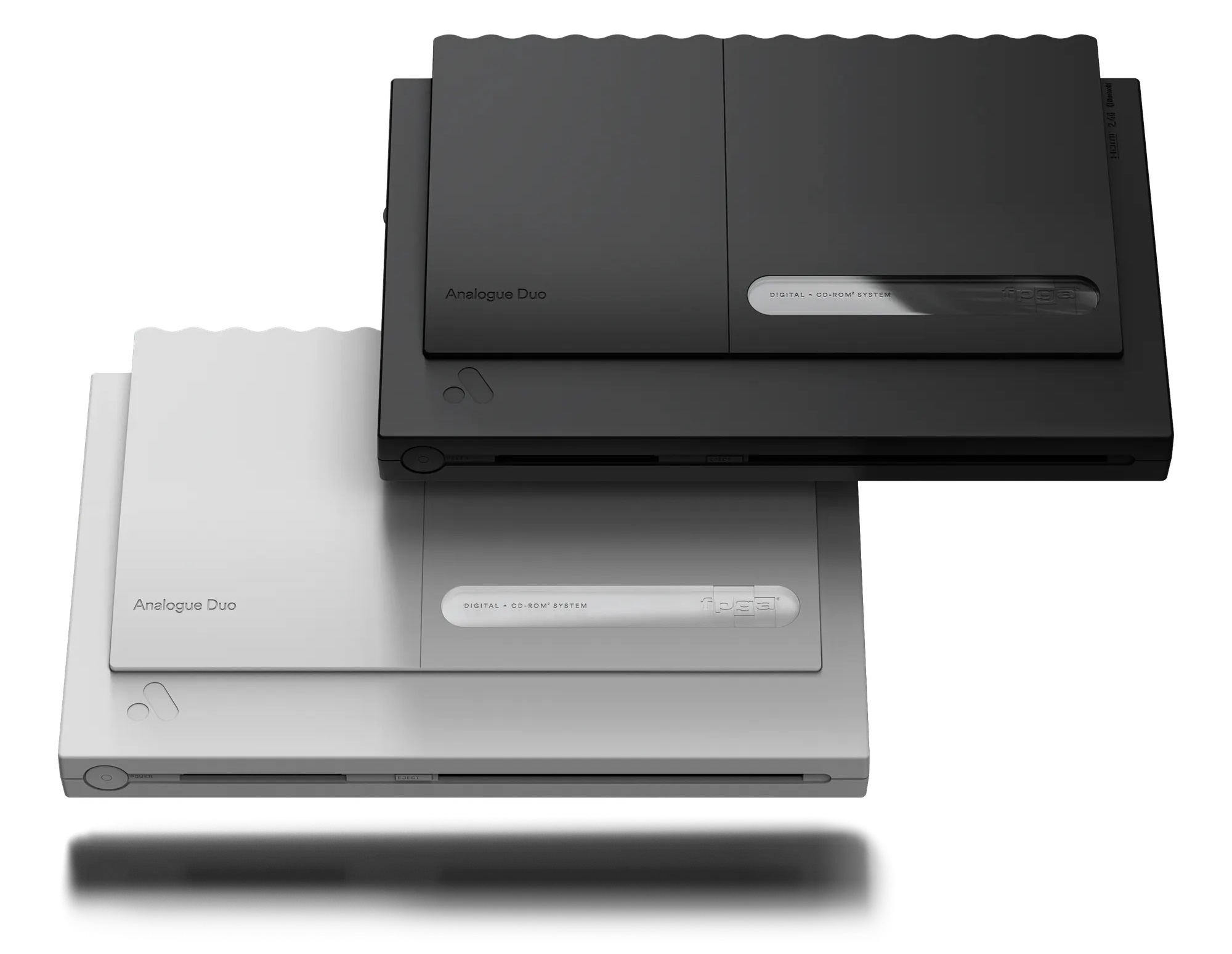
Analogue takes on the TurboGrafx-16 with its Duo retro console


Analogue’s beautiful, functional retro gaming consoles provide a sort of “archival quality” alternative to the cheap mini-consoles proliferating these days. The latest system to be resurrected by the company is the ill-fated, but still well-thought-of TurboGrafx-16 or PC Engine.

The Duo, as Analogue’s device is called, is named after a later version of the TurboGrafx-16 that included its expensive CD-ROM add-on — and indeed the new Duo supports both game cards and CDs, provided they have survived all this time without getting scratched.

Like the rest of Analogue’s consoles, and unlike the popular SNES and NES Classic Editions from Nintendo (and indeed the new TurboGrafx-16 Mini), the Duo does not use emulation in any way. Instead, it’s a painstaking recreation of the original hardware, with tweaks to introduce modern conveniences like high-definition video, wireless controllers, and improvements to reliability and so on.

Image Credits: Analogue

As a bonus, it’s all done in FPGA, which implies that this hardware is truly one of a kind in service of remaking the console accurately. Games should play exactly as they would have on the original hardware down to the annoying glitches and slowdowns of that era of consoles.

And what games! Well, actually, few of them ever reached the status of their competitors on Nintendo and Sega consoles here in the U.S., where the TurboGrafx-16 sold poorly. But titles like Bonk’s Adventure, Bomberman ’93, Ninja Spirit, Splatterhouse, and Devil’s Crush should be played more widely. Shmup fans like myself were spoiled with originals and arcade ports like R-Type and Blazing Lazers. The Ys series ( also got its start on the PC Engine (if you could afford the CD attachment). Here’s a good retrospective.

I wouldn’t mind having an HDMI port on the back of my SNES. Oh, Analogue makes one…

Analogue’s consoles are made for collectors who would prefer not to have to baby their original hardware, or want to upscale the signal and play wirelessly without too much fuss. I still have my original SNES, but 240p just doesn’t look as crisp as it did on a 15-inch CRT in the ’90s.

At $199, it’s more expensive than finding one at a garage sale, but good luck with that. The original and its CD add-on cost a fortune, so if you think about it from that perspective, this is a real bargain. Analogue says limited quantities are available, and will be shipping in 2021.


Read Full Article

EU’s Google-Fitbit antitrust decision deadline pushed into 2021


The deadline for Europe to make a call on the Google-Fitbit merger has been pushed out again — with EU regulators now having until January 8, 2021, to take a decision.

The latest change to the provisional deadline, spotted earlier by Reuters, could be the result of one of the parties asking for more time.

Last month the deadline for a decision was extended until December 23 — potentially pushing the decision out beyond a year after Google announced its intention to buy Fitbit, back in November 2019. So if the tech giant was hoping for a simple and swift regulatory rubberstamping its hopes have been diminishing since August when the Commission announced it was going to dig into the detail. Once bitten and all that.

The proposed Fitbit acquisition also comes as Alphabet, Google’s parent, is under intense antitrust scrutiny on multiple fronts on home turf.

Google featured prominently in a report by the House Judiciary Committee on big tech antitrust concerns earlier this month, with US lawmakers recommending a range of remedies — including breaking up platform giants.

European lawmakers are also in the process of drawing up new rules to regulate so-called ‘gatekeeper’ platforms — which would almost certainly apply to Google. A legislative proposal on that is expected before the end of this year, which means it may appear before EU regulators have taken a decision on the Google-Fitbit deal. (And one imagines Google isn’t exactly stoked about that possibility.)

Both competition and privacy concerns have been raised against allowing Google get its hands on Fitbit users’ data.

The tech giant has responded by offering a number of pledges to try to convince regulators — saying it would not use Fitbit health and wellness data for ads and offering to have data separation requirements monitored. It has also said it would commit to maintain third parties’/rivals’ access to its Android ecosystem and Fitbit’s APIs.

However rival wearable makers have continued to criticize the proposed merger. And, earlier this week, consumer protection and human rights groups issued a joint letter — urging regulators to only approve the takeover if “merger remedies can effectively prevent [competition and privacy] harms in the short and long term”.

One thing is clear: With antitrust concerns now writ large against ‘big tech’ the era of ‘friction-free’ acquisitions looks to be behind Google et al.


Read Full Article

We need universal digital ad transparency now


Dear Mr. Zuckerberg, Mr. Dorsey, Mr. Pichai and Mr. Spiegel: We need universal digital ad transparency now!

The negative social impacts of discriminatory ad targeting and delivery are well-known, as are the social costs of disinformation and exploitative ad content. The prevalence of these harms has been demonstrated repeatedly by our research. At the same time, the vast majority of digital advertisers are responsible actors who are only seeking to connect with their customers and grow their businesses.

Many advertising platforms acknowledge the seriousness of the problems with digital ads, but they have taken different approaches to confronting those problems. While we believe that platforms need to continue to strengthen their vetting procedures for advertisers and ads, it is clear that this is not a problem advertising platforms can solve by themselves, as they themselves acknowledge. The vetting being done by the platforms alone is not working; public transparency of all ads, including ad spend and targeting information, is needed so that advertisers can be held accountable when they mislead or manipulate users.

Our research has shown:

  • Advertising platform system design allows advertisers to discriminate against users based on their gender, race and other sensitive attributes.
  • Platform ad delivery optimization can be discriminatory, regardless of whether advertisers attempt to set inclusive ad audience preferences.
  • Ad delivery algorithms may be causing polarization and make it difficult for political campaigns to reach voters with diverse political views.
  • Sponsors spent more than $1.3 billion dollars on digital political ads, yet disclosure is vastly inadequate. Current voluntary archives do not prevent intentional or accidental deception of users.

While it doesn’t take the place of strong policies and rigorous enforcement, we believe transparency of ad content, targeting and delivery can effectively mitigate many of the potential harms of digital ads. Many of the largest advertising platforms agree; Facebook, Google, Twitter and Snapchat all have some form of an ad archive. The problem is that many of these archives are incomplete, poorly implemented, hard to access by researchers and have very different formats and modes of access. We propose a new standard for universal ad disclosure that should be met by every platform that publishes digital ads. If all platforms commit to the universal ad transparency standard we propose, it will mean a level playing field for platforms and advertisers, data for researchers and a safer internet for everyone.

The public deserves full transparency of all digital advertising. We want to acknowledge that what we propose will be a major undertaking for platforms and advertisers. However, we believe that the social harms currently being borne by users everywhere vastly outweigh the burden universal ad transparency would place on ad platforms and advertisers. Users deserve real transparency about all ads they are bombarded with every day. We have created a detailed description of what data should be made transparent that you can find here.

We researchers stand ready to do our part. The time for universal ad transparency is now.

Signed by:

Jason Chuang, Mozilla
Kate Dommett, University of Sheffield
Laura Edelson, New York University
Erika Franklin Fowler, Wesleyan University
Michael Franz, Bowdoin College
Archon Fung, Harvard University
Sheila Krumholz, Center for Responsive Politics
Ben Lyons, University of Utah
Gregory Martin, Stanford University
Brendan Nyhan, Dartmouth College
Nate Persily, Stanford University
Travis Ridout, Washington State University
Kathleen Searles, Louisiana State University
Rebekah Tromble, George Washington University
Abby Wood, University of Southern California


We need universal digital ad transparency now


Dear Mr. Zuckerberg, Mr. Dorsey, Mr. Pichai and Mr. Spiegel: We need universal digital ad transparency now!

The negative social impacts of discriminatory ad targeting and delivery are well-known, as are the social costs of disinformation and exploitative ad content. The prevalence of these harms has been demonstrated repeatedly by our research. At the same time, the vast majority of digital advertisers are responsible actors who are only seeking to connect with their customers and grow their businesses.

Many advertising platforms acknowledge the seriousness of the problems with digital ads, but they have taken different approaches to confronting those problems. While we believe that platforms need to continue to strengthen their vetting procedures for advertisers and ads, it is clear that this is not a problem advertising platforms can solve by themselves, as they themselves acknowledge. The vetting being done by the platforms alone is not working; public transparency of all ads, including ad spend and targeting information, is needed so that advertisers can be held accountable when they mislead or manipulate users.

Our research has shown:

  • Advertising platform system design allows advertisers to discriminate against users based on their gender, race and other sensitive attributes.
  • Platform ad delivery optimization can be discriminatory, regardless of whether advertisers attempt to set inclusive ad audience preferences.
  • Ad delivery algorithms may be causing polarization and make it difficult for political campaigns to reach voters with diverse political views.
  • Sponsors spent more than $1.3 billion dollars on digital political ads, yet disclosure is vastly inadequate. Current voluntary archives do not prevent intentional or accidental deception of users.

While it doesn’t take the place of strong policies and rigorous enforcement, we believe transparency of ad content, targeting and delivery can effectively mitigate many of the potential harms of digital ads. Many of the largest advertising platforms agree; Facebook, Google, Twitter and Snapchat all have some form of an ad archive. The problem is that many of these archives are incomplete, poorly implemented, hard to access by researchers and have very different formats and modes of access. We propose a new standard for universal ad disclosure that should be met by every platform that publishes digital ads. If all platforms commit to the universal ad transparency standard we propose, it will mean a level playing field for platforms and advertisers, data for researchers and a safer internet for everyone.

The public deserves full transparency of all digital advertising. We want to acknowledge that what we propose will be a major undertaking for platforms and advertisers. However, we believe that the social harms currently being borne by users everywhere vastly outweigh the burden universal ad transparency would place on ad platforms and advertisers. Users deserve real transparency about all ads they are bombarded with every day. We have created a detailed description of what data should be made transparent that you can find here.

We researchers stand ready to do our part. The time for universal ad transparency is now.

Signed by:

Jason Chuang, Mozilla
Kate Dommett, University of Sheffield
Laura Edelson, New York University
Erika Franklin Fowler, Wesleyan University
Michael Franz, Bowdoin College
Archon Fung, Harvard University
Sheila Krumholz, Center for Responsive Politics
Ben Lyons, University of Utah
Gregory Martin, Stanford University
Brendan Nyhan, Dartmouth College
Nate Persily, Stanford University
Travis Ridout, Washington State University
Kathleen Searles, Louisiana State University
Rebekah Tromble, George Washington University
Abby Wood, University of Southern California


EU’s Google-Fitbit antitrust decision deadline pushed into 2021


The deadline for Europe to make a call on the Google-Fitbit merger has been pushed out again — with EU regulators now having until January 8, 2021, to take a decision.

The latest change to the provisional deadline, spotted earlier by Reuters, could be the result of one of the parties asking for more time.

Last month the deadline for a decision was extended until December 23 — potentially pushing the decision out beyond a year after Google announced its intention to buy Fitbit, back in November 2019. So if the tech giant was hoping for a simple and swift regulatory rubberstamping its hopes have been diminishing since August when the Commission announced it was going to dig into the detail. Once bitten and all that.

The proposed Fitbit acquisition also comes as Alphabet, Google’s parent, is under intense antitrust scrutiny on multiple fronts on home turf.

Google featured prominently in a report by the House Judiciary Committee on big tech antitrust concerns earlier this month, with US lawmakers recommending a range of remedies — including breaking up platform giants.

European lawmakers are also in the process of drawing up new rules to regulate so-called ‘gatekeeper’ platforms — which would almost certainly apply to Google. A legislative proposal on that is expected before the end of this year, which means it may appear before EU regulators have taken a decision on the Google-Fitbit deal. (And one imagines Google isn’t exactly stoked about that possibility.)

Both competition and privacy concerns have been raised against allowing Google get its hands on Fitbit users’ data.

The tech giant has responded by offering a number of pledges to try to convince regulators — saying it would not use Fitbit health and wellness data for ads and offering to have data separation requirements monitored. It has also said it would commit to maintain third parties’/rivals’ access to its Android ecosystem and Fitbit’s APIs.

However rival wearable makers have continued to criticize the proposed merger. And, earlier this week, consumer protection and human rights groups issued a joint letter — urging regulators to only approve the takeover if “merger remedies can effectively prevent [competition and privacy] harms in the short and long term”.

One thing is clear: With antitrust concerns now writ large against ‘big tech’ the era of ‘friction-free’ acquisitions looks to be behind Google et al.


Read Full Article

Marshall Major IV wireless headphones offer great sound, plus 80+ hours of battery life and wireless charging


Marshall’s new Major IV headphones ($149.99) combine lightweight comfort with wireless charging, and up to 80 hours of playback for an iconic headset that’s affordable and flexible. At home or on the go, these are a great option with unique features that you won’t find anywhere else in the headphone market.

Basics

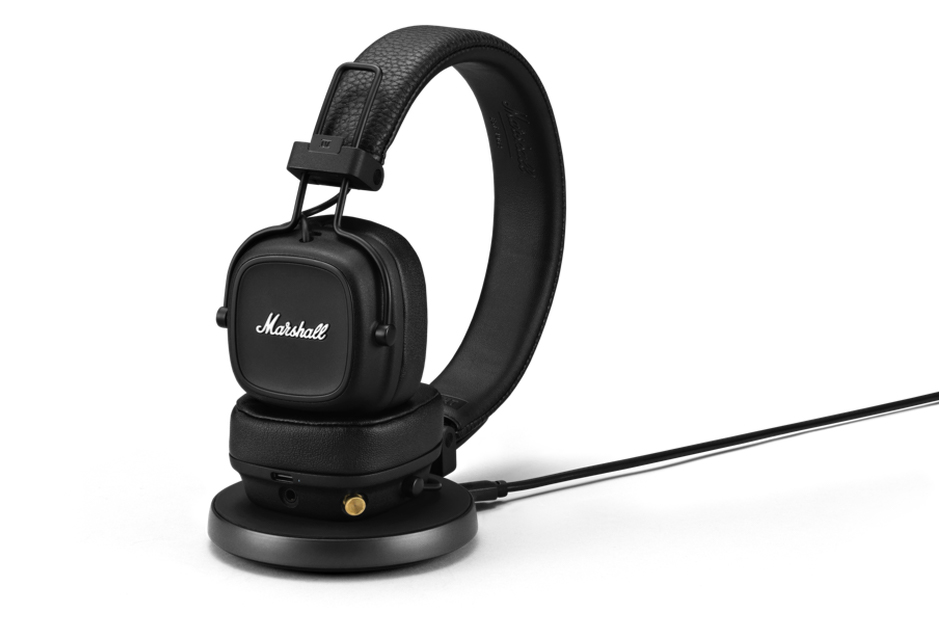
This is the fourth iteration of Marshall’s Major on-ear wireless headphones, and they offer a number of improvements new to the lineup, including a new folding clip design that makes them even more compact when packed for travel – and that allows them to rest comfortably on a charging pad to enable another new feature, wireless charging using the Qi standard.

Marshall has also greatly improved battery life, advertising an insane 80 hours of usage time on these, way up from the 30+ promised in the last generation. They still feature square earcups with that iconic Marshall look, but the detail on each is flat instead of pebbled faux leather (that remains on the headband). The multi-directional control knob is also carried over from past Major designs, and there’s a 3.5mm socket for wired sound, and for sharing your audio connection out to another headset.

In the box, there’s a coiled 3.5mm for that vintage Marshall amp feel, as well as a USB-C cable for wired charging, which will provide a full 80+ hours of use from 3 hours – or 15 hours from just 15 minutes with a new quick charge feature.

Design and performance

The design of the Major IV is classic Marshall aesthetic – which is great news. They look fantastic, with the iconic logo in script on both earcups. As mentioned, the earcup face is now smooth and matte, which looks great, and there’s a silicone edge on each which helps keep the right earcup in place when placed on a wireless charger.

Image Credits: Marshall

These are compact, over-ear headsets that rest comfortably, and that comfort is helped by the lightweight materials used in their construction. Despite feeling very light, they feel like they’re made of quality materials thoughtfully constructed, and should last a long time in terms of durability.

Marshall’s multi-directional controller is both an attractive cosmetic detail in gold, and a smart control interface that offers intuitive manipulation of audio playback and volume.

Sound-wise, the Major IV provides great audio quality for a headset in this price range. The bass is rich, and the highs are clear. There’s no noise cancelling at work here, so you will get a decent amount of audio bleed-in from your surroundings, but they do a decent job of sound isolation for an over-hear set. And the sound quality is made all the better because of the class-leading battery life Marshall has managed to pack into the Major IV. 80+ hours is just astounding, and it means you’ll likely be able to go at least a week or two without even thinking about a charger while using these actively.

Bottom line

Marshall has really delivered an amazing value with the new Major IV. Combining style, performance and quality into a headset that also has amazing battery life and unique wireless charging capabilities is a true achievement – and perks like 3.5mm wired audio sharing just round out the package. These are a great everyday wear headset that you won’t want to go anywhere without.


Read Full Article

How Ikea is growing its business while shrinking emissions | Jesper Brodin and Pia Heidenmark Cook

How Ikea is growing its business while shrinking emissions | Jesper Brodin and Pia Heidenmark Cook

IKEA currently makes up 0.1 percent of all global carbon emissions -- but by 2030, they're planning to be carbon negative across their business. Discussing new thinking about the lifespan of their products, from the forest to the landfill, Jesper Brodin and Pia Heidenmark Cook of Ingka Group (IKEA) share their company's steps towards sustainably sourcing materials like cotton and wood and redesigning products to extend their use without compromising on quality or affordability. (Narrated by Rosa Howard)

https://ift.tt/3lZ8t57

Click this link to view the TED Talk

Shure’s Aonic 50 wireless noise cancelling headphones offer best-in-class audio quality


The noise-cancelling over-ear headphone category is an increasingly competitive one, and consumers have never been more spoiled for choice. Shure entered the market this year with the Aonic 50, a premium-priced headset ($399) that offers active noise cancelling, Bluetooth connectivity and USB-C charging. Shure’s reputation for delivering top-quality sound is definitely part of the package, and there’s a lot more to recommend the Aonic 50 as well.

Basics

Shure offers the Aonic 50 in either black or brown finishes, and they have physical controls on the right ear cup for volume, turning noise cancellation on and off, power, activating voice assistances and skipping tracks. There’s a USB-C port for charging, and a 2.5mm stereo connector on the left ear cup for using the included cable to connect via wire, which allows you to use them even while the internal battery is depleted or the headset is powered down (albeit without active noise cancelling obviously).

The Aonic 50 also comes with a round, flat carrying case – the ear cups swivel to fit in the zippered storage compartment. This takes up more of a footprint than the typical folding design of these kind of ANC headphones, but it’s less bulky, too, so it depends on how you’re packing them whether this is good or bad.

Shure offers a mobile app for iOS and Android called ShurePlus Play that can provide EQ controls, as well as more specific tuning of both the active noise cancelling, and the environmental mode that pipes in outside sound. This allows for a lot of customization, but with one major caveat – EQ settings only apply when playing music via the app itself, which is an unusual and disappointing choice.

Design and performance

Shure’s Aonic 50 excel in a couple of areas where the company has a proven track record: Sound quality and comfort/wearability. The ample faux leather-wrapped padding on both the headband and the ear cups make them very comfortable to wear, even for longer sessions, which is great for work for home practicality. I often forgot I had them on while moving around the house, which gives you an idea of how well they fit.

As for sound, Shure has aimed for a relatively neutral, flat tone that provides an accurate recreation of what the original producer intended for any track, and the results are great. Music detail is clear, and they’re neither too heavy on bass or overemphatic on treble. This is a sound profile that audiophiles will appreciate, though it might not be the best for anyone who’s looking for a bass-heavy soundstage. That said, bass-favoring headphones are easy to find in this category, so Shure’s offering, with its clear highs, stands apart from the field in the ANC arena. To be clear, the bass is excellent, but overall the market has moved towards muddy, artificially enhanced bass vs. true rendering, which the Aonic 50 delivers.

The button controls on the Aonic 50 are well-placed and cover the spectrum in terms of what you’d want to be able to control right from the headset. USB-C charging is much-appreciated in an era where that’s far and away the standard for most of the mobile devices in your life, as well as many computers. The included stereo cable is a great addition for when the battery runs out – but Shure’s advertised 20-hour or so battery life estimate is accurate, so it’ll be quite a while before you have to resort to that as long as you remember to charge once in a while.

If there’s one place where Shure’s performance falls a bit short, it’s in noise cancellation. The ANC does a decent job of blocking out unwanted environmental sound, but it’s not quite up to the standard of the like of Bose or Sony’s top-end ANC headphones. It still gets the job done most of the time, and the trade-off is better sound.

Bottom line

As I said above, people looking for active noise cancelling headphones are spoiled for choice these days. But the Shure Aonic 50 offers something that discerning audio pros won’t be able to find from alternatives including those from Bose or Sony, and that’s an excellent soundstage and sound quality that just can’t be beat. Wearability is also tops, which makes these a great options for audiophiles who want a wire-free, sound-blocking solution for a home office.


Read Full Article

Twitter changes its hacked materials policy in wake of New York Post controversy


Twitter has announced an update to its hacked materials policy — saying it will no longer remove hacked content unless it’s directly shared by hackers or those “acting in concert with them”.

Instead of blocking such content/links from being shared on its service it says it will label tweets to “provide context”.

Wider Twitter rules against posting private information, synthetic and manipulated media, and non-consensual nudity all still apply — so it could still, for example, remove links to hacked material if the content being linked to violates other policies. But just tweeting a link to hacked materials isn’t an automatic takedown anymore.

The move comes hard on the heels of the company’s decision to restrict sharing of a New York Post article this week — which reported on claims that laptop hardware left at a repair shop contained emails and other data belonging to Hunter Biden, the son of U.S. presidential candidate Joe Biden.

The decision by Twitter to restrict sharing of the Post article attracted vicious criticism from high profile Republican voices — with the likes of senator Josh Hawley tweeting that the company is “now censoring journalists”.

Twitter’s hacked materials policy do explicitly allow “reporting on a hack, or sharing press coverage of hacking” but the company subsequently clarified that it had acted because the Post article contained “personal and private information — like email addresses and phone numbers — which violate our rules”. (Plus the Post wasn’t reporting on a hack; but rather on the claim of the discovery of a cache of emails and the emails themselves.)

At the same time the Post article itself is highly controversial. The scenario of how the data came to be in the hands of a random laptop repair shop which then chose to hand it over to a key Trump ally stretches credibility — bearing the hallmarks of an election-targeting disops operation, as we explained on Wednesday.

Given questions over the quality of the Post’s fact-checking and journalistic standards in this case, Twitter’s decision to restrict sharing of the article actually appears to have helped reduce the spread of disinformation — even as it attracted flak to the company for censoring ‘journalism’.

(It has also since emerged that the harddrive in question was manufactured shortly before the laptop was claimed to have been dropped off at the shop. So the most likely scenario is Hunter Biden’s iCloud was hacked and doctored emails planted on the drive where the data could be ‘discovered’ and leaked to the press in a ham-fisted attempt to influence the U.S. presidential election. But Twitter is clearly uncomfortable that enforcing its policy led to accusations of censoring journalists.)

In a tweet thread explaining the change to its policy, Twitter’s legal, policy and trust & safety lead, Vijaya Gadde, writes: “We want to address the concerns that there could be many unintended consequences to journalists, whistleblowers and others in ways that are contrary to Twitter’s purpose of serving the public conversation.”

She also notes that when the hacked materials policy was first introduced, in 2018, Twitter had fewer tools for policy enforcement than it does now, saying: “We’ve recently added new product capabilities, such as labels to provide people with additional context. We are no longer limited to Tweet removal as an enforcement action.”

Twitter began adding contextual labels to policy-breaching tweets by US president Donald Trump earlier this year, rather than remove his tweets altogether. It has continued to expand usage of these contextual signals — such as by adding fact-checking labels to certain conspiracy theory tweets — giving itself a ‘more speech to counteract bad speech’ enforcement tool vs the blunt instrument of tweet takedowns/account bans (which it has also applied recently to the toxic conspiracy theory group, QAnon).

“We believe that labeling Tweets and empowering people to assess content for themselves better serves the public interest and public conversation. The Hacked Material Policy is being updated to reflect these new enforcement capabilities,” Gadde also says, adding: “Content moderation is incredibly difficult, especially in the critical context of an election. We are trying to act responsibly & quickly to prevent harms, but we’re still learning along the way.”

The updated policy is clearly not a free-for-all, given all other Twitter Rules against hacked material apply (such as doxxing). Though there’s a question of whether tweets linking to the Post article would still be taken down under the updated policy if the story did indeed contain personal info (which remains against Twitter’s policy).

At the same time, the new ‘third way’ policy for hacked materials does leave Twitter’s platform to be a conduit for the spread of political disinformation (just with a little contextual friction) — in instances where it’s been credulously laundered by the press. (Albeit, Twitter can justifiably point the finger of blame at poor journalist standards at that point.)

The new policy also raises the question of how Twitter will determine whether or not a person is working ‘in concert’ with hackers? Just spitballing here but if — say — on the poll’s eve, Trump were to share some highly dubious information that smeared his key political rival and which he said he’d been handed by Russian president, Vladimir Putin, would Twitter step in and remove it?

We can only hope we don’t have to find out.


Read Full Article

Daily Crunch: Zoom launches its events marketplace


Zoom has a new marketplace and new integrations, Spotify gets a new format and we review Microsoft’s Surface Laptop Go. This is your Daily Crunch for October 14, 2020.

The big story: Zoom launches its events marketplace

Zoom’s new OnZoom marketplace allows anyone to host and sell tickets for virtual events. It’s also integrating the ability for nonprofits to accept donations.

The company made a couple other announcements at its Zoomtopia user conference. For one thing, it’s also integrating with a starting lineup of 35 third-party “Zapps,” allowing products like Asana and Dropbox to integrate directly into the Zoom experience.

In addition, Zoom said it will begin rolling out end-to-end encryption (a feature it’s been promising since acquiring Keybase in May) to users next week.

The tech giants

Spotify introduces a new music-and-spoken word format, open to all creators — The new format is designed to reproduce the radio-like experience of listening to a DJ talk about the music, and it also enables the creation of music-filled podcasts.

Microsoft reverse engineers a budget computer with the Surface Laptop Go — Brian Heater writes that the Laptop Go is a strange and sometimes successful mix of Surface design and budget decisions.

Google launches a suite of tech-powered tools for reporters, Journalist Studio — The suite includes a host of existing tools as well as two new products aimed at helping reporters search across large documents and visualizing data.

Startups, funding and venture capital

Getaround raises a $140M Series E amid rebound in short-distance travel — The rebound is real: I took my first Getaround this weekend.

Augury taps $55M for tech that predicts machine faults from vibration, sound and temperature — The startup works with large enterprises like Colgate and Heineken to maintain machines in their production and distribution lines.

Plenty has raised over $500M to grow fruits and veggies indoors — The funding was led by existing investor SoftBank Vision Fund and included the berry farming giant Driscoll’s.

Advice and analysis from Extra Crunch

What the iPhone 12 tells us about the state of the smartphone industry in 2020 — While the iPhone 12 was no doubt in development long before the current pandemic, the pandemic’s global shutdown has only exacerbated many existing problems for smartphone makers.

Databricks crossed $350M run rate in Q3, up from $200M one year ago — The data analytics company scaled rapidly to put itself on an obvious IPO path.

Dear Sophie: I came on a B-1 visa, then COVID-19 happened. How can I stay? — The latest advice from immigration lawyer Sophie Alcorn.

(Reminder: Extra Crunch is our subscription membership program, which aims to democratize information about startups. And we’re having a fall sale!)

Everything else

NASA loads 14 companies with $370M for ‘tipping point’ technologies — NASA has announced more than a third of a billion dollars’ worth of “Tipping Point” contracts awarded to over a dozen companies pursuing potentially transformative space technologies.

Harley-Davidson should keep making e-motorcycles — That’s Jake Bright’s takeaway after three weeks with the LiveWire e-motorcycle.

The Daily Crunch is TechCrunch’s roundup of our biggest and most important stories. If you’d like to get this delivered to your inbox every day at around 3pm Pacific, you can subscribe here.


Read Full Article

WizVille Local Monitor helps small shops track Google Maps ratings of competitors


French startup WizVille is launching a new product called Local Monitor to help restaurant owners, haircut places, bakeries and all kinds of small shops track their Google Maps ratings and the ratings of their competitors.

While there are plenty of ratings services to compare places around you, such as Foursquare, Yelp and Tripadvisor, Google Maps has slowly been showcasing ratings more prominently. And chances are you’re now checking ratings on Google Maps more than ever before.

“I’ve been working for 10 years in customer ratings. There’s something huge happening right now — Google and Google Maps are taking over the customer relationship with small shops,” co-founder and CEO Timothée de Laitre told me.

And yet, many small business owners don’t pay attention to their Google My Business rating that customers can see on Google Maps and above Google search results. WizVille thinks this is the most important metric you can track. And it’s also important to know how your competitors are doing.

When you add your business to WizVille Local Monitor, the company displays other places around you that provide the same products and services. You can choose up to five competitors from that list.

After that, you receive a report with your rating, your competitors’ ratings and the evolution over time. This way, you know how you rank compared to your competitors. The service sends you a new report every month so you can track your progress.

Google Maps ratings are really not that smart, as the company is calculating the average of all your ratings to determine your overall rating. You could have opened your business 10 days ago or 10 years ago — all your reviews will matter.

If you have more than one shop or you need more features, you have to switch to the full-fledged WizVille customer experience management service, and more specifically WizVille Local Insight. For that service, the startup works with bigger clients, such as Total, Etam, Naturalia and Schmidt.

Image Credits: WizVille


Read Full Article