13 August 2020

Samsung Galaxy Watch 3 review


Samsung makes good smartwatches. The fact tends to get lost in discussions about a category that’s traditionally been so dominated by a single player. Things have shifted a bit of late, globally. Apple’s market share has slipped somewhat and Huawei and Samsung have been there to pick up some of the pieces.

Here in the States, Huawei is less of a player for reasons that should be painfully obvious. Google’s Wear OS is — for now at least — a non-starter. Acquisition target Fitbit has made a dent with its solid smartwatches, though it’s not quite a juggernaut. Same goes for Garmin, which does well, but commands a relatively small niche. For those looking for Android compatibility — or just an Apple alternative, generally — Samsung continues to be your best shot.

The company has long approached its wearables with a similar philosophy to the one that governs its smartwatches: lots of options, plenty of features and a big, flashy footprint. For my money, however, the top-line feature on the Galaxy Watch 3 is the return of the rotating bezel. The company recently abandoned it for its Active line, attempting to convince us that a haptic approximation was just as good. It wasn’t.

The ability to toggle between screens by spinning the border of the display has long been the Gear line’s most distinguishing characteristic — and the best smartwatch input by far. The Apple Watch crown isn’t even close. It was an odd choice for Samsung to drop it, even for a splinter line of watches. It’s back, thankfully, made from the same stainless steel casing as the rest of the watch body and sporting a perforated ridge for a better grip. There’s something satisfying in the ability to smoothly spin between screens.

The bezel is a bit thinner this time out, matching an overall reduction in case size. All told, the 3 is 14% thinner, 8% smaller and 15% lighter than the original Galaxy Watch. The 45mm model is still large, compared to other smartwatches, but this goes a ways toward addressing what’s long been one of my chief complaints with the line. Ditto for the availability of a 41mm version. Past Galaxy Watches have felt needlessly bulky — an issue with a device intended to wear on one’s person all day and night.
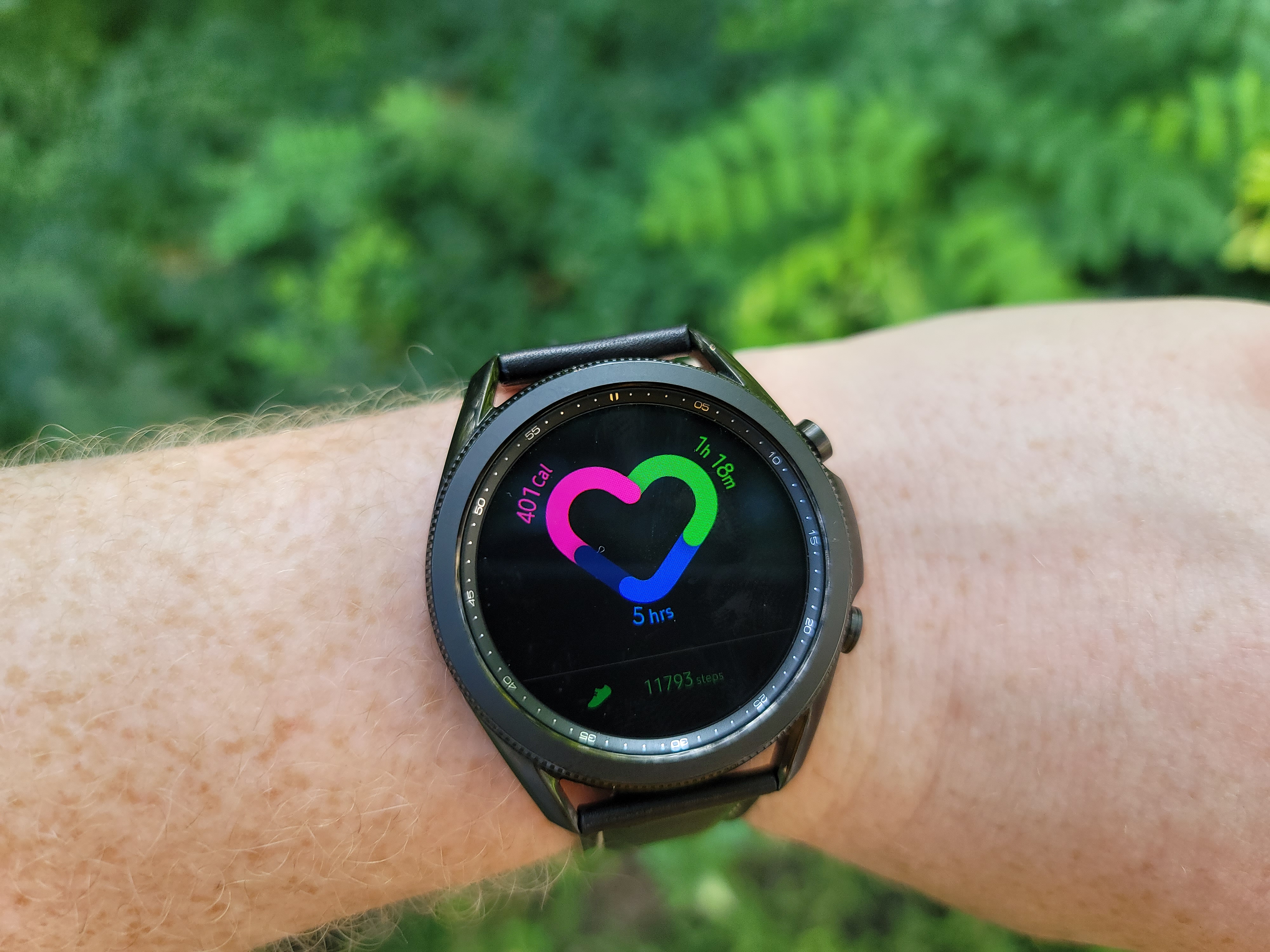
Image Credits: Brian Heater

The watch is still a bit big for my personal tastes, but outside of the Active line, this is definitely the most comfortable Samsung watch in some time. The metallic casing also has a fairly timeless design, as far as smartwatches go, maintaining a sporty look that’s been a standard of the line for a few generations now. I tend to prefer something a bit more minimalistic. For me, the S2 was and continues to be the pinnacle of design language for the line, but I recognize that plenty of people prefer something a bit more…complex.

The screen measures 1.4 inches on the 45mm and 1.2 inches on the 41mm — a touch smaller than the 1.65/1.5 inches found on the Apple Watch. Though, obviously the round design also offers up a different form factor. The screen is nice and clear and reads pretty well in daylight, thanks in part to the ambient light sensor. The model ships with a nice leather band, and thanks to its standardized fit, can be swapped out with an essentially infinite list of different third-party bands.

Tizen has always seemed like an odd choice, but Samsung’s very much made the operating system its own here, as Google has struggled for wider adoption with its own wearable OS. The watch’s app selection continues to lag Apple, including some bigger-name developers. There are some important partners here — most notably Spotify. With Apple making major plays on both the watch and streaming front, the partnership makes a lot of sense for both parties. Among other key features is the ability to download playlists directly to the device, so you can leave the phone at home for a workout, if you’re so inclined.

And what the Galaxy Store lacks in apps, it more than makes up for in watch faces, with more than 80,000 currently available. There are also some 40 different modular complications. You can also create custom faces by taking an image of real world patterns.

Battery life is decent, as long as you turn off the always-on display. By doing so, I was able to get a couple of hours short of two full days of life. That’s not exceptional, but it should help you take advantage of the sleep tracking a few days a week, assuming you’re comfortable falling asleep with a sizable watch on your wrist. That admittedly takes some getting used to. With always-on enabled, you can expect to get about half that total.
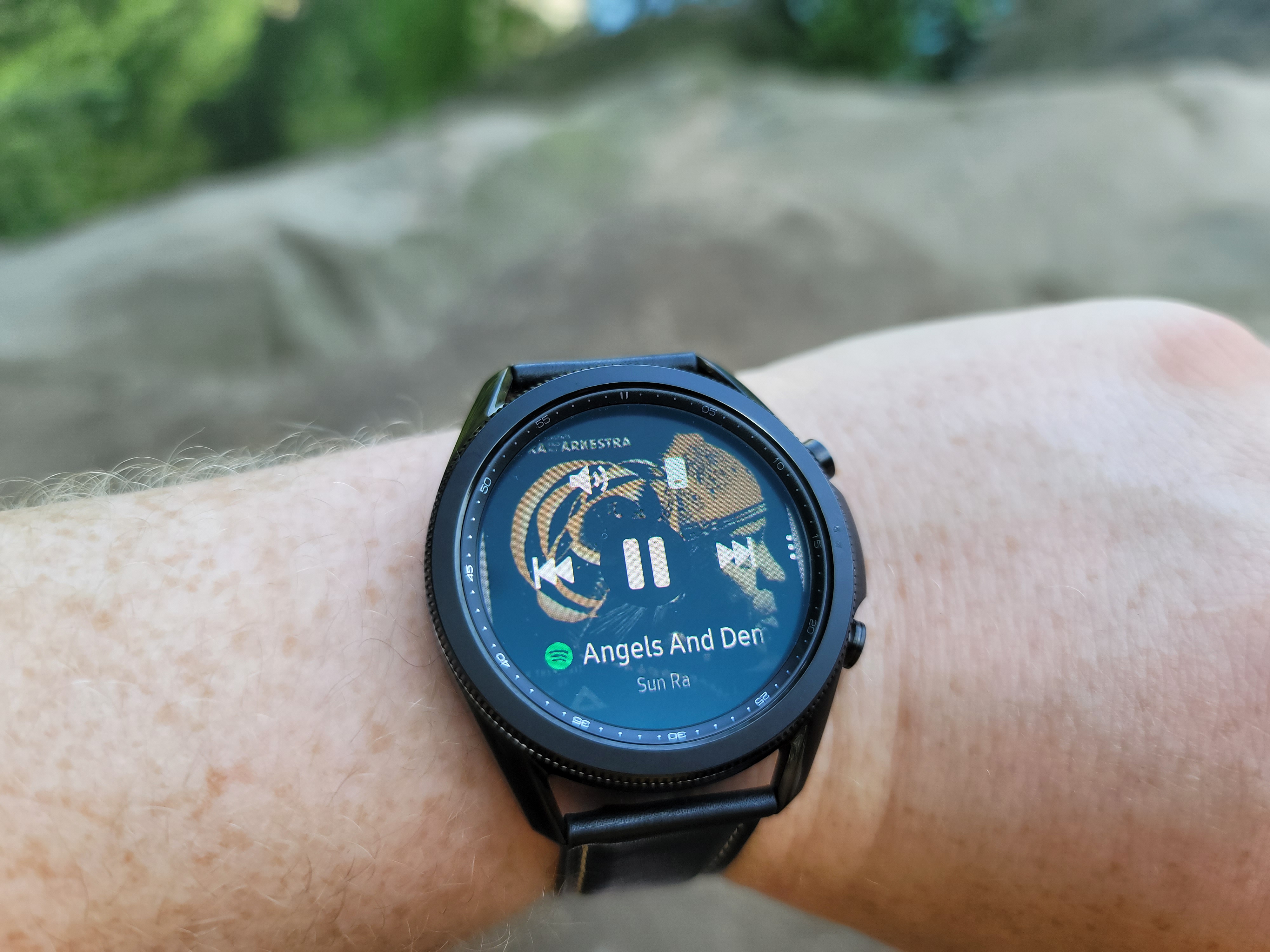
Image Credits: Brian Heater

The watch does a good job autodetecting select workouts. Running analysis goes a bit deeper, adding to a feature introduced with the Active 2. After a run is complete, it breaks down the specifics of your run mechanics (as best it can as a wrist-worn monitor) in an attempt to help reduce running-related injury. As a current former runner, I can attest to the fact that poor form is a really good way to injure yourself.

As Apple is finally getting serious about sleep tracking on its watch, Samsung is smoothing out its own experience. The watch breaks down light, deep and REM sleep, offering up a score for the night. I found myself getting scores in the 40s — not great, given that people in my age range apparently score around a 70. Samsung also offers up features like mindfulness and stress management to get that under control. Personally, I think getting better sleep on my end is going to take a “not constantly thinking about COVID” feature.

Image Credits: Brian Heater

Two key health additions aren’t ready out of the box here in the States: both the EKG reader and blood pressure detector will have to wait for all of the standard regulatory approval, so I’ll hold off judgment accordingly.

Samsung’s certainly not attempting to price competitively here. At $400 and $430 for the 41mm and 45mm versions, respectively, it’s a premium price tag. It’s clear that the company doesn’t see companies like Huawei or even Fitbit as its primary competitors. As with its flagship smartphones, Samsung’s got Apple firmly in its sights, and it’s priced to match. Apple is far and away still the best option for iOS users, but when it comes to Android, not many can compete with Samsung’s premium offering.


Read Full Article

Former COO sues Pinterest, accusing it of gender discrimination, retaliation and wrongful termination


Pinterest’s former chief operating officer has filed a lawsuit accusing the company of gender discrimination. Françoise Brougher, who says she was abruptly fired from the company in April, is suing the company to hold it “accountable for discrimination, retaliation, and wrongful termination in violation of the Fair Employment and Housing Act (FEHA), and the Labor Code,” according to a Tuesday filing in San Francisco Superior Court. (The full text of the filing is embedded below.)

Pinterest said in June this year that it had about 400 million monthly active users, most of whom are women. But its top executives are all men. “Ironically, even though Pinterest markets itself to women as a source of lifestyle inspiration, the company leadership team is male dominated, and gender-biased attitudes are prevalent,” the lawsuit says.

Brougher alleges in her lawsuit that she was hired with a less favorable equity compensation package than her male peers. She claims that she was also left out of key decision-making by other executives; was subjected to a hostile work environment; and ultimately fired by chief executive officer Ben Silbermann when she spoke up against her treatment.

Before joining Pinterest in March 2018, Brougher held executive positions at Square, Google and Charles Schawb. In a Medium post published today, she wrote, “I have always been a private person, but I am opening up about my experience because if someone of my privilege and seniority is fired for speaking out about these issues, the situation is likely far worse for people earlier in their careers.”

Brougher’s case against Pinterest comes two months after two Black former employees, Ifeoma Ozoma and Aerica Shimizu Banks, accused the company of unequal pay, racial discrimination and retaliation.

At the time Brougher was hired, the lawsuit says she was told Pinterest’s board directed executives to receive backloaded equity grants. Her equity grant stipulated that only 10% of shares vested in the first year, followed by 20% the second year, 30% the third year, and 40% the fourth year. Brougher assumed this vesting schedule was standard for Pinterest executives.

When the company filed to go public last year, however, Brougher realized while looking at its S-1 filing that her male peers’ equity grants were not backloaded. Brougher’s compensation was adjusted after she raised concerns with Silbermann, who directed her to Pinterest’s human resources department.

Brougher says she was not invited on Pinterest’s IPO roadshow, despite being its COO and knowing many of the company’s investors.

After Pinterest’s initial public offering in April 2019, Brougher says she was no longer invited to board meetings, even though members of her team occasionally were — sometimes without her knowledge. “As COO of Pinterest, Ms. Brougher no longer had meaningful engagement with the company’s board,” the lawsuit says.

“The abrasiveness trap”

Brougher’s suit also claims that she began receiving more critical feedback, and cites a study by tech executive Kieran Snyder called “The Abrasiveness Trap,” which found women are assessed more negatively than men in 248 reviews collected from 28 companies of different sizes. Snyder found that 87.9% of reviews for women contained critical feedback, compared to 58.9% of reviews for men. Their personalities were the focus of criticism in 75.5% of critical reviews for women, compared to just 2.4% of the critical reviews received by men.

The lawsuit says Silbermann criticized Brougher for “not being collaborative and told her that she did not have consistently healthy cross-functional relationships.” When Brougher asked him for more details, she claims “he told her to keep quiet, saying she should ‘be mindful’ of how she acted in a group setting.”

Pinterest’s chief financial officer Todd Morgenfeld also allegedly became “increasingly disrespectful” to Brougher beginning in January 2020, undermining her authority by ignoring her and talking directly to her team members.

In one meeting, Brougher says Morgenfeld sarcastically asked, “What is your job anyway?” Silbermann would also wait to make key strategy decisions after meetings Brougher attended, meeting with one or two male colleagues after she had left.

In February, the lawsuit says Brougher received a peer review written by Morgenfeld, even though she had not been asked to review him. Despite Brougher’s work on Pinterest’s IPO, advertiser base and monetization strategy in Europe, the lawsuit says the “Morgenfeld’s only comment on her 2019 achievements was: “Seems to be a champion for diversity issues.”

During a video call with Morgenfeld on February 21, 2020, Brougher says she tried to address his feedback, but that he became angry during the call, raised his voice, called her a liar and questioned the value she brought to Pinterest before hanging up on her.

After the call, Brougher says she texted Silbermann and told him it had not gone well. On February 24, she met with Pinterest’s Chief Human Resources Officer Jo Dennis and said she wanted to find a way to work with Morgenfeld, but was uncomfortable meeting alone with him. Instead of mediating between Brougher and Morgenfeld, the lawsuit alleges Dennis treated the matter as a possible legal issue, escalating it to Pinterest’s in-house counsel.

On the same day, Brougher also met with Silbermann. She says that Silbermann compared the situation between Morgenfeld and Brougher to “an old couple fighting over who would make coffee,” a comment the lawsuit calls a “gendered remark that trivialized her concern about sex discrimination by comparing it to a wife’s complaint about domestic trouble.”

On April 2, the filing says Silbermann told Brougher that she was being fired and asked her to transfer her responsibilities to Morgenfeld over the next month. He also told her to tell her team that she had made the decision to leave, which she refused to do. Brougher claims her termination cost her “tens of millions of dollars in lost earnings and equity compensation.”

Brougher is being represented by law firm Rudy, Exelrod, Zieff & Lowe, which also represented Ellen Pao in her gender discrimination lawsuit against Kleiner Perkins.

TechCrunch has reached out to Pinterest for comment. In a statement to The New York Times, a Pinterest representative said the company is conducting an independent review of its culture, policies and practices.

BROUGHER_VS_PINTEREST.pdf by TechCrunch on Scribd


Read Full Article

Kamala Harris brings a view from tech’s epicenter to the presidential race


Joe Biden’s decision to name California Senator Kamala Harris as his running mate in the quest to unseat President Trump means that the next vice president could be not only the first Black and Asian American woman on a presidential ticket in the U.S — historic milestones by any account — but also a Californian who built a career in the tech industry’s front yard.

Born in Oakland, Harris served as San Francisco district attorney and later as the attorney general for California before being elected to the Senate in 2016. And while the newly named vice presidential nominee is likely to bring a deeper understanding of the tech industry to the race, her positions on how a Democratic administration should approach tech’s most powerful companies during an unprecedented moment of scrutiny aren’t exactly crystal clear.

Harris attracted considerable support from Silicon Valley executives in her bid for the Democratic nomination, outpacing other candidates in donations from employees from large tech companies early on. While that support shifted around throughout the race and many donors in tech supported multiple candidates, the industry is likely to be happy with Biden’s selection.

Notably, Harris was elected as California attorney general in 2010 and served two terms, overseeing the tech industry through a large portion of its most explosive growth — a measure that likely proves more meaningful in assessing her stance toward regulating the tech industry than the things she said along the campaign trail.

Still, those were arguably simpler times for Silicon Valley, and ones that predated current hot-button conversations around issues like election interference, misinformation wars and antitrust enforcement.

Playing it safe

As the primary developed and then-rival Elizabeth Warren carved out a posture critical of big tech, Harris seldom waded into thorny issues around regulating the tech industry. During an October debate, Harris avoided a question asking about concerns over second order effects if big tech companies were broken up, instead redirecting to the safer political territory of Trump’s Twitter account. Dodging meatier points about tech accountability, Harris called on Twitter to suspend the president’s account for violating its rules, calling the issue “a matter of safety and corporate accountability.”

Earlier this year, in response to a straightforward question asking if companies like Facebook, Google and Amazon should be broken up, Harris again dodged, though signaled that she is concerned in how those companies handle user data.

“I believe that tech companies have got to be regulated in a way that we can ensure the American consumer can be certain that their privacy is not being compromised,” Harris said. Harris also expressed her concerns about user privacy in a 2018 Twitter thread.

“Millions of Americans have no idea how much data Facebook is collecting, from tracking their location and IP address, to following their activities on other websites,” she wrote.

“In the real world, this would be like someone watching what you do, where you go, for how long, and with whom you’re with every day. For most, it would feel like an invasion of privacy.”

A focus on Facebook

In other critiques of tech, Harris has mostly concentrated on Facebook, denouncing its role in spreading Russian disinformation during the 2016 presidential race and expressing worries over how the company handles the data it collects.

When given the chance to press Mark Zuckerberg in person, Harris zeroed in on the company’s handling of the Cambridge Analytica data misuse to its users. More recently, Harris co-authored a letter to Facebook along with Colorado Senator Michael Bennett after the audit’s largely unflattering results were published, pressing the company on election concerns.

“Although the company has shown a recent willingness to rein in disinformation with respect to COVID-19, it has not shown equal resolve to confront voter suppression and learn the lessons of the 2016 election,” the senators wrote. “We share the auditors’ concern that Facebook has failed to use the tools and resources at its disposal to more vigorously combat voter suppression and protect civil rights.”

In another letter to the company, Harris criticized Facebook’s fact-checking policies for climate-related misinformation in light of a New York Times report.

In spite of the harsh talk, Harris seems to be on fairly friendly terms with Facebook COO Sheryl Sandberg, who congratulated her on the nomination Tuesday. Back in 2013, Harris apparently contributed to the marketing effort around Sandberg’s now-ubiquitous book Lean In, sharing her own story. Harris also spoke at a cyberbullying event hosted at Facebook’s Menlo Park headquarters in 2015 and the two were photographed onstage together.

Antitrust on the back burner?

While we have a handful of public statements from Harris about her views on tech, there’s plenty more that we don’t know. The way she positioned herself in relation to other candidates during the primary might not wholly reflect the kind of priorities she would bring to the vice presidency, and we’ll likely be learning more about those in the coming days.

Right now there are many, many crises on the table for the next administration. If regulating big tech looked like a huge campaign issue back in the pre-pandemic political landscape of 2020, conversations around police brutality and the devastating American failure to contain the coronavirus are now at the fore. Whether issues around antitrust regulation and reining in tech’s power will make it off the back burner remains to be seen, and there are plenty of national five-alarm fires to be put out in the meantime.

While her potential position as the nation’s next vice president doesn’t mean that Harris would be tasked with shaping tech policy or spearheading antitrust efforts, her deep connections to tech’s geographic hub could prove consequential in a Biden presidency and its priorities.

In spite of some question marks around her policy approaches, Harris is a known quantity for the tech industry — one who understands Silicon Valley and who, per her track record, doesn’t look keen to take on the industry’s biggest companies in spite of some recent tough talk. Whatever tech policies emerge out of a Biden/Harris campaign, the fresh vice presidential nominee is connected to tech in a more meaningful way than any other contender for the spot. That alone is something to watch.


Read Full Article

5 Chinese Mobile Phone Brands Currently Selling in India


One of the things for which Chinese brands have become popular is the lower price of the products. If you take any product made by a Chinese brand and a product of the same specifications made by let’s say an American brand then you will mostly find that the Chinese product costs way less. There […]

The post 5 Chinese Mobile Phone Brands Currently Selling in India appeared first on ALL TECH BUZZ.


ByteDance in talks with India’s Reliance for investment in TikTok


Chinese giant ByteDance is engaging with India’s Reliance Industries Limited, the parent firm of telecom giant Jio Platforms, for financially backing TikTok in a move to potentially save the popular video app’s fate in its biggest market by users, two people familiar with the matter told TechCrunch.

The two companies began conversations late last month and have yet to reach a deal, the sources said, requesting anonymity as the talks are private. TikTok’s business in India, where it had amassed over 200 million users before it was banned in late June, is being valued at more than $3 billion, one of the sources said.

ByteDance did not respond to a request for comment. Reliance said it does not comment on speculation and rumor.

An investment in TikTok could help the oil-to-retails giant Reliance, the most valuable firm in India, make deeper connections with consumers. Even as Jio Platforms has amassed nearly 400 million users in India in less than four years of its existence, its consumer-facing apps have struggled to replicate that appeal.

Since late April this year, the Indian giant’s digital venture has raised about $20 billion from 13 high-profile investors, including Facebook and Google. Google said it would work with Jio Platforms to launch a customized version of its Android mobile operating system to power low-cost Android smartphones. Facebook said it would collaborate with Reliance to help digitize the country’s 60 million small and medium-sized businesses.

The preliminary talks between the two companies comes as ByteDance also struggles to retain some key employees in India. A handful of high-level executives at the company, including a policy head and Rohan Mishra, who oversaw ByteDance-owned Helo app’s operations in India, have left the company in recent weeks. Mishra did not respond to a request for comment Wednesday noon.

ByteDance has assured employees that it is in conversation with the Indian government to resolve New Delhi’s concerns and does not plan to layoff employees in the country. ByteDance employs about 2,000 employees in India.

ByteDance is separately engaging to sell the company’s business in select markets, including the U.S. with Microsoft, the Windows-maker confirmed earlier this month. Financial Times reported last week that the two companies had broadened the scope of the deal to include TikTok’s business in other markets, including Europe and India.

Any deal with Reliance — owned by Mukesh Ambani, India’s richest man who is an ally of India’s Prime Minister Narendra Modi — could help ByteDance allay concerns of the Indian government, which banned TikTok and 58 other apps developed by Chinese firms citing security concerns in late June.

Scores of local startups, including Twitter-backed ShareChat and Times Internet’s Gaana and MX Player, have launched standalone apps or integrated features to replicate the social experience TikTok provided to users. The local apps have claimed to have added tens of million of new users in recent weeks.

Facebook, which launched Reels in Instagram in India last month, has seen the daily engagement across its family of services surge more than 25% since the ban on TikTok, according to a person familiar with the matter.


Read Full Article

The Surface Duo Releases on September 10 for $1,399


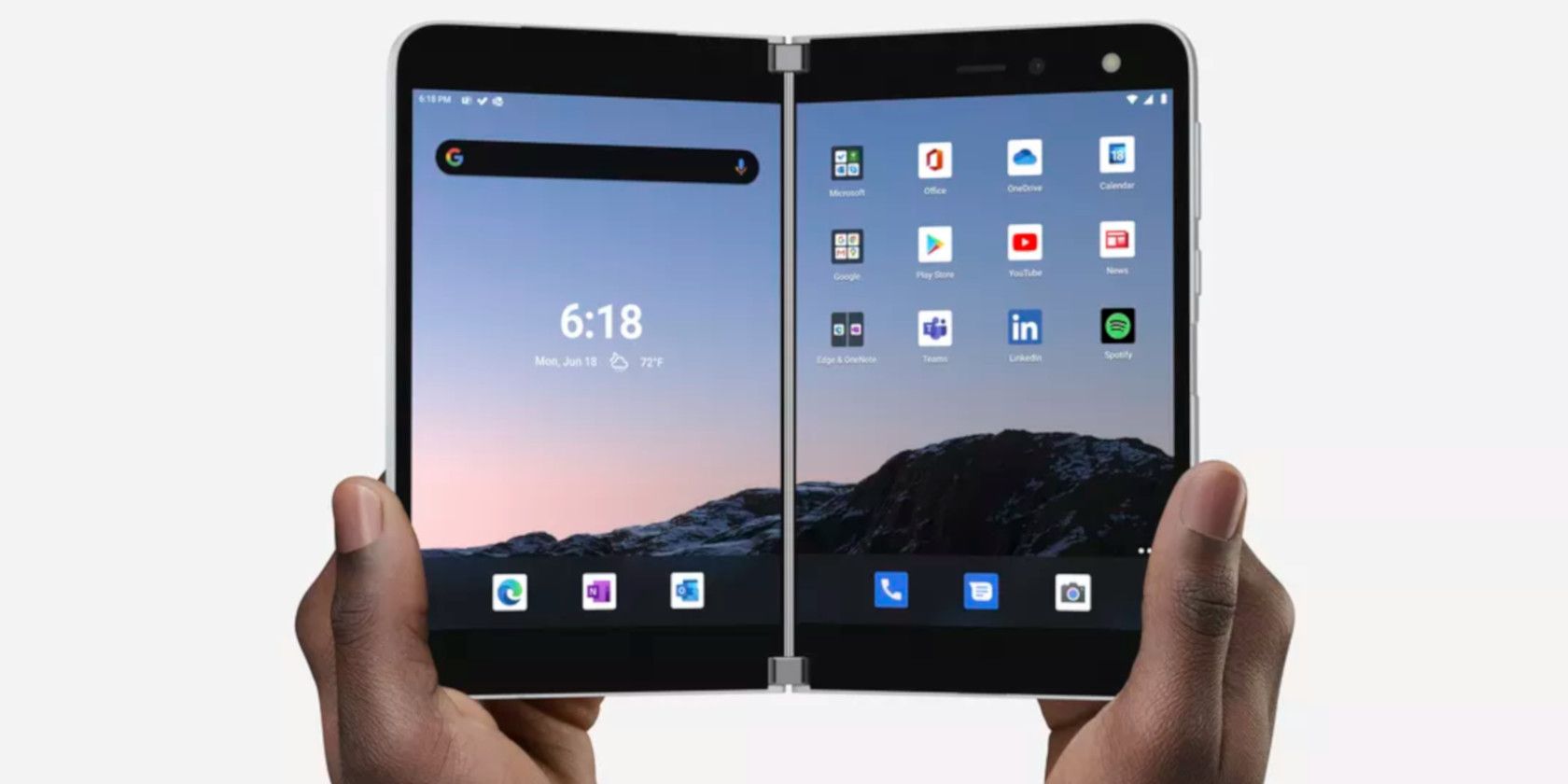
The Microsoft Surface Duo

If you’ve been keeping track of the development of the Surface Duo, you’ve probably heard rumors that it would be coming out soon. And now, Microsoft has confirmed the Surface Duo release date and pricing.

The Surface Duo: Release Date and Price

On the Microsoft Tech Community website, the company goes into detail about the Surface Duo’s launch. So we now know the Surface Duo will release on September 10 with a price tag of $1,399.

After that, Microsoft goes on to discuss how the Surface Duo aims to bring the PC and smartphone together. For example, it combines the vast library of Android apps with Microsoft 365 to create a device designed for both work and play.

The Surface Duo also has some impressive flexibility, as stated by Microsoft:

“…[the] Surface Duo opens into the thinnest mobile device on the market with an 8.1″ PixelSense Fusion display connected by a revolutionary 360-degree hinge, allowing you to use each 5.6″ display individually or together, across a variety of modes.”

More Information on the Surface Duo’s Specs

If this is the first time you’re hearing about the Surface Duo, you’ll want to know about what it’s capable of. Fortunately, we knew of the specifications ahead of time after GSMArena reported on a leak in mid-2020.

The main draw of the Surface Duo is its two-screen design. Each screen has a 5.6″ display with an 1800×1350 resolution. The system can fold out into one large 8.1″ display with a 2700×1800 resolution. The Surface Duo also boasts a Qualcomm Snapdragon 855, 6GB of RAM, and comes with either 128 or 256GB of storage.

The device runs on Android 10, with potential plans to upgrade it to Android 11 soon after launch. The Surface Duo sports two batteries, each underneath one of the screens. Combined, they provide 3,577 mAh of capacity. This reportedly lets you watch 15.5 hours of video or make calls for 27 hours.

If you’re interested, you can preorder the Surface Duo from the Microsoft website, AT&T, or Best Buy.

Scratching the Surface of Microsoft’s New Devices

After rumors claimed the Surface Duo would release soon, we now have an official date and price point from Microsoft. Mark your calendars for September 10 when you’ll be able to get your hands on one.

And if you’re wondering where the Surface Neo is, we have previously written about how the Microsoft Surface Neo has been delayed.

Read the full article: The Surface Duo Releases on September 10 for $1,399


Read Full Article

The 16 Best Documentaries on Netflix in 2020


best-documentaries-netflix

It should come as no surprise that Netflix features an enormous number of documentaries in its catalog. Sadly, a lot of them simply aren’t worth watching. Hidden among the endless options, however, are some must-see documentaries.

So, whether you’re looking for war documentaries, space documentaries, sports documentaries, or something else entirely, keep reading. These are the best documentaries on Netflix that you can watch right now. All of which will enlighten and entertain you.

The Best War Documentaries on Netflix

Unfortunately, documentary makers have no shortage of material when it comes to wars. Many of the most important conflicts of recent centuries have a show about them on Netflix.

1. The Vietnam War

This 10-part documentary tells the story of the United States’ controversial 19-year conflict in Vietnam.

It features testimonies from more than 80 witnesses from both sides, never-seen-before video footage, and runs for more than 17 hours in total.

2. World War II in Colour

World War II in Colour is a British documentary that includes a vast amount of real video footage from the battlefields, cities, and oceans that saw action during World War II.

It has 13 episodes in total, covering everything from the North African campaign to the Japanese invasion of China.

3. November 13: Attack on Paris

November 13: Attack on Paris is a Netflix original about the terror attacks in the French capital during November 2015. The three-part series documents the timeline of that traumatic day.

For more options, have a look at our full list of war documentaries on Netflix.

The Best Space Documentaries on Netflix

If you’d prefer to be dazzled by scientific ingenuity rather than human suffering, check out some of the top Netflix documentaries about space and the universe instead.

4. A Year in Space

A Year in Space is a 12-part Netflix docuseries that follows American Scott Kelly and Russian Mikhail Kornienko during their year-long stay on the International Space Station.

It follows their mission from takeoff to touchdown, providing a fascinating insight into zero-gravity life and the scientific work that goes on while in orbit.

5. The Search for Life in Space

The Search for Life in Space is a short 32-minute documentary about how humans are searching for signs of life beyond our planet. It’s doesn’t go into complex details, so it’s perfect for anyone who may not have the same level of background knowledge as a seasoned universe fanatic.

For more content about the universe, make sure to also check out the best space documentaries on Amazon.

The Best Nature Documentaries on Netflix

If you’d prefer to learn about Earth-based lifeforms, you’ll be pleased to know that some of the best documentaries on Netflix cover the natural world.

6. Dancing With the Birds

Narrated by the ever-lovable Stephen Fry, Dancing With The Birds follows majestic birds as they try to find a mate.

Fry’s commentary adds an element of humor to what is already a fascinating subject matter, making this one of the most enjoyable nature documentaries ever made.

7. Chasing Coral

Coral reefs are one of the most important ecosystems on the planet. They’ve been around for 485 million years and support more than one-quarter of all marine species; the NOAA National Ocean Service calls them “the rainforests of the sea.”

The climate emergency means coral is now dying at a faster rate than ever. This documentary investigates the devastating impact that coral death is having on our planet and our lives.

We’ve written about the best nature documentaries on Netflix if these couple of suggestions aren’t enough to satisfy you.

The Best BBC Documentaries on Netflix

The British television network is one of the foremost documentary makers in the world.

8. A Grand Night In: The Story of Aardman

Aardman Animations—creators of the Oscar-winning Wallace and Gromit, Shaun the Sheep, and Chicken Run—started life as a tiny animation studio in Bristol, England. A Grand Night In: The Story of Aardman tracks the studio from its humble beginnings to its status as a company with more than $1 billion in revenue.

In addition to A Grand Night In, many more of the best BBC documentaries are available on Netflix. Check out our list to learn more.

The Best Travel Documentaries on Netflix

The “new normal” means it could be a while before many people feel comfortable getting on a plane again. After all, why bother when you can travel anywhere in the world from your own sofa thanks to Netflix?!

9. Dark Tourist

Tourism isn’t only about beaches and all-inclusive buffets. If you’d like to learn about the grittier side of the world, check out Dark Tourist.

New Zealand filmmaker David Farrier investigates some of the weirder travel spots you’ll find, including Pablo Escobar-themed trips in Colombia and nuclear disaster tourism in Japan.

10. National Parks Adventure

Narrated by Robert Redford, National Parks Adventure takes viewers on a tour of remarkable spots in the National Parks of the United States. The documentary covers Yellowstone, Glacier National Park, Yosemite, and Arches. The entire documentary uses IMAX 3D cinematography.

To learn more, have a look at our complete list of the best travel documentaries on Netflix.

The Best Crime Documentaries on Netflix

True crime documentaries on Netflix have enjoyed a renaissance in recent years.

11. Making a Murderer

Making a Murderer is arguably the Netflix documentary that kicked off the renewed interest in the genre.

It tells the story of Steven Avery. Avery was wrongly convicted of murder and spent 18 years in jail, only to be found guilty of a different murder upon his exoneration and release. Despite doubts around the second conviction, he remains in jail to this day.

12. Amanda Knox

One of the most famous convictions of the 21st century occurred in Italy in 2007.

American exchange student, Amanda Knox, was found guilty of killing a fellow student, Meredith Kercher, in a trial littered with controversies. Rumors of police incompetence, evidence tampering, and false testimonies circulated for years after Knox’s conviction. The Italian supreme court eventually overturned the decision in 2015.

This documentary tells the story of the night of the murder and the subsequent media frenzy surrounding the court proceedings.

The Best Sports Documentaries on Netflix

Some of the best documentaries on Netflix fall into the sports category.

13. Senna

Ayrton Senna is widely believed to be the greatest Formula 1 driver of all time. He won three world titles before being killed in a crash at the 1994 San Marino Grand Prix at Imola. He was 34 years old.

This docufilm charts his life and death.

14. The Last Dance

An obvious inclusion, the Netflix docuseries tells the story of NBA legend, Michael Jordan. Scottie Pippen, Dennis Rodman, Steve Kerr, and Phil Jackson all feature.

The Best Music Documentaries on Netflix

And finally, a couple of brilliant music documentaries for you to watch.

15. Chasing Trane

Chasing Trane is about the life of the jazz icon, John Coltrane. Coltrane was one of the world’s foremost saxophonists before he succumbed to liver cancer in 1967 at the age of 40.

His legend lives on to this day.

16. Hip-Hop Evolution

Spread over four seasons, the Canadian docuseries explores the rise of hip-hop.

The series starts in the 1970s with Grandmaster Flash, then goes on to cover all of the major stars and storylines through to the early 2000s and the rise of 50 Cent.

More Netflix Shows Worth Watching

Documentaries form a large chunk of the Netflix library. And if you dig down into a specific genre, you’ll be able to find some niche content to suit your tastes.

And once you have watched all of the best documentaries on Netflix and want to watch something a little different, we recommend checking out the best interactive Netflix shows instead.

Read the full article: The 16 Best Documentaries on Netflix in 2020


Read Full Article

What Is Degree Fraud and Can You Prevent It?


degree-fraud

After years of hard work, graduating from college is a cause for celebration. For many people, it also marks the end of formal education as they take their first tentative steps into the job market.

However, there are some out there who want to take advantage of your efforts. Rather than study or undergo training themselves, the fraudsters use publicly available information to falsely claim that they have graduated from college.

Fortunately, there are ways to prevent this fraudulent activity and protect yourself from degree fraud as well.

What Is Degree Fraud?

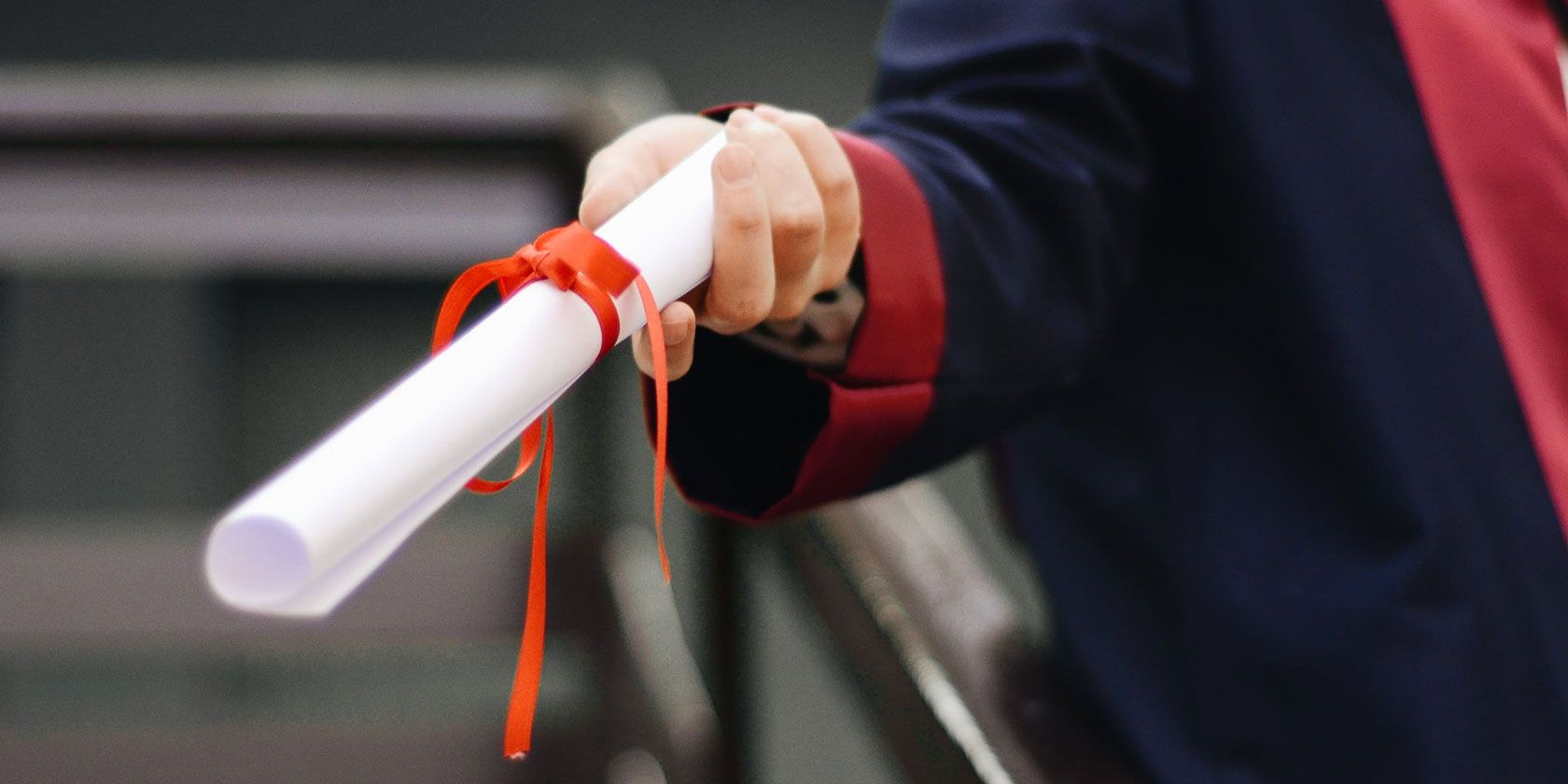
Graduation ceremony
McElspeth/Pixabay

Having already decided to invest time and money into higher education, you probably already know the benefits of obtaining a degree. But before we delve into how to protect yourself, it’s worth looking at what degree fraud actually is.

Your degree certificate serves as a confirmation of your skills, ability, and hard work. For this reason, employers are often keen to employ graduates. In challenging economic times, though, the job market can be tough, with many people competing for each role.

It’s no secret that attending college is an expensive undertaking. On top of the academic costs, you also have to find a way to pay bills, rent, and buy groceries. Unfortunately, some people out there want the benefits of a college degree but without the effort.

As a result, they fraudulently claim to have graduated from college with a degree. One method is to create fake degree certificates, but some will also combine this with identity theft to claim another person’s credentials and experience.

No one wants to be a victim of identity theft, so it’s essential to know how to protect yourself. Likewise, although it seems as though you can’t do anything about fake degree certificates, there are ways to prevent the spread of false credentials.

This is a broader problem, but an influx of fake certifications flooding the market devalues your degree. It’s in your interest to prevent the spread of counterfeit credentials as well.

So, let’s look at some of the ways you can help slow the propagation of fraudulent degree certificates and protect yourself from identity theft.

1. Don’t Post Pictures of Your Degree Certificate

Degree fraud
Olichel/Pixabay

We share most of our lives on social media, so it’s only natural you’d want to celebrate a milestone like graduating from college by posting some photographs. However, you shouldn’t post photos of your physical degree certificate.

On the certificate are personal details that enable social engineering, like your full name, the institution you attended, and the topic you studied. That said, you may be wise to this and blur or redact this personal information. Unfortunately, that doesn’t prevent degree fraud on its own.

Just as your government does with banknotes, colleges worldwide include logos, holograms, headers, and other design-based details in their certificates to verify their authenticity. By posting these details publicly, there is a risk that criminals will use that to create credible fake documents.

2. Change Your LinkedIn Privacy Settings

linkedin settings and privacy dropdown menu

LinkedIn is the most popular professional social network. While there are familiar features like the newsfeed and status updates, the site functions as an easy-to-access online resume. Searching for a job used to be a manual and active process requiring hours of form filling, website registrations, and cover letters.

These days, if you have a profile that stands out, businesses and recruiters can find and approach you with job offers. However, this only works if you share information about your background on your profile for others to view.

Currently, you have to sign in to view most profiles, but once you’re logged in, if you don’t tighten your settings, any registered member has access to the information posted on your profile. To improve your privacy, you can change your LinkedIn settings to limit who can see your email address.

In some cases, this alone could be enough for a fraudster, but it is especially useful when combined with other data they glean from your online presence.

3. Google Yourself Regularly

Screenshot of vanity search on GoogleIn the UK, April 28th is known as Ed Balls Day. In April 2011, the politician accidentally tweeted his own name when searching for posts mentioning him on Twitter. He has since embraced this, and each year pokes fun at himself. However, most people view vanity searches—purposefully hunting out online content about yourself—as something to be ashamed about.

But vanity searches serve a useful function when it comes to protecting yourself online. From old websites you no longer visit, media reports, publications you’ve authored, and even social media posts where you’re mentioned, there is a potential trove of easily accessible information about you.

There’s another reason to google yourself as well; public records websites. When you sign up for various government programs, participate in the census, or register to vote, some, if not all, of this information is publicly accessible. Although they pose a significant privacy risk, fortunately, you can delete your personal information from public record websites.

4. Share Documents Securely

ProtonMail encrypted inbox

Following research into the prevalence of degree fraud, the UK government issued recommendations to employers to not rely on your resume and inspect the certificates and transcripts themselves. If you have obtained your degree through an accredited institution, you should have no problems passing this check.

However, sharing documents with a prospective employer can be a tricky business. If they request physical copies, you can often ask your college to provide copies so you don’t have to send your originals. There will likely be a fee for this. Additionally, you should choose a secured postage option, preferably one requiring a signature upon delivery.

That said, most employers are likely to ask you for digital copies instead. Although you’ll probably have correspondence before they ask for these credentials, you should ensure you know and trust the person you are sending them to and verify that the request is legitimate. If you use one of the most secure email providers, you can encrypt the email to keep the contents only between you and the recipient.

You could even consider using one of the most secure cloud storage services. Storing your files in this secure space reduces the risk of interception and allows you more control over who can view and access it. For instance, you can choose to share the file only with a specific person and then remove this permission once the verification is complete.

Don’t Share Personal Information on Social Media

One of the best ways to protect yourself from degree fraud—or any fraud for that matter—is to be aware of and careful with the information you post online. Social media is a great way to make connections, catch up with friends, and build professional relationships.

However, this also makes it an ideal target for fraudsters, criminals, and social engineers. Educational background is a critical part of these attacks, but it isn’t the whole picture. There are plenty of other types of information you shouldn’t share online as well.

Read the full article: What Is Degree Fraud and Can You Prevent It?


Read Full Article

A Simulation Suite for Tackling Applied Reinforcement Learning Challenges


Reinforcement Learning (RL) has proven to be effective in solving numerous complex problems ranging from Go, StarCraft and Minecraft to robot locomotion and chip design. In each of these cases, a simulator is available or the real environment is quick and inexpensive to access. Yet, there are still considerable challenges to deploying RL to real-world products and systems. For example, in physical control systems, such as robotics and autonomous driving, RL controllers are trained to solve tasks like grasping objects or driving on a highway. These controllers are susceptible to effects such as sensor noise, system delays, or normal wear-and-tear that can reduce the quality of input to the controller, leading to incorrect decision-making and potentially catastrophic failures.

A physical control system: Robots learning how to grasp and sort objects using RL at the Everyday Robot Project at X. These types of systems are subject to many of the real-world challenges detailed here.

In “Challenges of Real-World Reinforcement Learning”, we identify and discuss nine different challenges that hinder the application of current RL algorithms to applied systems. We then follow up this work with an empirical investigation in which we simulated versions of these challenges on state-of-the-art RL algorithms, and benchmark the effects of each. We have open-sourced these simulated challenges in the Real-World RL (RWRL) task suite to help draw attention to these important issues, as well as accelerate research toward solving them.

The RWRL Suite
The RWRL suite is a set of simulated tasks inspired by applied reinforcement learning challenges, the goal of which is to enable fast algorithmic iterations for both researchers and practitioners, without having to run slow, expensive experiments on real-systems. While there will be additional challenges transitioning from RL algorithms that were trained in simulation to real-world applications, this suite intends to close some of the more fundamental, algorithmic gaps. At present, RWRL supports a subset of the DeepMind Control Suite domains, but the goal is to broaden the suite to support an even more diverse domain set.

Easy-to-Use & Flexible
We designed the suite with two main goals in mind. (1) It should be easy to use — a user should be able to start running experiments within minutes of downloading the suite, simply by changing a few lines of code. (2) It should be flexible — a user should be able to incorporate any combination of challenges into the environment with very little effort.

A Delayed Action Example
To illustrate the ease of use of the RWRL suite, imagine a researcher or practitioner wants to implement action delays (i.e., temporal delays on actions being sent to the environment). To use the RWRL suite, simply import the rwrl module. Next, load an environment (e.g., cartpole) with the delay_spec argument. This optional argument is specified as a dictionary configuring delay applied to actions, observations, or rewards and the number of timesteps the corresponding element is delayed (e.g., 20 timesteps). Once the environment is loaded, the effects of actions are automatically delayed without any other changes to the experiment. This makes it easy to test an RL algorithm with action delays in a range of different environments supported by the RWRL suite.

A high-level overview of the RWRL suite. Add a challenge (e.g., action delays) into the environment with a few lines of code, run a hyperparameter sweep and produce a graph shown on the right

A user can combine different challenges or choose from a set of predefined benchmark challenges by simply adding additional arguments to the load function, all of which are specified in the open-source RWRL suite codebase.

Supported Challenges
The RWRL suite provides functionality to support experiments related to eight of the nine different challenges that make applying current RL algorithms on applied systems difficult: sample efficiency; system delays; high-dimensional state and action spaces; constraints; partial observability, stochasticity and non-stationarity; multiple objectives; real-time inference; and training from offline logs. RWRL excludes the explainability challenge, which is abstract and non-trivial to define. The supported experiments are non-exhaustive and provide researchers and practitioners with the ability to analyze the capabilities of their agent with respect to each challenge dimension. Examples of the supported challenges include:

  • System Delays
    Most real systems have delays in either sensing, actuation or reward feedback, all of which can be configured and applied to any task within the RWRL suite.The graphs below show the performance of a D4PG agent as actions (left), observations (middle) and rewards (right) are increasingly delayed.
    The effect of increasing the action (left), observation (middle) and reward (right) delays respectively on a state-of-the art RL agent in four MuJoCo domains.

    As can be seen in the graphs, a researcher or practitioner can quickly gain insights as to which type of delay affects their agent’s performance. These delays can also be combined together to observe their combined effect.

  • Constraints
    Almost all applied systems have some form of constraints embedded into the overall objective, which is not common in most RL environments. The RWRL suite implements a series of constraints for each task, with varying difficulties, to facilitate research in constrained RL. An example of a complex local angular velocity constraint being violated is visualized in the video below.
    An example of constraint violations for cartpole. The red screen indicates that a violation has occurred on localized angular velocity.
  • Non-Stationarity
    The user can introduce non-stationarity by perturbing environment parameters. These perturbations are in contrast to the pixel level adversarial perturbations that have recently gained popularity in research on supervised deep learning. For example, in the human walker domain, the size of the head and friction of the ground can be modified throughout training to simulate changing conditions. A variety of schedulers are available in the RWRL suite (see our codebase for more details), along with multiple default parameter perturbations, which were carefully defined to handicap the learning capabilities of state-of-the-art learning algorithms.
    Non-stationary perturbations. The suite supports perturbing environment parameters across episodes such as changing head size (center) and contact friction (right).
  • Training from Offline Log Data
    In most applied systems, it is both slow and expensive to run experiments. There are often logs of data available from previous experiments that can be utilized to train a policy. However, it is often difficult to outperform the previous model in production due to the data being limited, of low variance, or of poor quality. To address this, we have generated offline datasets of the combined RWRL benchmark challenges, which we made available as part of a wider offline dataset release. More information can be found in this notebook.

Conclusion
Most systems rarely manifest only a single challenge, and we are excited to see how algorithms can deal with an environment in which there are multiple challenges combined with increasing levels of difficulty (‘Easy’, ‘Medium’ and ‘Hard’). We highly encourage the research community to try and solve these challenges, as we believe that solving them will facilitate more widespread applications of RL to products and real-world systems.

While the initial set of RWRL suite features and experiments provide a starting point for closing the gap between the current state of RL and the challenges of applied systems, there is still much work to do. The supported experiments are not exhaustive and we welcome new ideas from the wider community to better evaluate the capabilities of our RL agents. Our main goal with this suite is to highlight and encourage research on the core problems that limit the effectiveness of RL algorithms in applied products and systems and to accelerate progress towards enabling future RL applications.

Acknowledgements
We would like to thank our core contributor and co-author Nir Levine for his invaluable help. We would also like to thank our co-authors Jerry Li, Sven Gowal, Todd Hester and Cosmin Paduraru as well as Robert Dadashi, the ACME team, Dan A. Calian, Juliet Rothenberg and Timothy Mann for their contributions.


The Philips Hue Play HDMI Sync Box makes any home theater a bit more theatrical


Philips has steadily expanded its Hue line of smart lighting products to cover the entire home, inside and out. But while the ability to remotely control your lighting, including adjusting color, intensity and brightness is great, one of its more recent products focuses more on how to turn all those connected lights into a dynamic, at-home interactive entertainment experience. The Philips Hue Play HDMI Sync Box is a relatively simple device that sits between your video sources, including things like game consoles and the Apple TV, and your television, enabling synced light shows that can take advantage of a wide range of Hue products.

The basics

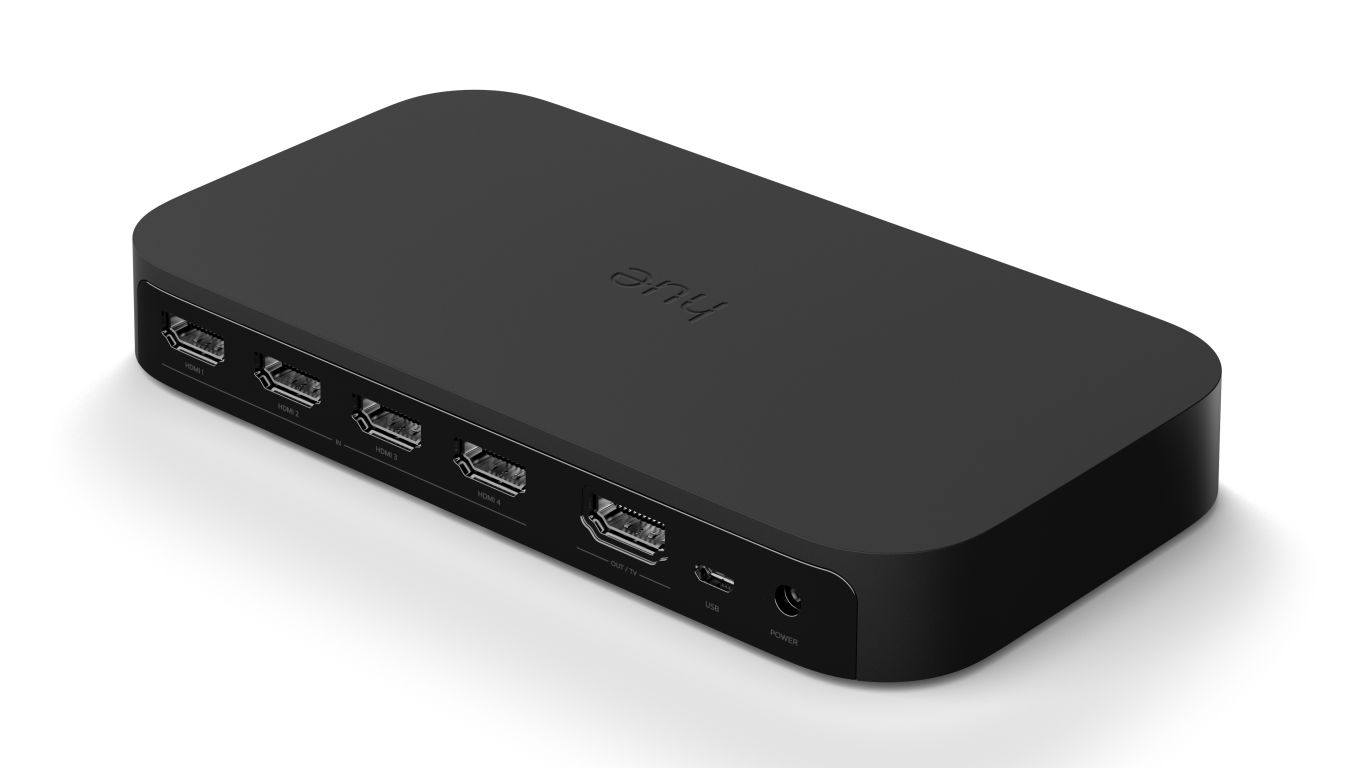
The Hue Play HDMI Sync Box is at core an HDMI switcher, offering four HDMI inputs and a single HDMI output.  Signals from your input devices (ie. Apple TV, Roku, Xbox, PS4, etc.) go into the box, and are passed through to the TV, with switching happening automatically depending on which device is most recently active (you can also change them manually with the app and with voice controls).

The Sync Box supports a range of modern quality standards for display and audio, and even more recently thanks to a firmware update released by Philips earlier this year. It supports 4K 60Hz resolution, HDR10+ and Dolby Vision standards, as well as Dolby Atmos surround sound. It also supports HDMI 2.0b with HDCP 2.2 compliance for copyright protection.

You will need not only Hue colored lights, but also a Hue Bridge (the second-generation, rounded square version) to ensure that the Hue Sync Box is more than just a particularly expensive HDMI hub, but it does that job very well, too. If you do have Hue products, like the Hue Play light bars that can easily mount on top of your TV stand or to the back of your TV itself, or the Hue Signe multi-colored floor or table lamps, then you can use the Sync companion app to ensure your lights reflect what’s going on on screen – for any video that plays through the box from any source.

Image Credits: Philips

Design and performance

Why would you want this? Well, mostly because it looks really, really cool. Hue Sync has already been available as a software feature for you to use with video played back on Macs and PCs, when used in combination with a monitoring tool, but that has a lot of limitations, including not being able to work with official Netflix apps and Netflix in the browser. The Sync Box eliminates any potential roadblocks and also means you can use regular streaming and gaming sources without having to run a media center PC.

The box itself is relatively large, but that seems like it’s mostly to accommodate the multiple HDMI ports. It’s very short, despite being about twice the surface area of an Apple TV, so it should be very easy to integrate into your existing home theatre setup, whatever that entails.

Setting up the Hue Play HDMI Sync Box is very easy, and requires only installing the app and pressing the sync button on your Hue Bridge when instructed to do so. As mentioned, you can plug in up to four sources and the box will switch between them automatically when you use an input device, or you can also manually change the input (and rename them) using the app. The app also allows you to tweak the intensity, brightness and responsiveness of the light, making it more subtle or more extreme, depending on your preferences and your activity. A ‘Game’ setting, for instance, sets it to maximum intensity and responsiveness for a more dynamic effect befitting fast-paced interactive content.

Image Credits: Philips

I found that the lighting was extremely good at mimicking the colors and brightness of a scene, especially if you take the time to accurately set up the position of your Hue lights for a dedicated “entertainment area” in the official main Hue app. It’s an effect that, when used in its most subtle settings, can basically fade away but still provide genuine enhancement for the watching experience, making it feel more immersive. At its maxed out settings, it’s much more noticeable, but still something that basically fades away into the background over an extended period of use, in a good way.

Especially since the firmware update, the Hue Play Sync Box has proven a fantastic addition to my home theater setup, providing an extra bit of flair to every TV watching experience. It’s obviously more effective in dark rooms, but it really seems to especially complement high-quality OLED screens that produce vibrant colors and true, deep blacks.

Bottom line

The Hue Play HDMI Sync Box is a bit of an extravagance at $229.99, but it definitely adds to the overall home TV-watching experience, for movies, streaming, and for gaming. The four HDMI inputs mean you can also use it to add more ports to your TV, if that’s something you need, and the recent updates mean you’re not going to sacrifice any video quality while doing so.


Read Full Article

12 August 2020

When you need content to build links, use social proof of concept


Before tackling a new content idea, it’s comforting to have evidence that it’ll go off without a hitch.

Of course, that’s not possible.

You can never know 100% that a piece of content will meet your objectives. But you can get a better sense of whether it’s likely to succeed.

We call it “social proof of concept.” This strategy is often used by marketers as a way to gauge the promotional viability of what they’re going to create.

Let’s examine what it is and how to use it to create compelling content.

What is “social proof of concept”?

“Social proof of concept” is one of the many ways you can come up with content ideas.

It essentially means a similar piece of content has performed well in the past, meaning it’s likely that something in the same vein that’s better will perform even more impressively now.

By exploring content examples that got a ton of social engagement, you can ask yourself:

  • Are people talking about the topic?
  • What was it about this content that might have made it so successful?
  • Is there something missing that we can add/improve upon?
  • Is there something about the methodology/design we can learn from?
  • What conversation is happening around the topic that you can contribute to now?
  • Is there an idea that complements this content and contributes to the discussion?

When you can identify what’s been successfully engaging in the past, you can start with a much higher chance of creating something that really resonates with people.

Where do I find social proof of concept for my ideas?

My favorite places to look for social proof of concept is on Reddit, Twitter, YouTube and others. I’ll walk through my process for vetting potential topics and methods of finding inspiration for new, related ideas.