12 November 2019

No one knows how effective digital therapies are, but a new tool from Elektra Labs aims to change that


Depending on which study you believe, the wearable and digital health market could be worth anywhere from $30 billion to nearly $90 billion in the next six years.

If the numbers around the size of the market are a moving target, just think about how to gauge the validity and efficacy of the products that are behind all of those billions of dollars in spending.

Andy Coravos, the co-founder of Elektra Labs, certainly has.

Coravos, whose parents were a dentist and a nurse practitioner, has been thinking about healthcare for a long time. After a stint in private equity and consulting, she took a coding bootcamp and returned to the world she was raised in by taking an internship with the digital therapeutics company, Akili Interactive.

Coravos always thought she wanted to be in healthcare, but there was one thing holding her back, she says. “I’m really bad with blood.”

That’s why digital therapeutics made sense. The stint at Akili led to a position at the U.S. Food and Drug Administration as an entrepreneur in residence, which led to the creation of Elektra Labs roughly two years ago.

Now the company is launching Atlas, which aims to catalog the biometric monitoring technologies that are flooding the consumer health market.

These monitoring technologies, and the applications layered on top of them, have profound implications for consumer health, but there’s been no single place to gauge how effective they are, or whether the suggestions they’re making about how their tools can be used are even valid. Atlas and Elektra are out to change that. 

The FDA has been accelerating its clearances for software-driven products like the atrial fibrillation detection algorithm on the Apple Watch and the ActiGraph activity monitors. And big pharma companies like Roche, Pfizer and Novartis have been investing in these technologies to collect digital biomarker data and improve clinical trials.

Connected technologies could provide better care, but the technologies aren’t without risks. Specifically the accuracy of data and the potential for bias inherent in algorithms which were created using flawed datasets mean that there’s a lot of oversight that still needs to be done, and consumers and pharmaceutical companies need to have a source of easily accessible data about the industry.

”The increase in FDA clearances for digital health products coupled with heavy investment in technology has led to accelerated adoption of connected tools in both clinical trials and routine care. However, this adoption has not come without controversy,” said Coravos, co-founder and CEO of Elektra Labs, in a statement. “During my time as an Entrepreneur in Residence in the FDA’s Digital Health Unit, it became clear to me that like pharmacies which review, prepare, and dispense drug components, our healthcare system needs infrastructure to review, prepare, and dispense connected technologies components.

The analogy to a pharmacy isn’t an exact fit, because Elektra Labs currently doesn’t prepare or dispense any of the treatments that it reviews. But Atlas is clearly the first pillar that the digital therapeutics industry needs as it looks to supplant pharmaceuticals as treatments for some of the largest and most expensive chronic conditions (like diabetes).
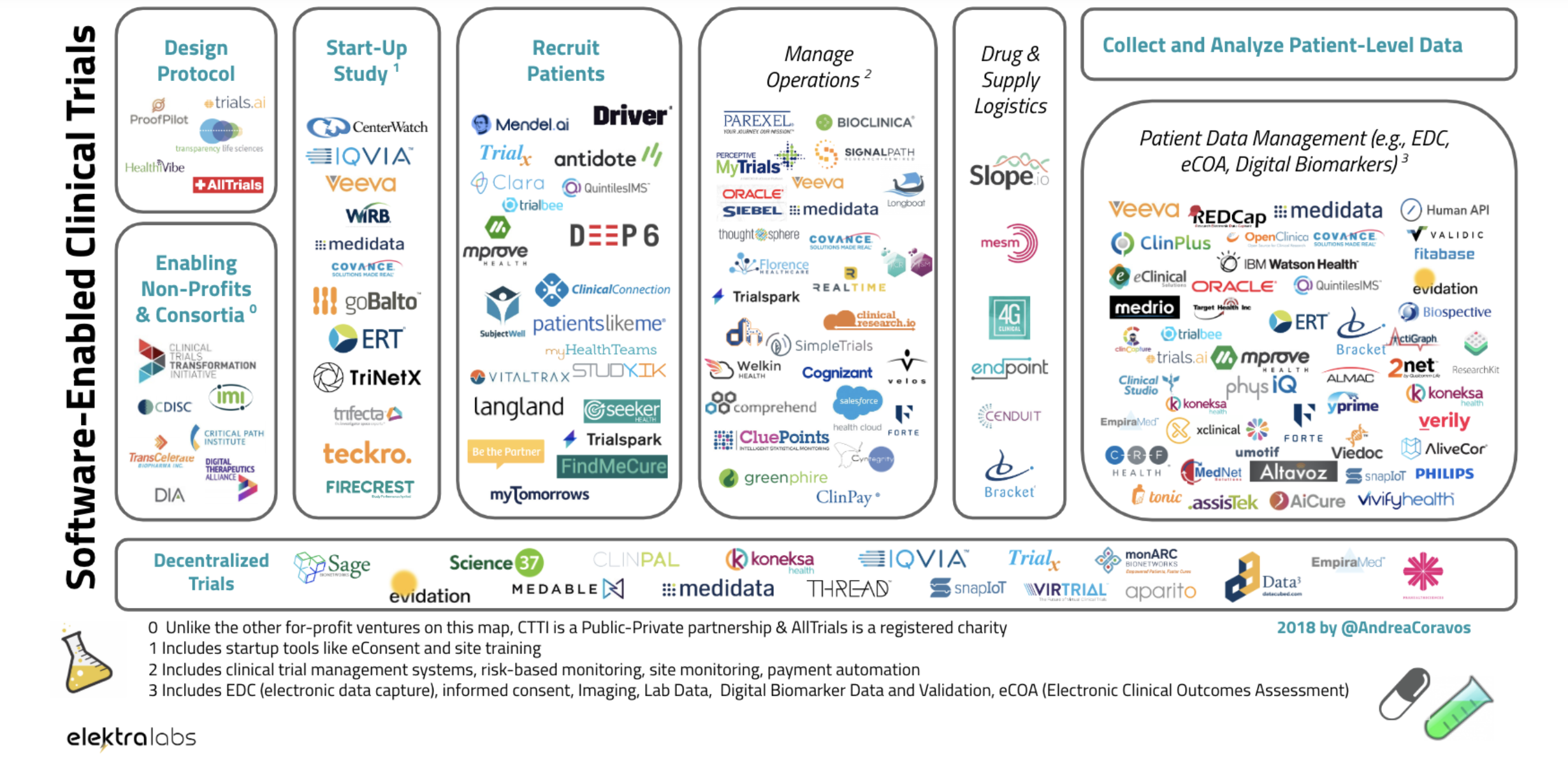
Coravos and here team interviewed more than 300 professionals as they built the Atlas toolkit for pharmaceutical companies and other healthcare stakeholders seeking a one-stop-shop for all of their digital healthcare data needs. Like a drug label, or nutrition label, Atlas publishes labels that highlight issues around the usability, validation, utility, security and data governance of a product.

In an article in Quartz earlier this year, Coravos made her pitch for Elektra Labs and the types of things it would monitor for the nascent digital therapeutics industry. It includes the ability to handle adverse events involving digital therapies by providing a single source where problems could be reported; a basic description for consumers of how the products work; an assessment of who should actually receive digital therapies, based on the assessment of how well certain digital products perform with certain users; a description of a digital therapy’s provenance and how it was developed; a database of the potential risks associated with the product; and a record of the product’s security and privacy features.

As the projections on market size show, the problem isn’t going to get any smaller. As Google’s recent acquisition bid for FitBit and the company’s reported partnership with Ascension on “Project Nightingale” to collect and digitize more patient data shows, the intersection of technology and healthcare is a huge opportunity for technology companies.

“Google is investing more. Apple is investing more… More and more of these devices are getting FDA cleared and they’re becoming not just wellness tools but healthcare tools,” says Coravos of the explosion of digital devices pitching potential health and wellness benefits.

Elektra Labs is already working with undisclosed pharmaceutical companies to map out the digital therapeutic environment and identify companies that might be appropriate partners for clinical trials or acquisition targets in the digital market.

“The FDA is thinking about these digital technologies, but there were a lot of gaps,” says Coravos. And those gaps are what Elektra Labs is designed to fill. 

At its core, the company is developing a catalog of the digital biomarkers that modern sensing technologies can track and how effective different products are at providing those measurements. The company is also on the lookout for peer-reviewed published research or any clinical trial data about how effective various digital products are.

Backing Coravos and her vision for the digital pharmacy of the future are venture capital investors including Maverick Ventures, Arkitekt Ventures, Boost VC, Founder Collective, Lux Capital, SV Angel, and Village Global.

Alongside several angel investors, including the founders and chief executives from companies including: PillPack, Flatiron Health, National Vision, Shippo, Revel and Verge Genomics, the venture investors pitched in for a total of $2.9 million in seed funding for Coravos’ latest venture.

“Timing seems right for what Elektra is building,” wrote Brandon Reeves, an investor at Lux Capital, which was . one of the first institutional investors in the company. “We have seen the zeitgeist around privacy data in applications on mobile phones and now starting to have the convo in the public domain about our most sensitive data (health).” 

If the validation of efficacy is one key tenet of the Atlas platform, then security is the other big emphasis of the company’s digital therapeutic assessment.  Indeed, Coravos believes that the two go hand-in-hand. As privacy issues proliferate across the internet, Coravos believes that the same troubles are exponentially compounded by internet-connected devices that are monitoring the most sensitive information that a person has — their own health records.

In an article for Wired, Koravos wrote:

Our healthcare system has strong protections for patients’ biospecimens, like blood or genomic data, but what about our digital specimens? Due to an increase in biometric surveillance from digital tools—which can recognize our face, gait, speech, and behavioral patterns—data rights and governance become critical. Terms of service that gain user consent one time, upon sign-up, are no longer sufficient. We need better social contracts that have informed consent baked into the products themselves and can be adjusted as user preferences change over time.

We need to ensure that the industry has strong ethical underpinning as it brings these monitoring and surveillance tools into the mainstream. Inspired by the Hippocratic Oath—a symbolic promise to provide care in the best interest of patients—a number of security researchers have drafted a new version for Connected Medical Devices.

With more effective regulations, increased commercial activity, and strong governance, software-driven medical products are poised to change healthcare delivery. At this rate, apps and algorithms have the opportunity to augment doctors and complement—or even replace—drugs sooner than we think.


Read Full Article

Dutch court orders Facebook to ban celebrity crypto scam ads after another lawsuit


A Dutch court has ruled that Facebook can be required to use filter technologies to identify and pre-emptively take down fake ads linked to crypto currency scams that carry the image of a media personality, John de Mol, and other well known celebrities.

The Dutch celerity filed a lawsuit against Facebook in April over the misappropriation of his and other celebrities’ likeness to shill Bitcoin scams via fake ads run on its platform.

In an immediately enforceable preliminary judgement today the court has ordered Facebook to remove all offending ads within five days, and provide data on the accounts running them within a week.

Per the judgement, victims of the crypto scams had reported a total of €1.7 million (~$1.8M) in damages to the Dutch government at the time of the court summons.

The case is similar to a legal action instigated by UK consumer advice personality, Martin Lewis, last year, when he announced defamation proceedings against Facebook — also for misuse of his image in fake ads for crypto scams. Lewis withdrew the suit at the start of this year after Facebook agreed to apply new measures to tackle the problem: Namely a scam ads report button. It also agreed to provide funding to a UK consumer advice organization to set up a scam advice service.

In the de Mol case the lawsuit was allowed to run its course — resulting in today’s preliminary judgement against Facebook.

It’s not yet clear whether the company will appeal but in the wake of the ruling Facebook has said it will bring the scam ads report button to the Dutch market early next month.

In court, the platform giant sought to argue that it could not more proactively remove the Bitcoin scam ads containing celebrities’ images on the grounds that doing so would breach EU law against general monitoring conditions being placed on Internet platforms.

However the court rejected that argument, citing a recent ruling by Europe’s top court related to platform obligations to remove hate speech, also concluding that the specificity of the requested measures could not be classified as ‘general obligations of supervision’.

It also rejected arguments by Facebook’s lawyers that restricting the fake scam ads would be restricting the freedom of expression of a natural person, or the right to be freely informed — pointing out that the ‘expressions’ involved are aimed at commercial gain, as well as including fraudulent practices.

Facebook also sought to argue it is already doing all it can to identify and take down the fake scam ads — saying too that its screening processes are not perfect. But the court said there’s no requirement for 100% effectiveness for additional proactive measures to be ordered.

Its ruling further notes a striking reduction in fake scam ads using de Mol’s image since the lawsuit was announced

Facebook’s argument that it’s just a neutral platform was also rejected, with the court pointing out that its core business is advertising. It also took the view that requiring Facebook to apply technically complicated measures and extra effort, including in terms of manpower and costs, to more effectively remove offending scam ads is not unreasonable in this context.

The judgement orders Facebook to remove fake scam ads containing celebrity likenesses from Facebook and Instagram within five days of the order — with a penalty of €10k per day that Facebook fails to comply with the order, up to a maximum of €1M (~$1.1M).

The court order also requires that Facebook provides data to the affected celebrity on the accounts that had been misusing their likeness within seven days of the judgement, with a further penalty of €1k per day for failure to comply, up to a maximum of €100k.

Facebook has also been ordered to pay the case costs.

Responding to the judgement in a statement, a Facebook spokesperson told us:

We have just received the ruling and will now look at its implications. We will consider all legal actions, including appeal. Importantly, this ruling does not change our commitment to fighting these types of ads. We cannot stress enough that these types of ads have absolutely no place on Facebook and we remove them when we find them. We take this very seriously and will therefore make our scam ads reporting form available in the Netherlands in early December. This is an additional way to get feedback from people, which in turn helps train our machine learning models. It is in our interest to protect our users from fraudsters and when we find violators we will take action to stop their activity, up to and including taking legal action against them in court.

One legal expert describes the judgement as “pivotal“. Law professor Mireille Hildebrandt told us that it provides for as an alternative legal route for Facebook users to litigate and pursue collective enforcement of European personal data rights. Rather than suing for damages — which entails a high burden of proof.

Injunctions are faster and more effective, Hildebrandt added.

The judgement also raises questions around the burden of proof for demonstrating Facebook has removed scam ads with sufficient (increased) accuracy; and what specific additional measures it might deploy to improve its takedown rate.

Although the introduction of the ‘report scam ad button’ does provide one clear avenue for measuring takedown performance.

The button was finally rolled out to the UK market in July. And while Facebook has talked since the start of this year about ‘envisaging’ introducing it in other markets it hasn’t exactly been proactive in doing so — up til now, with this court order. 


Read Full Article

Instagram Stories launches TikTok clone Reels in Brazil


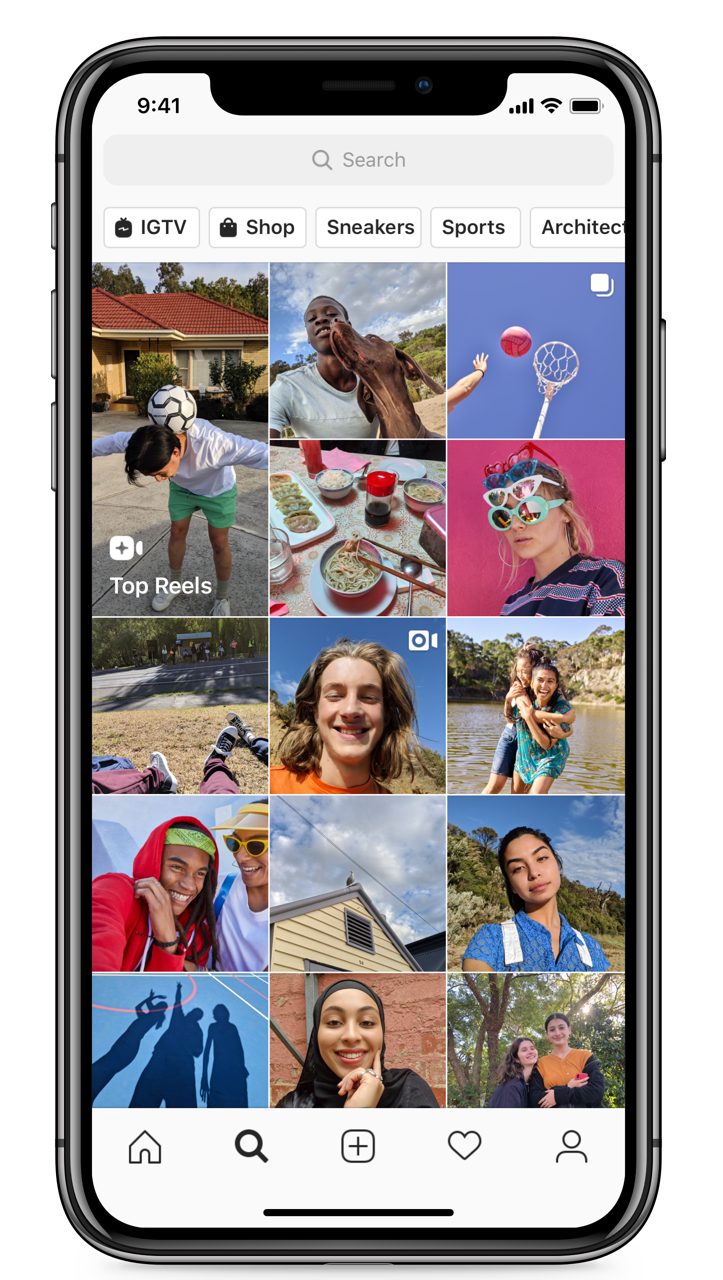
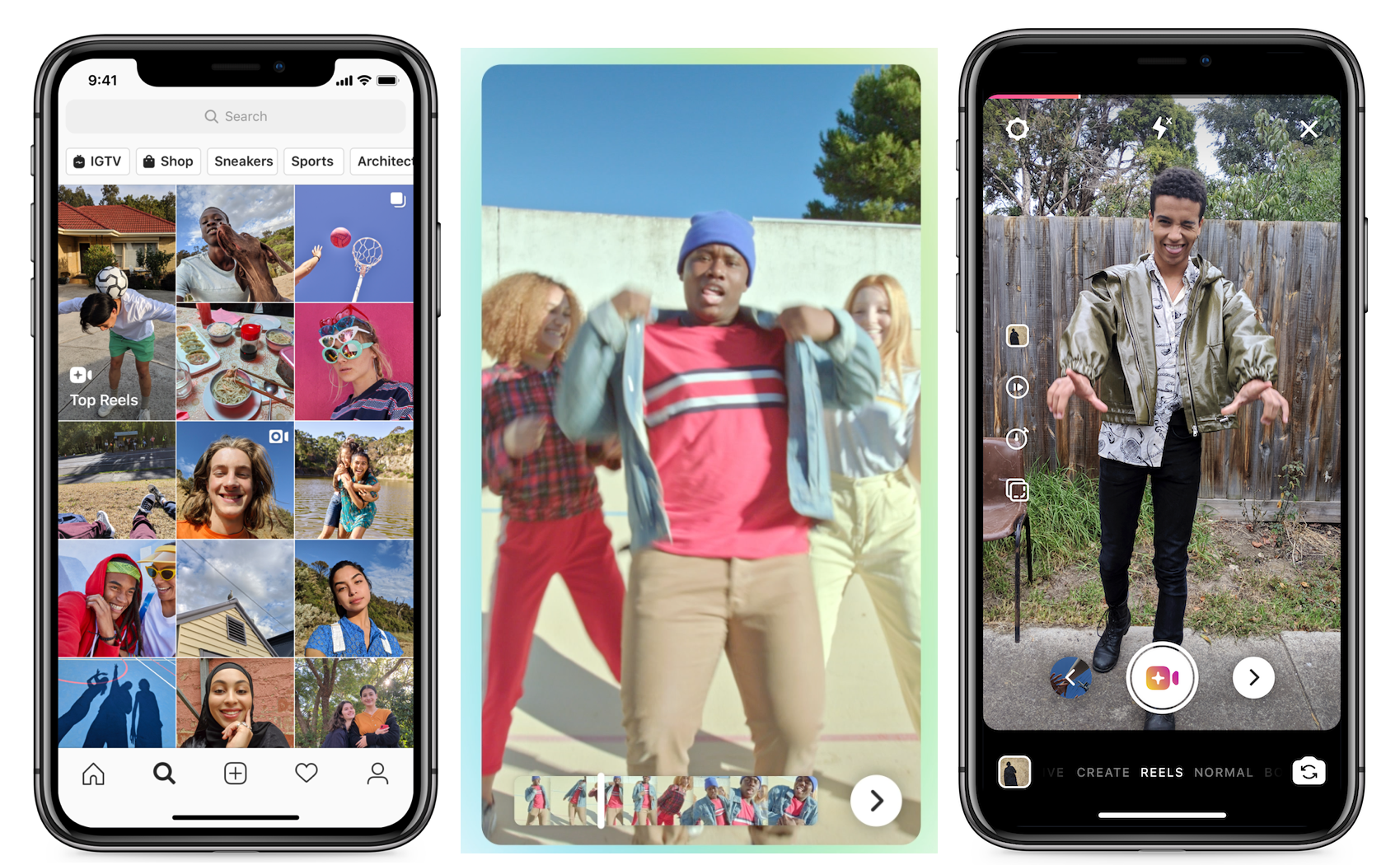
Instagram is launching a video-music remix feature to finally fight back against Chinese social rival TikTok. Instagram Reels lets you make 15-second video clips set to music and share them as Stories, with the potential to go viral on a new Top Reels section of Explore. Just like TikTok, users can soundtrack their Reels with a huge catalog of music, or borrow the audio from anyone’s else video to create a remix of their meme or joke. 

Reels is launching today on iOS and Android but limited to just Brazil where it’s called Cenas. Reels leverages all of Instagram’s most popular features to frankenstein together a remarkably coherent competitor to TikTok’s rich features and community of 1.5 billion monthly users including 122 million in the US according to Sensor Tower. Instead of trying to start from scratch like Facebook’s Lasso, Instagram could cross-promote Reels heavily to its own billion users.

But Instagram’s challenge will be retraining its populace to make premeditated, storyboarded social entertainment instead of just spontaneous, autobiographical social media like with Stories and feed posts.
“I think Musically before TikTok, and TikTok deserve a ton of credit for popularizing this format” admits Instagram director of product management Robby Stein. That’s nearly verbatim what Instagram founder Kevin Systrom told me about Snapchat when Instagram launched Stories. “They deserve all the credit”, he said before copying Snapchat so ruthlessly that it stopped growing for three years.

Chinese startups were always criticized for copying American companies, but Reels’ launch signals the grand shift to cloning in the opposite direction.

Yet Stein insists “No two products are exactly the same, and at the end of the day sharing video with music is a pretty univeral idea we think everyone might be interested in using. The focus has been on how to make this a unique format for us.” The key to that divergence? “Your friends are already all on Instagram. I think thats only true of Instagram.”

Throwing Instagram’s Weight Around

Starting in Brazil before potentially rolling out elsewhere could help Instagram nail down its customization and onboarding strategy. Luckily, Brazil has a big Instagram population, a deeply musical culture, and a thriving creator community, says Stein.

It also isn’t completely obsessed with TikTok yet like fellow developing market India. As Facebook CEO Mark Zuckerberg said about trying to grow Lasso, “We’re trying to first see if we can get it to work in countries where TikTok is not already big.” Instagram used this internationalization strategy to make Stories a hit where Snapchat hadn’t expanded yet, and it worked surprisingly well.

Instagram also has the US government on its side for a change. While its parent company Facebook is being investigated for anti-trust and privacy violations, TikTok is also under scrutiny.

Chinese tech giant ByteDance’s $1 billion 2017 acquisition of Musical.ly, another Chinese app similar to TikTok but with traction in the US, is under review by the Committee For Foreign Investment In The United States. ByteDance turned Musical.ly into TikTok, but it could have to unwind the acquisitions or make other concessions to US regulators to protect the country’s national security. Several Senators have also railed against TikTok injecting Chinese social values via censorship into the American discourse.

Perhaps Instagram’s best shot at differentiation is through its social graph. While TikTok is primarily a feed broadcasting app, Instagram can work Reels into its Close Friends and Direct messaging features potentially opening a new class of creators — shy one who only want to share with people they trust not to make fun of them. A lot of this lipsyncing / dancing / humor skit content can be kinda cringey when people don’t get it just right.

How Instagram Reels Works

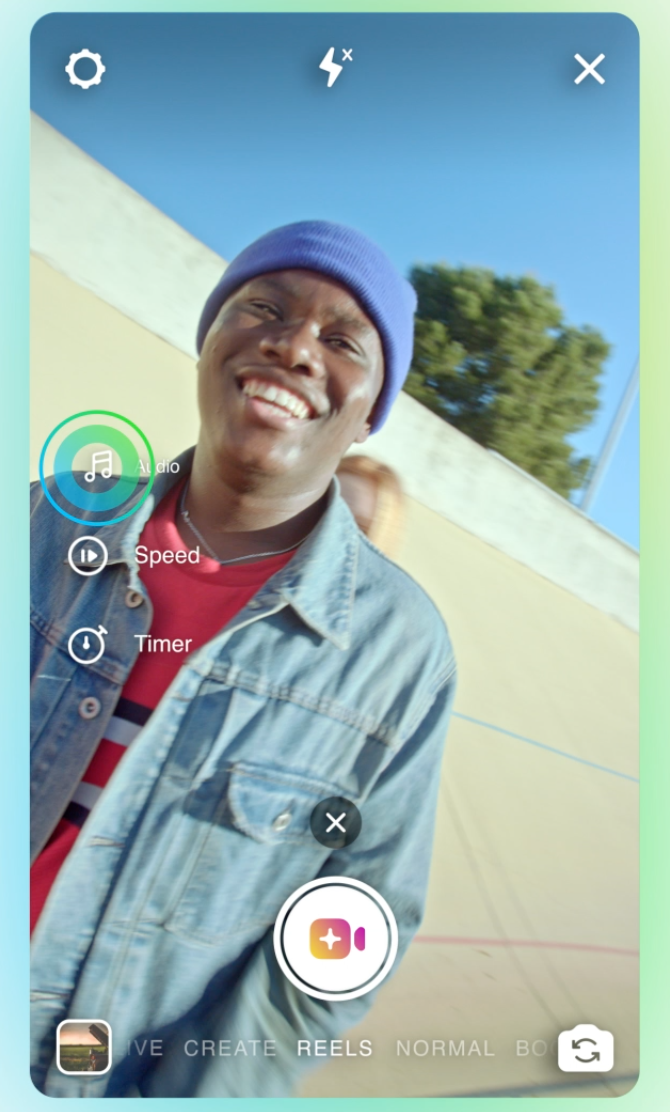
Users will find it in the Instagram Stories shutter modes tray next to Boomerang and Super-Zoom. They can either record with silence, borrow the audio of another video they find through hashtag search or Explore, or search a popular or trending song. Some audio snippets will even get their own pages showing off top videos made with them. Teaching users to poach audio for their remixes will be essential to getting Reels off the ground.

Facebook’s enormous music collection secured from all the major labels and many indie publishers powers Reels. Users pick the chunk to the song they want, and can then record or upload multiple video clips to fill out their Reel. Instagram has been building towards this moment since June 2018 when it first launched its Music stickers.

Instagram is adding some much-needed editing tools for Reels like timed captions so words appear in certain scenes, and a ghost overlay option for lining up transitions so they look fluid. Still, Reels lacks some of the video filters and special effects that TikTok has purposefully built to power certain gags and cuts between scenes. Stein says those are coming though.

Once users are satisfied with their editing job, they can post their Reel to Stories, Close Friends, or message it to people. If shared publicly, it will also be eligible to appear in the Top Reels section of the Explore tab. Most cleverly, Instagram works around its own ephemerality by letting users add their Reels to their profile’s non-disappearing Highlights for a shot to show up on Explore even after their 24-hour story expires.

Instead of having to monetize later somehow, Instagram can immediately start making money from Reels since it already shows ads in Stories and the Explore tab. The feature is sure to get plenty of exposure since 500 million of Instagram’s users already open Stories and Explore each month. Still, Reels’ composer and feed will be buried a few extra taps away from the homescreen compared to TikTok.

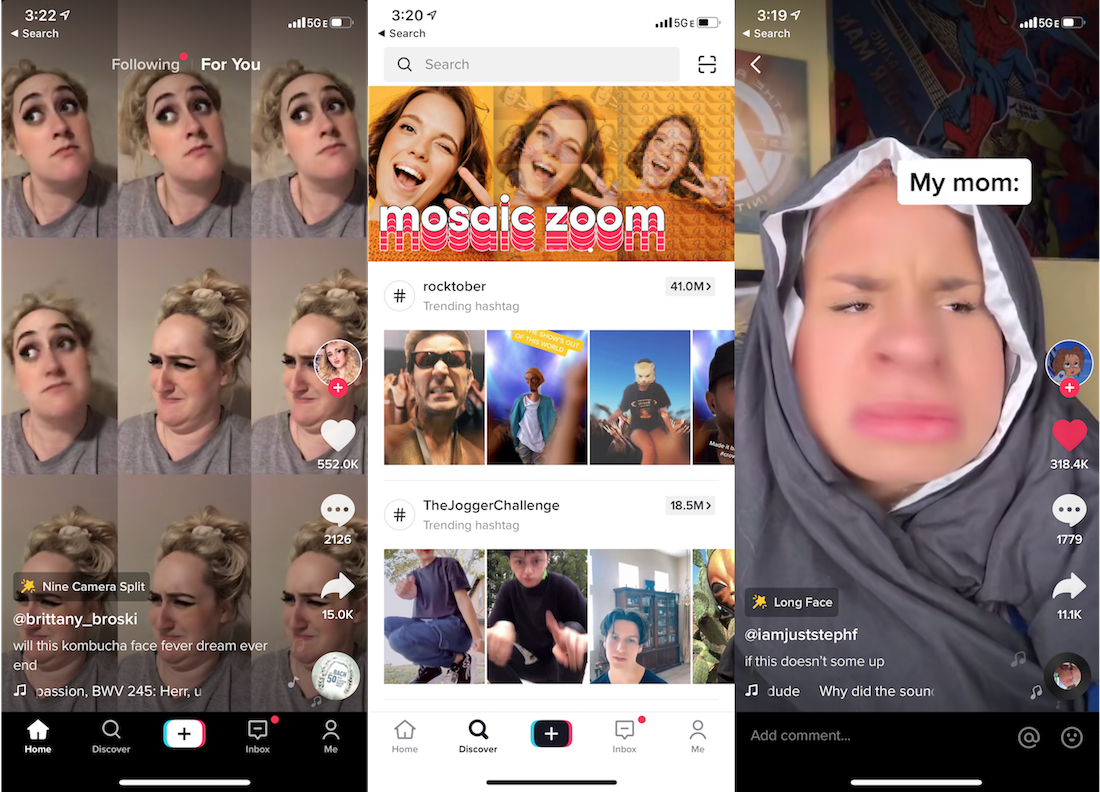
TikTok Screenshots

Cloning TikTok isn’t just about the features, though Reels does a good job of copying the core ones. Creating scripted content is totally new for most Instagram users, and could feel too showy or goofy for an app known for its seriousness.

TikTok is 100% about acting ridiculous just to make people smile, your personal image be damned. That’s the opposite of the carefully manicured image of glamor and glory most Instagram users try to project. It could feel counterintuitively more awkward to perform comedy in front of your real friends and fans than it does on a dedicated world stage.

Instagram, and Instagrammers, may have to lose their artful, cool aesthetic to embrace the silliness of tomorrow’s social entertainment. But if Reels can change Instagram’s culture to one where we’re comfortable looking stupid, it could beat TikTok’s talent competition by opening a million private karaoke rooms for goofing off just with friends.


Read Full Article

Instagram Stories launches TikTok clone Reels in Brazil


Instagram is launching a video-music remix feature to finally fight back against Chinese social rival TikTok. Instagram Reels lets you make 15-second video clips set to music and share them as Stories, with the potential to go viral on a new Top Reels section of Explore. Just like TikTok, users can soundtrack their Reels with a huge catalog of music, or borrow the audio from anyone’s else video to create a remix of their meme or joke. 

Launching today limited to just Brazil where it’s called Cenas, Reels leverages all of Instagram’s most popular features to frankenstein together a remarkably coherent competitor to TikTok’s rich features and community of 1.5 billion monthly users including 122 million in the US according to Sensor Tower. Instead of trying to start from scratch like Facebook’s Lasso, Instagram could cross-promote Reels heavily to its own billion users.

But Instagram’s challenge will be retraining its populace to make premeditated, storyboarded social entertainment instead of just spontaneous, autobiographical social media like with Stories and feed posts.

“I think Musically before TikTok, and TikTok deserve a ton of credit for popularizing this format” admits Instagram director of product management Robby Stein. “No two products are exactly the same, and at the end of the day sharing video with music is a pretty univeral idea we think everyone might be interested in using. The focus has been on how to make this a unique format for us.”

Throwing Instagram’s Weight Around

Starting in Brazil before potentially rolling out elsewhere could help Instagram nail down its customization and onboarding strategy. Luckily, Brazil has a big Instagram population, a deeply musical culture, and a thriving creator community, says Stein.

It also isn’t completely obsessed with TikTok yet like fellow developing market India. As Facebook CEO Mark Zuckerberg said about trying to grow Lasso, “We’re trying to first see if we can get it to work in countries where TikTok is not already big.” Instagram used this internationalization strategy to make Stories a hit where Snapchat hadn’t expanded yet, and it worked surprisingly well.

Instagram also has the US government on its side for a change. While its parent company Facebook is being investigated for anti-trust and privacy violations, TikTok is also under scrutiny.

Chinese tech giant ByteDance’s $1 billion 2017 acquisition of Musical.ly, another Chinese app similar to TikTok but with traction in the US, is under review by the Committee For Foreign Investment In The United States. ByteDance turned Musical.ly into TikTok, but it could have to unwind the acquisitions or make other concessions to US regulators to protect the country’s national security. Several Senators have also railed against TikTok injecting Chinese social values via censorship into the American discourse.

Perhaps Instagram’s best shot at differentiation is through its social graph. While TikTok is primarily a feed broadcasting app, Instagram can work Reels into it’s Close Friends and Direct messaging features potentially opening a new class of creators — shy one who only want to share with people they trust not to make fun of them. A lot of this lipsyncing / dancing / humor skit content can be kinda cringey when people don’t get it just right.

How Instagram Reels Works

Users will find it in the Instagram Stories shutter modes tray next to Boomerang and Super-Zoom. They can either record with silence, borrow the audio of another video they find through hashtag search or Explore, or search Facebook’s enormous music collection secured from all the major labels and many indie publishers. Users pick the chunk to the song they want, and can then record or upload multiple video clips to fill out their Reel.

Once satisfied with their editing job, scene-by-scene captions, and ghost overlay-assisted transitions they can share a Reel to their Story, Close Friends, or message it to people. If shared publicly, it will also be eligible to appear in the Top Reels section of the Explore tab. Most cleverly, Instagram works around its own ephemerality by letting users add their Reels to their profile’s non-disappearing Highlights for a shot to show up on Explore even after their 24-hour story expires.

Instead of having to monetize later somehow, Instagram can immediately start making money from Reels since it already shows ads in Stories and the Explore tab.

Cloning TikTok isn’t just about the features, though Reels does a good job of copying the core ones while leaving out AR effects and transitions for now. But creating scripted content is totally new for most Instagram users, and could feel too showy or goofy for an app known for its seriousness. Instagram may have to lose its artful, cool vibe to embrace the silliness of tomorrow’s social entertainment.


Read Full Article

Snapchat Spectacles 3 review: Pretty, pricey


No one’s going to pay $380 for decent point-of-view video glasses and some trippy filters. But that’s kind of the point of Snapchat Spectacles 3. They’re merely a stepping stone towards true augmented reality eyewear — a public hardware beta for the Snap Lab R&D team that Apple and Facebook aren’t getting as they tinker in their bunkers.

Still, I hoped for something that could at least unlock the talents of forward-thinking video creators. Yet the unpredictable and uncontrollable AR effects sadly fail to make use of Spectacles‘ fashionable form factor in premium steel. The clunky software requires clips be uploaded for processing and then re-downloaded before you can apply the 10 starter effects like a rainbow landscape filter or a shimmering fantasy falcon. This all makes producing AR content a chore instead of a joy for something only briefly novel.

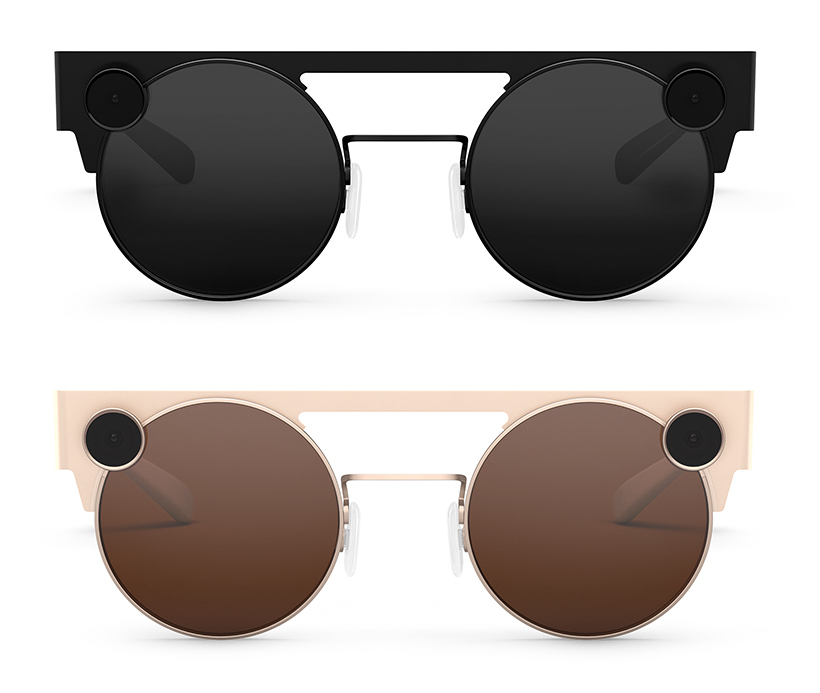
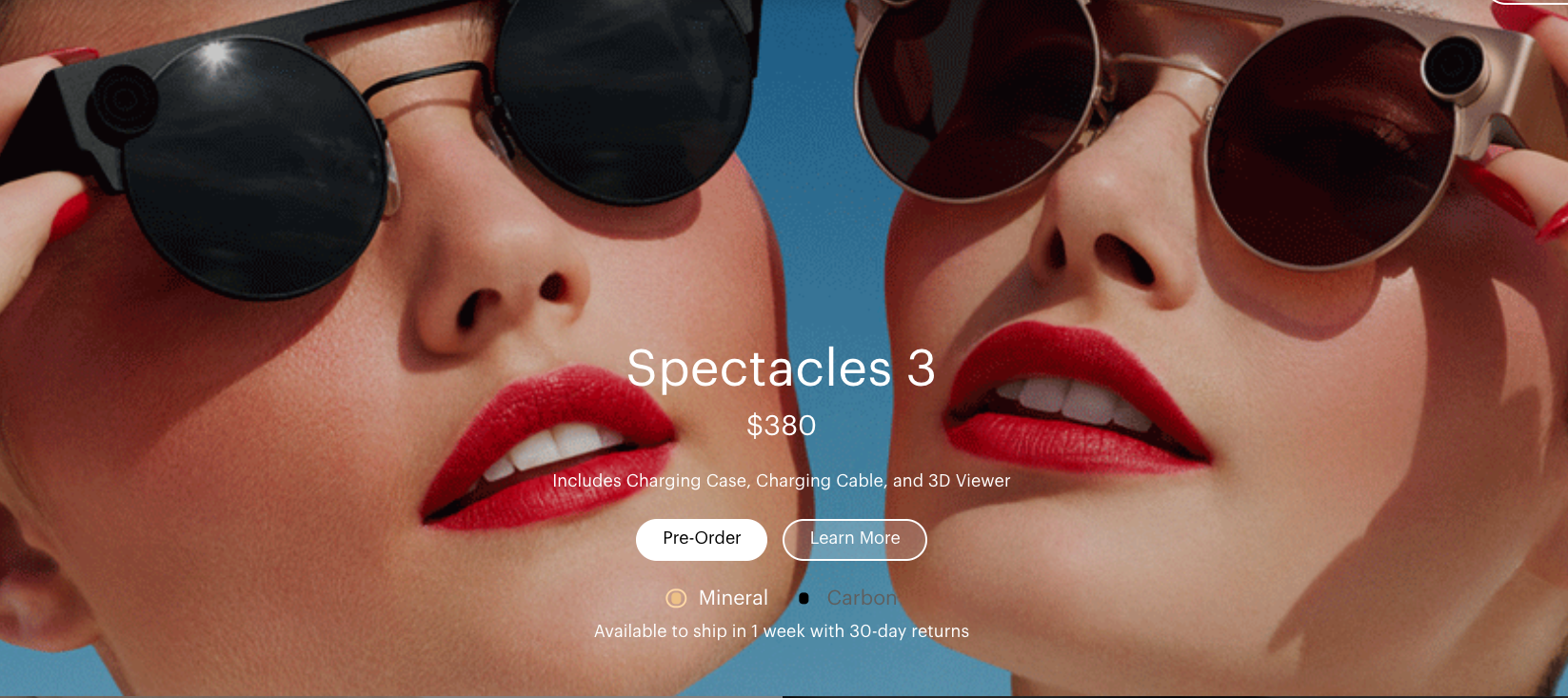
Spectacles 3 go on sale today for $380 in black ‘Carbon’ or rose gold-ish ‘Mineral’ color schemes on Spectacles.com, Neiman Marcus, and Ron Robinson in the UK, shipping in a week. Announced in August, they’re sunglasses with two stereoscopic lenses capable of capturing depth to produce “3D” photos, and videos you can add AR effects to on your phone. You also get a very nice folds-flat leather USB-C charging case that powers up the glasses four times, and a Google Cardboard-style VR viewer.

“Spectacles 3 is a limited production run. We’re not looking for massive sales here. We’re targeting people who are excited about these effects  — creative storytellers” says Matt Hanover of the Snap Lab team.

Gen 1 featured a “toy-like design to get people used to wearing tech on their face”, while Gen 2 and 2.1 had a more subdued look abandoning the coral color schemes to push mainstream adoption. What Gen 3 can’t do is force a $40 million write-off due to poor sales, as V1 did after only shipping 220,000 with hundreds of thousands more gathering dust somewhere. Snap is already losing $227 million per quarter as it scrambles to break even.

So it seems with Spectacles 3 that Snap is gathering data and biding its time, trying to avoid burning too much cash until it can build a version that overlays effects atop a user’s view through the glasses. “We’re still able to get feedback from the customer and inform the future of Spectacles. That’s really the goal for us” Hanover confirms.

His CEO Evan Spiegel agrees, telling me on stage at TechCrunch Disrupt that it would be 10 years until we see augmented reality glasses worthy of mainstream consumer adoption. That’s a long time for an unprofitable company to spend competing to invest in R&D versus cash-rich companies like Facebook and Apple.

tl;dr

Spectacles could be worth the steep $380 if you’re a videographer for a living, perhaps making futuristic social media clips like Karen X Cheng, a creator Snap hired to demonstrate the device’s potential. They’re cool enough looking that you could wear them around Cannes or Coachella without people getting weirded out like they did with Google Glass. And as Snap’s Lens Studio lets anyone build 3D effects for Spectacles 3, perhaps we’ll see some filters and imaginary characters that are more than just a momentary gimmick.

But for those simply seeking first-person camera glasses, I’d still recommend the Spectacles 2 at $150 to $200 depending on style which remain available. The 3D features don’t carry the weight of paying double the price for Spec 3s. And at least the 2nd-gen Specs are waterproof, which make them great for ocean play with fun underwater shooting when you don’t want to risk losing or fizzling your phone.

“We’re testing the price point and the premium aesthetic to see if it lands with this demographic” Hanover says. But Snap’s Director Of Communications Liz Markman notes that “there isn’t this perfect one-to-one overlap with the core Snap users.”

The result is that Spectacles 3 are really more for Snap’s benefit than yours.

Slick Eyewear, Now Where’s The AR?

The Spectacles 3 software is disappointing, but you’ll be delighted when you open the box. Slick black packaging reveal sturdily built metal sunglasses with a luxury matte finish. As they magnetically dislodge from their charging case, you definitely get they sense you’re trying on something futuristic.

The style concurs, with a flat black bar at the top connecting the round lenses with a camera on both corners. Unlike the old Specs that sat right on your nose, feeling heavy at times, Spectacles 3 offers adjustable acetate non-slip nose tips to keep the weight off. All the tech is built discreetly into the hinges and temples without appearing too chunky.

Tap the button either arm, and LED light swooshes in a circle to let people know you’re recording a video for 10 seconds, with multiple presses growing that to up to 60. Tap and hold to shoot a photo, and the light blinks. There’s no obnoxious yellow rubber ring to shout “these are cameras”, and the defused LEDs are more subtle than Gen 2’s dots while remaining an obvious enough signal to passersby so they’re not creepy.

One charge powers up to 70 captures and transfers to your phone over a combined Bluetooth built-in Wifi connection. The 4 gigabyte storage holds up to 100 videos or 1200 photos, and Spectacles 3 even have GPS and GLOSNASS on-board. A 4-mic array picks up audio from others and your own voice, though they’re susceptible to windshear if you’re biking or running. They shoot at 60-frames per second in 1216 x 1216 pixels resolution while photos come in at 1642 x 1642

The magnetically-sealing folding leather USB-C charging case is my favorite part. I wish I could get an even flatter one without a battery in it for my other sunglasses. It’s a huge improvement on the unpocketable bulky triangular case of the previous versions.

A Toy Not Fun Enough For The Price

So far so good, right? But then it comes time to actually see and augment what you shot.

Pairing and syncing is much easier than Gen 1. The glasses forge a Bluetooth connection, then spawn a WiFi network for getting media to your phone faster.

If you just want to share to Snapchat, you’re in luck. Spectacles content posts to Stories or messages in its cool circular format that lets viewers tilt their phones around while always staying full-screen to reveal the edges of your shots. Otherwise, you still have to go through the chore of exporting from Snapchat to your camera roll. Spectacles can at least now export in a variety of croppings for better sharing on Instagram and elsewhere.

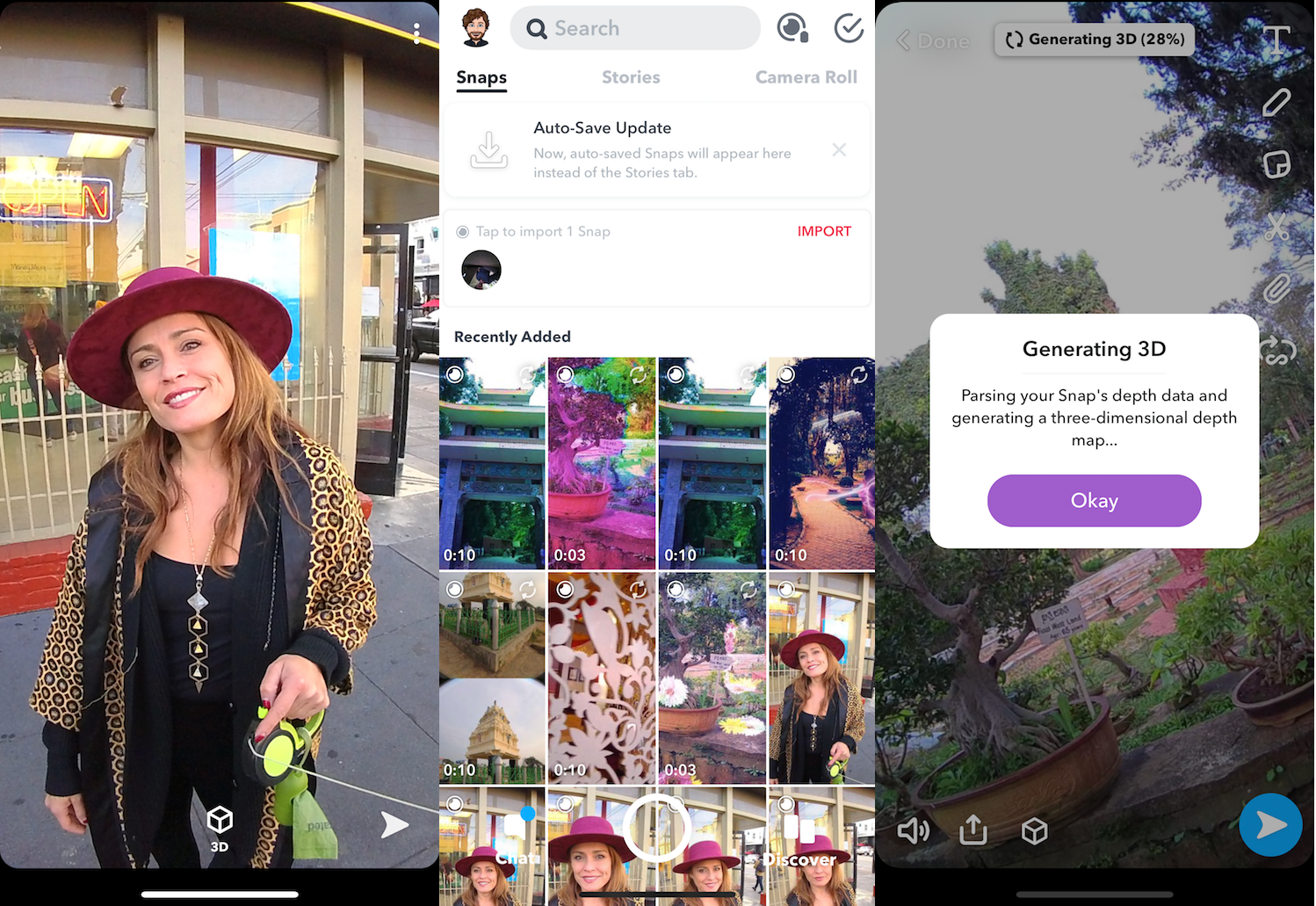
What’s new are the 3D photos and videos. They utilize the space between the stereoscopic cameras in the corners of Spectacles employ parallax to sense the depth of a scene. After tapping the 3D button on a photo, you can wiggle the perspective of the image around to almost see around the edges of what you’re looking at. Spectacles will automatically pan back and forth for you, and export 3D photos as short Boomerang-esque six-second videos.

Unfortunately, I found that I didn’t get much sense of depth from most of the 3D photos I shot or saw. It takes a very particular kind of three-dimensional object from the right angle in the right light to much sense of movement from the wiggle. Snapchat’s algorithms also had a bad habit of mistakenly assigning bits of the foreground and background to each other, breaking the illusion. Occasionally you’ll have someone’s ear or their hair left behind and disembodied by the 3D effect.

Don’t expect these to flood social media or convince prospective Spectacles buyers. The 3D selfies you can shoot on Snapchat for free look better anyways.

The biggest problem comes with the delay when playing with 3D videos. Snapchat has to do the depth processing on its servers, so you have to wait for your video to upload, get scanned, and be re-downloaded before you can apply the 3D AR filters. On WiFi that takes about 35 seconds per 10 second video, which is quite a bore. It takes forever over a mobile connection. That means you often won’t be able to apply the filters and see how they look until you’re home and unable to reshoot anything.

The filter set is also limited and haphazard. You can add a 3D bird or balloons around you, wander through golden snow or neon arcs, overlay flower projections or rainbow waves, or sprinkle on sparkles and light-bending blobs. While the bird is cute, and the rainbows and flowers are remarkably psychedelic, none of them are more than briefly entertaining.

The 3D objects often glitch through real pieces of scenery, and you can’t control them at all. No summoning the bird mid-video. My favorite trick, learned from Karen X Cheng, was to export unedited and filtered versions of a video and splice them together on my computer as scene in my demo video above. You can’t actually do that from within Snapchat.

One extra feature the team is working on is to let you see a special colored light flash on the glasses’ internal recording-on signal to alert you to incoming Snaps from certain friends. If that’s popular, would Snap try giving us more notifications through that light? Hanover says “potentially in the future.”

Snap will have to build a lot cooler filters with interactivity if they’re going to compel creators to fork over $380 for Spectacles 3. It could hope to rely on its Lens Studio community platform, but so few developers or users will have the glasses that most will stick to making and using filters for phones.

Spectacles 3 are too expensive to be a toy, but don’t excel at being much more. Videography influencers might enjoy having a pair in their tool bag. But it’s hard to imagine anyone not sharing content professionally paying for the gadget.

Iteration vs Ideation

“We’re now pushing to elevate the technology and the design to master depth technically” Hanover tells me. “Holing ourselves up within an R&D center for years and years? That’s not our approach. It’s important to meet the customer where they are today and continue to iterate and get that feedback.”

But this iteration doesn’t feel like Snap meeting the customer where they are. That raises the question of whether Snapchat is really getting enough data out of the whole endeavor to justify publicly releasing Spectacles at all. The company will have to hope that testing short-term is worth thinking short-term, when it’s trying to win the long-term war in augmented reality eyewear.


Read Full Article

Optimize Your Spending and Reduce Your Bills With Truebill


There are only two ways to get richer: earn more or spend less. Improving your salary is hard, but there are many ways to reduce your expenses. Truebill is a mobile app that helps you find the unnecessary spending. The app can also help you lower your bills and keep track of costly subscriptions. It is super secure, very smart and completely free to download.

Three-Step Financial Freedom

When your schedule is packed, budgeting can slip pretty low on the priority list. However, the main reason why most of us overspend is because we simply don’t know what we can afford.

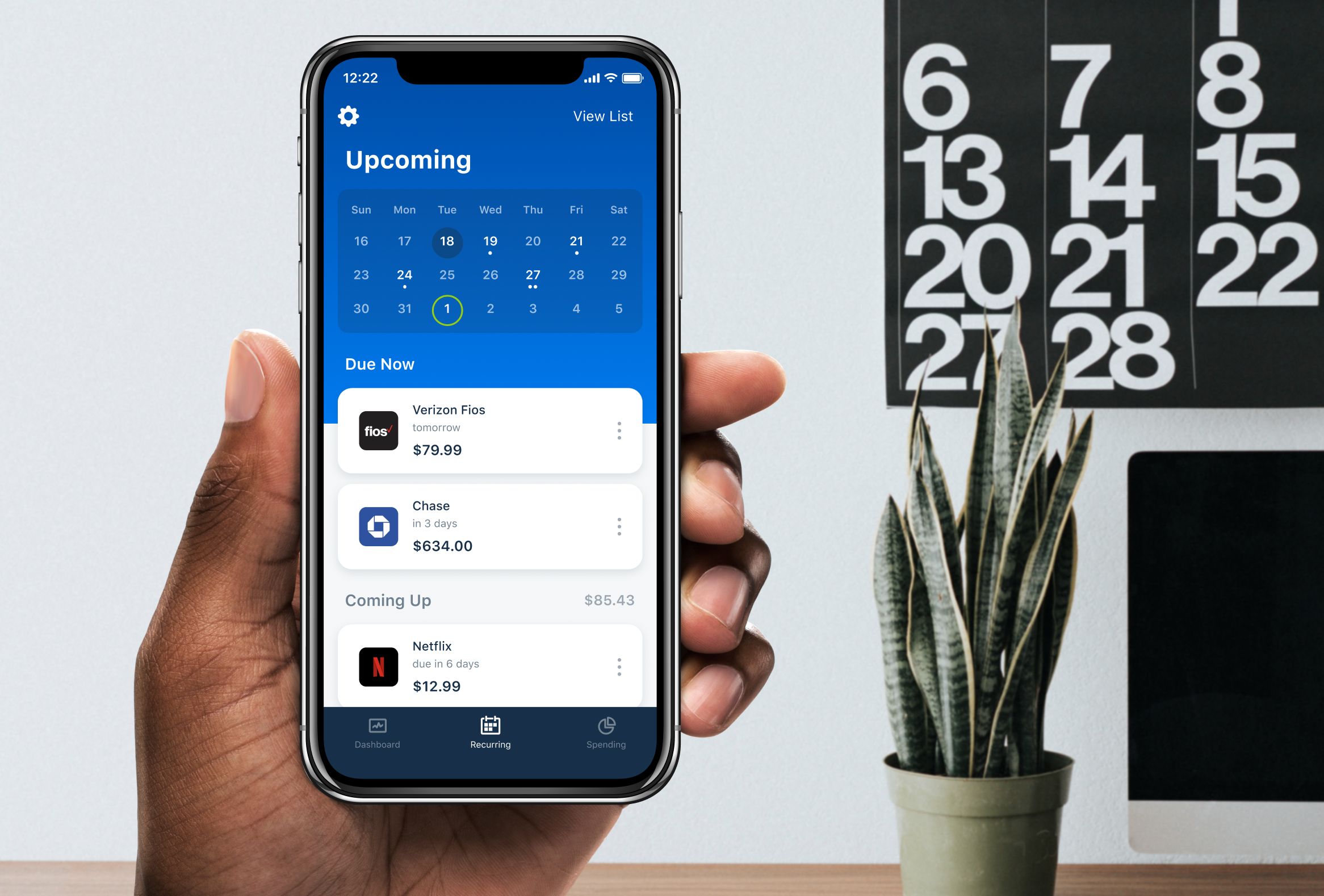
Truebill helps you take control of your financial life without spending hours hunched over a calculator. Available on iOS and Android, the free app connects to your bank and credit card accounts (using bank-level 256-bit SSL encryption) to track your income and expenses.

The data is presented in one simple dashboard, helping you gain an overview of your finances. Truebill automatically categorizes every transaction, so you can see where your money is going.

But that’s not all. Truebill lets you create savings goals, and the app will tell you how much you can spend. The app can also help you lower your bills by finding cheaper alternatives for your cell phone, cable and security. You can even monitor your subscriptions and cut the ones you don’t need.

Get Started Free

Truebill is completely free to download on iOS and Android. Head over to the homepage now to get started.

Read the full article: Optimize Your Spending and Reduce Your Bills With Truebill


Read Full Article

5 Best Sleep Apps & Methods to Fall Asleep Faster Without Interruptions


Man Sleeping

Do you have trouble falling asleep or getting a good night’s rest? There are millions of others like you. These apps and websites can help you sleep peacefully at night.

Doctors and scientists have found that lack of proper sleep can adversely affect several things, such as happiness, weight gain, productivity, etc. Plus, there are different reasons for people to not be able to sleep easily. These tools tackle various issues, and hopefully one of them is the trick you were waiting for all this time.

Note: Insomnia can be a debilitating disorder. You should seek advice from a medical professional if you have a recurring problem. These apps and tools are more to help those not diagnosed with a clinical condition.

1. Sleeep (Web): Calculate When You Should Go to Bed

Sleeep web app calculates when you should go to bed for the best sleep cycle

You don’t fall asleep the minute your head hits the pillow, right? A major reason you aren’t getting a good night’s sleep is that you aren’t starting the process at the right time. Calculate when to go to bed with Sleeep.

Sleeep’s premise is that an average sleep cycle is 1.5 hours, and humans need four or five of such sleep cycles in a night to feel well rested. Along with that, you need about 14 minutes to fall asleep, and the best time to wake up for the human body is with sunrise. Tell Sleeep where in the world you are, and it’ll calculate the time for you.

Once you give it access to your location, you’ll get three times at which you should go to bed so that you wake up with the sunrise. These times take into account the 14 minutes, so if you plan to watch Netflix in bed, do that before. Set an alarm for the time to put your phone away, and an alarm for when to wake up with the sunrise.

2. Slumber Bear (Web): Different Sleep Cycles for Different People

Slumber Bear calculates different sleep cycle types and timings for different people

Sleeep suggests timings based on the most widely accepted sleep cycle for the average human. This is called the monophasic cycle, largely applicable to anyone with a normal 9-to-5 job and a fixed routine. But there might be a different sleep cycle that’s quicker and better for you to battle insomnia.

Slumber Bear lists different sleep cycles, and includes a quick calculator to figure out how to apply it to your life. The cycles are:

  • Biphasic cycle: 6 hours at night, one midday nap
  • Everyman cycle: 3.5 hours at night, three 20-minute naps in the day
  • Dymaxion cycle: 4 naps of 30 minutes each, throughout the day
  • Uberman cycle: 6 naps of 20 minutes each, throughout the day

Slumber Bear lists the pros and cons of each type of sleep cycle, and who it’s best for. Tell the cycle’s calculator what time you want to start, and it will come up with alarm times for you. Add it to Google Calendar or an alarm app, and try out your new cycle.

3. Military Method (Web): Fall Asleep Anywhere in 120 Seconds

Learn the U.S. Navy Pre-Flight School's military method for falling asleep anywhere in 120 seconds

The U.S. Navy Pre-Flight School developed a sleep method for pilots to be able to fall asleep anywhere. It takes practice, but after six weeks, 96% of pilots can fall asleep within 120 seconds. And now you can learn how to do it.

Sharon Ackman’s viral article on Medium breaks down the steps involved in this 2-minute exercise. With it, you can even fall asleep while sitting upright on airplanes, so getting to lie down or stretch will only make it easier.

Step by step, Ackman will tell you how military personnel relax different parts of their body to signal to the brain that you’re ready to fall asleep. And finally, there’s an excellent trick to clear your mind and not think about anything.

Ackman’s story is also available in audio form, which you can download and play every night as a form of guided meditation.

4. Nightly (Android, iOS): Science-Backed Ways to Fall Asleep Faster

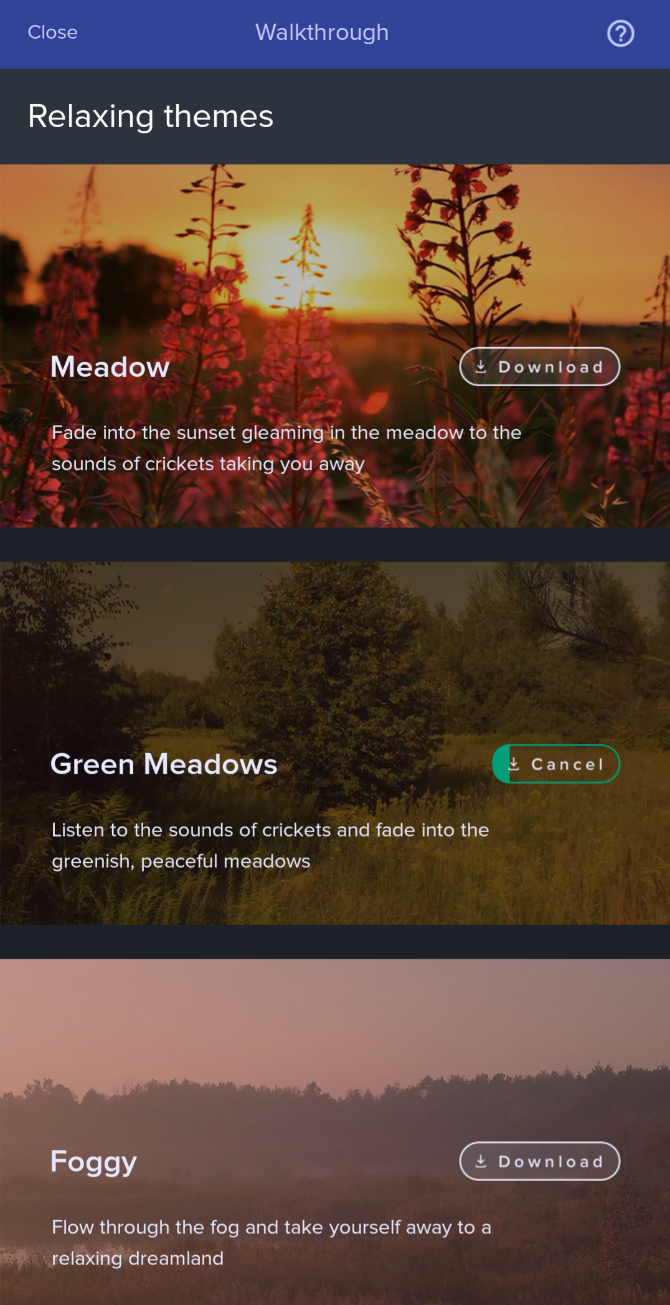
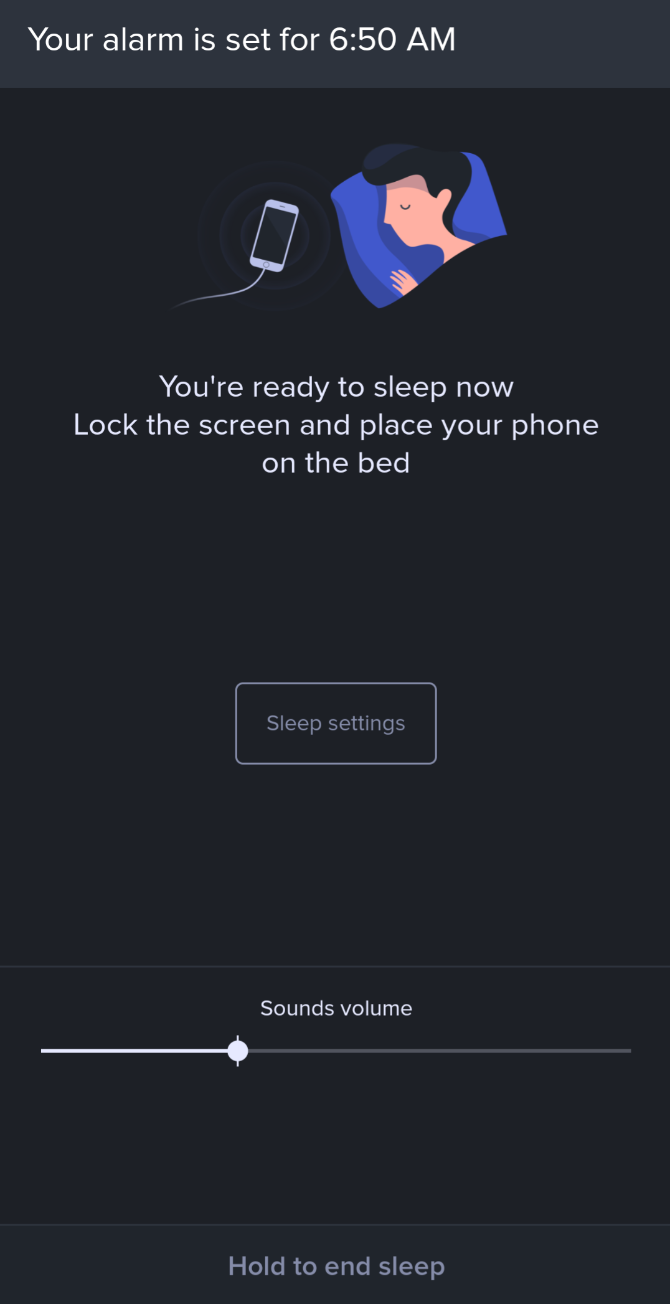
Nightly combines scientific research and smart algorithms to help you fall asleep faster, and then enjoy uninterrupted sleep. You start the routine by watching a video that relaxes the mind, priming it to fall asleep. After the video, put the phone next to your pillow and the app will play soothing sounds to help you drift off.

Throughout the night, the app monitors your sleeping pattern and behavior. At points where you are likely to experience unrest or have a bad dream, Nightly will restart the soothing sounds to relax you while you’re sleeping. A smart alarm wakes you in the morning when you’re in light sleep, rather than when you’re in a state of deep sleep.

The app tracks your sleep behavior and timings to provide sleep statistics. There’s a 14-day free trial, after which you’ll need to pay $30 annually. It might seem like quite a bit, but it’s worth it for a good night’s sleep.

Download: Nightly for Android | iOS (Free)

5. Nothing Much Happens (Podcast): Bedtime Stories for Adults

Nothing Much Happens podcast puts you to sleep with bedtime stories for adults

The glow of a screen can strain your eyes, so many of us listen to music or podcasts while we’re trying to fall asleep. But there are a few podcasts whose aim is to make you sleep, not listen. Sleep With Me is the most popular, but Nothing Much Happens is quickly gaining a lot of fans.

Nothing Much Happens describes itself as bedtime stories for adults. Hey, if it helped you fall asleep as a kid, why won’t it work when you’re a grown-up? These aren’t “adult stories” though. In fact, as you’ll see, the stories aren’t particularly that interesting and engrossing either. As the title suggests, nothing much happens.

Host and narrator Kathryn has a smooth and calming voice, with which she reads out details about everything in the story. That effect puts your mind into relaxation mode, and you’ll find yourself drifting off to sleep even before an episode finishes.

There are almost 50 bedtime stories for you to listen to. And if you finish with that, try these other podcasts to help you fall asleep.

Best Apps for Tracking and Improving Sleep

Did you check your phone before you went to sleep? The blue light of a smartphone’s screen has been shown to disrupt the body clock, and prevent you from falling asleep easily. It’s one of the first things you should address if you’re having trouble with sleep.

Try a combination of blue light filter apps, sleep tracking apps, and meditation apps to conquer the physical and mental barriers to falling asleep. To get you started, we’ve reviewed some of the best sleep apps for tracking and improving sleep.

Read the full article: 5 Best Sleep Apps & Methods to Fall Asleep Faster Without Interruptions


Read Full Article

You Can Now Control Roku With Your Apple Watch


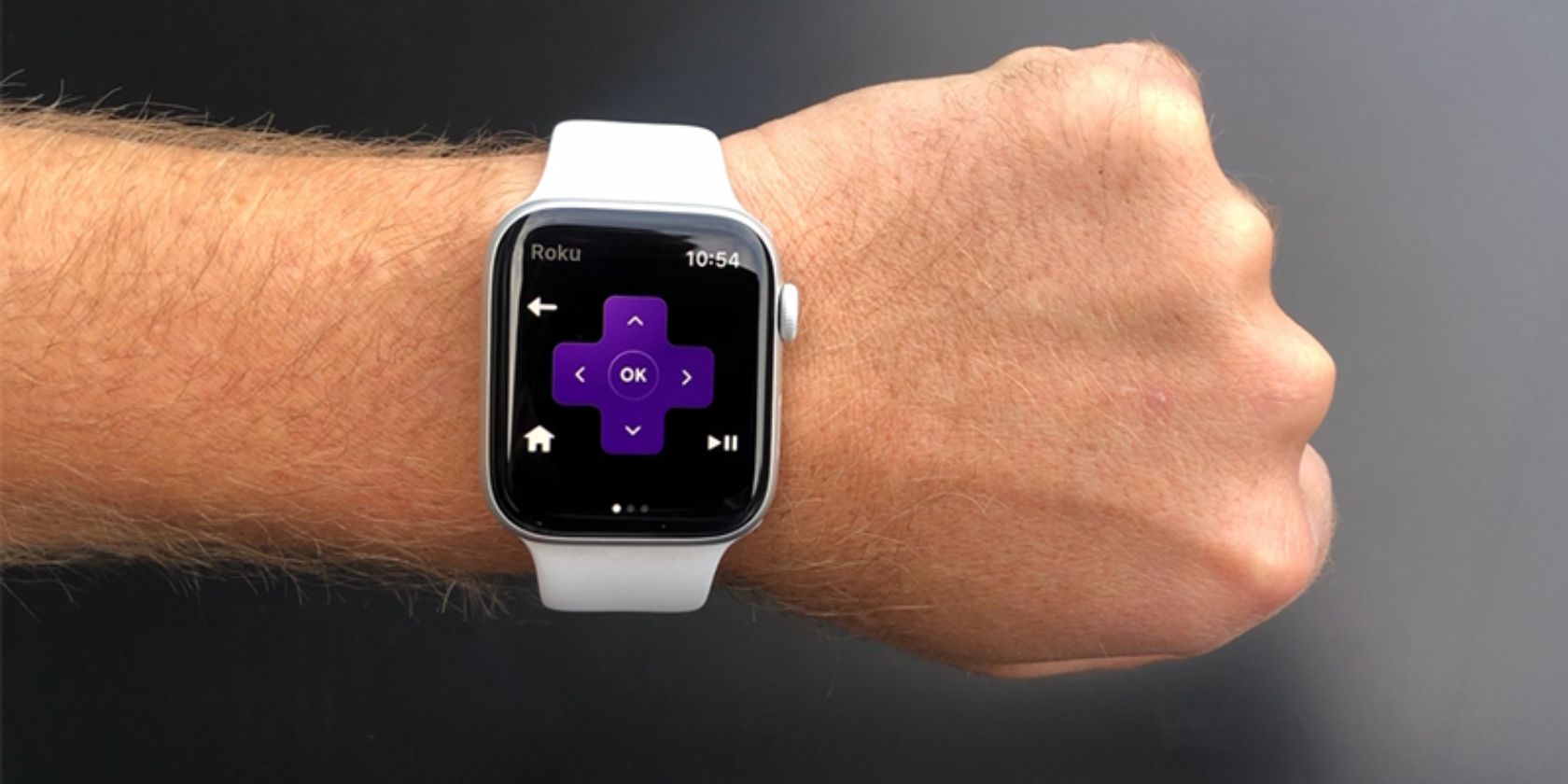
The Roku app now supports Apple Watch. This means you can use your Apple Watch to control your Roku device, launch channels on your TV, issue voice commands, and even find your Roku remote. All from the smartwatch wrapped around your wrist.

What Can You Do With the Roku App on Apple Watch?

Roku announced that its free app is now available on Apple Watch in a post on The Roku Blog. The company outlines what you can do with the Roku app on your Apple Watch…

You can use your Apple Watch as a remote control for your Roku. This works in the same way as the remote from the mobile app (available on Android and iOS). However, you can also use the Apple Watch’s circular crown to control the volume on your Roku device.

You can also launch channels on your TV using the Roku app on your Apple Watch. Channels are listed in order of the most recently launched, keeping your regular channels at or near the top. Simply tap on a channel once to launch it on your TV.

If you own an Apple Watch Series 1 through 5 you can also issue voice commands using the app. Simply tap the voice icon and speak into your Apple Watch. Voice commands include “Launch Hulu,” “search for comedies,” and “switch to HDMI 1”.

Last but not least, you can use the Roku app on your Apple Watch to search for your actual Roku remote control if you lose it down the back of the sofa. Unfortunately, this feature is only available on the Roku Ultra and select Roku TV models.

How to Install the Roku App on Your Apple Watch

You should be able to install the Roku app on your Apple Watch by updating the Roku app on your iPhone to version 6.1.3. The app will then appear on your Apple Watch. However, if you have disabled automatic installs you’ll have to install the app manually instead.

Installing the Roku app on your Apple Watch is a no-brainer. Especially as it’s free. And while we’d probably still use the Roku remote over the Apple Watch app, if your Roku remote has stopped working, the Roku app on your Apple Watch is a solid backup.

Read the full article: You Can Now Control Roku With Your Apple Watch


Read Full Article

MyFridgeFood & More Sites to Find Recipes With Ingredients You Have


instant-pot-cooking

Few of us spend a lot of time prepping our meals.

This lack of care is usually due to a busy schedule or a low budget. But just because you’re hunting around the house or asking yourself “what can I make with what’s in my fridge?” doesn’t mean that your meals have to be unappetizing.

Here’s a list of the best websites with simple recipes for the food you have in your fridge.

1. MyFridgeFood

MyFridgeFood Find Recipes With Ingredients You Have

MyFridgeFood is a recipe-based search engine. It presents you with two options—Quick Kitchen and Detailed Kitchen—when you open the website. You can access Detailed Kitchen by clicking on the button Show All Ingredients.

Both pages have checkboxes representing various food items. To find a recipe, click on the boxes for the foodstuff that you have on hand. It’ll then show you a list of meals that you can make with some or all your supplies.

If you sign up to myfridgefood.com, you can submit a recipe, too.

2. Recipe Puppy

Recipe Puppy Search for Recipes

Recipe Puppy is another ingredient-based search engine that helps you answer the question “what to make with what I have.” It does this by allowing you to hunt for simple recipes with the foodstuff lying around the house.

Recipe Puppy’s search function is similar to myfridgefood.com recipes. The search engine is part of the overarching “Recipe Labs” website, where you can create recipes to post for others or hunt for coupons.

This search engine is a great tool for anyone who needs to make a meal with a particular dietary requirement, as you can include or exclude ingredients that may conflict with your allergies.

If you’re looking for other food websites that allow you to use up the ingredients around your home, check out our list of recipe websites that show you how to cook with leftovers.

3. Student Recipes

Student Recipes Best Food for Parties

Student Recipes also answers the question “what should I do with my fridge food?” Unlike the other links on this list, it comes with a specific post-secondary focus.

If you’ve ever been a student, you’ll know that you won’t have access to a lot of food supplies due to your budget. You also won’t have a lot of time to go shopping. Student Recipes aims to fix this with a blog and cooking videos to boot.

The website was originally created by James Bailey, a former student who has admitted to having “very few culinary skills” at the time. One thing we really like about this website is how it breaks down its recipe sections, not only by prep time and type but by content.

You can sort recipes by vegetarian, pork, beef, and fish. There’s also a section specifically devoted to parties.

4. Budget Bytes

Budget Bytes Make Cheap Meals

Budget Bytes is a big website entirely devoted to cheap, easy recipes that don’t empty your wallet. It also focuses on meals that can be made with the supplies that you find in your home.

Founded in 2009 by the blogger Beth—when she herself was “struggling with student debt”—Budget Bytes operates on the simple concept that “good food doesn’t have to be complicated or expensive.”

With detailed subsections on the website that are devoted to each type of meal and prep suggestions, Budget Bytes aims to be a mega-shop for all your culinary questions.

5. Good Cheap Eats

Good Cheap Eats How to Do Meal Plans

Like Budget Bytes, Good Cheap Eats is a website devoted to cheap and easy recipes for people who are trying to budget. It also aims to help those who rely on less-than-healthy premade meals due to time constraints.

Run by the blogger Jessica, Good Cheap Eats has sections on its website where it breaks down the many ways that you can save money on groceries through meal plans, alongside its wealth of in-house recipes.

Through these tools, you can maximize your kitchen and cooking skills to their full potential.

6. Love Food Hate Waste

Love Food Hate Waste Recipes for Leftovers

Love Food Hate Waste is part of a larger website run by the charity WRAP. Its mission? To make sure there is as little food waste as possible.

WRAP wants to raise awareness about the issue of food waste and how it affects the most vulnerable in our population. They don’t want to do this without offering solutions on how to fix the problem, so they have a section entirely devoted to making meals.

The goal of these recipes is to cook food from the odds and ends lying around the house. In the recipe section, you can filter by dietary needs, difficulty, and cooking times.

You can also sort the recipes by popularity, the age of the recipe, or the most votes applied to them.

7. Kraft Recipes

Recipes for Kraft Products

How many times have you seen Kraft products in the grocery store? If you’re living anywhere in North America, probably a lot.

As one of the most commonly recognized brands when it comes to foodstuff, Kraft offers cheap-to-midrange products ranging from salad dressing to cream cheese. There’s a high chance you have one or two of Kraft products lying around your home.

Because of this, Kraft has this entire website devoted to making easy meals with Kraft products as the base. It’s a useful repository of ideas if you’re wondering what you can make for lunch or dinner with what’s in your fridge.

8. Betty Crocker Recipes

Betty Crocker Recipes

Like Kraft, Betty Crocker is another major food company whose products you can find in most stores. The company’s items come in a variety of different categories, although it’s most well-known for baking.

Because of its ubiquity at the grocery store, Betty Crocker has its own recipe section where you can learn to make cheap and easy meals by using its products. The ease of access to these products means they’re perfectly suited for constructing meals from handy ingredients.

9. Love Canned Food

Recipes for Canned Food

How many of us have canned food lying around the house that we know is good to eat, but we don’t know what to make with it? Love Canned Food is a website devoted to recipes for simple meals that you can make from food in tins.

Canned food is often cheaper than fresh food, and keeps for longer, too. Because of this, it’s great for people who are working with a budget.

10. Food Combo

Food Combo Find Recipe by Listing Ingredients

Last on the list is Food Combo, another ingredient-based search engine that helps you find recipes for the food that you have nearby.

Food Combo runs on a similar premise to Recipe Puppy and MyFridgeFood. The company’s mission statement explains that it wants to “promote cooking at home while making it more efficient, more affordable, and less wasteful.”

To use the service, simply type an ingredient into the search bar to find recipes based on that item. Food Combo will then pull up all the recipes that it can find for that ingredient.

From there, you can narrow down your list of recipes by adding or excluding additional ingredients from your search parameters.

Make an Easy Home-Cooked Meal

Now that you’ve got a list of places to search for recipes, you can get started with some quick and easy plates for breakfast, lunch, or dinner. However, what if you’ve got a craving for a particular sort of meal? Specifically, dessert?

If you need to satisfy your sweet tooth, here’s a list of the best baking recipe websites.

Read the full article: MyFridgeFood & More Sites to Find Recipes With Ingredients You Have


Read Full Article

The 6 Most Reliable Hard Drives According to Server Companies


most-reliable-hdd

Is there anything worse than going to boot up your computer and realizing that your hard drive is dead? You can lose all your documents, photos, music, and more if your hard drive fails.

For that reason, many people want a very reliable hard drive. And who better to advise on hard drive reliability than a server company? Here we’ll recommend to you the most reliable hard drives, according to server companies.

How Hard Drive Reliability Is Measured

Before we get into the hard drive recommendations, you might be wondering how exactly we’re defining reliable. To find out which hard drives are least likely to fail, the best option is to look at a report which covers a large number of drives. And so we looked at the Backblaze Hard Drive Stats 2019.

Servers use vast numbers of hard drives, so server companies are really the experts when it comes to reliability. Backblaze currently employs a total of 108,660 hard drives for storage and has been collecting data on their reliability since 2015. That makes it one of the best sources of information when you’re looking for a reliable hard drive.

Now we can list the most reliable hard drives, according to the Backblaze report.

1. Western Digital 12TB Ultrastar

Western Digital 12TB Ultrastar Western Digital 12TB Ultrastar Buy Now On Amazon $323.43

The most reliable hard drive is the Western Digital 12TB Ultrastar. This SATA hard drive comes in a range of capacities, starting at 1TB and going all the way up to 12TB. You’ll sometimes see this or similar models labeled as the HGST Ultrastar. But don’t worry, Western Digital owns HGST. So you can expect the same quality from HGST as you get from Western.

This model is aimed at the enterprise storage market with a focus on reliability over speed, hence why it is so popular with server companies. Inside the hard drive, the air is replaced with helium, which is lower density. That means the drive can run more efficiently with fewer issues, making it a top choice for people concerned with reliability.

2. HGST MegaScale DC 4000.B

HGST MegaScale DC 4000.B HGST MegaScale DC 4000.B Buy Now On Amazon $99.99

A similarly reliable hard drive is the HGST MegaScale DC 4000.B, another enterprise drive from Western Digital/HGST. This 4TB SATA drive is designed to be efficient as well as reliable, using up to 45 percent less operating power compared to other 4TB enterprise hard drives.

This drive isn’t as fast as those aimed at regular consumers. But it makes up for that with features like Advanced Power Management, which should keep both temperatures and power usage low.

3. Seagate Exos 12TB Internal Hard Drive

Seagate Exos 12TB Internal Hard Drive Seagate Exos 12TB Internal Hard Drive Buy Now On Amazon $329.99

Seagate is a recognized and trusted hard drive brand, and their Exos 12TB Internal Hard Drive is a good choice for reliable storage. This one is an enterprise model too, coming in capacities from 1TB to 12TB. The SATA drive is hermetically sealed to prevent dust or other debris from getting inside the drive and causing problems.

The Exos is more responsive than other enterprise models, too, with speeds of up to 261MB/s. It can also handle a massive workload of up to 550 terabytes per year. For reference, that’s around 10 times as much work as is possible on a standard desktop hard drive. The Seagate Exos comes with Advanced Write Caching, resulting in a 20 percent boost in random write performance.

4. Toshiba 14TB SATA 512e Enterprise HDD

Toshiba 14TB SATA 512e Enterprise HDD Toshiba 14TB SATA 512e Enterprise HDD Buy Now On Amazon $389.95

The Toshiba 14TB SATA 512e Enterprise HDD is a solid enterprise hard drive. It comes in a 14TB capacity, although there is a 12TB version as well if you don’t need quite so much space. This SATA drive has a helium-sealed inside using precision laser-welding technology. And it has a lower operational power profile, keeping power usage down.

It is rated for a total transfer of 550TB per year, which is surely enough for any home user. There’s also Advanced Format Sector Technology, which should prevent data loss if the power to your system gets cut off unexpectedly.

5. Seagate BarraCuda Pro 8TB

Seagate BarraCuda Pro 8TB Seagate BarraCuda Pro 8TB Buy Now On Amazon $274.99

The Seagate BarraCuda Pro 8TB is the updated model of one of Backblaze’s most reliable drives. This SATA drive comes in sizes from 1TB to 14TB. And there’s an option to include data recovery in your purchase. If you’re looking to store your files safely, the data recovery option can give you peace of mind.

As it’s not exclusively an enterprise drive, you can expect excellent responsiveness as well as reliability, with a transfer rate of up to 250MB/s. The BarraCuda is a power-efficient model, using as little as 6.9W of power. The drive is rated for a workload of up to 300TB per year, so it should fit the needs of most users.

6. Seagate ST4000DM000

Seagate ST4000DM000 Seagate ST4000DM000 Buy Now On Amazon $99.55

A more affordable alternative to the Seagate BarraCuda is the Seagate ST4000DM000. As it is designed for desktop use, it comes in smaller sizes. This particular drive comes in sizes from just 500GB up to 8TB. So, it’s a good choice for those looking for a smaller capacity SATA drive. It was one of the earliest 1TB-per-disk hard drives available and has had plenty of years on the market.

Models up to 6TB come with 128MB of cache, but the larger 8TB drive has 256MB, so it should have improved write speeds. Even though it’s a consumer product and not an enterprise one, this drive still offers solid reliability. If you’re looking for a reliable drive, but you don’t want to sacrifice consumer options like a two-year warranty and a larger cache, this model is an excellent choice.

The Most Reliable Hard Drive for Your System

The majority of the hard drives we’ve recommended here are enterprise models, meaning they’re intended for use in servers. They are incredibly reliable, but you might sacrifice some speed for that reliability. There are other options out there, too. Consumer-grade drives from companies like Seagate are also highly recommended.

To learn more about what to look for in a hard drive, see our guide to things you must know before buying a new hard drive.

Read the full article: The 6 Most Reliable Hard Drives According to Server Companies


Read Full Article