28 November 2018

Social music app Playlist lets you listen to music with others in real time


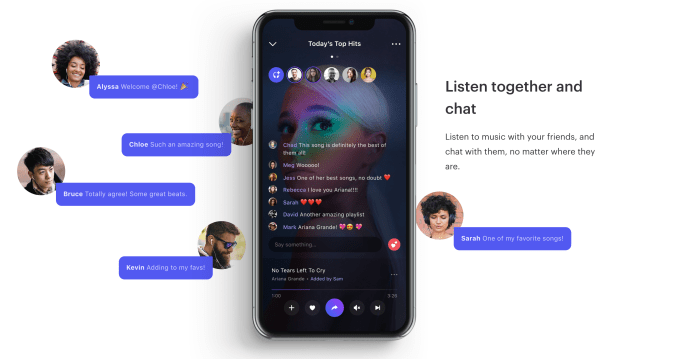
A new app called Playlist aims to make music a more social experience than what’s offered today by the major music platforms like Apple Music, Pandora or Spotify, for example. In Playlist, you can find others who share your musical tastes and join group chats where you listen to playlists together in real time. You can collaborate on playlists, too.

The app, backed by investment from Stanford’s StartX fund, was founded by Karen Katz and Steve Petersen, both Stanford engineers and serial entrepreneurs. Katz previously co-founded AdSpace Networks and another social music platform, Jam Music. She also was a founding executive team member at Photobucket, and founded a company called Project Playlist, which was like a Google search for music back in the Myspace era.

Peterson, meanwhile, has 35 patents and more than a decade of experience in digital music. In the early 2000s he created the software architecture and ran the team at PortalPlayer Inc., which powered the iPod’s music player and was later sold to Nvidia for $357 million. Afterwards, he was CTO at Concert Technology, a technology incubator and intellectual property company with a focus on mobile, social and digital music services.

“The world has gone social, but music has been largely left behind. That’s a real gap,” explains Katz, as to why the founders wanted to build Playlist in the first place.

“Ever since we started listening to music from our mobile phones, it’s become an isolated experience. And music is the number one thing we do on our phones,” she says.

The idea they came up with was to unite music and messaging by synchronizing streams, so people could listen to songs together at the same time and chat while they do so.
During last year’s beta testing period, Playlist (which was listed under a different name on the App Store), saw a huge number of engagements as a result of its real-time nature.

“Out of the gate, we saw 10 times the engagement of Pandora. People have, on average, 60 interactions per hour — like chats, likes, follows, joins, adds and creates,” Katz says. 

Under the hood, the app uses a lot of technology beyond just its synchronized streaming. It also leverages machine learning for its social recommendations, as well as collaborative playlists, large-scale group chat, and behavior-based music programming, and has “Music Match” algorithms to help you find people who listen to the same sort of things you do.

The social aspects of the app involves a following/follower model, and presents playlists from the people you follow in your home feed, much like a music-focused version of Instagram. A separate Discover section lets you find more people to follow or join in other popular listening and chat sessions.
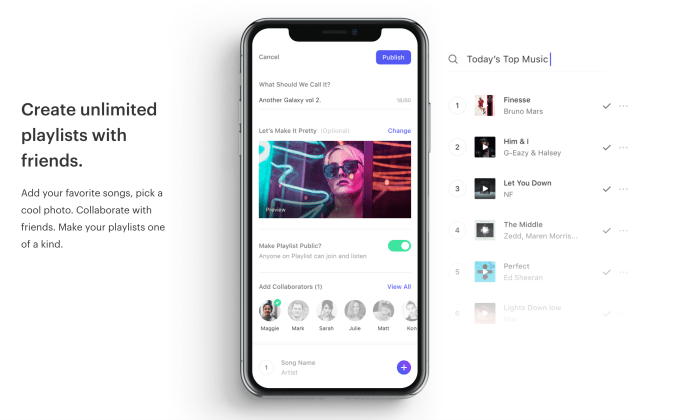
At launch, the app has a catalog of more than 45 million songs and has a music license for the U.S. It plans to monetize through advertising.

The core idea here — real-time music listening and chat — is interesting. It’s like a Turntable.fm for the Instagram age. But the app sometimes overcomplicates things, it seems. For example, importing a playlist from another music app involves switching over to that app, finding the playlist and copying its sharing URL, then switching back to Playlist to paste it in a pop-up box. It then offers a way for you to add your own custom photo to the playlist, which feels a little unnecessary as the default is album art.

Another odd choice is that it’s difficult to figure out how to leave a group chat once you’ve joined. You can mute the playlist that’s streaming or you can minimize the player, but the option to “leave” is tucked away under another menu, making it harder to find.

The player interface also offers a heart, a plus (+), a share button, a mute button and a skip button all on the bottom row. It’s… well… it’s a lot.

But Katz says that the design choices they’ve made here are based on extensive user testing and feedback. Plus, the app’s younger users — often high schoolers, and not much older than 21 — are the ones demanding all the buttons and options.

It’s hard to argue with the results. The beta app acquired more than 500,000 users during last year’s test period, and those users are being switched over to the now publicly available Playlist app, which has some 80K installs as of last week, according to Sensor Tower data.

The company also plans to leverage the assets it acquired from the old Project Playlist, which includes some 30 million emails, 21 million Facebook IDs and 14 million Twitter IDs. A “Throwback Thursday” marketing campaign will reach out to those users to offer them a way to listen to their old playlists.

The startup has raised $5 million in funding (convertible notes) from Stanford StartX Fund, Garage Technology Ventures, Miramar Ventures, IT-Farm, Dixon Doll (DCM founder), Stanford Farmers & Angels, Zapis Capital and Amino Capital.

The Palo Alto-based company is a team of six full-time.

Playlist is a free download for iOS. An Android version is in the works.


Read Full Article

Khosla GP launches Bling Capital to help seed-stage startups build products


At Facebook, where he was the first-ever director of platform, they called him Bling. At YouTube the following year, they still called him Bling. At Google in 2010, they continued to call him Bling. Even at Khosla Ventures, where Ben Ling has been a general partner for the past five years, the nickname stuck.

It was only natural that Bling Capital would be the name of his debut venture capital fund, a $60 million seed-stage vehicle backed by Marissa Mayer, Nellie and Max Levchin, Yelp CEO Jeremy Stoppelman and Quora CEO Adam D’Angelo.

We first spotted Bling Capital’s $60 million filing two months back; this week, TechCrunch sat down with Ling, who will officially depart from Khosla next month, to learn more about his investment strategy and why he’s venturing off on his own.

Bling Capital founder Ben Ling

Ling joined Khosla in 2013 to invest in consumer technology, internet, mobile, marketplace, SaaS and consumer health. In his tenure as a general partner and angel investor, he deployed capital to nine “unicorns,” including Lyft, Palantir, Square, Instacart and Zenefits. But he wanted the freedom to invest at a more rapid clip.

“Going out on my own allows me to be more agile; a sole GP can act a lot more quickly and speed matters a lot in seed,” Ling said. “And I love early-stage and product because I think there is a void in the marketplace — there’s a lot of money in seed but there’s not a lot of product builders in seed.”

Ling will invest between $750,000 and $1 million in one to two U.S. companies per month in exchange for 10 percent equity.

The firm is in the process of closing two funds: a $60 million flagship vehicle that will invest in consumer tech, internet and mobile, marketplace, data, fintech, SaaS and automation startups, and a $30 million opportunities fund, per an SEC filing, reserved for follow-on investments.

“It’s pretty much the things that a Google, a Facebook or an Amazon would be interested in,” Ling said, referring to where the fund will invest. “What’s it’s not is crypto, or rockets or enterprise, but it’s pretty much everything else when we think about the world of the internet.”

Given Ling’s experience, the fund will have a particular focus on product. Ling is the sole general partner of Bling, but he’s recruited a team of roughly 60 experts to work with his portfolio company executives as part of what Ling has dubbed his Product CouncilThat includes the heads of product at Square, Instagram, Twitter, YouTube, Google, Nextdoor and Uber, who also are all investors in the fund.

Members of the Product Council will be available to consult with founders and may become advisors, investors or board members, if it’s a good match.


Read Full Article

A Structured Approach to Unsupervised Depth Learning from Monocular Videos


Perceiving the depth of a scene is an important task for an autonomous robot — the ability to accurately estimate how far from the robot objects are, is crucial for obstacle avoidance, safe planning and navigation. While depth can be obtained (and learned) from sensor data, such as LIDAR, it is also possible to learn it in an unsupervised manner from a monocular camera only, relying on the motion of the robot and the resulting different views of the scene. In doing so, the “ego-motion” (the motion of the robot/camera between two frames) is also learned, which provides localization of the robot itself. While this approach has a long history — coming from the structure-from-motion and multi-view geometry paradigms — new learning based techniques, more specifically for unsupervised learning of depth and ego-motion by using deep neural networks, have advanced the state of the art, including work by Zhou et al., and our own prior research which aligns 3D point clouds of the scene during training.

Despite these efforts, learning to predict scene depth and ego-motion remains an ongoing challenge, specifically when handling highly dynamic scenes and estimating proper depth of moving objects. Because previous research efforts for unsupervised monocular learning do not model moving objects, it can result in consistent misestimation of objects’ depth, often resulting in mapping their depth to infinity.

In “Depth Prediction Without the Sensors: Leveraging Structure for Unsupervised Learning from Monocular Videos”, to appear in AAAI 2019, we propose a novel approach which is able to model moving objects and produces high quality depth estimation results. Our approach is able to recover the correct depth for moving objects compared to previous methods for unsupervised learning from monocular videos. In our paper, we also propose a seamless online refinement technique that can further improve quality and be applied for transfer across datasets. Furthermore, to encourage even more advanced approaches of onboard robotics learning, we have open sourced the code in TensorFlow.
Previous work (middle row) has not been able to correctly estimate depth of moving objects mapping them to infinity (dark blue regions in the heatmap). Our approach (right) provides much better depth estimates.
Structure
A key idea in our approach is to introduce structure into the learning framework. That is, instead of relying on a neural network to learn depth directly, we treat the monocular scene as 3D, composed of moving objects, including the robot itself. The respective motions are modeled as independent transformations — rotations and translations — in the scene, which is then used to model the 3D geometry and estimate all the objects’ motions. Additionally, knowing which objects may potentially move (e.g., cars, people, bicycles, etc.) helps us learn separate motion vectors for them even if they may be static. By decomposing the scene into 3D and individual objects, better depth and ego-motion in the scene is learned, especially on very dynamic scenes.

We tested this method on both KITTI and Cityscapes urban driving datasets, and found that it outperforms state-of-the-art approaches, and is approaching in quality methods which used stereo pair videos as training supervision. Importantly, we are able to recover correctly the depth of a car moving at the same speed as the ego-motion vehicle. This has been challenging previously — in this case, the moving vehicle appears (in a monocular input) as static, exhibiting the same behavior as the static horizon, resulting in an inferred infinite depth. While stereo inputs can solve that ambiguity, our approach is the first one that is able to correctly infer that from a monocular input.
Previous work with monocular inputs were not able to extract moving objects and incorrectly map them to infinity.
Furthermore, since objects are treated individually in our method, the algorithm is able to provide for the motion vectors for each individual object, i.e. which is an estimate of where it is heading:
Example depth results for a dynamic scene together with estimates of the motion vectors of the individual objects (rotation angles are estimated too, but for simplicity are not shown).
In addition to these results, this research provides motivation for further exploring what an unsupervised learning approach can achieve, as monocular inputs are cheaper and easier to deploy than stereo or LIDAR sensors. As can be seen in the figures below, in both the KITTI and Cityscapes datasets, the supervision sensor (be it stereo or LIDAR) is missing values and may occasionally be misaligned with the camera input, which happens due to time delay.
Depth prediction from monocular video input on the KITTI dataset, middle row, compared to ground truth depth from a Lidar sensor; the latter does not cover the full scene and has missing and noisy values. Ground truth depth is not used during training.
Depth prediction on the Cityscapes dataset. Left to right: image, baseline, our method and ground truth provided by stereo. Note the missing values in the stereo ground truth. Also note that our algorithm is able to achieve these results without any ground truth depth supervision.
Ego-motion
Our results also provide the best among the state-of-the-art estimates in ego-motion, which is crucial for autonomous robots, as it provides localization of the robots while moving in the environment. The video below shows results from our method that visualizes the speed and turning angle, obtained from the inferred ego-motion. While the outputs of both depth and ego-motion are valid up to a scalar, we can see that it is able to estimate its relative speed when slowing down and stopping.
Depth and ego-motion prediction. Follow the speed and the turning angle indicator to see the estimates when the car is taking a turn or stopping for a red light.
Transfer Across Domains
An important characteristic of a learning algorithm is its adaptability when moved to an unknown environment. In this work we further introduce an online refinement approach which continues to learn online while collecting new data. Below are examples of improvement of the estimated depth quality, after training on Cityscapes and online refinement on KITTI.
Online refinement when training on the Cityscapes Data and testing on KITTI. The images show depth prediction of the trained model, and of the trained model with online refinement. Depth prediction with online refinement better outlines the objects in the scene.
We further tested on a notably different dataset and setting, i.e. on an indoor dataset collected by the Fetch robot, while the training is done on the outdoor urban driving Cityscapes dataset. As to be expected, there is a large discrepancy between these datasets. Despite this, we observe that the online learning technique is able to obtain better depth estimates than the baseline.
Results of online adaptation when transferring the learning model from Cityscapes (an outdoors dataset collected from a moving car) to a dataset collected indoors by the Fetch robot. The bottom row shows improved depth after applying online refinement.
In summary, this work addresses unsupervised learning of depth and ego-motion from a monocular camera, and tackles the problem in highly dynamic scenes. It achieves high quality depth and ego-motion results and with quality comparable to stereo and sets forward the idea of incorporating structure in the learning process. More notably, our proposed combination of unsupervised learning of depth and ego-motion from monocular video only and online adaptation demonstrates a powerful concept, because not only can it learn in unsupervised manner from simple video, but it can also be transferred easily to other datasets.

Acknowledgements
This research was conducted by Vincent Casser, Soeren Pirk, Reza Mahjourian and Anelia Angelova. We would like to thank Ayzaan Wahid for his help with data collection and Martin Wicke and Vincent Vanhoucke for their support and encouragement.

WhatsApp’s chief business officer is leaving


Roughly one year after WhatsApp co-founder Brian Acton made his highly publicized exit from Facebook, another executive and early employee of the messaging platform is doing the same. Neeraj Arora, WhatsApp’s chief business officer, announced today that he would be “taking some time off to recharge and spend time with family.”

Facebook acquired WhatsApp for $19 billion in 2014 and pledged to allow the messaging giant to continue to operate independently under Acton and co-founder Jan Koum, who served as its chief executive officer until abruptly quitting over privacy and data concerns in April. Arora, who joined WhatsApp in 2011 from Google, was rumored to be the frontrunner to replace Koum as CEO. With him out the door, it’s unclear who will be tapped to lead WhatsApp.

In today’s announcement, Arora said he was “deeply indebted” to both Acton and Koum, “who entrusted me to be their business companion for so many years.”

Facebook subsidiaries WhatsApp and Instagram are both in periods of flux following the exits of their original founders, which are believed to be caused by quarrels with the social media giant’s CEO Mark Zuckerberg.

In what was one of the largest tech stories of 2018, Instagram co-founders Kevin Systrom and Mike Krieger announced they were leaving Facebook years after the company acquired their photo-sharing app for $1 billion. They shared the news in September, just a few months after Koum stepped down from WhatsApp.

According to The New York Times, Zuckerberg, over the course of the last year, had begun to assert more and more control over Instagram, upsetting its leaders.

Koum, for his part, reportedly wrote in a since-removed WhatsApp blog post that Zuckerberg and Facebook no longer had respect for privacy: “These days companies know literally everything about you, your friends, your interests, and they use it all to sell ads. At every company that sells ads, a significant portion of their engineering team spends they day tuning data mining, writing better code to collect your personal data… remember, when advertising is involved, you the user are the product.”

According to TechCrunch’s Josh Constine, Koum was unhappy “about how Facebook would monetize his app and the impact of that on privacy.” Both Acton and Koum departed Facebook before they fully vested from the multi-billion acquisition, meaning the pair chose to lose hundreds of millions of dollars over continued employment at Facebook.

Arora’s exit is further evidence that Facebook has entered a new era, one in which the company’s acquisition strategy may be in serious danger of long-term damage.

You can read Arora’s full post below.


Read Full Article

27 November 2018

Meet ‘Bitski’, the single sign-on wallet crypto desperately needs


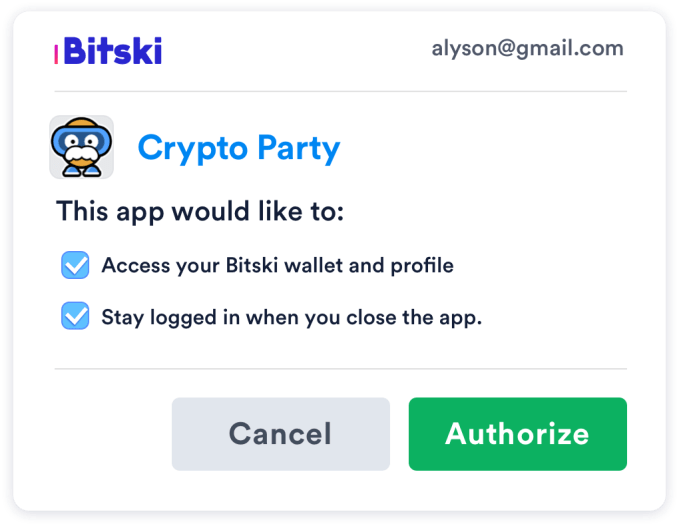
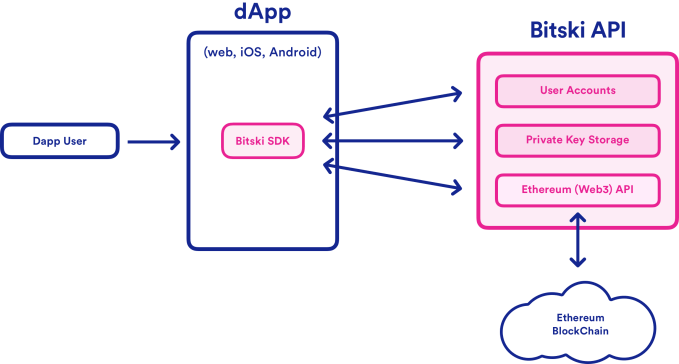
The mainstream will never adopt blockchain-powered decentralized apps (dApps) if it’s a struggle to log in. They’re either forced to manage complex security keys themselves, or rely on a clunky wallet-equipped browser like MetaMask. What users need is for signing in to blockchain apps to be as easy as Login With Facebook. So that’s what Bitski built. The startup emerges from stealth today with exclusive on TechCrunch about the release of the developer beta of its single sign-on cryptocurrency wallet platform.

10 projects including 7 game developers are lined up to pay a fee to integrate Bitski’s SDK. Then, whenever they need a user’s identity or to transact a payment, their app pops open a Bitski authorization screen where users can grant permissions to access their ID, send money, or receive items. Users sign up just once with Bitski, and then there’s no more punching in long private keys or other friction. Using blockchain apps becomes simple enough for novices. Given the recent price plunge, the mainstream has been spooked about speculating on cryptocurrencies. But Bitski could unlock the utility of dApps that blockchain developers have been promising but haven’t delivered.

“One of the great challenges for protocol teams and product companies in crypto today is the poor UX in dApps, specifically onboarding, transactions, and sign-in/password recovery” says co-founder and CEO Donnie Dinch. “We interviewed a ton of dApp developers. The minute they used a wallet, there was a huge drop-off of folks. 
Bitski’s vision is to solve user onboarding and wallet usability for developers, so that they can in-turn focus on creating unique and useful dapps.”

The scrappy Bitski team raised $1.5 million in pre-seed capital from Signia, Founders Fund, Village Global, Social Capital, and Steve Jain. They were betting on Dinch, a designer-as-CEO who’d built concert discovery app WillCall that he sold to Ticketfly, which was eventually bought by Pandora. After 18 months of rebranding Ticketfly and overhauling its consumer experience, Dinch left and eventually recruited engineer Julian Tescher to come with him and found Bitski.

Bitski co-founder and CEO Donnie Dinch

After Riff failed to hit scale, the team hung up its social ambitions in late 2017 and “started kicking around ideas for dApps. We mocked up a Venmo one, a remittance app…but found the hurdle to get someone to use one of these products is enormous” Dinch recalls. “Onboarding was a dealbreaker for anyone building dApps. Even if we made the best crypto Venmo, to get normal people on it would be extremely difficult. It’s already hard enough to get people to install apps from the App Store.” They came up with Bitski to let any developer ski jump over that hurdle.

Looking across the crypto industry, the companies like Coinbase and Binance with their own hosted wallets that permitted smooth UX were the ones winning. Bitski would bring that same experience to any app. “Our hosted wallet SDK lets developers drop the Btski wallet into their apps and onboard users with standards web 2.0 users have grown to know and love” Dinch explains.

Imagine an iOS game wants to reward users with a digital sword or token. Users would have to set up a whole new wallet, struggle with their credentials, or use another clumsy soluation. They’d have to own Ethereum already to pay the Ethereium “gas” price to power the transaction, and the developer would have to manually approve sending the gift. With Bitski, users can approve receiving tokens from a developer from then on, and developers can pay the gas on users behalf while triggering transactions programmatically.

Magik is an AR content platform that’s one of Bitski’s first developers. Magik’s founders tell me “We’re building towards reaching millions of mainstream consumers, and Bitski is the only wallet solution that understands what we need to reach users at that scale. They provide a dead-simple, secure, and familiar interface that addresses every pain point along the user-onboarding journey.”

Bitski will offer a free tier, priced tiers based on transaction volume or a monthly fee, and an enterprise version. In the future, the company is considering doubling-down on premium developer services to help them build more on top of the blockchain. “We will never, ever monetize user data. We’ve never had any intent at looking at it” Dinch vows. The startup hopes developers will seize on the network effects of a cross-app wallet, as once someone sets up Bitski to use one product, all future sign-ins just require a few clicks.

In August, Coinbase acquired a startup called Distributed Systems that was building a similar crypto identity platform called the Clear Protocol. A “login with Coinbase” feature could be popular if launched, but the company is focus is spread a ton of blockchain projects. “If [login with Coinbase] launched tomorrow, they wouldn’t be able to support games or anything with a unique token. We’re a lockbox, they’re a bank” Dinch claims.

The spectre of single sign-on’s biggest player Facebook looms as well. In May it announced the formation of a blockchain team we suspect might be working on a crypto login platform or other ways to make the decentralized world more accessible for mom and pop. Dinch suspects that fears about how Facebook uses data would dissuade developers and users from adopting such a product. Still, Bitski’s haste in getting its developer platform into beta just a year after forming shows it’s eager to beat them to market.

Building a centralized wallet in a decentralized ecosystem comes with its own security risks. But Dinch assures me Bitski is using all its own hardware with air-gapped computers that have been stripped of their wifi cards, and it’s taking other secret precautions to prevent anyone from snatching its wallets. He believes cross-app wallets will also deliver a future where users actually own their virtual goods instead of just relying on the good will of developers not to pull them away or shut them down.”The idea of we’ve never been able to provably own unique digital assets is crazy to me” Dinch notes. “Whether it’s a skin in Fortnight or a movie on iTunes that you purchase, you don’t have liquidity to resell those things. We think we’ll look back in 5 to 10 years and think it’s nuts that no one owned their digital items.”

While the crypto prices might be cratering and dApps like Cryptokitties have cooled off, Dinch is convinced the blockchain startups won’t fade away. “There is a thriving developer ecosystem hellbent on bringing the decentralized web to reality; regardless of token price. It’s a safe assumption that prices will dip a bit more, but will eventually rise whenever we see real use cases for a lot of these tokens. Most will die. The ones that success will be outcome oriented, building useful products that people want.” Bitski’s a big step in that direction.


Read Full Article

“The problem is Facebook,” lawmakers from nine countries tell Zuckerberg’s accountability stand-in


A grand committee of international parliamentarians empty-chaired Mark Zuckerberg at a hearing earlier today, after the Facebook founder snubbed repeat invitations to face questions about malicious, abusive and improper uses of his social media platform — including the democracy-denting impacts of so-called ‘fake news’.

The UK’s DCMS committee has been leading the charge to hold Facebook to account for data misuse scandals and election interference — now joined in the effort by international lawmakers from around the world. But still not by Zuckerberg himself.

In all parliamentarians from nine countries were in the room to put awkward questions to Zuckerberg’s stand in, policy VP Richard Allan — including asking what Facebook is doing to stop WhatsApp being used as a vector to spread political disinformation in South America; why Facebook refused to remove a piece of highly inflammatory anti-Muslim hate speech in Sri Lanka until the country blocked access to its platform; how Facebook continues to track non-users in Belgium and how it justifies doing so under Europe’s tough new GDPR framework; and, more generally, why anyone should have any trust in anything the company says at this point — with company neck-deep in privacy and trust scandals.

The elected representatives were collectively speaking up for close to 450 million people across the UK, Argentina, Belgium, Brazil, Canada, France, Ireland, Latvia and Singapore. The most oft repeated question on their lips was why wasn’t Zuckerberg there?

Allan looked uncomfortable on his absentee boss’ behalf and spent the best part of three hours running the gamut of placative hand gestures as he talked about wanting to work with regulators to find “the right regulation” to rein in social media’s antisocial, anti-democratic impacts.

Canadian MP Bob Zimmer spoke for the room, cutting into another bit of Allan’s defensive pablum with: “Here we are again hearing another apology from Facebook — ‘look trust us, y’all regulate us etc but we really don’t have that much influence in the global scheme of things’. In this room we regulate over 400M people and to not have your CEO sit in that chair there is an offence to all of us in this room and really our citizens as well.”

“[Blackberry co-founder] Jim Balsille said, when I asked him on our committee, is our democracy at risk if we don’t change the laws in Canada to deal with surveillance capitalism?” Zimmer continued. “He said without a doubt. What do you think?” — which Allan took as a cue to ummm his way into another series of “we need tos”, and talk of “a number of problematic vectors” Facebook is trying to address with a number of “tools”.

The session was largely filled up such frustratingly reframed waffle, as Allan sought to deflect, defang and defuse the committee’s questions — leading it to accuse him more than once of repeating the ‘delay, deny, deflect’ tactics recently reported on by the New York Times.

Allan claimed not — claiming to be there “acknowledging” problems. But that empty chair beside him sure looked awkward.

At the close, Canada’s Charlie Angus sought to sweep Facebook’s hot air away by accusing Allan of distracting with symptoms — to draw the regulatory eye away from the root cause of the problem which he sharply defined as Facebook itself.

“The problem we have with Facebook is there’s never accountability — so I would put it to you when we talk about regulation that perhaps the best regulation would be antitrust,” he said. “Because people who don’t like Facebook — oh they could go to WhatsApp. But oh we have some problems in South America, we have problems in Africa, we have to go back to Mr Zuckerberg who’s not here.

“My daughters could get off Facebook. But they’d go to Instagram. But that’s now controlled by Facebook. Perhaps the simplest form of regulation would be to break Facebook up — or treat it as a utility so that we could all then feel that when we talk about regulation we’re talking about allowing competition, counting metrics that are actually honest and true, and that Facebook has broken so much trust to allow you to simply gobble up every form of competition is probably not in the public interest.

“So when we’re talking about regulation would you be interested in asking your friend Mr Zuckerberg if we could have a discussion about antitrust?”

Allan’s reached for an “it depends upon the problem we’re trying to solve” reply.

“The problem is Facebook,” retorted Angus. “We’re talking about symptoms but the problem is the unprecedented economic control of every form of social discourse and communication. That it’s Facebook. That that is the problem that we need to address.”

Committee chair Damian Collins also gave short shrift to Allan’s attempt to muddily reframe this line of questioning — as regulators advocating “turning off the Internet” (instead of what Angus was actually advocating: A way to get “credible democratic responses from a corporation”) — by interjecting: “I think we would also distinguish between the Internet and Facebook to say they’re not necessarily the same thing.”

The room affirmed its accord with that.

At the start of the session Collins revealed the committee would not — at least for now — be publishing the cache of documents it dramatically seized this weekend from the founder of a startup that’s been suing Facebook since 2015, saying it was “not in a position to do that”.

Although at several points during the session DCMS committee members appeared to tease some new details derived from these documents, asking for example whether Facebook had ever made API decisions for developers contingent on them taking advertising on its platform.

Allan said it had not — and appeared to be attempting to suggest that the emails the committee might have been reading were the result of ‘normal’ internal business discussions about how to evolve Facebook’s original desktop-based business model for the mobile-first era.

Collins did detail one piece of new information that he categorically identified as having been sourced from the seized documents — and specifically from an internal email sent by a Facebook engineer, dating from October 2014 — describing this to be of significant public interest.

“An engineer at Facebook notified the company in October 2014 that entities with Russian IP addresses had been using a Pinterest API key to pull over 3BN data points a day through the ordered friends API,” he revealed, asking Allan whether “that reported to any external body at the time”.

The Facebook VP responded by characterizing the information contained in the seized documents as “partial”, on account of being sourced via a “hostile litigant”.

“I don’t want you to use this opportunity just to attack the litigant,” retorted Collins. “I want you to address the question… what internal process [Facebook] ran when this was reported to the company by an engineer? And did they notify external agencies of this activity? Because if Russian IP addresses were pulling down a huge amount of data from the platform — was that reported or was that just kept, as so often seems to be the case, just kept within the family and not talked about.”

“Any information you have seen that’s contained within that cache of emails is at best partial and at worst potentially misleading,” responded Allan.

“On the specific question of whether or not we believe, based on our subsequent investigations, that there was activity by Russians at that time I will come back to you.”

We reached out to Pinterest to ask whether Facebook ever informed it about such an abuse of its API key. At the time of writing it had not responded to our request for comment.


Read Full Article

Google’s Pixel Slate arrives Thursday


Google’s last major piece of hardware for the year is finally shipping this week. A number of pre-orders have already begun receiving shipping notifications for the Pixel Slate, and the company just popped up a blog post noting that the device will officially be available at retail starting this Thursday (11/29).

The detachable tablet, which was announced alongside the Pixel 3 and Google Home Hub last month, joins last year’s Pixelbook on the high-end of the Chromebook spectrum. You can read my full review of the device here, but the TLDR version is solid hardware propping up an operating system that still has some work to do for pro users.

It also presents an interesting crossroads for the OS moving forward. The Slate doesn’t offer a whole lot to differentiate itself from the Pixelbook, right down to the specs. Really, the only key differences here are a higher res screen and a detachable form factor — the latter of which isn’t hugely distinct, given the laptop’s fully swiveling keyboard. But hey, options are generally a good thing.

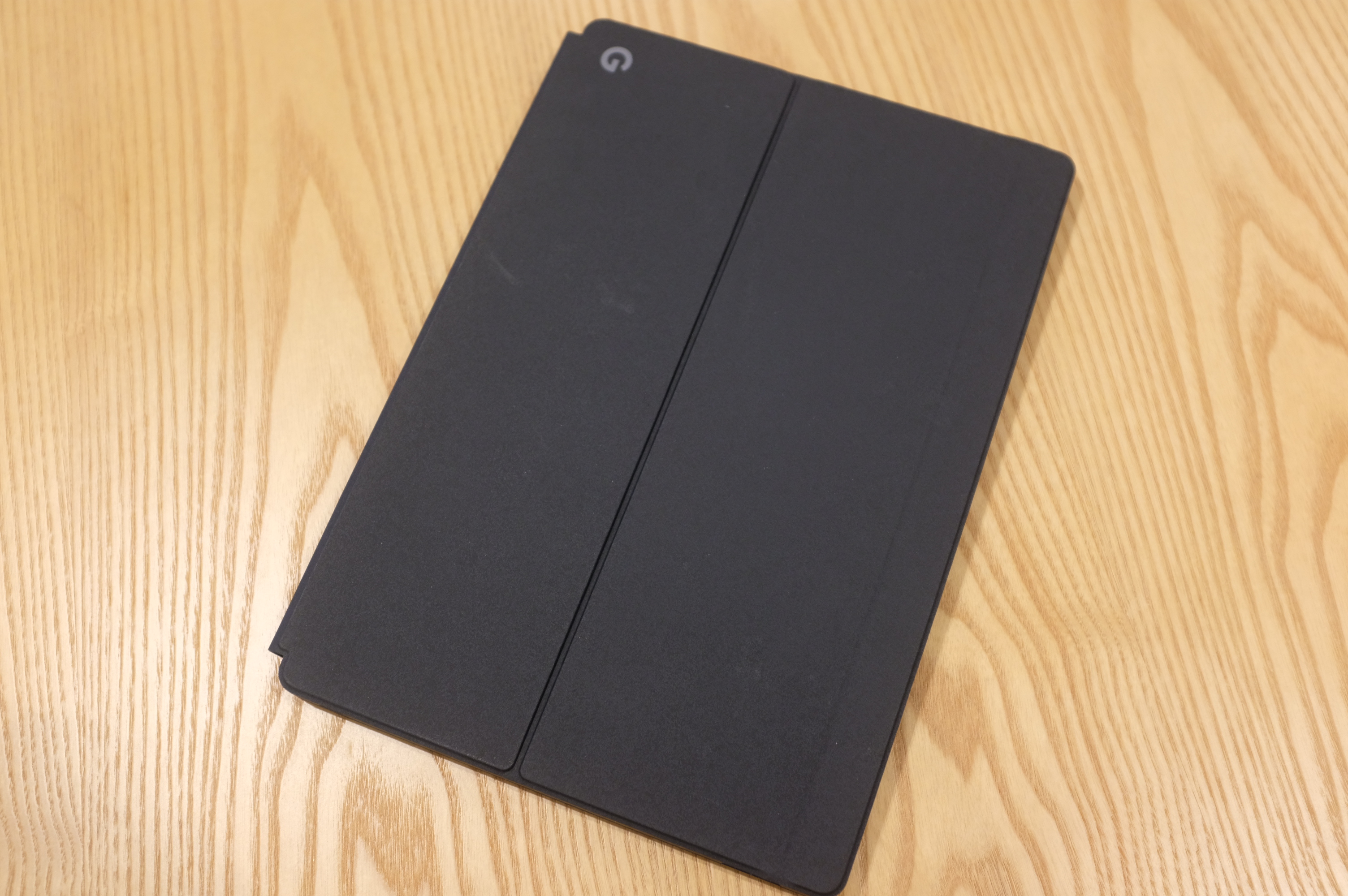
The tablet starts at $599 standalone. That gives you 4GB of RAM, 32GB of storage and an Intel Celeron. That maxes out at $1,599 for 16GB of RA and 256GB of storage with an Intel Core i7 processor. The keyboard case and Pen will cost you an additional $199 and $99, respectively.


Read Full Article

Google Pixel Slate review


First, a dirty little secret about product reviews: You’d love to integrate every product into your daily use, but it just isn’t possible. Especially when you’re dealing with the volumes we deal with here. Every so often, however, the stars align. You find yourself days from a two-week trip through Asia, when Google overnights you the Pixel Slate.

That, ultimately, is the best way to put a product through its paces, finding yourself a stranger in a strange land, forced to grapple with an unfamiliar product. Google’s new convertible hitched a ride through two countries and an autonomous territory, from the neon-lit, Mario Kart racing streets of Akihabara to the gadget markets of Shenzhen to the densely packed hostels of Hong Kong’s Chunking Mansions, where the showers are the toilets and the landlord bangs on your door after midnight, demanding payment.

It’s not the sort of experiment for which I would have volunteered to play guinea pig a few short years back. Google’s operating systems are often slow out of the gate, and Chrome OS is certainly no exception. The earliest Chromebooks were, at best, novelties, underpowered machines with little to differentiate themselves from the previous generation’s netbooks. Aside, of course, from an operating system that barely functioned offline.

But even while the mere existence of the category was (rightfully) questioned by pundits, Google kept plugging away. The company continued adding features to Chrome, turning the browser-based OS into something approaching a full desktop operating system. In 2013, the company unveiled the Chromebook Pixel, a premium notebook designed to show what Google, “could do if we really wanted to design the best computer possible at the best price possible,” according to then-SVP Sundar Pichai.

Even while the Chromebook came to dominate the classroom in subsequent years, Google still had something to prove. The company was never content to have its operating system relegated to the bargain bins. All of that came to a head with last year’s Pixelbook. The apex of Chrome features and proprietary design, the device pushed the boundaries of what a Chromebook can do.

Last December, Google quietly retired the Pixel C. Google acknowledged the move and managed to get a plug in for its new device, telling TechCrunch, “Our newly launched Google Pixelbook combines the best parts of a laptop and a tablet for those looking for a versatile device.”

Back in March, however, the company partnered with Acer to launch an education-focused Chrome tablet, just ahead of Apple’s big education event. And then, last month, it launched the Pixel Slate. More than anything, the Slate feels like a sister device to the Pixelbook. In fact, from a pure spec standpoint, you’d be pretty hard pressed to distinguish the devices.

The lack of distinction between the products really stood out during my time with the device. Detachables are great from the standpoint of versatility, but how often do you really end up taking advantage of the feature? After nearly two weeks spent traveling with the Slate, I can’t think of a single occasion that warranted removing it from the keyboard dock. Hell, the dock’s even better for watching videos — I’d much rather use a built-in stand than be forced to hold it for the duration of a film.

It’s just a fact of life that you’re going to sacrifice some features when opting for a convertible instead of a devoted laptop. The gulf between the two does seem to get smaller with each passing generation, but it continues to be the case with the Slate. The Pixelbook is simply the better typing experience of the two devices. That said, the Slate is easily one of the best typing experiences I’ve had on a keyboard case.

As someone whose job is like 90 percent typing, keyboards have long been the largest thing keeping me from seriously considering a hybrid tablet as a daily driver. The Slate case’s round keys are perfectly responsive, and it didn’t take me too long to get into the rhythm. Halfway into my first story, I could fully imagine myself doing all of my filing on the Slate.

Chrome OS has also improved by leaps and bounds in the last few years. Way back in 2016, Google announced a clever fix to Google’s app problem. The company would bring the Play Store to the operating system. At the time, the company told TechCrunch it was a “powerful way of bringing those two worlds together.” More than anything, however, it’s a clever workaround.

I found myself downloading a number of different apps from the Play Store, and in a number of cases ran into the same complaint I had on the Pixelbook. Try downloading and loading a less common app, and it will open with smartphone dimensions on your display. Try making it full size and you’ll see the following pop-up: “This application needs to restart to resize and may not work well when resized.”

Oof.

Another app gave me the more straightforward (and honest), “Sorry! This device is not supported.”

Double oof.

I’d run into a lot of this the last time I went to China with the Pixelbook in tow. I’d had some grand ambition to edit my podcast on the 14-hour plane ride, but ultimately gave up looking for a decent Audacity replacement after downloading and installing a half dozen or so different apps. These issues are understandable for a new operating system, but Chrome OS has been kicking for around seven years now. It can still feel like a frustrating mix of fully fledged operating system and undercooked user experience.

Like the iPad Pro, the Pixel Slate’s software shortcomings can be particularly frustrating when coupled with premium hardware. I could still do most of what I needed on the Slate, but the inability to fully connect some of the dots left me wondering why I wouldn’t just opt for a full laptop, nine times out of 10.

Price is one factor, certainly. The Slate starts at $599, which puts the 12.3-inch device well below the 11-inch iPad’s $799 entry (though the latter, admittedly, comes with 64GB of storage to the former’s 32GB). That price includes a stunning 3000 x 2000 pixel display, besting the Pixelbook’s 2400 x 1600.

Customization is really the name of the game here. The Slate has more configurations than the Pixelbook, letting you max out the specs at $1,599 for a model with 16GB of RAM, 256GB of storage (half the Pixelbook’s max) and a Core i7 processor. Of course, if you want the keyboard and pen, that’s going to cost you too — $199 and $99, respectively. The keyboard, it should be noted, brings the device’s total weight up to 2.7 pounds — more than both the Pixelbook (2.6 pounds) and 12-inch MacBook (2.03 pounds).

The keyboard is really a must have, snapping the OS into Desktop UI mode as soon as it’s docked. Of course, you also can still swipe up from the bottom to bring up the app tray. As someone who continues to use a Mac as my daily driver, it boggles the mind that Apple hasn’t brought full touchscreen functionality to the desktop. The touch bar is really no replacement for the feature, and having used the Pixel Slate for a few days now, I still find myself reaching out to touch the screen. “Some day,” I whisper softly to myself, before returning to the task at hand.

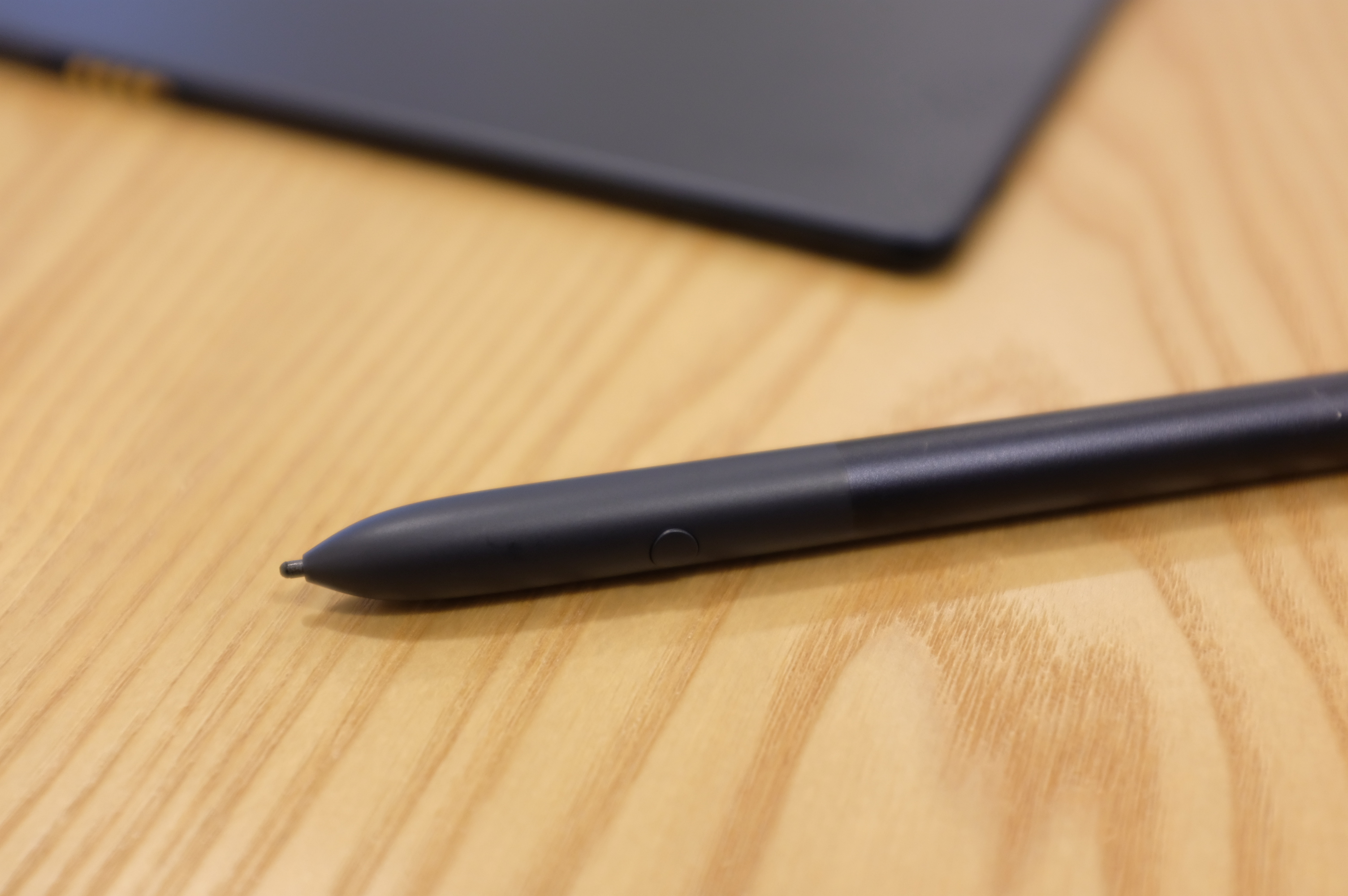
Other small touches like Split Screen and tabs that can be dragged into their own windows are nice touches, as well, which lend the device a bit more credence as a work machine. The pen is a nice add-on, as well, though I found a lot fewer uses for it during my day to day.

Ultimately, I would probably opt out of that additional $99 — especially with no easy way to store it à la the iPad Pro. Rather than a rechargeable battery, it takes the fairly uncommon AAAA — a shorter, thinner take on the AAA. They’re around if you look — I was actually a bit surprised to see them stocked at my local Walgreen’s.

The Pixel Imprint combo power button/fingerprint reader is a nice touch. The loss of the headphone jack, meanwhile, is a bit of a blow. I found myself all dongled up when using my headphones. It’s just an inevitability in 2018, I suppose. I also appreciate the fact that Google’s gone with one USB-C slot on either side, rather than sticking them both on the same edge like the MacBook Air. That gives you a little more wiggle room on the accessories front.

I don’t regret packing the Pixel Slate. I’ve had far worse travel companions, both human and gadget. Like the Pixelbook, the tablet is intended to be a showcase for what Chrome can do on a solid piece of hardware. And once again, it’s a case of the hardware outshining the software, even as it muddies the waters around Google’s Chromebook strategy. 

As an operating system, Chrome has made leaps and bounds in recent years, and it’s no wonder that it’s become a mainstay in classrooms. When it comes to being a serious desktop operating system for business, however, there’s still some work to be done.


Read Full Article

Google faces GDPR complaint over “deceptive” location tracking


A group of European consumer watchdogs has filed a privacy complaint against Google — arguing the company uses manipulative tactics in order to keep tracking web users’ location, for ad-targeting purposes.

The consumer organizations are making the complaint under the EU’s new data protection framework, GDPR, which regulators can use to levy major fines for compliance breaches — of up to 4% of a company’s global annual turnover.

Under GDPR a consent-based legal basis for processing personal data (e.g. person’s location) must be specific, informed and freely given.

In their complaint the groups, which include Norway’s Consumer Council, argue that Google does not have proper legal basis to track users through “Location History” and “Web & App Activity” — settings which are integrated into all Google accounts, and which, for users of Android-based smartphones, they assert are particularly difficult to avoid.

The Google mobile OS remains the dominant smartphone platform globally, as well as across Europe.

“Google is processing incredibly detailed and extensive personal data without proper legal grounds, and the data has been acquired through manipulation techniques,” said Gro Mette Moen, acting head of the Norwegian Consumer Council’s digital services unit in a statement.

“When we carry our phones, Google is recording where we go, down to which floor we are on and how we are moving. This can be combined with other information about us, such as what we search for, and what websites we visit. Such information can in turn be used for things such as targeted advertising meant to affect us when we are receptive or vulnerable.”

Responding to the complaint, a Google spokesperson sent TechCrunch the following statement:

Location History is turned off by default, and you can edit, delete, or pause it at any time. If it’s on, it helps improve services like predicted traffic on your commute. If you pause it, we make clear that — depending on your individual phone and app settings — we might still collect and use location data to improve your Google experience. We enable you to control location data in other ways too, including in a different Google setting called Web & App Activity, and on your device. We’re constantly working to improve our controls, and we’ll be reading this report closely to see if there are things we can take on board.

Earlier this year the Norwegian watchdog produced a damning report calling out dark pattern design tricks being deployed by Google and Facebook meant to manipulate users by nudging them towards “privacy intrusive options”. It also examined Microsoft’s consent flows but judged the company to be leaning less heavily on such unfair tactics.

Among the underhand techniques that the Google-targeted GDPR complaint, which draws on the earlier report, calls out are allegations of deceptive click-flow, with the groups noting that a “location history” setting can be enabled during Android set-up without a user being aware of it; key settings being both buried in menus (hidden) and enabled by default; users being presented at the decision point with insufficient and misleading information; repeat nudges to enable location tracking even after a user has previously turned it off; and the bundling of “invasive location tracking” with other unrelated Google services, such as photo sorting by location.

GDPR remains in the early implementation phrase — just six months since the regulation came into force across Europe. But a large chunk of the first wave of complaints have been focused on consent, according to Europe’s data protection supervisor, who also told us in October that more than 42,000 complaints had been lodged in total since the regulation came into force.

Where Google is concerned, the location complaint is by no means the only GDPR — or GDPR consent-related — complaint it’s facing.

Another complaint, filed back in May also by a consumer-focused organization, took aim at what it dubbed the use of “forced consent” by Google and Facebook — pointing out that the companies were offering users no choice but to have their personal data processed to make use of certain services, yet the GDPR requires consent to be freely given.


Read Full Article

Google faces GDPR complaint over “deceptive” location tracking


A group of European consumer watchdogs has filed a privacy complaint against Google — arguing the company uses manipulative tactics in order to keep tracking web users’ location, for ad-targeting purposes.

The consumer organizations are making the complaint under the EU’s new data protection framework, GDPR, which regulators can use to levy major fines for compliance breaches — of up to 4% of a company’s global annual turnover.

Under GDPR a consent-based legal basis for processing personal data (e.g. person’s location) must be specific, informed and freely given.

In their complaint the groups, which include Norway’s Consumer Council, argue that Google does not have proper legal basis to track users through “Location History” and “Web & App Activity” — settings which are integrated into all Google accounts, and which, for users of Android-based smartphones, they assert are particularly difficult to avoid.

The Google mobile OS remains the dominant smartphone platform globally, as well as across Europe.

“Google is processing incredibly detailed and extensive personal data without proper legal grounds, and the data has been acquired through manipulation techniques,” said Gro Mette Moen, acting head of the Norwegian Consumer Council’s digital services unit in a statement.

“When we carry our phones, Google is recording where we go, down to which floor we are on and how we are moving. This can be combined with other information about us, such as what we search for, and what websites we visit. Such information can in turn be used for things such as targeted advertising meant to affect us when we are receptive or vulnerable.”

Responding to the complaint, a Google spokesperson sent TechCrunch the following statement:

Location History is turned off by default, and you can edit, delete, or pause it at any time. If it’s on, it helps improve services like predicted traffic on your commute. If you pause it, we make clear that — depending on your individual phone and app settings — we might still collect and use location data to improve your Google experience. We enable you to control location data in other ways too, including in a different Google setting called Web & App Activity, and on your device. We’re constantly working to improve our controls, and we’ll be reading this report closely to see if there are things we can take on board.

Earlier this year the Norwegian watchdog produced a damning report calling out dark pattern design tricks being deployed by Google and Facebook meant to manipulate users by nudging them towards “privacy intrusive options”. It also examined Microsoft’s consent flows but judged the company to be leaning less heavily on such unfair tactics.

Among the underhand techniques that the Google-targeted GDPR complaint, which draws on the earlier report, calls out are allegations of deceptive click-flow, with the groups noting that a “location history” setting can be enabled during Android set-up without a user being aware of it; key settings being both buried in menus (hidden) and enabled by default; users being presented at the decision point with insufficient and misleading information; repeat nudges to enable location tracking even after a user has previously turned it off; and the bundling of “invasive location tracking” with other unrelated Google services, such as photo sorting by location.

GDPR remains in the early implementation phrase — just six months since the regulation came into force across Europe. But a large chunk of the first wave of complaints have been focused on consent, according to Europe’s data protection supervisor, who also told us in October that more than 42,000 complaints had been lodged in total since the regulation came into force.

Where Google is concerned, the location complaint is by no means the only GDPR — or GDPR consent-related — complaint it’s facing.

Another complaint, filed back in May also by a consumer-focused organization, took aim at what it dubbed the use of “forced consent” by Google and Facebook — pointing out that the companies were offering users no choice but to have their personal data processed to make use of certain services, yet the GDPR requires consent to be freely given.


Read Full Article

Topica raises $50M for its online learning services in Southeast Asia


Vietnam’s startup ecosystem is making forward progress. Just a week after 500 Startups’ local entity closed a $14 million fund for early-stage investments, one of the country’s elder statesmen of startups — educational service Topica — has closed its $50 million Series D.

The round — which is one of the highest to date for a Vietnamese tech company — comes from PE firm Northstar Group. Northstar, which manages some $2 billion in assets, is already linked to Topica via Openspace Ventures, the Singapore-based VC firm that is already an investor in the startup and counts Northstar among its LPs. (Openspace rebranded from NSI earlier this year, prior to which it was an arm of Northstar.)

Northstar’s total ownership stake is described as a minority but the exact size, and the valuation of the Topica business, hasn’t been revealed.

Topica was founded a decade ago at a launch event attended by Bill Gates, and since then it claims that it has helped more than one million adults through its online education platform. The business counted Microsoft and Qualcomm among its original sponsors and today it covers the six largest countries in Southeast Asia — Vietnam, Indonesia, Thailand, Singapore, Malaysia and the Philippines. It offers a range of different services that include English-language tutoring and university-level courses, but it has expanded to less traditional disciplines including a ‘founders institute’ accelerator program and a 3D ‘technologies’ program.

On the higher education focus, Topica works with 16 universities to offer Batchelor degree qualifications. That program has graduated some 6,200 students, the company claimed. Its dropout rate is above 90 percent, according to its data.

Deputy Prime Minister Pham Gia Khiem, Head of Microsoft General Embassy Bill Gates and other sponsors’ launching the program in April 2006 [Image via Topica]

More recently, Topica has also opened a marketplace that includes over 2,000 “short skill courses” to help users learn to master Microsoft Office or video editing, for example.

Topica has 1,700 staff and 2,000 teaching instructors across offices in Bangkok, Danang, Hanoi, HCMC, Jakarta, Manila and Singapore. There’s no specific aim for the investment other than to further the company’s ongoing mission of helping reach more students using digital mediums.

“We have been blessed to work with great partners like Northstar and our existing investors, who are all enthusiastic about our vision of investing in the long term to help bring quality education to millions of learners in Southeast Asia and beyond,” Dr. Tuan Pham, Topica chairman and CEO, said in a statement.

Topica employees regularly take part in marathons, ironman competitions and more across Southeast Asia

In particular, you can likely expect that Topica will continue to push its business-building initiatives as Southeast Asia’s startup ecosystem continues to grow. A recent report co-authored by Google forecast that the digital economy for the region — which houses over 650 million people — will triple over the next seven years. Topica claims that already it is invested in one-third of the startups in Vietnam that raised seed or Series A funding in 2016, so it seems entirely logical it’ll work to expand that to other markets.


Read Full Article
Facebook launches Watch Party for all, tests Live PiP commentating


Facebook Watch has failed to capture viewers with its content, so it’s hoping to differentiate through the company’s core strength: social. Today Facebook fully launches Watch Party, its co-viewing feature where users can see and comment on the same video at the same time, to all profiles and Pages around the world.

Watch Party had previously launched in Groups and been in testing with other types of accounts. But now any profile or business can post a Watch party invite to sync up with other users and simultaneously view videos they’ve discovered on Facebook.

Watch’s content lineup is still lackluster compared to YouTube, Netflix, or even Snapchat Discover. CNBC reports Facebook is giving up on younger teens that are already ditching its app, and pivoting the video hub towards an older audience. Facebook is hoping a shared experience with users commenting together on clips could make Watch more appealing, but it’s a genuinely new behavior that may prove difficult to instill.

Facebook is also testing a few other tricks to breathe life into Watch. Pages and Groups will be able to schedule a Watch Party to draw more viewers, maybe by setting up a nightly gathering. Watch Parties with lots of activity will have their comments threaded so it’s easier to follow discussions.

And most interestingly, Facebook will try allowing Watch Party hosts to go Live picture-in-picture so they can commentate in real-time. This could be a hit with celebrities, as it will make users feel like they’re sitting beside them watching TV together. Basketball star Shaq will test out the Live Commentating feature through his Page tomorrow.

Watch Party’s statistics sound impressive, with 12 million started from Groups so far, 7X more daily Watch Parties in Groups per day since its launch in July, and 8X more commenting than on non-Live/synced videos. Pages are using it to let fans binge watch playlists of their old videos, replay their TV content for users in different time zones, and let fans ask each other and the hosts questions about recipes as they cook.

But given Facebook’s 2.2 billion total monthly users, billion-plus Groups users, and the fact that measuring growth in multiples is easy when you start with a low number, the feature clearly hasn’t reached the zeitgeist yet.

Perhaps the best hope for Watch and Watch Party is a feature TechCrunch broke the news on last week. Facebook is now internally testing a Watch Party-like co-viewing feature inside Messenger. Baking the option into chat might be a lot more natural, especially in group texts. 

Facebook has been desperately trying to shift video consumption behavior from passive zombie viewing to interactive and social engagement with fellow viewers. But that only works if the content is compelling.

Beyond a reboot of MTV’s The Real World, nothing on Watch truly stands out. Facebook may need to open up its wallet and pay big for more tent pole shows to pull in users and hope they get lost commenting on clips with friends and like-minds.


Read Full Article

Facebook launches Watch Party for all, tests Live PiP commentating


Facebook Watch has failed to capture viewers with its content, so it’s hoping to differentiate through the company’s core strength: social. Today Facebook fully launches Watch Party, its co-viewing feature where users can see and comment on the same video at the same time, to all profiles and Pages around the world.

Watch Party had previously launched in Groups and been in testing with other types of accounts. But now any profile or business can post a Watch party invite to sync up with other users and simultaneously view videos they’ve discovered on Facebook.

Watch’s content lineup is still lackluster compared to YouTube, Netflix, or even Snapchat Discover. CNBC reports Facebook is giving up on younger teens that are already ditching its app, and pivoting the video hub towards an older audience. Facebook is hoping a shared experience with users commenting together on clips could make Watch more appealing, but it’s a genuinely new behavior that may prove difficult to instill.

Facebook is also testing a few other tricks to breathe life into Watch. Pages and Groups will be able to schedule a Watch Party to draw more viewers, maybe by setting up a nightly gathering. Watch Parties with lots of activity will have their comments threaded so it’s easier to follow discussions.

And most interestingly, Facebook will try allowing Watch Party hosts to go Live picture-in-picture so they can commentate in real-time. This could be a hit with celebrities, as it will make users feel like they’re sitting beside them watching TV together. Basketball star Shaq will test out the Live Commentating feature through his Page tomorrow.

Watch Party’s statistics sound impressive, with 12 million started from Groups so far, 7X more daily Watch Parties in Groups per day since its launch in July, and 8X more commenting than on non-Live/synced videos. Pages are using it to let fans binge watch playlists of their old videos, replay their TV content for users in different time zones, and let fans ask each other and the hosts questions about recipes as they cook.

But given Facebook’s 2.2 billion total monthly users, billion-plus Groups users, and the fact that measuring growth in multiples is easy when you start with a low number, the feature clearly hasn’t reached the zeitgeist yet.

Perhaps the best hope for Watch and Watch Party is a feature TechCrunch broke the news on last week. Facebook is now internally testing a Watch Party-like co-viewing feature inside Messenger. Baking the option into chat might be a lot more natural, especially in group texts. 

Facebook has been desperately trying to shift video consumption behavior from passive zombie viewing to interactive and social engagement with fellow viewers. But that only works if the content is compelling.

Beyond a reboot of MTV’s The Real World, nothing on Watch truly stands out. Facebook may need to open up its wallet and pay big for more tent pole shows to pull in users and hope they get lost commenting on clips with friends and like-minds.


Read Full Article

What Is Channel Bonding? One Way to Double Your Internet Speed