19 November 2018

Genies brings lifelike avatars to other apps with $10M from celebrities


Genies is emerging as the top competitor to Snapchat’s wildly popular Bitmoji as Facebook, Apple, and Google have been slow to get serious about personalized avatars. Over one million people have customized dozens of traits to build a realistic digital lookalike of themselves from over a million possible permutations.

When Genies launched a year ago after raising $15 million in stealth, it misstepped by trying to show people’s Genies interpreting a few weekly news stories and seasonal moments. Now the startup has figured out users want more control, so it’s shifting its iOS and Android apps to let you chat through your avatar, who acts out keywords and sentiments in reaction to what you type, which you can then share elsewhere. And Genies is launching an SDK that charges other apps apps to let you create avatars and use them for chat, stickers, games, animations, and augmented reality.

To power these new strategies and usher in what CEO Akash Nigam calls “the next wave of communication through avatars where people feel comfortable expressing themselves”, Genies has raised $10 million more. The party round comes from a wide range of investors from institutional firms like NEA and Tull Co; angels like Tinder’s Sean Rad, Raya’s Jared Morgenstern, and speaker Tony Robbins, athletes like Carmelo Anthony, Kyrie Irving, and Richard Sherman; and musicians including A$AP Rocky, Offset from Migos, The Chainsmokers, and 50 Cent. Some like Offset have even used their Genie to stand in for them brand sponsorships so their avatar poses for photos instead of them.

“We’ve transitioned from being an app to an avatar services company” Nigam tells me. The son of WebMD’s co-founder, Nigam build a string of failed apps before meeting his Genies co-founders through University Of Michigan hackathons. Watching Snapchat-owned Bitmoji stay glued atop the app download charts inspired them to see more opportunity in the avatar space.

With the Genies SDK, the startup is ready to challenge Snapchat’s new Snap Kit that lets apps build Bitmoji into their keyboards. But for $100,000 to $1 million in licensing fees, Genies allows apps to develop much deeper avatar features. Beyond creating keyboard stickers, games can plaster your Genies’ face over your character’s head, and utilities apps can have your Genie act out the weather or celebrate transactions. And since Genies is still taking off, partners can create experiences that feel fresh rather than just a repurposing of Bitmoji’s already-established cartoony avatars. Genies has also launched its first official brand deal, where Gucci has created a wheel in the Genies creator so you can deck out your mini-you with luxury clothing.

The Avatar Wars (from left): Facebook Avatars, Google Gboard Mini Stickers, Apple Memoji

Despite Bitmoji’s years of success, it’s yet to have a scaled competitor. TechCrunch broke the news that Facebook is working on a “Facebook Avatars” feature but seven months later it’s still not publicly testing and the prototype looks childish. Google’s Gboard just added the ability to create avatars based on a selfie, but they’re bland, low on detail, and far from fun looking. And Apple’s latest mobile operating system lets you create a Memoji, though they too look generic like actual emoji rather than something instantly identifiable as you. By designing avatars that not only look like you but like a cooler version of you, Genies could capture the hearts and faces of millions of teens and the influencers they follow.


Read Full Article

Plastiq raises $27M at 2X+ value to let you pay for anything on credit


“I wasn’t asking to pay in Bitcoin!” Plastiq CEO and co-founder Eliot Buchanan recalls with a laugh. “I went to pay part of my tuition at Harvard and I was told that they didn’t (and never would) accept credit card. It was inconvenient and seemed odd. Credit cards had been around for 50 years.” That set off the a light bulb in his head. “Why couldn’t I use a credit card to pay for this important bill? So, I set out to solve my own problem.”

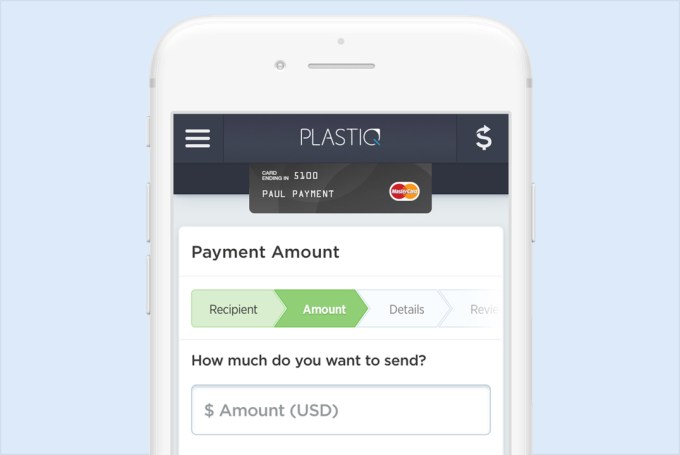
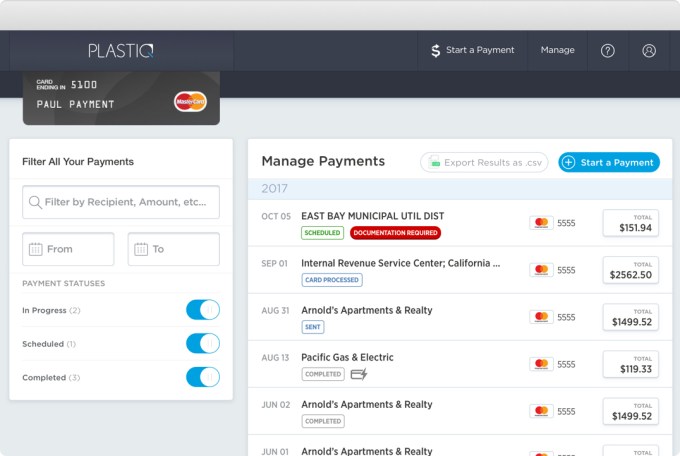
Whether you’re trying to pay your rent or tuition on credit, or you have a business and want to invest in a new opportunity or get a better rate by paying vendors up front, Plastiq can help. For a flat 2.5 percent fee, you pay Plastiq through your credit card, and it issues the proper wire transfer, check, or deposit for up to $500,000 on your behalf to whoever you owe.

Now with over 1 million clients, growth stage VCs are taking notice. Kleiner Perkins has just led a $27 million Series C for Plastiq with partner Ilya Fushman joining the board. A source says the raise that also comes from DST Global between doubles and triples Plastiq’s valuation over its 2017 Series B-1 rounds of $11 million and $16 million. Now with $73 million in total funding, it plans to add 100 more people to its current team of 60 while building out its small business product and bank partnerships.

“As tens of thousands of business owners started using Plastiq actively for billions of dollars in payments, we realized we had this incredible opportunity to serve as the hub/platform on which they (SMBs) could run all their payments. The very fabric of America’s economy — and certainly much of the world — is run by rising or aspiring small business owners” Buchanan tells me. He says that’s “the main reason that seeded this Kleiner financing and our renewed vision to ‘accelerate how small businesses grow’. [Helping people pay with credit cards] is merely the entry point to a much broader play where we are central to how a small business runs.”

For example, if a small business wants to ramp up production of something it’s selling, it’d typically have to pay up front for manufacturing, but wait months until the stuff is shipped and sold to recoup its investment. That can put a major squeeze on the company’s operating capital. With Plastiq, the business can pay with credit up front so they don’t have to worry about being in danger of running out of money in the meantime. Plastiq also lets businesses accept credit card payments, which can win them favor with partners.

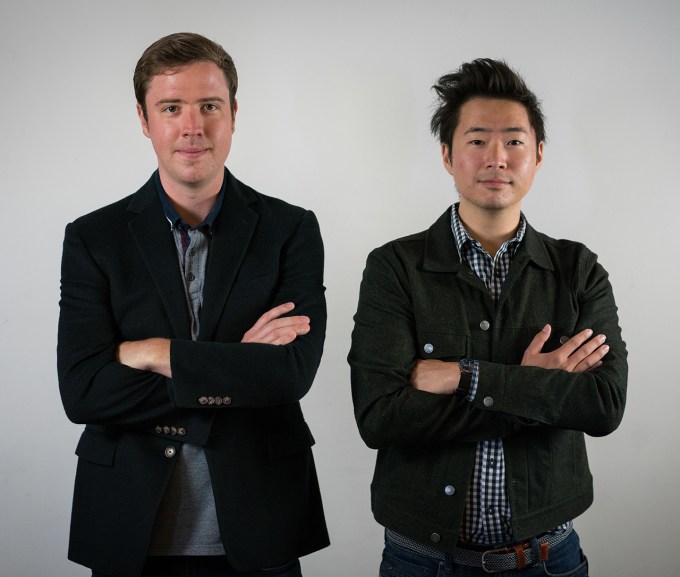
Plastiq co-founders (from left): Eliot Buchanan and Dan Choi

Speciality medical clinic chain Metro Vein pays vendors who don’t take credit with Plastiq instead. “I was able to invest in a new line of business that has enabled me to more than double our revenues in the last ten months,” said CEO Dmitri Ivanov. And thanks to tax write-offs, business users of Plastiq can push its realized fee down to 2 percent.

Buchanan claims Plastiq doesn’t have any direct competitors that allow SMBs to pay for all their bills via credit. It does carry platform risk, though. “Like any payments business, we rely heavily on Visa, MasterCard, and American Express. A challenge or risk factor is that you’re relying on very large companies that are very successful. You have to learn to work hand in hand with those partners instead of ‘disrupt them’.” He says Plastiq’s relationships with them are positive right now since it’s driving new revenue for them and helping their customers spend in new areas.

There’s also the risk that people misuse Plastiq to procrastinate on actually paying their personal bills or get in over their head investing in their business. But Plastiq’s new board member Fushman calls the service “this elegant way for businesses to tap into credit they’ve been issued but they haven’t been able to utilize before.” For many who are happy to pay though just need some time and flexibility, Plastiq can pitch in.


Read Full Article

Google report: Southeast Asia’s digital economy to triple to $240 billion by 2025


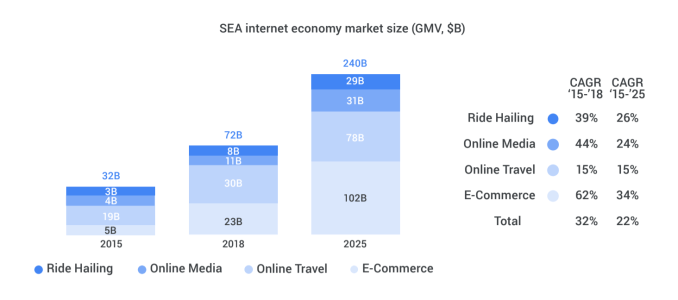
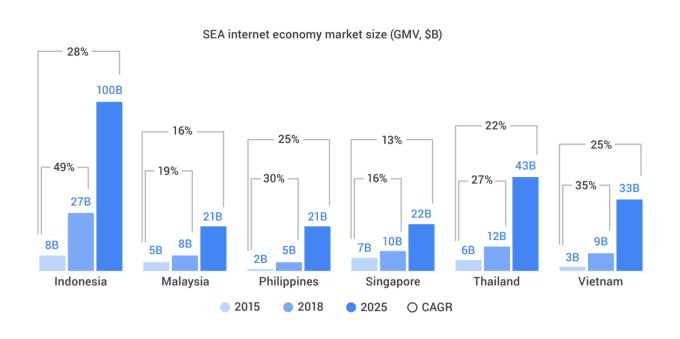
It may sit in the shade of China and India, but tech has real growth potential in Southeast Asia. Home to a cumulative 650 million people, the region’s digital economy is forecast to triple in size and reach $240 billion over the next seven years, according to Google’s third “e-Conomy SEA” report.

The annual study, which is authored by Google and Singapore sovereign fund Temasek and is arguably the most comprehensive research program for tech in Southeast Asia, has raised its estimation for the size of the digital economy in 2025 from an initial $200 billion after seeing the region reach “an inflection point.”

Southeast Asia has 350 million internet users across its six largest countries — that’s more than the entire U.S. population — and the latest data suggests its internet economy will reach $72 billion this year, up from $50 billion last year and $19.1 billion in 2015.

Online travel accounts for the majority of that revenue ($30 billion) ahead of e-commerce ($23 billion), online media ($11 billion) and ride-hailing ($8 billion), and that rough breakdown is likely to be maintained up until 2025, according to the report.

Indonesia, the world’s fourth largest country by population, is forecast to hit $100 billion by 2025, head of Thailand ($43 billion) and Vietnam ($33 billion) with strong growth forecast across the board. Indonesia and Vietnam, in particular, have seen their respective digital economies more than triple since 2015, according to the data.

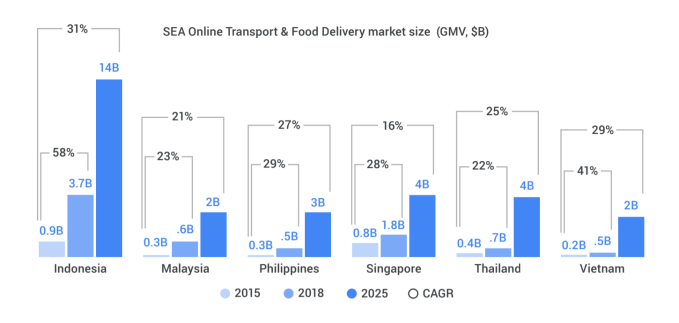
This year’s Google-Temasek report includes more detail on ride-hailing, which has become a particularly fascinating space in Southeast Asia since Grab acquired Uber’s local business earlier this year. Grab and its close rival Go-Jek, which is expanding from its base in Indonesia, have seen the market grow considerably, according to the report. Daily ride-hailing users in 2018 are up to eight million from 1.5 million in 2015, with monthly users growing to 35 million from eight million during the same time period.

Growth in revenue is actually coming faster for food delivery services over core transportation services, which is a good sign for Grab and Go-Jek since the two businesses have aggressively expanded into additional on-demand services. Singapore, while the smallest of Southeast Asia’s six largest economies with a population of 5.5 million, has an outsized share of the region’s ride-hailing market — and that’s forecast to continue to 2025.

Speaking of outsized, the report sheds some light on how the region’s largest companies utterly dominate its funding landscape. Billion-dollar companies in Southeast Asia sucked up $16 billion of the $24 billion invested in the region of the last four years, with Grab alone responsible for $6 billion of that figure.

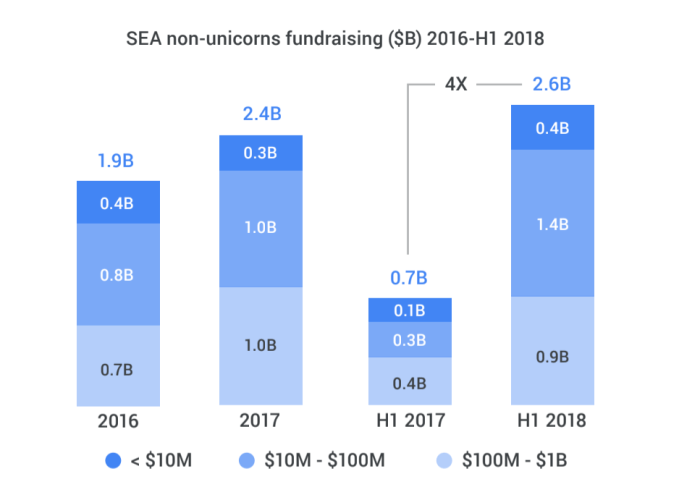
Every edition of the report has stressed that the growth forecasts are contingent on requisite levels of funding boosting the Southeast Asian startup ecosystem as a whole, so the fact that most capital is going to a few very big players is a concern. However, the report does show that there has been progress from the rest of the field, with non-unicorn funding jumping nearly forecast annually during the first half of 2018 — which raised more than the whole of 2017.

“More than 2,000 internet economy companies in the region have secured investments, with companies valued less than $1 billion able to raise collectively almost $7 billion in the last three years. Among them, the most dynamic segment was that of companies valued between $10 million and $100 million. The bedrock of the internet economy, these companies have raised $1.4 billion in the first half of 2018, already eclipsing the $1.0 billion they received in all of 2017,” the report states.

You can read the full findings here.


Read Full Article

17 November 2018

WhatsApp could wreck Snapchat again by copying ephemeral messaging


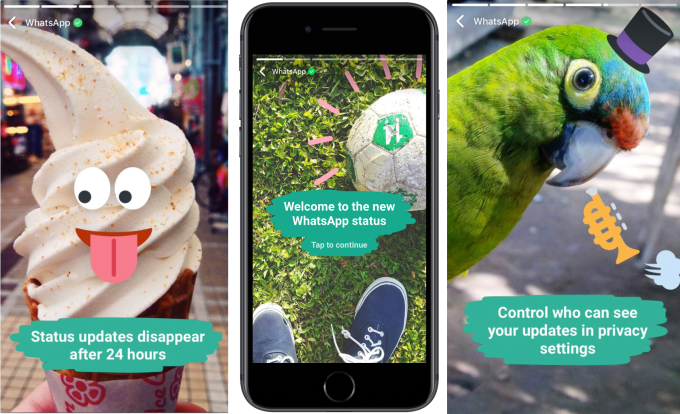
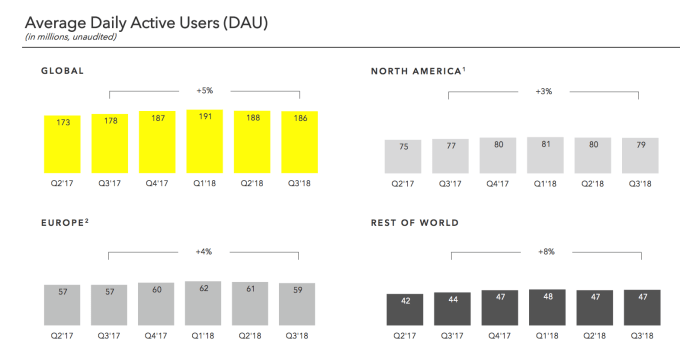
WhatsApp already ruined Snapchat’s growth once. WhatsApp Status, its clone of Snapchat Stories, now has 450 million daily active users compared to Snapchat’s 188 million. That’s despite its 24-hour disappearing slideshows missing tons of features including augmented reality selfie masks, animated GIFs, or personalized avatars like Bitmoji. A good enough version of Stories conveniently baked into the messaging app beloved in the developing world where Snapchat wasn’t proved massively successful. Snapchat actually lost total users in Q2 and Q3 2018, and even lost Rest Of World users in Q2 despite that being where late stage social networks rely on for growth.

That’s why it’s so surprising that WhatsApp hasn’t already copied the other big Snapchat feature, ephemeral messaging. When chats can disappear, people feel free to be themselves — more silly, more vulnerable, more expressive. For teens who’ve purposefully turned away from the permanence of the Facebook profile timeline, there’s a sense of freedom in ephemerality. You don’t have to worry about old stuff coming back to haunt or embarass you. Snapchat rode this idea to become a cultural staple for the younger generation.

Yet right now WhatsApp only lets you send permanent photos, videos, and texts. There is an Unsend option, but it only works for an hour after a message is sent. That’s far from the default ephemerality of Snapchat where seen messages disappear once you close the chat window unless you purposefully tap to save them.

Instagram has arrived at a decent compromise. You can send both permanent and temporary photos and videos. Text messages are permanent by default, but you can unsend even old ones. The result is the flexibility to both chat through expiring photos and off-the-cuff messages knowing they will or can disappear, while also being able to have reliable, utilitarian chats and privately share photos for posterity without the fear that one wrong tap could erase them. When Instagram Direct added ephemeral messaging, it saw a growth spurt to over 375 million monthly users as of April 2017.

Snapchat lost daily active users the past two quarters

WhatsApp should be able to build this pretty easily. Add a timer option when people send media so photos or videos can disappear after 10 seconds, a minute, an hour, or a day. Let people add a similar timer to specific messages they send, or set a per chat thread default for how long your messages last similar to fellow encrypted messaging app Signal.

Snap CEO Evan Spiegel’s memo leaked by Cheddar’s Alex Heath indicates that he views chat with close friends as the linchpin of his app that was hampered by this year’s disastrous redesign. He constantly refers to Snapchat as the fastest way to communicate. That might be true for images but not necessarily text, as BTIG’s Rich Greenfield points out, citing how expiring text can causes conversations to break down. It’s likely that Snapchat will double-down on messaging now that Stories has been copied to death.

Given its interest in onboarding older users, that might mean making texts easier to keep permanent or at least lengthening how long they last before they disappear. And with its upcoming Project Mushroom re-engineering of the Snapchat app so it works better in developing markets, Snap will increasingly try to become WhatsApp.

…Unless WhatsApp can become Snapchat first. Spiegel proved people want the flexibility of temporary messaging. Who cares who invented something if it can be brought to more people to deliver more joy? WhatsApp should swallow its pride and embrace the ephemeral.


Read Full Article

WhatsApp could wreck Snapchat again by copying ephemeral messaging


WhatsApp already ruined Snapchat’s growth once. WhatsApp Status, its clone of Snapchat Stories, now has 450 million daily active users compared to Snapchat’s 188 million. That’s despite its 24-hour disappearing slideshows missing tons of features including augmented reality selfie masks, animated GIFs, or personalized avatars like Bitmoji. A good enough version of Stories conveniently baked into the messaging app beloved in the developing world where Snapchat wasn’t proved massively successful. Snapchat actually lost total users in Q2 and Q3 2018, and even lost Rest Of World users in Q2 despite that being where late stage social networks rely on for growth.

That’s why it’s so surprising that WhatsApp hasn’t already copied the other big Snapchat feature, ephemeral messaging. When chats can disappear, people feel free to be themselves — more silly, more vulnerable, more expressive. For teens who’ve purposefully turned away from the permanence of the Facebook profile timeline, there’s a sense of freedom in ephemerality. You don’t have to worry about old stuff coming back to haunt or embarass you. Snapchat rode this idea to become a cultural staple for the younger generation.

Yet right now WhatsApp only lets you send permanent photos, videos, and texts. There is an Unsend option, but it only works for an hour after a message is sent. That’s far from the default ephemerality of Snapchat where seen messages disappear once you close the chat window unless you purposefully tap to save them.

Instagram has arrived at a decent compromise. You can send both permanent and temporary photos and videos. Text messages are permanent by default, but you can unsend even old ones. The result is the flexibility to both chat through expiring photos and off-the-cuff messages knowing they will or can disappear, while also being able to have reliable, utilitarian chats and privately share photos for posterity without the fear that one wrong tap could erase them. When Instagram Direct added ephemeral messaging, it saw a growth spurt to over 375 million monthly users as of April 2017.

Snapchat lost daily active users the past two quarters

WhatsApp should be able to build this pretty easily. Add a timer option when people send media so photos or videos can disappear after 10 seconds, a minute, an hour, or a day. Let people add a similar timer to specific messages they send, or set a per chat thread default for how long your messages last similar to fellow encrypted messaging app Signal.

Snap CEO Evan Spiegel’s memo leaked by Cheddar’s Alex Heath indicates that he views chat with close friends as the linchpin of his app that was hampered by this year’s disastrous redesign. He constantly refers to Snapchat as the fastest way to communicate. That might be true for images but not necessarily text, as BTIG’s Rich Greenfield points out, citing how expiring text can causes conversations to break down. It’s likely that Snapchat will double-down on messaging now that Stories has been copied to death.

Given its interest in onboarding older users, that might mean making texts easier to keep permanent or at least lengthening how long they last before they disappear. And with its upcoming Project Mushroom re-engineering of the Snapchat app so it works better in developing markets, Snap will increasingly try to become WhatsApp.

…Unless WhatsApp can become Snapchat first. Spiegel proved people want the flexibility of temporary messaging. Who cares who invented something if it can be brought to more people to deliver more joy? WhatsApp should swallow its pride and embrace the ephemeral.


Read Full Article

Quantum computing, not AI, will define our future

Microsoft could release a disc-less Xbox One


According to a new report from Thurott, Microsoft has been working on a new console in the Xbox One family. This cheaper model could play regular Xbox One games, but there would be no Blu-Ray drive.

This move would lower the price of the entry-level Xbox One. An Xbox One S officially starts at $299 but you can currently find it for around $250 on Amazon. The disc-less Xbox One could start at $199.

If you already have an Xbox One and physical games, you could imagine going to an official retailer to trade your discs for a digital download code. Let’s hope that this new Xbox comes with a big hard drive for those who have a slow internet connection.

Back when Microsoft first unveiled the Xbox One in 2013, the company wanted to make a big push toward digital games. The original plan was that you would associate your physical games with your Xbox account. After that, you could play the game even without inserting the disc. Microsoft also planned a way to lend a digital game to a friend for 30 days.

After some backlash, Microsoft gave up on this plan and switched back to a more traditional system. But it’s been five years, digital games are more popular than ever and internet connections are faster than ever.

Microsoft also thinks the future of games is based on subscriptions. With the Xbox Game Pass, you can access dozens of games for $10 per month. You can also subscribe to EA Access on the Xbox One. Eventually, you could imagine replacing the Xbox altogether with a subscription for a streaming service. But we’re not there yet.

According to Thurott, Microsoft is also working on an updated Xbox One S that could be a bit cheaper. This one would have a traditional disc drive.


Read Full Article
Good News! 5 Places to Read or Hear Positive and Uplifting News


good-news-

Turn on the TV, pick up the newspaper, or hop on to social media, and it seems like there is nothing but bad news. Nothing could be further from the truth. There is a ton of positive, good news that you are missing, and these sites and apps want to fix that.

A constant barrage of negative and depressing news can have an effect on how you think and feel. Seeking out positive news is one of the important steps to escape the drama of bad news.

As you can see, that news can be got through websites, a browser’s new tab extension, podcasts, or even by talking to your Google Assistant.

Not Depressing and r/UpliftingNews (Web): News Feeds of Hopeful and Inspiring Stories

Not Depressing News has a lsit of positive news articles

The simplest way to see positive stories happening across the world is to go to one of these two sites, which present a list of such hopeful events.

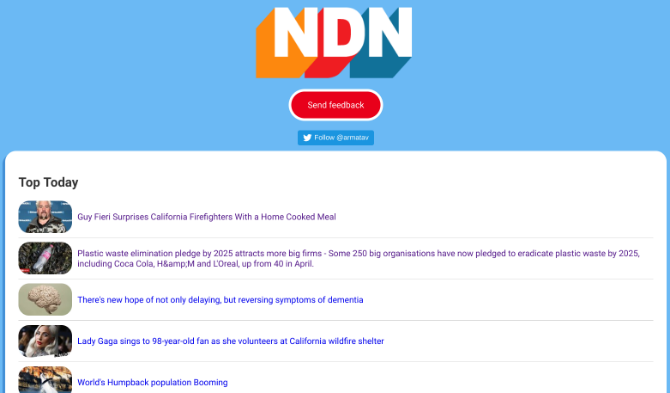
Not Depressing aggregates links from several media outlets, including the world’s most trusted news sites. You’ll see a headline and a picture, which you click to be taken to the news article in a new tab. Don’t rely on the “Top Today”, which is the first section and doesn’t update often. Scroll down to “New” and you’ll find the latest happenings.

Similarly, u/UpliftingNews is a Reddit community that shares such good news. A lot of these are real stories of samaritans, while others are links to news articles. If you want a discussion forum along with your positive news, then Uplifting News is where you should head to. It’s one of the sure-fire ways to get an instant shot of happiness.

Goodnet (Web): Positive and Uplifting Articles, Videos, and More

Goodnet for uplifting news

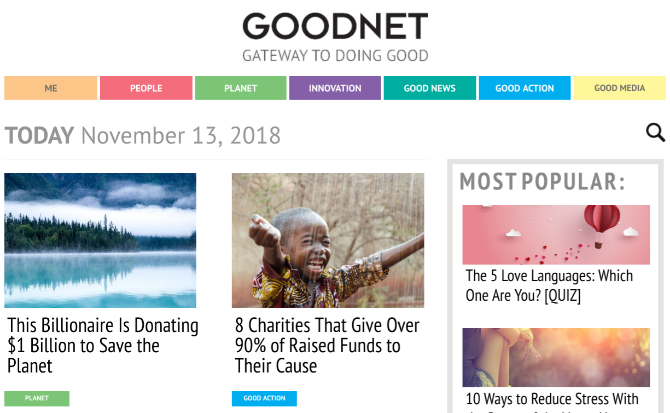
Goodnet is an all-in-one destination for anyone who wants to seek some good news. The aim is to report on anyone making a positive impact through volunteering, charity work, microfunding, creativity, green tech, water conservation, collaborative consumption, mindful living, or anything else.

The main page seems like any other news site you might go to. The only difference is that all of the content is about something good happening in the world. You can largely filter the topics as me, people, planet, innovation, good news, and good action. Goodnet is almost a zealot about propagating positivity and seems to find the silver lining in every dark cloud.

The site also has a “Good Media” section where it hosts positive videos as well as other media like infographics and quizzes. It’s a nice break from the age-old way of consuming news.

Sounds Good (Podcast): Conversations With Optimists and World-Changers

Brendan Harvey of Sounds Good podcast for Conversations With Optimists and World-Changers

GoodGoodGood is trying to start a physical newspaper that only reports positive news, and has launched a Kickstarter for that. Till that comes to fruition, you can check their weekly podcast, Sounds Good.

Every week, host Branden Harvey speaks to people who are making a positive change in the world. These are both influencers in the limelight as well as people who work hard behind the scenes to get things done. The focus here is on helping society evolve and push forward.

Sounds Good is available for free on different podcast networks, so you can easily subscribe to it. There are over 100 episodes for you to listen to.

Subscribe to Sounds Good: iTunes | Stitcher | Overcast | SoundCloud

GoodGoodGood also has a newsletter for positive stories. Every Tuesday, the GoodNewsletter sends you five uplifting news articles to brighten your week. You will routinely learn something new with this newsletter.

Google Assistant (Google Home, Android, iOS): Articles From “Solutions Journalism”

Google News is the default news source for millions of people. And the new changes in Google News make it better than ever before. But it is still riddled with depressing news. In this constant effort to improve, Google Assistant can now show you articles that are about positive and uplifting events.

All you have to do is fire up Google Assistant on your Android device or iPhone, or speak to it on a Google Home device. The magic command is, “OK Google, tell me something good.”

To serve this positive news, Google has partnered with the Solutions Journalism Network, which finds instances from across the world about how anyone can make positive change and solve problems.

“Solutions journalism empowers and energizes audiences, helping to combat negative news fatigue,” says Google. But if you’re still not happy with the search giant’s efforts, you might want to switch to some of the best Google News alternatives.

Goodnews (Chrome): Uplifting News In New Tab

Goodnews for Chrome puts positive news in a new tab

Google Chrome’s New Tab page can be customized to do a lot of things. One of them is to give you a dose of good and positive news through the Goodnews extension.

It’s a minimalistic and gorgeous add-on that does one job well. Install it, and every time you open a new tab, you will see one positive headline, along with where it’s from. Placed on a solid single-color background, it has a calming and uplifting effect. This is one of those tiny changes that can make a big difference to your outlook without you trying much.

Of course, this would mean you have to give up on other things like the best New Tab page extensions for productivity. But choose what you want, a healthier mind or a work boost.

Download: Goodnews for Chrome (Free)

Instead of Positive, Go for Funny

With the help of these sites, apps, and podcasts, you will get a dose of positive news in your life without much effort. It’s a welcome change from the depressing and dark articles flooding your social media.

But such “good news sites” aren’t the only way to break out of the negative news cycle. You can also look at a daily dose of humorous news as an alternative. Try any of these 15 enjoyable and funny news websites to see the world in a positive light.

Read the full article: Good News! 5 Places to Read or Hear Positive and Uplifting News


Read Full Article
YouTube quietly added free, ad-supported movies to its site


YouTube quietly added around 100 ad-supported Hollywood movies to its site, beginning last month, according to a new report from AdAge. The titles include a mix of classics like “Rocky” and “The Terminator,” as well as other family fare like “Zookeeper,” “Agent Cody Banks,” and “Legally Blonde,” among others.

Before, YouTube had only offered consumers the ability to purchase movies and TV shows, similar to how you can rent or buy content from Apple’s iTunes or Amazon Video.

Currently, YouTube is serving ads on these free movies, but the report said the company is open to working out other deals with advertisers – like sponsorships or exclusive screenings.

YouTube’s advantage in this space, compared with some others, is its sizable user base of 1.9 million monthly active users and its ability to target ads using data from Google.

The addition of a an ad-supported movies marketplace on YouTube follows Roku’s entry into this market, which began last year with the launch of its free collection of movies, called The Roku Channel.

This year, Roku has been expanding the type of content on that channel to also include things like live news from ABC News, Cheddar, Newsmax, Newsy, People TV, Yahoo and The Young Turks, and – more recently – entertainment and live sports. 

Walmart also offers its own free movies collection through Vudu, and recently teamed up with MGM on original content for the service. Tubi operates a streaming service with free, ad-supported content, too. And Amazon is rumored to be working on something similar.


Read Full Article

We’re Giving Away a DJI Spark!


If you’ve always wanted to get your hands on a quality drone, the time could be now, and it won’t cost you a dime!

That’s right. This month we’re giving away a DJI Spark (worth $399) to one of our lucky newsletter subscribers. Read on to find out how to enter!

About the DJI Spark

This mini-drone, from the undisputed king of drone manufacturers, is a seriously fun piece of kit, and it is so small it can practically fit in your pocket.

With a mechanical gimbal and a 12MP, 1080p camera, your aerial photography and videography will be silky-smooth, and super-crisp. And with plenty of intelligent flight modes on offer — including cinematic movements, hand-gesture control, and object tracking — you’ll feel like a pro in no time.

All taken together, this much quality tech packed into such a small drone makes the DJI Spark far more than just a toy. And you can enter to win one right now!

Read our full review to learn more about the DJI Spark and what it can do.

How to Enter

To be in with a chance of winning the DJI Spark, visit the giveaway landing page.

Simply enter your name and email address into the form, then click the button to subscribe to our newsletter. Existing subscribers can also enter through the same process. Feel free to complete additional steps for more entries!

The winner will be announced via our newsletter by November 27, so keep an eye on your inbox!

As a subscriber, you will receive roundups of our most popular articles, and occasional third party offers. For more info read our giveaway rules and our privacy policy.

Read the full article: We’re Giving Away a DJI Spark!


Read Full Article
The Countdown to Black Friday Is On! Here Are the 10 Best Deals

Stoop aims to improve your news diet with an easy way to find and read newsletters


Stoop is looking to provide readers with what CEO Tim Raybould described as “a healthier information diet.”

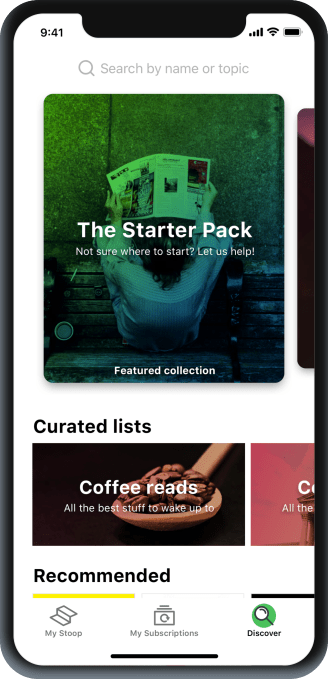
To do that, it’s launched an iOS and Android app where you can browse through different newsletters based on category, and when you find one you like, it will direct you to the standard subscription page. If you provide your Stoop email address, you’ll then be able to read all your favorite newsletters in the app.

“The easiest way to describe it is: It’s like a podcast app but for newsletters,” Raybould said. “It’s a big directory of newsletters, and then there’s the side where you can consume them.”

Why newsletters? Well, he argued that they’re one of the key ways for publishers to develop a direct relationship with their audience. Podcasts are another, but he said newsletters are “an order of magnitude more important” because you can convey more information with the written word and there are lower production costs.

That direct relationship is obviously an important one for publishers, particularly as Facebook’s shifting priorities have made it clear that publications need to “establish the right relationship to readers, as opposed to renting someone else’s audience.” But Raybould said it’s better for readers too, because you’ll be spending your time on journalism that’s designed to provide value to the reader, not just attracting clicks: “You will find you use the newsfeed less and consume more of your content directly from the source.”

“Most content [currently] is distributed through a third party and that software is choosing what to surface next not based on the quality of the content, but based on what’s going to keep people scrolling,” he added. “Trusting an algorithm with what you’re going to read next is like trusting a nutritionist who’s incentivized based on how many chips you eat.”

Stoop Discover

So Raybould is a fan of newsletters, but he said the current system is pretty cumbersome. There’s no one place where you can find new newsletters to read, and you may also hesitate to subscribe to another one because it “crowds out your personal inbox.” So Stoop is designed to reduce the friction, making it easy to subscribe to and read as many newsletters as your heart desires.

Raybould said the team has already curated a directory of around 650 newsletters (including TechCrunch’s own Daily Crunch) and the list continues to grow. Additional features include a “shuffle” option to discover new newsletters, plus the ability to share a newsletter with other Stoop users, or to forward it to your personal address where they can be sent along to whoever you like.

The Stoop app is free, with Raybould hoping to eventually add a premium plan for features like full newsletter archives. He’s also hoping to collaborate with publishers — initially, most publishers will probably treat Stoop readers as just another set of subscribers, but Raybould said they could get access to additional analytics and also make subscriptions easier by integrating with the app’s instant subscribe option.

And the company’s ambitions even go beyond newsletters. Raybould said Stoop is the first consumer product from a team with a larger mission to help publishers. They’re also working on OpenBundle, an initiative around bundled news subscriptions with a planned launch in 2019 or 2020.

“The overaching thing that is the same is the OpenBundle thesis and the Stoop thesis,” he said. “Getting publishers back in the role of delivering content directly to the audience is the antidote to the newsfeed.”


Read Full Article

Improved Grading of Prostate Cancer Using Deep Learning


Approximately 1 in 9 men in the United States will develop prostate cancer in their lifetime, making it the most common cancer in males. Despite being common, prostate cancers are frequently non-aggressive, making it challenging to determine if the cancer poses a significant enough risk to the patient to warrant treatment such as surgical removal of the prostate (prostatectomy) or radiation therapy. A key factor that helps in the “risk stratification” of prostate cancer patients is the Gleason grade, which classifies the cancer cells based on how closely they resemble normal prostate glands when viewed on a slide under a microscope.

However, despite its widely recognized clinical importance, Gleason grading of prostate cancer is complex and subjective, as evidenced by studies reporting inter-pathologist disagreements ranging from 30-53% [1][2]. Furthermore, there are not enough speciality trained pathologists to meet the global demand for prostate cancer pathology, especially outside the United States. Recent guidelines also recommend that pathologists report the percentage of tumor of different Gleason patterns in their final report, which adds to the workload and is yet another subjective challenge for the pathologist [3]. Overall, these issues suggest an opportunity to improve the diagnosis and clinical management of prostate cancer using deep learning–based models, similar to how Google and others used such techniques to demonstrate the potential to improve metastatic breast cancer detection.

In “Development and Validation of a Deep Learning Algorithm for Improving Gleason Scoring of Prostate Cancer”, we explore whether deep learning could improve the accuracy and objectivity of Gleason grading of prostate cancer in prostatectomy specimens. We developed a deep learning system (DLS) that mirrors a pathologist’s workflow by first categorizing each region in a slide into a Gleason pattern, with lower patterns corresponding to tumors that more closely resemble normal prostate glands. The DLS then summarizes an overall Gleason grade group based on the two most common Gleason patterns present. The higher the grade group, the greater the risk of further cancer progression and the more likely the patient is to benefit from treatment.
Visual examples of Gleason patterns, which are used in the Gleason system for grading prostate cancer. Individual cancer patches are assigned a Gleason pattern based on how closely the cancer resembles normal prostate tissue, with lower numbers corresponding to more well differentiated tumors. Image Source: National Institutes of Health.
To develop and validate the DLS, we collected de-identified images of prostatectomy samples which contain a greater amount and diversity of prostate cancer than needle core biopsies, even though the latter is the more common clinical procedure. On the training data, a cohort of 32 pathologists provided detailed annotations of Gleason patterns (resulting in over 112 million annotated image patches) and an overall Gleason grade group for each image. To overcome the previously referenced variability in Gleason grading, each slide in the validation set was independently graded by 3 to 5 general pathologists (selected from a cohort of 29 pathologists) and had a final Gleason grade assigned by a genitourinary-specialist pathologist to obtain the ground-truth label for that slide.

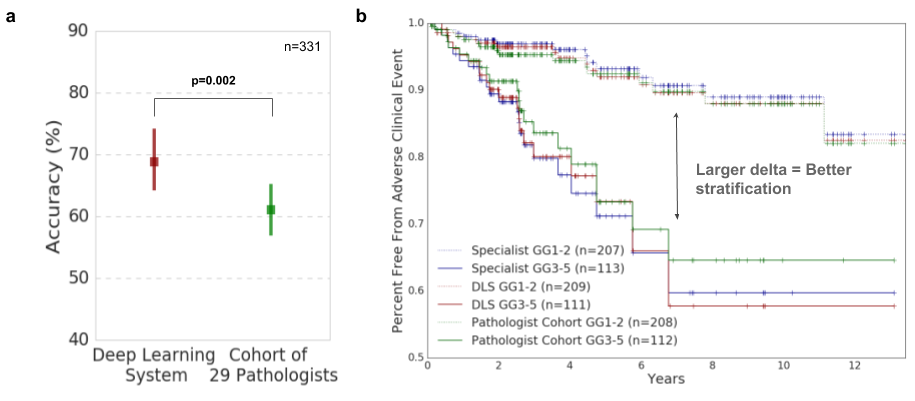
In the paper, we show that our DLS achieved an overall accuracy of 70%, compared to an average accuracy of 61% achieved by US board-certified general pathologists in our study. Of 10 high-performing individual general pathologists who graded every slide in the validation set, the DLS was more accurate than 8. The DLS was also more accurate than the average pathologist at Gleason pattern quantitation. These improvements in Gleason grading translated into better clinical risk stratification: the DLS better identified patients at higher risk for disease recurrence after surgery than the average general pathologist, potentially enabling doctors to use this information to better match patients to therapy.
Comparison of scoring performance of the DLS with pathologists. a: Accuracy of the DLS (in red) compared with the mean accuracy among a cohort-of-29 pathologists (in green). Error bars indicate 95% confidence intervals. b: Comparison of risk stratification provided by the DLS, the cohort-of-29 pathologists, and the genitourinary specialist pathologists. Patients are divided into low and high risk groups based on their Gleason grade group, where a larger separation between the Kaplan-Meier curves of these risk groups indicates better stratification.
We also found that the DLS was able to characterize tissue morphology that appeared to lie at the cusp of two Gleason patterns, which is one reason for the disagreements in Gleason grading observed between pathologists, suggesting the possibility of creating finer grained “precision grading” of prostate cancer. While the clinical significance of these intermediate patterns (e.g. Gleason pattern 3.3 or 3.7) is not known, the increased precision of the DLS will enable further research into this interesting question.
Assessing the region-level classification of the DLS. a: Annotations from 3 pathologists compared to DLS predictions. The pathologists show general concordance on the location and the extent of tumor areas, but poor agreement in classifying Gleason patterns. The DLS’s precision Gleason pattern for each region is represented by interpolating between the DLS’s prediction patterns for Gleason patterns 3 (green), 4 (yellow), and 5 (red). b: DLS prediction
patterns compared to the distribution of pathologists’ Gleason pattern classifications on 41 million annotated image patches from the test dataset. On patches where pathologists are discordant, where the tissue is more likely to be on the cusp of two patterns, the DLS reflects this ambiguity in it's prediction scores.
While these initial results are encouraging, there is much more work to be done before systems like our DLS can be used to improve the care of prostate cancer patients. First, the accuracy of the model can be further improved with additional training data and should be validated on independent cohorts containing a larger number and more diverse group of patients. In addition, we are actively working on refining our DLS system to work on diagnostic needle core biopsies, which occur prior to the decision to undergo surgery and where Gleason grading therefore has a significantly greater impact on clinical decision-making. Further work will be needed to assess how to best integrate our DLS into the pathologist’s diagnostic workflow and the impact of such artificial-intelligence based assistance on the overall efficiency, accuracy, and prognostic ability of Gleason grading in clinical practice. Nonetheless, we are excited about the potential of technologies like this to significantly improve cancer diagnostics and patient care.

Acknowledgements
This work involved the efforts of a multidisciplinary team of software engineers, researchers, clinicians and logistics support staff. Key contributors to this project include Kunal Nagpal, Davis Foote, Yun Liu, Po-Hsuan (Cameron) Chen, Ellery Wulczyn, Fraser Tan, Niels Olson, Jenny L. Smith, Arash Mohtashamian, James H. Wren, Greg S. Corrado, Robert MacDonald, Lily H. Peng, Mahul B. Amin, Andrew J. Evans, Ankur R. Sangoi, Craig H. Mermel, Jason D. Hipp and Martin C. Stumpe. We would also like to thank Tim Hesterberg, Michael Howell, David Miller, Alvin Rajkomar, Benny Ayalew, Robert Nagle, Melissa Moran, Krishna Gadepalli, Aleksey Boyko, and Christopher Gammage. Lastly, this work would not have been possible without the aid of the pathologists who annotated data for this study.

References
  1. Interobserver Variability in Histologic Evaluation of Radical Prostatectomy Between Central and Local Pathologists: Findings of TAX 3501 Multinational Clinical Trial, Netto, G. J., Eisenberger, M., Epstein, J. I. & TAX 3501 Trial Investigators, Urology 77, 1155–1160 (2011).
  2. Phase 3 Study of Adjuvant Radiotherapy Versus Wait and See in pT3 Prostate Cancer: Impact of Pathology Review on Analysis, Bottke, D., Golz, R., Störkel, S., Hinke, A., Siegmann, A., Hertle, L., Miller, K., Hinkelbein, W., Wiegel, T., Eur. Urol. 64, 193–198 (2013).
  3. Utility of Quantitative Gleason Grading in Prostate Biopsies and Prostatectomy Specimens, Sauter, G. Steurer, S., Clauditz, T. S., Krech, T., Wittmer, C., Lutz, F., Lennartz, M., Janssen, T., Hakimi, N., Simon, R., von Petersdorff-Campen, M., Jacobsen, F., von Loga, K., Wilczak, W., Minner, S., Tsourlakis, M. C., Chirico, V., Haese, A., Heinzer, H., Beyer, B., Graefen, M., Michl, U., Salomon, G., Steuber, T., Budäus, L. H., Hekeler, E., Malsy-Mink, J., Kutzera, S., Fraune, C., Göbel, C., Huland, H., Schlomm, T., Clinical Eur. Urol. 69, 592–598 (2016).

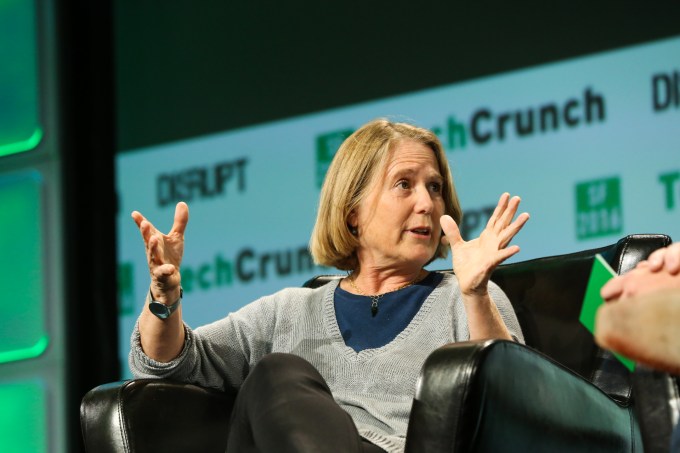
Former Oracle Exec Thomas Kurian to replace Diane Greene as head of Google Cloud


Diane Greene announced in a blog post today that she would be stepping down as CEO of Google Cloud and will be helping transition former Oracle executive Thomas Kurian to take over early next year.

Greene took over the position almost exactly three years ago when Google bought Bebop, the startup she was running. The thinking at the time was that the company needed someone with a strong enterprise background and Greene, who helped launch VMware, certainly had the enterprise credentials they were looking for.

In the blog post announcing the transition, she trumpeted her accomplishments. “The Google Cloud team has accomplished amazing things over the last three years, and I’m proud to have been a part of this transformative work. We have moved Google Cloud from having only two significant customers and a collection of startups to having major Fortune 1000 enterprises betting their future on Google Cloud, something we should accept as a great compliment as well as a huge responsibility,” she wrote.

The company had a disparate set of cloud services when she took over, and one of the first things Greene did was to put them all under a single Google Cloud umbrella. “We’ve built a strong business together — set up by integrating sales, marketing, Google Cloud Platform (GCP), and Google Apps/G Suite into what is now called Google Cloud,” she wrote in the blog post.

As for Kurian, he stepped down as president of product development at Oracle at the end of September. He had announced a leave of absence earlier in the month before making the exit permanent.  Like Greene before him, he brings a level of enterprise street cred, which the company needs as it continues to try and grow its cloud business.

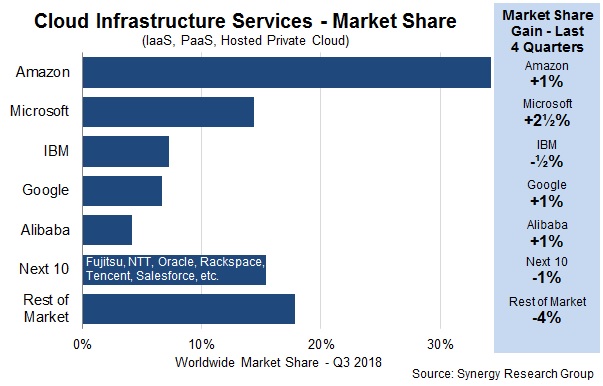
After three years with Greene at the helm, Google, which has tried to position itself as the more open cloud alternative to Microsoft and Amazon, has still struggled to gain market share against its competitors, remaining under 10 percent consistently throughout Greene’s tenure.

As Synergy’s John Dinsdale told TechCrunch in an article on Google Cloud’s strategy in 2017, the company had not been particularly strong in the enterprise to that point. “The issues of course are around it being late to market and the perception that Google isn’t strong in the enterprise. Until recently Google never gave the impression (through words or deeds) that cloud services were really important to it. It is now trying to make up for lost ground, but AWS and Microsoft are streets ahead,” Dinsdale explained at the time. Greene was trying hard to change that perception.

Google has not released many revenue numbers related to the cloud, but in February it indicated they were earning a billion a quarter, a number that Greene felt the $4 billion run rate put Google in elite company. Amazon and Google were reporting numbers like that for a quarter at the time. Google stopped reporting cloud revenue after that report.

Regardless, the company will turn to Kurian to continue growing those numbers now. “I will continue as CEO through January, working with Thomas to ensure a smooth transition. I will remain a Director on the Alphabet board,” Greene wrote in her blog post.

Interesting enough Oracle has struggled with its own transition to the cloud. Kurian gets a company that was born in the cloud, rather than one that has made a transition from on-prem software and hardware to one solely in the cloud. It will be up to him to steer Google Cloud moving forward.


Read Full Article

16 November 2018

Sheryl Sandberg claims she didn’t know Facebook hired agency behind ‘abhorrent’ anti-Soros campaign


Sheryl Sandberg has denied that she obstructed early investigations into election meddling and claimed that she was unaware Facebook was involved with an agency that ran “abhorrent” anti-Semitic campaigns that targeted George Soros, among others.

Facebook, the world’s largest social network, with more than 2.2 billion users, spent Thursday doing its best to fight a media relations forest fire that followed an explosive New York Times article revealing a campaign to smear George Soros, and other revelations.

The company fired PR and research firm Definers, the center of some of the story, it disputed allegations that it tried to hide details around Russian hacking and it held an hour-long call with journalists and CEO Mark Zuckerberg.

Now Sandberg has joined Zuckerberg and Facebook itself in distancing herself from some of the core claims of the Times report, which paints her in a particularly poor light.

“On a number of issues – including spotting and understanding the Russian interference we saw in the 2016 election – Mark and I have said many times we were too slow,” she wrote in a rebuttal posted to Facebook. “But to suggest that we weren’t interested in knowing the truth, or we wanted to hide what we knew, or that we tried to prevent investigations, is simply untrue.”

Sandberg repeated a common refrain at Facebook: the company wasn’t aware of the scale of the attacks it received until it was too late and it is now committed to “investing heavily” to prevent recurrences.

“While we will always have more work to do, I believe we’ve started to see some of that work pay off, as we saw in the recent US midterms and elections around the world where we have found and taken down further attempts at interference,” she wrote.

But perhaps the most striking part of Sandberg’s post is a brief passage in which she claims that she — Facebook’s chief operating officer — was unaware of the exact scope of Definers’ work for the company, which included disinformation campaigns against Apple, Google and the George Soros-backed Open Society Foundations.

From her post:

I also want to address the issue that has been raised about a PR firm, Definers. We’re no longer working with them but at the time, they were trying to show that some of the activity against us that appeared to be grassroots also had major organizations behind them. I did not know we hired them or about the work they were doing, but I should have. I have great respect for George Soros – and the anti-Semitic conspiracy theories against him are abhorrent.

Indeed, the claim that Sandberg didn’t even know the agency worked for Facebook flies in the face of the company’s original response, in which it wrote that its “relationship with Definers was well-known by the media.”

According to those statements, the relationship was well-known by the media but unknown to the company COO? OK then.

The New York Times’ allegations are hugely serious, enough to solicit fast and concerned responses from a multitude of politicians and prompt Facebook’s campaign PR machine to splutter into frenzied activity — don’t expect this issue to disappear soon.

Here’s a quick recap of what you need to know so far.

If you didn’t yet do so, go read The New York Times report.

And here’s the response from Sandberg in full:

I want to address some of the claims that have been made in the last 24 hours.

On a number of issues – including spotting and understanding the Russian interference we saw in the 2016 election – Mark and I have said many times we were too slow. But to suggest that we weren’t interested in knowing the truth, or we wanted to hide what we knew, or that we tried to prevent investigations, is simply untrue. The allegations saying I personally stood in the way are also just plain wrong. This was an investigation of a foreign actor trying to interfere in our election. Nothing could be more important to me or to Facebook.

As Mark and I both told Congress, leading up to Election Day in November 2016, we detected and dealt with several threats with ties to Russia and reported what we found to law enforcement. These were known traditional cyberattacks like hacking and malware. It was not until after the election that we became aware of the widespread misinformation campaigns run by the IRA. Once we were, we began investing heavily in more people and better technology to protect our platform. While we will always have more work to do, I believe we’ve started to see some of that work pay off, as we saw in the recent US midterms and elections around the world where we have found and taken down further attempts at interference.

I also want to address the issue that has been raised about a PR firm, Definers. We’re no longer working with them but at the time, they were trying to show that some of the activity against us that appeared to be grassroots also had major organizations behind them. I did not know we hired them or about the work they were doing, but I should have. I have great respect for George Soros – and the anti-Semitic conspiracy theories against him are abhorrent.

At Facebook, we are making the investments that we need to stamp out abuse in our system and ensure the good things people love about Facebook can keep happening. It won’t be easy. It will take time and will never be complete. This mission is critical and I am committed to seeing it through.


Read Full Article

Black Friday and Cyber Monday: A Gamer’s Complete Guide