
xkcd Phone 12
Immigration law firm Fragomen, Del Rey, Bernsen & Loewy has confirmed a data breach involving the personal information of current and former Google employees.
The New York-based law firm provides companies with employment verification screening services to determine if employees are eligible and authorized to work in the United States.
Every company operating in the United States is required to maintain a Form I-9 file on every employee to ensure that they are legally allowed to work and not subject to more restrictive immigration rules. But Form I-9 files can contain a ton of sensitive information, including government documents like passports, ID cards and driver’s licenses, and other personally identifiable data, making them a target for hackers and identity thieves.
But the law firm said it discovered last month that an unauthorized third-party accessed a file containing personal information on a “limited number” of current and former Google employees.
In a notice with the California attorney general’s office, Fragomen did not say what kind of data was accessed or how many Google employees were affected. Companies with more than 500 California residents affected by a breach are required to submit a notice with the state’s attorney general’s office.
Michael McNamara, a spokesperson for Fragomen, declined to say how many Google employees were affected by the breach.
A spokesperson for Google did not respond to a request for comment.

Starting today, Twitter users in the U.S. will see two large notices at the top of their feeds that aim to “preemptively debunk” misinformation related to voting. The striking messages are designed to push back against the deluge of false claims about the 2020 election.
One notice warns users that they “might encounter misleading information” about mail-in voting while the other attempts to head off online election-related chaos by cautioning that the results of the U.S. election may be delayed.
Delayed results are a very possible outcome in an election that will see more ballots than ever cast through the mail. States have differing rules about when mailed ballots can begin to be tallied, making it possible that official results may indeed take time to trickle in — a situation that it’s wise to normalize in advance.

Image Credits: Twitter
The prompts will point users to Twitter Moments that collect authoritative information on both topics. The notices will also pop up in searches of relevant terms and hashtags.
Social media companies have scrambled to ready their platforms for the unique challenges of a deeply contentious U.S. election in the midst of a worsening national health crisis. While those efforts have been mixed — some weak, some more robust — serving proactive, attention-grabbing notices to everyone is a solid step up from the easy-to-miss misinformation “labels” that get tacked onto false claims across Twitter and Facebook.


One week to the U.S. presidential election and things are getting spicy.
It’s not just the rhetoric — hackers are actively working to disrupt the election, officials have said, and last week they came with a concrete example and an unusually quick pointing of blame.
On Wednesday night, Director of National Intelligence John Ratcliffe blamed Iran for an email operation designed to intimidate voters in Florida into voting for President Trump “or else.” Ratcliffe, who didn’t take any questions from reporters and has been accused of politicizing the typically impartial office, said Iran had used voter registration data — which is largely public in the U.S. — to send emails that looked like they came from the far-right group the Proud Boys. Google security researchers also linked the campaign to Iran, which denied claims of its involvement. It’s estimated about 2,500 emails went through in the end, with the rest getting caught in spam filters.
The announcement was lackluster in detail. But experts like John Hultquist, who heads intelligence analysis at FireEye-owned security firm Mandiant, said the incident is “clearly aimed at undermining voter confidence,” just as the Russians attempted during the 2016 election.
The hackers who broke into Twitter’s network used a fake VPN page to steal the credentials — and two-factor authentication code — of an employee, an investigation by New York’s Department of Financial Affairs found. The state tax division got involved after the hackers then hijacked user accounts using an internal “admin tool” to spread a cryptocurrency scam.
In a report published last week, the department said the hackers called several Twitter employees and used social engineering to trick one employee into entering their username and password on a site that looked like the company’s VPN portal, which most employees use to access the network from home during the pandemic.
“As the employee entered their credentials into the phishing website, the hackers would simultaneously enter the information into the real Twitter website. This false log-in generated a [two-factor authentication] notification requesting that the employees authenticate themselves, which some of the employees did,” wrote the report. Once onto the network using the employee’s VPN credentials, the hackers used that access to investigate how to access the company’s internal tools.
Twitter said in September that its employees would receive hardware security keys, which would make it far more difficult for a repeat phishing attack to be successful.
YouTube today is rolling out a series of updates to its player page on mobile devices. The changes relocate some elements, add new features — like an expanded set of gesture-based navigation options — and update existing ones, like video chapters, among other things.
Video chapters were introduced in May, as an easier way to get to the “good part” of a video, without having to manually fast-forward. Instead, creators can apply timestamps to their videos that allow users to quickly jump to a specific section of a video or backtrack to rewatch a key part.
These chapters are automatically enabled as a line of timestamps and titles, based on chapter information the creator adds to their video’s description, beginning at segment 0:00.
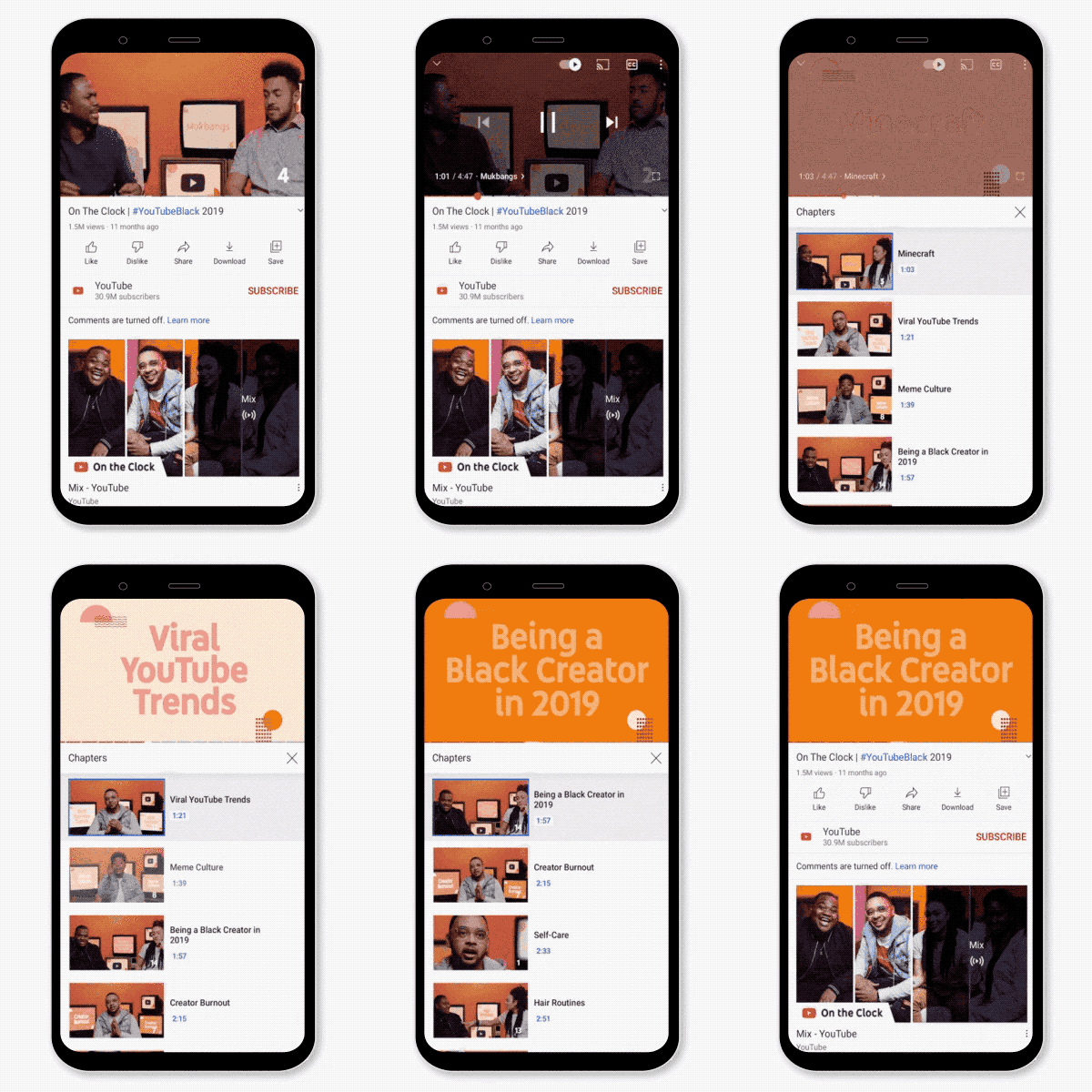
Image Credits: YouTube
Today, YouTube is extending this feature to include a new list view that lets you see a complete list of all the chapters included in the video, each with their own preview thumbnail. You can access this list view by tapping or clicking on the chapter title in the player, then jump to the part of the video you want to see by tapping the video chapter in the list.
This make chapters easier to navigate, as the thumbnails offer a visual guide to the various parts of the video.
YouTube is also today updating its player page. To make captions more accessible, it’s moving the button to a more prominent position on mobile phones. The auto-play toggle has been moved as well, so it’s easier to turn it on or off while you’re watching a video — a change that will roll out to desktop users soon, too, YouTube says.
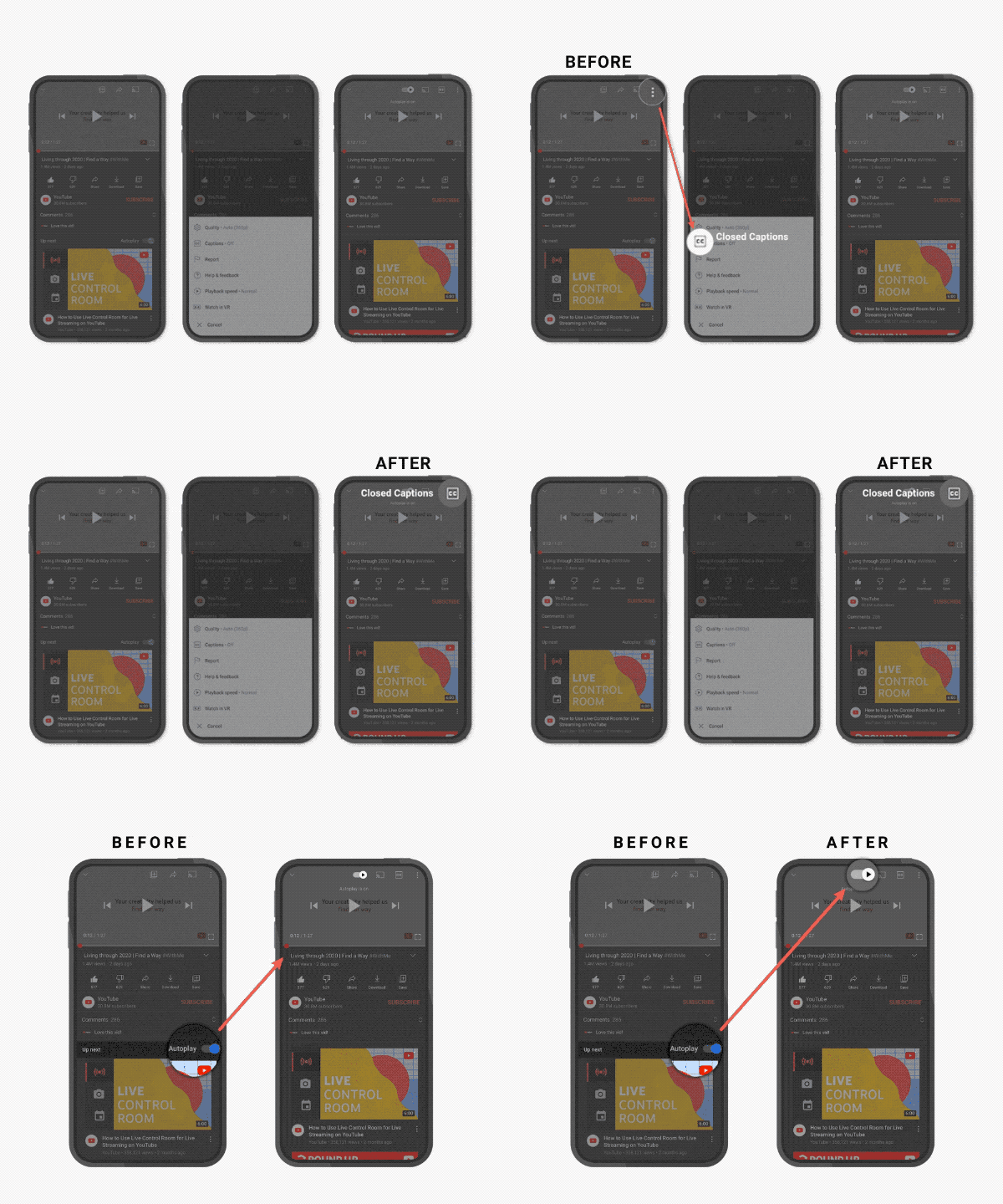
Image Credits: YouTube
There are other small improvements on the new player page, including a re-arranged buttons and controls that respond to your input faster than they did before.
Along with the user interface changes, navigation has been updated to include an expanded set of gesture controls. Already, you can double tap on the left or right side of a video to either fast forward or rewind 10 seconds. Now, you’ll be able to swipe up to enter full screen mode and swipe down to exit full screen, too.
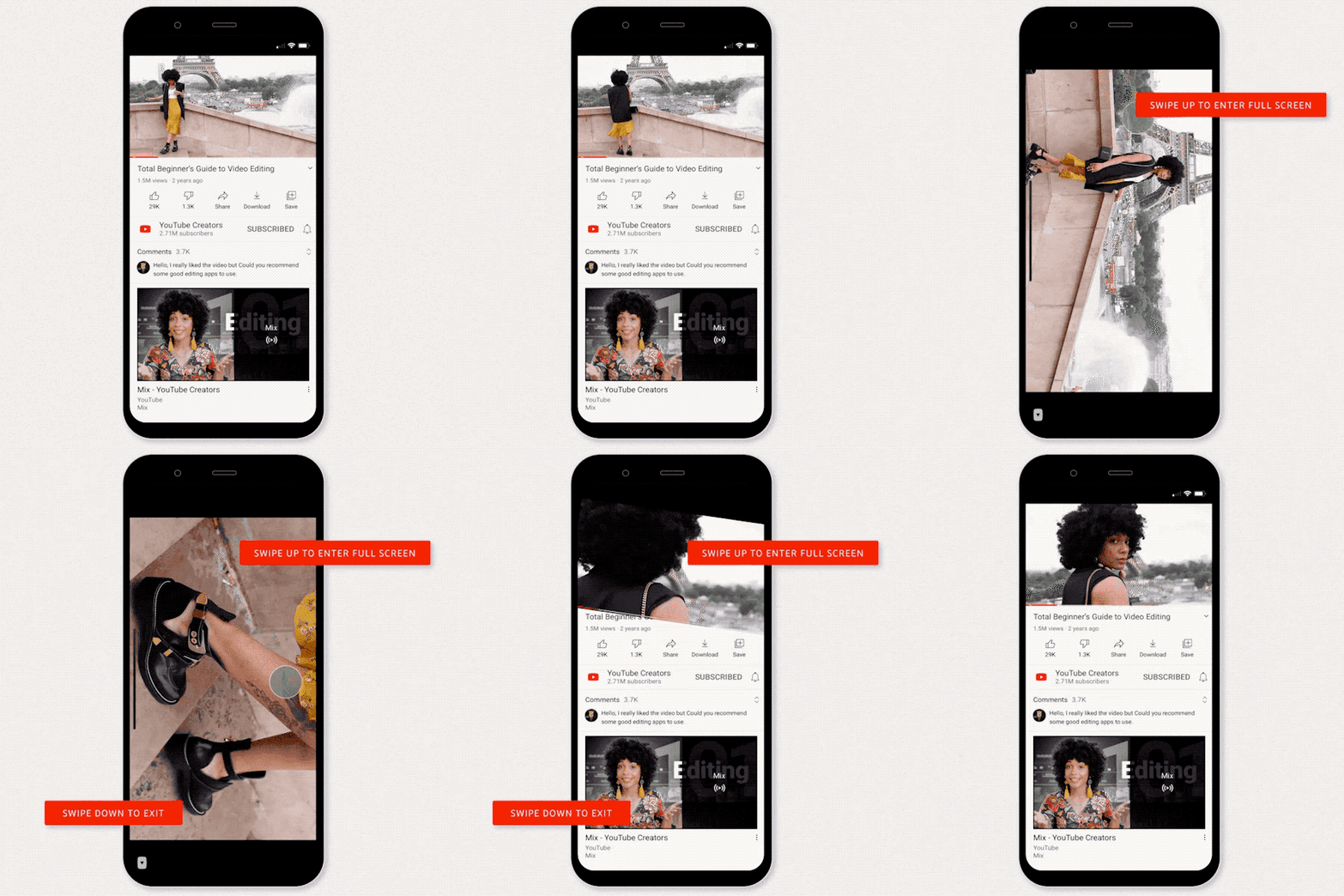
Image Credits: YouTube
And if you want to see how much time is counting down versus how much time has elapsed in a video you’re watching, you can tap the timestamp to switch back and forth between these numbers.
In another change, YouTube will prompt viewers with “suggested actions” when there’s a way to have a better video experience. For example, you may be prompted to rotate your phone for a landscape video, or play a video in VR. Over time, it will roll out more suggestions, as needed.
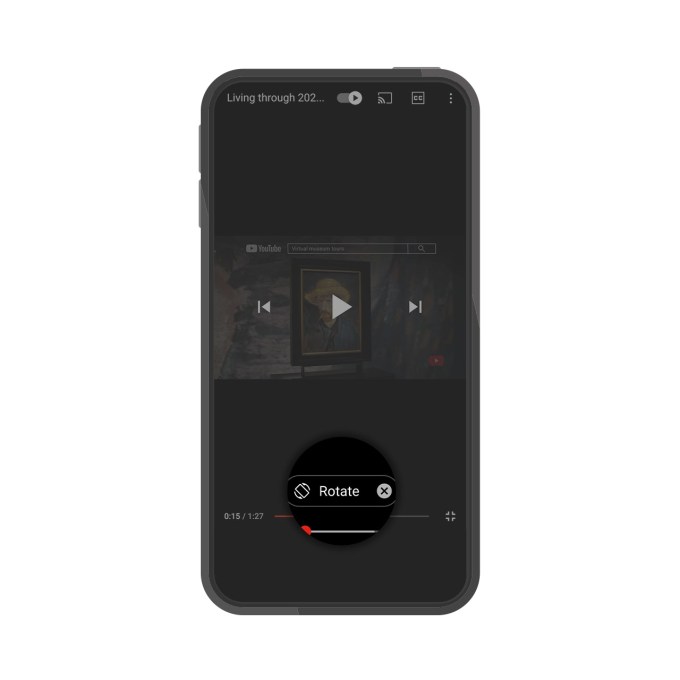
Image Credits: YouTube
In its announcement today, YouTube mentioned a bedtime reminders feature which actually launched earlier this year. It’s not clear why it was lumped in with the other changes, as it’s already live. (YouTube says it was just a “recap”).
Many of the other changes may not be new to all users, either, however. YouTube confirmed to TechCrunch that some users will already have these features at the time of the announcement, while others will receive them this week.
The updates will roll out across both iOS and Android, starting today.


When you delete a file in Google Drive, it moves to the trash folder and stays there indefinitely until you manually empty the bin. That is how it has always been but, sometime this month, Google made one important change to how the trash bin works.
Under the new policy, files that have been in Google Drive’s trash bin for more than 30-days are automatically deleted. This automatic cleanup does help reclaim space but if you happen to accidentally delete some important files or folders from your Google Drive, there’s no way to restore them from the trash after the 30-day window.
If you are like me who is terrified at the prospect of forever losing important files that were deleted by mistake, Google Drive Watch can help.
Google Drive Watch is an open-source Google Script that automatically monitors your Google Drive and sends daily email notifications with a detailed list of files that were deleted the previous day.
Here’s a sample email notification sent by the Google Drive Watch program.

The email includes the file link, the date when the file was first created, and the name/email address of the Google Account that last modified and deleted the file. It monitors files in your regular Google Drive as well as Shared Drive folders.
Here’s how you can set up Google Drive watch for your own Google account in few easy steps:
Click here to make a copy of the Google script in your own Google Drive.
Inside the script editor, go to line #9 and specify the email address where you want to receive the Drive notifications. You can also put multiple emails separated by commas.
The script, by default, will create a cron job that will run once per day at the selected hour. If you however wish to change the frequency so that the notifications arrive, say, every 5 days, you can specify 5 in line #10.
We are almost there. Go to the Run menu and choose “Enable Drive Watch” to enable the monitor for your Drive. Allow the script to access your file and you are all set.

Important: The first email notification will only arrive the next day at the selected hour.
The source code of the Google Drive monitor script is available on Github.
Internally, the script uses the Google Drive API with Google Apps Script to watch for changes in your Google Drive. It then sets up a daily cron job, using triggers in Google Scripts, that sends the email if new file changes are found.
When you first run the script, it gets a starting page token and all changes made to Google Drive after this token is fetched will be monitored by the script. We set supportsAllDrives to true since the script should monitor folders in Team Drives as well.
function getPageToken() {
  const store = PropertiesService.getScriptProperties();
  const token = store.getProperty('token');
  if (token) return token;
  const { startPageToken } = Drive.Changes.getStartPageToken({
    supportsAllDrives: true,
  });
  store.setProperty('token', startPageToken);
  return startPageToken;
}
The change.list endpoint of the Google Drive API fetches all changes made to the authorized user’s Drive since the start page token. We also set the fields property to limit file properties that are available in the response. The newStartPageToken returned in the response will become the new page token for future calls to the Drive API.
const fields = `newStartPageToken,
  items(file(id,title,labels(trashed),
  iconLink,mimeType,createdDate,ownedByMe,
  lastModifyingUser(emailAddress,displayName,picture(url)),
  alternateLink, fileSize))`;

const { newStartPageToken, items = [] } = Drive.Changes.list({
  fields,
  pageToken: getPageToken(),
  includeItemsFromAllDrives: true,
  pageSize: 100,
  supportsAllDrives: true,
});

if (newStartPageToken) {
  propertyStore.setProperty('token', newStartPageToken);
}
The items array holds a list of files that have been modified since the last run. This also includes new files that have added and old files that were edited by the users. Since we are only interested in the file that have been trashed, we’ll filter all files from the response except the ones that have been trashed.
const filteredItems = items
  .map(({ file }) => file)
  // Only interested in files where "I" am the owner
  .filter(({ ownedByMe }) => ownedByMe)
  // Only interested in files that have been "trashed"
  .filter(({ labels: { trashed } = {} }) => trashed === true)
  // Only return fields that are sent by email
  .map((file) => {
    const {
      iconLink,
      alternateLink,
      title,
      lastModifyingUser = {},
      createdDate,
      fileSize,
    } = file;
    return { iconLink, alternateLink, title, createdDate, fileSize };
  });
Now that we have an array of files that have been deleted by the user since the last run, we can use the Gmail service to notify the user.
Also see: Google Drive URL Tricks
Simple, link-centric user profiles might seem might not seem like a particularly ambitious idea, but it’s been big enough for Linktree.
The Melbourne startup says that 8 million users — whether they’re celebrities like Selena Gomez and Dua Lipa or brands like HBO and Red Bull — have created profiles on the platform, with those profiles receiving more than 1 billion visitors in September.
Plus, there are more than 28,000 new users signing up every month.
“This category didn’t exist when we started,” CEO Alex Zaccaria told me. “We created this category.”
Zaccaria said that he and his co-founders Anthony Zaccaria and Nick Humphreys created Linktree to solve a problem they were facing at their digital marketing agency Bolster. Instagram doesn’t allow users to include links in posts — all you get is a single link in your profile, prompting the constant “link in bio” reminder when someone wants to promote something.
Meanwhile, most of Bolster’s clients come from music and entertainment, where a single link can’t support what Zaccaria said is a “quite fragmented” business model. After all, an artist might want to point fans to their latest streaming album, upcoming concert dates, an online store for merchandise and more. A website could do the job in theory, but they can be clunky or slow on mobile, with users probably giving up before they finally reach the desired page.

Linktree founders Anthony Zaccaria, Alex Zaccaria and Nick Humphreys
So instead of constantly swapping out links in Instagram and other social media profiles, a Linktree user includes one evergreen link to their Linktree profile, which they can update as necessary. Selena Gomez, for example, links to her latest songs and videos, but also her Rare Beauty cosmetics brand, her official store and articles about her nonprofit work.
Zaccaria said that after launching the product in 2016, the team quickly discovered that “a lot more people had the same problem,” leading them to fully separate Linktree and Bolster two years ago. Since then, the company hasn’t raised any outside funding — until now, with a $10.7 million Series A led by Insight Partners and AirTree Ventures.
“We had the option to just continue to grow sustainably, but we wanted to pour some fuel on the fire,” Zaccaria said.
In fact, Linktree has already grown from 10 to 50 employees this year. And while the company started out by solving a problem for Instagram users, Zaccaria described it as evolving into a much broader platform that can “unify your entire digital ecosystem” and “democratize digital presence.” He said that while some customers continue to maintain “a giant, brand-immersive website,” for others, Linktree is completely replacing the idea of a standalone website.
Zaccaria added that Instagram only represents a small amount of Linktree’s current traffic, while nearly 25% of that traffic now comes from direct visitors.
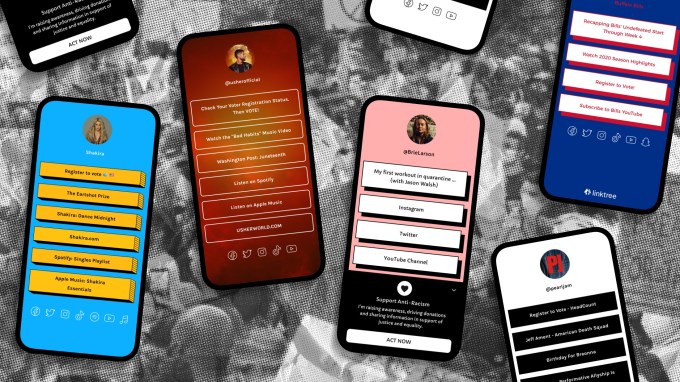
Image Credits: Linktree
Black Lives Matter has also been a big part of Linktree’s recent growth, with activists and other users who want to support the movement using their profiles to point visitors to websites where they can donate, learn more and get involved. In fact, Linktree even introduced a Black Lives Matter banner over the summer that anyone could add to their profile.
Linktree is free to use, but you have to pay $6 a month for Pro features like video links, link thumbnails and social media icons.
Zaccaria said that the new funding will allow the startup to add more “functionality and analytics.” He’s particularly eager to grow the data science and analytics team, though he emphasized that Linktree does not collect personally identifiable information or monetize visitor data in any way — he just wants to provide more data to Linktree users.
In a statement, Insight Managing Director Jeff Lieberman said:
As the internet becomes increasingly fragmented, brands, publishers, and influencers need a solution to streamline their content sharing and connect their social media followers to their entire online ecosystem, ultimately increasing brand awareness and revenue. Linktree has successfully created this new “microsite” category enabling companies to monetize the next generation of the internet economy via a single interactive hub. The impressive traction and growing number of customers Linktree has gained over the last few months demonstrates its proven market fit, and we could not be more excited to work with the Linktree team as they transition to the ScaleUp phase of growth.


Facebook will soon be the latest tech giant to enter the world of cloud gaming. Their approach is different than what Microsoft or Google has built but Facebook highlights a shared central challenge: dealing with Apple.
Facebook is not building a console gaming competitor to compete with Stadia or xCloud, instead the focus is wholly on mobile games. Why cloud stream mobile games that your device is already capable of running locally? Facebook is aiming to get users into games more quickly and put less friction between a user seeing an advertisement for a game and actually playing it themselves. Users can quickly tap into the title without downloading anything and if they eventually opt to download the title from a mobile app store, they’ll be able to pick up where they left off.
Facebook’s service will launch on the desktop web and Android, but not iOS due to what Facebook frames as usability restrictions outlined in Apple’s App Store terms and conditions.
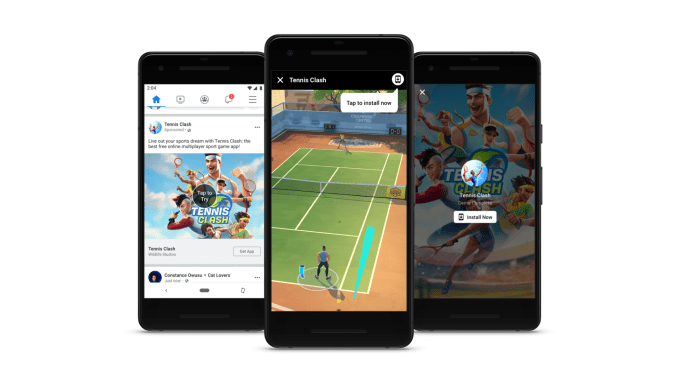
With the new platform, users will be able to start playing mobile games directly from Facebook ads. Image via Facebook.
While Apple has suffered an onslaught of criticism in 2020 from developers of major apps like Spotify, Tinder and Fortnite for how much money they take as a cut from revenues of apps downloaded from the App Store, the plights of companies aiming to build cloud gaming platforms have been more nuanced and are tied to how those platforms are fundamentally allowed to operate on Apple devices.
Apple was initially slow to provide a path forward for cloud gaming apps from Google and Microsoft, which had previously been outlawed on the App Store. The iPhone maker recently updated its policies to allow these apps to exist, but in a more convoluted capacity than the platform makers had hoped, forcing them to first send users to the App Store before being able to cloud stream a gaming title on their platform.
For a user downloading a lengthy single-player console epic, the short pitstop is an inconvenience, but long-time Facebook gaming exec Jason Rubin says that the stipulations are a non-starter for what Facebook’s platform envisions, a way to start playing mobile games immediately without downloading anything.
“It’s a sequence of hurdles that altogether make a bad consumer experience,” Rubin tells TechCrunch.
Apple tells TechCrunch that they have continued to engage with Facebook on bringing its gaming efforts under its guidelines and that platforms can reach iOS by either submitting each individual game to the App Store for review or operating their service on Safari.
In terms of building the new platform onto the mobile web, Rubin says that without being able to point users of their iOS app to browser-based experiences, as current rules forbid, Facebook doesn’t see pushing its billions of users to accessing the service primarily from a browser as a reasonable alternative. In a Zoom call, Rubin demoes how this could operate on iOS, with users tapping an advertisement inside the app and being redirected to a game experience in mobile Safari.
“But if I click on that, I can’t go to the web. Apple says, ‘No, no, no, no, no, you can’t do that,’ Rubin tells us. “Apple may say that it’s a free and open web, but what you can actually build on that web is dictated by what they decide to put in their core functionality.”

Facebook VP of Play Jason Rubin. Image via Facebook.
Rubin, who co-founded the game development studio Naughty Dog in 1994 before it was acquired by Sony in 2001, has been at Facebook since he joined Oculus months after its 2014 acquisition was announced. Rubin had previously been tasked with managing the games ecosystem for its virtual reality headsets, this year he was put in charge of the company’s gaming initiatives across their core family of apps as the company’s VP of Play.
Rubin, well familiar with game developer/platform skirmishes, was quick to distinguish the bone Facebook had to pick with Apple and complaints from those like Epic Games which sued Apple this summer.
“I do want to put a pin in the fact that we’re giving Google 30% [on Android]. The Apple issue is not about money,” Rubin tells TechCrunch. “We can talk about whether or not it’s fair that Google takes that 30%. But we would be willing to give Apple the 30% right now, if they would just let consumers have the opportunity to do what we’re offering here.”
Facebook is notably also taking a 30% cut of transaction within these games, even as Facebook’s executive team has taken its own shots at Apple’s steep revenue fee in the past, most recently criticizing how Apple’s App Store model was hurting small businesses during the pandemic. This saga eventually led to Apple announcing that it would withhold its cut through the end of the year for ticket sales of small businesses hosting online events.
Apple’s reticence to allow major gaming platforms a path towards independently serving up games to consumers underscores the significant portion of App Store revenues that could be eliminated by a consumer shift towards these cloud platforms. Apple earned around $50 billion from the App Store last year, CNBC estimates, and gaming has long been their most profitable vertical.
Though Facebook is framing this as an uphill battle against a major platform for the good of the gamer, this is hardly a battle between two underdogs. Facebook pulled in nearly $70 billion in ad revenues last year and improving their offerings for mobile game studios could be a meaningful step towards increasing that number, something Apple’s App Store rules threaten.
For the time being, Facebook is keeping this launch pretty conservative. There are just 5-10 titles that are going to be available at launch, Rubin says. Facebook is rolling out access to the new service, which is free, this week across a handful of states in America, including California, Texas, Massachusetts, New York, New Jersey, Connecticut, Rhode Island, Delaware, Pennsylvania, Maryland, Washington, D.C., Virginia and West Virginia. The hodge-podge nature of the geographic rollout is owed to the technical limitations of cloud-gaming– people have to be close to data centers where the service has rolled out in order to have a usable experience. Facebook is aiming to scale to the rest of the U.S. in the coming months, they say.

iPhone owners should utilize phone cases if they want to protect their phones from damage. They should also utilize them if they want to make a fashion statement. There are various iPhone cases on the market, and many of them possess qualities beyond providing physical protection. Some iPhone cases are budget-friendly, while others are luxurious […]
The post Best iPhone Cases of 2020 appeared first on ALL TECH BUZZ.
As gaming companies start to shift their focus more on mobile games, there is now an increase in great and entertaining games to play on your smartphone. Even popular games like Call of Duty or PUBG came out with mobile versions of the games. PUBG, in particular, also has PUBG Lite for low to mid-range […]
The post Games.lol – A Guide To Playing Android Games On PC appeared first on ALL TECH BUZZ.
Welcome back to This Week in Apps, the TechCrunch series that recaps the latest OS news, the applications they support and the money that flows through it all.
The app industry is as hot as ever, with a record 204 billion downloads and $120 billion in consumer spending in 2019. People are now spending three hours and 40 minutes per day using apps, rivaling TV. Apps aren’t just a way to pass idle hours — they’re a big business. In 2019, mobile-first companies had a combined $544 billion valuation, 6.5x higher than those without a mobile focus.
There was so much wrong with Quibi’s premise that it’s sometimes hard to even know where to start. But at the core, its problem was that it fundamentally misunderstood how, when and why users would watch video on their phones.
The company’s thinking was that you could fund high-production value content ($100K/minute, yikes) then chop it up into smaller “bites,” add a technology layer, then call this a reinvention of cinema.
The reality is there was little demand for this sort of content, and it didn’t fit with how people want to be entertained on their phones.
When people want to appreciate high-quality filmmaking (or even TV production), they tend to want a bigger screen — they’ve spent money for their fancy high-def or 4K TV, after all. Pre-COVID, they might even pay to go a movie theater. On mobile, the production value of content is far less of a concern, if it even registers.
Quibi also misunderstood what users want to watch in terms of video on their phones when they have a few minutes to kill.
By positioning its app in this space, it had to compete with numerous and powerful sources for “short-form” content — existing apps like YouTube, TikTok, Facebook (e.g. News Feed content, Watch feeds), Instagram Stories, Snapchat and so on. This is content you don’t have to get invested in, since you’re just distracting yourself from a few minutes of boredom. It’s not a time or place to engage with a longer story — chopped or otherwise.
Quibi also cut the length of content to serve its artificial limitations — at the expense of story quality and enjoyment.
A reality show dumbed down to just its highlights is almost unwatchable, as it exposes the editors’ machinations and manipulations that are better hidden among longer stretches of fluff. And there was simply no reason to cut down movies — like Quibi’s “The Dangerous Game,” for example — into pieces. It didn’t elevate the storytelling; it distracted from it. And if you wanted a quick news update (e.g. Quibi’s “Daily Essentials”), you didn’t need a whole new app for that.
Quibi content may have been considered “high quality,” but it often wasn’t good. (I still can’t believe I sat through an episode of “Dishmantled,” where chefs had to recreate dishes of food that were thrown in their face. And Quibi had the nerve to shame YouTube’s low-quality and lack of talent?!)
Quibi also wanted to charge for its service, but its catalog wasn’t designed for families, with content that ranged from kids to adult programming. It didn’t offer parental controls. This immediately limited its competitiveness.
At launch, Quibi also limited itself to the phone, which meant it limited your ability to use the phone as a second screen while you watched a show. (There was no PiP support). TechCrunch has been writing about phones as the second screen for the better part of a decade, often with a focus on startups. But in Quibi’s case, it killed the second screen experience, seemingly forgetting that people text friends, order food, check Twitter and peek in on other apps while a TV show plays in the background. Did it really think that a reboot of “Punk’d” deserved our full attention?
Quibi naturally blamed COVID for its failure to thrive. It had imagined a world where users had ample time to kill while out and about: commuting on the subway, standing in long lines, that sort of thing.
But even this premise was flawed. It would have eventually caught up to Quibi, too; COVID just accelerated it. The issue is that Quibi imagined the U.S. as only a swath of urban metros where public transportation is abundant and standing in lines is the norm. In reality, more than half (52%) the U.S. is described as suburban, 27% is urban and 21% is rural. Non-urban commuters often drive themselves to work. Sure, they could stream Quibi during those commutes, but not really look at it. So why burn high-production value on them? And standing in long lines, believe it or not, is not actually that common in smaller cities and towns, either. If it only takes two minutes to grab a coffee or a burrito before you hop back in your car, do you really want to start a new show?
So where would that have left Quibi? Hoping for Gen Z’ers attention as they lounge around their bedrooms looking for something to do? And yet it wanted to appeal to these kids using Hollywood A-Listers they don’t even know? As COVID pressed down, it left Quibi in competition with (often arguably better) content that streamed natively on the TV from apps like Netflix, HBO, Hulu, Prime Video, Disney+, and others where you could binge through seasons at once instead of waiting every week for a new “quick bite” to drop.
There’s more, so much more that could still be said, including the fact that a former eBay and HP CEO may not be the right person to lead a company that wanted to dazzle a younger demographic. Or how its video-flipping TurnStyle feature was clever, but added complexity to filmmaking, and was not enough of a technological leap to build a business around. Or how, no matter how much money it had raised, it was still not enough, compared with the massive budgets of competitors like Netflix and Amazon.
You can read a further post-mortem round-up here. And another here. Because we can’t get enough post-mortems, apparently.
In the meantime, TikTok still isn’t banned.
Snapchat’s maker was forecast to bring around $555 million in revenues in Q3 but posted $679 million instead, a 52% YoY increase, in a surprise earnings beat. EPS were an adjusted $0.01, beating an expected loss of $0.04. The company also grew daily active users by 4% (11 million) to 249 million, an 18% YoY increase. Snap’s net loss of $200 million was a 12% improvement over last year, too.
As a result of the earnings, shares jumped nearly 30% the next day and its valuation cracked $50 billion for the first time, a record high.
During earnings, the company touted it now reaches 90% of the Gen Z population and 75% of millennials in the U.S., U.K. and France. User growth was attributed to new products, including Profiles, Minis, Lens creation tools and AR ads. In particular, Snap leveraged the Facebook ad boycott to reach out to brands that wanted to “realign their marketing efforts” with companies that “share their corporate values,” the company said.
Snap also just launched its TikTok competitor, Sounds on Snapchat, which lets users add licensed music to their Stories.
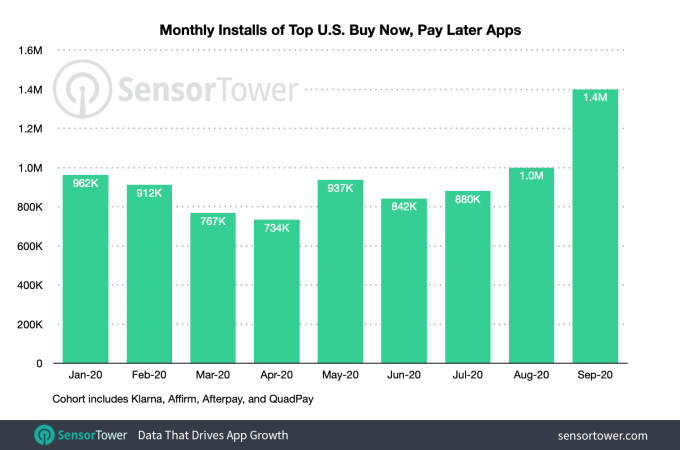
Image Credits: Sensor Tower
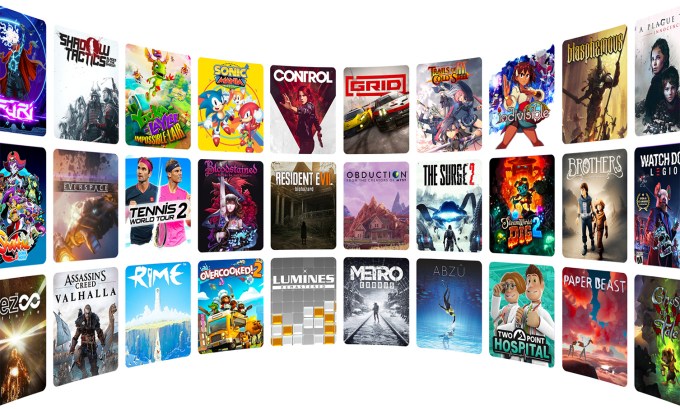

Image Credits: Lux
The developers of popular pro iPhone camera apps Halide and Spectre this week launched their latest creation, the Halide Mark II camera app. The new interface has been designed for one-handed operation and includes a range of new features.
These include a new gesture-based automatic and manual switcher; tactile touch for enabling and disabling features like exposure warnings, focus peaking, and loupe as you adjust exposure or focus; an overhauled manual mode; new dynamic labeling of controls and actions to explain features to new users; support for the edge-to-edge interface of the iPhone 12 models; a redesigned reviewer with a full metadata read-out; in-app memberships for photo lessons; and over 40 more changes.
A new “Coverage” feature can take a photo with Smart HDR 2/3 and Deep Fusion for maximum quality and computational processing as well as a RAW file — with only a slight delay between captures.

Image Credits: Lux
Halide Mark II also uses machine learning to process an iPhone RAW file in the app (ProRAW) with 17 steps, including detail enhancement, contrast and color adjustment and more. This feature, called Instant RAW, intelligently develops the file to get the best possible results.
And the app includes top pro tools, like a new waveform and color exposure warnings (zebras) that use XDR (Extended Dynamic Range) 14-bit RAW sampling, for accurate exposure previews and readings.
The app is $36 (currently $30 during a promo period) if you want to only pay once. Otherwise it’s $11.99 per year on subscription (currently $9.99 per year if you lock in the price now during the promo period). Subscribers to the membership plan also get perks, like custom icons. Existing Halide 1 users, unbelievably, are upgraded for free but are asked to support the app with a membership.
Aaand here it is..!!!
After months of hard work with @jblanchefr, @ClipDropApp beta (AR Copy Paste) is now publicly available on #Android, #iOS, #macOS, and #Windows
Here's a thread of what you can already do with it ↓ 1/n#ML #AR #AI pic.twitter.com/0fQJQ8KRBv
— Cyril Diagne (@cyrildiagne) October 22, 2020
A new app called ClipDrop launches on iOS, Android, macOS and Windows as a new sort of “copy and paste” experience. The app uses state-of-the-art vision AI to copy images from your desktop with a screenshot to any other app (e.g. Docs, Photoshop, Canva, etc.) and it allows you to extract anything — objects, people, drawings or text.
The mobile app lets you snap photos of real-world items and then digitally transfer them to other apps or websites. In the below demo, the company shows how you could “clip” an image of an article of clothing using the camera, then import the photo into a document.
The company also just released a plugin for Photoshop that lets you drop the image into its app as a new layer with an editable mask.
The app is $39.99 per year (until November 2020, when it ups to $79.99 per year.)
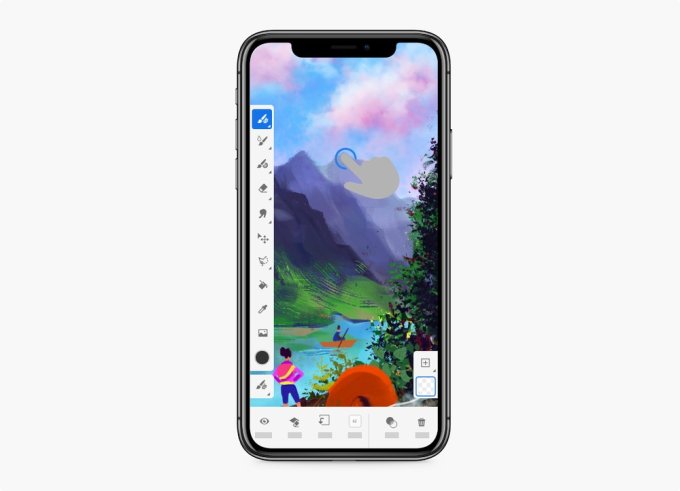
Image Credits: Adobe
As part of Adobe’s virtual MAX 2020 conference this week, the company launched the first public version of its Illustrator vector graphics app on the iPad and brought its Fresco drawing and painting app to the iPhone. In time, the company plans to bring more effects, brushes and AI features to Illustrator. Fresco 2.0, meanwhile, includes new smudge brushes and support for personalized brushes, among other things.
Designed for landlords, Airbnb owners or other vacation rental property owners, Party Squasher offers a hardware device and paired mobile app that counts the number of people at your house by counting the mobile phones in or around a house. The phones can be counted even if they’re not connected to the home’s Wi-Fi.
Because the device doesn’t include cameras or microphones, it’s ideal for ensuring that renters aren’t hosting large (and these days, potentially illegal) parties without violating privacy.
In the event that a large gathering is present, you’re sent a text or email so you can take action.
The device is $249 and the app charges a $199 per year subscription.
— Jonathan Morrison
(@tldtoday) October 22, 2020
The No. 1 game in the App Store is now Among Us!.
Can you guess why?



