28 September 2020

The ancient, earth-friendly wisdom of Mongolian nomads | Khulan Batkhuyag

The ancient, earth-friendly wisdom of Mongolian nomads | Khulan Batkhuyag

There's a lot we can learn from Mongolian nomads about how to survive in the years to come, says environmental activist Khulan Batkhuyag. Taking us on a journey through the country's stunning rural landscape, she shows how Mongolian nomads have survived in remote areas for thousands of years by virtue of some truly incredible, earth-friendly, zero-waste innovations. There's wisdom here for all of us on how to live more minimally, sustainably and in harmony with Mother Nature.

https://ift.tt/2S2Y9Mt

Click this link to view the TED Talk

Mental health startup eQuoo will be distributed by Unilever in new global youth campaign


Last December (yes, in the before-times) UK-based mental health startup eQuoo had a round of announcements, becoming the NHS approved mental health game, as well as signing Barmer, the largest insurance company in Germany, as a client.

It’s now been selected as the Mental Health App for Unilever’s new global initiative aimed at the mental health of young people. The move came after Unilever’s People Data Centre (PDC) selected eQuoo out of all the mental health games on the Google Playstore, being, as it is, one of the few backed by scientific research. Unilever’s new brand campaign, which will feature eQuoo app – will be marketed to over 70,000 18 to 35-year olds.

“eQuoo teaches important skills in a fun and engaging way,” said Unilever’s Global PDC Search and Social Analyst, Janelle Tomayo. “The game teaches you how to become a better communicator using fictional characters to navigate through difficult circumstances with skills and storylines empirically based on current psychological research.”

Silja Litvin, founder and CEO of eQuoo said: “1 in 3 young adults experience an anxiety disorder, crippling and harming too many people at the cusp of their adult lives. Together eQuoo and Unilever will equip thousands of people with the personal resilience to manage the pressures of today’s world.”

PsycApps, which makes eQuoo, is a Digital Mental Health startup that is using gamification, Cognitive behavioral therapy (CBT), Positive Psychology and AI to treat mental illness, using evidence-based features. It’s achieved a top rating at ORCHA, the leading health app assessment platform and is also available through the GP EMIS data bank, meaning that NHS doctors can now refer their patients to eQuoo to improve their mental health and wellbeing.

The market for mental health-oriented games and apps is increasing considerably. AKILI, the first ADHD game for children, attained FDA approval. In June, the European Medicines Agency approved Akili’s digital therapy for attention deficit hyperactivity disorder (ADHD), which uses a video game to treat the underlying cause of the condition. The European Commission has granted a CE mark for the game called EndeavorRx, allowing the product to be marketed in Europe.


Read Full Article

27 September 2020

This Week in Apps: Redesigning the iOS 14 home screen, app makers form ‘fairness’ coalition, latest on TikTok ban


Welcome back to This Week in Apps, the TechCrunch series that recaps the latest OS news, the applications they support and the money that flows through it all.

The app industry is as hot as ever, with a record 204 billion downloads and $120 billion in consumer spending in 2019. People are now spending three hours and 40 minutes per day using apps, rivaling TV. Apps aren’t just a way to pass idle hours — they’re a big business. In 2019, mobile-first companies had a combined $544 billion valuation, 6.5x higher than those without a mobile focus.

In this series, we help you keep up with the latest news from the world of apps, delivered on a weekly basis.

Top Stories

iOS 14 Home screen Customization Craze

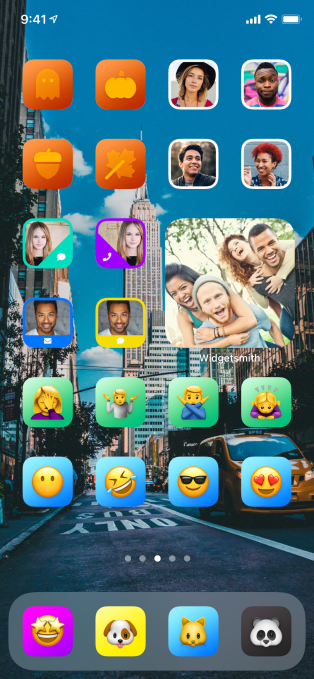
The release of iOS 14 included one of the biggest updates to the iPhone’s user interface in years. Apps can now be stored off screen in the new App Library where they’re organized for you, as opposed to you being forced to categorize apps yourself into various folders. And Apple finally allows for home screen widgets — a development that left Android users snickering about how “behind” their iPhone-using counterparts have been all this time.

But as with iOS apps, Apple’s design constraints and rules around widgets mean there’s a standard that all widgets have to meet to be approved. As a result, widgets have a consistent look-and-feel, thanks to things like size limitations and other design guidelines. They can’t be stretched out indefinitely or moved all over the screen, either.

Apple may have originally envisioned widgets as a way for existing iOS apps to gain a larger presence on users’ home screens, while delivering key information like news, weather or stock updates, for example. But a handful of iOS developers instead built apps that allowed users to design widgets themselves — by selecting colors, fonts, sizes, backgrounds and what information the widget would display.

Meanwhile, TikTok users and other Gen Z’ers began teaching each other how to create custom icons for their apps using Apple’s Shortcuts app. These tutorials were starting to trend even before iOS 14’s release, but the addition of the App Library and widgets meant users could now finally customize their entire home screen. That prompted a more enthusiastic adoption of the icon customization technique.

On the Twitter hashtag #iOS14homescreen, users shared their creations — a showcase of creativity where home screens looked fully themed at last, with custom icons, widgets, decorative photos, matching wallpapers and more. The results have been fantastic.

And at the top of the App Store, there now sit a trio of must-have tools for this new era: Widgetsmith, Color Widgets and Photo Widget today continue to claim the top three spots on the free apps chart.

Users are also now demanding Apple to change how app shortcuts open. Currently, an app shortcut first launches Apple’s Shortcuts app, which then opens the target app. With the popularity of custom icons, users want that intermediate step cut out.

Apple is aware of the customization craze as it has in the days since iOS 14’s release run App Store editorial features about iOS 14’s design changes, suggested widgets to try, creative tools and more. It also featured apps at the top of the App Store, which are benefiting from the trend, like apps offering great widgets, like Fantastical, or those that are booming, like Pinterest — which recently broke its daily download record.

App makers team up to take on Apple and Google

A number of top app makers have banded together to fight against Apple’s control of its App Store and, to a lesser extent, Google’s control of the Play Store — a topic of increased regulatory scrutiny in recent months. Today, 13 app publishers, including Epic Games, Deezer, Basecamp, Tile, Spotify and others, have launched the Coalition for App Fairness.

The new organization formalizes efforts the companies already have underway that focus on either forcing app store providers to change their policies, or ultimately pushing the app stores into regulation.

On the coalition’s website, the group details its key issues, which include anti-competitive practices, like the app stores’ 30% commission structure, and the inability to distribute software to billions of Apple devices through any other means but the App Store, which the group sees as an affront to personal freedom.

Google allows apps to be side-loaded, so it’s not as much of a target on this front. In fact, much of the focus of the coalition’s efforts have to do with Apple’s business, given its stricter guidelines.

The group has also published a list of 10 “App Store Principles” it would like to see enacted industry-wide. These include the ability to distribute apps outside of app stores, protections from having their own data used against them to compete, timely access to developer documentation, the right to communicate with users through its app for legitimate business purposes, no requirements to use the app store’s payment systems, no requirements to pay unfair fees and more.

The website is also aiming to recruit new members to join the coalition. App makers who feel similarly oppressed by Apple’s practices are able to fill out a form to request to join.

Apple responded to the hardball tactics with a barrage of new material and data meant to highlight the benefits of its App Store platform. The company on Thursday revealed the number of rejections it enforces is quite low compared to the number of submissions. It said it rejected 150,000 apps in 2020 but sees 100,000 submissions per week. It also has removed more than 60 million user reviews it believed to be spam.

The company noted its Developer program has over 28 million developers worldwide, whose apps have seen over 50 billion promotions — meaning when a user sees an app Apple has promoted on the App Store, in emails, on social media or in other general advertising.

However, the backlash has also forced Apple to be more transparent about some of its until-now fairly secretive programs. For example, Apple has now published a page that clarifies how its Video Partner program works — a program that had before only been detailed via background conversations with reporters who then relayed the information to readers. The page reveals the program’s requirements and that over 130 premium subscription video entertainment providers have since joined. If the guidelines are followed, these providers can pay only a 15% commission to Apple instead of 20%.

Current members include Amazon Prime Video, Binge, Canadian Broadcasting Corporation (CBC), Claro, C More, DAZN, Disney+, Globo, HBO Max, Joyn, Molotov, MUBI, myCanal, STARZ and Viaplay, the website said.

TikTok deal chaos continues

No, seriously, what is going on with the TikTok deal? (We feel you, Walmart.)

The deal that Trump was poised to approve solved some but not all concerns by making Oracle a trusted technology partner responsible for hosting U.S. user data and ensuring other security requirements were in place. But issues around how the TikTok algorithm could be used to influence U.S. users or censor content were not addressed.

The ban got a week’s extension as a result of promising progress and the announcements that seemed to indicate the parties were in agreement on terms.

But this week, China jumped in to say it won’t approve a TikTok sale. In China Daily, an official English-language newspaper of the Chinese Communist Party, an editorial slammed the deal that would see Oracle and Walmart effectively taking over TikTok in the U.S. as one based on “bullying and extortion.”

At the same time, TikTok is chasing a legal means of preventing its ban in the U.S.

TikTok filed a motion to stop the Commerce Department from enforcing the Trump administration’s ban that would otherwise be set to start this weekend. The move came shortly after WeChat users were granted an injunction in a federal court last week that blocked the app from being banned. TikTok’s filing asks the court to set a hearing before the rules take effect at 11:59 PM on September 27, 2020. But unlike the WeChat case, TikTok is the one asking the court to stop the ban, not its users.

A federal judge said Thursday that the Trump administration must either delay the ban on U.S. app stores or file its legal response to defend the decision by 2:30 PM Friday. The Justice Department filed its opposition Friday, saying that U.S. user data being stored outside the country is a “significant” risk.  The judge will still need to rule on the injunction — that is, whether the ban should go into effect Sunday, as planned.

Stay tuned to TechCrunch for the latest on this never-ending saga.

Weekly News Round-up

Platforms

  • Google will increase its push for apps to give it a cut of in-app purchases. Following Apple’s lead, Google will begin to push harder to demand a cut of transactions on Android by enforcing a requirement for apps to use Google’s billing service, Bloomberg reports.
  • New Google Play Console arrives on November 2, 2020. Over 350K developers now use the new Play Console today. On November 2, it exits beta — meaning you’ll be redirected to the updated experience when you log in. The console features reorganized navigation, speed and performance improvements, personalized messaging, a new Publishing overview page, acquisition reports and more.
  • Apple temporarily waived App Store fees for Facebook’s online events. Facebook last month launched paid online events to help businesses impacted by the pandemic. But at the time, Apple wouldn’t waive its own fees. The company has now changed its mind, and will waive fees until December 31, but says this won’t apply to gaming creators.
  • Apple and Facebook fight over messaging. But all is not well between the two tech giants on other fronts. Now that Apple has lifted its rules over default apps for email and web browsing, Facebook is pushing the company to allow Messenger to become a default messaging app too.
  • iOS 14.0.1 and iPadOS 14.0.1 released. The update patches the bug that reset web browser and email apps back to Apple’s defaults after a restart, and other fixes.
  • iOS 14 adoption surpasses 25% in five days after release. According to data from Mixpanel, iOS 14 (including iPadOS 14) reached 25% of active devices by Monday, September 21. As of the time of writing, it has reached 30.7%.
  • Apple’s Swift comes to Windows. The programming language is available on Windows for the first time, six years after its debut on Apple platforms.
  • Schoolwork 2.1 beta released. The updated iPad app for teachers and students is now in beta. Apps that use the latest ClassKit will be more discoverable by teachers in Schoolwork.

Services

  • Amazon announces a gaming streaming service, Luna. A competitor to Microsoft xCloud and Google Stadia, Luna will allow gamers to stream titles to play across PC, Mac and iOS mobile web. Over 50 titles will be included at launch, including a Sonic game and Remedy Entertainment’s Control. Ubisoft titles will be available on subscription. Twitch integration will be a key selling point.
  • Microsoft launches Xbox remote play streaming on Android. This is not xCloud, but rather a rebrand of the service previously called Console Streaming. The games stream directly from your Xbox One console to your Android courtesy of Microsoft’s new Xbox app for Android.
  • UK launches a COVID-19 exposure notification app for England and Wales. Northern Ireland and Scotland had already launched official apps. All apps use smartphones’ Bluetooth radios to generate alerts of potential exposure to COVID-19.
  • Samsung TV+ comes to phones. Free, ad-supporting streaming service makes the leap to Samsung devices.
  • Adobe rolls out new ‘Liquid Mode’ in Adobe’s Acrobat Reader app for iOS and Android. The feature uses Adobe’s AI engine, Sensei, to analyze a PDF and automatically rebuild it for mobile devices. Adobe says it’s working on an API that will allow similar functionality for non-Adobe apps in the future.

Trends

  • Fintech apps top 1.2B installs worldwide in Q2 (report).
  • Time spent in education apps was up 90% year-over-year during the week of September 6, 2020, compared to last year, on a global basis. The numbers, via App Annie, were calculated on Android devices online. In the U.S., time spent was up 30%.
  • Home screen customization apps top the App Store. Top 20 iOS home screen customization apps reached at least 13.7 million installs and more than $1 million in consumer spending in the seven days following the iOS 14 release. Pinterest also broke its daily download record as users sought new inspiration.

Other News

  • Telepath launches a “kinder” social networking app. It aims to promote quality conversation and ban harassment and fake news. Easier said than done on today’s internet.
  • Child tips off security researchers about scam apps with 2.4 million downloads. The scam involved apps posing as entertainment, wallpaper images or music download apps targeting young users. Some served intrusive ads even when the app wasn’t active. Others charged users, gaining revenues of over $500K. The apps were available across iOS and Android.
  • Epic rejects Apple’s attempts to disparage its business. Apple tried to claim that interest in Fortnite declined 70% from October 2019 to July 2020. Epic said, no actually, daily active players grew 39% during those dates. The two sides are fighting over Apple’s right to commission Epic’s business in a continuing legal battle.

Funding and M&A (and IPOs)

  • Apple acquires Scout FM. Apple bought a startup called Scout FM that turns podcast listening into more of a traditional radio-like experience by leveraging the user’s listening history to know what sort of programming they like. Deal terms are unknown.
  • Epic Games acquires SuperAwesome. Epic acquired the kidtech pioneer whose digital engagement tools are used by 500 million kids per month across thousands of apps, including those from Lego, NBCU and Hasbro. Deal terms were not disclosed.
  • IRL app raises $16 million. Event discovery network IRL raised $16 million in Series B funding after refocusing its social calendar on virtual events during the pandemic. The move made the app, now with 5.5 million MAUs, accessible by a wider audience.
  • GoodRx IPO raises $1 billion+. GoodRx, an app that helps users comparison shop prices for prescription drugs, sold roughly 34.6 million shares at its IPO price to raise $1.14 billion at a valuation of $12.67 billion, sending its stock up 50%.
  • Robinhood raises $660 million. Stock trading app Robinhood raised $660 million in an extension of its Series G round announced last month when D1 Capital Partners invested $200 million. Robinhood is now valued at $11.7 billion.
  • Class for Zoom raises $16 million. Class for Zoom from ClassEDU is designed to make online teaching more engaging. The company was founded by former Blackboard CEO and former PrecisionHawk CEO Michael Chasen.
  • Mobile Premier League raises $90 million. Indian mobile gaming platform Mobile Premier League (MPL) raised $90 million as the company looks to expand its esports and gaming platform outside India.
  • Rappi raises over $300 million. Colombian delivery app Rappi raised over $300 million in a round from T. Rowe Price Associates and others.

Downloads

How could you not be customizing your iOS 14 home screen this week? The launch of the new mobile OS has delivered an entirely new category of apps — widget design tools. And alongside these apps, there are others that can help you get started creating a whole new look for your home screen. These could be creative tools, those for sourcing inspiration or those for building custom icons. Want a weekend project? These apps below can get you going:

  • Pinterest: Search for ideas and inspiration to get your motivation. Download wallpapers and other photos you may want to use with your icons.
  • Widgetsmith: The current No. 1 app lets you build all sorts of customized widgets in a range of colors and sizes.
  • Color Widgets: The current No. 2 app offers a customizable widget that can feature the date, time, day of the week and battery percentage for the top of your home screen.
  • Photo Widget: Simple: Another top app that lets you pick a single photo for placement on your home screen.
  • Motivation – Daily Quotes: A top 30 app lets you pin some daily inspirational quotes to your home screen.
  • Launcher and Launch Center Pro: these two apps include tools for creating custom icons.
  • PicsArt: For more creative types, PicsArt is great for sourcing photos and designing backgrounds and icons either from scratch or by remixing those others have already made.
  • Canva: The DIY design tool has added a collection of iOS home screen templates.
  • TuneTrack: If you want a Spotify widget, this app is your best option for now as no official widget is available.
  • Fonts: Why stop at the home screen? customize your keyboard theme to match your new design.
  • Fantastical: Now includes a dozen widgets for date, weather, calendar, events and more.
  • Etsy: Can’t DIY? Designers are turning to Etsy to sell packs of icons and widget cover photos that will let you create a beautiful home screen without doing all the creative work yourself.



Read Full Article

26 September 2020

Yun Express Tracking – Easier Than Ever


People around the world struggle with Yun Express Tracking but what if we tell you that Yun Express Tracking is now easier than ever? All thanks to My Package Tracking. Here you can track Yun Express in literally no time! My Package Tracking – An Introduction My Package Tracking performs China post parcel tracking for […]

The post Yun Express Tracking – Easier Than Ever appeared first on ALL TECH BUZZ.


Parity Conservation


Parity Conservation

Postmates cuts losses in Q2 as it heads towards tie-up with Uber


Popular food delivery service Postmates is in the process of merging with Uber in a blockbuster $2.65 billion deal that would see it join forces with its food delivery competitor, Uber Eats. The deal remains under antitrust scrutiny, and has not yet been approved for closing. The deal is expected to close in the first half of 2021.

However, a new SEC filing posted after hours this Friday gives us a glimpse into how Postmates is faring in the new world of global pandemics and sit-in dining closures across the United States.

Postmates posted a loss of just $32.2 million in Q2, compared to a loss of $73 million in Q1, nearly cutting its cash burning in half. That compares to Uber Eats’ results, which showed a loss of $286 million in the first quarter of 2020 and a loss of $232 million in the second quarter — an improvement of roughly 20%, according to Uber’s most recent financial reports.

Altogether, Postmates lost $105.2 million in the first half of 2020, compared to a loss of $239 million in the same period of 2019.

Uber through its filing today also disclosed the cap table for Postmates in full detail for the first time. On a fully-diluted basis, the largest shareholder in Postmates is Tiger Global, which owns 27.2% of the company. Following up is Founders Fund with 11.4%, Spark Capital with 6.9%, and GPI capital with 5.3%. At Uber’s $2.65 billion all-stock deal, that nets Tiger Global roughly $720 million and Founders Fund roughly $302 million, not including some stock preferences and dividends that certain owners of the company hold.

While Postmates and Uber continue to go through the antitrust review process at the federal level, the companies also face legal pressure in their own backyards. Uber noted in its filing today that it and Postmates face headwinds due to California’s AB5 bill, which is designed to give additional employment protections to freelance workers. However, the company notes that such litigation “may not, in and of itself, give rise to a right of either party to terminate the transaction.”


Read Full Article

Want to hire and retain high-quality developers? Give them stimulating work


Software developers are some of the most in-demand workers on the planet. Not only that, they’re complex creatures with unique demands in terms of how they define job fulfillment. With demand for developers on the rise (the number of jobs in the field is expected to grow by 22% over the next decade), companies are under pressure to do everything they can to attract and retain talent.

First and foremost — above salary — employers must ensure that product teams are made up of developers who feel creatively stimulated and intellectually challenged. Without work that they feel passionate about, high-quality programmers won’t just become bored and potentially seek opportunities elsewhere, the standard of work will inevitably drop. In one survey, 68% of developers said learning new things is the most important element of a job.

The worst thing for a developer to discover about a new job is that they’re the most experienced person in the room and there’s little room for their own growth.

Yet with only 32% of developers feeling “very satisfied” with their jobs, there’s scope for you to position yourself as a company that prioritizes the development of its developers, and attract and retain top talent. So, how exactly can you ensure that your team stays stimulated and creatively engaged?

Allow time for personal projects

78% of developers see coding as a hobby — and the best developers are the ones who have a true passion for software development, in and out of the workplace. This means they often have their own personal passions within the space, be it working with specific languages or platforms, or building certain kinds of applications.

Back in their 2004 IPO letter, Google founders Sergey Brin and Larry Page wrote:

We encourage our employees, in addition to their regular projects, to spend 20% of their time working on what they think will most benefit Google. [This] empowers them to be more creative and innovative. Many of our significant advances have happened in this manner.

At DevSquad, we’ve adopted a similar approach. We have an “open Friday” policy where developers are able to learn and enhance their skills through personal projects. As long as the skills being gained contribute to work we are doing in other areas, the developers can devote that time to whatever they please, whether that’s contributing to open-source projects or building a personal product. In fact, 65% of professional developers on Stack Overflow contribute to open-source projects once a year or more, so it’s likely that this is a keen interest within your development team too.

Not only does this provide a creative outlet for developers, the company also gains from the continuously expanding skillset that comes as a result.

Provide opportunities to learn and teach

One of the most demotivating things for software developers is work that’s either too difficult or too easy. Too easy, and developers get bored; too hard, and morale can dip as a project seems insurmountable. Within our team, we remain hyperaware of the difficulty levels of the project or task at hand and the level of experience of the developers involved.


Read Full Article

Top 5 Tests That a Tester Needs to Do for Projects of Any Complexity


Projects of any and all complexities benefit from proper software testing, and there simply isn’t enough reason for a tester to skip software testing altogether. A tester needs to spend their limited time and resources in performing software tests that would be beneficial to a project at hand. They need to choose their tests wisely […]

The post Top 5 Tests That a Tester Needs to Do for Projects of Any Complexity appeared first on ALL TECH BUZZ.


10 SEO Tactics That You Should Avoid Using In 2020 And Save Time


In an age where every business, competitor, and industry are using digital mediums for their outreach and marketing, SEO plays a critical role in ensuring that you are still visible to your target audience. But using traditional SEO techniques in 2020 means spending a considerable amount of time and still not getting the right results. […]

The post 10 SEO Tactics That You Should Avoid Using In 2020 And Save Time appeared first on ALL TECH BUZZ.


6 Future Trends in Online Gaming


The gaming industry is constantly changing and evolving. Even though this may sound like a good thing, it doesn’t always have to be. Since the gaming industry is constantly reinventing itself, gaming trends come and go quite frequently. That’s why making future predictions can sometimes be a bit challenging. However, not all trends are the […]

The post 6 Future Trends in Online Gaming appeared first on ALL TECH BUZZ.


What is Insurtech? How a Company Like Olive is Changing the Industry


If you’ve never heard the word “insurtech” before, you’re not alone! A portmanteau of “insurance” and “technology,” insurtech is a relatively new term used to describe companies who are transforming the insurance industry using new technologies and innovations that optimize cost savings and maximize efficiency for insurance providers and customers alike. As a prime example […]

The post What is Insurtech? How a Company Like Olive is Changing the Industry appeared first on ALL TECH BUZZ.


25 September 2020

Advancing Instance-Level Recognition Research


Instance-level recognition (ILR) is the computer vision task of recognizing a specific instance of an object, rather than simply the category to which it belongs. For example, instead of labeling an image as “post-impressionist painting”, we’re interested in instance-level labels like “Starry Night Over the Rhone by Vincent van Gogh”, or “Arc de Triomphe de l'Étoile, Paris, France”, instead of simply “arch”. Instance-level recognition problems exist in many domains, like landmarks, artwork, products, or logos, and have applications in visual search apps, personal photo organization, shopping and more. Over the past several years, Google has been contributing to research on ILR with the Google Landmarks Dataset and Google Landmarks Dataset v2 (GLDv2), and novel models such as DELF and Detect-to-Retrieve.

Three types of image recognition problems, with different levels of label granularity (basic, fine-grained, instance-level), for objects from the artwork, landmark and product domains. In our work, we focus on instance-level recognition.

Today, we highlight some results from the Instance-Level Recognition Workshop at ECCV’20. The workshop brought together experts and enthusiasts in this area, with many fruitful discussions, some of which included our ECCV’20 paper “DEep Local and Global features” (DELG), a state-of-the-art image feature model for instance-level recognition, and a supporting open-source codebase for DELG and other related ILR techniques. Also presented were two new landmark challenges (on recognition and retrieval tasks) based on GLDv2, and future ILR challenges that extend to other domains: artwork recognition and product retrieval. The long-term goal of the workshop and challenges is to foster advancements in the field of ILR and push forward the state of the art by unifying research workstreams from different domains, which so far have mostly been tackled as separate problems.

DELG: DEep Local and Global Features
Effective image representations are the key components required to solve instance-level recognition problems. Often, two types of representations are necessary: global and local image features. A global feature summarizes the entire contents of an image, leading to a compact representation but discarding information about spatial arrangement of visual elements that may be characteristic of unique examples. Local features, on the other hand, comprise descriptors and geometry information about specific image regions; they are especially useful to match images depicting the same objects.

Currently, most systems that rely on both of these types of features need to separately adopt each of them using different models, which leads to redundant computations and lowers overall efficiency. To address this, we proposed DELG, a unified model for local and global image features.

The DELG model leverages a fully-convolutional neural network with two different heads: one for global features and the other for local features. Global features are obtained using pooled feature maps of deep network layers, which in effect summarize the salient features of the input images making the model more robust to subtle changes in input. The local feature branch leverages intermediate feature maps to detect salient image regions, with the help of an attention module, and to produce descriptors that represent associated localized contents in a discriminative manner.

Our proposed DELG model (left). Global features can be used in the first stage of a retrieval-based system, to efficiently select the most similar images (bottom). Local features can then be employed to re-rank top results (top, right), increasing the precision of the system.

This novel design allows for efficient inference since it enables extraction of global and local features within a single model. For the first time, we demonstrated that such a unified model can be trained end-to-end and deliver state-of-the-art results for instance-level recognition tasks. When compared to previous global features, this method outperforms other approaches by up to 7.5% mean average precision; and for the local feature re-ranking stage, DELG-based results are up to 7% better than previous work. Overall, DELG achieves 61.2% average precision on the recognition task of GLDv2, which outperforms all except two methods of the 2019 challenge. Note that all top methods from that challenge used complex model ensembles, while our results use only a single model.

Tensorflow 2 Open-Source Codebase
To foster research reproducibility, we are also releasing a revamped open-source codebase that includes DELG and other techniques relevant to instance-level recognition, such as DELF and Detect-to-Retrieve. Our code adopts the latest Tensorflow 2 releases, and makes available reference implementations for model training & inference, besides image retrieval and matching functionalities. We invite the community to use and contribute to this codebase in order to develop strong foundations for research in the ILR field.

New Challenges for Instance Level Recognition
Focused on the landmarks domain, the Google Landmarks Dataset v2 (GLDv2) is the largest available dataset for instance-level recognition, with 5 million images spanning 200 thousand categories. By training landmark retrieval models on this dataset, we have demonstrated improvements of up to 6% mean average precision, compared to models trained on earlier datasets. We have also recently launched a new browser interface for visually exploring the GLDv2 dataset.

This year, we also launched two new challenges within the landmark domain, one focusing on recognition and the other on retrieval. These competitions feature newly-collected test sets, and a new evaluation methodology: instead of uploading a CSV file with pre-computed predictions, participants have to submit models and code that are run on Kaggle servers, to compute predictions that are then scored and ranked. The compute restrictions of this environment put an emphasis on efficient and practical solutions.

The challenges attracted over 1,200 teams, a 3x increase over last year, and participants achieved significant improvements over our strong DELG baselines. On the recognition task, the highest scoring submission achieved a relative increase of 43% average precision score and on the retrieval task, the winning team achieved a 59% relative improvement of the mean average precision score. This latter result was achieved via a combination of more effective neural networks, pooling methods and training protocols (see more details on the Kaggle competition site).

In addition to the landmark recognition and retrieval challenges, our academic and industrial collaborators discussed their progress on developing benchmarks and competitions in other domains. A large-scale research benchmark for artwork recognition is under construction, leveraging The Met’s Open Access image collection, and with a new test set consisting of guest photos exhibiting various photometric and geometric variations. Similarly, a new large-scale product retrieval competition will capture various challenging aspects, including a very large number of products, a long-tailed class distribution and variations in object appearance and context. More information on the ILR workshop, including slides and video recordings, is available on its website.

With this research, open source code, data and challenges, we hope to spur progress in instance-level recognition and enable researchers and machine learning enthusiasts from different communities to develop approaches that generalize across different domains.

Acknowledgements
The main Google contributors of this project are André Araujo, Cam Askew, Bingyi Cao, Jack Sim and Tobias Weyand. We’d like to thank the co-organizers of the ILR workshop Ondrej Chum, Torsten Sattler, Giorgos Tolias (Czech Technical University), Bohyung Han (Seoul National University), Guangxing Han (Columbia University), Xu Zhang (Amazon), collaborators on the artworks dataset Nanne van Noord, Sarah Ibrahimi (University of Amsterdam), Noa Garcia (Osaka University), as well as our collaborators from the Metropolitan Museum of Art: Jennie Choi, Maria Kessler and Spencer Kiser. For the open-source Tensorflow codebase, we’d like to thank the help of recent contributors: Dan Anghel, Barbara Fusinska, Arun Mukundan, Yuewei Na and Jaeyoun Kim. We are grateful to Will Cukierski, Phil Culliton, Maggie Demkin for their support with the landmarks Kaggle competitions. Also we’d like to thank Ralph Keller and Boris Bluntschli for their help with data collection.


How to Improve Project Management  


To make the greatest businesses, perfect business ideas and plans always work and help the business people to make analysis and to find the best possible solutions with immediate feedback. There are numerous ideas and interesting plans which require great concentration and personal interests. Always follow to adopt useful actionable tips on making a project […]

The post How to Improve Project Management   appeared first on ALL TECH BUZZ.


Apple is (temporarily) waiving its App Store fee for Facebook’s online events


Last month, Facebook introduced support for paid online events — and because many of the businesses offering those events have struggled during the coronavirus pandemic, the company also said it would not collect fees for the next year. At the same time, it complained that Apple had “dismissed” its requests to waive the App Store’s customary 30% fee on in-app purchases.

Today, Facebook is announcing a reversal on Apple’s part: Online event fees will be processed through Facebook Pay, without Apple collecting its 30% cut, meaning businesses will receive all of the earnings from their online events, minus taxes. This arrangement will last until December 31 and will not apply to gaming creators.

The news comes after Facebook publicly pressured Apple to change its stance. It even submitted an iOS app update stating that “Apple takes 30% of this purchase” in the events payments flow. (Facebook said Apple rejected the update for including information that’s “irrelevant” to users.)

And while the two companies appear to have come to an agreement, today’s statements from Facebook are still a bit barbed.

“This is a difficult time for small businesses and creators, which is why we are not collecting any fees from paid online events while communities remain closed for the pandemic,” said Facebook spokesperson Joe Osborne. “Apple has agreed to provide a brief, three-month respite after which struggling businesses will have to, yet again, pay Apple the full 30% App Store tax.”

Similarly, in discussing the exception for gaming creators, Facebook Gaming Vice President Vivek Sharma said, “We unfortunately had to make this concession to get the temporary reprieve for other businesses.”

When asked about the change, Apple provided the following statement: “The App Store provides a great business opportunity for all developers, who use it to reach half a billion visitors each week across 175 countries. To ensure every developer can create and grow a successful business, Apple maintains a clear, consistent set of guidelines that apply equally to everyone.”

More specifically, Apple said it’s giving Facebook until the end of the year to implement in-app payments for these events and bring them into compliance with App Store rules.

This also comes as Fortnite-maker Epic Games is waging a legal battle and publicity campaign against Apple’s App Store fees, with Fortnite removed from the iOS App Store. Epic is also part of a just-announced group of publishers called the Coalition for App Fairness, which is pushing for app store changes or regulation.


Read Full Article

Apple is (temporarily) waiving its App Store fee for Facebook’s online events


Last month, Facebook introduced support for paid online events — and because many of the businesses offering those events have struggled during the coronavirus pandemic, the company also said it would not collect fees for the next year. At the same time, it complained that Apple had “dismissed” its requests to waive the App Store’s customary 30% fee on in-app purchases.

Today, Facebook is announcing a reversal on Apple’s part: Online event fees will be processed through Facebook Pay, without Apple collecting its 30% cut, meaning businesses will receive all of the earnings from their online events, minus taxes. This arrangement will last until December 31 and will not apply to gaming creators.

The news comes after Facebook publicly pressured Apple to change its stance. It even submitted an iOS app update stating that “Apple takes 30% of this purchase” in the events payments flow. (Facebook said Apple rejected the update for including information that’s “irrelevant” to users.)

And while the two companies appear to have come to an agreement, today’s statements from Facebook are still a bit barbed.

“This is a difficult time for small businesses and creators, which is why we are not collecting any fees from paid online events while communities remain closed for the pandemic,” said Facebook spokesperson Joe Osborne. “Apple has agreed to provide a brief, three-month respite after which struggling businesses will have to, yet again, pay Apple the full 30% App Store tax.”

Similarly, in discussing the exception for gaming creators, Facebook Gaming Vice President Vivek Sharma said, “We unfortunately had to make this concession to get the temporary reprieve for other businesses.”

When asked about the change, Apple provided the following statement: “The App Store provides a great business opportunity for all developers, who use it to reach half a billion visitors each week across 175 countries. To ensure every developer can create and grow a successful business, Apple maintains a clear, consistent set of guidelines that apply equally to everyone.”

More specifically, Apple said it’s giving Facebook until the end of the year to implement in-app payments for these events and bring them into compliance with App Store rules.

This also comes as Fortnite-maker Epic Games is waging a legal battle and publicity campaign against Apple’s App Store fees, with Fortnite removed from the iOS App Store. Epic is also part of a just-announced group of publishers called the Coalition for App Fairness, which is pushing for app store changes or regulation.


Read Full Article

How humanity can reach the stars | Philip Lubin

How humanity can reach the stars | Philip Lubin

Could we exit our solar system, and enter another? Astrophysicist Philip Lubin discusses the awesome potential of using lasers to propel small spacecraft, enabling humanity's first interstellar missions. Learn how this transformative technology could help us reach Proxima Centauri, the nearest star to our own -- and fundamentally alter our understanding of the universe along the way.

https://ift.tt/3kKpSxC

Click this link to view the TED Talk

A Healthy Future With The Apple Watch 6


Now that the all-new Apple Watch Series 6 has been announced and released, what do you really need to know about it before you get one or upgrade to one? One thing is for sure, it’s going to be a great accessory to anyone who cares to live a fit and healthy lifestyle! The newly […]

The post A Healthy Future With The Apple Watch 6 appeared first on ALL TECH BUZZ.


Google Meet and other Google services go down (Updated)


Google’s engineers aren’t having a good day today. This afternoon, a number of Google services went offline or are barely reachable. These services include Google Meet, Drive, Docs, Analytics, Classroom and Calendar, for example.

While Google’s own status dashboards don’t show any issues, we’re seeing reports from around the world from people who aren’t able to reach any of these services. Best we can tell, these issues started around 6pm PT.

It’s unusual for this number of Google services to go down at once. Usually, it’s only a single service that is affected. This time around, however, it’s clearly a far broader issue.

We’ve reached out to Google and will update this post once we hear more about what happened.

Update (6:30pm PT): and we’re back. It looks like most Google services are now recovering.


Read Full Article

Daily Crunch: Amazon unveils its own game-streaming platform


Amazon announces a new game service and plenty of hardware upgrades, tech companies team up against app stores and United Airlines tests a program for rapid COVID-19 testing. This is your Daily Crunch for September 24, 2020.

The big story: Amazon unveils its own game-streaming platform

Amazon’s competitor to Google Stadia and Microsoft xCloud is called Luna, and it’s available starting today at an early access price of $5.99 per month. Subscribers will be able to play games across PC, Mac and iOS, with more than 50 games in the library.

The company made the announcement at a virtual press event, where it also revealed a redesigned Echo line (with spherical speakers and swiveling screens), the latest Ring security camera and a new, lower-cost Fire TV Stick Lite.

You can also check out our full roundup of Amazon’s announcements.

The tech giants

App makers band together to fight for App Store changes with new ‘Coalition for App Fairness’ — Thirteen app publishers, including Epic Games, Deezer, Basecamp, Tile, Spotify and others, launched a coalition formalizing their efforts to force app store providers to change their policies or face regulation.

LinkedIn launches Stories, plus Zoom, BlueJeans and Teams video integrations as part of wider redesignLinkedIn has built its business around recruitment, so this redesign pushes engagement in other ways as it waits for the job economy to pick up.

Facebook gives more details about its efforts against hate speech before Myanmar’s general election — This includes adding Burmese language warning screens to flag information rated false by third-party fact-checkers.

Startups, funding and venture capital

Why isn’t Robinhood a verb yet? — The latest episode of Equity discusses a giant funding round for Robinhood.

Twitter-backed Indian social network ShareChat raises $40 million — Following TikTok’s ban in India, scores of startups have launched short-video apps, but ShareChat has clearly established dominance.

Spotify CEO Daniel Ek pledges $1Bn of his wealth to back deeptech startups from Europe — Ek pointed to machine learning, biotechnology, materials sciences and energy as the sectors he’d like to invest in.

Advice and analysis from Extra Crunch

3 founders on why they pursued alternative startup ownership structures — At Disrupt, we heard about alternative approaches to ensuring that VCs and early founders aren’t the only ones who benefit from startup success.

Coinbase UX teardown: 5 fails and how to fix them — Many of these lessons, including the need to avoid the “Get Started” trap, can be applied to other digital products.

As tech stocks dip, is insurtech startup Root targeting an IPO? — Alex Wilhelm writes that Root’s debut could clarify Lemonade’s IPO and valuation.

(Reminder: Extra Crunch is our subscription membership program, which aims to democratize information about startups. You can sign up here.)

Everything else

United Airlines is making COVID-19 tests available to passengers, powered in part by Color — United is embarking on a new pilot project to see if easy access to COVID-19 testing immediately prior to a flight can help ease freedom of mobility.

Announcing the final agenda for TC Sessions: Mobility 2020 — TechCrunch reporters and editors will interview some of the top leaders in transportation.

The Daily Crunch is TechCrunch’s roundup of our biggest and most important stories. If you’d like to get this delivered to your inbox every day at around 3pm Pacific, you can subscribe here.


Read Full Article

Launch Center Pro lets you build custom icons to customize your iOS 14 home screen


Launch Center Pro, an iOS utility that offered widgets and custom icons long before they were allowed on the iPhone’s home screen, is bringing its design tools to iOS 14. The app aims to capitalize on the recent trend toward home screen personalization by offering a set of over 7,000 glyphs and emoji that can be used to create custom icons for use with Apple’s Shortcuts app.

In addition, the app offers over 13 icon background styles with 15 colors each, along with other tools to build a customized experience like glyph styling and badges, for example. In total, it has the capability of producing 13 trillion possible icons using its built-in tools — and even more if you choose to use your own photos when creating your icons.

Image Credits: Contrast/Launch Center Pro

Much of the work to make this possible had already been done last year for iOS 13, says Launch Center Pro’s developer David Barnard. But iPhone home screen customization never really took off until this month, thanks to the launch of iOS 14. With the OS update, developers have finally been able to ship widgets of different sizes alongside their apps to offer a more engaging experience directly on users’ home screens.

While the original intention was focused on bringing informational updates from existing apps to the home screen, a handful of developers leveraged the new capabilities to build specialized widget design tools. These widget-making apps have allowed users to create widgets of many sorts and sizes, using a variety of colors and styles. Widgetsmith, for example, has been topping the App Store charts as users began to customize their home screens.

In addition, a number of users figured out how to use Apple’s Shortcuts to replace the icons associated with their favorite apps in order to create entirely unique, themed home screen experiences. Tutorials popped up on TikTok and the hashtag #iOS14homescreen began trending on Twitter as people shared the end results of their iPhone makeovers.

But one obstacle to redesigning the home screen was that you either needed to find a set of custom icons to use or design your own using an app like PicsArt or Photoshop, for example. And this could be challenging for those who don’t regularly work with creative tools. That’s where Launch Center Pro comes in:

@launchcenterproBuild your own custom icons for iOs 14! More tips to come! ##ios14homescreen ##ios14 ##homescreen♬ original sound – Launch Center Pro

The app offers simple tools that let you build your own icons without needing to be a design expert. Instead, you simply pick the icon shape, the color and the glyph, then optionally add a frame or badge. Apple’s Shortcuts app offers a similar set of tools, but with far fewer options.

The icons you make can then either be used with the Shortcuts app by exporting the icon to your Camera Roll or they can be used inside Launch Center Pro’s classic Today View widgets. These widgets can include not just favorite apps, but specific actions or tasks — like messaging a favorite friend, getting directions or anything else you commonly do on your phone.

Unfortunately, Launch Center Pro hasn’t yet released iOS 14-compatible home screen widgets at this time.

However, the team expects to have those ready later this fall, along with other big updates. In the meantime, the company hopes its icon designer will come in handy in these early days of iOS 14 customizations. They also plan on releasing smaller updates focused on improving the icon design experience in the weeks ahead.

Launch Center Pro is available as a free download on the App Store.


Read Full Article