16 September 2020

Four perspectives on Apple’s new service bundle


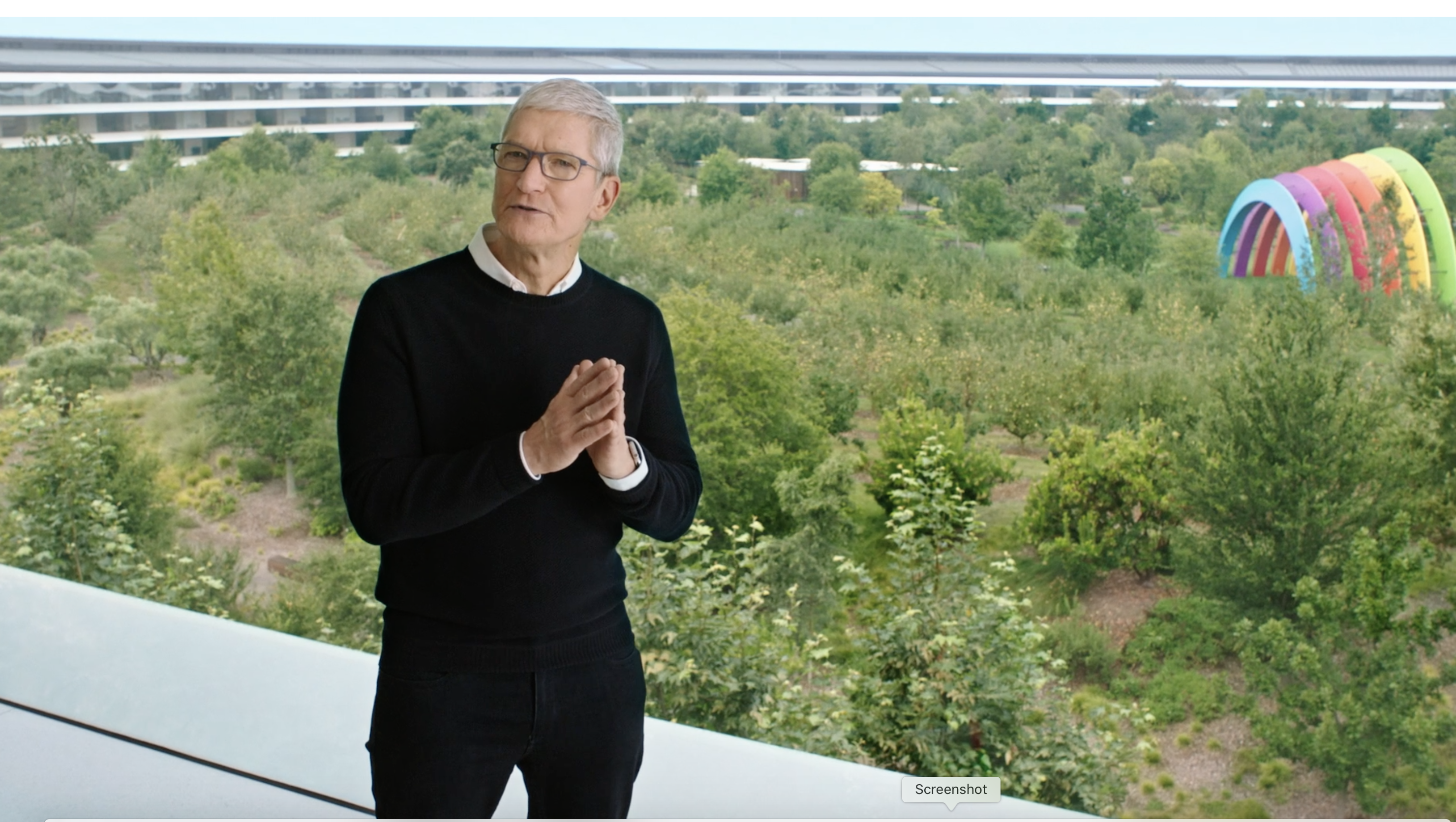
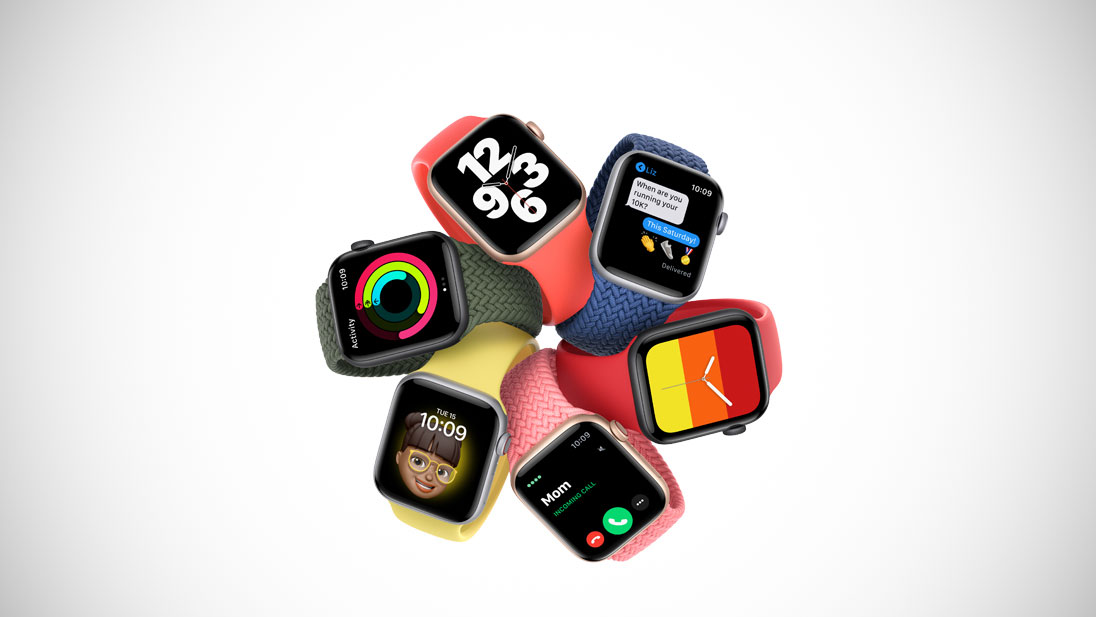
Apple’s hardware event yesterday wasn’t particularly eventful for its most popular devices, bringing only iterative changes to Apple Watch and the iPad. But the company tipped its hand as to a new, aggressive approach to services with a fitness product and new unified subscription called Apple One. What are the implications of this shift?

For one thing, Cupertino is engaging in a form of future-proofing to offset slowing hardware sales and potentially a loss of App Store income.

And yet some of the services may not survive the next few years. What happens when no one wants to pay for Apple Arcade or TV+? Will its newest service, Fitness+, impact self-employed fitness workers who are building their own brands by undercutting them and offering exclusive watchOS integration?

Lastly, the whole deal may look different depending on what country you live in — and no one likes to feel left out.

TC staff dilate on these possibilities below:

  • Brian Heater: This is Apple’s new bread and butter.
  • Kirsten Korosec: If you’re a self-employed fitness pro, Apple just ate your lunch.
  • Lucas Matney: Apple One is doomed from the start.
  • Devin Coldewey: Apple’s increasingly complex global ecosystem.

This is Apple’s new bread and butter

Brian Heater

Image Credits: Apple

Of course Apple’s not at any risk of losing money on the hardware front. It still sells a ton of iPhones, a lot of computers and more smartwatches than anyone else. But certain categories are seeing a slow down. The iPhone in particular — the long-time tentpole product of Apple’s hardware offering — has been impacted as smartphone sales have plateaued and slowed down nearly across the board.

Accordingly, services have become an increasingly important piece of Apple’s quarterly revenue. Earlier this year, the company noted a year-over-year sales increase of 17%, due in no small part to recent additions like Arcade and TV+. Today’s addition of Fitness+ will no doubt juice the numbers even further, arriving at a perfect moment for in-home workouts amid the COVID-19 pandemic.


Read Full Article

Why do we blame individuals for economic crises? | Liene Ozoliņa

Why do we blame individuals for economic crises? | Liene Ozoliņa

In 2008, the global financial crisis decimated Latvia. As unemployment skyrocketed, the government slashed public funding and raised taxes, while providing relief to the wealthy and large businesses -- all without backlash or protest from struggling citizens. Sociologist Liene Ozoliņa examines how Latvian officials convinced their people to accept responsibility for the country's failing economy -- and highlights the rise of similar social policies upholding inequality worldwide.

https://ift.tt/3kkAeUP

Click this link to view the TED Talk

How To Disable Office Click-To-Run Service In Windows 10


CLICK HERE TO SEE FULL POST

The other day, I received an email from a reader asking if it is possible to prevent the Office Click-To-Run from automatically running in the background. In this guide, we will see what Office Click-To-Run is and how to disable it in Windows 10. What is Office Click-To-Run? Microsoft Office Click-To-Run is automatically installed along […]

The post How To Disable Office Click-To-Run Service In Windows 10 appeared first on Into Windows. Content from IntoWindows website.


Zwift, maker of a popular indoor training app, just landed a whopping $450 million in funding led by KKR


Zwift, a 350-person, Long Beach, Calif.-based online fitness platform that immerses cyclists and runners in 3D generated worlds, just raised a hefty $450 million in funding led by the investment firm KKR in exchange for a minority stake in its business.

Permira and Specialized Bicycle’s venture capital fund, Zone 5 Ventures, also joined the round alongside earlier backers True, Highland Europe, Novator and Causeway Media.

Zwift has now raised $620 million altogether and is valued at north of $1 billion.

Why such a big round? Right now, the company just makes an app, albeit a popular one.

Since its 2015 founding, 2.5 million people have signed up to enter a world that, as Outside magazine once described it, is “part social-media platform, part personal trainer, part computer game.” That particular combination makes Zwift’s app appealing to both recreational riders and pros looking to train no matter the conditions outside.

The company declined to share its active subscriber numbers with us — Zwift charges $15 per month for its service — but it seemingly has a loyal base of users. For example, 117,000 of them competed in a virtual version of the Tour de France that Zwift hosted in July after it was chosen by the official race organizer of the real tour as its partner on the event.

Which leads us back to this giant round and what it will be used for. Today, in order to use the app, Zwift’s biking adherents need to buy their own smart trainers, which can cost anywhere from $300 to $700 and are made by brands like Elite and Wahoo. Meanwhile, runners use Zwift’s app with their own treadmills.

Now, Zwift is jumping headfirst into the hardware business itself. Though a spokesman for the company said it can’t discuss any particulars — “It takes time to develop hardware properly, and COVID has placed increased pressure on production” — it is hoping to bring its first product to market “as soon as possible.”

He added that the hardware will make Zwift a “more immersive and seamless experience for users.”

Either way, the direction isn’t a surprising one for the company, and we don’t say that merely because Specialized participated in this round as a strategic backer. Cofounder and CEO Eric Min has told us in the past that the company hoped to produce its own trainers some day.

Given the runaway success of the in-home fitness company Peloton, it wouldn’t be surprising to see a treadmill follow, or even a different product entirely. Said the Zwift spokesman, “In the future, it’s possible that we could bring in other disciplines or a more gamified experience.” (It will have expert advice in this area if it does, given that Swift just brought aboard Ilkka Paananen, the co-founder and CEO of Finnish gaming company Supercell, as an investor and board member.)

In the meantime, the company tells us not to expect the kind of classes that have proven so successful for Peloton, tempting as it may be to draw parallels.

While Zwift prides itself on users’ ability to organize group rides and runs and workouts, classes, says its spokesman, are “not in the offing.”


Read Full Article

Facebook addresses political controversy in India, monetization opportunities, startup investments


At the beginning of the previous decade, Facebook had a tiny presence in India. It had just started to slowly expand its team in the country and was inking deals with telecom operators to make access to its service free to users and even offer incentives such as free voice credit.

India’s internet population, now the second largest with more than 500 million connected users, itself was very small. In early 2011, the country had fewer than 100 million internet users.

But Facebook ended up playing a crucial role in the last decade. So much so that by the end of it, the social juggernaut was reaching nearly every internet user in the country. WhatsApp alone reaches more than 400 million internet users in India, more than any other app in the country, according to mobile insight firm App Annie.

This reach of Facebook in India didn’t go unnoticed. Politicians in the country today heavily rely on Facebook services, including WhatsApp, to get their message out. But it has also complicated things.

Rumors have spread on WhatsApp that cost lives, and politicians from both the large political parties in India in recent weeks have accused the company of showing favoritism to the other side.

To address these issues, and the role Facebook wishes to play in India, Ajit Mohan, the head of the company’s business in the country, joined us at Disrupt 2020. Following are some of the highlights.

On controversy

A recent report in WSJ claimed that Ankhi Das, one of Facebook’s top executives in India, decided against taking down a post from a politician from the ruling party. She did so, the report claimed, because she feared it could hurt the company’s business prospects in India.

In Mohan’s first interview since the controversy broke, he refuted the claims that any executive in the country holds power to influence how Facebook enforces its content policy.

“We believe that it’s important for us to be open and neutral and non-partisan,” he said. “We have deep belief and conviction that our enabling role is as a neutral party that allows speech of all kinds, that allows expression of all kinds, including political expression, and a lot of the guidelines that we have developed are to make sure that we really enable our diversity of expression and opinion so long as we’re able to make sure that the safety and security of people are protected.”

Mohan said the internal processes and systems inside Facebook are designed to ensure that any opinion and preference of an employee or a group of employees is “quite separate from the company and the company’s objective enforcement of its own policies.”

He said individuals can offer input on decisions, but nobody — including Ankhi Das — can unilaterally influence the decision Facebook takes on content enforcement.

“We do allow free expression inside the company as well. We don’t have any constraints on people expressing their point of view, but we see that separate from the enforcement of our content policy. […] The content policy itself, in the context of India, is a team that stands separate from the public policy team that is led by Ankhi,” he added.
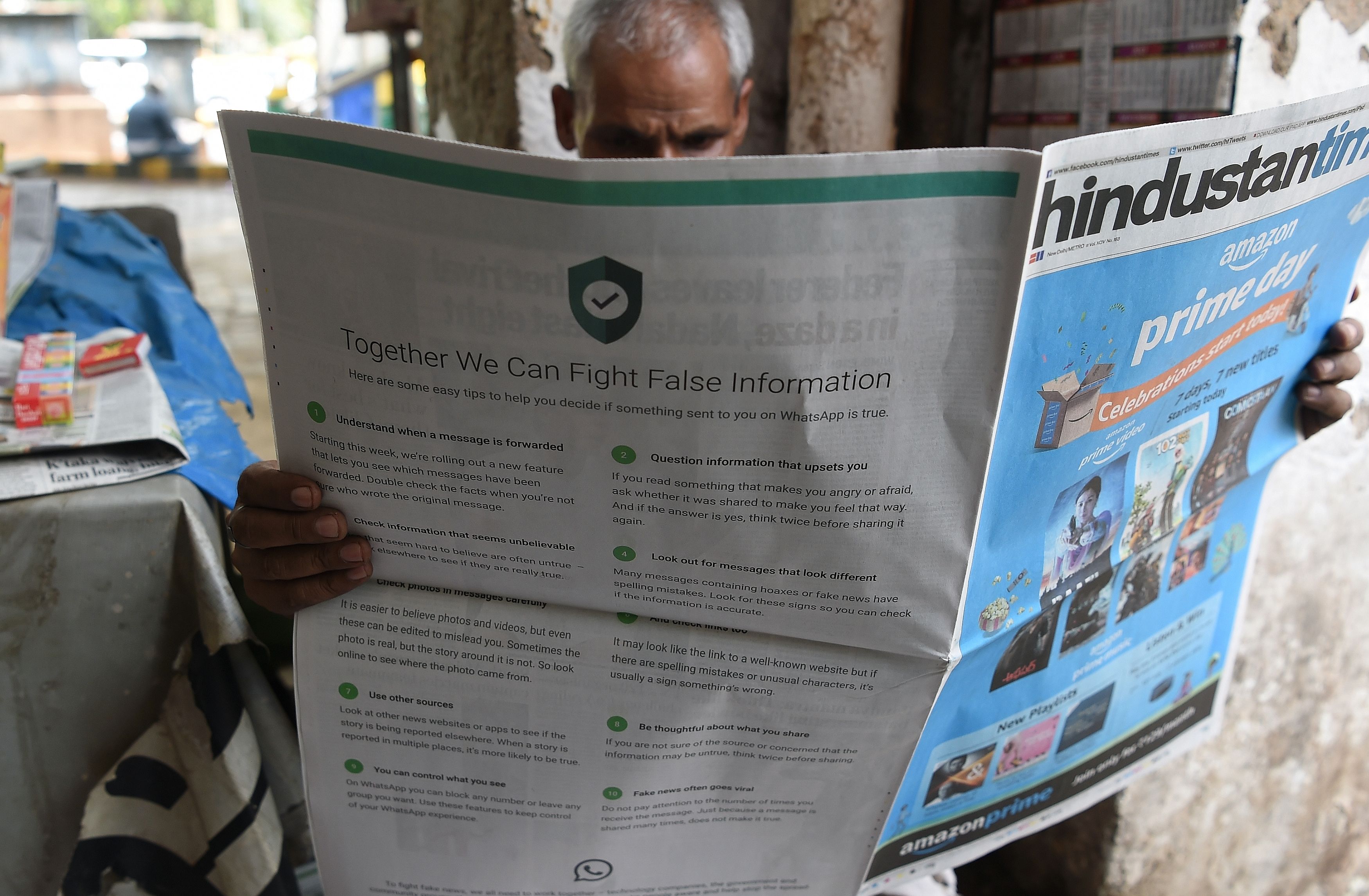
This photo illustration shows an Indian newspaper vendor reading a newspaper with a full back page advertisement from WhatsApp intended to counter fake information, in New Delhi on July 10, 2018. (Photo by Prakash SINGH / AFP)

On India and monetization

Even as Facebook has amassed hundreds of millions of users in India, the world’s second largest market contributes little to its bottom line. So why does Facebook care so much about the country?

“India is in the middle of a very exciting economic and social transformation where digital has a massive role to play. In just the last four years, more than 500 million users have come online. The pace of this transformation probably has no parallel in either human history or even in the digital transformation happening in countries around the world,” he said.

“For a company like ours, if you look at the family of apps across WhatsApp and Instagram, we believe we have a useful role to play in fueling this transformation,” he said.

Even as Facebook does not generate a lot of revenue from India, Mohan said the company has established itself as one of the most trusted platforms for marketers. “They look to us as a material partner in their marketing agenda,” he said.

He said the company is hopeful that advertising as a GDP will go up in India. “Therefore ad-revenue will become substantial over time,” he said.

For Facebook, India is also crucial because it allows the company to build some unique products that solve issues for India but could be replicated in other markets. The company is currently testing an integration of WhatsApp, which currently does not have a business model despite having over 2 billion users, with new Indian e-commerce JioMart, to allow users to easily track their orders.

“We think there is opportunity to build India-first models, experiment at scale, and in a world where we succeed, we see huge opportunity in taking some of these models global,” he said.

Facebook as a VC

Facebook does not usually invest in startups. But in India, the company has invested in social-commerce firm Meesho, online learning platform Unacademy — it even participated in its follow-up round — and it wrote a $5.7 billion check to Jio Platforms earlier this year. So why is Facebook taking this investment route in India?

“We wanted to create a program for taking minority investments in early-stage startups to figure out how we could be helpful to startup founders and the ecosystem as a whole. The starting point was backing teams that were building models that in some ways were unique to India and could go global. Since we made an investment in Meesho, they have made a strong thrust in Indonesia. These are the kind of companies where we feel we can add value as well as we can learn from these startups,” he said.

The partnership with Jio Platforms follows a different rationale. “The transformation we talked about in India in the last few years, Jio triggered it,” he said. Other than that, Facebook is exploring ways to work with Jio, such as with its partnership with Jio’s venture JioMart. “It can really fuel the small and medium business that is good for the Indian economy,” he said.

Mohan said the company continues to explore more opportunities in Indian startups, especially with those where the teams think Facebook can add value, but he said there is no mandate of any kind that Facebook has to invest in, say dozens of startups in three to four years. “It’s not a volume play,” he said.

During the Q&A part of the interview, Mohan was asked if Reliance Industries, which operates Jio Platforms and Reliance Retail, will receive any special access on Facebook’s services. What if Amazon, BigBasket, Grofers, or Flipkart want to integrate with WhatsApp, too? Mohan said Facebook platform is open for every firm and everyone will receive the same level of access and opportunities.

In the interview, Mohan, who ran the Disney-run Hotstar on-demand streaming service in India, also talked about the growing usage of video in India, the state of WhatsApp Pay’s rollout in the country, what Facebook thinks of India’s ban on Chinese apps, and much more. You can watch the full interview below.


Read Full Article

A Comprehensive Guide on Live Casino Games Online


Are you bored of playing online casino games for a long time? You can now switch to live online games. In live dealer casino games, you can easily communicate with dealers directly online and also with other players in real-time to get real-life gaming experience. Switch your normal casino routine and start playing online live […]

The post A Comprehensive Guide on Live Casino Games Online appeared first on ALL TECH BUZZ.


Twitter flags Indian politician’s years-old tweet for violating its policy


Twitter has flagged a post from Indian politician T. Raja Singh for violating its policy days after TechCrunch asked the social giant about the three-year-old questionable tweet.

In a video tweet, Singh urged India’s Defence Minister Rajnath Singh and others citizens in the country to move Rohingya Muslim immigrants, including those “who supported terrorism,” out of the nation as he feared that they would become a “headache for the nation” in the future. “#Deport RohingyaMuslims,” he tweeted.

Singh, who belongs to India’s ruling party Bharatiya Janata Party and has made hateful speeches in public appearances in the past, also urged his followers to make his tweet “viral” on the platform so that every “Hindu and [other] Indians” see it. He did not respond to a request for comment.

It’s a similar message that Singh had also posted on Facebook, which ultimately led the Menlo Park-headquartered firm to permanently ban him from the platform.

Facebook has received some of the harshest backlash it has seen to date in the country in part for its initial inaction on Singh’s posts. The Wall Street Journal reported last month that a top Facebook executive in India had decided to not take action on Singh’s posts as she feared it could hurt the company’s business prospects in the country.

In a statement to TechCrunch, a Twitter spokesperson said that Singh’s tweet was “actioned” for violating its hateful conduct policy.

“Twitter has zero-tolerance policies in place to address threats of violence, abuse and harassment, and hateful conduct. If we identify accounts that violate these rules, we’ll take enforcement action,” the spokesperson added.

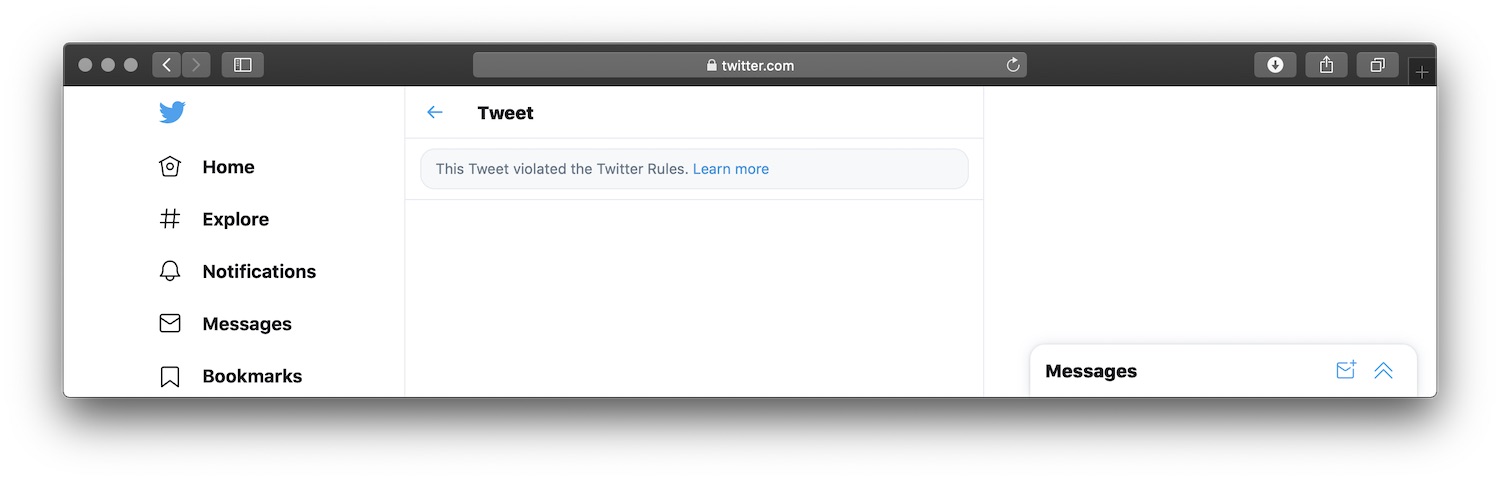
A September 13 tweet, which Singh has retweeted from his account, shows a warning message from Twitter that says his account was locked for the aforementioned tweet. Singh has posted several tweets since September 13, suggesting the matter has been resolved. The aforementioned tweet still shows it is in violation of Twitter rules.

The slow reactions from Twitter and Facebook, both of which count India as an important market, illustrates lapses in their content moderation efforts in the world’s second largest market.

Twitter, which had about 70 million monthly active users on its official app in India last month (according to mobile insights firm App Annie, data of which an industry executive shared with TechCrunch), has been particularly slow — or unresponsive — in the country in taking actions despite reports from users.

In January, India’s ruling party was accused of running a deceptive Twitter campaign to gain support for a controversial lawnothing new for Twitter in India — but the company never responded to questions. A month before that, snowfall in Kashmir, a highly sensitive region that hasn’t had internet connection for months, began trending on Twitter in the U.S. It mysteriously disappeared after many journalists questioned how it made it to the list.

A Twitter spokesperson in India pointed TechCrunch to an FAQ article at the time that explained how Trending Topics work. Nothing in the FAQ article addressed the question.


Read Full Article
Triller aims for TikTok with additions of influencers like Charli D’Amelio and Addison Rae


Triller had been poised to benefit from a potential TikTok ban in the U.S. Though that may not happen now, given the apparent Oracle deal, the chaos around TikTok has increased the attention given to alternative apps such as Triller. As TikTok users sought out a new home — or at least hedged their bets in the event of a full ban — Triller’s app shot up the app store charts. It even became the No. 1 across 80 different countries at some point, Triller CEO Mike Lu says.

At Techcrunch Disrupt 2020, Lu today spoke of Triller’s growing potential and what makes its app unique. He also touched on Triller’s involvement in several high-profile additions, including influencers and public figures like TikTok star Charli D’Amelio and family, and even Trump himself.

Lu also noted another top TikToker, Addison Rae, will make her way to Triller this week, as well.

Though Triller has often positioned itself as a different sort of app than TikTok, the company has steadily worked to onboard the same set of influencers that made TikTok so popular. TikTok star Josh Richards recently joined Triller as both an investor and chief strategy officer, despite being only 18, for example. Other TikTok stars Noah Beck and Griffin Johnson also joined Triller earlier this summer.

And just this week, Triller snagged TikTok’s queen herself, Charli D’Amelio, whose current TikTok account has 87 million followers.

Though Triller often benefits from influencers setting up their own accounts, Lu confirmed Triller reached out to D’Amelio to establish the relationship and to learn how the company could help her create a different type of presence on the Triller app.

Deal terms were not disclosed but Lu said that, “up until a month ago, we had never paid anyone to make a video.”

TikTok stars aren’t the only notable new additions. Last month, Donald Trump launched his own official Triller account, as well, to promote his political campaign.

Lu said he welcomes all the new users, including Trump.

“We’re an open platform and what we really strive for is creativity. So, we welcome anyone — regardless of whether you’re on the left side or the right side of the fence — to express yourself on the Triller platform,” he said. “Seeing some of the world leaders and also some of the biggest influencers in the world join the platform is very exciting for Triller.”

Lu also explained how Triller differentiates itself from the broader social media app lineup, noting that much of the focus of older social networks had been on allowing users to post status updates, not creative content.

Triller’s identity, Lu added, “has always been around music, around content, and around creative discovery.”

“I think that we will always shine more than your traditional status updates — which I think that the world of Facebook, Instagram and Twitter has done really well” he said. But today’s users “really don’t post creative content to those old platforms anymore,” he continued. “They’re actually posting them on platforms like ourselves, where they’re looking for an expressive and creative outlet.”

Lu claimed Triller also benefitted from older social networks’ attempt to enter the short-form video space.

When Instagram launched its TikTok competitor, Reels, Triller saw a 20% spike in usage, Lu said.

“We realized that a lot of users who were waiting for Reels…they saw what it was. And they decided they’re sticking to Triller,” he said.

On the topic of business matters, Lu declined to speak about recent reports of its supposed billion dollar valuation, but did confirm Triller is in the process of raising new funding. He also declined to speak about the status of Triller’s reported $20 billion bid with Centricus for TikTok assets, but said the company believed it would have been a good home for TikTok creator content from an infrastructure perspective.

Not surprisingly, given Triller’s potential growth in the midst of TikTok concerns, Lu also supported the idea that TikTok could be a security threat to U.S. users.

“Given the sensitivity of the data [and] the amount of data that they collect, it does pose a national risk,” Lu said of TikTok. “This is a Chinese-owned  company. The data is sitting, probably, not here in the States…” he added, seemingly refuting TikTok’s claims that its U.S. data was on U.S. servers.

“We take that stuff very seriously. We are a U.S.- based company,” he said, noting how Triller was complaint with U.S. regulations, like COPPA. “Something we actually take very strong pride in is making sure that we uphold [Triller] to the right standards that we’re used to, and as well as the privacy of our users and our citizens,” Lu said.


Read Full Article

Twitter debuts US election hub to help people navigate voting in 2020


Twitter debuted its election hub on Tuesday, introducing a set of tools to help Americans prepare for the most uncertain election in modern U.S. history.

The platform will add a new “US Elections” tab in the Explore menu, where the trending tab and other curated topic lists live. That tab will serve as Twitter’s central source for hand-picked election news in English and Spanish, debate live streams, state-specific resources and candidate information.

Twitter will also introduce what it’s calling a series of “public service announcements” to educate voters on critical election-related topics. Those PSAs will present information on voter registration, instructions on obtaining a mail-in ballot and suggestions for safe voting as the pandemic continues to rage across the United States.

“Twitter wants to empower every eligible person to vote in the 2020 US election, and we’re focused on helping people register, better understand the voting process during COVID-19 including early voting options, and feel informed about the choices on their ballot,” Twitter Public Policy Director Bridget Coyne and Senior Product Manager Sam Toizer wrote in a blog post on the announcement.

Twitter took a number of measures early on to address concerns around misinformation and platform manipulation around the 2020 election. Unlike Facebook, which has taken more incremental steps, Twitter opted to no longer accept political advertising in a decision made last October. The platform also began aggressively flagging tweets containing election-related misinformation months ago, setting expectations for high-profile serial platform rule-breakers like President Trump.

Twitter kicked off a political war with the president in May when the company added a fact-checking label to a pair of his tweets containing false claims about voter registration and mail-in voting security. In the last month and a half alone, Twitter locked the Trump campaign out of its Twitter account for sharing a video with the false claim that children are “almost immune” to COVID-19, hid a tweet from the president that discouraged voting and restricted a handful of tweets from Trump that encouraged Americans to vote twice, which is illegal.

Last week, in a foreboding sign of what Americans might expect from November’s election, Twitter expanded its misinformation rules to address what happens if a candidate declares victory prematurely. In that same update, Twitter also said it would take action against any tweets “inciting unlawful conduct to prevent a peaceful transfer of power or orderly succession.”

While Twitter is far from containing its own misinformation problem, it has shown a proactive willingness to adapt to real concerns around the 2020 election, making policy changes on the fly and adjusting those choices somewhat fluidly as needed. By anticipating worst-case scenarios, Twitter will at least be going into the 2020 U.S. elections with its eyes open — and with so many unknowns in such a tumultuous year, let’s just hope that’s enough.


Read Full Article

Triller aims for TikTok with additions of influencers like Charli D’Amelio and Addison Rae


Triller had been poised to benefit from a potential TikTok ban in the U.S. Though that may not happen now, given the apparent Oracle deal, the chaos around TikTok has increased the attention given to alternative apps such as Triller. As TikTok users sought out a new home — or at least hedged their bets in the event of a full ban — Triller’s app shot up the app store charts. It even became the No. 1 across 80 different countries at some point, Triller CEO Mike Lu says. At Techcrunch Disrupt 2020, Lu today spoke of Triller’s growing potential and what makes its app unique. He also touched on Triller’s involvement in several high-profile additions, including influencers and public figures like TikTok star Charli D’Amelio and family, and even Trump himself.

Lu also noted another top TikToker, Addison Rae, will make her way to Triller this week, as well.

Though Triller has often positioned itself as a different sort of app than TikTok, the company has steadily worked to onboard the same set of influencers that made TikTok so popular. TikTok star Josh Richards recently joined Triller as both an investor and chief strategy officer, despite being only 18, for example. Other TikTok stars Noah Beck and Griffin Johnson also joined Triller earlier this summer.

And just this week, Triller snagged TikTok’s queen herself, Charli D’Amelio, whose current TikTok account has 87 million followers.

Though Triller often benefits from influencers setting up their own accounts, Lu confirmed Triller reached out to D’Amelio to establish the relationship and to learn how the company could help her create a different type of presence on the Triller app.

Deal terms were not disclosed but Lu said that, “up until a month ago, we had never paid anyone to make a video.”

TikTok stars aren’t the only notable new additions. Last month, Donald Trump launched his own official Triller account, as well, to promote his political campaign.

Lu said he welcomes all the new users, including Trump.

“We’re an open platform and what we really strive for is creativity. So, we welcome anyone — regardless of whether you’re on the left side or the right side of the fence — to express yourself on the Triller platform,” he said. “Seeing some of the world leaders and also some of the biggest influencers in the world join the platform is very exciting for Triller.”

Lu also explained how Triller differentiates itself from the broader social media app lineup, noting that much of the focus of older social networks had been on allowing users to post status updates, not creative content.

Triller’s identity, Lu added, “has always been around music, around content, and around creative discovery.”

“I think that we will always shine more than your traditional status updates — which I think that the world of Facebook, Instagram and Twitter has done really well” he said. But today’s users “really don’t post creative content to those old platforms anymore,” he continued. “They’re actually posting them on platforms like ourselves, where they’re looking for an expressive and creative outlet.”

Lu claimed Triller also benefitted from older social networks’ attempt to enter the short-form video space.

When Instagram launched its TikTok competitor, Reels, Triller saw a 20% spike in usage, Lu said.

“We realized that a lot of users who were waiting for Reels…they saw what it was. And they decided they’re sticking to Triller,” he said.

On the topic of business matters, Lu declined to speak about recent reports of its supposed billion dollar valuation, but did confirm Triller is in the process of raising new funding. He also declined to speak about the status of Triller’s reported $20 billion bid with Centricus for TikTok assets, but said the company believed it would have been a good home for TikTok creator content from an infrastructure perspective.

Not surprisingly, given Triller’s potential growth in the midst of TikTok concerns, Lu also supported the idea that TikTok could be a security threat to U.S. users.

“Given the sensitivity of the data [and] the amount of data that they collect, it does pose a national risk,” Lu said of TikTok. “This is a Chinese-owned  company. The data is sitting, probably, not here in the States…” he added, seemingly refuting TikTok’s claims that its U.S. data was on U.S. servers.

“We take that stuff very seriously. We are a U.S.- based company,” he said, noting how Triller was complaint with U.S. regulations, like COPPA. “Something we actually take very strong pride in is making sure that we uphold [Triller] to the right standards that we’re used to, and as well as the privacy of our users and our citizens,” Lu said.


Read Full Article

This is the new iPad Air, with Touch ID built into the power button


At Apple’s (virtual) hardware event today, the company announced a significantly redesigned iPad Air with a new look and tiny bezels. In a move portentous for other Apple products, Touch ID has returned — inside the power button on the top of the tablet.

For the 10th anniversary of the iPad, the new 4th-generation Air is the biggest change to the device in a while. “This is a big year for iPad,” said CEO Tim Cook, before introducing changes to the non-Pro tablets in the lineup. “And today, we’re thrilled to introduce an all new completely redesigned iPad Air.”

The biggest change has to be the next-generation touch ID sensor built into the power button. Time will tell whether this is truly more convenient than having it in the “home” button, but it’s clear now that Apple has seen that demand for the fingerprint-based unlocking method has not abated.

Image Credits: Apple

Could the new Touch ID power button show up on the iPhone 12, or at the very least on the iPad Pro later? It seems likely, as while Face ID has become more reliable over time, sometimes people just prefer the hands-on approach.

The look is new to the iPad Air series, but mainly just resembles the Pro, with flat sides, rounded corners on the screen, and a prominent camera bump. There are also a bunch of hot new colors.

Image Credits: Apple

There’s a new display, with a 2360×1640 resolution, a little higher than the last generation. You probably won’t notice the difference unless they’re side by side, but Apple has always pushed to make sure its devices have among the highest quality screens out there, and the new Air is no exception.

The connector has graduated from Lightning to USB-C like its big brother the iPad Pro, so while on one hand you might need to throw away your cables… again… the new cables aren’t special Apple ones sprinkled with fairy dust, so you’ll be able to use $5 ones from Monoprice instead.

There’s an improved front camera, and the back one gets the iPad Pro’s 12-megapixel, 4K-capable shooter. But no lidar, unfortunately. Speakers also get a boost, with stereo audio in landscape mode.

You’ll be able to pick up the new iPad Air starting next month at $599 for the cheapest version (wi-fi only, with the least amount of storage, exact amount TBD). It may be hard to justify spending the extra money for the Pro at this point.

The vanilla iPad, now in its 8th generation, also got a computing power bump to the A12 series of chips, but no big design changes. With 500 million iPad devices sold, the traditional design is proven to be just fine. It’ll set you back $329.


Read Full Article

Apple introduces the Apple Watch SE, a cheaper Apple Watch


In addition to keeping old generation devices at an entry-level price, Apple is introducing a brand new Apple Watch at a cheaper price point. The new Apple Watch SE features the same design as the newly announced Apple Watch Series 6. But it costs $279.

“The second thing we're doing to make Apple Watch available to even more people is to create a new model that combines elements of Series 6 design with the most essential features of Apple Watch, all at a more affordable price,” Apple COO Jeff Williams said.

The Apple Watch SE uses the S5 system-on-a-chip, which was first released for the Apple Watch Series 5. However, it has the same, big display as the one on the Series 6. It also has the same accelerometer, gyroscope, compass and altimeter as the ones in the Series 6.

And because the Apple Watch SE shares the same design as the Apple Watch Series 6, you can use the most recent complications and watch faces that are going to be introduced with watchOS 7.

So we’ll have to look at the tech specs in details after Apple’s event because the Apple Watch SE looks like a good deal when you compare it with the Apple Watch Series 6 that costs $399. You might not get blood oxygen data like on the Series 6, but it’s a good watch for users who just want a watch to track their workouts, for instance.

Apple is still keeping the Apple Watch Series 3 at the same price ($199). This device is a few years old now and it features the older screen design. So the Apple Watch Series 3 is not compatible with the most recent watch faces and complications.

The company is also positioning the Apple Watch SE as a way to offer an Apple Watch to your kid. There’s a cellular model, which means you can communicate with your kid without handing them a smartphone.

The Apple Watch SE will be available on Friday. Pre-orders start today.


Read Full Article

15 September 2020

Apple to release iOS 14, iPadOS 14, watchOS 14 and tvOS on September 16


Apple said its latest iOS 14 software will be released on September 16, ahead of the company’s release of the next-generation iPhones.

We saw our first glimpse at iOS 14 earlier this year at Apple’s Worldwide Developer Conference, which included home screen widgets and reply threading in Messages. It also comes with new Maps features, including adding cycling as a transportation option, and routing for electric vehicle owners so they can find charging points along the way.

iOS 14 also comes with an in-built translator, an improved and redesigned Siri, and better security and privacy features in the Safari browser.

But one privacy feature promised by Apple will be delayed. Apple said it would allow iPhone users to opt-out of in-app tracking, which the company said would not be immediately enforced when iOS 14 is released. It follows an uproar from ad giants — including Facebook — which lobbied against the proposal. Apple said it would give developers until next year to adjust to the changes.

iOS 14 will be supported on iPhone 6s and later, and lands as a free download.

Apple said it will also release its upcoming iPadOS 14, watchOS 14 and tvOS 14 on September 16.


Read Full Article

Imitation Learning in the Low-Data Regime


Reinforcement Learning (RL) is a paradigm for using trial-and-error to train agents to sequentially make decisions in complex environments, which has had great success in a number of domains, including games, robotics manipulation and chip design. Agents typically aim at maximizing the sum of the reward they collect in an environment, which can be based on a variety of parameters, including speed, curiosity, aesthetics and more. However, designing a specific RL reward function is a challenge since it can be hard to specify or too sparse. In such cases, imitation learning (IL) methods offer an alternative as they learn how to solve a task from expert demonstrations, rather than a carefully designed reward function. However, state-of-the-art IL methods rely on adversarial training, which uses min/max optimization procedures, making them algorithmically unstable and difficult to deploy.

In “Primal Wasserstein Imitation Learning” (PWIL), we introduce a new IL method, based on the primal form of the Wasserstein distance, also known as the earth mover’s distance, which does not rely on adversarial training. Using the MuJoCo suite of tasks, we demonstrate the efficacy of the PWIL method by imitating a simulated expert with a limited number of demonstrations (even a single example) and limited interactions with the environment.

Left: Demonstration of the algorithmic Humanoid “expert”, trained on the true reward of the task (which relates to speed). Right: Agent trained using PWIL on the expert demonstration.

Adversarial Imitation Learning
State-of-the-art adversarial IL methods operate similarly to generative adversarial networks (GANs) in which a generator (the policy) is trained to maximize the confusion of a discriminator (the reward) that itself is trained to differentiate between the agent’s state-action pairs and the expert’s. Adversarial IL methods boil down to a distribution matching problem, i.e., the problem of minimizing a distance between probability distributions in a metric space. However, just as GANs, adversarial IL methods rely on a min/max optimization problem and hence come with a number of training stability challenges.

Imitation Learning as Distribution Matching
The PWIL method is based on the formulation of IL as a distribution matching problem, in this case, the Wasserstein distance. The first step consists of inferring from the demonstrations a state-action distribution of the expert, the collection of relationships between the actions taken by the expert and the corresponding state of the environment. The goal is then to minimize the distance between the agent’s and the expert’s state-action distributions, through interactions with the environment. In contrast to adversarial IL, however, PWIL is a non-adversarial method, enabling it to bypass the min/max optimization problem, instead aiming to directly minimize the Wasserstein distance between the agent’s and the expert’s state-action pair distributions.

Primal Wasserstein Imitation Learning
Computing the exact Wasserstein distance can be restrictive since one must wait until the end of a trajectory of the agent to calculate it, meaning that the rewards can be computed only when the agent is done interacting with the environment. To avoid this restriction, we use an upper bound on the distance instead, from which we can define a reward that we optimize using RL. We show that by doing so, we indeed recover expert behaviour and minimize the Wasserstein distance between the agent and the expert on a number of locomotion tasks of the MuJoCo simulator. While adversarial IL methods use a reward function from a neural network that must be optimized and re-estimated continuously as the agent interacts with the environment, PWIL defines a reward function offline from demonstrations, which does not change and is based on substantially fewer hyperparameters than adversarial IL approaches.

Training curves for PWIL on Humanoid. In green, the Wasserstein distance to the state-action distribution of the expert. In blue, the return (the sum of rewards collected) by the agent.

A Measure of Similarity for the True Imitation Learning Setting
As in numerous challenges in ML, a number of IL methods are evaluated on synthetic tasks, where one usually has access to the underlying reward function of the task and can measure similarity between the expert’s and the agent’s behaviour in terms of performance, which is the expected sum of rewards. A byproduct of PWIL is the creation of a metric that can compare expert behavior to an agent’s behavior for any IL method, without access to the true reward of the task. In this sense, we can use the Wasserstein distance in the true IL setting, not only on synthetic tasks.

Conclusion
In environments where interacting is costly (e.g., a real robot or a complex simulator), PWIL is a prime candidate not only because it can recover expert behaviour, but also because the reward function it defines is easy to tune and is defined without interactions with the environment. This opens multiple opportunities for future exploration, including deployment to real systems, extending PWIL to the setup where we have only access to demonstration states (rather than states and actions), and finally applying PWIL to visual based observations.

Acknowledgements
We thank our co-authors, Matthieu Geist and Olivier Pietquin; as well as Zafarali Ahmed, Adrien Ali Taïga, Gabriel Dulac-Arnold, Johan Ferret, Alexis Jacq and Saurabh Kumar for their feedback on the manuscript.


Google launches new AI-powered meeting room hardware


Google today announced the Google Meet Series One, a new video conferencing hardware suite for meeting rooms. Built in collaboration with Lenovo, the Series One uses high-end cameras and microphones and then marries them with Google’s AI smarts thanks to using Google’s own Coral M.2 accelerator modules with the company’s Edge TPUs.

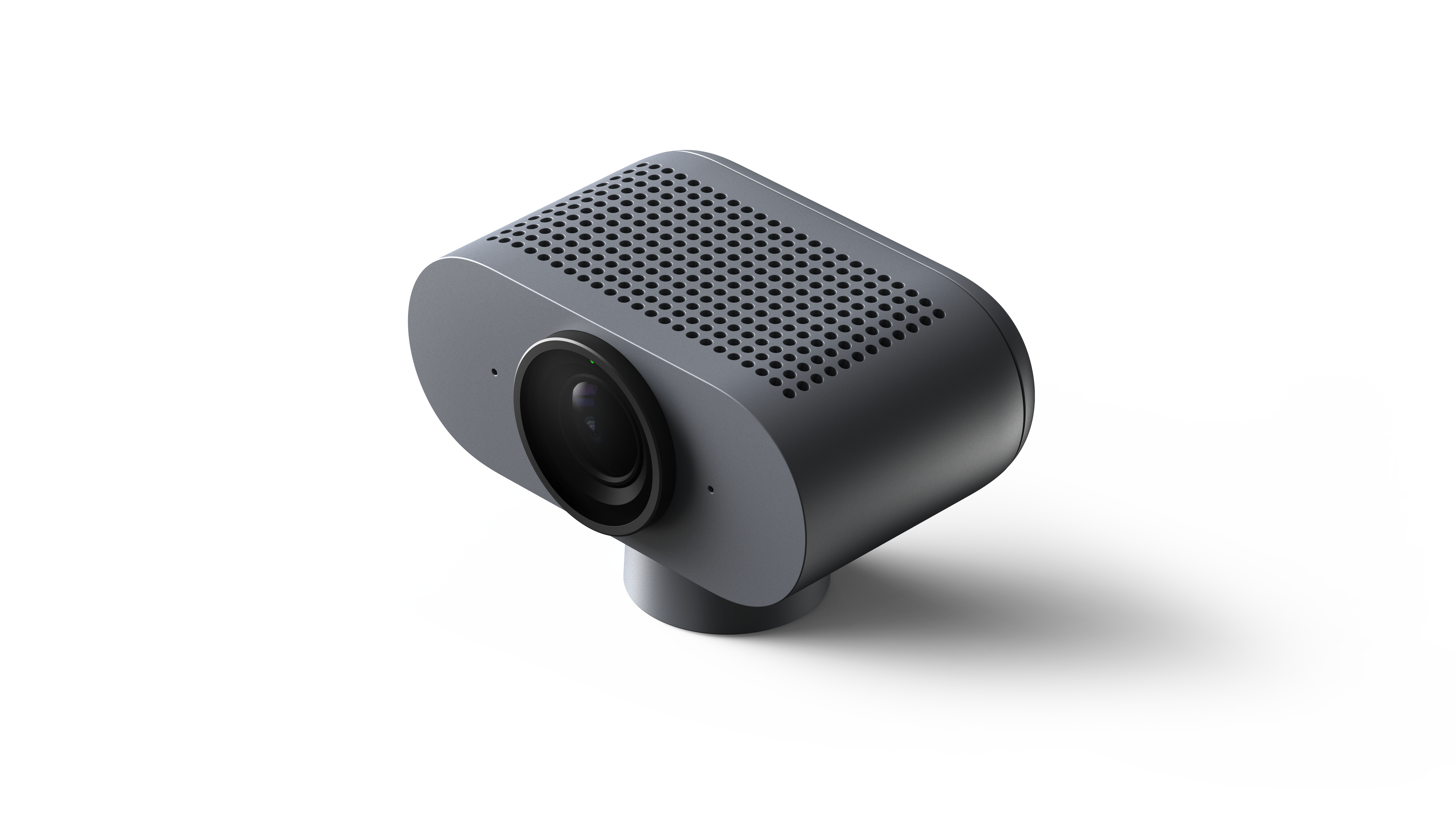
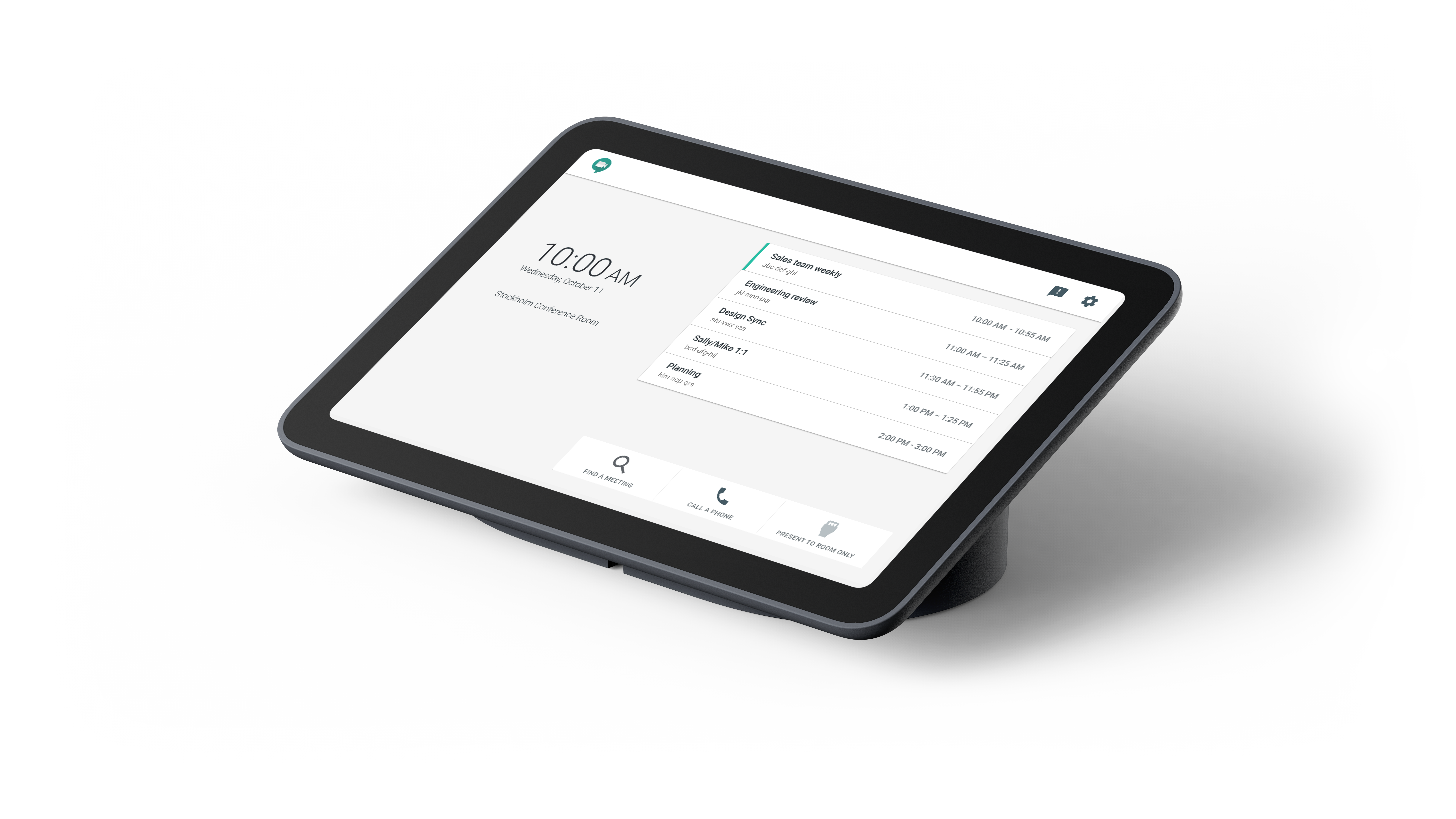
Previous Google Meet hardware efforts from companies like ASUS, Acer and Logitech were generally built around a Chromebox. This new effort uses a custom-built compute system at its core and combines that with an almost Google Nest-like tablet-sized screen, a soundbar with eight built-in microphones, additional microphone pods and one of two cameras.

Image Credits: Google

The cameras are maybe the most interesting option here, with the Smart Camera XL features a 20.3-megapixel sensor and 4.3x optical zoom. Thanks to these specs, it can be used as a digital PTZ (pan, tilt, zoom) camera. With that, the system can always automatically zoom in to frame everybody in the room and when the next person joins, it can zoom and pan as necessary to make sure everybody is still visible.

The regular Smart Camera can still do most of this, but it doesn’t feature the optical zoom, making it a better solution for smaller rooms. Google partnered with Huddly to develop this camera system (and the two companies also collaborated on previous Meet hardware projects).

But Google also put a lot of effort into the audio system. With its eight beam-forming microphones built into the soundbar and advanced noise cancellation techniques running on Google’s AI chips, the system should be able to filter out most distractions. Companies can add additional soundbars that only feature the speakers and microphones without the AI chips to cover even larger rooms. These additional units only feature the speakers and microphones, without the additional AI hardware since all of the processing needs to be done centrally.

Image Credits: Google

One nice touch here is that the team also made it easy to install these systems thanks to using Power-over-Ethernet. That should make installing one of these systems in a conference room pretty easy.

Since this is Google, it’s probably no surprise that you can also use the Google Assistant on this system, providing you with hands-free control over the room (something that’s maybe more important today than ever before).

The smallest room kit, with the basic Smart Camera but without the tablet-style meeting controller and microphone pod, will retail for $2,699. For $2,999 you get a complete set with one standard camera, soundbar, microphone pod and controller and if you have a very large room, you can opt for the $3,999 version with the additional soundbar, two microphone pods and the Smart Camera XL.


Read Full Article

Waze gets smarter with trip suggestions, lane guidance, traffic notifications and more


Google-owned navigation app Waze is gaining a number of new product features as well as a partnership with Amazon Music, the company announced at its first major virtual event, Waze On. Among the changes, Waze is gaining personalized recommendations based on a user’s trip history, as well as traffic notifications, ETA improvements, lane suggestions, expanded Google Assistant integration, and more.

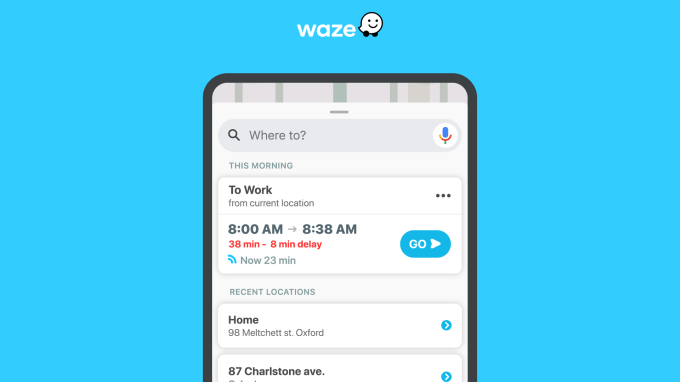
Waze’s trip suggestions are one of the more notable new features, as they tap into the Waze user’s historical driving patterns to make inferences about where the user may be headed to next. The feature, which will roll out next month, will be based on trips the user took in the past as well as the locations they’ve recently driven to, Waze says. The suggestions will offer the driver a visual overview of their trip, including details like the time the trip will take and the expected traffic.

Image Credits: Waze

Another new feature, traffic notifications, will alert users when traffic begins to build up or the driver risks being late on both favorite and frequent destinations, as well as one-time planned drives. These will also arrive next month, Waze noted.

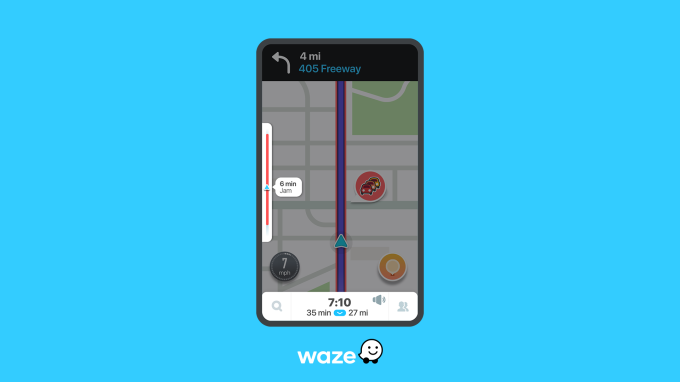
Among the smarter improvements, is a new addition called Lane Guidance. As the name suggests, Waze will now be able to tell drivers what lane to be in when they’re merging or exiting a stretch of highway. This feature is rolling out now.

Image Credits: Waze

Waze also updated its ETA calculations in areas where there are fewer drivers — a reflection of the impact the pandemic has had on historical driving patterns. With some areas seeing fewer cars on the road due to companies’ embrace of remote work, Waze says it’s been harder to predict the changing flow of traffic. The update should help it take into account the reduction in traffic when making calculations in some areas.

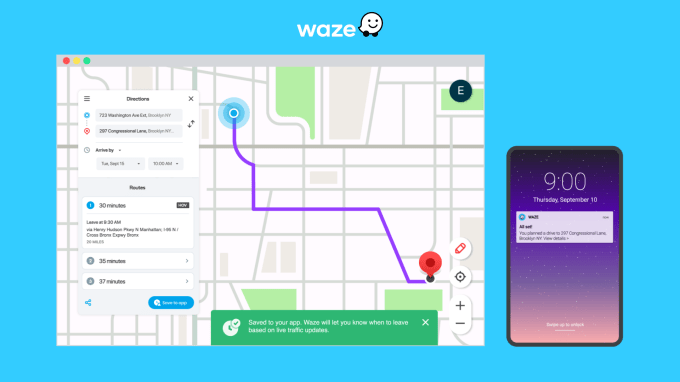
In a much-needed update, users will now be able to save their itinerary for a planned drive directly to the Waze app from the Live Map feature on the web.

Image Credits: Waze

Waze has also expanded Google Assistant integration to French, Spanish and Portuguese-speaking Waze users.

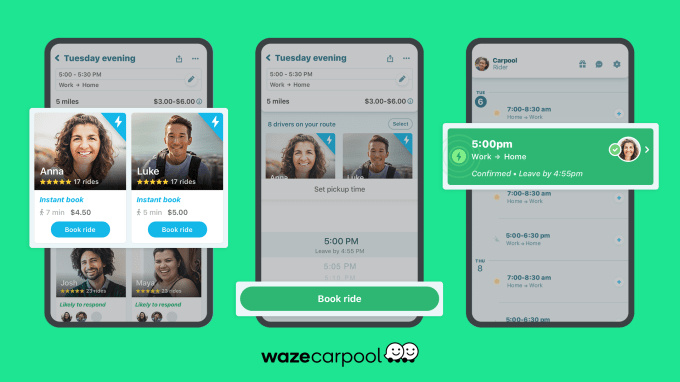
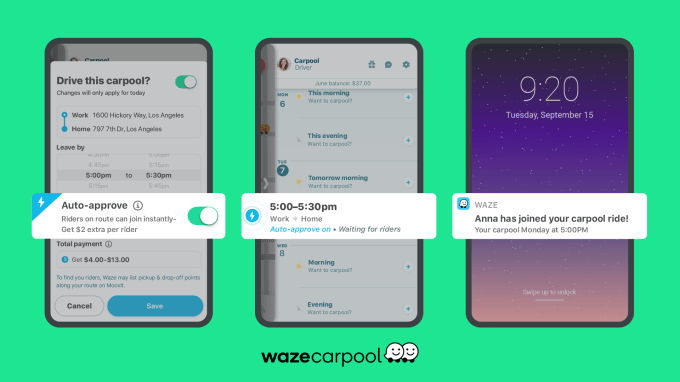
The Waze Carpool service received a few updates, too. It now offers instant booking and auto approve features for drivers and riders. Drivers can also get real-time ride requests as they begin a drive, allowing them to pick up more riders along the way.

Image Credits: Waze

Amazon Music, meanwhile, joined the Waze Audio Player partner program, which allows Waze users to listen to third-party services from Waze’s audio player. Amazon Music users will be able to access the Waze app from the music app, as well. The audio program itself is not new. Waze already works with other music and audio partners, including Spotify, Pandora, TuneIn, YouTube Music, Deezer, TIDAL, Stitcher, iHeartRadio, NPR One, Scribd, and others.

Image Credits: Waze

Waze at the event said it now sees over 140 million users worldwide per month contributing to the community by driving over 36 billion kilometers and reporting over 70 million incidents in 185 countries.


Read Full Article

Facebook launches a climate change information center and commits to eliminating ‘scope 3’ emissions by 2030


Even as Facebook, the world’s largest social media platform, admits that climate change “is real” and that “the science is unambiguous and the need to act grows more urgent by the day” the platform appears unwilling to take steps to really stand up to the climate change denialism that circulates on its platform. 

The company is set to achieve net zero carbon emissions and be supported fully by renewable energy in its own operations this year.

But as the corporate world slaps a fresh coat of green paint on its business practices, Facebook is looking to get out in front with the launch of a Climate Science Information Center to “connect people with science-based information.”

The company is announcing a new information center, designed after its COVID-19 pandemic response. The center is designed to connect people to factual and up-to-date climate information, according to the company. So far, Facebook says that more than 2 billion people have been directed to resources from health authorities with its COVID-19 response.

The company said that it will use The Climate Science Information Center to feature facts, figures and data from the Intergovernmental Panel on Climate Change (IPCC) and their global network of climate science partners, including the UN Environment Programme (UNEP), The National Oceanic and Atmospheric Administration (NOAA), World Meteorological Organization (WMO) and others. This center is launching in France, Germany, the U.K. and the U.S. to start. 

While Facebook has been relatively diligent in taking down COVID-19 misinformation that circulates on the platform, removing 7 million posts and labeling another 98 million more for distributing coronavirus misinformation, the company has been accused of being far more sanguine when it comes to climate change propaganda and pseudoscience.

A July article from The New York Times revealed how climate change deniers use the editorial label to skirt Facebook’s policies around climate disinformation. In September 2019 a group called the CO2 Coalition managed to overturn a fact-check that would have labeled a post as misinformation by appealing to Facebook’s often criticized stance on providing and amplifying different opinions. By calling an editorial that contained blatant misinformation on climate science an editorial, the group was able to avoid the types of labels that would have redirected a Facebook user to information from recognized scientific organizations.  

Facebook disputes that characterization. “If it’s labeled an opinion piece, it’s subject to fact checking,” said Chris Cox, the chief product officer at Facebook.

“We look at the stuff that starts to go viral. There’s not a part of our policies that says anything about opinion pieces being exempted at all.”

With much of the Western coast of the United States now on fire, the issues are no longer academic. “We are taking important steps to reduce our emissions and arm our global community with science-based information to make informed decisions and tools to take action, and we hope they demonstrate that Facebook is committed to playing its part and helping to inspire real action in our community,” the company said in a statement.

Beyond its own operations, the company is also pushing to reduce operational greenhouse gases in its secondary supply chain by 75% and intends to reach net zero emissions for its value chain — including suppliers and employee commuting and business travel — by 2030, the company said. Facebook did not disclose how much money it would be investing to support that initiative.


Read Full Article

What if lifesaving prescriptions were affordable for all? | Kiah Williams

What if lifesaving prescriptions were affordable for all? | Kiah Williams

As prescription drug costs skyrocket in the US, thousands of people are forced to forgo lifesaving medications -- all while manufacturers and health care facilities systematically destroy perfectly good, surplus pills. Kiah Williams shares how SIRUM -- a nonprofit that delivers unused medications to families who need them most -- plans to drive down prescription prices by recycling almost a billion dollars' worth of medications in the next five years. (This ambitious plan is a part of the Audacious Project, TED's initiative to inspire and fund global change.)

https://ift.tt/3bY8en0

Click this link to view the TED Talk

Things To Know Before You Sign Up For Any Streaming Service


Everybody is heading for live streaming and eventually, you will too. Almost 50% of American households have streaming devices and soon it will reach 100%. Ultimately, there will be no concept of traditional TV and everything will be delivered via the internet. Hence, adopting a future trend now is a wise option. We have accumulated […]

The post Things To Know Before You Sign Up For Any Streaming Service appeared first on ALL TECH BUZZ.


Europe’s top court says net neutrality rules bar ‘zero rating’


The European Union’s top court has handed down its first decision on the bloc’s net neutrality rules — interpreting the law as precluding the use of commercial ‘zero rating’ by Internet services providers.

‘Zero rating’ refers to the practice of ISPs offering certain apps/services ‘tariff free’ by excluding their data consumption. It’s controversial because it can have the effect of penalizing and/or blocking the use of non-zero-rated apps/services, which may be inaccessible while the zero rated apps/services are not — which in turn undermines the principal of net neutrality with its promise of fair competition via an equal and level playing field for all things digital.

The pan-EU net neutrality regulation came into force in 2016 amid much controversy over concerns it would undermine rather than bolster a level playing field online. So the Court of Justice of the EU (CJEU)’s first ruling interpreting the regulation is an important moment for regional digital rights watchers.

Despite the existence of a net neutrality regulation, European carriers have continued offering packages that ‘zero rate’ certain apps, such as Facebook-owned WhatsApp, for example — raising questions over whether such offers comply with the rules. Today’s ruling suggests they do not.

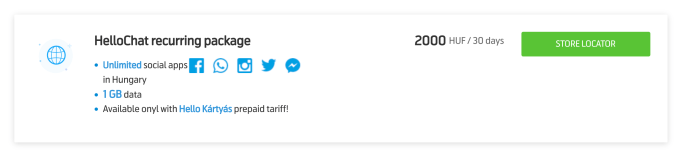
In another example from Hungary, one of carrier Telenor’s 1GB data tariffs (screengrabbed below) touts unlimited domestic data consumption for a number of social apps, including Facebook, WhatsApp, Messenger, Instagram and Twitter — meaning all other apps/services are at a disadvantage as usage is throttled by the user’s 1GB allowance.

A Budapest court hearing two actions against Telenor, related to two of its ‘zero rating’ packages, made a reference to the CJEU for a preliminary ruling on how to interpret and apply Article 3(1) and (2) of the regulation — which safeguards a number of rights for end users of Internet access services and prohibits service providers from putting in place agreements or commercial practices limiting the exercise of those rights — and Article 3(3), which lays down a general obligation of “equal and non-discriminatory treatment of traffic”.
The court found that ‘zero rating’ agreements that combine a ‘zero tariff’ with measures blocking or slowing down traffic linked to the use of ‘non-zero tariff’ services and applications are indeed liable to limit the exercise of end users’ rights within the meaning of the regulation and on a significant part of the market.
“Such packages are liable to increase the use of the favoured applications and services and, accordingly, to reduce the use of the other applications and services available, having regard to the measures by which the provider of the internet access services makes that use technically more difficult, if not impossible. Furthermore, the greater the number of customers concluding such agreements, the more likely it is that, given its scale, the cumulative effect of those agreements will result in a significant limitation of the exercise of end users’ rights, or even undermine the very essence of those rights,” the court writes in a press release.

It also found that no assessment of the effect of measures blocking or slowing down traffic on the exercise of end users’ rights is required by the regulation, while measures applied for commercial (rather than technical) reasons must be regarded as automatically incompatible.

The full CJEU judgement is available here in French and Hungarian. (Update: And in English here.)


Read Full Article