03 September 2020

Samsung’s got a new budget 5G handset and a fitness tracker with a two-week battery


Yesterday’s overflow Galaxy Unpacked event was about one thing and one thing alone: the Galaxy Z Fold 2. Honestly, it was a bit anticlimactic after its predecessor found Samsung unveiling five new devices. But the singular focus wasn’t for lack of new stuff to show off. In fact, the company just unleashed a whole slew of new products across a wide range of categories, including a gaming monitor, charging pad, refrigerator and washing machine.

There are two in particular I’d like to break out here, however: the new Galaxy Fit 2 band and A42 5G handset. The latter in particular is worth highlighting, given the company’s huge push into 5G this year. Samsung is betting big on pushing early and hard on the next-generation wireless tech.

Early this year, the company announced that it would be standardizing 5G across its flagship products. The company has also made a major push toward embracing the tech on its budget devices, including the A7 and now the A42. 5G hasn’t quite turned out to be the market correction the industry was banking on, due in no small part to a slowdown in sales from the pandemic. Certainly few banked on that. But while Apple has yet to announce a 5G iPhone (give it a month or two, mind), Samsung’s already loaded up.

And importantly, the A42 looks like it may be Samsung’s cheapest 5G offering (though we’re still waiting on exact pricing). Honestly, Samsung wasn’t particularly chatty about the device during an IFA-tied event. Though we do know there’s a quad-camera system and a 6.6-inch display. Honestly, one of the most remarkable things about 5G is how quickly affordable devices have hit the market, thanks in part to the efforts of component makers like Qualcomm.

Image Credits: Samsung

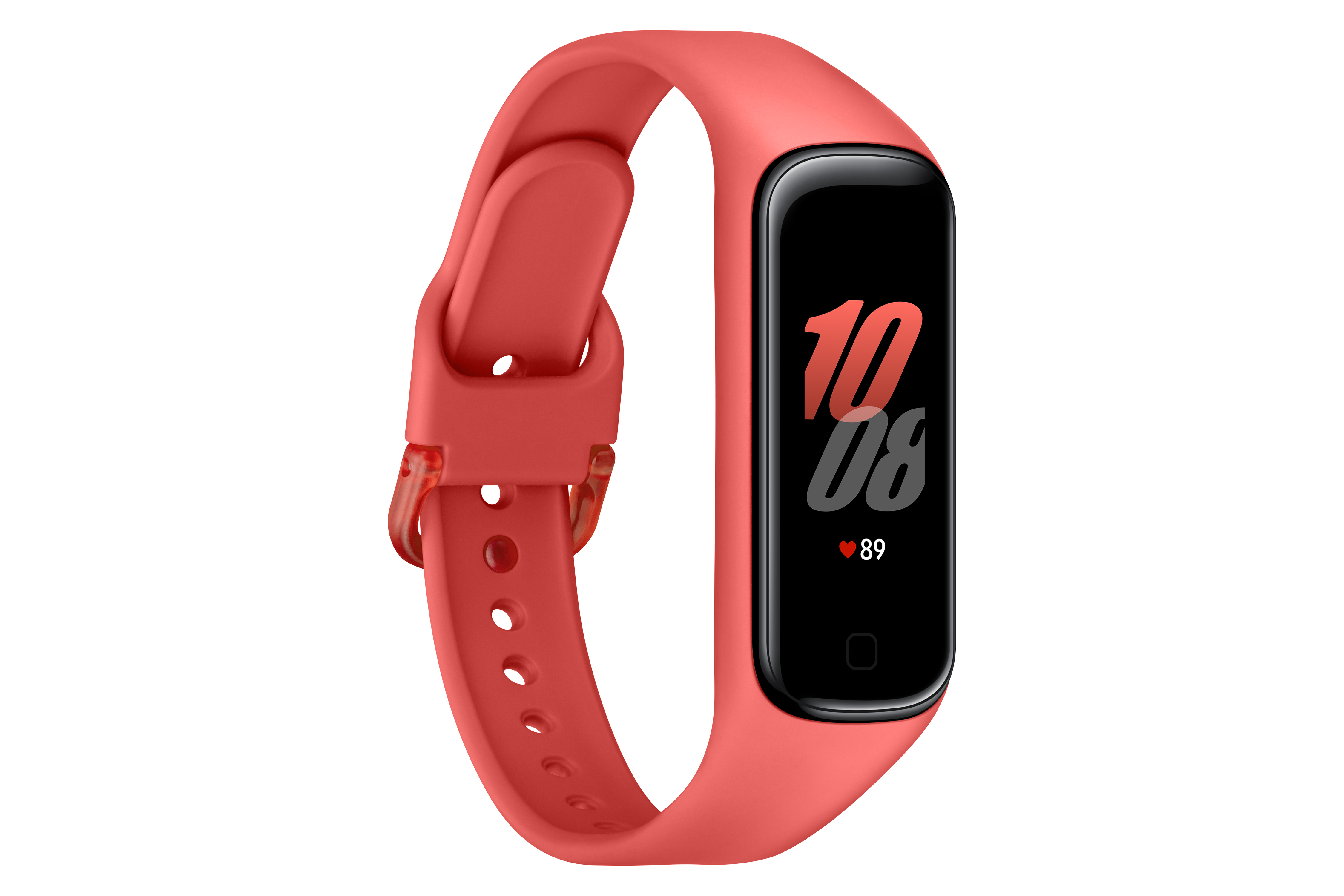
The Galaxy Fit 2 is notable mostly for the inclusion of a 15-day battery (per Samsung). It can autodetect five different kinds of workouts and monitors sleep. It’s nice to see Samsung still offering something up to the dwindling tracker market, even as its (and the world’s) focus has clearly shifted over to smartwatches.


Read Full Article

KeyPose: Estimating the 3D Pose of Transparent Objects from Stereo


Estimating the position and orientation of 3D objects is one of the core problems in computer vision applications that involve object-level perception, such as augmented reality and robotic manipulation. In these applications, it is important to know the 3D position of objects in the world, either to directly affect them, or to place simulated objects correctly around them. While there has been much research on this topic using machine learning (ML) techniques, especially Deep Nets, most have relied on the use of depth sensing devices, such as the Kinect, which give direct measurements of the distance to an object. For objects that are shiny or transparent, direct depth sensing does not work well. For example, the figure below includes a number of objects (left), two of which are transparent stars. A depth device does not find good depth values for the stars, and gives a very poor reconstruction of the actual 3D points (right).

Left: RGB image of transparent objects.  Right: A four-panel image showing the reconstructed depth for the scene on the left.The top row includes depth images and the bottom row presents the 3D point cloud. The left panels were reconstructed using a depth camera and the right panels are output from the ClearGrasp model.  Note that although ClearGrasp inpaints the depth of the stars, it mistakes the actual depth of the rightmost one.

One solution to this problem, such as that proposed by ClearGrasp, is to use a deep neural network to inpaint the corrupted depth map of the transparent objects. Given a single RGB-D image of transparent objects, ClearGrasp uses deep convolutional networks to infer surface normals, masks of transparent surfaces, and occlusion boundaries, which it uses to refine the initial depth estimates for all transparent surfaces in the scene (far right in the figure above). This approach is very promising, and allows scenes with transparent objects to be processed by pose-estimation methods that rely on depth.  But inpainting can be tricky, especially when trained completely with synthetic images, and can still result in errors in depth.

In “KeyPose: Multi-View 3D Labeling and Keypoint Estimation for Transparent Objects”, presented at CVPR 2020 in collaboration with the Stanford AI Lab, we describe an ML system that estimates the depth of transparent objects by directly predicting 3D keypoints. To train the system we gather a large real-world dataset of images of transparent objects in a semi-automated way, and efficiently label their pose using 3D keypoints selected by hand. We then train deep models (called KeyPose) to estimate the 3D keypoints end-to-end from monocular or stereo images, without explicitly computing depth. The models work on objects both seen and unseen during training, for both individual objects and categories of objects. While KeyPose can work with monocular images, the extra information available from stereo images allows it to improve its results by a factor of two over monocular image input, with typical errors from 5 mm to 10 mm, depending on the objects. It substantially improves over state-of-the-art in pose estimation for these objects, even when competing methods are provided with ground truth depth. We are releasing the dataset of keypoint-labeled transparent objects for use by the research community.

Real-World Transparent Object Dataset with 3D Keypoint Labels
To facilitate gathering large quantities of real-world images, we set up a robotic data-gathering system in which a robot arm moves through a trajectory while taking video with two devices, a stereo camera and the Kinect Azure depth camera.

Automated image sequence capture using a robot arm with a stereo camera and an Azure Kinect device.

The AprilTags on the target enable accurate tracing of the pose of the cameras. By hand-labelling only a few images in each video with 2D keypoints, we can extract 3D keypoints for all frames of the video using multi-view geometry, thus increasing the labelling efficiency by a factor of 100.

We captured imagery for 15 different transparent objects in five categories, using 10 different background textures and four different poses for each object, yielding a total of 600 video sequences comprising 48k stereo and depth images. We also captured the same images with an opaque version of the object, to provide accurate ground truth depth images. All the images are labelled with 3D keypoints. We are releasing this dataset of real-world images publicly, complementing the synthetic ClearGrasp dataset with which it shares similar objects.

KeyPose Algorithm Using Early Fusion Stereo
The idea of using stereo images directly for keypoint estimation was developed independently for this project; it has also appeared recently in the context of hand-tracking. The diagram below shows the basic idea: the two images from a stereo camera are cropped around the object and fed to the KeyPose network, which predicts a sparse set of 3D keypoints that represent the 3D pose of the object. The network is trained using supervision from the labelled 3D keypoints.

One of the key aspects of stereo KeyPose is the use of early fusion to intermix the stereo images, and allow the network to implicitly compute disparity, in contrast to late fusion, in which keypoints are predicted for each image separately, and then combined. As shown in the diagram below, the output of KeyPose is a 2D keypoint heatmap in the image plane along with a disparity (i.e., inverse depth) heatmap for each keypoint. The combination of these two heatmaps yields the 3D coordinate of the keypoint, for each keypoint.

Keypose system diagram. Stereo images are passed to a CNN model to produce a probability heatmap for each keypoint.  This heatmap yields 2D image coordinates U,V for the keypoint.  The CNN model also produces a disparity (inverse depth) heatmap for each keypoint, which when combined with the U,V coordinates, gives a 3D position (X,Y,Z).

When compared to late fusion or to monocular input, early fusion stereo typically is twice as accurate.

Results
The images below show qualitative results of KeyPose on individual objects. On the left is one of the original stereo images; in the middle are the predicted 3D keypoints projected onto the image. On the right, we visualize points from a 3D model of the bottle, placed at the pose determined by the predicted 3D keypoints. The network is efficient and accurate, predicting keypoints with an MAE of 5.2 mm for the bottle and 10.1 mm for the mug using just 5 ms on a standard GPU.

The following table shows results for KeyPose on category-level estimation. The test set used a background texture not seen by the training set. Note that the MAE varies from 5.8 mm to 9.9 mm, showing the accuracy of the method.

Quantitative comparison of KeyPose with the state-of-the-art DenseFusion system, on category-level data. We provide DenseFusion with two versions of depth, one from the transparent objects, and one from opaque objects. <2cm is the percent of estimates with errors less than 2 cm. MAE is the mean absolute error of the keypoints, in mm.

For a complete accounting of quantitative results, as well as, ablation studies, please see the paper and supplementary materials and the KeyPose website.

Conclusion
This work shows that it is possible to accurately estimate the 3D pose of transparent objects from RGB images without reliance on depth images. It validates the use of stereo images as input to an early fusion deep net, where the network is trained to extract sparse 3D keypoints directly from the stereo pair. We hope the availability of an extensive, labelled dataset of transparent objects will help to advance the field. Finally, while we used semi-automatic methods to efficiently label the dataset, we hope to employ self-supervision methods in future work to do away with manual labelling.

Acknowledgements
I want to thank my co-authors, Xingyu Liu of Stanford University, and Rico Jonschkowski and Anelia Angelova; as well the many who helped us through discussions during the project and paper writing, including Andy Zheng, Shuran Song, Vincent Vanhoucke, Pete Florence, and Jonathan Tompson.


Snapchat had a big August amid TikTok uncertainty


The continual uncertainty around TikTok’s future may have provided a big boost to Snapchat in August. Or maybe it was just the Disney eyes filter that went viral. In any event, preliminary estimates from app store intelligence firm Sensor Tower indicate that Snapchat’s mobile app across both iOS and Android saw approximately 28.5 million new installs last month — its single largest month for first-time downloads since May 2019, when it had then seen 41.2 million new installs.

May 2019, however, was an outlier in Snapchat’s history. The only other month, besides May 2019, where Snapchat had seen more monthly downloads than it did in August was December 2016, Sensor Tower data indicates.

Based on the firm’s findings, Snapchat downloads were up 29% year-over-year in August 2020 compared with 9% growth in July.

It’s unclear what combination of trends or changes may have shaped Snapchat’s download data over the past month.

But one significant area of interest in the social apps space has been the ongoing news around a possible TikTok ban in the U.S. News coverage of the ban already had a notable impact on the app stores’ top charts in recent weeks. Earlier in August, a number of direct TikTok competitors — including Likee, Byte, Dubsmash, Triller and others — saw sizable increases in weekly active users in the U.S. But none have grown to the point where they’re an obvious shoo-in to take TikTok’s place if the Chinese-owned video app is banned from the U.S., per Trump’s executive order.

It’s been more difficult, however, to pinpoint how larger TikTok competitors — like Snapchat and Instagram –were impacted by the news of a TikTok ban. These broader social apps tend to continually grow on a month-over-month basis and they regularly add new features which could impact downloads and usage. For example, Instagram in recent weeks has been expanding features around live streaming, shopping and debuted its own TikTok alternative, Reels.

Though not a direct TikTok rival, Snapchat has also been working to attract the same young demographic that now favors the short-form video app.

This month, Snapchat announced its plans to launch a new music-powered feature that would appeal to TikTok users. The feature, due to arrive this fall, will allow users to set their Snaps to music, similar to TikTok. Snap also confirmed it has deals in place with top music industry partners, including Warner Music Group, Warner Chappell, Universal Music Publishing Group, NMPA publisher members, Merlin and others, who have licensed their content for use in the Snapchat app.

Image Credits: App Store, screenshot by TechCrunch

In addition, Snapchat in late July turned on a new feature called “Minis,” which are basically lightweight, simplified versions of apps that live within Snapchat’s chat section. The apps, built using HTML, allow users to engage with a range of tasks — like buying tickets, meditating with Headspace, collaborating with friends, and more — without having to leave the app.

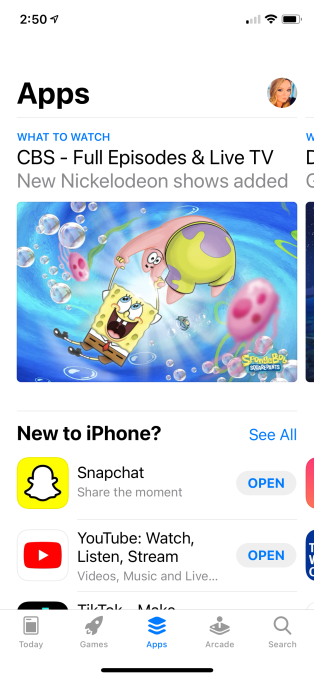
Snapchat has been benefitting, too, from a prominent position on the App Store. Apple currently has it featured in an editorially curated list of app suggestions called “New to iPhone?” which is on the App Store’s “App” homepage. The collection, which you don’t even have to scroll down to find, recommends apps that first-time iPhone users will want to download.

Other bumps in downloads could be attributed to increased marketing spend, as is common among larger app publishers. Snapchat, however, isn’t commenting on what, specifically, may have changed in August.

And maybe it was just those 66.4 million TikTok videos tagged #disneyfilter that gave Snapchat a bump this past month!

Sensor Tower’s new Snapchat data is considered preliminary because it’s only been finalized through August 26th. When the remaining days of August are also finalized, there may be some changes to the resulting numbers. But those changes will likely be minor, at best.

These figures were also initially reported by one of Sensor Tower’s financial services customers in an analyst note. They were not publicized by Sensor Tower’s data reporting team. But the company confirmed the data’s accuracy with TechCrunch.

Snapchat, as of its Q2 earnings in July, reported its daily active users had grown to 238 million, up nearly 4% from the 229 million the company reported in April. The company won’t comment on the new download data.


Read Full Article

Deep Science: Dog detectors, Mars mappers and AI-scrambling sweaters


Research papers come out at far too rapid a rate for anyone to read them all, especially in the field of machine learning, which now affects (and produces papers in) practically every industry and company. This column aims to collect the most relevant recent discoveries and papers, particularly in but not limited to artificial intelligence, and explain why they matter.

This week in Deep Science spans the stars all the way down to human anatomy, with research concerning exoplanets and Mars exploration, as well as understanding the subtlest habits and most hidden parts of the body.

Let’s proceed in order of distance from Earth. First is the confirmation of 50 new exoplanets by researchers at the University of Warwick. It’s important to distinguish this process from discovering exoplanets among the huge volumes of data collected by various satellites. These planets were flagged as candidates but no one has had the chance to say whether the data is conclusive. The team built on previous work that ranked planet candidates from least to most likely, creating a machine learning agent that could make precise statistical assessments and say with conviction, here is a planet.

“A prime example when the additional computational complexity of probabilistic methods pays off significantly,” said the university’s Theo Damoulas. It’s an excellent example of a field where marquee announcements, like the Google-powered discovery of Kepler-90 i, represent only the earliest results rather than a final destination, emphasizing the need for further study.

In our own solar system, we are getting to know our neighbor Mars quite well, though even the Perseverance rover, currently hurtling through the void in the direction of the red planet, is like its predecessors a very resource-limited platform. With a small power budget and years-old radiation-hardened CPUs, there’s only so much in the way of image analysis and other AI-type work it can do locally. But scientists are preparing for when a new generation of more powerful, efficient chips makes it to Mars.


Read Full Article

Deep Science: Dog detectors, Mars mappers and AI-scrambling sweaters


Research papers come out at far too rapid a rate for anyone to read them all, especially in the field of machine learning, which now affects (and produces papers in) practically every industry and company. This column aims to collect the most relevant recent discoveries and papers, particularly in but not limited to artificial intelligence, and explain why they matter.

This week in Deep Science spans the stars all the way down to human anatomy, with research concerning exoplanets and Mars exploration, as well as understanding the subtlest habits and most hidden parts of the body.

Let’s proceed in order of distance from Earth. First is the confirmation of 50 new exoplanets by researchers at the University of Warwick. It’s important to distinguish this process from discovering exoplanets among the huge volumes of data collected by various satellites. These planets were flagged as candidates but no one has had the chance to say whether the data is conclusive. The team built on previous work that ranked planet candidates from least to most likely, creating a machine learning agent that could make precise statistical assessments and say with conviction, here is a planet.

“A prime example when the additional computational complexity of probabilistic methods pays off significantly,” said the university’s Theo Damoulas. It’s an excellent example of a field where marquee announcements, like the Google-powered discovery of Kepler-90 i, represent only the earliest results rather than a final destination, emphasizing the need for further study.

In our own solar system, we are getting to know our neighbor Mars quite well, though even the Perseverance rover, currently hurtling through the void in the direction of the red planet, is like its predecessors a very resource-limited platform. With a small power budget and years-old radiation-hardened CPUs, there’s only so much in the way of image analysis and other AI-type work it can do locally. But scientists are preparing for when a new generation of more powerful, efficient chips makes it to Mars.


Read Full Article

02 September 2020

FB Messenger chief Stan Chudnovsky is coming to Disrupt


Stan Chudnovsky last spoke at Disrupt in 2016, so we’ve got a lot to catch up on.

Chudnovsky remains in charge of Facebook Messenger — his current title is VP of Messenger — so he can tell us more about how the product has evolved at this year’s Disrupt 2020 on September 14-18.

One of the biggest changes has been the launch of Messenger Rooms, a service that allows you to start and join video calls from within Facebook or Messenger (and eventually other Facebook products). The product’s appeal is pretty easy to see in a time of social distancing, but Facebook still has a long way to go if it wants to challenge Zoom.

Meanwhile, we’ve also seen increasing scrutiny about the role that messaging apps can play in spreading hate speech and misinformation. Among Facebook’s apps, WhatsApp has struggled the most visibly with these issues, but Messenger has also been adding tools to help people share accurate information about the COVID-19 pandemic.

On top of all that, we can get general updates on how FB Messenger has been doing during the pandemic, and what the big priorities are moving forward. Chudnovsky might also have some thoughts to share on the messaging landscape, and on the startup world — after all, before joining Facebook, he co-founded startups including Jiff, NFX, Ooga Labs and Wonderhill.

Learn more about the future of messaging at our all-virtual Disrupt 2020, which runs from September 14-18. Get your front row seat to see this panel live with a Disrupt Digital Pro Pass or a Digital Startup Alley Exhibitor Package. We’re excited to see you there.


Read Full Article

FB Messenger chief Stan Chudnovsky is coming to Disrupt


Stan Chudnovsky last spoke at Disrupt in 2016, so we’ve got a lot to catch up on.

Chudnovsky remains in charge of Facebook Messenger — his current title is VP of Messenger — so he can tell us more about how the product has evolved at this year’s Disrupt 2020 on September 14-18.

One of the biggest changes has been the launch of Messenger Rooms, a service that allows you to start and join video calls from within Facebook or Messenger (and eventually other Facebook products). The product’s appeal is pretty easy to see in a time of social distancing, but Facebook still has a long way to go if it wants to challenge Zoom.

Meanwhile, we’ve also seen increasing scrutiny about the role that messaging apps can play in spreading hate speech and misinformation. Among Facebook’s apps, WhatsApp has struggled the most visibly with these issues, but Messenger has also been adding tools to help people share accurate information about the COVID-19 pandemic.

On top of all that, we can get general updates on how FB Messenger has been doing during the pandemic, and what the big priorities are moving forward. Chudnovsky might also have some thoughts to share on the messaging landscape, and on the startup world — after all, before joining Facebook, he co-founded startups including Jiff, NFX, Ooga Labs and Wonderhill.

Learn more about the future of messaging at our all-virtual Disrupt 2020, which runs from September 14-18. Get your front row seat to see this panel live with a Disrupt Digital Pro Pass or a Digital Startup Alley Exhibitor Package. We’re excited to see you there.


Read Full Article

Dignity isn't a privilege. It's a worker's right | Abigail Disney

Dignity isn't a privilege. It's a worker's right | Abigail Disney

What's the purpose of a company? In this bold talk, activist and filmmaker Abigail Disney imagines a world where companies have a moral obligation to place their workers above shareholders, calling on Disney (and all corporations) to offer respect, dignity and a living wage to everyone who works for them.

https://ift.tt/32Sj2i6

Click this link to view the TED Talk

Peer Medical allows lung cancer patients to anonymously share treatments with each other


Peer Medical has a big mission. After his father died of lung cancer, serial entrepreneur Ed Spiegel vowed to create a better way for lung cancer patients to deal with their disease. The startup has so far raised a $1.2M seed funding round for its ground-breaking approach and is onboarding patients at a rate of knots.

Peer Medical allows lung cancer patients to anonymously share their treatments with each other. This helps survivors find others like them and see which treatments and procedures work best. Users can search by biomarker, stage, age, or gender and review verified treatments and journeys of similar patients.

The funding round was led by Amsterdam-based ‘Partners in Equity’ (PiE), best known for investing seed capital into Adyen the Dutch payments unicorn; and London’s Seedcamp, alongside Angel investors. Peer Medical is now able to sign up patients’ electronic health records inside a minute. Its advisers include Dr. David Jablons, Head of Thoracic Oncology at UCSF, and Dr. Geoffrey Ginsburg, Head of Applied Genomics and Precision Medicine at Duke University.

Spiegel’s RentMineOnline was one of the first-ever ‘share economy’ startups to appear 10 years ago, and also Seedcamp’s first investment, and its first exit.

Indeed, the idea for Peer Medical came to Spiegel 10 years ago as the sole care-giver during his father’s three-year battle with lung cancer.

Spiegal told me he came up with the idea after meeting a buddy of his from his college who had also seen his father pass away from lung cancer. Comparing notes, Spiegal realized he could have had so much more information if they’ve been able to share treatment information.

“It’s like: ‘God I wish I would have known that back then!’. It’s just such a terrible experience. Unfortunately for me, I lived the experience, but I could have really used a sort of ‘electronic caregiver’ essentially to help my Dad through it.”

Participating in online forums, Spiegel found patients willing to help but realized the need for a centralized, searchable database that contained the knowledge these people possessed. There were over 1.7 million new cancer cases diagnosed in the US last year alone. The information for the patients is often disorganized, incomplete, or out of date. Medical record portability is growing in adoption and will be crucial in aiding treatments.

“It’s a little like you as a driver using Waze to crowdsource information from other drivers to get to the perfect route because you’re learning from all the other people,” commented Spiegal. “The future is certainly electronic health records, although it’s still kind of like using a credit card in 1999 online, it’s coming in a big way. You will have your records, and wonder ‘who else is just like me?’”

There are already big players making it happen such as Apple Health, and online hospital portal growth driven by companies like Epic and Cerner.

Peer Medical doesn’t really have ‘competitors’ in the traditional sense, other than Facebook support groups for patients, which are not anonymous and chaotic, and Google searches. PatientsLikeMe, founded in the early 2000s, doesn’t leverage the medical records aspect and sold in 2019 to United Health Care for 2017 after raising $100M.

Commenting, Reshma Sohoni, co-founder of Seedcamp said: “Ed was a part of Seedcamp’s first cohort of companies and returned our first successful exit. We’re thrilled to back Ed and his team for a second time and bring what we hope will be another successful venture to our portfolio. Unfortunately, I’ve also lost a parent to cancer and can relate to how important a tool like this can be to navigate such difficult times. We really like that the patient retains anonymity but is still able to learn from others.”

Carlos Eduardo Espinal, Seedcamp Managing Partner added: “At Seedcamp, this is exactly the type of community that we like to invest in. People, in this case, patients and caregivers, bound together by a common goal to fight cancer. We’re thrilled to help Ed and the Peer Medical team build this community that pools verified and anonymized medical records and uses them to optimize individual treatment paths.”

RentMineOnline, which did referrals for apartments on Facebook, was successfully sold to a publicly-traded property management software firm, Real Page (NASDAQ: RP).


Read Full Article

Google’s personalized audio news feature, Your News Update, comes to Google Podcasts


Last year, Google launched a personalized playlist of audio news called “Your News Update” for Google Assistant. The feature leverages machine learning techniques to understand the news content and how it relates to the listener’s own likes and interests. Today, the company says it’s publishing this personalized audio experience on Google Podcasts, allowing it to reach millions of podcast listeners in the U.S.

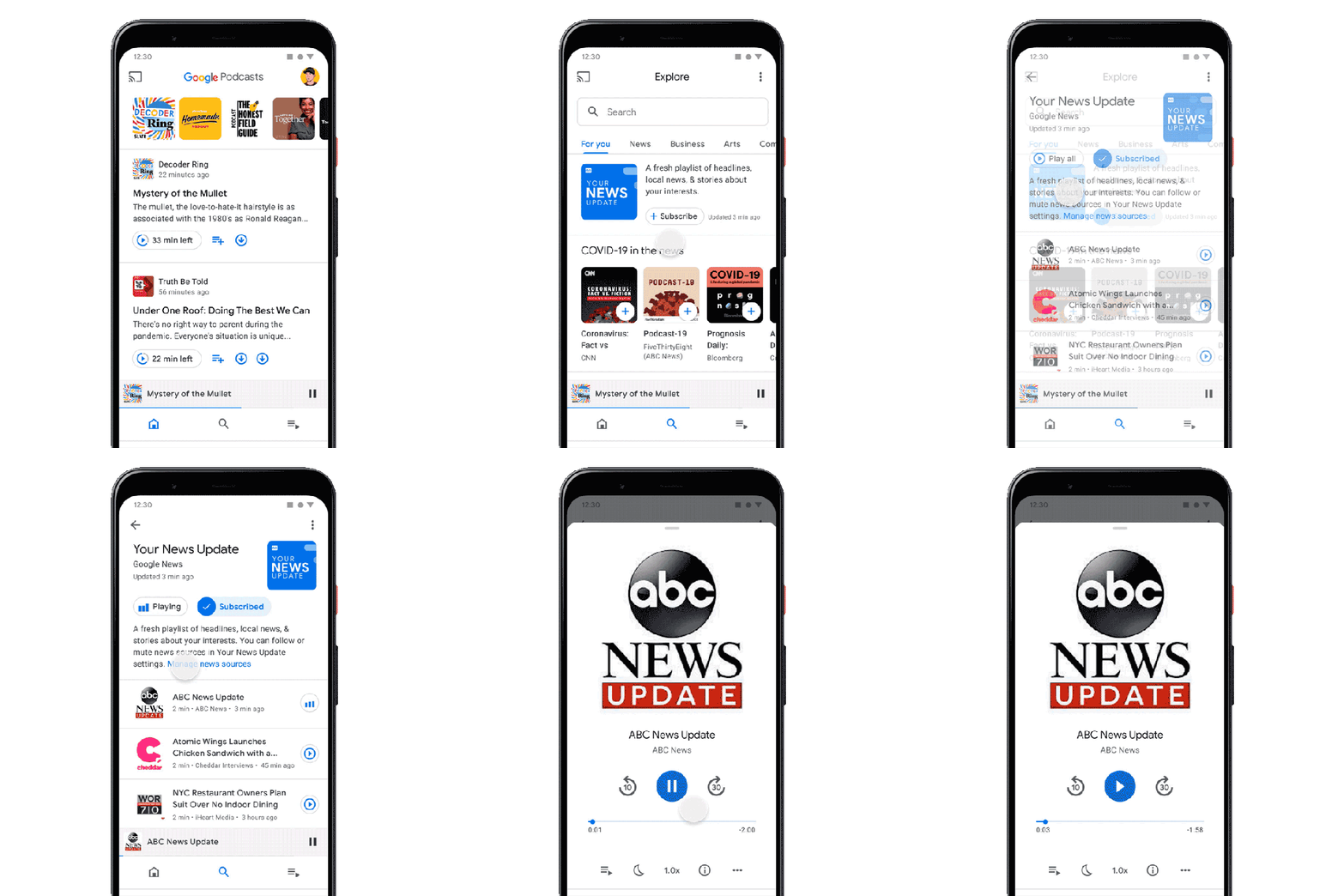
To subscribe to Your News Update, users will launch the Google Podcasts app, navigate to the Explore tab, then subscribe to listen a mix of stories that will reflect their interests, location, user history, and other preferences.

Image Credits:

Your News Update was designed to be a smarter alternative to Alexa’s popular Flash Briefing. Today, Alexa users can customize their own Flash Briefing by adding additional sources and other content from any of the over 10,000 now Flash Briefing skills. However, this takes work on the end user’s part.

Google’s Your News Update instead relies on algorithms to do the heavy lifting, based on Google’s understanding of your interests.

This personalization takes into account data you’ve explicitly provided Google — like the topics, sources, and locations you’ve said you’re interested in following. In addition, it allows Google to use the data the company has gleaned from your use of other Google products to further personalize the news to your own interests, unless you’ve gone to your account settings page to turn personalization off.

Via a link in Google Assistant underneath the Your News Update feature, Google directs you to a website where it further explains how its news algorithms work. Here, Google explains the news algorithms don’t “try” to personalize results based on your political beliefs or other demographic factors.

However, Google will know and learn from activity like if you follow or hide specific publishers on Google News or Discover, if you follow particular topics, or if you directed Google to show you similar articles more or less frequently.

In other words, Google combines the wealth of information it knows about you with its knowledge of other efforts you’ve made to customize your news to your liking in order to craft Your News Update.

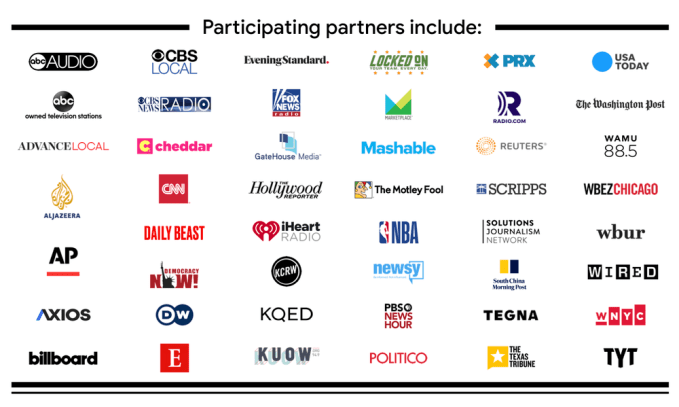
In some cases, this can be useful. You can get updates on your favorite sports team or your hometown news, for instance. There may not be a stated intention of directing someone towards left or right leaning sources, but it could certainly end up that way based on how this personalization technology works and Google’s publisher lineup — which includes both left of center and right of center sources.

Image Credits: Google

In addition, Google said at launch that the personalization will get better the more you use the feature on Google Assistant, as it will learn from how you engage with the product.

Alongside the podcast update, Google is also making it easier to listen to local stories via Google Assistant. Users can say, “Hey Google, play local news” or “Hey Google, play news about [your city],” to hear a mix of native audio and text-to-speech local news stories. How you engage with this product can inform the choices made by Your News Update, as well.


Read Full Article

A Guide For Purchasing Wood Stains


Wood stains comprise of a mixture of pigmentation or dyes and a solvent. The types of solutions range from water, alcohol, petroleum, polyurethane, or varnish. The color and pigment dissolve in varying rates in these mediums hence the need for mixing before application. Upon application, dyes get absorbed on the wood while the pigment remains […]

The post A Guide For Purchasing Wood Stains appeared first on ALL TECH BUZZ.


How to Create Photorealistic 3D Render of a Robot


What does 3D rendering entail? 3D rendering is the process of creating photorealistic images from a 3D model using computer programs. Rendering is an essential technique widely used in video games, commercials, film, and television. The film and advertising industry nowadays use different tools to influence the viewer, such as special effects. Visual effects are […]

The post How to Create Photorealistic 3D Render of a Robot appeared first on ALL TECH BUZZ.


How to Deposit Money on a Betting Site Using an Astropay Card


The Indian Premier League that’s commonly referred to as IPL has attracted a significant number of fans since its inauguration in 2008. Running between March and May every year, it attracts up to 400 million Indians who watch the matches on their televisions. For gamblers, the IPL provides an opportunity to make extra money. However, […]

The post How to Deposit Money on a Betting Site Using an Astropay Card appeared first on ALL TECH BUZZ.


3 Ways To Disable The CapsLock Key In Windows 10


CLICK HERE TO SEE FULL POST

Do you often activate the CapsLock key on your keyboard accidentally? Want to completely disable the CapsLock key on your Windows 10 PC? Here are three ways to disable the CapsLock key in Windows 10. Before we tell you how to disable the CapsLock key, it is important to note that Windows 10 does not […]

The post 3 Ways To Disable The CapsLock Key In Windows 10 appeared first on Into Windows. Content from IntoWindows website.


Daily Crunch: Apple launches ‘Exposure Notification Express’ for COVID-19


Apple and Google are adding support for app-less exposure notifications, Facebook says it might block news sharing in Australia and Samsung has a new foldable phone. This is your Daily Crunch for September 1, 2020.

The big story: Apple launches ‘Exposure Notification Express’ for COVID-19

Apple and Google are introducing new tools that should make it easier for public health authorities (PHAs) to implement notifications for people who may have been exposed to COVID-19.

We’ve written before about the two companies’ efforts to create technology that supports contact-tracing efforts, but with the latest update (available today in iOS 13.7 and coming later this month in Android), users no longer need to download an app. Instead, the local PHA can send a notification about exposure notification and what it does, then the user can choose whether or not to opt-in.

Apple and Google said that 20 countries have already built apps based on their API, along with six U.S. states.

The tech giants

Facebook threatens to block news sharing in Australia as it lobbies against revenue share law — The threat is Facebook’s attempt to lobby against a government plan that will require it and Google to share revenue with regional news media.

Samsung’s new Galaxy Fold arrives September 18 for $2,000 — Brian Heater runs down Samsung’s latest foldable phone.

Netflix is making a series based on ‘The Three-Body Problem’ — The show will be executive produced and written by “Game of Thrones” showrunners David Benioff and D.B. Weiss.

Startups, funding and venture capital

Bambuser raises $45 million after shifting focus to live video shopping — Bambuser’s history goes back more than a decade, but it moved into live video shopping last year.

Sarcos raises $40 million to bring its Guardian XO exoskeleton to market — Sarcos’ technology is designed to augment an existing human workforce.

InfoSum raises $15.1 million for its privacy-first, federated approach to big data analytics — The startup has built a way for organizations to share their data with each other in a more secure and decentralized way.

Advice and analysis from Extra Crunch

Jeff Lawson on API startups, picking a market and getting dissed by VCs — The Twilio CEO told us, “The world is getting broken down into APIs.”

Your first sales hire should be a missionary, not a mercenary — Next47’s Micah Smurthwaite discusses the importance of your first sales hire.

Zoom’s Q2 report details some of the most extraordinary growth I’ve ever seen — The “I” in question is Alex Wilhelm, who delivers his daily dive into startups and markets.

(Reminder: Extra Crunch is our subscription membership program, which aims to democratize information about startups. You can sign up here.)

Everything else

Movies Anywhere officially launches its digital movie-lending feature, ‘Screen Pass’ — Screen Pass allows you to lend out one of your purchased movies to a friend or family member.

Oral-B’s iO smart toothbrush is a big upgrade in just about every way — It’s easy to make fun of the idea of a smart toothbrush, but Darrell Etherington makes it sound like this one is actually good.

Watch these 6 startups compete in Pitchers & Pitches tomorrow — It’s a rapid-fire pitch competition with a hefty side of advice.

The Daily Crunch is TechCrunch’s roundup of our biggest and most important stories. If you’d like to get this delivered to your inbox every day at around 3pm Pacific, you can subscribe here.


Read Full Article

Dell’s U3219Q 32-inch 4K monitor provides a perfect home office upgrade


Dell has long held high esteem for the quality of its displays, and that hasn’t changed with its more recent models. What has changed is that more and more, people are looking for external monitors to complement their work laptops as they shift to more remote work – and settle in for more permanent home office configuration options. Dell’s 32-inch, 4K resolution UltraSharp U3219Q monitor is perhaps the best blend of quality, screen real estate, and connection flexibility you can get, provided your budget is in the mid- to high range.

The basics

The U3219Q has a 31.5-inch diagonal screen, with an IPS display and a matte finish that’s excellent for avoiding glare. Its max resolution is 3840 x 2160, with a 16:9 aspect ratio, and it can run at up to 60Hz refresh rate. It’s a very large display, but it feels a lot less large than it is, in part because of the extremely thin eels that surround the screen, and a relatively shallow depth. The display weighs just 12.8 lbs, which is extremely light when you consider just how much screen space it provides.

It comes with a stand that allows it to be adjusted across a range of around six inches up or down, and it’s able to be tilted up to 21 degrees, or swiveled 30 degrees in either direction. You can also rotate it from landscape to portrait, which is a handy feature for coding or document review, and it’ll still clear your desk with the integrated stand. The stand is also easy to remove, and it includes a standard 200×200 VESA mounting point for attaching it to monitor arms and wall mounts.
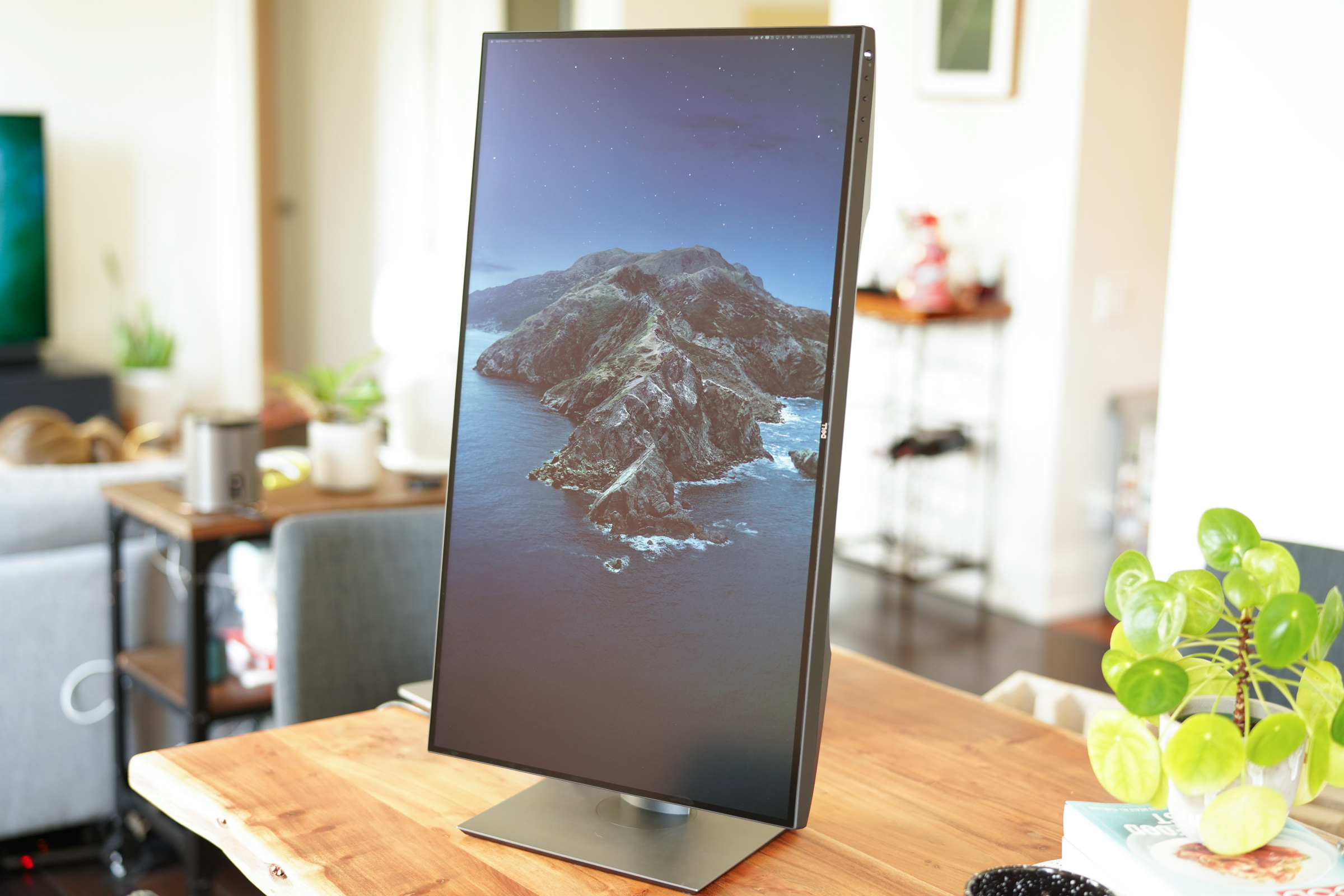
Image Credits: Darrell Etherington

For display connections, the U3219Q has 1 DisplayPort 1.4 and 1 HDMI 2.0 (both of which support HDCP 2.2 for playing back copyright protected content). There’s also a USB Type-C port which can provide DisplayPort 1.4 connectivity, as well as Power Delivery and USB 2.0 data connectivity, with a DP cable and a C-to-C cable included in the box. The monitor also features a USB 3.0 cable and port for connecting it to your computer to act as a hub, providing 2 USB 3.0 ports for accessories, as well as 2 USB 3.0 ports at the side of the display, and two of those also include charging power. While there are no built-in speakers, there is a 3.5mm audio output port for connecting headphones or an external speaker.

Dell touts the accuracy and quality of the panel, which boasts support for DisplayHDR content playback, and a factory color calibration that means it’s set to deliver 99% sRGB color accuracy out of the box, as well as 95% DCI-P3 and 99% Rec. 709 color for video. The display also features 400 nits of brightness, and 1.07 billion color depth along with impressive contrast. In short, it’s more than capable of handling even demanding video and photo editing tasks.

Design and performance

The Dell U3219Q lives up to its promises in terms of video and image quality. Out of the box, it looked fantastic when plugged into both a MacBook and a Mac mini, delivering excellent color rendering, contrast, brightness and blacks without any tuning. This is definitely a screen that has brightness to spare, useful if you’re working in a bright room with lots of natural sunlight, or if you need to crank up the brightness for specific tasks when editing photos or videos.

While the image quality is definitely a big advantage if you’re any kind of multimedia pro, that’s not the limit of who this screen should appeal to. The large size, and relatively small footprint, along with that 4K resolution, mean you can tune it to provide you with ample screen real estate depending on what resolution you choose. It’s easily able to handle multiple browser windows and applications arrayed next to one another in a variety of configurations, all while keeping text reasonable sized so that you don’t have to strain to read anything like you would running the same resolution on a smaller, but still 4K, screen.
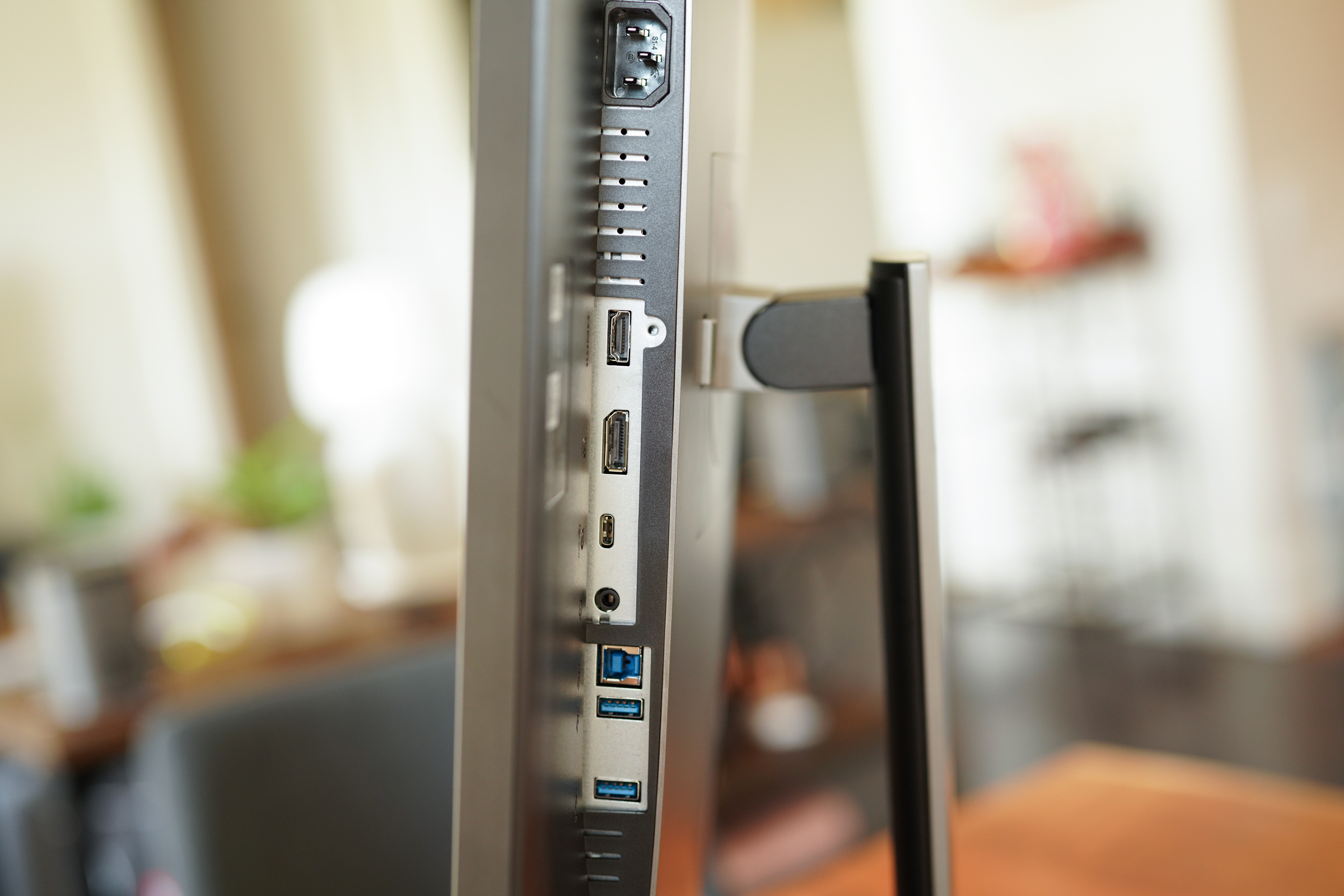
Image Credits: Darrell Etherington

60Hz means that you’ve got a plenty fast enough display for smooth desktop computing and editing even 60fps video, but it’s not quite up to the high-speed standards that gamers are looking for today. Unless you’re very resinous about that, however, it’s a perfectly fine refresh rate for just about every other use.

Dell adding single cable USB-C connectivity makes it an ideal companion for modern Mac notebooks, allowing you to move from your couch to the desk with ease. Three total inputs across HDMI/USB-C and DisplayPort also mean you can have it connected to multiple devices at once, which can come in handy for some desktop console gaming breaks during your lunch break.

Video also looks fantastic on this display, either for editing or just for watching Netflix. And at 32-inches, it’s plenty capable of doing double duty in a home office/guest room where you want to also have a TV, but don’t want to invest in a second device. You would have to figure out an audio solution in that case, but Dell makes a monitor soundbar that you can add for $69 which mounts to the screen’s stand.

Bottom line
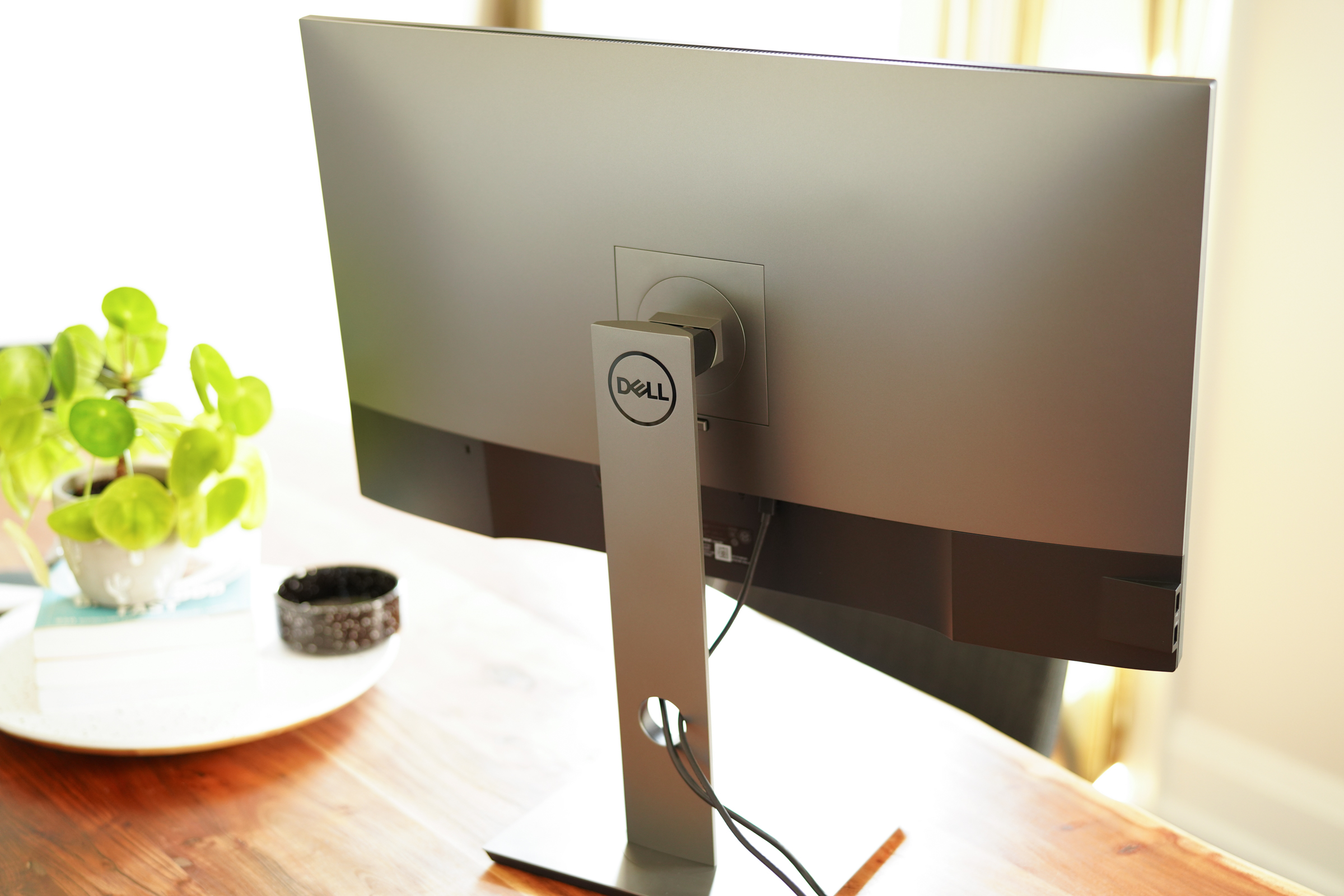
Image Credits: Darrell Etherington

Office upgrades are almost a must depending on where you work, and what their evolving policy is on work-from-home vs. cautious office re-opening. The Dell U3219Q is normally $1,049, but on sale at $839.99 via Dell direct right now, which is a lot to spend on a screen – but it’s also a device you use every day, and one that you want to provide the most bang for your buck and potential longevity. I actually currently use two Dell P2715Q monitors with my work setup, and both of these early generation 4K monitors are still going strong half-a-decade after I initially bought and began using them.

Dell’s also just launched a 32-inch curved 4K monitor (S3221QS) and a 27-inch 4K (S2721QS) that pack many similarly features but at lower price points depending on your budget. The company’s reputation for high-quality displays is well-earned regardless, however, and will serve any home office well, now and into the future.


Read Full Article
Google’s AI-powered flood alerts now cover all of India and parts of Bangladesh


India, the world’s second most populated nation, sees more than 20% of the global flood-related fatalities each year as overrun riverbanks sweep tens of thousands of homes with them. Two years ago, Google volunteered to help.

In 2018, the company began its flood forecasting pilot initiative in Patna — the capital of the Indian state of Bihar, which has historically been the most flood-prone region in the nation with over 100 fatalities each year — to provide accurate real-time flood forecasting information to people in the region.

The company’s AI model analyzes historical flood data gleaned from several river basins in different parts of the world to make accurate prediction for any river basin.

For this project, Google has not worked in isolation. Instead, it has collaborated with India’s Central Water Commission, Israel Institute of Technology, and Bar-Ilan University. It also works with the Indian government to improve how New Delhi collects data on water levels. They have installed new, electronic sensors that automatically transmit data to water authorities.

Thrilled by the initial results, two years later, Google’s Flood Forecasting Initiative now covers all of India, Google announced on Tuesday.

The company also said it has partnered with the Water Development Board of Bangladesh, which sees more floods than any other country in the world, to expand its initiative to parts of India’s neighboring nation. This is the first time Google is bringing Flood Forecasting Initiative outside of India.

Alerts for flood forecasting

Part of the job is to deliver this potentially life-changing information to people. In India, the company said it has sent out more tthan 30 million notifications to date in flood-affected areas. It says its initiative can help better protect more than 200 million people across more than 250,000 square kilometers (96,525 square miles). In Bangladesh, Google’s model is able to cover more than 40 million people and the company is working to extend this to the whole nation.

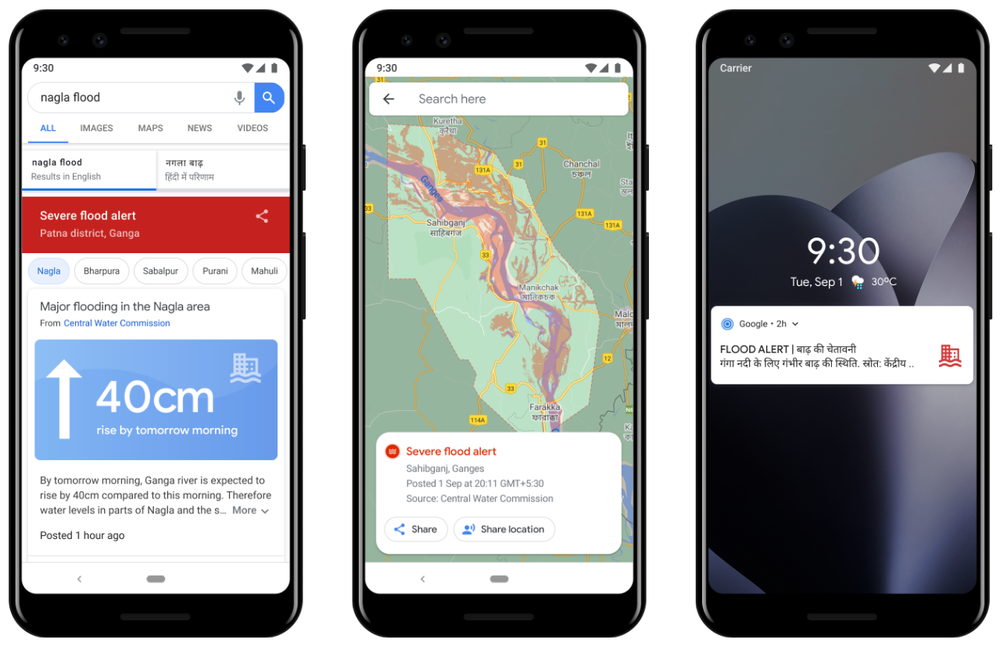
“We’re providing people with information about flood depth: when and how much flood waters are likely to rise. And in areas where we can produce depth maps throughout the floodplain, we’re sharing information about depth in the user’s village or area,” wrote Yossi Matias, VP of Engineering and Crisis Response Lead at Google.

Along the way, the company said it worked with Yale and found that there was room for more improvement.

This year, Google said it overhauled the way its alerts look and function to make it more accessible to people. It also added support for Hindi, Bengali, and seven other locaal languages, and further customized the messaging in the alerts. It has also rolled out a new forecasting model that doubles the warning time of many of its alerts.

Moving forward, the company said its charitable arm Google.org has started a collaboration with the International Federation of Red Cross and Red Crescent Societies to build local networks and deliver alerts to people who otherwise wouldn’t receive smartphone alerts directly.

“There’s much more work ahead to strengthen the systems that so many vulnerable people rely on—and expand them to reach more people in flood-affected areas. Along with our partners around the world, we will continue developing, maintaining and improving technologies and digital tools to help protect communities and save lives,” wrote Matias.


Read Full Article

Google Cloud lets businesses create their own text-to-speech voices


Google launched a few updates to its Contact Center AI product today, but the most interesting one is probably the beta of its new Custom Voice service, which will let brands create their own text-to-speech voices to best represent their own brands.

Maybe your company has a well-known spokesperson for example, but it would be pretty arduous to have them record every sentence in an automated response system or bring them back to the studio whenever you launch a new product or procedure. With Custom Voice, businesses can bring in their voice talent to the studio and have them record a script provided by Google. The company will then take those recordings and train its speech models based on them.

As of now, this seems to be a somewhat manual task on Google’s side. Training and evaluating the model will take “several weeks,” the company says and Google itself will conduct its own tests of the trained model before sending it back to the business that commissioned the model. After that, the business must follow Google’s own testing process to evaluate the results and sign off on it.

For now, these custom voices are still in beta and only American English is supported so far.

It’s also worth noting that Google’s review process is meant to ensure that the result is aligned with its internal AI Principles, which it released back in 2018.

Like with similar projects, I would expect that this lengthy process of creating custom voices for these contact center solutions will become mainstream quickly. While it will just be a gimmick for some brands (remember those custom voices for stand-alone GPS systems back in the day?), it will allow the more forward-thinking brands to distinguish their own contact center experiences from those of the competition. Nobody likes calling customer support, but a more thoughtful experience that doesn’t make you think you’re talking to a random phone tree may just help alleviate some of the stress at least.


Read Full Article

01 September 2020

Apple launches COVID-19 ‘Exposure Notification Express’ with iOS 13.7 – Android to follow later this month


Apple and Google are continuing to make good on their planned roll-out of exposure notification technology for helping with COVID-19 contact tracing efforts. The two partners are introducing new tools that make it much easier for public health authorities to implement digital exposure notification, without the need for developing and maintaining their own individual apps. Apple makes this possible via the iOS 13.7 system update, out today, while Google is implementing it with an automatically-generated application on Android 6.0 and up coming later this month, a workaround required because of the very different method through which it manages system services and OS updates.

This change in the way the technology works means that users won’t have to actually download and install a dedicated app created by the public health authority (PHA) in their jurisdiction to participate. Instead, you’ll receive a notification that provides information supplied by your local health authority about the exposure notification system and what it does, from which you can choose to opt-in. On iOS, that’ll mean installing a provisioning profile, while on Android, it’ll result in that auto-generated app, which is installed via the Google Play store. Apple and Google clarified that Exposure Notification Express co-exists with existing dedicated PHA apps, rather than replacing it.

PHAs using Exposure Notifications Express can provide Apple and Google with contact information, guidance about care and precautions, and recommendations on next steps. PHAs provide their name, logo, criteria for triggering an exposure notification and info to be offered to an indictable in case of exposure using a system that’s easy for non technical people to use.

Local health authorities will still have to elect to participate, and customize the text and messaging delivered to users in their regions when the receive this notification and onboarding info, but they’ll no longer have to develop and distribute their own applications in order to set up a digital exposure notification system based on the combined Apple/Google tech to supplement their contact tracing efforts. The health authority will also be responsible for determining how they calculate exposure risk, which is what they were able to do with dedicates apps, too. That’s huge, since while Apple and Google note that 20 countries globally have already introduced apps based on their API, and 25 U.S. states are “exploring” use of the system, with six states having launched apps so far, making this a system level feature with a lower technical barrier to entry on the developer/health agency side should help expedite roll-out.

To start, Apple and Google say they expect DC, Maryland, Nevada and Virginia will be the first to implement Exposure Notification Express sometime soon, with others likely to follow. The companies also said they’re working with the U.S. Association of Public Health Laboratories on a national key server that will effectively allow users to have exposure tracking work across state lines when they’re traveling out of their home health agency district.

There has been a lot of misinformation circulating about contact tracing requiring a threshold of 60% or higher adoption to be effective; that’s based on a misinterpretation of an Oxford study published earlier this year. The researchers behind the study subsequently clarified that in fact, any level of contact tracing, as aided by apps that support digital contact tracing, has a positive effect on reducing the spread of COVID-19, as well as resulting deaths.

The system includes the same privacy protections that Apple and Google have provided throughout, which means your location information is not collected or connected to any exposure notifications. Instead, the tech uses a randomly-generated key to track when and where a device has come into Bluetooth range with other devices also using the software. It maintains a log of these random identifiers, and checks against reported confirmed diagnoses (also fully anonymized) to see if there has been any exposure risk – as determined by the definition of exposure in terms of duration and distance as established by each region’s governing public health authority.


Read Full Article

Why specializing early doesn't always mean career success | David Epstein

Why specializing early doesn't always mean career success | David Epstein

A head start doesn't always ... well, help you get ahead. With examples from sports, technology and economics, journalist David Epstein shares how specializing in a particular skill too early in life could undermine your long-term development -- and explains the benefits of a "sampling period" where you try new things and focus on building a range of skills. Learn how this broader, counterintuitive mindset (and more forgiving timeline) could lead to a more fulfilling life, personally and professionally.

https://ift.tt/34ScNO4

Click this link to view the TED Talk