The Mail Merge app merges data from a Google Spreadsheet and sends them as personalized emails. You can format your sheet data in multiple colors, choose different font families, vary the size of your text, include hyperlinks, line breaks and more.
The rich text of spreadsheet cells is internally translated into HTML tags with inline CSS and thus the cell formatting is preserved in the outgoing Gmail messages. Here’s an example:
If you would like to enable this feature, go to the Add-ons menu in Google Sheets > Mail Merge with Attachments > Configure Mail Merge and check the “Preserve Cell Formatting” option.
You can even format your spreadsheet cells with conditional formatting and the text styles will be retained in mail merge. For instance, you can dynamically color the invoice amount column in red and make it bold if the due date has passed and this value would show up in bold red in the email message as well.
Send Rich Text HTML Emails with Google Sheet
This snippet handles the transformation of rich-text Spreadsheet data to HTML. The functions reads the data from a cell, specified in A1 notation, breaks the rich text into blocks that have the same text styles and translate individual blocks into HTML tags.
constsendRichEmail=()=>{const cellAddress ='A1';const sheetName ='Mail Merge';const recipient ='amit@labnol.org';const richTextValue = SpreadsheetApp.getActiveSpreadsheet().getSheetByName(sheetName).getRange(cellAddress).getRichTextValue();/* Run is a stylized text string used to represent cell text.
This function transforms the run into HTML with CSS
*/constgetRunAsHtml=(richTextRun)=>{const richText = richTextRun.getText();// Returns the rendered style of text in a cell.const style = richTextRun.getTextStyle();// Returns the link URL, or null if there is no link// or if there are multiple different links.const url = richTextRun.getLinkUrl();const styles ={
color: style.getForegroundColor(),'font-family': style.getFontFamily(),'font-size':`${style.getFontSize()}pt`,'font-weight': style.isBold()?'bold':'','font-style': style.isItalic()?'italic':'','text-decoration': style.isUnderline()?'underline':'',};// Gets whether or not the cell has strike-through.if(style.isStrikethrough()){
styles['text-decoration']=`${styles['text-decoration']} line-through`;}const css = Object.keys(styles).filter((attr)=> styles[attr]).map((attr)=>[attr, styles[attr]].join(':')).join(';');const styledText =`<span style='${css}'>${richText}</span>`;return url ?`<a href='${url}'>${styledText}</a>`: styledText;};/* Returns the Rich Text string split into an array of runs,
wherein each run is the longest possible
substring having a consistent text style. */const runs = richTextValue.getRuns();const htmlBody = runs.map((run)=>getRunAsHtml(run)).join('');
MailApp.sendEmail(recipient,'Rich HTML Email','',{ htmlBody });};
Known Limitations
You can format the cells of your Google Spreadsheet in any font family - from the cursive Caveat to the heavy Impact typeface - but if the recipient doesn’t have these fonts installed on their computer, the rendered text in the email would fallback to the default font.
The font colors, font size and text styles (bold, italics, underline) get perfectly transformed into HTML but other properties like background fill colors, borders and text-alignment of the cell are ignored.
Also, if your spreadsheet cells are formatted as dates, the rich text functions may not work.
As soon as you start playing your favorite slot machine games on 918kiss, you become engrossed, forgetting about the technology that underpins these forms of entertainment. Technology makes it possible to create exciting and rewarding gaming experiences, but since the first slot machine was built in the late 1890s, its model remains standard. Modern gaming […]
Great signage is a part and parcel of any successful restaurant business. It doesn’t matter whether yours is an upscale brassier that boasts locally sourced ingredients, a cozy, romantic bistro complete with a rotating menu, or any option in between. All this will amount to zilch if you cannot let your hungry customers know that […]
Welcome back to This Week in Apps, the TechCrunch series that recaps the latest OS news, the applications they support and the money that flows through it all.
The app industry is as hot as ever, with a record 204 billion downloads and $120 billion in consumer spending in 2019. People are now spending three hours and 40 minutes per day using apps, rivaling TV. Apps aren’t just a way to pass idle hours — they’re a big business. In 2019, mobile-first companies had a combined $544 billion valuation, 6.5x higher than those without a mobile focus.
In this series, we help you keep up with the latest news from the world of apps, delivered on a weekly basis.
This week, two big stories dominated the news: Apple’s fight with Fortnite maker Epic Games and TikTok’s negotiations with top U.S. tech firms over a sale. The former story saw Microsoft coming to Epic Games’ aid in court, in a surprise move.
Meanwhile, TikTok deal talks are happening quickly as both Oracle and Microsoft’s names have emerged as top suitors. But this week, we saw Walmart joining in the talks, too. Yes, Walmart!
One has to wonder if the TikTok that emerges from an acquisition like this will even be the TikTok that people today love to use, what with all these new corporate synergies that come into play.
Top Stories
Apple gets petty in fight with Epic Games
Image credit: Kyle Grillot/Bloomberg via Getty Images
Sorry, Apple, but this is not a good look.
On Friday, the $2 trillion company took its battle with Fortnite maker Epic Games to a whole new level of petty. Just as Fortnite for iOS and Mac was officially blocked from being able to issue updates for its apps, Apple featured Fortnite top competitor PUBG Mobile in the App Store in an editorial story on the Today tab. Apple’s App Store Twitter account also posted about PUBG Mobile’s New Era.
Oh my gosh they did it. They actually did it. They’re running a featured story on the App Store about PUBG today. pic.twitter.com/M4nwA3sBQA
This isn’t coincidental, but a conscious decision on Apple’s part to demonstrate its market power. That is: if you don’t want to play by our rules, fine — we’ll just give business to your competitor instead. Being featured on the App Store drives downloads for an app, which helps an app find new users and reconnect with existing ones.
Apple made its point, but it sure was an ugly way to do it.
In a surprise move, Microsoft came out in support of Epic Games this week. Microsoft GM of gaming developer experiences Kevin Gammill submitted a letter to the court that said Apple’s move to cut ties with Epic would harm game developers. Microsoft uses Epic’s Unreal Engine for its own title, “Forza Street,” but the company understands the damage Apple can do to the gaming industry if it stopped Epic from being able to work on Unreal Engine by disabling its Apple developer account.
Plus, if there’s a battle between the gaming industry and Apple, Microsoft will probably take game developers’ sides these days. After all, Microsoft is in the gaming business and its own cloud gaming service xCloud is banned from the App Store, too, as is Google’s Stadia. Apple’s decision to disallow cloud gaming is anti-consumer and fairly unpopular.
The judge in the Apple v. Epic case this week gave Epic Games a temporary restraining order against Apple, but only to stop Apple from retaliating against Epic Games by blocking the company’s Unreal Engine. Judge Yvonne Gonzalez Rogers also chastised Apple for the move, saying that Epic and Apple were free to litigate against each other, but “their dispute should not create havoc to bystanders.”
Unfortunately, in battles of this size we’re not exactly left with a hero to root for. Epic Games is no indie underdog being crushed by the big guy. It is the big guy. Microsoft is doing okay too. And when Facebook complains that Apple wouldn’t allow its gaming app into the store, or when it rejected Facebook’s app for informing users of Apple’s 30% cut, it’s easy enough to shrug and move on. Oh poor Facebook is not a sentiment people are capable of feeling these days.
But it’s important to remember that what Apple is doing to these big guys, it’s also doing to the smaller ones. We already saw that with the Basecamp Hey debacle. More recently, Apple rejected the free, open-source WordPress app from the App Store for failing to add Apple’s in-app purchase system and because some of the app’s web views could lead to information about WordPress’s pricing plans.
Heads up on why @WordPressiOS updates have been absent… we were locked by App Store. To be able to ship updates and bug fixes again we had to commit to support in-app purchases for .com plans. I know why this is problematic, open to suggestions. Allow others IAP? New name?
The issue was resolved and Apple even apologized, but it’s clear that something is very, very broken at the App Store. And the ultimate loser is the consumer.
In Steve Jobs’ day, GV General Partner M.G. Siegler pointed out in a recent blog post, Apple believed in its App Store and payment systems would win on their own merits, not because they were forced. In Jobs’ own words: “Our philosophy is simple — when Apple brings a new subscriber to the app, Apple earns a 30 percent share; when the publisher brings an existing or new subscriber to the app, the publisher keeps 100 percent and Apple earns nothing.”
On Thursday, things went from bad to worse as TikTok CEO Kevin Mayer resigned. The former Disney executive had joined the social network just over 100 days ago, but said this was not the job he signed up for. His hiring now increasingly looks like a way what many had suspected all along — a way for TikTok’s Chinese parent company, ByteDance, to point to Americans in exec roles at TikTok as a way to reassure U.S. regulators about its business.
According to reports, Mayer was left out of the negotiations to sell TikTok, which were instead headed by ByteDance founder and CEO Zhang Yiming. Mayer was also said to be scheduled to leave TikTok as part of a planned sale, as his role would no longer exist. But the exec’s sudden departure is bad for morale at a time when TikTok’s existence in the U.S. market remains in question.
Apple releases new betas. Apple’s 6th developer betas for iOS 14, iPadOS 14, watchOS 7 and tvOS 14 rolled out this week, as did the latest public betas for iOS an iPadOS. The company typically releases its software updates in September, so these are getting close to the final versions.
Facebook and Instagram expand Shopping features. Facebook this week introduced a new “Shop” section in its app, which aims to redirect Facebook users to sellers’ storefronts without leaving Facebook, similar to Instagram’s existing shopping experience. Instagram also began testing live shopping, where businesses can show off content in live videos. Dozens of live video shopping startups will be impacted by the new competition.
YouTube is testing Picture-in-Picture mode on iOS. But will supporting the feature impact YouTube’s ability to upsell subscriptions to those who want access to background play?
Ever shuts down app after building facial recognition tech using customer data. Cloud photo storage app Ever is shutting down. The company last year was the subject of an NBC News report which found Ever had been using its customers’ photos to develop facial recognition technology that it turned around and offered for sale by way of the Ever API to business clients, including law enforcement and the military. Unfortunately, that ill-gotten business lives on, rebranded as Paravision.
Amazon launches a fitness band and app called Halo. The service will sell for $64.99 for a six-month membership at launch. Oh, do we trust Amazon with our health data now?
Facebook warns Apple’s upcoming ad tracking restrictions will significantly impact app developers’ ability to target ads. The company says that without targeting and personalization, mobile app install campaigns brought in 50% less revenue for publishers and it expects the impact to Audience Network on iOS 14 will be even greater. Consumers, sick of being tracked everywhere on the web, are going to be fine with this. Facebook will also be OK. Small startups that used highly targeted ads to save themselves from having to pay for tons more impressions to reach their desired audience, however…
LaunchNotes raised a $1.8 million seed round to help companies better communicate their software updates. No more “bug fixes and performance improvements.”
Berlin-based Delivery Hero acquired InstaShop for $360 million. The latter is based in Dubai and has half a million users in five markets.
Unity files to go public. A rival to Epic Games’ Unreal Engine with its own Unity Game Engine, Unity claims its engine powers over half the top games on mobile, PC and consoles, and 53% of the top 1,000 games on iOS and Android. Not surprisingly, its numbers look strong.
Downloads
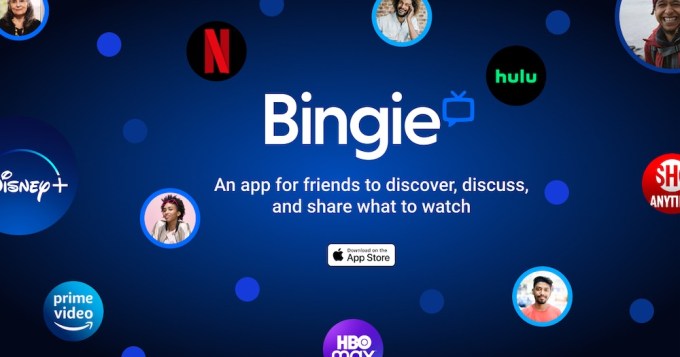
Bingie helps you find new things to watch.
Image Credits: Bingie
Bingie aims to turn getting Netflix recommendations from friends into a more structured experience. The app for streamers let them get together with friends to discuss, discover and share recommendations across services. The app looks well-built, but overlooks the fact that not all friend groups share common interests. It would be interesting to see it expand to include fellow fans, like TV Time offers, in a later update. Bingie is free on iOS. Read the full review on TechCrunch.
Mozilla this week launched Firefox 79 for Android, aka Firefox Daylight, after more than a year of development. The new browser is faster and entirely overhauled, offering a new user interface, Mozilla’s browser engine GeckoView, enhanced tracking protection, a private mode (based on the privacy browser Firefox Focus), a new bookmarking tools, support for add-ons and more.
Flipboard gets into video
Image Credits: Flipboard
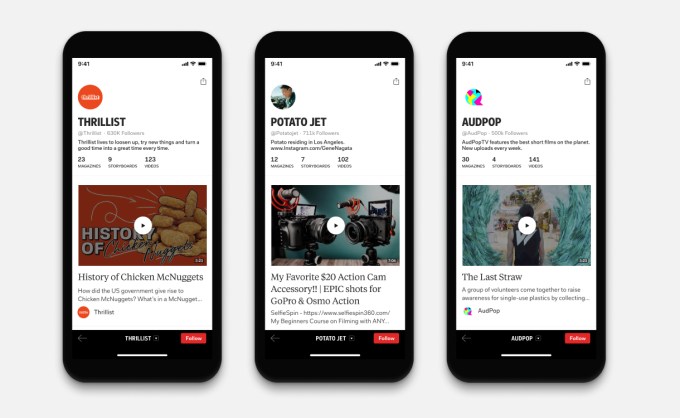
News magazine app Flipboard has been around for years, but its latest update introduces a big change. The app now allows users to follow video content from hundreds of publishers, including national/global news outlets, local news and (carefully vetted) indie producers. Users can even build out their own video-only collections to stay on top of the latest news in the form of video, or they can add video-only feeds into existing magazines. Publishers can also add video to their static round-ups known as Storyboards. Flipboard TV, as the new feature is called, was previously a Samsung exclusive. Now the ad-supported version is available to all.
With default settings, the Windows 10 Start menu displays the app list on the left side of the Start menu, and pinned tiles show up on the right side of the Start menu. The app list displays apps installed on your Windows 10 PC, including recently installed apps. You can scroll through the app list […]
Epic Games has been removed from Apple’s App Store.
If you’ve already downloaded Fortnite to your Mac or iOS device, it should still work, but Epic’s termination means the Fortnite developer will no longer be able to submit new apps or updates.
MacStories Managing Editor John Voorhees noted the termination on Twitter, as well as the fact that the App Store is currently featuring Fortnite competitor PUBG.
We are disappointed that we have had to terminate the Epic Games account on the App Store. We have worked with the team at Epic Games for many years on their launches and releases. The court recommended that Epic comply with the App Store guidelines while their case moves forward, guidelines they’ve followed for the past decade until they created this situation. Epic has refused. Instead they repeatedly submit Fortnite updates designed to violate the guidelines of the App Store. This is not fair to all other developers on the App Store and is putting customers in the middle of their fight. We hope that we can work together again in the future, but unfortunately that is not possible today.
You missed your chance. Epic is off the App Store now.
Apple also said that Epic has been creating support issues by directing frustrated users toward AppleCare.
This is the latest development in the Epic-Apple dispute, which began earlier this month when the developer introduced support for direct payments in Fortnite, attempting to circumvent the 30% cut that Apple takes on App Store payments. This prompted Apple to boot Fortnite from the App Store, with Epic immediately launching a lawsuit and a publicity campaign that accused Apple of abusing its market power.
For years, India has served as the largest open battleground for Silicon Valley and Chinese firms searching for their next billion users.
With more than 400 million WhatsApp users, India is already the largest market for the Facebook-owned service. The social juggernaut’s big blue app also reaches more than 300 million users in the country.
Google is estimated to reach just as many users in India, with YouTube closely rivaling WhatsApp for the most popular smartphone app in the country.
Several major giants from China, like Alibaba and Tencent (which a decade ago shut doors for most foreign firms), also count India as their largest overseas market. At its peak, Alibaba’s UC Web gave Google’s Chrome a run for its money. And then there is TikTok, which also identified India as its biggest market outside of China.
Though the aggressive arrival of foreign firms in India helped accelerate the growth of the local ecosystem, their capital and expertise also created a level of competition that made it too challenging for most Indian firms to claim a slice of their home market.
New Delhi’s ban on 59 Chinese apps on June 30 on the basis of cybersecurity concerns has changed a lot of this.
Indian apps that rarely made an appearance in the top 20 have now flooded the charts. But are these skyrocketing download figures translating to sustaining users?
An industry executive leaked the download, monthly active users, weekly active users and daily active users figures from one of the top mobile insight firms. In this Extra Crunch report, we take a look at the changes New Delhi’s ban has enacted on the world’s second largest smartphone market.
TikTok copycats
Scores of startups in India, including news aggregator DailyHunt, on-demand video streamer MX Player and advertising giant InMobi Group, have launched their short-video format apps in recent months.
For years, India has served as the largest open battleground for Silicon Valley and Chinese firms searching for their next billion users.
With more than 400 million WhatsApp users, India is already the largest market for the Facebook-owned service. The social juggernaut’s big blue app also reaches more than 300 million users in the country.
Google is estimated to reach just as many users in India, with YouTube closely rivaling WhatsApp for the most popular smartphone app in the country.
Several major giants from China, like Alibaba and Tencent (which a decade ago shut doors for most foreign firms), also count India as their largest overseas market. At its peak, Alibaba’s UC Web gave Google’s Chrome a run for its money. And then there is TikTok, which also identified India as its biggest market outside of China.
Though the aggressive arrival of foreign firms in India helped accelerate the growth of the local ecosystem, their capital and expertise also created a level of competition that made it too challenging for most Indian firms to claim a slice of their home market.
New Delhi’s ban on 59 Chinese apps on June 30 on the basis of cybersecurity concerns has changed a lot of this.
Indian apps that rarely made an appearance in the top 20 have now flooded the charts. But are these skyrocketing download figures translating to sustaining users?
An industry executive leaked the download, monthly active users, weekly active users and daily active users figures from one of the top mobile insight firms. In this Extra Crunch report, we take a look at the changes New Delhi’s ban has enacted on the world’s second largest smartphone market.
TikTok copycats
Scores of startups in India, including news aggregator DailyHunt, on-demand video streamer MX Player and advertising giant InMobi Group, have launched their short-video format apps in recent months.
Posted by Daniel Freedman and Ehud Rivlin, Research Scientists, Google Health
Colorectal cancer (CRC) is a global health problem and the second deadliest cancer in the United States, resulting in an estimated 900K deaths per year. While deadly, CRC can be prevented by removing small precancerous lesions in the colon, called polyps, before they become cancerous. In fact, it is estimated that a 1% increase in the adenoma detection rate (ADR, defined as the fraction of procedures in which a physician discovers at least one polyp) can lead to a 6% decrease in the rate of interval CRCs (a CRC that is diagnosed within 60 months of a negative colonoscopy).
Colonoscopy is considered the gold standard procedure for the detection and removal of polyps. Unfortunately, the literature indicates that endoscopists miss on average 22%-28% of polyps during colonoscopies; furthermore, 20% to 24% of polyps that have the potential to become cancerous (adenomas) are missed. Two major factors that may cause an endoscopist to miss a polyp are (1) the polyp appears in the field of view, but the endoscopist misses it, perhaps due to its small size or flat shape; and (2) the polyp does not appear in the field of view, as the endoscopist has not fully covered the relevant area during the procedure.
In “Detecting Deficient Coverage in Colonoscopies”, we introduce the Colonoscopy Coverage Deficiency via Depth algorithm, or C2D2, a machine learning-based approach to improving colonoscopy coverage. The C2D2 algorithm performs a local 3D reconstruction of the colon as images are captured during the procedure, and on that basis, identifies which areas of the colon were covered and which remained outside of the field of view. C2D2 can then indicate in real time whether a particular area of the colon has suffered from deficient coverage so the endoscopist can return to that area. Our work proposes a novel approach to compute coverage in real time, for which 3D reconstruction is done using a calibration-free, unsupervised learning method, and evaluate it in a large scale way.
The C2D2 Algorithm
When considering colon coverage, it is important to estimate the coverage fraction — what percentage of the relevant regions were covered by a complete procedure. While a retrospective analysis is useful for the physician and could provide general guidance for future procedures, it is more useful to have real-time estimation of coverage fraction, on a segment by segment basis, i.e. knowledge of what fraction of the current segment has been covered while traversing the colon. The helpfulness of such functionality is clear: during the procedure itself, a physician may be alerted to segments with deficient coverage, and can immediately return to review these areas. Higher coverage will result in a higher proportion of polyps being seen.
The C2D2 algorithm is designed to compute such a segment-by-segment coverage in two phases: computing depth maps for each frame of the colonoscopy video, followed by computation of coverage based on these depth maps.
C2D2 computes a depth image from a single RGB image. Then, based on the computed depth images for a video sequence, C2D2 calculates local coverage, so it can detect where the coverage has been deficient and a second look is required.
Depth map creation consists of both depth estimation as well as pose estimation — the localization of where the endoscope is in space, as well as the direction it is pointing. In addition to the detection of deficient coverage, depth and pose estimation are useful for a variety of other interesting tasks. For example, depth can be used for improved detection of flat polyps, while pose estimation can be used for relocalizing areas of the colon (including polyps) that the endoscopist wishes to revisit, and both together can be used for visualization and navigation.
Top row: RGB image, from which the depth is computed. Bottom row: Depth image as computed by C2D2. Yellow is deeper, blue is shallower. Note that the “tunnel” structure is captured, as well as the Haustral ridges.
In order to compute coverage fractions from these depth maps, we trained C2D2 on two sources of data: synthetic sequences and real sequences. We generated the synthetic videos using a graphical model of a colon. For each synthetic video, ground truth coverage is available in the form of a number between 0 (completely uncovered) and 1 (completely covered). For real sequences, we analyzed de-identified colonoscopy videos, for which ground truth coverage is unavailable.
Performance on Synthetic Videos
When using synthetic videos, the availability of ground truth coverage enables the direct measurement of C2D2’s performance. We quantify this using the mean absolute error (MAE), which indicates how much the algorithm’s prediction differs, on average, from the ground truth. We find that C2D2’s MAE = 0.075; meaning that, on average, the prediction of C2D2 is within 7.5% of the ground truth. By contrast, a group of physicians given the same task achieved MAE = 0.177, i.e., within 17.7% of the ground truth. Thus, the C2D2 attained an accuracy rate 2.4 times higher on synthetic sequences.
Performance on Real Videos
Of course, what matters most is performance on videos of real colonoscopies. The challenge in this case is the absence of ground truth labelling: we don’t know what the actual coverage is. Additionally, one cannot use labels provided by experts directly as they are not always accurate, due to the challenges described earlier. However, C2D2 can still perform inference on real colonoscopy videos. Indeed, the learning pipeline is designed to perform equally well on synthetic and real colonoscopy videos.
To verify performance on real sequences, we used a variant of a technique common in the generative modelling literature, which involves providing video sequences to human experts along with C2D2’s coverage scores for those sequences. We then ask the experts to assess whether C2D2’s score is correct. The idea is that while it is difficult for experts to assign a score directly, the task of verifying a given score is considerably easier. (This is similar to the fact that verifying a proposed solution to an algorithmic problem is generally much easier than computing that solution.) Using this methodology, experts verified C2D2’s score 93% of the time. And in a more qualitative sense, C2D2’s output seems to pass the “eyeball test”, see the figure below.
Coverage on real colonoscopy sequences. Top row: Frames from a well covered sequence — the entire “tunnel” down the lumen may be seen; C2D2 coverage = 0.931. Middle row: A partially covered sequence — the bottom may be seen, but the top is not as visible; C2D2 coverage = 0.427. Bottom row: A poorly covered sequence, much of what is seen is the wall; C2D2 coverage = 0.227.
Next steps
By alerting physicians to missed regions of the colon wall, C2D2 promises to lead to the discovery of more adenomas, thereby increasing the ADR and concomitantly decreasing the rate of interval CRC. This would be of tremendous benefit to patients.
In addition to this work that addresses colonoscopy coverage, we are concurrently conducting research to improve polyp detection by combining C2D2 with an automatic, real-time polyp detection algorithm. This study adds to the mounting evidence that physicians may use machine learning methods to augment their efforts, especially during procedures, to improve the quality of care for patients.
Acknowledgements This research was conducted by Daniel Freedman, Yochai Blau, Liran Katzir, Amit Aides, Ilan Shimshoni, Danny Veikherman, Tomer Golany, Ariel Gordon, Greg Corrado, Yossi Matias, and Ehud Rivlin, with support from Verily. We would like to thank all of our team members and collaborators who worked on this project with us, including: Nadav Rabani, Chen Barshai, Nia Stoykova, David Ben-Shimol, Jesse Lachter, and Ori Segol, 3D-Systems and many others. We'd also like to thank Yossi Matias for support and guidance. The research was conducted by teams from Google Health and Google Research, Israel.
Facebook is testing out a new feature that could help news publishers create a better experience for paying subscribers on the social network.
The idea is that when Facebook identifies a subscriber from one of its publisher partners, that subscriber will be invited to link their news account to their Facebook account. Once they’re linked, if they encounter a paywalled article on Facebook, they’ll be able to read it without hitting the paywall or having to log-in again.
Facebook also says that when subscribers link their accounts, it will show them more content from that publisher, and that it’s “developing and [plans] to introduce additional subscriber experiences over time.”
The Atlanta Journal-Constitution, The Athletic and the Winnipeg Free Press have already been testing the feature out. Facebook says subscribers who linked their accounts made an average of 111% more article clicks compared to those who weren’t part of the test group, and that those subscribers increased their rate of following a publisher from 34% to 97%.
“Account linking with Facebook has offered a convenient, easy way for The Athletic’s subscribers to access our in-depth storytelling while they are spending time on their favorite social media platform,” said The Athletic’s vice president of product marketing Charlotte Winthrop in a statement. “This enhances the experience for our subscribers, keeping them engaged with The Athletic and up-to-date on their favorite teams, leagues and players.”
When news organizations rely on outside platforms for distribution, one of the big issues is who owns the subscriber. So Facebook’s approach here may be more acceptable to publishers, since it still requires readers to subscribe to a given publication (rather than subscribing through Facebook itself).
The front-facing camera has been a pretty constant bugbear for phone makers for a number of years now. Xiaomi certainly isn’t the first to offer a clever technological solution to the problem — and it’s also certainly not the only company to have show off under-screen camera tech — but next year, it’s committed to bringing that technology to market.
The manufacturer noted its plans today as part of its earnings report, stating that it will begin manufacturing handsets using the latest version of the technology it’s been working on for a number of years now. This actually represents the third generation of the tech. The first didn’t exist outside of the lab and the second was shown off to the public but never made it into production.
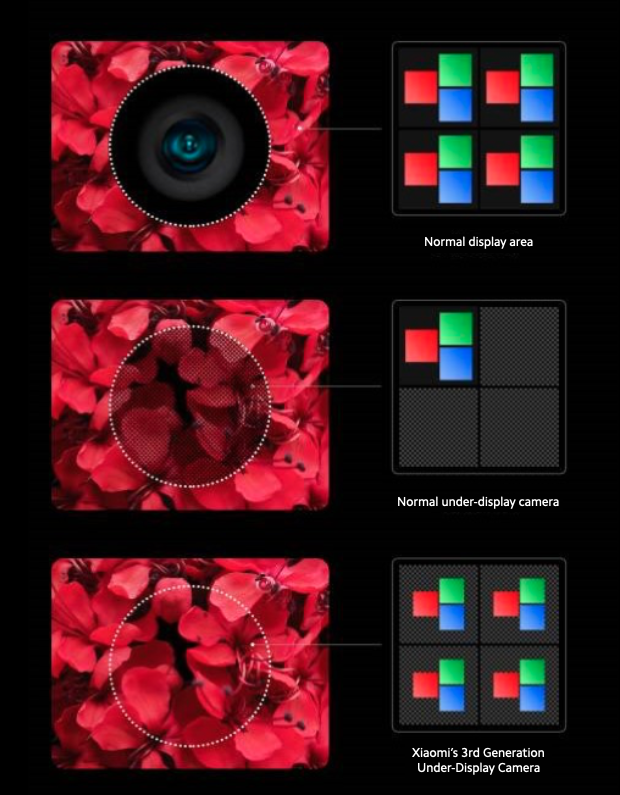
There are no doubt all sorts of practical reasons for that. Among them seems to be the issue of pixel density. For reasons that ought to be pretty obvious, there’s a big question of how to maintain a consistent pixel density in the area of the screen that sits on top of the front-facing camera. Xiaomi claims to have solved the problem, however.
“The self-developed pixel arrangement used in Xiaomi’s 3rd Generation Under-Display Camera Technology allows the screen to pass light through the gap area of sub-pixels, allowing each single pixel to retain a complete RGB subpixel layout without sacrificing pixel density,” it writes in a blog post.
Xiaomi says it’s been able to effectively double the pixel density of competing technology, letting light through to the camera, without sacrificing the uniformity of the screen. It looks good in the side-by-side videos the company has released, but obviously it’s worth reserving judgement until mass production starts next year.
What Saturn's most mysterious moon could teach us about the origins of life | Elizabeth "Zibi" Turtle
NASA's Dragonfly -- a robotic rotorcraft-lander that's designed to hop across the surface of an extraterrestrial body -- is set to voyage deep into the solar system to explore Titan, Saturn's largest moon, in 2026. Planetary scientist Elizabeth "Zibi" Turtle shares how studying this mysterious moon that's thought to resemble the early Earth could bring us closer to understanding the habitability of other planets -- and the origin of life itself.
If you are looking for an alternative way of downloading apps and games, take a look at TutuApp. One of the most reliable and best of all the unofficial app stores, TutuApp, offers users thousands of apps, games, screen recorders, game emulators, and much more, none of which is found in the iOS app store. […]
Over the last few years, many alternatives to the iOS app store have been released, and one of the best is undoubtedly AppValley app installer. With support for all iPhone and iPad models, AppValley offers tons of unofficial apps, games, emulators, and more than policy restrictions keep out of the app store. You don’t have […]
Are you looking for an alternative to the official Apple app store? Are you looking for apps and games that Apple doesn’t let into their store? TopStore app is a great alternative with full support for the iPhone and iPad, offering tons of apps and games and other cool content, all without having to jailbreak […]
The rise of technologies has had a significant impact on most businesses globally, and the gambling industry, as well. Fast internet speeds and affordable portable devices and smartphones make casino games more accessible than ever. Most online casinos, like Gclub, have adopted innovative technologies for an immersive and seamless gaming experience. It is incredible to […]
Turmoil continues at TikTok, Salesforce lays off 1,000 people and Warby Parker is now valued at $3 billion. This is your Daily Crunch for August 27, 2020.
The big story: TikTok’s CEO resigns
Kevin Mayer, the former Disney executive who joined TikTok as CEO just over 100 days ago, announced yesterday that he’s resigning. While Mayer was likely brought on to reassure U.S. legislators about the app’s Chinese owners, it seems he wasn’t expecting this level of conflict, with President Donald Trump signing an executive order that would ban TikTok in the U.S. unless it’s sold to another company.
“We appreciate that the political dynamics of the last few months have significantly changed what the scope of Kevin’s role would be going forward, and fully respect his decision,” a TikTok spokesperson said in a statement. “We thank him for his time at the company and wish him well.”
As for which company might acquire TikTok, Walmart has confirmed that it’s interested in teaming up with Microsoft to acquire the popular video app.
The Daily Crunch is TechCrunch’s roundup of our biggest and most important stories. If you’d like to get this delivered to your inbox every day at around 3pm Pacific, you can subscribe here.
Turmoil continues at TikTok, Salesforce lays off 1,000 people and Warby Parker is now valued at $3 billion. This is your Daily Crunch for August 27, 2020.
The big story: TikTok’s CEO resigns
Kevin Mayer, the former Disney executive who joined TikTok as CEO just over 100 days ago, announced yesterday that he’s resigning. While Mayer was likely brought on to reassure U.S. legislators about the app’s Chinese owners, it seems he wasn’t expecting this level of conflict, with President Donald Trump signing an executive order that would ban TikTok in the U.S. unless it’s sold to another company.
“We appreciate that the political dynamics of the last few months have significantly changed what the scope of Kevin’s role would be going forward, and fully respect his decision,” a TikTok spokesperson said in a statement. “We thank him for his time at the company and wish him well.”
As for which company might acquire TikTok, Walmart has confirmed that it’s interested in teaming up with Microsoft to acquire the popular video app.
The Daily Crunch is TechCrunch’s roundup of our biggest and most important stories. If you’d like to get this delivered to your inbox every day at around 3pm Pacific, you can subscribe here.
Apple’s upcoming operating system iOS 14 (currently in public beta) could have a big impact on publishers who work with Facebook’s ad network — at least, according to Facebook.
The company published a couple of blog posts yesterday outlining the potential impact of a major privacy change that Apple announced at WWDC — namely, the fact that Apple will explicitly ask users whether they want to opt-in before sharing the IDFA identifier with app developers, who can then use it to target ads.
In response, Facebook said it will not be collecting this data on its own apps, but it suggested that the bigger impact will be on the Facebook Audience Network, which uses Facebook data to target ads on other publishers’ websites and apps.
“Like all ad networks on iOS 14, advertiser ability to accurately target and measure their campaigns on Audience Network will be impacted, and as a result publishers should expect their ability to effectively monetize on Audience Network to decrease,” the company said. “Ultimately, despite our best efforts, Apple’s updates may render Audience Network so ineffective on iOS 14 that it may not make sense to offer it on iOS 14.”
In fact, the company said that in testing, it found that without targeting and personalization, mobile app install campaigns brought in 50% less revenue for publishers, and it warned, “The impact to Audience Network on iOS 14 may be much more.”
To get a sense of how serious this might be, I reached out to a number of companies and investors in the adtech world. Ron Thomas, general manager for analytics at App Annie (which is moving into ad analytics), described this as “an acknowledgement from a top publisher that IDFA is truly gone and attribution in this post IDFA world is changing.”
And Brian Quinn, U.S. president and general manager at mobile ad attribution company AppsFlyer, said Facebook’s announcement is “a clear message to the market.”
“The possibility of losing Facebook Audience Network as a major source of revenue can potentially devastate the smaller publisher and developer communities on a global scale, which in turn would impact users worldwide that value and utilize apps as they navigate through their daily lives,” Quinn told me via email. “The ability to deliver relevant ads to users – and prove their effectiveness through attribution – is integral for publishers and developers to build sustainable businesses around their apps and deliver quality content that users love.”
He went on to suggest that “it’s possible to give users control over their data and still provide developers transparency through privacy-centric attribution solutions.”
Others have been more skeptical about the way Facebook is framing the news. For example, famed gadget reviewer Walt Mossberg suggested that we’ll be seeing more “griping about this from Facebook and other leaders of the toxic ad tech privacy theft industry,” but he argued that rather than hurting publishers, all the change in iOS does is “give consumers clear choices.”
Similarly, Jason Kint of Digital Content Next (a trade body representing publishers like The New York Times and Condé Nast) scoffed that Facebook is “pretending to be the messenger of what’s good for publishers,” and he suggested that the company is using Audience Network publishers to deflect from its broader data collection practices.
“A majority of Facebook’s data collection happens across other company’s services and feeds the mothership,” Kint tweeted. (At the same time, Kint and his organization have other concerns about Apple’s control over the ecosystem.)
This isn’t the first time in recent weeks that Facebook has criticized Apple. Earlier this month, the company announced support for paid online events but complained that Apple wasn’t waiving its customary 30% fee. In both cases, Facebook’s language has been mild — but in the platitude-filled world of corporate PR, it still feels remarkable for the company to be challenging Apple so openly.
In a statement emailed to reporters, James Currier of venture capital firm NFX suggested that this conflict is a sign that history is repeating itself:
In 2009 at the beginning of the Facebook platform, you could build an app on Facebook, go viral and gain millions of followers. But Facebook slowly shut down all the viral channels and put an ad server in the way, meaning app creators had to pay to get traffic. Facebook extracted what money they could from the app developers. Similarly, at the beginning of the iOS platform, Facebook could be an app on iOS and get millions of users. Now Apple is going to slowly shut off the oxygen in order to take the value for themselves. This is the law of the jungle and the network effect makes it pretty clear who has the power: iOS.
Beyond Facebook, Apple and the publishers in the Audience Network, Eric Franchi of marketing- and media-focused VC MathCapital suggested that the changing landscape around privacy and ad-tracking is creating new opportunities for startups (including his own portfolio companies zeotap and ID5).
“Facebook’s commentary underscores a) how dependent the marketing ecosystem is on a couple of operating systems and platforms and b) the importance of user identification in making digital marketing work,” Franchi wrote. “We think there is opportunity here for new forms of consent-driven identity solutions to step up.”