21 August 2020

This subscription social network is happy to be an Albatross in a pandemic


In discussions of ethically dubious social networks Facebook is the usual reference choice. But spare a thought for subscribers of InterNations, a Munich-based social networking community for expats, who have found themselves unable to obtain refunds for full-year payments charged in the middle of the coronavirus crisis.

InterNations has operated an expat networking experience since 2007, offering a free ‘Basic’ tier of membership that gives users some access to site content and community-organized events (if they pay an entry fee); or a premium tier which requires shelling out for a year’s subscription up front to get free/reduced price entry to networking events, plus access to some additional site features.

The German company appears to be a fan of nominative determinism — having named the subscription tier of membership ‘Albatross‘, given how difficult it is for users to exit once they upgrade from Basic to paying, perpetually renewing contract.

Several former members told us their memberships were auto-renewed for a full year without any warning in the middle of the pandemic. When they contacted InterNations to request a refund they were point-blank refused — with the company saying they were bound by the terms of the contract they’d entered into when they paid to upgrade the year before.

In emails we’ve reviewed between users and InterNations’ staff the company repeatedly ignores requests for refunds.

One UK-based user, who told us she had signed up to use the service to attend networking events in London and Paris, where she travelled regularly for work, found herself put on furlough in March when the UK went into lockdown. She only noticed the InterNations subscription had autorenewed when she saw a charge as she was checking her bank statement.

She contacted InterNations to request a refund — pointing out there were now no physical events near her, nor would she be able to attend in-person networking events for the foreseeable future due to shielding as a result of personal vulnerability to the health risk posed by COVID-19. But InterNations still refused to refund her subscription.

Instead it offered to put the year’s ‘Albatross’ membership on hold until 2022 — suggesting she might be able to make use of the services she’d just been billed for in two years’ time.

“Many of the people complaining feel aggrieved by InterNation because the entire event offering is very much voluntary and community based. It relies on people stepping forward to organise groups of people to attend events, walks, screening etc. Most of them do not make financial gain out of it,” she told us.

“So for this organisation not to be looking after its very own community feels like a slap on our faces.”

“My local gym froze my membership from April 2020 without any of its members having to request it. They informed us by email, they would do this. I was able to cancel in July without any question asked,” she added. “If my small gym is able to do this, how come InterNations is not stopping the auto-renewal of the membership at such a time?

“When everyone almost worldwide is worrying about their health, their livelihood, their relatives, we are not remembering to cancel or to stop memberships.”

Another user, who signed up to the service after moving from the US to Singapore, told us he was sent repeated payment demands in the middle of the coronavirus crisis after his on-file credit card had expired — which meant InterNations couldn’t auto collect his payment.

He told it he wanted to cancel the subscription but it told him he would only able to delete his account if he paid up for a full second year. Eventually he said he felt he had no choice but to pay the demand for around $100 in order that he could downgrade from ‘Albatross’ to ‘Basic’ and have his account deleted.

“I was (and still am) a paid subscriber and during the height of the pandemic I never received an offer of ‘free months’ of membership,” he said. “Instead, all I got was a deluge of threatening emails about how they couldn’t process my credit card information. Nothing even remotely about whether I was sick or even still alive. They just wanted my credit card details.”

A third user, who signed up for the service after moving to Hanoi, summed up her experience as “not the best”. She pointed us to a blog post in which she recounts a similar story — finding herself charged for a renewal in the middle of the coronavirus without any advance warning and having forgotten to cancel the subscription herself.

“I didn’t realise I’d been charged until a notification from PayPal arrived in my inbox,” she writes. “Say, what? Where was the email reminder? Where was the ‘now due’ invoice that is the hallmark of good business? Turns out InterNations don’t send them.”

This user was finally able to obtain a refund — but only via disputing the charge through PayPal. She got no joy asking for her money back from InterNations itself.

A deluge of similar complaints about the company can be seen on Trustpilot — where InterNations has an 81% ‘bad’ rating at the time of writing.

“An annual membership was taken from my account, and refund was refused. A year on and I am being threatened with non payment of a new invoice,” writes one reviewer.

“I cancelled my membership the past two years and every year it shows that I didn’t and their records conveniently show no record of my cancellation. Then they will refuse refunds,” recounts another.

“InterNations contacted me via automated email about my membership payment being due. When I responded, asking to cancel membership since I haven’t logged in in months and can’t afford membership during these times, they refused to help,” says another irate reviewer. “They make it impossible to do this simple task. They’re greedily unable to help with anything other than take your money. No empathy. All they have to do is cancel the membership.”

“They don’t even send a reminder for end of membership. Some people have seen their credit card debited, without any reminder. And if your credit card you registered has expired, they keep harassing you and threaten you,” runs another despairing former user.

In emails to users who are requesting a refund which we’ve seen InterNations simply points them to German law — which does appear to be the legal sticking point here. As a number of expat blogs warn, service contracts in Germany can be a lot harder to get out of than into.

Though, of course, it’s unlikely to have been immediately clear to people signing up to a global social network in cities like Hanoi and Singapore that they needed to understand German contract law before hitting ‘subscribe’.

BEUC, the European consumer rights group, told us there’s no pan-EU requirement for a notification to be actively sent to users ahead of an auto-renewal of a services contract — and the lack of such a notification ahead of the InterNations subscription renewal is one of the key recurring complaints.

“EU law only requires the consumer to be informed of the final price and the contractual conditions,” a spokesperson said, noting that consumer rights can vary substantially from member state to member state as the area isn’t harmonised at EU level.

So, while BEUC noted that, for example, Belgium law does have a specific provision which allows the consumer to terminate a contract at no cost after its tacit renewal — Germany, self evidently, does not. Although domestic pressure appears to be growing for reform of its one-sided contract rules.

When we put the various complaints we’d heard about refunds and cancelations (and indeed dark patterns) to InterNations, its founder and co-CEO, Malte Zeeck, said the company does not breach consumer law — and further claimed it “clearly communicates” subscription renewals to users.

“InterNations is operating on a standard subscription model like many other businesses, which is at no point in breach of consumer protection laws,” he said. “Subscriptions are renewed automatically, which is clearly communicated at the beginning of each subscription period, in each invoice, and in every user’s membership and account settings. This is also where a subscription can be cancelled at any time, without a notice period that has to be observed.

“Our members have a continual visual reminder of their membership status through the Albatross symbol found on their profile picture. They can also always see their current membership status by visiting their membership page.”

And while he conceded that InterNations had had to cancel in-person events “during the height of the pandemic” he said it substituted this reduction in service by offering “additional free months of membership” and “working very hard to respond to the situation and find ways for our members to still meet and spend time together online”.

“After only a few weeks, we already offered over 500 online activities worldwide to help expats and global minds connect and share experiences — more online events were being added every day,” he added. “In addition, our users continued to benefit from other online networking and information features our premium membership offers. Since restrictions on in-person events are being lifted around the world, we have started to offer many opportunities for our members again to meet in person.”

EU consumer protection rules do bake in requirements that contract terms be fair — with provisions intended to protect against things like one-sided changes to a service without a valid reason. But it’s pretty clear that InterNations could argue a pandemic is a valid reason for canceling in person events and replacing them with online networking. So angry users are unlikely to find much solace there.

Still, maintaining such an inflexible and user hostile attitude during a pandemic does look risky for InterNations and its reputation, given new users are likely to be far less easy for it to net now the coronavirus has settled like a dead calm on so much foreign travel.

So while it might be legally entitled to sit and claw in revenue from people who — living through a pandemic and worried about things like their jobs, health and loved ones — forgot to cancel a subscription that only comes round once a year, it’s hardly a recipe for long-term customer loyalty.

Indeed, we’ve seen these kind of auto-renewing subscription gigs crop up in the ecommerce space in years past. And none of those dubious tactics went the distance.

Tricking consumers into recurring payments is never a good long term business strategy and it certainly isn’t now that reputational damage can scale all over social media in seconds. (To wit: Irate InterNations users have been organizing via Twitter and have set up a website to amplify negative reviews where they urge people to boycott the service.)

None of the people who’ve been stung by InterNations’ auto-renewing subscription are likely to forget to cancel a second time so won’t be a source of recurring revenue in future. And treating users like so much chum when the company also relies upon their community spirit to power its service looks like a rotten business model long past its sell-by-date. (However many members InterNations claims have contacted it “to say how much our online events have helped them to stay in touch with people and also stay positive during a period of self-isolation”, a minority of satisfied customers are being drowned out by all the angry online views.)

In the meanwhile, it’s certainly curious to encounter a niche social network that’s happy operating with as little regard for users’ wishes as some of the far more maligned giants of the category. To the point where its website displays information regarding the European Commission’s “online dispute resolution” platform in small print right on the contacts page. Er, perhaps Facebook should take note.

On unhappy users, Zeeck only had this to say: “We are sorry that some of our former members perceive this differently and were not happy with the benefits our membership offered them. We are always taking our users’ feedback seriously and are working hard to provide a great experience for them. At the same time, we are aware that it is hard to have the perfect solution for everybody, and there will always be detractors.”

But perhaps he’s been taking cues from Mark Zuckerberg’s neverending apology tours.


Read Full Article

Understanding View Selection for Contrastive Learning


Most people take for granted the ability to view an object from several different angles, but still recognize that it's the same object— a dog viewed from the front is still a dog when viewed from the side. While people do this naturally, computer scientists need to explicitly enable machines to learn representations that are view-invariant, with the goal of seeking robust data representations that retain information that is useful to downstream tasks.

Of course, in order to learn these representations, manually annotated training data can be used. However, as in many cases such annotations aren’t available, which gives rise to a series of self- and crossmodal supervised approaches that do not require manually annotated training data. Currently, a popular paradigm for training with such data is contrastive multiview learning, where two views of the same scene (for example, different image channels, augmentations of the same image, and video and text pairs) will tend to converge in representation space while two views of different scenes diverge. Despite their success, one important question remains: “If one doesn’t have annotated labels readily available, how does one select the views to which the representations should be invariant?” In other words, how does one identify an object using information that resides in the pixels of the image itself, while still remaining accurate when that image is viewed from disparate viewpoints?

In “What makes for good views for contrastive learning”, we use theoretical and empirical analysis to better understand the importance of view selection, and argue that one should reduce the mutual information between views while keeping task-relevant information intact. To verify this hypothesis, we devise unsupervised and semi-supervised frameworks that learn effective views by aiming to reduce their mutual information. We also consider data augmentation as a way to reduce mutual information, and show that increasing data augmentation indeed leads to decreasing mutual information while improving downstream classification accuracy. To encourage further research in this space, we have open-sourced the code and pre-trained models.

The InfoMin Hypothesis
The goal of contrastive multiview learning is to learn a parametric encoder, whose output representations can be used to discriminate between pairs of views with the same identities, and pairs with different identities. The amount and type of information shared between the views determines how well the resulting model performs on downstream tasks. We hypothesize that the views that yield the best results should discard as much information in the input as possible except for the task relevant information (e.g., object labels), which we call the InfoMin principle.

Consider the example below in which two patches of the same image represent the different “views”. The training objective is to identify that the two views belong to the same image. It is undesirable to have views that share too much information, for example, where low-level color and texture cues can be exploited as “shortcuts” (left), or to have views that share too little information to identify that they belong to the same image (right). Rather, views at the “sweet spot” share the information related to downstream tasks, such as patches corresponding to different parts of the panda for an object classification task (center).

An illustration of three regimes of information captured during contrastive multiview learning. Views should not share too much information (left) or too little information (right), but should find an optimal mix (the “sweet spot”, middle) that maximizes the downstream performance.

A Unified View on Contrastive Learning
We design several sets of experiments to verify the InfoMin hypothesis, motivated by the fact that there are simple ways to control the mutual information shared between views without any supervision. For example, we can sample different patches from the same images, and reduce their mutual information simply by increasing the distance between the patches. Here, we estimate the mutual information using InfoNCE (INCE), which is a quantitative measure of the mutual information lower bound.. Indeed, we observe a reverse U-shape curve: as mutual information is reduced, the downstream task accuracy first increases and then begins to decrease.

Downstream classification accuracy on STL-10 (left) and CIFAR-10 (right) by applying linear classifiers on representations learned with contrastive learning. Same as the previous illustration, the views are sampled as different patches from the same images. Increasing the Euclidean distance between patches leads to decreasing mutual information. A reverse U-shape curve between classification accuracy and INCE (patch distance) is observed.

Furthermore, we demonstrate that several state-of-the-art contrastive learning methods (InstDis, MoCo, CMC, PIRL, SimCLR and CPC) can be unified through the perspective of view selection: despite the differences in architecture, objective and engineering details, all recent contrastive learning methods create two views that implicitly follow the InfoMin hypothesis, where the information shared between views are controlled by the strength of data augmentation. Motivated by this, we propose a new set of data augmentations, which outperforms the prior state of the art, SimCLR, by nearly 4% on the ImageNet linear readout benchmark. We also found that transferring our unsupervised pre-trained models to object detection and instance segmentation consistently outperforms ImageNet pre-training.

Learning to Generate Views
In our work, we design unsupervised and semi-supervised methods that synthesize novel views following the InfoMin hypothesis. We learn flow-based models that transfer natural color spaces into novel color spaces, from which we split the channels to get views. For the unsupervised setup, the view generators are optimized to minimize the InfoNCE bound between views. As shown in the results below, we observe a similar reverse U-shape trend while minimizing the InfoNCE bound.

View generators learned by unsupervised (left) and semi-supervised (right) objectives.

To reach the sweet spot without overly minimizing mutual information, we can use the semi-supervised setup and guide the view generator to retain label information. As expected, all learned views are now centered around the sweet spot, no matter what the input color space is.

Code and Pretrained Models
To accelerate research in self-supervised contastive learning, we are excited to share the code and pretrained models of InfoMin with the academic community. They can be found here.

Acknowledgements
The core team includes Yonglong Tian, Chen Sun, Ben Poole, Dilip Krishnan, Cordelia Schmid and Phillip Isola. We would like to thank Kevin Murphy for insightful discussion; Lucas Beyer for feedback on the manuscript; and the Google Cloud team for computation support.


Stop dancing to the sound of your oppression | Madame Gandhi

Stop dancing to the sound of your oppression | Madame Gandhi

Popular music is often riddled with misogynistic lyrics that objectify and demean women ... so why are we listening and dancing to it? Performing a sample of her original song "Top Knot Turn Up" and sharing clips from her female-directed music video of "See Me Thru," activist and musician Madame Gandhi explains why she's making sex-positive music that doesn't contribute to anyone's oppression -- and calls on music lovers to get down to tunes that empower everyone.

https://ift.tt/2YmW3dX

Click this link to view the TED Talk

Facebook trails expanding portability tools ahead of FTC hearing


Facebook is considering expanding the types of data its users are able to port directly to alternative platforms.

In comments on portability sent to US regulators ahead of an FTC hearing on the topic next month, Facebook says it intends to expand the scope of its data portability offerings “in the coming months”.

It also offers some “possible examples” of how it could build on the photo portability tool it began rolling out last year — suggesting it could in future allow users to transfer media they’ve produced or shared on Facebook to a rival platform or take a copy of their “most meaningful posts” elsewhere.

Allowing Facebook-based events to be shared to third party cloud-based calendar services is another example cited in Facebook’s paper.

It suggests expanding portability in such ways could help content creators build their brands on other platforms or help event organizers by enabling them to track Facebook events using calendar based tools.

However there are no firm commitments from Facebook to any specific portability product launches or expansions of what it offers currently.

For now the tech giant only lets Facebook users directly send copies of their photos to Google’s eponymous photo storage service — a transfer tool it switched on for all users this June.

“We remain committed to ensuring the current product remains stable and performant for people and we are also exploring how we might extend this tool, mindful of the need to preserve the privacy of our users and the integrity of our services,” Facebook writes of its photo transfer tool.

On whether it will expand support for porting photos to other rival services (i.e. not just Google Photos) Facebook has this non-committal line to offer regulators: “Supporting these additional use cases will mean finding more destinations to which people can transfer their data. In the short term, we’ll pursue these destination partnerships through bilateral agreements informed by user interest and expressions of interest from potential partners.”

Beyond allowing photo porting to Google Photos, Facebook users have long been able to download a copy of some of the information it holds on them.

But the kind of portability regulators are increasingly interested in is about going much further than that — meaning offering mechanisms that enable easy and secure data transfers to other services in a way that could encourage and support fast-moving competition to attention-monopolizing tech giants.

The Federal Trade Commission is due to host a public workshop on September 22, 2020, which it says will  “examine the potential benefits and challenges to consumers and competition raised by data portability”.

The regulator notes that the topic has gained interest following the implementation of major privacy laws that include data portability requirements — such as the European Union’s General Data Protection Regulation (GDPR) and the California Consumer Privacy Act (CCPA).

It asked for comment submissions by August 21, which is what Facebook’s paper is responding to.

In comments to the Reuters news agency, Facebook’s privacy and public policy manager, Bijan Madhani, said the company wants to see “dedicated portability legislation” coming out of any post-workshop recommendations.

It reports that Facebook supports a portability bill that’s doing the rounds in Congress — called the Access Act, which is sponsored by Democratic Senators Richard Blumenthal and Mark Warner, and Republican senator Josh Hawley — which would require large tech platforms to let their users easily move their data to other services.

Albeit Madhani dubs it a good first step, adding that the company will continue to engage with the lawmakers on shaping its contents.

“Although some laws already guarantee the right to portability, our experience suggests that companies and people would benefit from additional guidance about what it means to put those rules into practice,” Facebook also writes in its comments to the FTC.

Ahead of dipping its toe into portability via the photo transfer tool, Facebook released a white paper on portability last year, seeking to shape the debate and influence regulatory thinking around any tighter or more narrowly defined portability requirements.

In recent months Mark Zuckerberg has also put in facetime to lobby EU lawmakers on the topic, as they work on updating regulations around digital services.

The Facebook founder pushed the European Commission to narrow the types of data that should fall under portability rules. In the public discussion with commissioner Thierry Breton, in May, he raised the example of the Cambridge Analytica Facebook data misuse scandal, claiming the episode illustrated the risks of too much platform “openness” — and arguing that there are “direct trade-offs about openness and privacy”.

Zuckerberg went on to press for regulation that helps industry “balance these two important values around openness and privacy”. So it’s clear the company is hoping to shape the conversation about what portability should mean in practice.

Or, to put it another way, Facebook wants to be able to define which data can flow to rivals and which can’t.

“Our position is that portability obligations should not mandate the inclusion of observed and inferred data types,” Facebook writes in further comments to the FTC — lobbying to put broad limits on how much insight rivals would be able to gain into Facebook users who wish to take their data elsewhere.

Both its white paper and comments to the FTC plough this preferred furrow of making portability into a ‘hard problem’ for regulators, by digging up downsides and fleshing out conundrums — such as how to tackle social graph data.

On portability requests that wrap up data on what Facebook refers to as “non-requesting users”, its comments to the FTC work to sew doubt about the use of consent mechanisms to allow people to grant each other permission to have their data exported from a particular service — with the company questioning whether services “could offer meaningful choice and control to non-requesting users”.

“Would requiring consent inappropriately restrict portability? If not, how could consent be obtained? Should, for example, non-requesting users have the ability to choose whether their data is exported each time one of their friends wants to share it with an app? Could an approach offering this level of granularity or frequency of notice could lead to notice fatigue?” Facebook writes, skipping lightly over the irony given the levels of fatigue its own apps’ default notifications can generate for users.

Facebook also appears to be advocating for an independent body or regulator to focus on policy questions and liability issues tied to portability, writing in a blog post announcing its FTC submission: “In our comments, we encourage the FTC to examine portability in practice. We also ask it to recommend dedicated federal portability legislation and provide advice to industry on the policy and regulatory tensions we highlight, so that companies implementing data portability have the clear rules and certainty necessary to build privacy-protective products that enhance people’s choice and control online.”

In its FTC submission the company goes on to suggest that “an independent mechanism or body” could “collaboratively set privacy and security standards to ensure data portability partnerships or participation in a portability ecosystem that are transparent and consistent with the broader goals of data portability”.

Facebook then further floats the idea of an accreditation model under which recipients of user data “could demonstrate, through certification to an independent body, that they meet the data protection and processing standards found in a particular regulation, such as the [EU’s] GDPR or associated code of conduct”.

“Accredited entities could then be identified with a seal and would be eligible to receive data from transferring service providers. The independent body (potentially in consultation with relevant regulators) could work to assess compliance of certifying entities, revoking accreditation where appropriate,” it further suggests.

However its paper also notes the risk that requiring accreditation might present a barrier to entry for the small businesses and startups that might otherwise be best positioned to benefit from portability.


Read Full Article

Facebook trails expanding portability tools ahead of FTC hearing


Facebook is considering expanding the types of data its users are able to port directly to alternative platforms.

In comments on portability sent to US regulators ahead of an FTC hearing on the topic next month, Facebook says it intends to expand the scope of its data portability offerings “in the coming months”.

It also offers some “possible examples” of how it could build on the photo portability tool it began rolling out last year — suggesting it could in future allow users to transfer media they’ve produced or shared on Facebook to a rival platform or take a copy of their “most meaningful posts” elsewhere.

Allowing Facebook-based events to be shared to third party cloud-based calendar services is another example cited in Facebook’s paper.

It suggests expanding portability in such ways could help content creators build their brands on other platforms or help event organizers by enabling them to track Facebook events using calendar based tools.

However there are no firm commitments from Facebook to any specific portability product launches or expansions of what it offers currently.

For now the tech giant only lets Facebook users directly send copies of their photos to Google’s eponymous photo storage service — a transfer tool it switched on for all users this June.

“We remain committed to ensuring the current product remains stable and performant for people and we are also exploring how we might extend this tool, mindful of the need to preserve the privacy of our users and the integrity of our services,” Facebook writes of its photo transfer tool.

On whether it will expand support for porting photos to other rival services (i.e. not just Google Photos) Facebook has this non-committal line to offer regulators: “Supporting these additional use cases will mean finding more destinations to which people can transfer their data. In the short term, we’ll pursue these destination partnerships through bilateral agreements informed by user interest and expressions of interest from potential partners.”

Beyond allowing photo porting to Google Photos, Facebook users have long been able to download a copy of some of the information it holds on them.

But the kind of portability regulators are increasingly interested in is about going much further than that — meaning offering mechanisms that enable easy and secure data transfers to other services in a way that could encourage and support fast-moving competition to attention-monopolizing tech giants.

The Federal Trade Commission is due to host a public workshop on September 22, 2020, which it says will  “examine the potential benefits and challenges to consumers and competition raised by data portability”.

The regulator notes that the topic has gained interest following the implementation of major privacy laws that include data portability requirements — such as the European Union’s General Data Protection Regulation (GDPR) and the California Consumer Privacy Act (CCPA).

It asked for comment submissions by August 21, which is what Facebook’s paper is responding to.

In comments to the Reuters news agency, Facebook’s privacy and public policy manager, Bijan Madhani, said the company wants to see “dedicated portability legislation” coming out of any post-workshop recommendations.

It reports that Facebook supports a portability bill that’s doing the rounds in Congress — called the Access Act, which is sponsored by Democratic Senators Richard Blumenthal and Mark Warner, and Republican senator Josh Hawley — which would require large tech platforms to let their users easily move their data to other services.

Albeit Madhani dubs it a good first step, adding that the company will continue to engage with the lawmakers on shaping its contents.

“Although some laws already guarantee the right to portability, our experience suggests that companies and people would benefit from additional guidance about what it means to put those rules into practice,” Facebook also writes in its comments to the FTC.

Ahead of dipping its toe into portability via the photo transfer tool, Facebook released a white paper on portability last year, seeking to shape the debate and influence regulatory thinking around any tighter or more narrowly defined portability requirements.

In recent months Mark Zuckerberg has also put in facetime to lobby EU lawmakers on the topic, as they work on updating regulations around digital services.

The Facebook founder pushed the European Commission to narrow the types of data that should fall under portability rules. In the public discussion with commissioner Thierry Breton, in May, he raised the example of the Cambridge Analytica Facebook data misuse scandal, claiming the episode illustrated the risks of too much platform “openness” — and arguing that there are “direct trade-offs about openness and privacy”.

Zuckerberg went on to press for regulation that helps industry “balance these two important values around openness and privacy”. So it’s clear the company is hoping to shape the conversation about what portability should mean in practice.

Or, to put it another way, Facebook wants to be able to define which data can flow to rivals and which can’t.

“Our position is that portability obligations should not mandate the inclusion of observed and inferred data types,” Facebook writes in further comments to the FTC — lobbying to put broad limits on how much insight rivals would be able to gain into Facebook users who wish to take their data elsewhere.

Both its white paper and comments to the FTC plough this preferred furrow of making portability into a ‘hard problem’ for regulators, by digging up downsides and fleshing out conundrums — such as how to tackle social graph data.

On portability requests that wrap up data on what Facebook refers to as “non-requesting users”, its comments to the FTC work to sew doubt about the use of consent mechanisms to allow people to grant each other permission to have their data exported from a particular service — with the company questioning whether services “could offer meaningful choice and control to non-requesting users”.

“Would requiring consent inappropriately restrict portability? If not, how could consent be obtained? Should, for example, non-requesting users have the ability to choose whether their data is exported each time one of their friends wants to share it with an app? Could an approach offering this level of granularity or frequency of notice could lead to notice fatigue?” Facebook writes, skipping lightly over the irony given the levels of fatigue its own apps’ default notifications can generate for users.

Facebook also appears to be advocating for an independent body or regulator to focus on policy questions and liability issues tied to portability, writing in a blog post announcing its FTC submission: “In our comments, we encourage the FTC to examine portability in practice. We also ask it to recommend dedicated federal portability legislation and provide advice to industry on the policy and regulatory tensions we highlight, so that companies implementing data portability have the clear rules and certainty necessary to build privacy-protective products that enhance people’s choice and control online.”

In its FTC submission the company goes on to suggest that “an independent mechanism or body” could “collaboratively set privacy and security standards to ensure data portability partnerships or participation in a portability ecosystem that are transparent and consistent with the broader goals of data portability”.

Facebook then further floats the idea of an accreditation model under which recipients of user data “could demonstrate, through certification to an independent body, that they meet the data protection and processing standards found in a particular regulation, such as the [EU’s] GDPR or associated code of conduct”.

“Accredited entities could then be identified with a seal and would be eligible to receive data from transferring service providers. The independent body (potentially in consultation with relevant regulators) could work to assess compliance of certifying entities, revoking accreditation where appropriate,” it further suggests.

However its paper also notes the risk that requiring accreditation might present a barrier to entry for the small businesses and startups that might otherwise be best positioned to benefit from portability.


Read Full Article

Best Slender Man Games, Toys, Costumes And Books


Slender Man The world has many human-made stories and myths of monsters, and there is probably more than one for each generation. However, this generation has got its monsters from the web! Slenderman is just a product of digital media, and as described in stories, he appears in places where humans rarely go, such as […]

The post Best Slender Man Games, Toys, Costumes And Books appeared first on ALL TECH BUZZ.


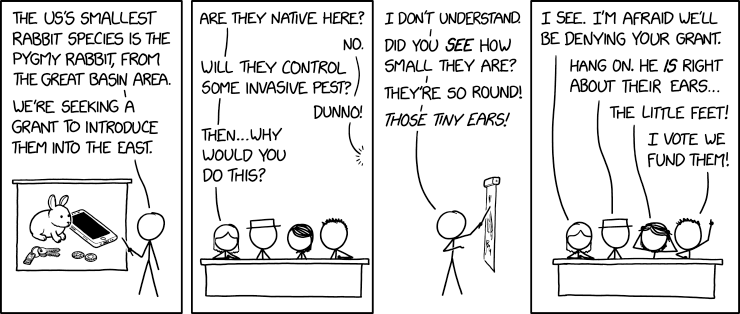
Rabbit Introduction


Rabbit Introduction

Gmail, Google Drive hit by outage


Updated at 5:00PM IST / 11.30AM GMT: Google says it has resolved the issue that was affecting a number of its services. Our original story follows.

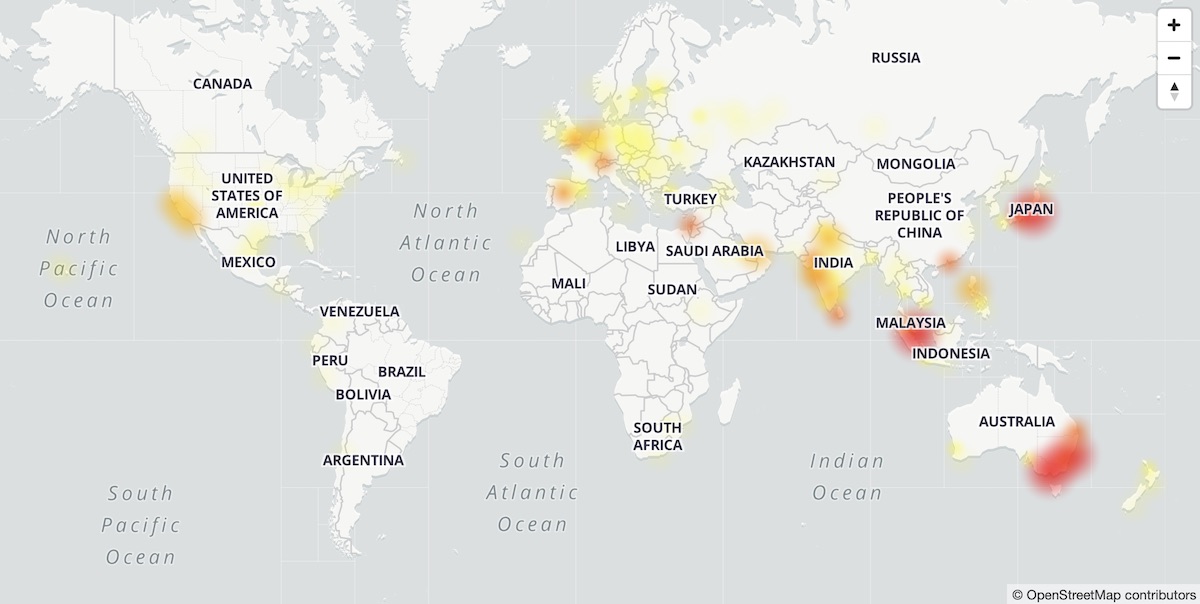
Having trouble accessing your Gmail, Google Drive or Google Meet? You’re not alone. Thousands of users, mostly in India, parts of the U.S., Australia, Japan and Malaysia are reporting they are unable to access the aforementioned Google services.

Some users have reported they are unable to log in to their Gmail accounts, while others are saying new emails are not showing up in the app and they are unable to add attachments. Some Google Drive users, including yours truly, are unable to upload new files to the cloud.

Third-party web monitoring firm Downdetector has corroborated the reports that began pouring in at around 04:40AM GMT. Google has acknowledged the existence of this outage to G Suite users, saying it is investigating the issue.

“We will provide an update by 8/20/20, 1:30 PM (IST) detailing when we expect to resolve the problem,” it wrote. More than two billion users rely on G Suite, Google said in March this year.

In an update moments ago, Google said, “Our team is continuing to investigate this issue. We will provide an update by 8/20/20, 1:51 PM with more information about this problem. Thank you for your patience. Gmail sending issues, Meet recording issues, Creating files issues in Drive, CSV user upload issues in Admin Console, Posting message issues in Google Chat.”

Downdetector estimates the regions that are facing the Gmail outage (Image: Downdetector)

We will update the story when things change.


Read Full Article

Overlooked teams up with college newspapers to build a news-focused social network


George Sehremelis is building what he calls a “social news network,” with the aim of combating the spread of misinformation and fake news online.

“My goal has always been to make an impact on the 2020 election,” Sehremelis told me — a tall order, particularly when the big social networks are struggling to solve these same problems. And as if that wasn’t enough, Sehremelis is hoping to revitalize student and local newspapers at the same time.

To do that, he’s launched Overlooked, an app currently being piloted with newspapers at the University of Southern California, Dartmouth, West Virginia University and elsewhere.

“We didn’t want to build a news aggregator, and we didn’t want to build a social network,” Sehremelis said. “We wanted to combine them.”

So Overlooked is an app where users — initially college students — can post, share and comment on articles. And that’s basically all they can do. They won’t be able to post any original content of their own, which Sehremelis said already “eliminates the possibility of a deep fake” video or image that’s been edited to mislead.

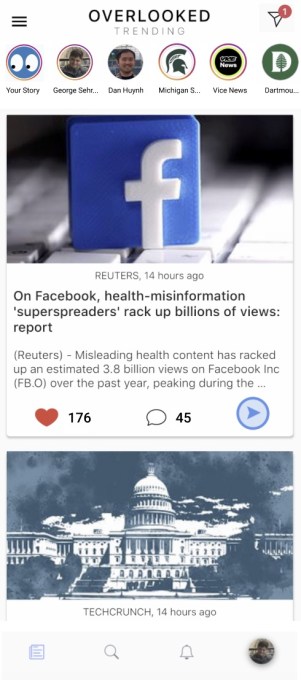
Overlooked screenshot

Image Credits: Overlooked

Of course, misinformation doesn’t just come from individual posts, but also from articles posted by publishers across the web. Those kinds of articles might still be shared on Overlooked, but Sehremelis argued that by eliminating user-generated content, the startup “drastically reduces the amounts of data that we have to vet.”

“Instead of posts, videos, memes, all of the above, there’s only news articles,” he continued. “One day in the future, our content moderators will be able to actually vet all the content on our system.”

But without those social posts and memes, what’s going to bring readers to the app? For one, Sehremelis said Overlooked is the “fastest way and the easiest way to share a news article with your friend.” This is also where the partnerships with student newspapers come in.

Sehremelis is a recent USC alum, and he participated in the school’s Blackstone LaunchPad powered by Techstars. He recalled visiting the offices of the USC newspaper, the Daily Trojan, and seeing printed newspapers stacked to the ceiling — which seemed like a wasted expense that’s disconnected from the way students actually get their news. This, in turn, led him “down the rabbit hole of the newspaper industry as a whole,” where he learned about broader circulation and revenue challenges.

“The newspaper, it needs a superhero,” Sehremelis said.

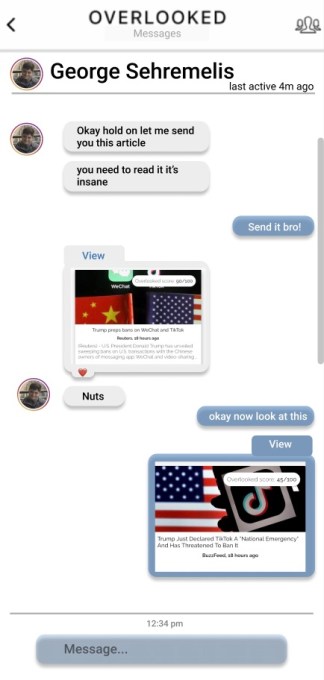
Overlooked screenshot

Image Credits: Overlooked

And in fact, Overlooked has created a superhero mascot of sorts called Article Man, who represents the profile that newspapers can create on Overlooked, allowing them to communicate and share content directly with readers. They also get a share of the revenue from any Overlooked advertising that targets the newspaper’s readers.

Sehremelis argued that this approach addresses the issues that arise from an individual newspaper app (which can have a hard time getting downloads) or a profile on social media (where a newspaper gives up control and rarely monetizes in a significant way). He suggested these issues are only going to be more acute this fall, with many colleges sticking to remote learning or bringing students back to campus in a reduced capacity.

“Students aren’t going to be on campus to pick up the newspaper,” he said. “Many students weren’t picking up newspapers, anyway. Many of these student newspapers instead are on social media — it’s just that social media wasn’t compensating them.”

In addition, he’s hoping to get Overlooked in classrooms (virtual or otherwise), with professors inviting their classes to join the app and discuss the news.


Read Full Article

Microsoft’s Seeing AI founder Saqib Shaikh is speaking at Sight Tech Global


When Microsoft CEO Satya Nadella introduced Saqib Shaikh on stage at BUILD in 2016, he was obviously moved by the engineer’s “passion and empathy,” which Nadella said, “is going to change the world.”

That assessment was on the mark because Shaikh went on to co-found the mobile app Seeing AI, which is a showcase for the power of AI applied to the needs of people who are blind or visually impaired. Using the camera on a phone, the Seeing AI app can describe a physical scene, identify persons and their demeanor, read documents (including handwritten ones), read currency values and tell colors. The latest version uses haptic technology to help the user discover the position of objects and people in an image. The app has been used 20 million times since launch nearly three years ago, and today it works in eight languages.

It’s exciting to announce that Shaikh will be speaking at Sight Tech Global, a virtual, global event that addresses how rapid advances in technology, many of them AI-related, will influence the development of accessibility and assistive technology for people who are blind or visually impaired. The show, which is a project for the Vista Center for the Blind and Visually Impaired Silicon Valley, launched recently on TechCrunch. The virtual event is Dec. 2-3 and free to the public. Pre-register here. 

Shaikh lost his vision at the age of 7, and attended a school for blind students, where he was intrigued by computers that could “talk” to students. He went on to study computer science at the U.K.’s University of Sussex. “One of the things I had always dreamt of since university,” he says, “was something that could tell you at any moment who and what’s going on around you.”  That dream turned into his destiny.

After he joined Microsoft in 2006, Shaikh participated in Microsoft’s annual, week-long hackathons in 2014 and 2015 to develop the idea of applying AI in ways that could help people who are blind or visually impaired. Not long after, Seeing AI became an official project and Shaikh’s full-time job at Microsoft. The company’s Cognitive Services APIs have been critical to his work, and he now leads a team of engineers who are leveraging emerging technology to empower people who are blind.

“When it comes to AI,” says Shaikh, “I consider disabled people to be really good early adopters. We can point to history where  blind people have been using talking books for decades and so on, all the way through to OCR text-to-speech, which is early AI. Today, this idea that a computer can look at an image and turn it into a sentence has many use-cases but probably the most compelling is to describe that image to a blind person. For blind people this is incredibly empowering.” Below is a video Microsoft released in 2016 about Shaikh and the Seeing AI project. 

The Seeing AI project is an early example of a tool that taps various AI technologies in ways that produce an almost “intelligent” experience. Seeing AI doesn’t just read the text, for example, it also tells the user how to move the phone so the document is in the viewfinder. It doesn’t just tell you there are people in front of you, it tells you something about them, including who they are (if you have named them in the past) and their general appearance.

At Sight Tech Global, Shaikh will speak about the future of Seeing AI and his views on how accessibility will unfold in a world more richly enabled by cloud compute, low latency networks and ever more sophisticated AI algorithms and data sets. 

To pre-register for a free pass, please visit Sight Tech Global.

Please follow the event on Twitter @Globalsight.

Sponsors are welcome, and there are opportunities available ranging from branding support to content integration. Please email sponsor@sighttechglobal.com for more information.


Read Full Article

20 August 2020

Tackling Open Challenges in Offline Reinforcement Learning


Over the past several years, there has been a surge of interest in reinforcement learning (RL) driven by its high-profile successes in game playing and robotic control. However, unlike supervised learning methods, which learn from massive datasets that are collected once and then reused, RL algorithms use a trial-and-error feedback loop that requires active interaction during learning, collecting data every time a new policy is learned. This approach is prohibitive in many real-world settings, such as healthcare, autonomous driving, and dialogue systems, where trial-and-error data collection can be costly, time consuming, or even irresponsible. Even for problems where some active data collection can be used, the requirement for interactive collection limits dataset size and diversity.

Offline RL (also called batch RL or fully off-policy RL) relies solely on a previously collected dataset without further interaction. It provides a way to utilize previously collected datasets — from previous RL experiments, from human demonstrations, and from hand-engineered exploration strategies — in order to automatically learn decision-making strategies. In principle, while off-policy RL algorithms can be used in the offline setting (fully off-policy), they are generally only successful when used with active environment interaction — without receiving this direct feedback, they often exhibit undesirable performance in practice. Consequently, while offline RL has enormous potential, that potential cannot be reached without resolving significant algorithmic challenges.

In “Offline Reinforcement Learning: Tutorial, Review, and Perspectives on Open Problems”, we provide a comprehensive tutorial on approaches for tackling the challenges of offline RL and discuss the many issues that remain. To address these issues, we have designed and released an open-source benchmarking framework, Datasets for Deep Data-Driven Reinforcement Learning (D4RL), as well as a new, simple, and highly effective offline RL algorithm, called conservative Q-learning (CQL).

Benchmarks for Offline RL
In order to understand the capabilities of current approaches and to guide future progress, it is first necessary to have effective benchmarks. A common choice in prior work was to simply use data generated by a successful online RL run. However, while simple, this data collection approach is artificial because it involves training an online RL agent which is prohibitive in many real-world settings as we discussed previously. One wishes to learn a policy that is better than the current best from diverse data sources that provides good coverage of the task. For example, one might have data collected from a hand-designed controller of a robot arm, and use offline RL to train an improved controller. To enable progress in this field under realistic settings, one needs a benchmark suite that accurately reflects these settings, while being simple and accessible enough to enable rapid experimentation.

D4RL provides standardized environments, datasets and evaluation protocols, as well as reference scores for recent algorithms to help accomplish this. This is a “batteries-included” resource, making it ideal for anyone to jump in and get started with minimal fuss.

Environments in D4RL

The key design goal for D4RL was to develop tasks that reflect both real-world dataset challenges as well as real-world applications. Previous datasets used data collected either from random agents or agents trained with RL. Instead, by thinking through potential applications in autonomous driving, robotics, and other domains, we considered how real-world applications of offline RL might require handling of data generated from human demonstrations or hard-coded controllers, data collected from heterogeneous sources, and data collected by agents with a variety of different goals.

Aside from the widely used MuJoCo locomotion tasks, D4RL includes datasets for more complex tasks. The Adroit domain, which requires manipulating a realistic robotic hand to use a hammer, for example, illustrates the challenges of working with limited human demonstrations, without which these tasks are extremely challenging. Previous work found that existing datasets could not distinguish between competing methods, whereas the Adroit domain reveals clear deficiencies between them.

Another common scenario for real-world tasks is one in which the dataset used for training is collected from agents performing a wide range of other activities that are related to, but not specifically targeted towards, the task of interest. For example, data from human drivers may illustrate how to drive a car well, but do not necessarily show how to reach a specific desired destination. In this case, one might like offline RL methods to “stitch” together parts of routes in the driving dataset to accomplish a task that was not actually seen in the data (i.e., navigation). As an illustrative example, given paths labeled “A” and “B” in the picture below, offline RL should be able to “remix” them to produce path C.

Having only observed paths A and B, they can be combined to form a shortest path (C).

We constructed a series of increasingly difficult tasks to exercise this “stitching” ability. The maze environments, shown below, require two robots (a simple ball or an “Ant” robot) to navigate to locations in a series of mazes.

Maze navigation environments in D4RL, which require “stitching” parts of paths to accomplish new navigational goals that were not seen in the dataset.

A more complex “stitching” scenario is provided by the Franka kitchen domain (based on the Adept environment), where demonstrations from humans using a VR interface comprise a multi-task dataset, and offline RL methods must again “remix” this data.

The “Franka kitchen” domain requires using data from human demonstrators performing a variety of different tasks in a simulated kitchen.

Finally, D4RL includes two tasks that are meant to more accurately reflect potential realistic applications of offline RL, both based on existing driving simulators. One is a first-person driving dataset that utilizes the widely used CARLA simulator developed at Intel, which provides photo-realistic images in realistic driving domains, and the other is a dataset from the Flow traffic control simulator (from UC Berkeley), which requires controlling autonomous vehicles to facilitate effective traffic flow.

D4RL includes datasets based on existing realistic simulators for driving with CARLA (left) and traffic management with Flow (right).

We have packaged these tasks and standardized datasets into an easy-to-use Python package to accelerate research. Furthermore, we provide benchmark numbers for all tasks using relevant prior methods (BC, SAC, BEAR, BRAC, AWR, BCQ), in order to baseline new approaches. We are not the first to propose a benchmark for offline RL: a number of prior works have proposed simple datasets based on running RL algorithms, and several more recent works have proposed datasets with image observations and other features. However, we believe that the more realistic dataset composition in D4RL makes it an effective way to drive progress in the field.

An Improved Algorithm for Offline RL
As we developed the benchmark tasks, we found that existing methods could not solve the more challenging tasks. The central challenge arises from a distributional shift: in order to improve over the historical data, offline RL algorithms must learn to make decisions that differ from the decisions taken in the dataset. However, this can lead to problems when the consequences of a seemingly good decision cannot be deduced from the data — if no agent has taken this particular turn in the maze, how does one know if it leads to the goal or not? Without handling this distributional shift problem, offline RL methods can extrapolate erroneously, making over-optimistic conclusions about the outcomes of rarely seen actions. Contrast this with the online setting, where reward bonuses modeled after curiosity and surprise optimistically bias the agent to explore all potentially rewarding paths. Because the agent receives interactive feedback, if the action turns out to be unrewarding, then it can simply avoid the path in the future.

To address this, we developed conservative Q-learning (CQL), an offline RL algorithm designed to guard against overestimation while avoiding explicit construction of a separate behavior model and without using importance weights. While standard Q-learning (and actor-critic) methods bootstrap from previous estimates, CQL is unique in that it is fundamentally a pessimistic algorithm: it assumes that if a good outcome was not seen for a given action, that action is likely to not be a good one. The central idea of CQL is to learn a lower bound on the policy’s expected return (called the Q-function), instead of learning to approximate the expected return. If we then optimize our policy under this conservative Q-function, we can be confident that its value is no lower than this estimate, preventing errors from overestimation.

We found that CQL attains state-of-the-art results on many of the harder D4RL tasks: CQL outperformed other approaches on the AntMaze, Kitchen tasks, and 6 out of 8 Adroit tasks. In particular, on the AntMaze tasks, which require navigating through a maze with an “Ant” robot, CQL is often the only algorithm that is able to learn non-trivial policies. CQL also performs well on other tasks, including Atari games. On the Atari tasks from Agarwal et al., CQL outperforms prior methods when data is limited (“1%” dataset). Moreover, CQL is simple to implement on top of existing algorithms (e.g., QR-DQN and SAC), without training additional neural networks.

Performance of CQL on Atari games with the 1% dataset from Agarwal et al.

Future Thoughts
We are excited about the fast-moving field of offline RL. While we took a first step towards a standard benchmark, there is clearly still room for improvement. We expect that as algorithms improve, we will need to reevaluate the tasks in the benchmark and develop more challenging tasks. We look forward to working with the community to evolve the benchmark and evaluation protocols. Together, we can bring the rich promises of offline RL to real-world applications.

Acknowledgements
This work was carried out in collaboration with UC Berkeley PhD students Aviral Kumar, Justin Fu, and Aurick Zhou, with contributions from Ofir Nachum from Google Research.


Report: Apple quietly acquired Israel’s Camerai, formerly Tipit, a specialist in AR and camera tech


Apple is well known for picking up smaller startups on the hush-hush to augment its business, and today news leaked out about the latest of these… nearly two years after the fact. Sometime between 2018 and 2019, the iPhone giant reportedly acquired and shut down Camerai, an augmented reality and computer vision company based out of Israel, which used to be called Tipit.

The news was first reported earlier today by Israeli newspaper Calcalist, and we have reached out to ask Apple directly about it. In the meantime, Jonathan (Yehonatan) Rimon, who had been Camerai’s CEO and co-founded the company with Moty Kosharovsky, Erez Tal, and Aaron Wetzler, declined to comment one way or the other on the report to us when we contacted him directly about it. A separate source confirmed the story to us. We’ll update as we learn more.

Calcalist said that the startup sold for several tens of millions of dollars. From being founded in 2015, Camerai had raised around $5 million — including a $2.5 million round in 2017 and another unreported $2.5 million in 2018 — with investors including the Atooro Fund and another called the SKO Fund.

It seems that the acquisition came on the heels of multiple approaches from a number of companies at a time when AR was arguably at a peak of hype and many big tech companies wanted a piece of the action. (Recall that 2018 was the year when Magic Leap raised nearly $1 billion in a single round of funding.) Back in 2018, we heard rumors that those approaching and looking at the startup included Apple, Samsung, and Alibaba.

The Calcalist report said that Camerai employees joined Apple’s computer vision team, and that the company’s technology has been incorporated into Apple products already. It’s not clear specifically where and when, but recall that both iOS 13 and iOS 14 have featured big software updates to the camera.

Camerai had built an SDK and specifically a range of software-based AR tools to help edit and use camera-made images in more sophisticated ways,

Its tech included the ability to detect different objects in the picture, and outline them with precision to alter them cosmetically; the ability to outline and apply filters across the whole image; a “skeleton tracking” neural network API that could detect and draw body joints in real time overlaid on a picture of a human; and its own version of selective focus for enhanced portrait modes (remember this was 2018 and this was not standard on phones at the time). Camerai’s site is shut down, but here are some screenshots of how it all looked, pulled from the Internet Archive:

[gallery ids="2034083,2034084,2034086,2034087"]

Camerai’s acquisition underscores a couple of interesting, and ongoing, trends.

The first of these is in the development of smartphone technology, particularly around cameras. Some of the more interesting innovations in smartphone camera technology have come not out of improvements in hardware, but software, where the application of breakthroughs in artificial intelligence can mean that an existing combination of sensor, lens, and on-phone and cloud processors produce a better and more technically dynamic picture than before.

At a time when smartphone replacement cycles have really slowed down and we are seeing also slower innovation on hardware, bolting on talent and tech created outside the phone companies is one way to gain a competitive edge.

(Separately, I wonder if making cutting edge technology software-based also means that there could be scope in the future for paid updates to older phone models, which could mean more incremental revenues from consumers that don’t want to invest incompletely new devices.)

The second trend that this deal underscores is how Israel remains fertile ground for bigger companies on the hunt to pick up and bolt on technology, and that the secretive approach is likely to remain for some time to come.

“In Israel there are over 350 global corporate companies, from 30 countries, who search for local innovation. Some of them like Apple, MS, Google, even have local R&D [operations],” said Avihai Michaeli, a Tel Aviv-based senior investment banker and startup advisor. “Those global companies look mainly for tech which could serve as its competitive edge. It is not the first time that an acquired startup is asked not to publish it was acquired, nor talk about it.”

Other acquisitions that Apple has made in Israel have included camera module maker LinX, semiconductor startup Anobit, and 3D sensor company PrimeSense.

We’ll update this post as we learn more.


Read Full Article

Yalochat, a fast-growing conversational commerce startup, lands $15 million led by B Capital


Yalochat, a five-year-old, Mexico City-based conversational commerce platform that enables customers like Coca Cola and Walmart to upsell, collect payments, and provide better service to their own customers over WhatsApp, Facebook Messenger and WeChat in China, has closed on $15 million in Series B funding led by B Capital Group.

Sierra Ventures, which led a $10 million Series A financing for the company in early 2019, also participated.

The round isn’t so surprising if Yalochat’s numbers are to be believed. It says that since the beginning of the COVID-19 pandemic, its platform has seen a tenfold increase in volume, and a 650% increase of message volume as more large enterprises  — especially outside of the U.S. — use messaging apps to manage some of their sales operations and much of their customer service.

Yalochat is chasing a fast-growing market, too. According to the 10-year-old, India-based market research company MarketsandMarkets, the conversational AI software market should see $4.8 billion in revenue this year and more than triple that amount by 2025.

Certainly, having conglomerates on board is speeding along the company’s growth.

“With Coca Cola, we started in Brazil and we helped them run their commerce when it comes to talking with small mom-and-pop shops,” says Yalochat founder and CEO Javier Mata, a Columbia University grad who studied engineering and founded three other companies beginning in 2013 before launching Yalochat.

“They had such success running their ordering process that they then took us to Mexico and Colombia, and we’re talking with [them about entering into the] Philippines and India.” Says Mata, “You try to get fast success in one market, then the conglomerate takes you into other areas of business so they can optimize their workflows around sales and customer service in other countries.”

Mata makes the process sound awfully easy, particularly considering that dozens of startups are also focused on conversational commerce and also raising funding right now.

Still, he argues that if you build your product the right way, it becomes a no-brainer for customers.

In pitching companies like Walmart, for example, he says Yalochat would “start with something super simple but high value that they could launch in a week.  We’d say, ‘That process for sales that it has taken you years [to organize], we can get it out for you by Friday.’ Then we’d just do it.

“It was low stakes for them to try us out, and as soon as they saw our conversion rates, we were introduced to other [units] with the corporation.” Says Mata, “I think why a lot of other companies haven’t been successful is that [their tech] is not simple or doesn’t really work. We made ours scalable, easy to launch, and capable of running smoothly without passing that complexity to end users.”

B Capital is plainly buying what Yalochat is selling. Firm cofounder Eduardo Saverin — who famously cofounded Facebook —  calls Mata and his team “phenomenally strong” and suggests there’s little to stop their trajectory right now. “Yalo is an example of a Latin American business that is already today in Asia. And if you’re building  a conversational commerce enablement for large enterprises that redefines the way they touch customers — [meaning] messaging applications, the most engaging medium in the world today —  should that really be confined to Latin America or Asia? Absolutely not.”

Saverin compares the startup to B Capital itself, which has offices in L.A., San Francisco, New York, and Singapore.

The firm has already made bets in the U.S., Europe, and Asia, since getting off the ground in 2015. Now, with Yalo, it has its first investment that’s principally headquartered in Latin America, as well.

“For us,” says Saverin, who grew up in Brazil, “we didn’t start investing everywhere on day one. But that’s the mission.”


Read Full Article

Author and former professional poker player Annie Duke on how conspiracy theories gain ground


Earlier today, Facebook said it had removed hundreds of QAnon groups from its site, and that it’s restricting many more groups, along with hundreds of pages and more than 10,000 Instagram accounts.

As The New York Times observed in its report about the maneuvers, four-year-old QAnon, once a fringe phenomenon, has gone mainstream in recent months despite a wide range of patently outlandish conspiracy theories, including that the world is run by pedophiles trying to damage Donald Trump and that 5G cellular networks are spreading the coronavirus.

How is this happening exactly? Because we happened to be talking this week with the famed former professional poker player turned best-selling author Annie Duke — an academic who now teaches about decision theory, including in her upcoming book “How to Decide: Simple Tools for Making Better Choices” —  we asked for her thoughts about whether and why more people than ever have grown susceptible to conspiracy theories.

She had some interesting things to say that we thought worth sharing. Stay tuned for a longer piece from our conversation about her new book and how it can help both founders and investors.

Our brains don’t like randomness. We as human beings are always trying to figure out this cause and effect that’s just kind of random, yet our brains don’t like; we try to connect dots and create causality where it doesn’t exist.

Belief in conspiracy theories isn’t correlated to intelligence. It’s kind of a different thing that’s going on with how comfortable are you with saying, ‘Shit happens. Sometimes life is random and there’s a lot of luck involved and what are you going to do?’ versus [people who] really want things to make sense and to [maintain] the illusion of control over outcomes.

If you say, ‘These random things can happen like COVID and people are dying and you’re now stuck in your home,’ it’s hard to think about that as luck expelling itself all over you because that has implications [regarding how much control] you have over your destiny. We’re very deterministic in how we  think . . . so we’re always connecting things together to make it feel like decisions and outcomes and things are much more deterministic than they are.

We’re also natural pattern recognizers, even where patterns don’t exist. It’s so we can partly figure out that, ‘When I went to this part of the plains, there were a lot of lions, [so for safety’s sake I shouldn’t go back],’ and so we can recognize faces. It’s [hard] to understand that the world is not as you see it and that we impose things on the world all the time. [Editor’s note: here, Duke points to this visual illusion (below) of two side-by-side cubes that look to be in motion but are not.]

We shouldn’t have so much confidence that we know the truth, but we really believe that the cubes are spinning. So [one solution is] don’t have so much confidence that we know the truth, and know that you’re imposing your reality on the world, as opposed to reality imposing itself on you.

Conspiracy theories are not new, in any case, they’ve been going on a long time. The bigger issue now is how easily they are amplified.

One of the heuristics we have to determine whether something is true or not is processing fluency, meaning how easy is it for us to process a message. If we hear something over and over again, it increases its truthiness, in the words of Stephen Colbert. If you add a picture — so I say giraffes are the only animal that can’t jump, and I include a picture of a giraffe — that increases this truthiness.

You can see where that interacts with social media. With theories plus repetition, it’s harder to figure out fact from fiction.

Again, we’ll have more with Duke soon, including why you’re almost certainly running your meetings the wrong way, and why we dig into losses without exploring enough why things go the right way when they do.


Read Full Article