03 October 2019

Sony’s new A9 II mirrorless full-frame camera has the speed sports photographers need


Sony announced a successor to its popular A9 mirrorless interchangeable lens full-frame camera today. The A9 II carries over some of the specs and stats of its predecessor, like the 24.2 megapixel stacked imaging sensor, but adds an upgraded BIONZ X image processor, which powers the much more powerful autofocus capabilities in the new camera.

Sony debuted a number of improved AF features on its A6400 APS-C camera earlier this year, and its brought those and more to the A7R IV it launched at the beginning of September, and on this new iteration of the A9. There’s real-time eye autofocus for both people and animals, with right and left eye selection for animals, along with real-time eye AF during movie shooting, and the company’s real-time object tracking, which basically sticks your focus point to whatever you want to point it at remarkably well, based on my experience with it in other modern Sony cameras.

Other new features to the camera include a body with upgraded dust and moisture resistance, which Sony also brought to the A7R IV, as well as a beefier design with a deeper grip that should be a welcome change in terms of ergonomics, especially for photographers with bigger hands. And while it uses the same battery, it also is rated for slightly more shots.

[gallery ids="1891690,1891689,1891687,1891688,1891685,1891684,1891683"]

Sony also brought its new digital audio interface to the hotshoe on the camera, again something it first introduced in the A7R IV. That will let you use their new shotgun mic and XLR adapter to pipe audio from external sources into the camera when recording video.

This camera is really intended to meet the needs of photographers who need high-speed capture capabilities, and Sony has bumped things up there, too. You get blackout-free, silent continuous shooting at up to 20fps, with a buffer size capable of capturing 361 JPGs or 239 of Sony’s ‘compressed’ RAW files in one continuous go – it can also calculate AF and auto exposure at up to 60 times per second, so each of these should be in focus and properly exposed even in changing lighting conditions.

The new A9 II goes on sale in November, and will be priced at $4,500 for the body only.


Read Full Article

Instagram launches Threads, a Close Friends chat app with auto-status


What if Instagram could automatically tell your Close Friends you’re 🏠 (home), 🤓 (working), 🚗 (on the move), or 🛋 (chilling and might want to hang out)? That’s the idea behind Instagram’s new companion app Threads, a Close Friends-only messaging experience that opens to the camera with shortcuts for instantly sending specific people photos and videos. Threads offers two brand new features called Status and Auto-Status that allow you to manually set an emoji as an away message to show Close Friends what you’re up to, or opt in to letting Instagram select one automatically based on your location, accelerometer, and even your phone’s battery level.
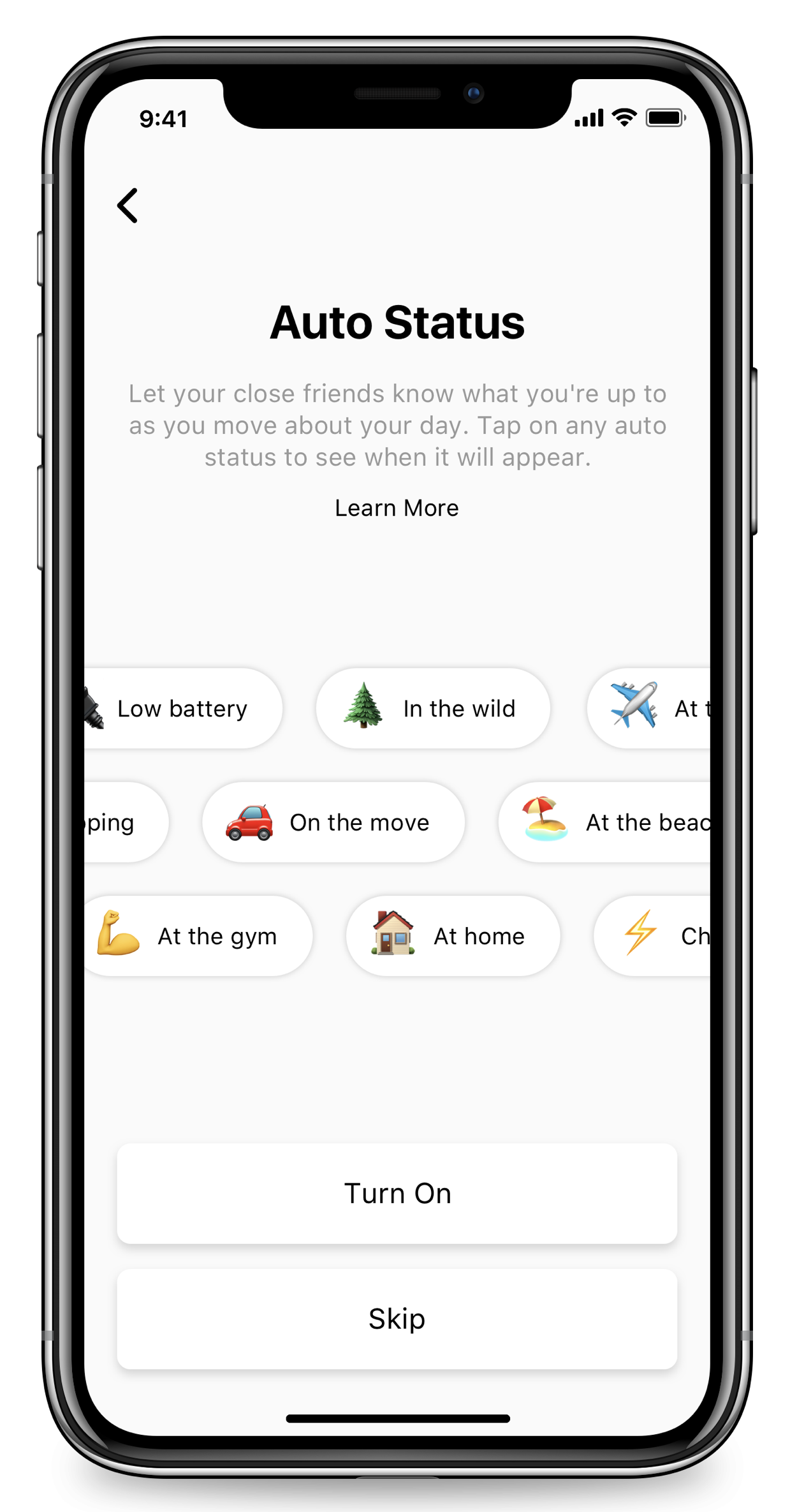
Instagram Threads Auto StatusLaunching globally today on iOS and Android, this is Facebook and Instagram’s next big swing at Snapchat, specifically targeting its top use case: rapid-fire camera and text messaging with your best friends. Sick of randos in your inbox? Only people in your Instagram Close Friends list show up in Threads so you can trust its notifications are important. You can still just use Instagram Direct in the main app or the two in parallel, though.

What’s most unique is that Threads finally sees the launch the Facebook “Your Emoji” status feature we reported it was prototyping 18 months ago. Threads Status and Auto-Status offer conversation starters, contextual clues to why someone might not respond, and opportunities to meet up offline. But importantly, it leaves out a map or any exact location sharing to avoid being creepy and instead focus on what Close Friends are up to — which determines if they can chat or hang out more than where they are.

Threads offers “persistent connection”, Instagram’s Director of consumer product management Robby Stein tells me. It was designed with three priorities: the ability to “fully control who can reach you”, speed because “If most of your messages only go to a couple of people, why isn’t the experience built around that?”, and “Having more of a connection through the day . . . even if you don’t have time for a conversation.”

By building Threads as a separate app, Instagram has little to lose if it flops and could learn about what features to pull back into its main app. But if it succeeds, Threads cement itself as where you stay in touch with your favorite people, while pigeonholing other messaging options like SMS, WeChat, as Snapchat as noisy channels full of unwanted alerts.

Close Friends Only

Social networks have an inevitable problem. Eventually out of coincidence and courtesy, you add too many people as friends, filling the apps with people who’s content you don’t care about and who’s messages you don’t always want. Facebook, the catch-all network for everything from family to bosses to acquaintances. That leads people to feel uncomfortable sharing too much, and to distrust that the notifications they get are important.
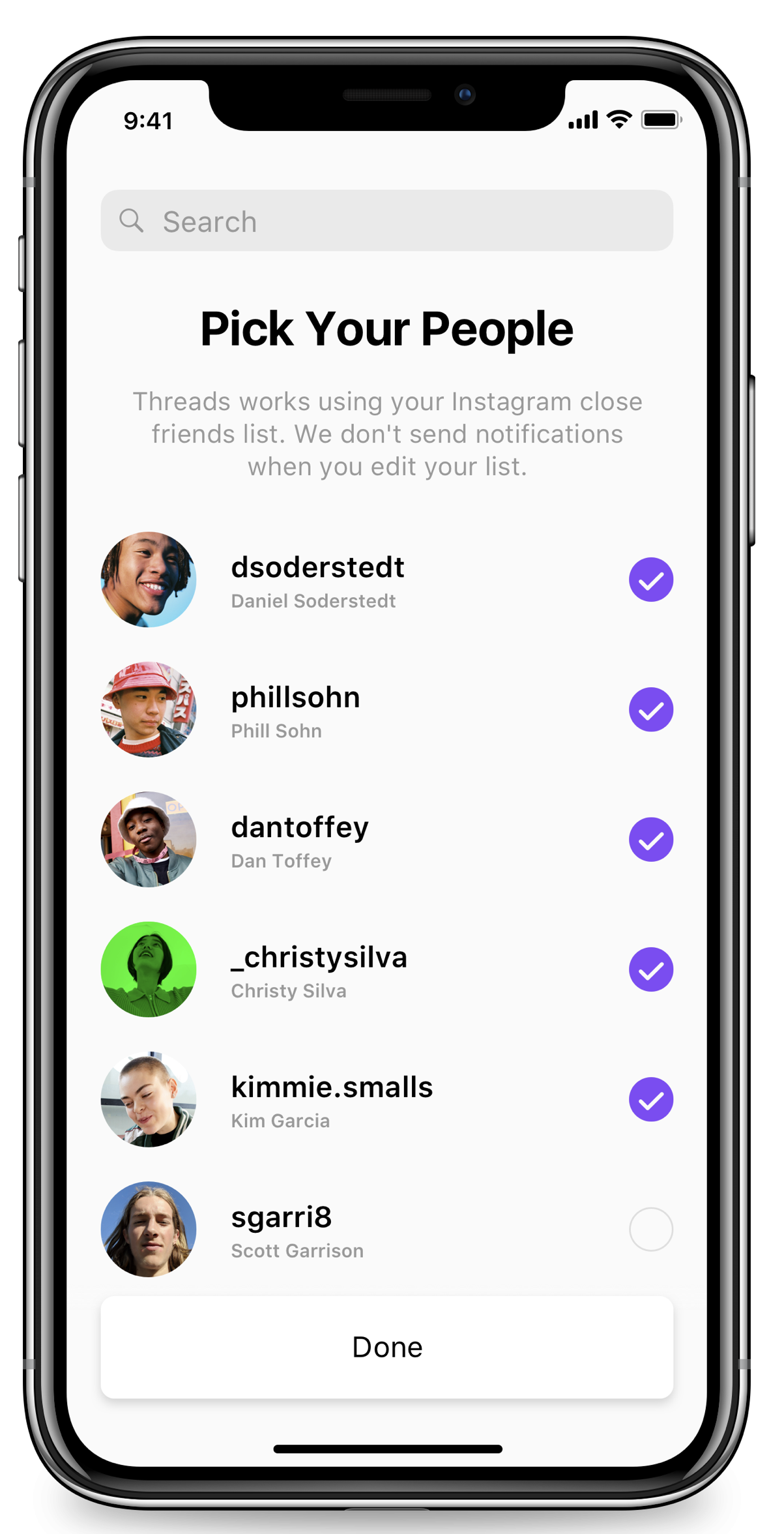
Instagram Close Friends ThreadsNow Instagram is doubling-down on Close Friends which launched last November at TechCrunch Disrupt Berlin to let you secretly set a special group of best pals who get to see special Stories you set as visible to only them. Facebook had tried complicated Lists products in the past and never seen them gain significant traction because it’s too tough to keep track of who’s in each. Instagram nailed the concept with a single list you edit as needed, though people don’t know if they’re added or removed. I’m surprised Facebook doesn’t already have its own Close Friends feature and it’d be smart to build one.

Instagram already tried building its own standalone Direct messaging app, but shut it down after low usage since it didn’t offer anything beyond what you already got in the main app. Casey Newton of The Verge reported Instagram was building an app with automatic activity sharing in August.

Now with Threads, Close Friends creates the foundation for something different. The only entries in your inbox are Close Friends, which you can edit in the app with the list syncing with your list on Instagram. You can hide any of those chats or group chats with exclusively close friends if you don’t want to see them.

When you open Threads, you’ll see open immediately to the camera like Snapchat. At the bottom are “Camera Shortcuts” that show friends’ faces you can tap on to send a photo or tap and hold for a video. You can also tap the “default camera” shutter and the select everyone you want to message. Since it’s focused on speed, there are no filters or augmented reality masks, just drawing and text overlays for off-the-cuff commentary on what’s going on around you.

Swiping up from the camera reveals the Threads inbox, where you can tap into a conversation for a full-featured messaging experience just like in Instagram Direct. There you can send GIFs, camera roll content, and more. Without unsolicited messages in your inbox, your most important people stay closer to the top. “I see more of my wife’s life now that we’re in this product” Stein tells me.
Instagram threads logo

Ambient Sharing With Auto-Status

With Status, you can set an emoji as your away message for one to four hours. You can select from pre-made ones with their own text tag lines, or define a new one from the full range of emoji. Meanwhile, Auto-Status defaults to off but can be turned on to give Instagram the ability to use data signals to choose an emoji for you. It will match your exact location to specific places like Home, Work, cafes, bars, traveling out of town and more. Your accelerometer lets it show if you’re biking or driving. And your phone battery can let it display that you’re low on juice or currently charging.

Why share my batter status? Stein tells me that if you’re charging your phone, you might not be next to it and could be slow to respond. Or if you’re low battery, you might suddenly stop replying all together. That’s helpful knowledge to share with Close Friends even if it’d be weird to post it more widely.

One problem is that who you want to message with often might include family or co-workers that you don’t want to have see your Close Friends Stories, but the list is used for both. At the same time, Threads could boost Close Friends usage, leading people to share more intimate and silly stuff on Stories which do help Instagram earn money thanks to the ads in between.

For now, though, Instagram tells me there’s no plan to monetize Threads directly or show any ads in it. In fact, Facebook won’t even use the exact locations pulled from the app to power ad targeting. Coordinates are only sent so it can match them to locations like a movie theater to show you’re at the movies. Facebook won’t store the locations and they only stay on your device for a short period before they’re deleted.

Still, Auto-Status is sure to rile some who think Facebook and Instagram are too creepy to give any more data. But if the convenience of knowing your friend is available to hang out or is probably too stressed for a chat outweighs the company’s toxic brand, Instagram could develop an important new social behavior. Even if it doesn’t monetize it directly, Threads could keep users locked into the Insta ecosystem where they’ll see plenty of feed and Story ads between message bouts.

Social graph bloat causes a chilling effect on sharing. It’s what Snapchat, Path, and other apps have tried to solve but ended up succumbing to. Instagram accepts that you’ll inevitably connect with people you don’t care much about out of social obligation, pity, or apathy. But by building whole products around just sharing with your favorite subset of people, it could unlock what we self-center — the real us.


Read Full Article

Instagram launches Threads, a Close Friends chat app with auto-status


What if Instagram could automatically tell your Close Friends you’re 🏠 (home), 🤓 (working), 🚗 (on the move), or 🛋 (chilling and might want to hang out)? That’s the idea behind Instagram’s new companion app Threads, a Close Friends-only messaging experience that opens to the camera with shortcuts for instantly sending specific people photos and videos. Threads offers two brand new features called Status and Auto-Status that allow you to manually set an emoji as an away message to show Close Friends what you’re up to, or opt in to letting Instagram select one automatically based on your location, accelerometer, and even your phone’s battery level.

Instagram Threads Auto StatusLaunching globally today on iOS and Android, this is Facebook and Instagram’s next big swing at Snapchat, specifically targeting its top use case: rapid-fire camera and text messaging with your best friends. Sick of randos in your inbox? Only people in your Instagram Close Friends list show up in Threads so you can trust its notifications are important. You can still just use Instagram Direct in the main app or the two in parallel, though.

What’s most unique is that Threads finally sees the launch the Facebook “Your Emoji” status feature we reported it was prototyping 18 months ago. Threads Status and Auto-Status offer conversation starters, contextual clues to why someone might not respond, and opportunities to meet up offline. But importantly, it leaves out a map or any exact location sharing to avoid being creepy and instead focus on what Close Friends are up to — which determines if they can chat or hang out more than where they are.

Threads offers “persistent connection”, Instagram’s Director of consumer product management Robby Stein tells me. It was designed with three priorities: the ability to “fully control who can reach you”, speed because “If most of your messages only go to a couple of people, why isn’t the experience built around that?”, and “Having more of a connection through the day . . . even if you don’t have time for a conversation.”

By building Threads as a separate app, Instagram has little to lose if it flops and could learn about what features to pull back into its main app. But if it succeeds, Threads cement itself as where you stay in touch with your favorite people, while pigeonholing other messaging options like SMS, WeChat, as Snapchat as noisy channels full of unwanted alerts.

Close Friends Only

Social networks have an inevitable problem. Eventually out of coincidence and courtesy, you add too many people as friends, filling the apps with people who’s content you don’t care about and who’s messages you don’t always want. Facebook, the catch-all network for everything from family to bosses to acquaintances. That leads people to feel uncomfortable sharing too much, and to distrust that the notifications they get are important.

Instagram Close Friends ThreadsNow Instagram is doubling-down on Close Friends which launched last November at TechCrunch Disrupt Berlin to let you secretly set a special group of best pals who get to see special Stories you set as visible to only them. Facebook had tried complicated Lists products in the past and never seen them gain significant traction because it’s too tough to keep track of who’s in each. Instagram nailed the concept with a single list you edit as needed, though people don’t know if they’re added or removed. I’m surprised Facebook doesn’t already have its own Close Friends feature and it’d be smart to build one.

Instagram already tried building its own standalone Direct messaging app, but shut it down after low usage since it didn’t offer anything beyond what you already got in the main app. Casey Newton of The Verge reported Instagram was building an app with automatic activity sharing in August.

Now with Threads, Close Friends creates the foundation for something different. The only entries in your inbox are Close Friends, which you can edit in the app with the list syncing with your list on Instagram. You can hide any of those chats or group chats with exclusively close friends if you don’t want to see them.

When you open Threads, you’ll see open immediately to the camera like Snapchat. At the bottom are “Camera Shortcuts” that show friends’ faces you can tap on to send a photo or tap and hold for a video. You can also tap the “default camera” shutter and the select everyone you want to message. Swiping up reveals the Threads inbox, where you can tap into a conversation for a full-featured messaging experience just like in Instagram Direct. “I see more of my wife’s life now that we’re in this product” Stein tells me.

With Status, you can set an emoji as your away message for one to four hours. You can select from pre-made ones with their own text tag lines, or define a new one from the full range of emoji. Meanwhile, Auto-Status defaults to off but can be turned on to give Instagram the ability to use data signals to choose an emoji for you. It will match your exact location to specific places like Home, Work, cafes, bars, traveling out of town and more. Your accelerometer lets it show if you’re biking or driving. And your phone battery can let it display that you’re low on juice or currently charging.

Instagram threads logo

Why share my batter status? Stein tells me that if you’re charging your phone, you might not be next to it and could be slow to respond. Or if you’re low battery, you might suddenly stop replying all together. That’s helpful knowledge to share with Close Friends even if it’d be weird to post it more widely.

One problem is that who you want to message with often might include family or co-workers that you don’t want to have see your Close Friends Stories, but the list is used for both. At the same time, Threads could boost Close Friends usage, leading people to share more intimate and silly stuff on Stories which do help Instagram earn money thanks to the ads in between.

For now, though, Instagram tells me there’s no plan to monetize Threads directly or show any ads in it. In fact, Facebook won’t even use the exact locations pulled from the app to power ad targeting. Coordinates are only sent so it can match them to locations like a movie theater to show you’re at the movies. Facebook won’t store the locations and they only stay on your device for a short period before they’re deleted.

Still, Auto-Status is sure to rile some who think Facebook and Instagram are too creepy to give any more data. But if the convenience of knowing your friend is available to hang out or is probably too stressed for a chat outweighs the company’s toxic brand, Instagram could develop an important new social behavior. Even if it doesn’t monetize it directly, Threads could keep users locked into the Insta ecosystem where they’ll see plenty of feed and Story ads between message bouts.

Social graph bloat causes a chilling effect on sharing. It’s what Snapchat, Path, and other apps have tried to solve but ended up succumbing to. Instagram accepts that you’ll inevitably connect with people you don’t care much about out of social obligation, pity, or apathy. But by building whole products around just sharing with your favorite subset of people, it could unlock what we self-center — the real us.


Read Full Article

What happens in your brain when you taste food | Camilla Arndal Andersen

What happens in your brain when you taste food | Camilla Arndal Andersen

With fascinating research and hilarious anecdotes, neuroscientist Camilla Arndal Andersen takes us into the lab where she studies people's sense of taste via brain scans. She reveals surprising insights about the way our brains subconsciously experience food -- and shows how this data could help us eat healthier without sacrificing taste.

Click the above link to download the TED talk.

Stock trading app Robinhood revamps its newsfeed with The Wall Street Journal and ad-free videos


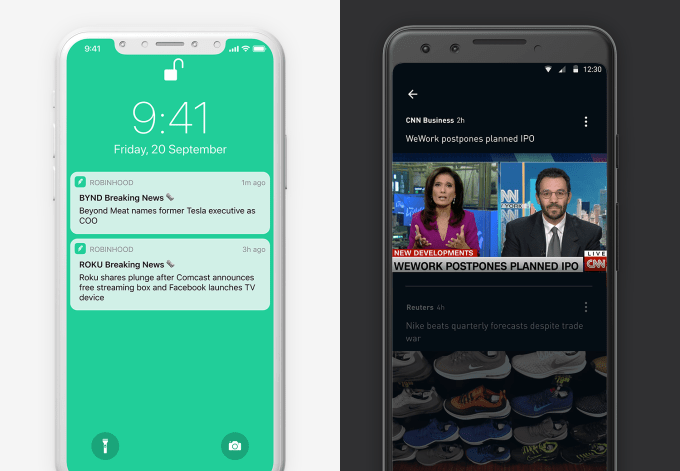
Robinhood may be best known its free stock trading, but today it’s rolling out a new version of the newsfeed, adding content from Reuters, Barron’s and market coverage from The Wall Street Journal, with no paywall or additional charge.

In addition, Robinhood is introducing video into the newsfeed, with ad-free videos from CNN Business, Cheddar and (again) Reuters.

The startup, which recently raised $323 million at a $7.6 billion valuation, has been showing more interest in content lately with the acquisition of the financial podcast and newsletter MarketSnacks — and as part of the redesign, the newsletter (now called Snacks) can be read directly in the app.

“A lot of this is not even about making investment decisions,” Robinhood’s Vice President of Product Josh Elman told me. “[Some users] check Robinhood very, very often just to consume the news and understand the companies that they’re watching, the ones that they are invested in and continuing to hold.”

He added that just buying and selling stocks is “sort of a utility,” so Robinhood wants to help its users “to feel informed, to be empowered to make their own decisions.”

Robinhood newsfeed

Before redesigning the newsfeed, Elman said the team did a seven-day study, where they asked subjects to create a diary of “all of their experiences reading and understanding market news.”

Among other things, Elman’s team learned that people “really want to read news from multiple, trusted sources,” which is why Robinhood is partnering with these publications. In addition, they saw that people like watching videos: “Even if it’s in the background, ultimately, people really told us they feel more confident and control in their decisions.”

Along with bringing in new content (which, again, is taken out from behind paywalls and is ad-free), Elman said the Robinhood newsfeed also features “all-new algorithms and a whole new display layer.” Robinhood users can see the new interface for themselves, but I was curious about those algorithms.

“We start with the companies you either own and hold in your portfolio or are watching, what types of sources do you frequently like to watch … and we make sure that we’re bringing you that news as much as possible,” Elman said. “And we have a lot of room to grow from here.”


Read Full Article

Redesigned Google Shopping goes live, with price tracking, Google Lens for outfits and more


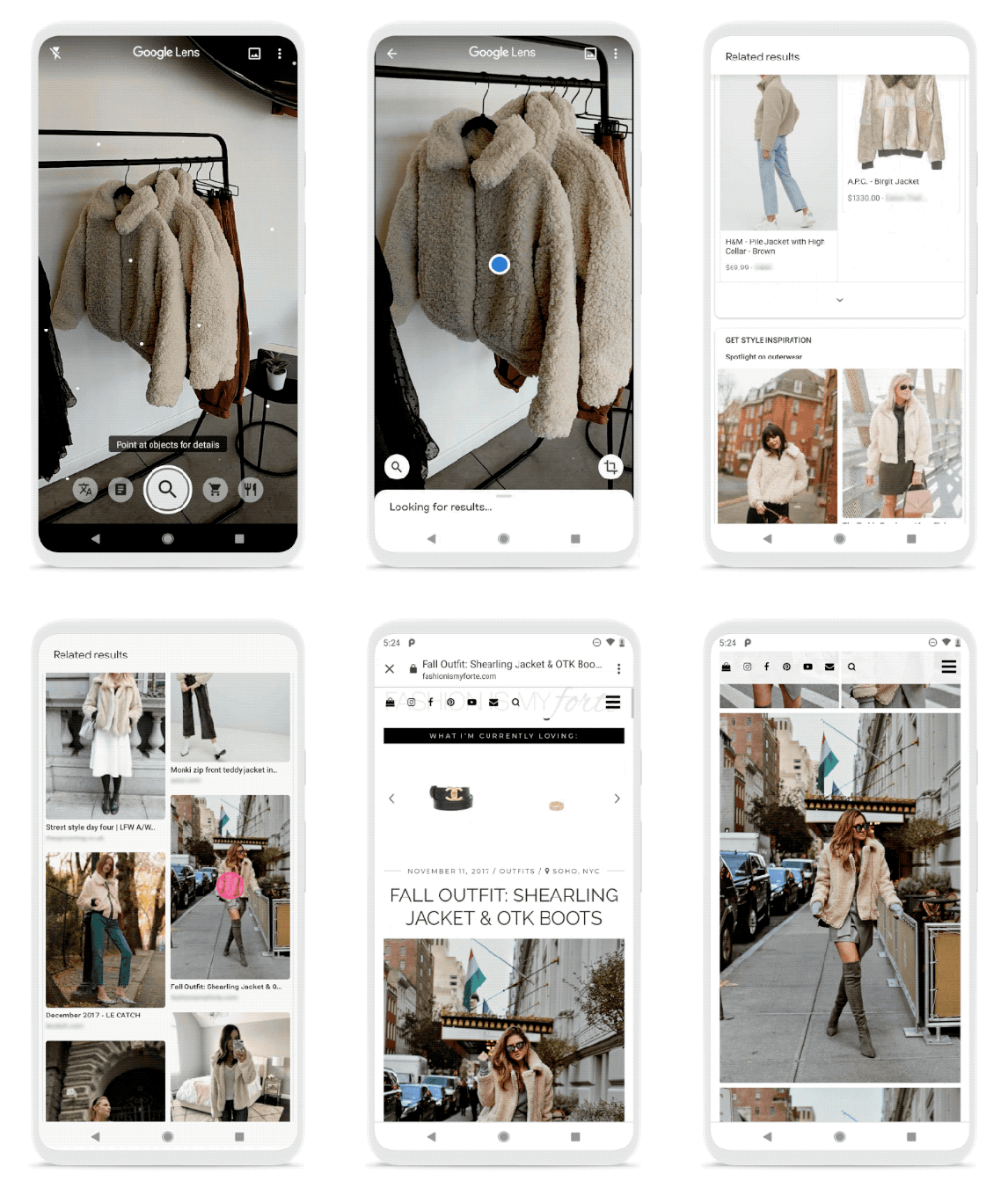
Google Shopping is getting a redesign with several new features, including options to shop local stores, track prices and even find style inspiration through Google Lens. Already, Google Lens’ smart image recognition technology can help identify objects, translate text, and find similar items. Now, using a photo of an outfit you like — for instance, something you found on Instagram — Google Lens will be able to pull up other “style ideas” from around the web.

These style ideas are focused on showing you how other people are wearing the item in question, not just returning matches of similar items, Google explains.

For example, if you found a skirt on social media, you could take a screenshot then use Lens in Google Photos to see how other people have been photographed wearing that same skirt.

Lens style ideas

But Lens isn’t limited to photos of new clothes posted online. You can also photograph an item hanging in your own closet, or seen on a store rack, and get suggestions of people wearing similar pieces.

The feature complements Lens’ existing item suggestions for things like home décor and individual items of clothing.

It’s also clearly meant as a challenger to Pinterest, which has been heavily investing in its own image recognition technology. This has allowed it to capture consumers’ interest long before their placing items in their online shopping cart — an existential threat to Google’s business, potentially.

Pinterest users often browse the site for inspiration, whether that’s what to wear or how to wear it, or how to decorate their home, or even where to travel. Later, those interests and desires may translate to clicks and purchases. The challenge for Pinterest is being able to connect the inspirational browsing with the checkout process.

Pinterest’s latest efforts on that front is the launch of its own “shop” tab, designed to showcase products.

Google, meanwhile, is doubling down on Google Shopping.

Its big redesign has now rolled out in the U.S. on both web and mobile, following the merger with Google Express earlier this year, and last month’s final shutdown of the Google Express brand and destination. 

The new version of Google Shopping aims to make itself a one-stop-shop for everything that’s around the web…and not on Amazon.

Price tracking

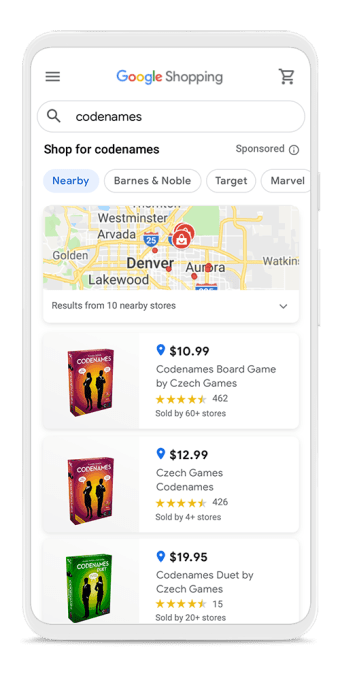
The updated Google Shopping experience includes a personalized homepage based on your habits and purchases, a price tracker for getting notifications of changes and drops, and the ability to shop from both online and local retailers. (Buying locally means you’ll have the option to go pick it up — great for last-minute gifts.)

Google says you can now shop from over 1,000 stores through Google Shopping and check out using the information saved to your Google account. It also offers a “Google guarantee,” on the items you purchase, which includes customer support and help with things like returns and exchanges.

Google is pitching the new experience as a redesign. And to some extent, it is, thanks to new features like price tracking and universal shopping carts. However, at the root of it, you’ll find it’s still very much the same concept that once was Google Express. That is: it’s an online Google-branded destination where shopping is meant to be as convenient as on Amazon.

Nearby results

But Google Express failed to capture consumers’ attention the first time around because of what Google lacks: a Prime competitor. There is no subscription that promises fast, 2-day (or less) shipping on millions of items, nor the wider perks program that Amazon Prime offers.

That said, it’s smart for Google to capitalize on the shopping search traffic it does have, and make that experience feel more connected and seamless. After all, Amazon doesn’t have everything — especially when it comes to specific fashion brands. That will see users turn to Google to search instead.

Google Shopping homepage

Google says the new Google Shopping is live in the U.S. on web and mobile today.

Google Lens is also live in the U.S. only for now.


Read Full Article
Dive Into Big Data With This Huge MATLAB and LabVIEW Training Bundle


Over the next decade, biotechnology and computer science are likely to shape our world. Artificial brains will take decisions and smart cities will run themselves. But to make that happen, someone needs to build programs and algorithms for analyzing vast amounts of data. If you want to dive into this lucrative niche, the Essential MATLAB & LabVIEW Mega Bundle is a great place to start. The bundle contains nine courses, covering some of the key development tools used by programmers, engineers and scientists. Right now, you can get the training for $29 at MakeUseOf Deals.

MATLAB, LabVIEW, and More

There are many frameworks for building algorithms and simulations. But in the scientific community, MATLAB and LabVIEW are usually favored. To break into biotech or design the future, it’s a good idea to know the tools.

This bundle gives you a comprehensive education. Through 342 video tutorials, you learn how to build advanced algorithms, data simulations and visualizations, and GUIs. You don’t need any previous experience with code, and each of the nine courses provides plenty of hands-on practice.

Along the way, you will learn to build data models with Simulink, connected systems with labVIEW, and polished user-facing apps with MATLAB.

62 Hours for $29

Order now for $29 to get lifetime access to all 62 hours of video instruction, worth $1,800.

Read the full article: Dive Into Big Data With This Huge MATLAB and LabVIEW Training Bundle


Read Full Article

Samsung pulls the plug on Chinese smartphone production


Samsung this morning confirmed with Reuters that it has shuttered handset production in China. The move comes as the company continues to struggle in the world’s No. 1 smartphone market.

As we noted in a deeper dive into China’s smartphone sales back in August, the Korean hardware giant has struggled to maintain a market share in the low single digits. It’s not alone, of course; Apple, too, has faced an uphill effort to crack the market, which is dominated by homegrown names, including Huawei, Vivo, Oppo and Xiaomi.

Sales have been driven by a combination of pricing and, in the case of embattled Huawei, patriotic purchasing decisions.

Samsung has slowly phased out production in the country over the past year, suspending operations in some plants, before ultimately pulling the plug altogether. The news follows a similar move by Sony. Apple, meanwhile, is maintaining its production in the country for now.

More recently, Samsung has looked to others countries, including India and Vietnam, which have undercut China’s production costs. The company will, however, continue selling phones in China, even as it eyes other cheaper locations for manufacturing.


Read Full Article

MyMilk Labs launches Mylee, a small sensor that analyzes breast milk at home


Many expectant mothers are told that breastfeeding will come naturally, but it is often a fraught and confusing experience, especially during the first few weeks after birth. Parents often worry about if their babies are getting enough nutrition or if they are producing enough milk. MyMilk Labs wants to give nursing mothers more information with Mylee, a sensor that scans a few drops of breast milk to get information about its composition and connects to a mobile app. The Israel-based company presented today at Disrupt Battlefield as one of two wild card competitors picked from Startup Alley.

The Mylee launched at Disrupt with a pre-order price of $249 (its regular retail price is $349). Based in Israel, MyMilk Labs was founded in 2014 by Ravid Schecter and Sharon Haramati, who met while working on PhDs in neuroimmunology and neurobiology, respectively, at the Weizmann Institute of Science.

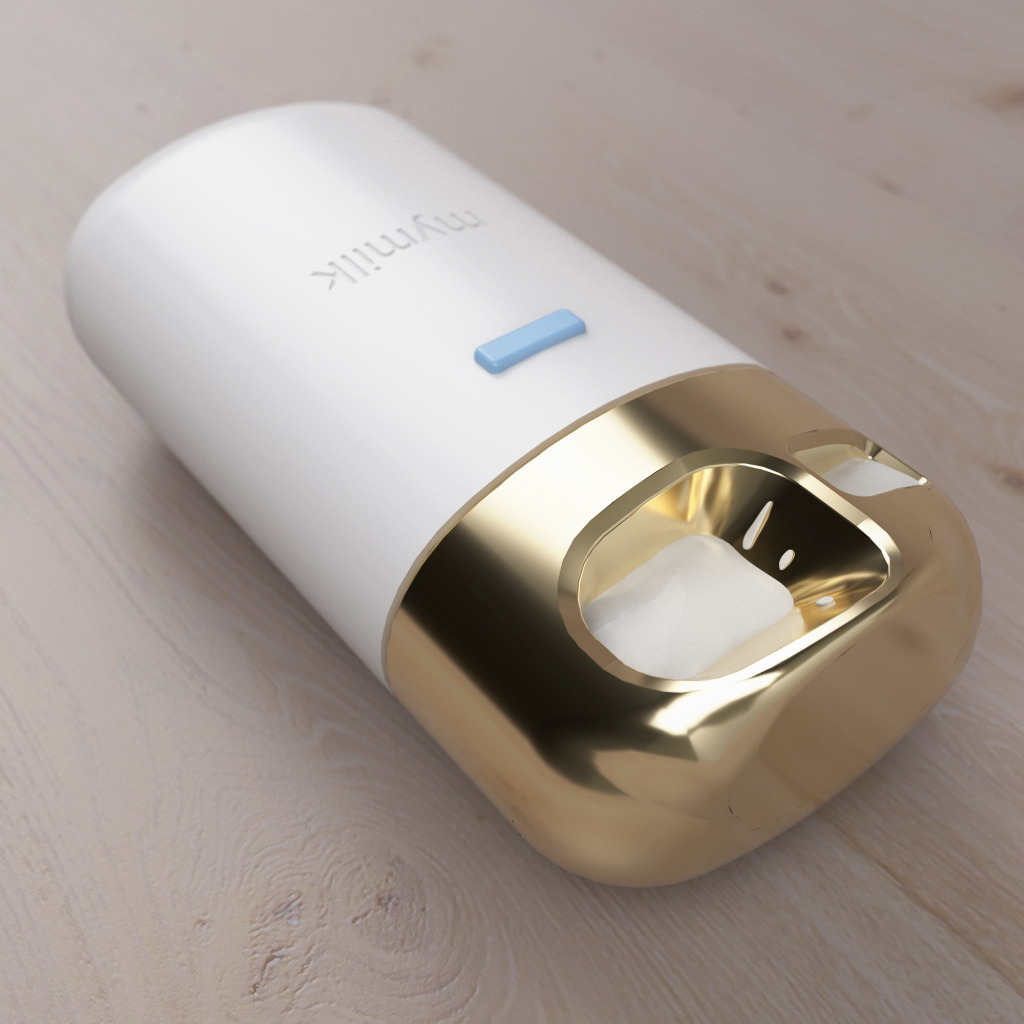
Mylee deviceDuring the company’s stage presentation, Schecter said the device is meant to give mothers and lactation consultants objective information about breast milk.

Breast milk changes in the first days and weeks after birth, progressing from colostrum to mature milk. Mylee scans the electrochemical properties of milk and then correlates that to data points based on MyMilk Labs’ research to calculate where the sample is on the continuum, then tells mothers if their milk is “delayed” or “advanced,” relative to the time that has passed since they gave birth.

The device’s first version is currently in a beta pilot with lactation consultants who have used them to scan milk samples from 500 mothers.

MyMilk Labs already has consumer breast milk testing kits that enable mothers to provide a small sample at home that is then sent to MyMilk Labs’ laboratories for analysis. One is a nutritional panel that gives information about the milk’s levels of vitamins B6, B12 and A, calories and fat percentage, along with dietary recommendations for the mother. Another panel focuses on what is causing breast pain, a frequent complaint for nursing mothers. It tests for bacterial or fungal infections and gives antibiotic suggestions depending on what strains are detected.

Though some doctors believe testing kits are unnecessary for the majority of nursing mothers, there is demand for more knowledge about breastfeeding, as demonstrated by the line-up of breast milk testing kits from MyMilk Labs and competitors like Lactation Labs, Everly Well and Happy Vitals. Haramati said on stage that MyMilk Labs plans to eventually transfer some of the tests’ capabilities to the Mylee.


Read Full Article
Rune raises $2M to help you find new friends in mobile games, starting with Brawl Stars


Multiplayer games are more fun when you get to play with the same crew regularly. Playing with the same people means better cooperation, deeper strategies, and, if all goes well, more wins.

But what if none of your friends play the game you want to play?

Rune, a company out of Y Combinator’s Winter 2019 class, wants to use AI to help you find the right people to play with, connecting you via voice chat. And they’ve just closed a $2M seed round to get it done.

The round was led by the gaming-focused firm Makers Fund, and backed by byFounders, E14 Fund, VentureSouq, and Gmail creator Paul Buchheit.

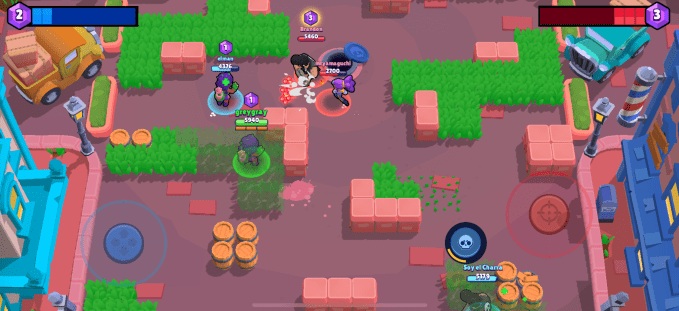
The first game they’re supporting is Brawl Stars, the popular free-to-play mobile game built by Clash of Clans creator Supercell. It’s a pretty perfect game for something like this — it’s a game where strategic teams have a solid advantage, but where building such a team from scratch can be tough. Brawl Stars will automatically match you with teammates if you’re playing alone, but in-game communication is limited and random players tend to only hang around for a game or two.

brawl stars

Supercell’s Brawl Stars

When you first sign up, Rune asks you a handful of questions to start tuning their matchmaking algorithm. Which language(s) do you speak? How much Brawl Stars have you played (how many “trophies” have you earned?) What sort of gameplay are you looking for right now — are you just messing around, or are you looking for nothing but wins? Push a button, and the matchmaking system starts its search.

The more you play, the better the algorithm is tuned. If you seem to have longer play sessions with certain players, for example, it can prioritize matchmaking you with players their algorithms see as similar. (For the curious: while they will tune the matchmaking algorithms based on metadata like who you’re chatting with and for how long, Rune co-founder Sanjay Guruprasad tells me that they don’t store or analyze the actual voice communication in any way.)

The company says that players have collectively spent around 50,000 hours chatting through the app since launching in March of 2019.

Rune’s matchmaking and voice chat systems are currently limited to two players. Since Brawl Stars (and plenty of other Battle Royale/arena style games) have game modes that support up to three players per team, Sanjay tells me that 3-player matchmaking and voice chat are “both in the pipeline and will come out soon.”

Rune plans to support other games beyond Brawl Stars in the future — in fact, driving traffic to other games is part of their plans to monetize the free app. Once you’ve befriended someone, you’re free to use Rune for voice chat with whatever game you want; it just runs in the background, so what you’re playing doesn’t matter too much.

Rune is available for free on iOS here, and on Android here.


Read Full Article

Rune raises $2M to help you find new friends in mobile games, starting with Brawl Stars


Multiplayer games are more fun when you get to play with the same crew regularly. Playing with the same people means better cooperation, deeper strategies, and, if all goes well, more wins.

But what if none of your friends play the game you want to play?

Rune, a company out of Y Combinator’s Winter 2019 class, wants to use AI to help you find the right people to play with, connecting you via voice chat. And they’ve just closed a $2M seed round to get it done.

The round was led by the gaming-focused firm Makers Fund, and backed by byFounders, E14 Fund, VentureSouq, and Gmail creator Paul Buchheit.

The first game they’re supporting is Brawl Stars, the popular free-to-play mobile game built by Clash of Clans creator Supercell. It’s a pretty perfect game for something like this — it’s a game where strategic teams have a solid advantage, but where building such a team from scratch can be tough. Brawl Stars will automatically match you with teammates if you’re playing alone, but in-game communication is limited and random players tend to only hang around for a game or two.

brawl stars

Supercell’s Brawl Stars

When you first sign up, Rune asks you a handful of questions to start tuning their matchmaking algorithm. Which language(s) do you speak? How much Brawl Stars have you played (how many “trophies” have you earned?) What sort of gameplay are you looking for right now — are you just messing around, or are you looking for nothing but wins? Push a button, and the matchmaking system starts its search.

The more you play, the better the algorithm is tuned. If you seem to have longer play sessions with certain players, for example, it can prioritize matchmaking you with players their algorithms see as similar. (For the curious: while they will tune the matchmaking algorithms based on metadata like who you’re chatting with and for how long, Rune co-founder Sanjay Guruprasad tells me that they don’t store or analyze the actual voice communication in any way.)

The company says that players have collectively spent around 50,000 hours chatting through the app since launching in March of 2019.

Rune’s matchmaking and voice chat systems are currently limited to two players. Since Brawl Stars (and plenty of other Battle Royale/arena style games) have game modes that support up to three players per team, Sanjay tells me that 3-player matchmaking and voice chat are “both in the pipeline and will come out soon.”

Rune plans to support other games beyond Brawl Stars in the future — in fact, driving traffic to other games is part of their plans to monetize the free app. Once you’ve befriended someone, you’re free to use Rune for voice chat with whatever game you want; it just runs in the background, so what you’re playing doesn’t matter too much.

Rune is available for free on iOS here, and on Android here.


Read Full Article

YouTube’s Neal Mohan describes the company’s efforts on safety and trust


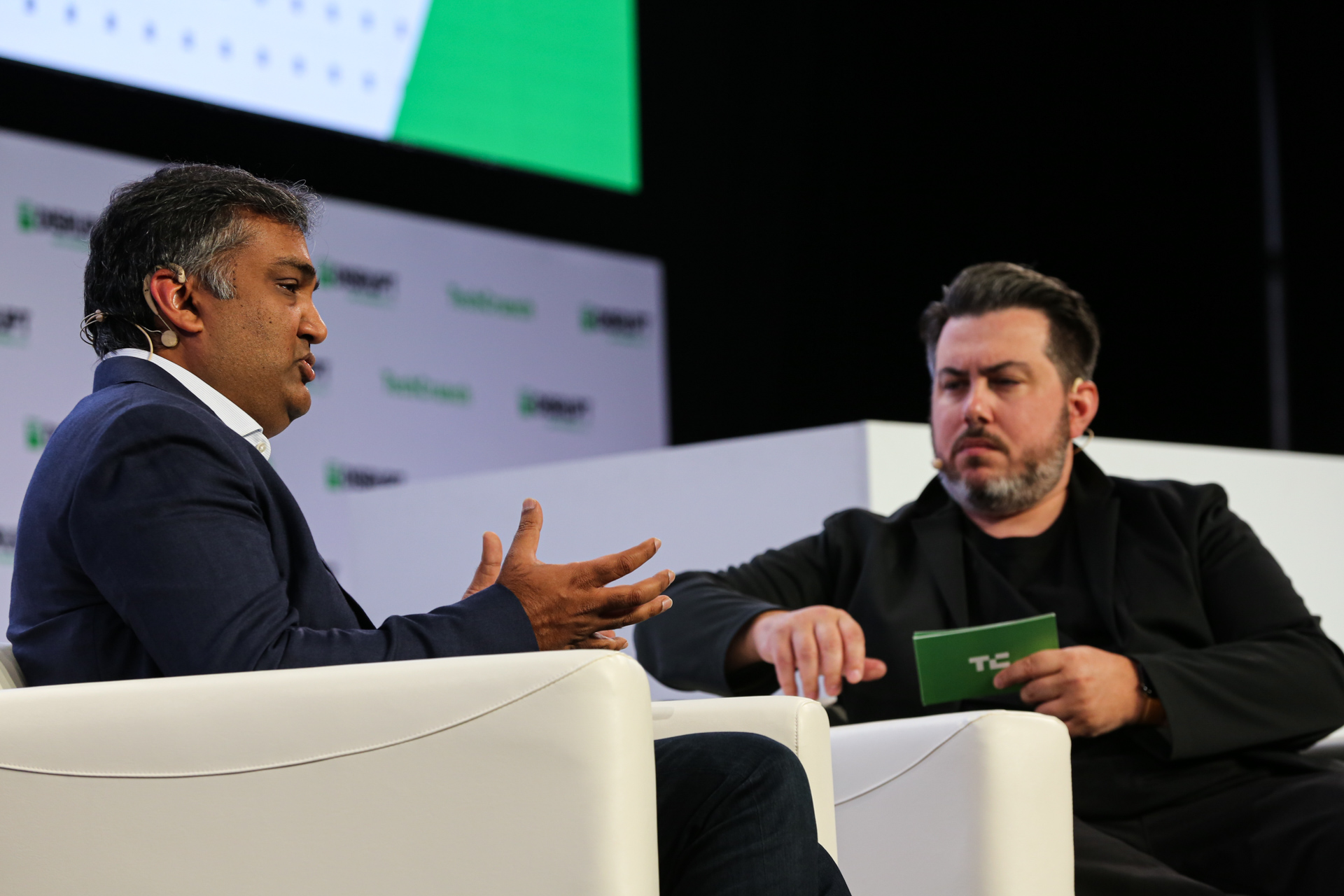
YouTube Chief Product Officer Neal Mohan gave an update on all things YouTube at TechCrunch Disrupt SF. He touched on many different subjects, from YouTube Music updates to advertiser-friendly guidelines and tweaking YouTube’s recommendation algorithm.

Mohan started right away with an update on YouTube Music. YouTube has accidentally become one of the biggest music streaming services in the world. And the company plans to take advantage of that.

“Everybody knows music has been a core part of YouTube really since the day of the founding of the product,” he said.

While YouTube Premium started as YouTube Red, the company rebranded its premium subscription service with a focus on YouTube Music. "It's a music subscription service and it also brings the best of YouTube,” Mohan said.

It is now available in 71 different countries and YouTube is rolling out three personalized playlists today to make the service more competitive with Spotify and Apple Music.

With a renewed focus on YouTube Music, Google has decided to phase out Google Play Music to focus on YouTube Music instead. But there are still some missing features on YouTube Music.

In particular, YouTube is working on porting three Google Play Music features: The ability to have a locker with personal music files, the ability to play local audio files on your Android device and the ability to transfer your playlists from Google Play Music to the YouTube Music app.

“We'd like to do it in the near future and but we want to make sure we nail that,” Mohan said. So it’s still a work in progress.

Many YouTube creators have criticized the platform as some of their videos have been demonetized. Mohan mostly recapped some of YouTube’s efforts on this front to make sure that videos aren’t demonetized for no reason.

“In addition to our community guidelines, we also have something called the advertiser-friendly guidelines. Those are the sets of rules that govern what type of content is eligible for monetization and what is not,” Mohan said.

The company now has an appeal system so that creators can contest a demonetization decision. “There's an SLA turnaround time for processing that appeal,” Mohan said.

YouTube creators themselves can give advance warnings by saying what’s in a video, such as swear words, etc. Mohan believes that this model will make monetization more stable for YouTube creators.

When it comes to autoplaying videos, watch next and personalized recommendations, YouTube has also been criticized for recommending conspiracy videos or simply weird stuff that makes you uncomfortable.

“Lots of users are recommended content that you would call sort of more mainstream sometimes it’s in the other direction,” Mohan said. “And one thing that we want to avoid is sending users down paths to more and more extreme content, especially when that content might not be quite policy violations — so it still exists on our platform — but it's borderline in nature or maybe it's spreading you know harmful misinformation in some way or the other.”

YouTube started tweaking the recommendation algorithm back in January. Mohan says that there’s been a 50% reduction in user exposure to content “that we would deem to be in that bucket of sort of borderline or maybe harmful misinformation.”

disrupt neal mohan youtube 0153

TechCrunch’s Matthew Panzarino and Neal Mohan also talked about Lilly Singh, a YouTube star who now has her own late night talk show on NBC — A Little Late with Lilly Singh.

“When they were looking for a replacement host for that late night show, it made sense,” Mohan said. “Lilly has this natural way of connecting with the audience. But also because the nature of a lot of that late night content in particular is that it's often viewed — not as it's linearly broadcasted on live channels — but the next day on YouTube.”

And Mohan doesn’t think she’s turning her back to YouTube. “She knows that her core audience, her most passionate fans are on YouTube,” he said.

Finally, Mohan had two pieces of advice for people working on subscription businesses. First, make sure that the message is clear and that people know why they should subscribe. Second, optimize the funnel from user acquisition to retention, monetization, etc.

disrupt neal mohan youtube 0137


Read Full Article

Bad news: Facebook leads in news consumption among social feeds, but most don’t trust it, says Pew


As Facebook prepares to launch a “news tab” this month featuring news stories curated by humans to complement the headlines that appear in your social feed generated by your friends’ shares, paid promotions and algorithms, a new report paints a damning picture of how social media is viewed as a news platform today.

Screenshot 2019 10 02 at 07.29.54

Pew social media news consumption

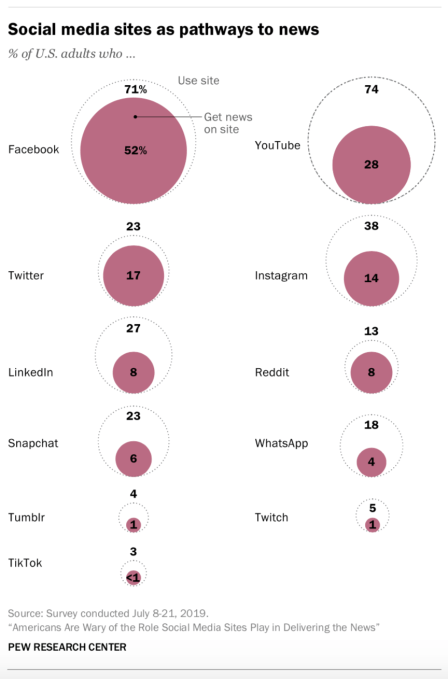
A survey from the Pew Research Center found that more than half of the U.S. adults surveyed by the group this past July — some 52% — already get their news from Facebook, making it the most popular social platform for news sourcing, with YouTube and Twitter the second- and third-most popular at 28% and 17%, respectively, and a variety of other platforms like Instagram, LinkedIn, Reddit and Snapchat also making smaller but notable appearances.

Overall, a full 88% of all those surveyed believed that social media has “at least some control” over the news people see.

But sentiments about that control are poor.

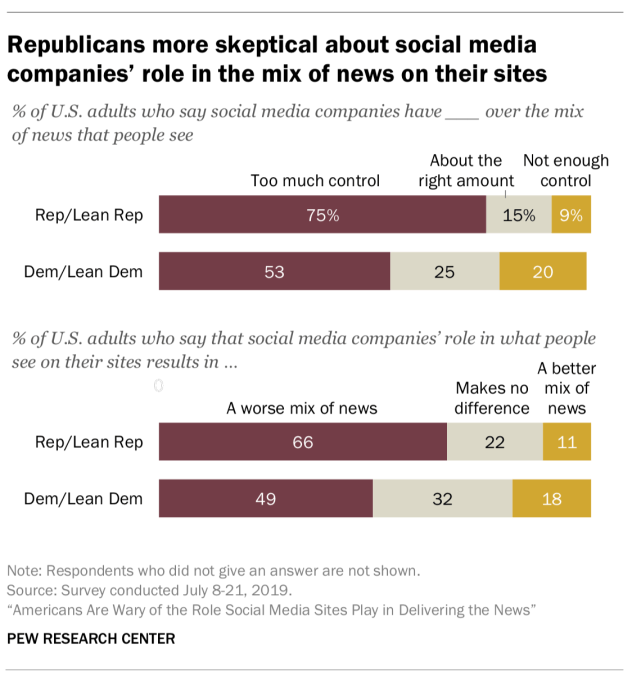
A majority — 62% — of respondents believe social media has “too much control” over the mix of news we see on their platforms, and 55% said they believed that this results in a worse mix of news. A full 53% identified one-sided news and 51% named inaccurate news as “very big problems” on social media.

The findings are unsettling: They underscore an already huge amount of power that the likes of Facebook have when it comes to news consumption, but they also underscore how people seem to have already determined that the effect of that has been bad.

The findings also come on the heels of disturbing stories about how much those platforms get manipulated by bad actors. The stories of how political groups and state actors hiding their identities have promoted misleading stories on social platforms stretch back years at this point, but even as the platforms work to try to identify and take down these accounts, other misuse that is less hidden continues to arise.

Just last month, it was found that those promoting stories through paid channels (advertising, that is) can rewrite news headlines to fit their own political agendas, shifting the tone of the news for the vast majority of people who never click through to stories and only read the summary headlines as they scroll to see the latest pictures of their friends’ kids.

And it’s not just bad news for consumers. Publishers have long lamented that they don’t get a cut of any kind on the revenues that social platforms make from sharing their stories and turning them into monetizing traffic, and there has been some thinking that this would soon change as a result of increased regulatory scrutiny. However, a report in the WSJ this week implies that this might not be changing anytime soon. It claims that Facebook will only be paying a small handful of the publishers whose content will get shared in its human-curated news tab.

Drilling into some of the more interesting details, Pew found that Republicans are more cynical about the effect of social media on news than Democrats, with 75% of those on the right believing that social media has too much control, versus 53% of those on the left. Ironically, these numbers appear to run counter to the assumption that social media is an echo chamber of your own opinions.

Screenshot 2019 10 02 at 07.32.02

Pew also notes that 48% of social media news consumers — recall that more Republicans than Democrats believe social media sites have too much control — believe the news they see is “liberal or very liberal.” That compares to 14% believing news is conservative or very conservative. This would support the feeling among many on the right that the media is too liberal, but also that they are being fed news that is not in keeping with their own political leanings.

The survey also puts paid to the recent report about how only a handful of publishers will get paid by Facebook: 82% of respondents feel that not all news sources are treated equally by social media now — meaning some get more circulation than others. Some 88% believe that those publishing “attention-grabbing” articles, otherwise known as “click bait,” are more likely to appear in the feed. And, 84% believe that social media following plays an important role, and 79% believe that the political leaning of the story affects how much it appears in your feeds.

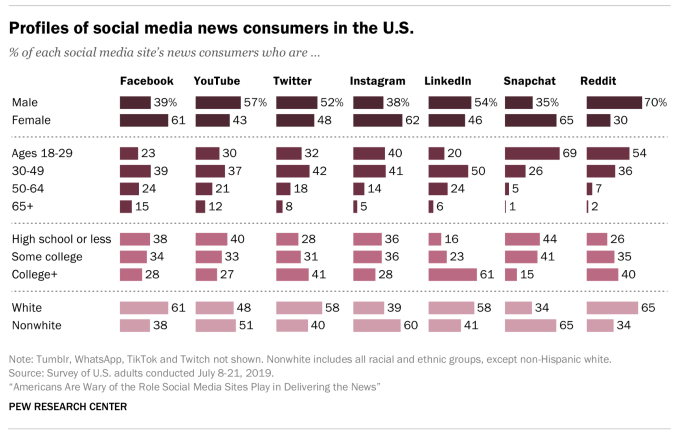
On the division between male and female readers, the report’s findings are not unsurprising and follow much of the same lines we’ve seen in other social media surveys: the likes of Reddit lean heavily to male readers, while Facebook leans female.

Screenshot 2019 10 02 at 07.43.45

Lastly, while the report is more about bias in news and sentiment around that, it’s interesting to note which platforms are appearing here and in what concentration. TikTok — which many think could be the next big juggernaut in social — is at less than 1 % when it comes to being a platform for getting news. Snapchat, meanwhile, also is languishing at a mere 6% for news delivery.

Given their heavy concentration on younger users, this points to the fact that younger people are not really using any social channels to get news, but also that they are not particularly interested in reading news. Social platforms may currently be positioned as pariahs in the news landscape, but they don’t have to be: these could also be opportunities to change the conversation, bringing in more people who traditionally are not being cut in.

Pew surveyed 5,107 respondents from its American Trends research panel from July 8 to July 21.


Read Full Article