11 September 2019

How deepfakes undermine truth and threaten democracy | Danielle Citron

How deepfakes undermine truth and threaten democracy | Danielle Citron

The use of deepfake technology to manipulate video and audio for malicious purposes -- whether it's to stoke violence or defame politicians and journalists -- is becoming a real threat. As these tools become more accessible and their products more realistic, what will happen to our conception of the truth? In a portentous talk, law professor Danielle Citron reveals how deepfakes magnify our distrust -- and suggests approaches to safeguarding the truth.

Click the above link to download the TED talk.

Google Express to close in a few weeks, will become part of Google Shopping


Google’s failed online shopping service Google Express is closing in a few weeks, as its features will be merged into a revamped version of Google Shopping, Google says in an email sent to its customers this week. The company had already announced its plans to shutter the Google Express brand, as part of a wider redesign of how it approached online shopping. This included new advertising options for brands and online sellers, as well as a universal shopping cart across its platform of services, like Search, Shopping, Images, and even YouTube.

While Google is characterizing Google Express’s closure as an “integration,” it’s really more of a sunsetting of a failed product and brand.

Google Express was Google’s high-profile attempt to compete with Amazon for online shopping clicks and ad dollars buy creating a virtual mall on the web filled with top retailers’ products. Because Google is not a retailer itself, it did what it knows best — it organized information. At Google Express, you could find products from thousands of retailers — including big names like Walmart, Target, Walgreens, Best Buy, and others. And you could shop through a dedicated online storefront on the web, a Google Express mobile app, or even Google Assistant.

In the latter case, Google Express partnered with retailers like Walmart and Target for deep integrations for voice-enabled shopping. As direct competitors with Amazon, these retailers didn’t want to offer third-party skills for Echo users or others on Amazon’s Alexa platform. Google represented a safer third-party platform for their experiments with voice commands and personalized shopping.

But even several years after launch, Google Express had failed to offer any real threat to Amazon. Its retail partners, meanwhile, were building out their own fulfillment businesses for their customers’ online orders — like Walmart Grocery’s curbside pickup and delivery, for example, or Target’s Shipt, Drive Up, and Restock.

Not too much later, Target and Walmart were pulling out of Google Express.

Google has tried to downplay the news of Google Express’s demise by including it as just another part to the larger Google Shopping revamp. After all, it’s not a shutdown, the company implied. Its features were simply becoming a part of Google Shopping! Nothing to see here! Just a rebrand!

But clearly, Google Express had been unable to establish itself in consumers’ minds as its own dedicated shopping destination. If customers wanted an online mall, they already had one with either Amazon or Walmart and their vast third-party marketplaces where you could find just about anything you’d need. Nor had Google innovated (or acquired) across key areas like warehousing or logistics, while others like Amazon, Target and Walmart had been spending billions.

With Google Shopping, Google goes back to its search engine roots. It aims to simply capture consumers’ clicks, ad dollars and now conversions no matter where they are on Google’s sites — whether that’s shopping from Merch shelves under YouTube videos, browsing photos in a Pinterest-y manner on Google Images, or through more traditional Google searches for products where ads become shoppable, and shopping carts follow you around Google’s part of the web.

In an email to Google Express shoppers that was sent this week, Google says Google Express will be integrated with Shopping in a few weeks’ time.

The redesigned Google Shopping will then be available across the web and through apps for iOS and Android later this month. At that point, the Google Express apps will automatically update to become Google Shopping, if you already had them installed.

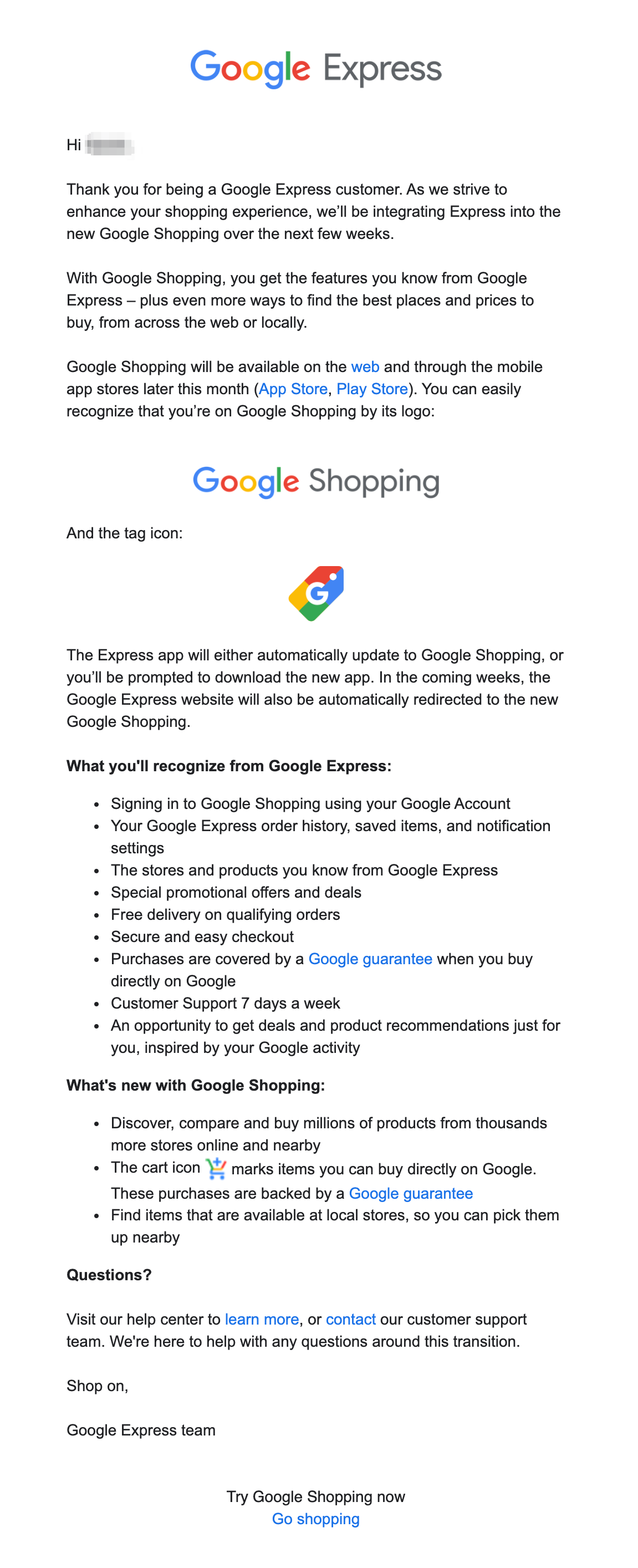
The full email about Google Express’ closure is below:

google express shutdown


Read Full Article

Kubernetes co-founder Craig McLuckie is as tired of talking about Kubernetes as you are


“I’m so tired of talking about Kubernetes. I want to talk about something else,” joked Kubernetes co-founder and VP of R&D at VMware Craig McLuckie during a keynote interview at this week’s Cloud Foundry Summit in The Hague. “I feel like that 80s band that had like one hit song — Cherry Pie.”

He doesn’t quite mean it that way, of course (though it makes for a good headline, see above), but the underlying theme of the conversation he had with Cloud Foundry executive director Abby Kearns was that infrastructure should be boring and fade into the background, while enabling developers to do their best work. “We still have a lot of work to do as an industry to make the infrastructure technology fade into the background and bring forwards the technologies that developers interface with, that enable them to develop the code that drives the business, etc. […] Let’s make that infrastructure technology really, really boring. ”

IMG 20190911 115940

What McLuckie wants to talk about is developer experience and with VMware’s intend to acquire Pivotal, it’s placing a strong bet on Cloud Foundry as one of the premiere development platforms for cloud native applications. For the longest time, the Cloud Foundry and Kubernetes ecosystem, which both share an organizational parent in the Linux Foundation, have been getting closer, but that move has accelerated in recent months as the Cloud Foundry ecosystem has finished work on some of its Kubernetes integrations.

McLuckie argues that the Cloud Native Computing Foundation, the home of Kubernetes and other cloud-native open-source projects, was always meant to be a kind of open-ended organization that focuses on driving innovation. And that created a large set of technologies that vendors can choose from. “But when you start to assemble that, I tend to think about you building up this cake which is your development stack, you discover that some of those layers of the cake, like Kubernetes, have a really good bake. They are done to perfection,” said McLuckie, who is clearly a fan of the Great British Baking show. “And other layers, you look at it and you think, wow, that could use a little more bake, it’s not quite ready yet. […] And we haven’t done a great job of pulling it all together and providing a recipe that delivers an entirely consumable experience for everyday developers.”

EEK3PG1W4AAaasp

He argues that Cloud Foundry, on the other hand, has always focused on building that highly opinionated, consistent developer experience. “Bringing those two communities together, I think, is going to have incredibly powerful results for both communities as we start to bring these technologies together,” he said.

With the Pivotal acquisition still in the works, McLuckie didn’t really comment on what exactly this means for the path forward for Cloud Foundry and Kubernetes (which he still talked about with a lot of energy, despite being tired of it), but it’s clear that he’s looking to Cloud Foundry to enable that developer experience on top of Kubernetes that abstracts all of the infrastructure away for developers and makes deploying an application a matter of a single CLI command.

Bonus: Cherry Pie.


Read Full Article

Web feature developers told to dial up attention on privacy and security


Web feature developers are being warned to step up attention to privacy and security as they design contributions.

Writing in a blog post about “evolving threats” to Internet users’ privacy and security, the W3C standards body’s technical architecture group (TAG) and Privacy Interest Group (PING) set out a series of revisions to the W3C’s Security and Privacy Questionnaire for web feature developers.

The questionnaire itself is not new. But the latest updates place greater emphasis on the need for contributors to assess and mitigate privacy impacts, with developers warned that “features may not be implemented if risks are found impossible or unsatisfactorily mitigated”.

In the blog post, independent researcher Lukasz Olejnik, currently serving as an invited expert at the W3C TAG; and Apple’s Jason Novak, representing the PING, write that the intent with the update is to make it “clear that feature developers should consider security and privacy early in the feature’s lifecycle” [emphasis theirs].

“The TAG will be carefully considering the security and privacy of a feature in their design reviews,” they further warn, adding: “A security and privacy considerations section of a specification is more than answers to the questionnaire.”

The revisions to the questionnaire include updates to the threat model and specific threats a specification author should consider — including a new high level type of threat dubbed “legitimate misuse“, where the document stipulates that: “When designing a specification with security and privacy in mind, all both use and misuse cases should be in scope.”

“Including this threat into the Security and Privacy Questionnaire is meant to highlight that just because a feature is possible does not mean that the feature should necessarily be developed, particularly if the benefitting audience is outnumbered by the adversely impacted audience, especially in the long term,” they write. “As a result, one mitigation for the privacy impact of a feature is for a user agent to drop the feature (or not implement it).”

Features should be secure and private by default and issues mitigated in their design,” they further emphasize. “User agents should not be afraid of undermining their users’ privacy by implementing new web standards or need to resort to breaking specifications in implementation to preserve user privacy.”

The pair also urge specification authors to avoid blanket treatment of first and third parties, suggesting: “Specification authors may want to consider first and third parties separately in their feature to protect user security and privacy.”

The revisions to the questionnaire come at a time when browser makers are dialling up their response to privacy threats — encouraged by rising public awareness of the risks posed by data leaks, as well as increased regulatory action on data protection.

Last month the open source WebKit browser engine (which underpins Apple’s Safari browser) announced a new tracking prevention policy that takes the strictest line yet on background and cross-site tracking, saying it would treat attempts to circumvent the policy as akin to hacking — essentially putting privacy protection on a par with security.

Earlier this month Mozilla also pushed out an update to its Firefox browser that enables an anti-tracking cookie feature across the board, for existing users too — demoting third party cookies to default junk.

Even Google’s Chrome browser has made some tentative steps towards enhancing privacy — announcing changes to how it handles cookies earlier this year. Though the adtech giant has studiously avoided flipping on privacy by default in Chrome where third party tracking cookies are concerned, leading to accusations that the move is mostly privacy-washing.

More recently Google announced a long term plan to involve its Chromium browser engine in developing a new open standard for privacy — sparking concerns it’s trying to both kick the can on privacy protection and muddy the waters by shaping and pushing self-interested definitions which align with its core data-mining business interests.

There’s more activity to consider too. Earlier this year another data-mining adtech giant, Facebook, made its first major API contribution to Google’s Chrome browser — which it also brought to the W3C Performance Working Group.

Facebook does not have its own browser, of course. Which means that authoring contributions to web technologies offers the company an alternative conduit to try to influence Internet architecture in its favor.

The W3C TAG’s latest move to focus minds on privacy and security by default is timely.

It chimes with a wider industry shift towards pro-actively defending user data, and should rule out any rubberstamping of tech giants contributions to Internet architecture which is obviously a good thing. Scrutiny remains the best defence against self-interest.


Read Full Article

What Is IFA? Google Calendar Spam Solved, Spot a Scammer on the Phone


phone-scam-signs

Ever wondered what happens at tech trade shows like IFA? Want to block Google Calendar spam? In this week’s Really Useful Podcast you can! PLUS: obligatory retro games talk, and a look at some ridiculous EULA clauses you might have inadvertently signed up to…

Really Useful Podcast Season 4 Episode 2 Shownotes

In this week’s show:

This Really Useful Podcast was hosted by Christian Cawley with Ben Stegner. You can follow them both on Twitter for tech tips and thoughts:

If you think you know someone who would would benefit from jargon-free clarity about technology, why not share this podcast with them? Point them to the Really Useful Podcast on:

Enjoy this show? Subscribe to the tech podcast for technophobes today!

Read the full article: What Is IFA? Google Calendar Spam Solved, Spot a Scammer on the Phone


Read Full Article

YouTube Launches a Section Dedicated to Fashion


YouTube has launched a new vertical dedicated to fashion. So if you’re a dedicated follower of fashion, you now have a section of YouTube just for you. Which should make it easier to find new fashion-related videos full of style and beauty tips.

Organizing Content on YouTube

(Almost) everything goes on YouTube. Whatever you search for on YouTube you’re likely to find a video that fits the bill. You’ll also find lots of random nonsense that doesn’t belong to a particular genre. However, certain topics demand their own sections.

At the moment the genres afforded their own sections are YouTube Premium, Movies and Shows, Gaming, and Live. However, these are now being joined by a section dedicated wholly to fashion. Which encompasses fashion, style, and beauty.

YouTube Launches a Fashion Vertical

YouTube announced the Fashion section on the Official YouTube Blog. The company says it aims to “create an ultimate destination for style content that bridges both our fabulous endemic creator community and the more traditional worlds of fashion and beauty.”

YouTube Fashion is where you’ll find new fashions being modelled, makeup tutorials and tips, behind the scenes of the fashion industry, interviews with famous models, opinions on celebrities’ styles, and videos from the best style and beauty vloggers.

YouTube is putting the spotlight on the creators, mentioning YouTubers such as Camila Coelho and Safiya Nygaard. It also namechecks brands such as Louis Vuitton and Dior, and industry insiders including Rosie Huntington-Whiteley and Alexa Chung.

Videos Aplenty for Fashionistas

YouTube Fashion is live right now, and packed full of videos for fashionistas. It should grow over time too, as YouTube is promising to “bring more international voices to the page and to localize for global markets.” Making it even bigger and better.

If you’re into your fashion then the new YouTube Fashion vertical should float your boat. However, YouTube is just one of the many ways to explore fashion online. And these men’s fashion apps and women’s fashion apps are well worth a look.

Read the full article: YouTube Launches a Section Dedicated to Fashion


Read Full Article

The 6 Best UPS Units You Can Buy Right Now

Chipolo Plus: Bi-Directional Budget BlueTooth Tracking


chipolo in hand featured

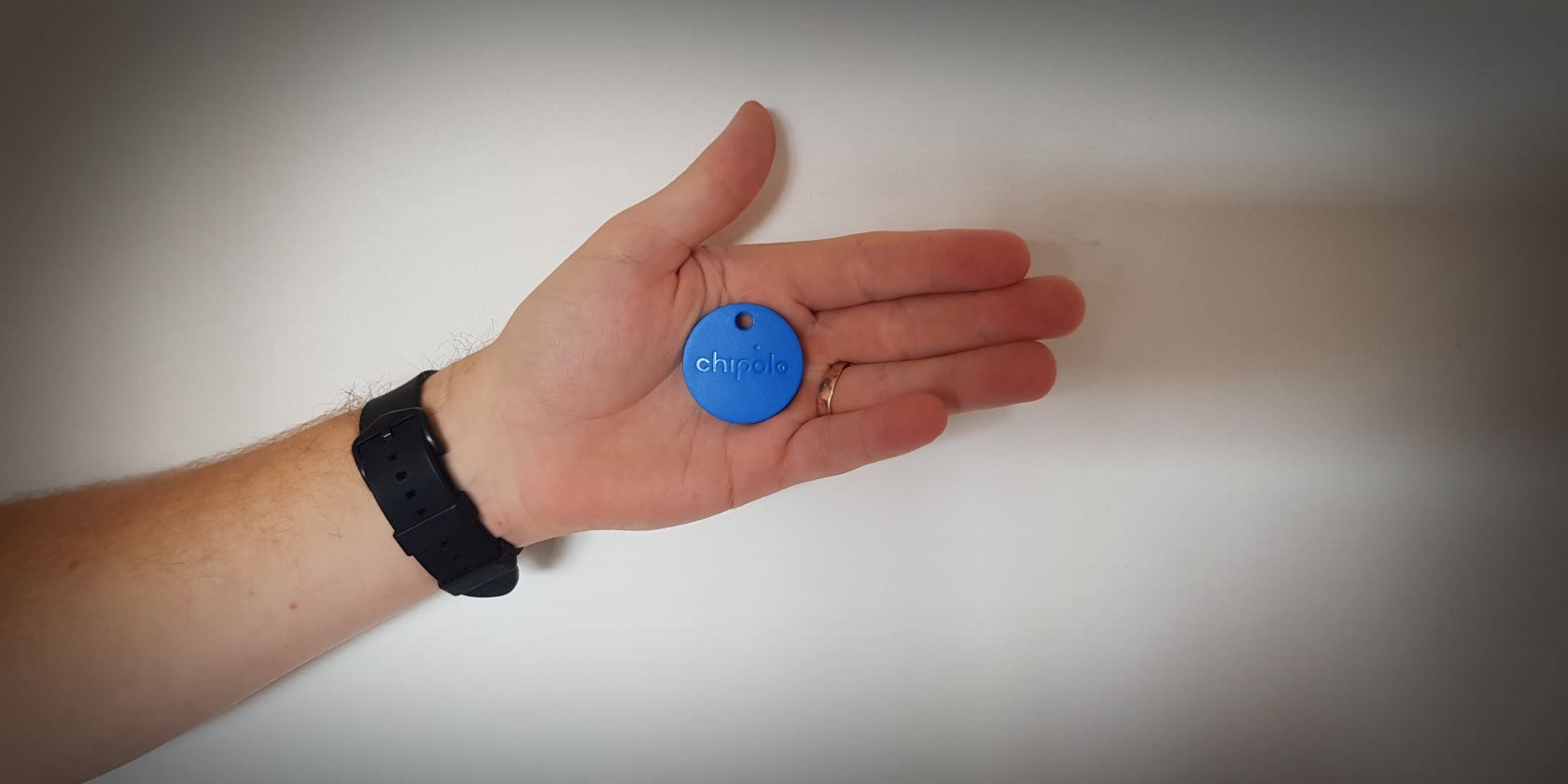
I rarely lose my keys, wallet, or phone. I’m an obsessive checker, scanning in, under, and around everything before I leave the house, restaurant, or otherwise. Not everyone is, however. Those people should consider a Chipolo Plus, a bi-directional Bluetooth tracking tool that won’t destroy your budget.

So, what does the Chipolo Plus bring to the table? Well, there are three things you need to know about the Chipolo Plus.

First, it is loud. Like, really loud. When you ping the Chipolo Plus to find out where your keys are, the Chipolo emits a 100dB melody to lure you in. Second, unlike other Bluetooth trackers, the Chipolo Plus is bi-directional. That’s a fancy of way of saying it works both ways, but the ability to ping your phone from your keys cannot be understated. Also, that function works even if your phone is on silent, solving yet another issue.

chipolo plus in boix

Third, the Chipolo Plus has some handy community features, too. You can add multiple users to a single Chipolo device but track the device from multiple accounts. If you share a car with your partner and one of you is hopeless with putting them down, your partner can find them before you and really show you up (or kindly return them, of course). While that functionality seems like it should be standard for all Bluetooth trackers, it isn’t.

Another handy feature is “Community Search.” If you cannot find your device or keys at all, but you know the tracker is attached, you can mark it lost. If a fellow Chipolo user enters the same area as your lost Chipolo, it will ping your phone—but importantly, not the “finders.”

chipolo in hand

Oh, and did I mention it comes in six colors, is rated IPX5 water-resistant, and its battery will last for one year? No? Well, it’s the truth.

Personally, I would like to see the introduction of a replaceable battery, like the Chipolo Classic. The earlier Chipolo tracker allows you to replace the battery when it dies. However, that sacrifices the Chipolo Plus’ water resistance. Chipolo also runs a replacement and renew program where you can send back your device for recycling, receiving a decent discount on your next Chipolo in the process.

Read the full article: Chipolo Plus: Bi-Directional Budget BlueTooth Tracking


Read Full Article

Speak All the Languages With This Real-Time Language Translator


At IFA 2019, Everbrilliant in conjunction with Supreme demonstrated an outstanding real-time translation platform, capable of converting spoken languages into your native tongue and vice versa. Through cloud processing, a companion mobile app on both Android and iOS, and a dual channel Bluetooth 5.0 earpiece, a truly brilliant technology experience emerges.

Real time language translator app

Can you imagine going back 50 years and telling people about this device? By placing an earpiece in your ear, you can understand anyone speaking almost any language. If two people use this device they can both converse even if neither knows a common language.

This technology only existed in the realms of science-fiction books 50 years ago, so it would be mind-blowing back then. It’s still outstanding today, and it can be easy to underestimate how much potential this device has.

Real time language translator earphones

This platform runs on the cloud, but Bluetooth 5.0 headsets are available to enhance the experience. While one of the headsets is essentially a Bluetooth headphone, the other supports two-way communication with the translation app. You phone can redirect the translated audio to your headset.

One massive benefit of using a custom headset is the flexibility offered through the translation services. Using this system, you can start a discussion with a group of people. Each person can have a different language translation routed to them through their own headset. If you’re speaking in German, your colleagues could have French, Spanish, English and so on.

The headsets cost $50 (headphones) and $79 (intelligent earbud).

Real time language translator earpiece

As the app uses an artificial intelligence cloud to provide the voice to text service, not every language is available on the system yet. If you need real-time voice translation, there are 33 languages available. If you’re willing to switch to a written text only service, the total languages goes up to 59. The selection of languages is steadily increasing.

Having used this system recently, it works incredibly well. Even on a noisy trade show floor, it had no problem recognizing, interpreting, and then translating a variety of different languages. It feels like the future has arrived now, and there’s nothing stopping you talking to another person, with a live, real-time translation service in your ear.

Read the full article: Speak All the Languages With This Real-Time Language Translator


Read Full Article

Nextdoor adds new funding from Mary Meeker’s Bond, closes growth round at $170M


Social networking platform for neighbors Nextdoor today announced it has secured additional funding to close out its $170 million growth round. The new financing includes the $123 million Nextdoor raised in May from new investor Riverwood Capital along with existing investors Benchmark, Tiger Global Management and Kleiner Perkins. The additional funding announced today comes from Mary Meeker’s tech investment firm, Bond.

As a result of the new investment, Meeker will join Nextdoor’s board.

Meeker had left Kleiner Perkins last year, where she was well-known for her popular Internet Trends Report, released annually. She has since founded Bond, taking Kleiner’s entire former growth team with her, where they’re all now equal partners. Bond raised $1.25 billion for its debut growth fund. 

As of the May 2019 round, Nextdoor was valued at $2.1 billion for its neighborhood-level networking platform, which today generates revenue from sponsored posts and its real estate vertical for local agents. The company had said it was on track to double its revenue in 2019.

We understand the valuation remains at $2.1 billion, even with the additional funding.

Since its 2010 founding, the Nextdoor platform has grown to more than 247,000 neighborhoods across 10 countries. Its international growth potential appears to be of interest to Meeker, as does the verification process Nextdoor uses to ensure its users actually live in the neighborhoods they join.

This is not how Facebook’s Groups product works, where verification is left up to individual Group admins. That results in neighborhood groups filled with people who are just looking to research the area, those who used to live there but have since moved, businesses looking to advertise to locals, people who live nearby but don’t have a neighborhood group of their own and various other non-neighbors.

“Nextdoor has proven itself as the leader in local connectivity. Nextdoor is built on trust — verifying each members’ name, address and neighborhood — which creates the transparency and accountability that is core to building communities,” Meeker said. “Nextdoor is connecting people to the information and services that matter most, and I am excited to work with this impressive team to help expand Nextdoor’s local utility as well as it’s growing global footprint,” she added.

In recent months, Nextdoor has also grown its team, with new hires Antonio Silveira as its head of engineering; Tatyana Mamut, head of product; Bryan Power, head of people; and Craig Lisowski, head of data, information systems and trust.

“We could not be more thrilled to welcome Bond to our family of investors. Mary Meeker has been a strong supporter of Nextdoor for many years and is deeply knowledgeable about consumer technology,” stated Sarah Friar, CEO of Nextdoor, in a statement. “At Nextdoor, we believe that change starts with each of us opening our front doors and building deeper connections with the people nearest to us: our neighbors. We’re thrilled and honored to partner with all of our forward-looking investors to catalyze neighbors’ ability to connect with relevant local conversations, organizations, and businesses, engage in real-world interactions, and unlock the global power of local.”


Read Full Article

iOS 13 will be available on September 19


Apple announced in a press release that iOS 13 will be available on September 19. Even if you don’t plan on buying a new iPhone, you’ll be able to get a bunch of new features.

But that’s not all. iOS 13.1 will be available on September 30. Apple had to remove some features of iOS 13.0 at the last minute as they weren’t stable enough, such as Shortcuts automations and the ability to share your ETA in Apple Maps. That’s why iOS 13.1 will be released shortly after iOS 13.

As always, iOS 13 will be available as a free download. If you have an iPhone 6s or later, an iPhone SE or a 7th-generation iPod touch, your device supports iOS 13.

watchOS 6 will also be released on September 19. Unfortunately, Apple will release iPadOS 13 on September 30. And it looks like tvOS 13 will also be released on September 30 according to a separate press release.

Here’s a quick rundown of what’s new in iOS 13. This year, in addition to dark mode, it feels like every single app has been improved with some quality-of-life updates. The Photos app features a brand new gallery view with autoplaying live photos and videos, smart curation and a more immersive design.

This version has a big emphasis on privacy as well thanks to a new signup option called “Sign in with Apple” and a bunch of privacy popups for Bluetooth and Wi-Fi consent, background location tracking. Apple Maps now features an impressive Google Street View-like feature called Look Around. It’s only available in a handful of cities, but I recommend… looking around as everything is in 3D.

Many apps have been updated, such as Reminders with a brand new version, Messages with the ability to set a profile picture shared with your contacts, Mail with better text formatting options, Health with menstrual cycle tracking, Files with desktop-like features, Safari with a new website settings menu, etc. Read more on iOS 13 in my separate preview.

On the iPad front, for the first time Apple is calling iOS for the iPad under a new name — iPadOS. Multitasking has been improved, the Apple Pencil should feel snappier, Safari is now as powerful as Safari on macOS and more.


Read Full Article

Why does the new iPhone 11 Pro have 3 cameras?


On the back of the iPhone 11 Pro can be found three cameras. Why? Because the more light you collect, the better your picture can be. And we pretty much reached the limit of what one camera can do a little while back. Two, three, even a dozen cameras can be put to work creating a single photo — the only limitation is the code that makes them work.

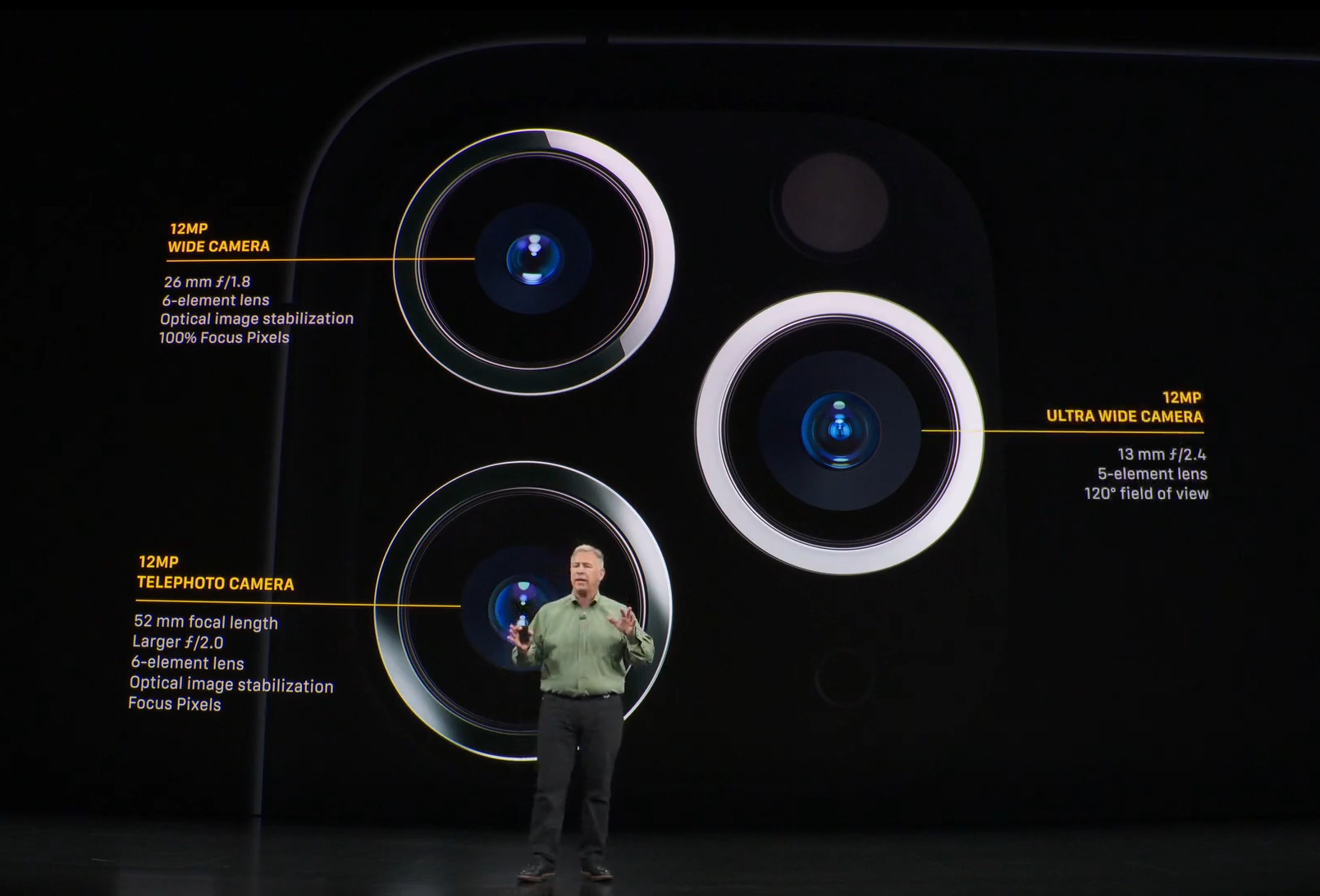
Earlier in today’s announcements, Apple showed the base-level iPhone 11 with two cameras, but it ditched the telephoto for an ultrawide lens. But the iPhone Pro has the original wide, plus ultrawide and telephoto, its optical options covering an approximate 35mm equivalents of 13mm to 52mm, and 26mm.

threecams

“With these three cameras you have incredible creative control,” said Apple’s Phil Schiller during the stage presentation. “It is so pro, you’re going to love using it.”

Previously the telephoto lens worked with the wide-angle camera to produce portrait mode effects or take over when the user zooms in a lot. By combining the info from both those cameras, which have a slightly different perspective, the device can determine depth data, allowing it to blur the background past a certain point, among other things.

The ultra-wide lens provides even more information, which should improve the accuracy of portrait mode and other features. One nice thing about a wide angle on a dedicated sensor and camera system is the creators can build in lots of corrections so you don’t get crazy distortion at the corners or center. Fundamentally you’ll still want to back off a bit, because using an ultrawide lens on a face gives it a weird look.

While we’re all used to the pinch-to-zoom-in gesture, what you’re usually doing when you do that is a digital zoom, just looking closer at the pixels you already have. With an optical zoom, however, you’re switching between different pieces of glass and, in this case, different sensors, getting you closer to the action without degrading the image.

One nice thing about these three lenses is that they’ve been carefully chosen to work together well. You may have noticed that the ultra-wide is 13mm, the wide is twice that at 26mm, and the telephoto is twice that at 52mm.

wide1

The simple 2x factor makes it easy for users to understand, sure, but it also makes the image-processing math of switching between these lenses easier. And as Schiller mentioned on stage, “we actually pair the three cameras right at the factory calibrating for focus and color.”

Not only that, but when you’re shooting with the wide camera, it’s sharing information with the other two cameras, so when you switch to them, they’re already focused on the same point, shooting at the same speed and exposure, white balance, and so on. That makes switching between them mostly seamless even while shooting video (just be aware that you will shake the device when you tap it).

Apple’s improvements to the iPhone camera system this year are nowhere near as crazy as the switch from one to two cameras made by much of the industry a couple years back. But a wide, tele, and ultra-wide setup is a common one for photographers and no doubt will prove a useful one for everyone who buys into this rather expensive single-device solution.


Read Full Article

iOS 13 will be available on September 19


Apple announced in a press release that iOS 13 will be available on September 19. Even if you don’t plan on buying a new iPhone, you’ll be able to get a bunch of new features.

But that’s not all. iOS 13.1 will be available on September 30. Apple had to remove some features of iOS 13.0 at the last minute as they weren’t stable enough, such as Shortcuts automations and the ability to share your ETA in Apple Maps. That’s why iOS 13.1 will be released shortly after iOS 13.

As always, iOS 13 will be available as a free download. If you have an iPhone 6s or later, an iPhone SE or a 7th-generation iPod touch, your device supports iOS 13.

watchOS 6 will also be released on September 19. Unfortunately, Apple will release iPadOS 13 on September 30. And it looks like tvOS 13 will also be released on September 30 according to a separate press release.

Here’s a quick rundown of what’s new in iOS 13. This year, in addition to dark mode, it feels like every single app has been improved with some quality-of-life updates. The Photos app features a brand new gallery view with autoplaying live photos and videos, smart curation and a more immersive design.

This version has a big emphasis on privacy as well thanks to a new signup option called “Sign in with Apple” and a bunch of privacy popups for Bluetooth and Wi-Fi consent, background location tracking. Apple Maps now features an impressive Google Street View-like feature called Look Around. It’s only available in a handful of cities, but I recommend… looking around as everything is in 3D.

Many apps have been updated, such as Reminders with a brand new version, Messages with the ability to set a profile picture shared with your contacts, Mail with better text formatting options, Health with menstrual cycle tracking, Files with desktop-like features, Safari with a new website settings menu, etc. Read more on iOS 13 in my separate preview.

On the iPad front, for the first time Apple is calling iOS for the iPad under a new name — iPadOS. Multitasking has been improved, the Apple Pencil should feel snappier, Safari is now as powerful as Safari on macOS and more.


Read Full Article

Twenty and Mappen merge to help users hang out IRL


Today, social networks Twenty and Mappen are joining together in a merger under the Twenty brand.

From the beginning, Twenty’s goal has been to get young people off of their phones and out in the real world with their friends. Twenty connects users with their friend groups and lets them browse fun experiences, from concerts to sports games to movies, with an easy UI for coordinating a group and making it happen. In fact, Twenty has forged relationships with orgs like Live Nation, Endeavor, Roc Nation and Tao, which collectively produce 10,000+ events a year with an audience of more than 100 million fans.

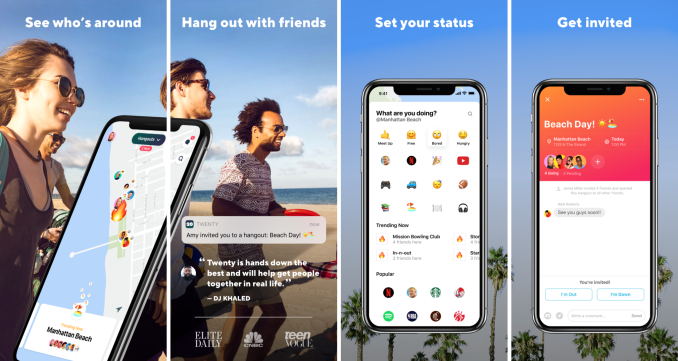
Mappen, on the other hand, is a location-based social network that let users share what they were doing (and where they were doing it) with their friends. For example, users could give a status update using a Fortnite emoji tagged to their house, inviting friends to come over and play a few games.

The two companies have been in talks, and collaborating, for the past nine months looking for ways to bring the experiences together. Where Twenty has relationships with experience providers, Mappen had the audience of young people looking to connect with each other.

The end result is an all-stock deal that unifies the user experience under the Twenty brand name.

twenty

Though the announcement of the merged app didn’t go down until today, the two apps have been combined for a while, and CEO Diesel Peltz says the new app has seen 33% month over month growth in new users. Hangouts have increased 50% from July to August. Peltz will lead the combined company as CEO.

For now, the new Twenty does not have a business model in place. However, the plan is to use the event partnerships to generate revenue as opposed to ads, which relies on eyeballs on screens.

“If the model is solely based on ads, you want the users to spend as much time on the platform as possible,” said Peltz. “We’re looking to create a different opportunity for people to access these experiences.”

Thus far, the combined Twenty has raised approximately $40 million from partners, including Accel, Maveron, 500 Startups and Sound Ventures, as well as Roc Nation, Live Nation and Endeavor.


Read Full Article

10 September 2019

Apple’s new A13 chip is faster according to charts with no numbers


Apple is announcing new iPhone models today. The iPhone 11 uses an Apple A13 Bionic system-on-a-chip. It is faster than the A12 Bionic in the iPhone XR, XS and XS Max.

But how much faster exactly? According to Apple, Apple is making the fastest GPU and CPU for a smartphone.

Worse, the company showed two charts with no X-axis. With this chart, CPU performance of the A13 Bionic could be 2% faster or 248% faster than CPU performance of the A12 Bionic. The same thing applies for GPU performance. I guess we’ll have to wait for benchmarks.

It reminds me of another technology company that is well-known for its charts with no numbers…


Read Full Article

Apple introduces the Apple Watch Series 5 with always-on display


Apple introduced some new Apple Watch models at a press conference. The Apple Watch Series 5 has an always-on display. It seems to look just like the Apple Watch Series 4.

“Apple Watch puts groundbreaking health, fitness and communication capabilities on the wrist of millions and millions of people,” Apple CEO Tim Cook said. He then introduced a video segment showing how Apple Watch users are healthier.

The Apple Watch automatically adjusts the brightness of the new always-on display. When you lower your wrist, the brightness goes down. It features an LTPO display with an adaptive refresh rate. It can go down to 1Hz, or one screen refresh per second. That’s how Apple can reach 18 hours of battery life with a display that stays on.

The new Apple Watch also features a built-in compass. There’s a new app that tells you your latitude, longitude and direction. It could be particularly useful when you’re hiking.

When it comes to emergency calling, Apple is extending emergency calling to 150 countries. When you press and hold down the side button, it automatically calls local emergency services.

Aluminum models come in silver, gold and space gray. Those cases are now made from recycled aluminum. Stainless steel models come in gold, space black and and polished.

And finally, there are two new titanium models (brushed and brushed space black) and a ceramic model. Apple is refreshing special editions of the Apple Watch with Nike and Hermès.

Apple Watch Series 5 with a GPS starts at $399. For $499, you also get a cellular modem. Pre-orders start today and they will be available on September 20. The Apple Watch Series 3 first introduced in 2017 now starts at $199.

Apple also announced three new health research studies with health facilities. Apple is starting a hearing study with the World Health Organization and the University of Michigan, a women’s health study with NIH and Harvard thanks to the new cycle tracking feature, and a heart and movement study with the American Heart Association and Brigham and Women's Hospital.


Read Full Article

The Polaroid Lab uses the light from your phone’s screen to turn digital photos into Polaroids


When all of us are carrying phones that can snap a thousand photos a minute and are connected to cloud systems that can store millions, there’s an undeniable charm to physical photos. The ones deemed worthy; the ones so special that they must be transformed from bit to atom.

While photo printers are nothing new, Polaroid is twisting up the concept (and rebooting an idea from a few years back) with the “Polaroid Lab”. It’s a $129 tower that uses the light from your phone’s screen, bounced off a series of mirrors, to make a proper Polaroid from the photos you’ve already taken.

Open your photo in Polaroid’s companion app, place your phone (any iPhone after the 6S, and ‘current models of Samsung, Huawei, Google Pixel, and One Plus’ Android handsets) on top of the tower, and push the red button. A few seconds later, out pops a grey Polaroid. Did it work? You’ll have to wait a few minutes for it to develop, just like the good (?) ol’ days.

Is using light and mirrors better than just sending a picture to a printer over Bluetooth or WiFi and blasting the ink out from a cartridge? Maybe not. But it’s neat! It’s physical and sciencey and fun — and, arguably, as close as you can get to having a “true” Polaroid picture of a moment that’s already happened.

The company says that the Polaroid Lab works with its existing I-Type and 600 series films… which, as any enthusiast could tell you, doesn’t come cheap. Expect each photo printed here to cost you a buck or two. That’s a bit steeper than many at-home printers and definitely pricier than just blasting out some 4x6s at Costco, but this thing will almost certainly still find its audience amongst those going for a certain look.

There’s also a way to “blow up” one photo across a bunch of Polaroids, if you’ve got the film to spare. Here’s a demo video of what that looks like:

If the whole concept seems familiar, you might be remembering the Impossible Instant Lab — a product of a veeeery similar vein that raised over half a million dollars on Kickstarter back in 2012. The Impossible Instant Lab was discontinued in July of 2017… just a few months after the team behind it acquired the rights to the Polaroid brand. This seems to be a reboot of the concept, now with the added weight and officialness of the Polaroid name thrown behind it.

The team behind the Polaroid Lab says it should hit the shelves by October 10th.


Read Full Article

Google brings Cloud Dataproc to Kubernetes


Cloud Dataproc is probably one of the lesser-known products in Google Cloud’s portfolio, but it’s a powerful tool for data wranglers who are looking for a fully managed cloud service that lets them run Apache Spark and Hadoop clusters without having to worry about managing the underlying infrastructure. Today. Google announced that it is launching the alpha of Cloud Dataproc to Kubernetes — and while that, too, may not sound all that interesting at first, it’s an important step for Google Cloud as it works to adapt more of its products to a hybrid cloud model.

The general idea here is to give enterprise customers (and make no mistake, enterprise customers are the main focus of Google Cloud these days) the ability to run Apache Spark jobs on Google Kubernetes Engine (GKE) clusters. With products like Anthos now making GKE available virtually anywhere, this means customers can now also take Cloud Dataproc to their own data centers. Right now, the service only supports Apache Spark, but Google plans to support other open-source projects, too.

“Enterprises are increasingly looking for products and services that support data processing across multiple locations and platforms,” said Matt Aslett, Research Vice President at 451 Research. “The launch of Cloud Dataproc on Kubernetes is significant in that it provides customers with a single control plane for deploying and managing Apache Spark jobs on Google Kubernetes Engine in both public cloud and on-premises environments.”

Typically, Spark applications run on Hadoop YARN clusters. Google notes that the Cloud Dataproc on Kubernetes will free users from having to use two cluster management systems and will give them a single view across both YARN and Kubernetes clusters. “Supporting both YARN and Kubernetes can bring your enterprise the needed flexibility to modernize certain hybrid workloads while continuing to monitor YARN-based workloads,” the company writes in today’s announcement.

The new service is now available as an alpha. If you want to give it a try, you’ll have to apply for access by emailing Google.


Read Full Article

Recursive Sketches for Modular Deep Learning


Much of classical machine learning (ML) focuses on utilizing available data to make more accurate predictions. More recently, researchers have considered other important objectives, such as how to design algorithms to be small, efficient, and robust. With these goals in mind, a natural research objective is the design of a system on top of neural networks that efficiently stores information encoded within—in other words, a mechanism to compute a succinct summary (a “sketch”) of how a complex deep network processes its inputs. Sketching is a rich field of study that dates back to the foundational work of Alon, Matias, and Szegedy, which can enable neural networks to efficiently summarize information about their inputs.

For example: Imagine stepping into a room and briefly viewing the objects within. Modern machine learning is excellent at answering immediate questions, known at training time, about this scene: “Is there a cat? How big is said cat?” Now, suppose we view this room every day over the course of a year. People can reminisce about the times they saw the room: “How often did the room contain a cat? Was it usually morning or night when we saw the room?”. However, can one design systems that are also capable of efficiently answering such memory-based questions even if they are unknown at training time?

In “Recursive Sketches for Modular Deep Learning”, recently presented at ICML 2019, we explore how to succinctly summarize how a machine learning model understands its input. We do this by augmenting an existing (already trained) machine learning model with “sketches” of its computation, using them to efficiently answer memory-based questions—for example, image-to-image-similarity and summary statistics—despite the fact that they take up much less memory than storing the entire original computation.

Basic Sketching Algorithms
In general, sketching algorithms take a vector x and produce an output sketch vector that behaves like x but whose storage cost is much smaller. The fact that the storage cost is much smaller allows one to succinctly store information about the network, which is critical for efficiently answering memory-based questions. In the simplest case, a linear sketch x is given by the matrix-vector product Ax where A is a wide matrix, i.e., the number of columns is equal to the original dimension of x and the number of rows is equal to the new reduced dimension. Such methods have led to a variety of efficient algorithms for basic tasks on massive datasets, such as estimating fundamental statistics (e.g., histogram, quantiles and interquartile range), finding popular items (known as frequent elements), as well as estimating the number of distinct elements (known as support size) and the related tasks of norms and entropy estimation.
A simple method to sketch the vector x is to multiply it by a wide matrix A to produce a lower-dimensional vector y.
This basic approach works well in the relatively simple case of linear regression, where it is possible to identify important data dimensions simply by the magnitude of weights (under the common assumption that they have uniform variance). However, many modern machine learning models are actually deep neural networks and are based on high-dimensional embeddings (such as Word2Vec, Image Embeddings, Glove, DeepWalk and BERT), which makes the task of summarizing the operation of the model on the input much more difficult. However, a large subset of these more complex networks are modular, allowing us to generate accurate sketches of their behavior, in spite of their complexity.

Neural Network Modularity
A modular deep network consists of several independent neural networks (modules) that only communicate via one’s output serving as another’s input. This concept has inspired several practical architectures, including Neural Modular Networks, Capsule Neural Networks and PathNet. It is also possible to split other canonical architectures to view them as modular networks and apply our approach. For example, convolutional neural networks (CNNs) are traditionally understood to behave in a modular fashion; they detect basic concepts and attributes in their lower layers and build up to detecting more complex objects in their higher layers. In this view, the convolution kernels correspond to modules. A cartoon depiction of a modular network is given below.
This is a cartoon depiction of a modular network for image processing. Data flows from the bottom of the figure to the top through the modules represented with blue boxes. Note that modules in the lower layers correspond to basic objects, such as edges in an image, while modules in upper layers correspond to more complex objects, like humans or cats. Also notice that in this imaginary modular network, the output of the face module is generic enough to be used by both the human and cat modules.
Sketch Requirements
To optimize our approach for these modular networks, we identified several desired properties that a network sketch should satisfy:
  • Sketch-to-Sketch Similarity: The sketches of two unrelated network operations (either in terms of the present modules or in terms of the attribute vectors) should be very different; on the other hand, the sketches of two similar network operations should be very close.
  • Attribute Recovery: The attribute vector, e.g., the activations of any node of the graph can be approximately recovered from the top-level sketch.
  • Summary Statistics: If there are multiple similar objects, we can recover summary statistics about them. For example, if an image has multiple cats, we can count how many there are. Note that we want to do this without knowing the questions ahead of time.
  • Graceful Erasure: Erasing a suffix of the top-level sketch maintains the above properties (but would smoothly increase the error).
  • Network Recovery: Given sufficiently many (input, sketch) pairs, the wiring of the edges of the network as well as the sketch function can be approximately recovered.
This is a 2D cartoon depiction of the sketch-to-sketch similarity property. Each vector represents a sketch and related sketches are more likely to cluster together.
The Sketching Mechanism
The sketching mechanism we propose can be applied to a pre-trained modular network. It produces a single top-level sketch summarizing the operation of this network, simultaneously satisfying all of the desired properties above. To understand how it does this, it helps to first consider a one-layer network. In this case, we ensure that all the information pertaining to a specific node is “packed” into two separate subspaces, one corresponding to the node itself and one corresponding to its associated module. Using suitable projections, the first subspace lets us recover the attributes of the node whereas the second subspace facilitates quick estimates of summary statistics. Both subspaces help enforce the aforementioned sketch-to-sketch similarity property. We demonstrate that these properties hold if all the involved subspaces are chosen independently at random.

Of course, extra care has to be taken when extending this idea to networks with more than one layer—which leads to our recursive sketching mechanism. Due to their recursive nature, these sketches can be “unrolled” to identify sub-components, capturing even complicated network structures. Finally, we utilize a dictionary learning algorithm tailored to our setup to prove that the random subspaces making up the sketching mechanism together with the network architecture can be recovered from a sufficiently large number of (input, sketch) pairs.

Future Directions
The question of succinctly summarizing the operation of a network seems to be closely related to that of model interpretability. It would be interesting to investigate whether ideas from the sketching literature can be applied to this domain. Our sketches could also be organized in a repository to implicitly form a “knowledge graph”, allowing patterns to be identified and quickly retrieved. Moreover, our sketching mechanism allows for seamlessly adding new modules to the sketch repository—it would be interesting to explore whether this feature can have applications to architecture search and evolving network topologies. Finally, our sketches can be viewed as a way of organizing previously encountered information in memory, e.g., images that share the same modules or attributes would share subcomponents of their sketches. This, on a very high level, is similar to the way humans use prior knowledge to recognize objects and generalize to unencountered situations.

Acknowledgements
This work was the joint effort of Badih Ghazi, Rina Panigrahy and Joshua R. Wang.

A "living drug" that could change the way we treat cancer | Carl June

A "living drug" that could change the way we treat cancer | Carl June

Carl June is the pioneer behind CAR T-cell therapy: a groundbreaking cancer treatment that supercharges part of a patient's own immune system to attack and kill tumors. In a talk about a breakthrough, he shares how three decades of research culminated in a therapy that's eradicated cases of leukemia once thought to be incurable -- and explains how it could be used to fight other types of cancer.

Click the above link to download the TED talk.