27 April 2018

DeepCode cleans your code with the power of AI


Zurich-based DeepCode claims that their system – essentially a tool for analyzing and improving code – is like Grammarly for programmers. The system, which uses a corpus of 250,000 rules, reads your public and private Github repositories and tells you how to fix problems, remain compatible, and generally improve your programs.

Founded by Veselin Raychev, advisor Martin Vechev, and Boris Paskalev, the team has extensive experience in machine learning and AI research. This project is a spinoff from ETH in Switzerland and is a standalone research project turned programming utility.

How does it work? Pretty well. I ran one of my public repositories through the system and received 49 suggestions in 449 files. The fixes range from literal code changes – changing name: String, to name: {type: String}, – to suggestions for code that might be actually missing in function calls. It’s an interesting tool, especially if you need help finding hidden bugs in your code. The advice this tool gives is also surprisingly precise. Because it can build its own recommendations based on large amounts of code it finds things humans might miss.

“We built a platform that understands the intent of the code,” said Paskalev. “We autonomously understand millions of repositories and note the changes developers are making. Then we train our AI engine with those changes and can provide unique suggestions to every single line of code analyzed by our platform.”

“Today we have more than 250K rules and growing daily,” said Paskalev. “Our competition has to manually create rules and the biggest competitor has 3-4,000 rules and they’ve been working for years.

The company is self-funded and recently raised $1.1 million from btov. The founders are serial entrepreneurs. Paskalev worked at Vistaprint and PPAG and Raychev worked for Google and is a researcher in the field of machine learning in programming language semantics.

More than a simple debugger, DeepCode “reads” and tries to compare code to other implementations, giving you best-of-class performance from every line. Now the team just has to get programmers to use it.

“We have a unique platform that understands software code the same way Grammarly understands written language,” Paskalev said. “This unique proposition is positioned us save billions of dollars within the software development community with our first service and then to be on the front end of transforming the industry towards fully autonomous code synthesis.”


Read Full Article

What we learned from Facebook’s latest data misuse grilling


Facebook’s CTO Mike Schroepfer has just undergone almost five hours of often forensic and frequently awkward questions from members of a UK parliament committee that’s investigating online disinformation, and whose members have been further fired up by misinformation they claim Facebook gave it.

The veteran senior exec, who’s clocked up a decade at the company, also as its VP of engineering, is the latest stand-in for CEO Mark Zuckerberg who keeps eschewing repeat requests to appear.

The DCMS committee’s enquiry began last year as a probe into ‘fake news’ but has snowballed in scope as the scale of concern around political disinformation has also mounted — including, most recently, fresh information being exposed by journalists about the scale of the misuse of Facebook data for political targeting purposes.

During today’s session committee chair Damian Collins again made a direct appeal for Zuckerberg to testify, pausing the flow of questions momentarily to cite news reports suggesting the Facebook founder has agreed to fly to Brussels to testify before European Union lawmakers in relation to the Cambridge Analytica Facebook data misuse scandal.

“We’ll certainly be renewing our request for him to give evidence,” said Collins. “We still do need the opportunity to put some of these questions to him.”

Committee members displayed visible outrage during the session, accusing Facebook of concealing the truth or at very least concealing evidence from it at a prior hearing that took place in Washington in February — when the company sent its UK head of policy, Simon Milner, and its head of global policy management, Monika Bickert, to field questions.

During questioning Milner and Bickert failed to inform the committee about a legal agreement Facebook had made with Cambridge Analytica in December 2015 — after the company had learned (via an earlier Guardian article) that Facebook user data had been passed to the company by the developer of an app running on its platform.

Milner also told the committee that Cambridge Analytica could not have any Facebook data — yet last month the company admitted data on up to 87 million of its users had indeed been passed to the firm.

Schroepfer said he wasn’t sure whether Milner had been “specifically informed” about the agreement Facebook already had with Cambridge Analytica — adding: “I’m guessing he didn’t know”. He also claimed he had only himself become aware of it “within the last month”.

Who knows? Who knows about what the position was with Cambridge Analytica in February of this year? Who was in charge of this?” pressed one committee member.

“I don’t know all of the names of the people who knew that specific information at the time,” responded Schroepfer.

“We are a parliamentary committee. We went to Washington for evidence and we raised the issue of Cambridge Analytica. And Facebook concealed evidence to us as an organization on that day. Isn’t that the truth?” rejoined the committee member, pushing past Schroepfer’s claim to be “doing my best” to provide it with information.

A pattern of evasive behavior

“You are doing your best but the buck doesn’t stop with you does it? Where does the buck stop?”

“It stops with Mark,” replied Schroepfer — leading to a quick fire exchange where he was pressed about (and avoided answering) what Zuckerberg knew and why the Facebook founder wouldn’t come and answer the committee’s questions himself.

“What we want is the truth. We didn’t get the truth in February… Mr Schroepfer I remain to be convinced that your company has integrity,” was the pointed conclusion after a lengthy exchange on this.

“What’s been frustrating for us in this enquiry is a pattern of behavior from the company — an unwillingness to engage, and a desire to hold onto information and not disclose it,” said Collins, returning to the theme at another stage of the hearing — and also accusing Facebook of not providing it with “straight answers” in Washington.

“We wouldn’t be having this discussion now if this information hadn’t been brought into the light by investigative journalists,” he continued. “And Facebook even tried to stop that happening as well [referring to a threat by the company to sue the Guardian ahead of publication of its Cambridge Analytica exposé]… It’s a pattern of behavior, of seeking to pretend this isn’t happening.”

The committee expressed further dissatisfaction with Facebook immediately following the session, emphasizing that Schroepfer had “failed to answer fully on nearly 40 separate points”.

“Mr Schroepfer, Mark Zuckerberg’s right hand man whom we were assured could represent his views, today failed to answer many specific and detailed questions about Facebook’s business practices,” said Collins in a statement after the hearing.

“We will be asking him to respond in writing to the committee on these points; however, we are mindful that it took a global reputational crisis and three months for the company to follow up on questions we put to them in Washington D.C. on February 8

“We believe that, given the large number of outstanding questions for Facebook to answer, Mark Zuckerberg should still appear in front of the Committee… and will request that he appears in front of the DCMS Committee before the May 24.”

We reached out to Facebook for comment — but at the time of writing the company had not responded.

Palantir’s data use under review

Schroepfer was questioned on a wide range of topics during today’s session. And while he was fuzzy on many details, giving lots of partial answers and promises to “follow up”, one thing he did confirm was that Facebook board member Peter Thiel’s secretive big data analytics firm, Palantir, is one of the companies Facebook is investigating as part of a historical audit of app developers’ use of its platform.

Have there ever been concerns raised about Palantir’s activity, and about whether it has gained improper access to Facebook user data, asked Collins.

“I think we are looking at lots of different things now. Many people have raised that concern — and since it’s in the public discourse it’s obviously something we’re looking into,” said Schroepfer.

“But it’s part of the review work that Facebook’s doing?” pressed Collins.

“Correct,” he responded.

The historical app audit was announced in the wake of last month’s revelations about how much Facebook data Cambridge Analytica was given by app developer (and Cambridge University academic), Dr Aleksandr Kogan — in what the company couched as a “breach of trust”.

However Kogan, who testified to the committee earlier this week, argues he was just using Facebook’s platform as it was architected and intended to be used — going so far as to claim its developer terms are “not legally valid”. (“For you to break a policy it has to exist. And really be their policy, The reality is Facebook’s policy is unlikely to be their policy,” was Kogan’s construction, earning him a quip from a committee member that he “should be a professor of semantics”.)

Schroepfer said he disagreed with Kogan’s assessment that Facebook didn’t have a policy, saying the goal of the platform has been to foster social experiences — and that “those same tools, because they’re easy and great for the consumer, can go wrong”. So he did at least indirectly confirm Kogan’s general point that Facebook’s developer and user terms are at loggerheads.

“This is why we have gone through several iterations of the platform — where we have effectively locked down parts of the platform,” continued Schroepfer. “Which increases friction and makes it less easy for the consumer to use these things but does safeguard that data more. And been a lot more proactive in the review and enforcement of these things. So this wasn’t a lack of care… but I’ll tell you that our primary product is designed to help people share safety with a limited audience.

“If you want to say it to the world you can publish it on a blog or on Twitter. If you want to share it with your friends only, that’s the primary thing Facebook does. We violate that trust — and that data goes somewhere else — we’re sort of violating the core principles of our product. And that’s a big problem. And this is why I wanted to come to you personally today to talk about this because this is a serious issue.”

“You’re not just a neutral platform — you are players”

The same committee member, Paul Farrelly, who earlier pressed Kogan about why he hadn’t bothered to find out which political candidates stood to be the beneficiary of his data harvesting and processing activities for Cambridge Analytica, put it to Schroepfer that Facebook’s own actions in how it manages its business activities — and specifically because it embeds its own staff with political campaigns to help them use its tools — amounts to the company being “Dr Kogan writ large”.

“You’re not just a neutral platform — you are players,” said Farrelly.

“The clear thing is we don’t have an opinion on the outcome of these elections. That is not what we are trying to do. We are trying to offer services to any customer of ours who would like to know how to use our products better,” Schroepfer responded. “We have never turned away a political party because we didn’t want to help them win an election.

“We believe in strong open political discourse and what we’re trying to do is make sure that people can get their messages across.”

However in another exchange the Facebook exec appeared not to be aware of a basic tenet of UK election law — which prohibits campaign spending by foreign entities.

“How many UK Facebook users and Instagram users were contacted in the UK referendum by foreign, non-UK entities?” asked committee member Julie Elliott.

“We would have to understand and do the analysis of who — of all the ads run in that campaign — where is the location, the source of all of the different advertisers,” said Schroepfer, tailing off with a “so…” and without providing a figure. 

“But do you have that information?” pressed Elliott.

“I don’t have it on the top of my head. I can see if we can get you some more of it,” he responded.

“Our elections are very heavily regulated, and income or monies from other countries can’t be spent in our elections in any way shape or form,” she continued. “So I would have thought that you would have that information. Because your company will be aware of what our electoral law is.”

“Again I don’t have that information on me,” Schroepfer said — repeating the line that Facebook would “follow up with the relevant information”.

The Facebook CTO was also asked if the company could provide it with an archive of adverts that were run on its platform around the time of the Brexit referendum by Aggregate IQ — a Canadian data company that’s been linked to Cambridge Analytica/SCL, and which received £3.5M from leave campaign groups in the run up to the 2016 referendum (and has also been described by leave campaigners as instrumental to securing their win). It’s also under joint investigation by Canadian data watchdogs, along with Facebook.

In written evidence provided to the committee today Facebook says it has been helping ongoing investigations into “the Cambridge Analytica issue” that are being undertaken by the UK’s Electoral Commission and its data protection watchdog, the ICO. Here it writes that its records show AIQ spent “approximately $2M USD on ads from pages that appear to be associated with the 2016 Referendum”.

Schroepfer’s responses on several requests by the committee for historical samples of the referendum ads AIQ had run amounted to ‘we’ll see what we can do’ — with the exec cautioning that he wasn’t entirely sure how much data might have been retained.

“I think specifically in Aggregate IQ and Cambridge Analytica related to the UK referendum I believe we are producing more extensive information for both the Electoral Commission and the Information Commissioner,” he said at one point, adding it would also provide the committee with the same information if it’s legally able to. “I think we are trying to do — give them all the data we have on the ads and what they spent and what they’re like.”

Collins asked what would happen if an organization or an individual had used a Facebook ad account to target dark ads during the referendum and then taken down the page as soon as the campaign was over. “How would you be able to identify that activity had ever taken place?” he asked.

“I do believe, uh, we have — I would have to confirm, but there is a possibility that we have a separate system — a log of the ads that were run,” said Schroepfer, displaying some of the fuzziness that irritated the committee. “I know we would have the page itself if the page was still active. If they’d run prior campaigns and deleted the page we may retain some information about those ads — I don’t know the specifics, for example how detailed that information is, and how long retention is for that particular set of data.”

Dark ads a “major threat to democracy”

Collins pointed out that a big part of UK (and indeed US) election law relates to “declaration of spent”, before making the conjoined point that if someone is “hiding that spend” — i.e. by placing dark ads that only the recipient sees, and which can be taken offline immediately after the campaign — it smells like a major risk to the democratic process.

“If no one’s got the ability to audit that, that is a major threat to democracy,” warned Collins. “And would be a license for a major breach of election law.”

“Okay,” responded Schroepfer as if the risk had never crossed his mind before. “We can come back on the details on that.”

On the wider app audit that Facebook has committed to carrying out in the wake of the scandal, Schroepfer was also asked how it can audit apps or entities that are no longer on the platform — and he admitted this is “a challenge” and said Facebook won’t have “perfect information or detail”.

“This is going to be a challenge again because we’re dealing with historic events so we’re not going to have perfect information or detail on any of these things,” he said. “I think where we start is — it very well may be that this company is defunct but we can look at how they used the platform. Maybe there’s two people who used the app and they asked for relatively innocuous data — so the chance that that is a big issue is a lot lower than an app that was widely in circulation. So I think we can at least look at that sort of information. And try to chase down the trail.

“If we have concerns about it even if the company is defunct it’s possible we can find former employees of the company who might have more information about it. This starts with trying to identify where the issues might be and then run the trail down as much as we can. As you highlight, though, there are going to be limits to what we can find. But our goal is to understand this as best as we can.”

The committee also wanted to know if Facebook had set a deadline for completing the audit — but Schroepfer would only say it’s going “as fast as we can”.

He claimed Facebook is sharing “a tremendous amount of information” with the UK’s data protection watchdog — as it continues its (now) year-long investigation into the use of digital data for political purposes.

“I would guess we’re sharing information on this too,” he said in reference to app audit data. “I know that I personally shared a bunch of details on a variety of things we’re doing. And same with the Electoral Commission [which is investigating whether use of digital data and social media platforms broke campaign spending rules].”

In Schroepfer’s written evidence to the committee Facebook says it has unearthed some suggestive links between Cambridge Analytica/SCL and Aggegrate IQ: “In the course of our ongoing review, we also found certain billing and administration connections between SCL/Cambridge Analytica and AIQ”, it notes.

Both entities continue to deny any link exists between them, claiming they are entirely separate entities — though the former Cambridge Analytica employee turned whistleblower, Chris Wylie, has described AIQ as essentially the Canadian arm of SCL.

“The collaboration we saw was some billing and administrative contacts between the two of them, so you’d see similar people show up in each of the accounts,” said Schroepfer, when asked for more detail about what it had found, before declining to say anything else in a public setting on account of ongoing investigations — despite the committee pointing out other witnesses it has heard from have not held back on that front.

Another piece of information Facebook has included in the written evidence is the claim that it does not believe AIQ used Facebook data obtained via Kogan’s apps for targeting referendum ads — saying it used email address uploads for “many” of its ad campaigns during the referendum.

The data gathered through the TIYDL [Kogan’s thisisyourdigitallife] app did not include the email addresses of app installers or their friends. This means that AIQ could not have obtained these email addresses from the data TIYDL gathered from Facebook,” Facebook asserts. 

Schroepfer was questioned on this during the session and said that while there was some overlap in terms of individuals who had downloaded Kogan’s app and who had been in the audiences targeted by AIQ this was only 3-4% — which he claimed was statistically insignificant, based on comparing with other Facebook apps of similar popularity to Kogan’s.

“AIQ must have obtained these email addresses for British voters targeted in these campaigns from a different source,” is the company’s conclusion.

“We are investigating Mr Chancellor’s role right now”

The committee also asked several questions about Joseph Chancellor, the co-director of Kogan’s app company, GSR, who became an employee of Facebook in 2015 after he had left GSR. Its questions included what Chancellor’s exact role at Facebook is and why Kogan has been heavily criticized by the company yet his GSR co-director apparently remains gainfully employed by it.

Schroepfer initially claimed Facebook hadn’t known Chancellor was a director of GSR prior to employing him, in November 2015 — saying it had only become aware of that specific piece of his employment history in 2017.

But after a break in the hearing he ‘clarified’ this answer — adding: “In the recruiting process, people hiring him probably saw a CV and may have known he was part of GSR. Had someone known that — had we connected all the dots to when this thing happened with Mr Kogan, later on had he been mentioned in the documents that we signed with the Kogan party — no. Is it possible that someone knew about this and the right other people in the organization didn’t know about it, that is possible.”

A committee member then pressed him further. “We have evidence that shows that Facebook knew in November 2016 that Joseph Chancellor had formed the company, GSR, with Aleksandr Kogan which obviously then went on to provide the information to Cambridge Analytica. I’m very unclear as to why Facebook have taken such a very direct and critical line… with Kogan but have completely ignored Joseph Chancellor.”

At that point Schroepfer revealed Facebook is currently investigating Chancellor as a result of the data scandal.

“I understand your concern. We are investigating Mr Chancellor’s role right now,” he said. “There’s an employment investigation going on right now.

In terms of the work Chancellor is doing for Facebook, Schroepfer said he thought he had worked on VR for the company — but emphasized he has not been involved with “the platform”.

The issue of the NDA Kogan claimed Facebook had made him sign also came up. But Schroepfer counter claimed that this was not an NDA but just a “standard confidentiality clause” in the agreement to certify Kogan had deleted the Facebook data and its derivatives.

“We want him to be able to be open. We’re waiving any confidentiality there if that’s not clear from a legal standpoint,” he said later, clarifying it does not consider Kogan legally gagged.

Schroepfer also confirmed this agreement was signed with Kogan in June 2016, and said the “core commitments” were to confirm the deletion of data from himself and three others Kogan had passed it to: Former Cambridge Analytica CEO Alexander Nix; Wylie, for a company he had set up after leaving Cambridge Analytica; and Dr Michael Inzlicht from the Toronto Laboratory for Social Neuroscience (Kogan mentioned to the committee earlier this week he had also passed some of the Facebook data to a fellow academic in Canada).

Asked whether any payments had been made between Facebook and Kogan as part of the contract, Schroepfer said: “I believe there was no payment involved in this at all.”

‘Radical’ transparency, not regulation

Other issues raised by the committee included why Facebook does not provide an overall control or opt-out for political advertising; why it does not offer a separate feed for ads but chooses to embed them into the Newsfeed; how and why it gathers data on non-users; the addictiveness engineered into its product; what it does about fake accounts; why it hasn’t recruited more humans to help with the “challenges” of managing content on a platform that’s scaled so large; and aspects of its approach to GDPR compliance.

On the latter, Schroepfer was queried specifically on why Facebook had decided to shift the data controller of ~1.5BN non-EU international users from Ireland to the US. On this he claimed the GDPR’s stipulation that there be a “lead regulator” conflicts with Facebook’s desire to be more responsive to local concerns in its non-EU international markets.

“US law does not have a notion of a lead regulator so the US does not become the lead regulator — it opens up the opportunity for us to have local markets have them, regions, be the lead and final regulator for the users in that area,” he claimed.

Asked whether he thinks the time has come for “robust regulation and empowerment of consumers over their information”, Schroepfer demurred that new regulation is needed to control data flowing over consumer platforms. “Whether, through regulation or not, making sure consumers have visibility, control and can access and take their information with you, I agree 100%,” he said, agreeing only to further self-regulation not to the need for new laws.

“In terms of regulation there are multiple laws and regulatory bodies that we are under the guise of right now. Obviously the GDPR is coming into effect just next month. We have been regulated in Europe by the Irish DPC whose done extensive audits of our systems over multiple years. In the US we’re regulated by the FTC, Privacy Commissioner in Canada and others. So I think the question isn’t ‘if’, the question is honestly how do we ensure the regulations and the practices achieve the goals you want. Which is consumers have safety, they have transparency, they understand how this stuff works, and they have control.

“And the details of implementing that is where all the really hard work is.”

His stock response to the committee’s concerns about divisive political ads was that Facebook believes “radical transparency” is the fix — also dropping one tidbit of extra news on that front in his written testimony by saying Facebook will roll out an authentication process for political advertisers in the UK in time for the local elections in May 2019.

Ads will also be required to be labeled as “political” and disclose who paid for the ad. And there will be a searchable archive — available for seven years — which will include the ads themselves plus some associated data (such as how many times an ad may have been seen, how much money was spent, and the kinds of people who saw it).

Collins asked Schroepfer whether Facebook’s ad transparency measures will also include “targeting data” — i.e. “will I understand not just who the advertiser was and what other adverts they’d run but why they’d chose to advertise to me”?

“I believe among the things you’ll see is spend (how much was spent on this ad); you will see who they were trying to advertise to (what is the audience they were trying to reach); and I believe you will also be able to see some basic information on how much it was viewed,” Schroepfer replied — avoiding yet another straight answer.


Read Full Article
Google endorses Clean Power Plan ahead of expected repeal


Google has joined Apple in a growing chorus of tech giants coming out in support of the Clean Power Plan. The company filed a statement with the Environmental Protection Agency, which it has since shared with TechCrunch, supporting the Obama-era legislation.

The legislation, which sought curb power plant emissions by more than 30-percent by 2030, is expected to be repealed by the Trump administration. As with Apple’s earlier filing, Google cites both environmental and economic fallout, should the policy be repealed.

“Wind and solar deployment—as well as the associated supply chains—have been among the fastest-growing sectors of the U.S. economy in recent years,” the company writes in the later dated April 25. “With job growth rates significantly exceeding the growth rate of the overall labor force.”

The company also notes its own personal interest in supporting the policy, citing its work to shift toward on renewable energy, along with the CPP’s potential to drive job growth. “The Clean Power Plan can continue to drive innovation and job growth,” Google adds, “while spurring the modernization of the American electricity system and reducing carbon dioxide emissions and helping to mitigate the threat of global climate change.

Under embattled head Scott Pruitt, the EPA has suggested that the CPP was an illegal extension of the agency’s authority. Late last month, Trump signed an executive order, mandating a review of the policy, a move most observers have interpreted as the first steps toward its eventual repeal.


Read Full Article
The 5G wireless revolution will come, if your city council doesn’t block it first


The excitement around 5G is palpable at the Brooklyn 5G Summit this week, and for good reason. Once the province of academic engineers, there is increasingly a consensus emerging among technology leaders that millimeter-wave technology is ready for prime time.

Yet, there remain large barriers to a successful rollout, particularly at the local government level. Those challenges could prevent the U.S. from aggressively competing with other nations like China, who are investing massive resources to lead this next generation of wireless technology.

The Summit, now in its fifth year and organized by New York University’s Wireless Center, Nokia, and IEEE, is designed to showcase New York’s technology leadership in the space. New York has been at the forefront of wireless for many years, with the first mobile phone call taking place in Midtown Manhattan.

That was 45 years ago though. This month, New York learned that it had been selected as one of two initial sites for a 5G testbed by the Platforms for Advanced Wireless Research program, which is managed by the National Science Foundation in concert with a consortium of wireless companies.

Through a program called COSMOS, researchers will deploy a total of 249 large, medium, and mostly small cell nodes to West Harlem (including Columbia University’s Morningside Heights main campus) in order to investigate the performance of 5G in an urban setting. New York was awarded an initial grant of $3.6 million to execute the initiative.

This sort of testbed model is quite progressive in the wireless industry. While the notion of a minimum viable product and constant test feedback is a hallmark of software startups, that mentality has not been translated well into the wireless world. The hope for this testbed is that as new equipment is invented in the coming years, the West Harlem network can be continuously upgraded, serving as a model for potential deployments onto operators’ networks across the country.

It’s also critical because the network architecture of wireless is expected to change drastically in the years ahead. More computing will be done at the “edge” in order to reduce network latency and power the internet of things. In order to handle that traffic, new machine learning algorithms are going to have to be deployed that can actively manage traffic and ensure that applications have reliable performance. A realistic testbed provides key training data and analytics that can improve those algorithms and ultimately deliver better services to customers.

The good news is that the U.S. has conceived and launched this test program. The bad news is that we may still be too slow to win the competition for this generation of wireless tech.

The wireless industry’s trade association, the CTIA, has declared the rollout of 5G a “race” between the United States and the Asian nations of China, Korea, and Japan. The U.S. widely won the competition for 4G technologies, but the rise of Huawei as a dominant force in the wireless equipment space means that competition for technological leadership has never been more keen.

The White House and the federal government have made a 5G rollout a national security priority, but getting 5G wireless into the hands of consumers is likely to be stymied by opposition from local city councils and mayors around the issue of site access.

In order to provide reliable cell service, operators need to deploy cell sites near consumers. While they don’t need direct line of sight for the spectrum used in 4G, buildings and other objects can interfere with signals, making it critical to have a dense mesh of sites in urban environments.

Concerns about cancer, historical preservation, and fees for renting space have slowed the expansion of wireless services to communities across the country. Permits for erecting a new cell site can easily take a year or more.

In the 4G world, that was somewhat manageable, since the network architecture was built with large cell sites as the core of the network. With 5G though, technologists are pushing for greater decentralization through deployment of microcells that would be closer to street-level, improving quality of service while lowering power requirements. The fear is that if permits continue to take so long for every new site, the burden of that process could kill 5G in the United States.

The FCC is investigating how to reduce the burden of siting requirements, and one option is to exempt from review the kinds of small cells that are at the heart of 5G. That plan though has faced significant pushback from environmental and historical preservation activists, who don’t want the federal government overruling local government decisions on wireless rollouts.

One attendee of the Summit this morning joked that “It takes eighteen months to review a permit, and one hour to install” a small cell. Others noted that it takes just a few short weeks to deploy cell sites in South Korea and China, one reason those countries are in many ways leading the race for 5G.

As with any summit, there were buzzwords galore, but the reality is that the U.S. has an incredible opportunity to win this critical space. But we will need to fight in jurisdictions across the country if we ever want to see this technology actually arrive in our hands.


Read Full Article
Mozilla Hubs is a super-simple social chat room for robots


The socially networked web is frightening enough, but maybe chatting with some friendly robots will ease the tension.

Today, Mozilla showed off a preview of Hubs, a dead-simple social WebVR experience that users can dive into with a couple of clicks, share a URL and meet up with other people across platforms, including mobile, desktop and VR.

It’s not Second Life, or even Facebook Spaces; it’s pretty low-key. You’re just a humble robot hanging with other robots who are hopefully your friends.

It’s admittedly kind of hilarious how childish so many of these social apps for VR look right now. It’s pretty much due to the marriage of PS1-level graphics and a Club Penguin social schema. The thing that’s really being tested here isn’t a lifelike approach to detail or nifty interface cues, it’s the bare-bones simplicity of getting people into a social environment together and facilitating connections.

The broader issues that Mozilla is tackling here are the same ones others are, though Mozilla is starting its efforts with a heavy approach to cross-platform compatibility by building Hubs entirely on WebVR. Mozilla says Hubs has support for all of the major VR headsets out now. Having the web as the backbone for the service is something that’s easy to take for granted, but with most social VR experiences requiring app stores and downloads, the idea of using a URL to dive into a social environment is oddly unique.

Even when compared to VR itself, WebVR is in its earliest stages, but Mozilla is continuing to experiment and attract other developers to it. This is just a preview of Hubs; the company has plans to bring some new avatar systems and tools for developing custom spaces inside it soon.


Read Full Article
Teradyne snatches up robot maker MiR in $272M deal


Teradyne, a prosaic-sounding but flush company that provides automated testing equipment for industrial applications, has acquired the Danish robotics company MiR for an eye-popping $148 million, with $124 million on the table after meeting performance goals.

MiR, which despite the lowercase “i” stands for Mobile Industrial Robots, does what you might guess. Founded in 2013, the company has grown steadily and had a huge 2017, tripling its revenues to $12 million after its latest robot, the MiR200, received high marks from customers.

MiR’s robots are of the warehouse sort, wheeled little autonomous fellows that can lift and pull pallets, boxes, and so on. They look a bit like the little ones that are always underfoot in Star Wars movies. It’s a natural fit for Teradyne, especially with the latter’s recent purchase of the well known Universal Robotics in a $350 million deal in 2015.

Testing loads of electronics and components may be a dry business, but it’s a booming one, because the companies that test faster ship faster. Any time efficiencies can be made in the process, be it warehouse logistics or assisting expert humans in sensitive procedures, one can be sure a company will be willing to pay for them.

Teradyne also noted (the Robot Report points out) that both companies take a modern approach to robots and how they interact and must be trained by people — the old paradigm of robotics specialists having to carefully program these things doesn’t scale well, and both UR and MiR were forward thinking enough to improve that pain point.

The plan is, of course, to take MiR’s successful technology global, hopefully recreating its success on a larger scale.

“My main focus is to get our mobile robots out to the entire world,” said MiR CSO and founder Niels Jul Jacobsen in the press release announcing the acquisition. “With Teradyne as the owner, we will have strong backing to ensure MiR’s continued growth in the global market.”


Read Full Article
26 April 2018

How to Turn Your Amazon Echo Into a Smart Home Security System

Announcing the Google Cloud Platform Research Credits Program


Scientists across nearly every discipline are researching ever larger and more complex data sets, using tremendous amounts of compute power to learn, make discoveries and build new tools that few could have imagined only a few years ago. Traditionally, this kind of research has been limited by the availability of resources, with only the largest universities or industry partners able to successfully pursue these endeavors. However, the power of cloud computing has been removing obstacles that many researchers used to face, enabling projects that use machine learning tools to understand and address student questions and that study robotic interactions with humans, among many more.

In order to ensure that more researchers have access to powerful cloud tools, we’re launching Google Cloud Platform (GCP) research credits, a new program aimed to support faculty in qualified regions who want to take advantage of GCP’s compute, analytics, and machine-learning capabilities for research. Higher education researchers can use GCP research credits in a multitude of ways — below are just three examples to illustrate how GCP can help propel your research forward.

Andrew V. Sutherland, a computational number theorist and Principal Research Scientist at the Massachusetts Institute of Technology, is one of a growing number of academic researchers who has already made the transition and benefited from GCP. His team moved his extremely large database to GCP because “we are mathematicians who want to focus on our research, and not have to worry about hardware failures or scaling issues with the website.”

Ryan Abernathey, Assistant Professor of Earth and Environmental Sciences, Ocean and Climate Physics at the Lamont-Doherty Earth Observatory at Columbia University, used Google Cloud credits through an NSF partnership and, with his team, developed an open-source platform to manage the complex data sets of climate science. The platform, called Pangeo, can run Earth System Modeling simulations on petabytes of high-resolution, three-dimensional data. “This is the future of what day-to-day science research computing will look like,” he predicts.

At the Stanford Center for Genomics and Personalized Medicine (SCGPM), researchers using GCP and BigQuery can now run hundreds of genomes through a variant analysis pipeline and get query results quickly. Mike Snyder, director of SCGPM, notes, “We’re entering an era where people are working with thousands or tens of thousands or even million genome projects, and you’re never going to do that on a local cluster very easily. Cloud computing is where the field is going.”

The GCP research credits program is open to faculty doing cutting-edge research in eligible countries. We’re eager to hear how we can help accelerate your progress. If you’re interested, you can learn more on our website or apply now.

How to Automatically Log Your Daily Life to Google Sheets


Life can blind us with its routine. Let’s turn to Google and open up new opportunities to improve your life? The simple act of life logging with Google Sheets can uncover details which often go unnoticed. You don’t have to sweat because you can do it automatically. There’s no special knowledge required.

In this article, we’re going to cover five specific examples of how a daily log of your life activities can be used to identify opportunities. These might uncover opportunities to improve your health, saving money, or even your relationships.

The examples used here require only simple Google Script code to create the automated logging and notifications. If you want you can copy the scripts right out of this article and into your own Google Sheet project.

Get Weight Log Reminders

When you’re done setting up this automation, all you’ll have to do is remember to step on your smart scale every day.

This will submit a new entry to your Google Sheet. However, if you go more than a week without getting on the scale, you’ll receive an email reminding you to weigh yourself.

Smart Scale

The important thing for this automation to work is that you purchase a smart scale that provides a way to log your weight to Google Sheets automatically. There are usually multiple ways to accomplish this depending on the manufacturer.

  • The scale may let you send an email notification, which you can use to trigger an IFTTT action that writes the weight to a Google Sheet.
  • The scale may be compatible with IFTTT, so you only need to select it in IFTT as a trigger, and choose Google Sheets as the action.
  • Direct Google Sheets integration may be available.

Make sure to do your homework before you buy the scale so you know it will let you log your weight.

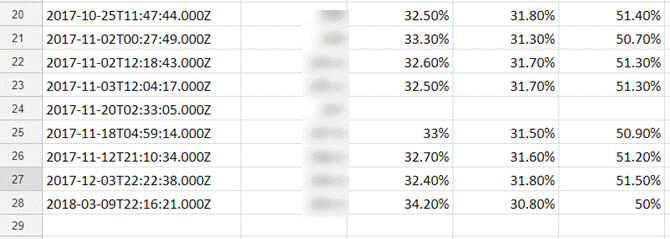
In my case, I failed to do my homework. The Weight Gurus smart scale does not provide an automated output to email or IFTTT, but the app does allows me to export all weight recordings to a CSV file, which I export into Google Sheets every day.

logging your daily life to google sheets automatically

This isn’t ideal, and hopefully, you’ve purchased a smart scale that will automatically log using one of the three solutions above.

Once the scale is sending new data to Google Sheets, the next step is to create a Google script that will check every day whether you’ve weighed yourself.

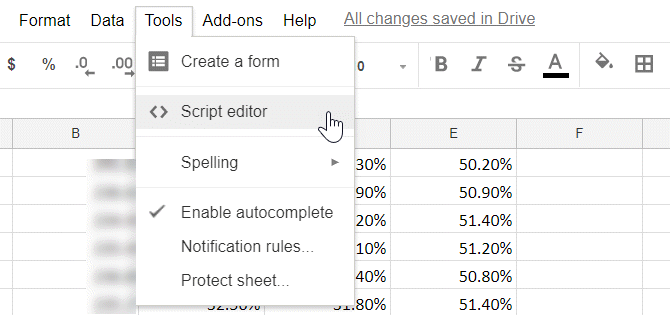
To create this new script, open that Google Sheet where your weight is getting logged and select Tools from the menu, then Script editor.

logging your daily life to google sheets automatically

In the script editor, paste the following code and save it as a new project.

function myFunction() {
  var ss = SpreadsheetApp.getActiveSpreadsheet();
  var sheet = ss.getActiveSheet();
  var lastRow = CountColA();
  var lastDate = new Date(sheet.getRange(lastRow,1).getValues());
  var thisDate = new Date();
  var DateDiff = (thisDate.getTime() - lastDate.getTime())/1000/60/60/24;

  if (DateDiff > 7) {
    MailApp.sendEmail("xxxxxx@gmail.com", "Weight Log Reminder", "You haven't weighed yourself in " + DateDiff.toString() + " days!");
  } 
}

function CountColA() {
  var sheet = SpreadsheetApp.getActiveSheet();
  var data = sheet.getDataRange().getValues();
  for(var i = data.length-1 ; i >=0 ; i--){
    if (data[i][0] != null && data[i][0] != ''){
      return i+1 ;
    }
  }
}

The way this code works is as follows.

  1. Uses the CountColA function to identify the last row of data in the sheet.
  2. Pulls the date value out of the last row, and subtracts it from today’s date.
  3. Converts the date difference from miliseconds to days.
  4. If more than seven days have passed since the last entry, the script will send a reminder email.

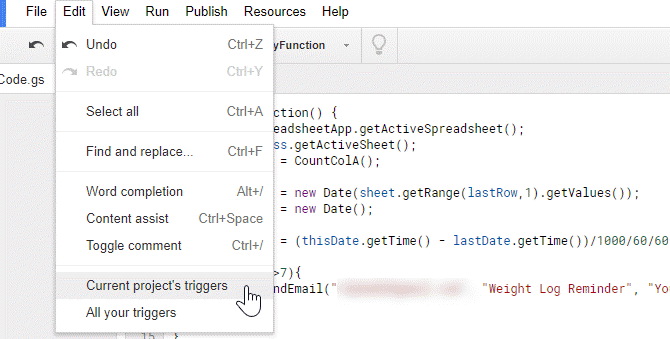
If you’re curious how sending email via Google Scripts works, we’ve covered the details in another article. Finally, you just need to configure the script to run every day. To do this, in the script editor, click on Edit, and then Current project’s triggers.

logging your daily life to google sheets automatically

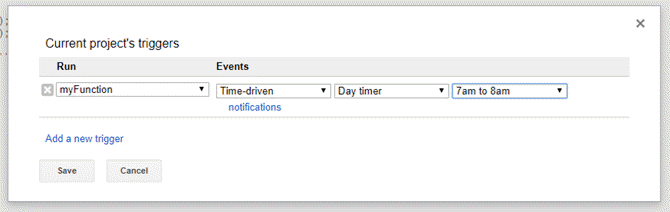
Set your new function to trigger as a Time-driven event using the Day timer, and set when you want the script to run every day.

logging your daily life to google sheets automatically

I’ve set my script to run every morning before my alarm goes off, so that I’ll see my email reminder first thing in the morning.

logging your daily life to google sheets automatically

It’s a really useful way to never forget to weigh yourself. By weighing yourself often, you’ll always be aware of where you stand health-wise.

See Who’s Wasting Energy at Home

There is nothing more frustrating for a homeowner than seeing your heating or cooling bill climbing month after month, and not having any clue as to what’s causing it.

There are a lot of ways to track your home’s energy use. One great way is to track where you may be losing air (hot or cold) to the outside is by monitoring how often people open and close the front door of your house. A great gadget for this is an indoor or outdoor wireless camera pointed at the entryway.

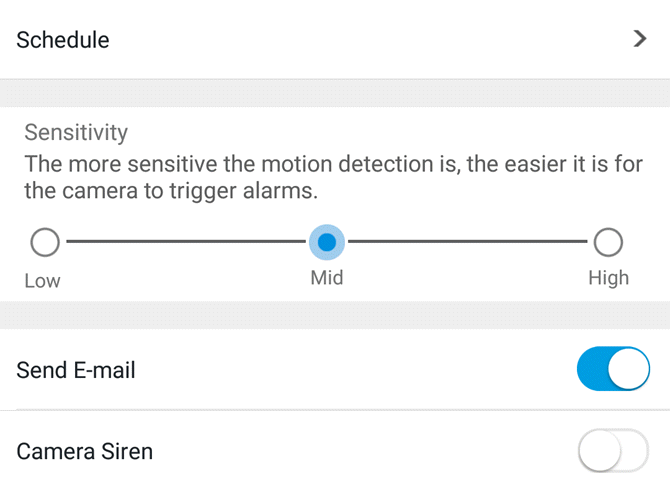
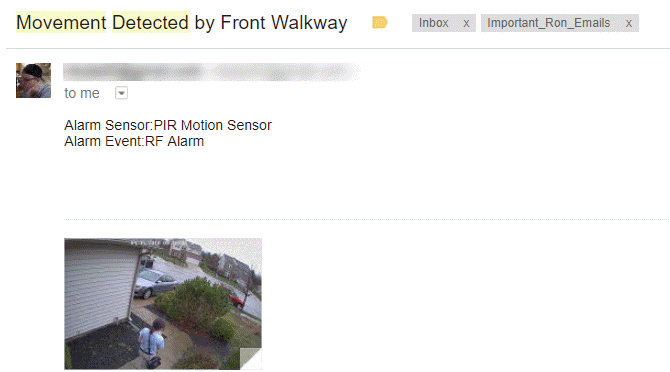
Nearly any wireless camera you buy these days allows you to send motion notifications via email. For example, I use the ReoLink Argus 2 Indoor/Outdoor Camera, and it allows for up to three email accounts to receive notifications.

logging your daily life to google sheets automatically

These notifications arrive in the following format.

logging your daily life to google sheets automatically

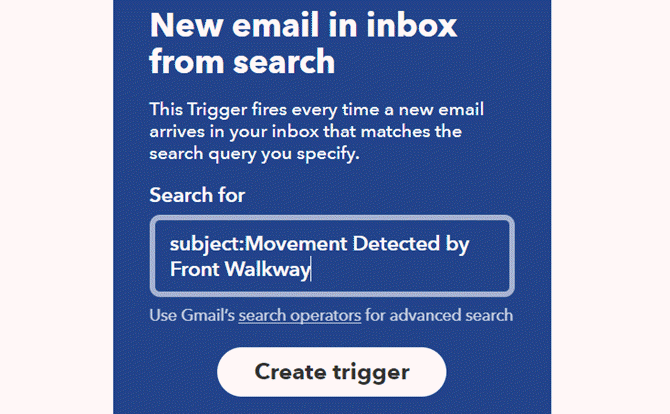
You’ll need to determine either the incoming email address or the subject line that should be used when the motion detection alerts come in.

Then you can use this in IFTTT when you configure the trigger for your applet.

logging your daily life to google sheets automatically

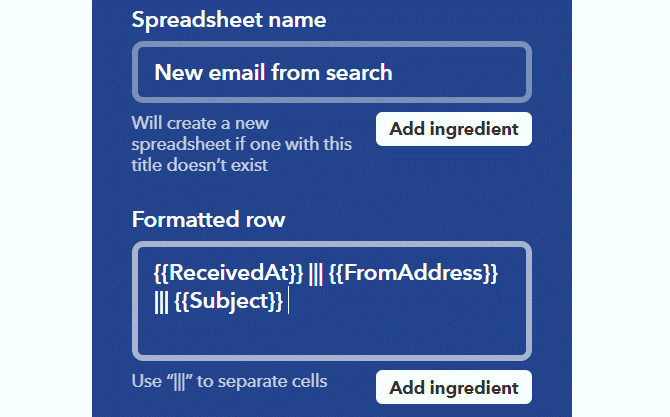
Then, set up the action in IFTTT to write a line of data that includes the date and time of the alert.

logging your daily life to google sheets automatically

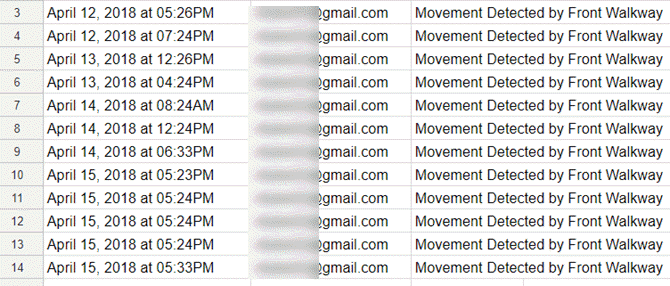
Once this is set up, you’ll have a full log of all of the days and times the front door of your house was opened.

logging your daily life to google sheets automatically

In this format, it’s easy enough see if there are any days where the front door is opening and closing excessively.

Even better, if your wireless camera is configured to send a snapshot whenever there’s motion, you could check your incoming email during those times and see who the culprit is!

Automated Gym Reminders

Another useful thing to log using Google Sheets is visits to the gym. It’s very easy to forget to go to the gym, or come up with excuses not to go. Sometimes all it takes is a little bit of encouragement.

By tracking how often you go, you’ll provide yourself with a record of your accomplishments. Go often and watch thet sheet fill up.

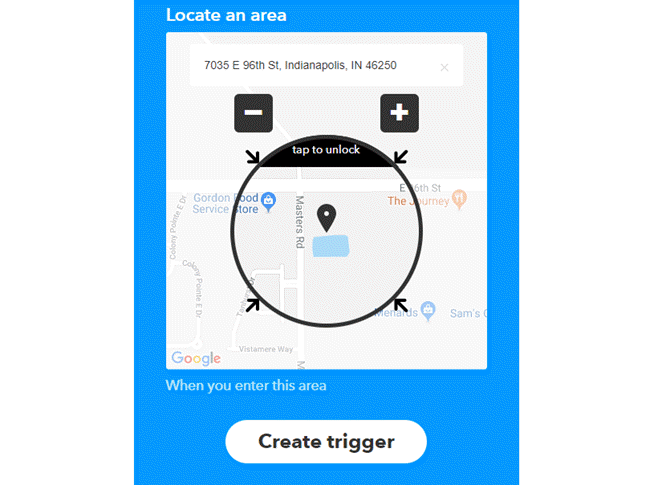
The best way to do this is using IFTTT. Specifically the Location trigger. Just type the address of your gym into the address field.

logging your daily life to google sheets automatically

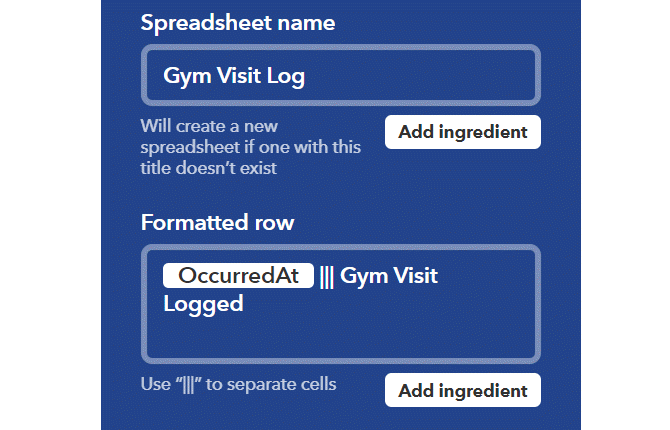
Create the trigger, and then choose Google Sheets as the action. The important data point is just the date, so make sure to leave at least the OccurredAt ingredient.

logging your daily life to google sheets automatically

Now you’ll have a record of the day and time you’ve visited the gym each day.

A visual record of your success in going to the gym is great. But what if you just decide not to go and don’t even check the spreadsheet?

A solution for this is to trigger an automated reminder email using the same script as the weight logging one in the first section of this article.

You’ll just need to change the IF statement so the outgoing email looks something like this:

if (DateDiff>2) {
  MailApp.sendEmail("xxxxxx@gmail.com", "Exercise Reminder", "It's been " + DateDiff.toString() + " days since you've worked out. Get to the gym you sloth!");
}

Now you’ll get a gentle reminder if you go more than two days without going to the gym!

Get Better Sleep

Whether you own a Fitbit, Apple Watch, or a Samsung Smart Watch, you have a very easy eay to log how well you’re sleeping every night.

Keeping a history of that data can really help you understand different things that are hurting or helping your sleep patterns.

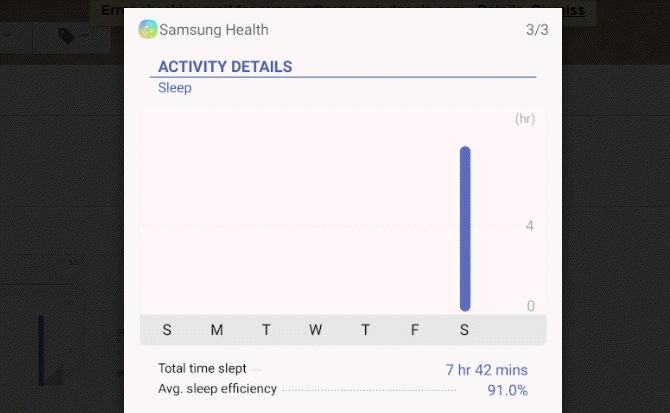
Not all of the solutions out there provide a way to log information to a spreadsheet. For example, Samsung Gear will log your sleep patterns to the Samsung Health app.

logging your daily life to google sheets automatically

You can scroll back and forth in time in this app to see what your sleep patterns were like over time, but there’s no easy way to do a data analysis on the numbers.

On the other hand, if you have a Fitbit, it’s a different story.

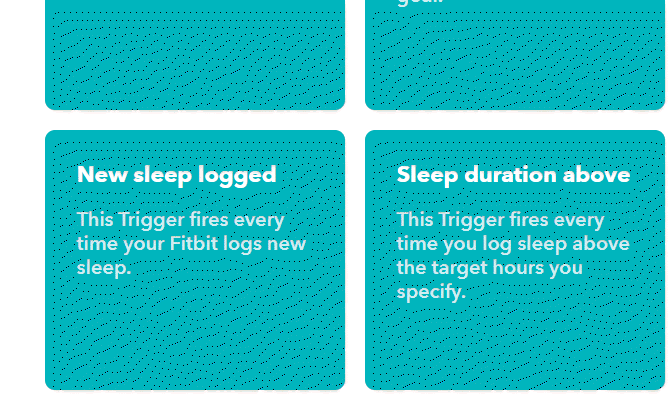
Fitbit is integrated with IFTTT, which means you can collecte data to a Google Sheet every time your Fitbit logs a new sleep event.

logging your daily life to google sheets automatically

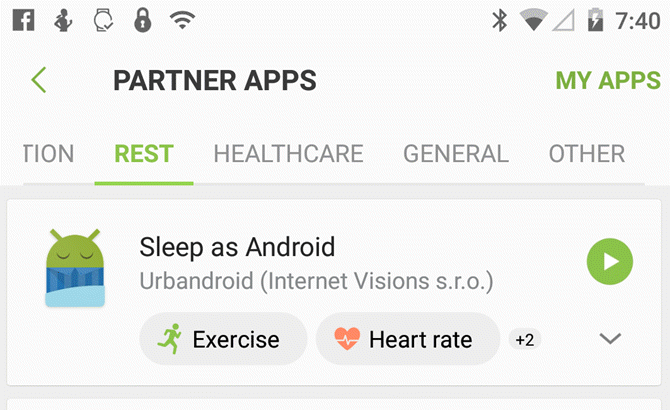
You don’t have to own a Fitbit to get great sleep tracking. Khamosh liked the Apple Watch’s sleep tracking, and you can integrate Samsung Health with an app like Sleep as Android to achieve the same thing.

logging your daily life to google sheets automatically

You actually don’t need to use Samsung Health at all, since Sleep as Android is capatible directly with your Samsung Gear smart watch (both S2 and S3).

Sleep as Android is compatible with IFTTT, but you need to set it up via a Webhook using the instructions in the user guide.

Once you’re logging how many hours a night you’re sleeping to Google Sheets, you can start trying to correlate that data with other events that were going on in your life during that time.

Some examples of what you can learn from this data:

  • Is your sleep quality better when you go to bed early or late?
  • Do you sleep better during certain seasons?
  • Are you sleeping better on certain days of the week?
  • Do your workout days (from your earlier log) affect your sleep quality?

By understanding what patterns lead to better sleep, you’ll have the knowledge you need to improve your odds of waking up much better-rested in the morning.

Trend SMS Activity With Spouse

Has your spouse ever claimed that you don’t give them enough attention?

Maybe you’ve been really busy lately and forgot to text them during the day like you usually do?

You can actually create a very quick Google Sheets log that’ll remind you if you’ve gone too long since sending a text to your spouse.

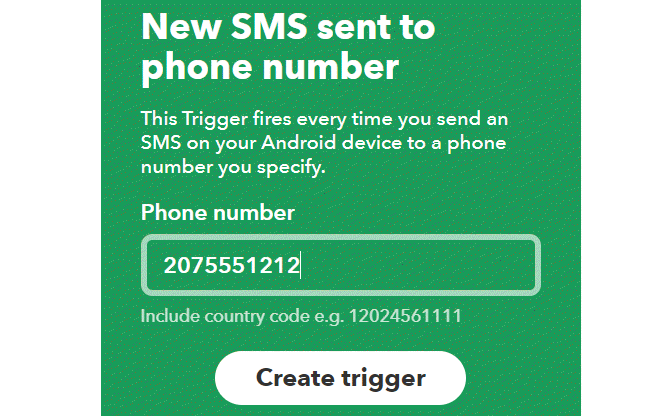
All you have to do is create an IFTTT recipe with Android SMS as the trigger.

logging your daily life to google sheets automatically

Fill in your spouse’s phone number as the “send to” phone number. This will trigger the applet every time you text your spouse.

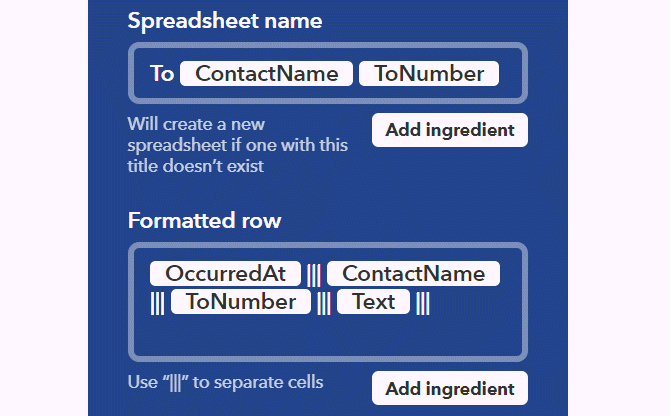
For the trigger action, choose Google Sheets Add Row to Spreadsheet.

logging your daily life to google sheets automatically

Now all you have to do is go into the Google Sheet, and create a Google Script just like in the first section of this article.

Modify the number of days when you want to alert, and edit the email send section of the code to something like this:

if (DateDiff>4) {
  MailApp.sendEmail("xxxxxx@gmail.com", "Spousal Reminder", "It's been " + DateDiff.toString() + " days since you've texted your Spouse. You're being neglectful!");
}

Yes, it’s probably sad that you need an automatic reminder to reach out to your spouse and say I love you, but it’s better than forgetting and not doing it at all, right?

Google Sheets Helps You Track Your Life

These are just a few examples of the ways you can take advantage of Google Sheets to improve your life.

It’s so easy to collect data from your life to Google Sheets. In nearly every area of your life, there’s probably a way to track and even create notifications that can help you improve in some way.

If you like what we’ve done here with scripting in Google Sheets, you’ll enjoy our more advanced article on Google Scripts that make Google Sheets more powerful.


Read Full Article
Opera Touch Is a New One-Handed Mobile Browser


Opera has launched Opera Touch, a new mobile web browser designed to be used with just one hand. As well as the one-handed functionality, Opera Touch comes with a feature called Flow, which lets you share content between your smartphone and your computer.

Designed for One-Handed Browsers

As detailed on the Opera Blog, Opera Touch has been designed with users in mind. Citing research that 86 percent of smartphone users like to use their phone with one hand while doing something else, Opera Touch has been made for one-handed browsing.

To facilitate this, Opera has created the Fast Action Button (FAB). This button is always within thumb’s reach, and gives you access to recent tabs and search functions. It means you should never have to bring your other hand into play while browsing the web.

The other main feature of Opera Touch is the new Flow feature. This lets you share photos, videos, and links between Opera Touch and the desktop version of Opera (v52 and up). And all you need to do is scan a QR code to establish a connection between the two.

For Opera users who like to browse one-handed (for whatever reason; we’re not judging) Opera Touch could be a revelation. So if you want to try it out for yourself, Opera Touch is available on Android right now, with a version for iOS in the works.

Opera Faces an Uphill Battle

The challenge Opera faces is persuading people to ditch their current mobile browser in favor of Opera Touch. Because as good as Opera Touch and its new features may be, people tend to stick with what they know for as long as possible. Just like their banks.

The ability to operate Opera Touch with one hand is great. And Flow makes the process of sharing content between your desktop browser and your mobile browser easier than ever. But is this enough? Opera Touch may need some even bolder features to gain traction.

Does Anyone Remember Opera Neon?

This isn’t the first time Opera has attempted to disrupt the browser market. In January 2017, Opera launched an experimental web browser called Opera Neon. And while it hasn’t been updated in a while, it represents a bold vision for the future of browsers.


Read Full Article
Dropbox rolls out a templates tool for its Paper online document service


As Dropbox looks to woo larger and larger businesses with its strategy of building simpler collaboration tools than what’s on the market, it’s making some moves in its online document tool Paper to further reduce that friction today.

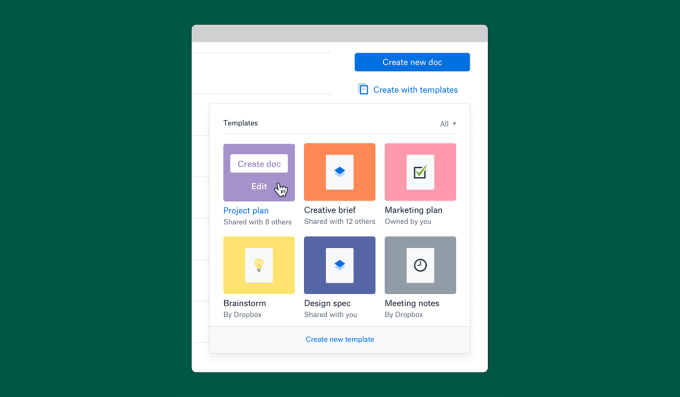
Dropbox said it was rolling out a new tool for Dropbox Paper that allows users to get a paper document up and running through a set of templates. It may seem like something that would be table stakes for a company looking to create an online document tool like Google Docs, but figuring out what Paper’s core use cases look like can take a lot of thinking and user research before finally pulling the trigger. Dropbox at its heart hopes to have a consumer feel for its products, so preserving that as it looks to build more robust tools presents a bigger challenge for the freshly-public company.

The templates tool behaves pretty much like other tools out there: you open Dropbox Paper, and you’ll get the option to create a document from a number of templates. Some common use cases for Dropbox Paper include continuous product development timelines and design specs, but it seems the company hopes to broaden that by continuing to integrate new features like document previews. Dropbox Paper started off as a blank slate, but given the number of options out there, it has to figure out a way to differentiate itself eventually.

The company said it’s also rolling out a number of other small features. That includes a way to pin documents, launch presentations, format text and insert docs and stickers. There’s also a new meeting widget and increased formatting options in the comments section in Paper. Finally, it’s adding a number of small quality-of-life updates like viewing recent Paper docs by alphabetical order and the ability to unsubscribe to comment notifications and archive docs on iOS, as well as aggregating to-do lists across docs.

Dropbox went public earlier this year to dramatic success, immediately getting that desired “pop” and more or less holding it throughout the past month or so as one of the first blockbuster IPOs of 2018. There have been a wave that have followed since, including DocuSign, and it’s one of a batch of several enterprise companies looking to get out the door now that it appears the window is open for investor demand for fresh IPOs.

Paper, to that end, appears to be a key piece of the puzzle for Dropbox. The company has always sought to be a company centered around simple collaboration tools, coming from its roots as a consumer company to start. It’s an approach that has served it — and others, like Slack — well as the company looks to expand more and more into larger enterprises. While it’s been able to snap up users thanks to its simpler approach, those enterprise deals are always more lucrative and serve as a stronger business line for Dropbox.

Dropbox will have to continue to not only differentiate itself from Google Docs and other tools, but also an emerging class of startups that’s looking to figure out ways to snap up some of the core use cases of online document tools. Slite, for example, hopes to capture the internal wiki and note-taking portion of an online doc system like Google Docs. That startup raised $4.4 million earlier this month. There’s also Coda, a startup that’s looking to rethink what a document looks altogether, which raised $60 million. Templates are one way of reducing that friction and keeping it feeling like a simple document tool and hopefully getting larger businesses excited about its products.


Read Full Article
Are Smartphone Camera Lenses Worth Buying?


It gets said a lot: “The best camera is the one you have with you.” That has never rang truer than it does today, in the age of smartphone photography. But while smartphones are more convenient to carry around, DSLRs are still way ahead in versatility due to the wide range of lenses available.

That’s why if you want to avoid lugging around a heavy DSLR but want to get more out of your phone’s camera, you might try adding a smartphone lens to your arsenal.

Between the latest Samsung, Google, and Apple phones, there are some excellent smartphone cameras available to shutterbugs. And it’s pretty much a guarantee that the next time you upgrade, the camera will be even better. So why should you consider adding a lens?

You may want to carry less gear, improve the quality of your photos, or push the limits of your phone. Or maybe you’re on the hunt for gifts for the photographer in your life. Whatever the reason, here’s everything you need to know about smartphone camera lenses.

Your Smartphone Camera Has Limitations

One of the key reasons you should be considering a smartphone camera lens is that there are certain limitations your phone just can’t get over, no matter how hard it tries:

  • When it comes to hardware, your phone has a tiny lens, and it’s only going to let in so much light.
  • The biggest advance in phone cameras isn’t coming through optics. It’s being brought to you by software. Computational photography uses software to process your phone’s images and exceed the native capabilities of the optics. You can see this in action on your phone when you take a panorama photo, use HDR, or use portrait mode on your phone. And of course, these features aren’t perfect.
  • Most phones only have digital zoom, and if you take your photography seriously, you’ll never use it. Digital zoom doesn’t tinker with your camera’s optics, instead it just scales up the picture. You’ll end up with a pixelated image that isn’t that different had you taken the photo without zoom and just cropped it.

How to Get Past These Limitations

There are several types of smartphone camera lenses that can help you get past your phone’s software and hardware limitations.

  • Telephoto: Rather than rely on your phone’s digital zoom feature, opt for a telephoto lens instead and catch those moments from a distance but with a crisp, clean photo.
  • Wide Angle: A jack of all trades, a wide angle lens will come in handy with street or landscape photography, is great for food photography, and more.
  • Macro: Your phone might have a macro option in the camera, but a macro lens will give you far more detail or texture.
  • Fisheye: You can also get creative if you go for something like a fisheye lens. There are apps that claim to offer that kind of functionality, but let’s be honest, they’re just manipulations that will never look true to an actual fisheye lens.

Real-Life Lens Comparisons

This is all good and well, but what about an actual comparison of photos with and without a smartphone lens?

Just to give you an idea of what a lens can do, here are some real-life comparisons using the Google Pixel 2 XL, which is a smartphone with a great camera, with a Moment Wide Angle lens attached. Moment claims that this lens doubles your phone’s native field of view.

Since the Google Pixel 2 XL has a lens which is roughly the equivalent of a 26mm lens, the wide angle smartphone lens pushes that to the equivalent of 18mm, giving you a far wider shot.

Street Photography

I’m going to show you three photos that will help illustrate how helpful one of these lenses can be in your street photography.

The first photo is this pleasant exterior shot of the National Gallery of Art in Washington, DC. The photo was was taken with the phone’s camera. It’s a straightforward shot and the camera does a fantastic job of rendering the scene.

street photography no lens

Let’s look at the second photo—taken from exactly the same spot—but this time with the the wide angle lens attached.

street photography with lens

That’s a pretty big difference. I managed to fit almost the entire side of the building into the frame, and more importantly, the image quality hasn’t suffered.

I can hear some of you in the back saying: big deal, why don’t you just back up and get the same shot without having to shell out for another gadget. Good question. So let’s do that.

Here’s the same field of view, and the same portion of the building captured without the aid of the 18mm lens.

street photography comparison

To get this shot, I had to back all the way across the street. Now I’ve got the same portions of the building, but I’ve also introduced a bunch of cars, a streetlamp, people I don’t know, and some less photogenic trees.

I’ve sacrificed a lot of compositional cleanliness and control getting this shot. Focusing with one’s feet isn’t always the best answer.

Food Photography

If you’re trying to to get a flat lay photo of your meal at a restaurant you’re going to have to get up over the table. And if you’re not a fan of standing up on a restaurant chair, attaching a wide angle lens to your phone will get you much closer to your goal.

Trying to capture a flat lay photo by holding your phone above the table, without standing up, will get you something like this (I was also contending with a low hanging lamp):

flat lay photo

Holding the phone in the exact same spot, with the addition of the lens, gets you this:

flat lay photo

As you can see, shooting with a smartphone lens helped me pack in much more detail without having to disrupt everyone else’s meal in order to get the shot.

Should You Buy a Smartphone Camera Lens?

So, do you need to buy a third-party lens to improve your smartphone photography? For most users, no.

However, having a smartphone camera lens in your arsenal really does open up your smartphone photography to a whole new world of possibilities.

If you want to make money with smartphone photography or improve your photos of food—or you’re a professional photographer looking to diversify your options—then a smartphone camera lens is definitely a worthy purchase.


Read Full Article
How Does Election Hacking Work? Everything Explained in Simple Terms


The fallout from the 2016 presidential election continues to dominate the news. If you flick to your favorite news channel, there’s a strong chance at least something to do with the election is still making headlines.

And for a good reason. Whatever side of the political spectrum you hail from, there’s a lot to talk about.

One of the major sticking points is that of election hacking. Allegations of election hacking and tampering continue to swirl, and with more elections looming near, this combustible topic is going to feature increasingly.

However, election hacking is a broad term. With one eye on the midterms and another on the future, let’s try and understand exactly what election hacking is.

What Is Election Hacking?

Election hacking has a broad set of definitions, but you can boil it down to one central concept: manipulation of the voting process in favor of a candidate or political party.

Election hacking is also known as electoral fraud. At other times critics refer to it as vote rigging or electoral interference. But the objective is always the same—to directly influence the outcome of a vote.

One challenge facing voters is pinning down the effects of election hacking. Voters encounter difficulty because it isn’t usually a single observable issue taking place. In many cases, the manipulation is subtle, plays out over a lengthy period, and isn’t apparent until after the election results (but not all the time).

Around the world, numerous totalitarian states feature only name on the ballot: that of the existing leader or party, or parties subservient to the ruling party. This happens in countries like China, North Korea, Cuba, and Vietnam (there are several more, too). These are single-party dictatorships, however, and differ somewhat from rigged voting situations.

There are countless rigged election examples. For instance, the Ugandan general election of 2006, the Kenyan presidential election of 2007, the Romanian presidential election of 2014, the Syrian presidential election of 2014, and hundreds more all fit this category.

What Election Hacking Looks Like in Practice

Despite the many examples of electoral interference around the globe, election hacking boils down to just three major, coverall categories. Why? Because together, these three categories form a cohesive strategy for election hacking.

1. Manipulate the Voters Before the Election

The first strategy is to manipulate the voters before they hit the polling booths. Manipulating voters before an election is itself multifaceted, but there are prominent recent examples for you to examine.

The post-2016 presidential election analysis from various government agencies made it clear that Russia had run a “messaging strategy that blends covert intelligence operations—such as cyber activity—with overt efforts by Russian Government agencies, state-funded media, third-party intermediaries, and paid social media users or ‘trolls.'”

In early November 2017, Congress released a series of Russian-backed Facebook ads that targeted voters of specific demographics. The advertisements promote divisive, emotional topics designed to begin online arguments (some of which spilled out into public). Other revelations saw Russian-run Facebook pages uniting different political pages under unique hashtags to raise awareness.

“Fake news” plays a significant part in voter influence, as does social media in the distribution of the false stories. The severity of fake news varies. At times, fake news is a regular news report that has its truth economically twisted to suit the goal of the news outlet and their political choices.

However, at other times, fake news is outright lies spread throughout social media (sometimes using the aforementioned targeted advertising to hit key demographics that are more likely to share the fake media and thus increase its reach).

Facebook isn’t the only place where voters were unduly influenced by other nations. Twitter is also rife with fake bot accounts that only retweet specific hashtags. Reddit has well-known problems with downvote and upvote brigading, forcing dissenting voices toward the bottom of the conversation.

Fake news regularly appears in national newspapers, making bold, false allegations that target specific demographics or make sweeping, generalized statements. But when proven false, the newspaper prints a minute apology buried in the middle of an edition months down the line.

Another common voter manipulation tactic is to split the opposition support, then manufacture conflict between those parties. The US political system has only two major parties that will realistically win control of the three branches. Thus, splitting voters within parties isn’t a common tactic. However, in the UK, this tactic becomes more potent due to the overlap of many political parties.

2. Manipulate the Votes and Machines

Directly after the 2016 presidential election, voters were left wondering if nefarious individuals tampered with their voting machines. At the time, the Department of Homeland Security had found no evidence.

However, there were attacks against at least one US voting software supplier, while a leaked NSA document confirmed a breach with a Florida-based voting-equipment vendor. A Bloomberg report in 2017 alleges “Russian hackers hit systems in a total of 39 states,” drastically increasing the scope of potential interference.

A direct attack on the voting machines seems unlikely; outrageous, even. They are a bastion of democracy, after all. But hackers have repeatedly shown just how easy it is to exploit a voting machine. At the enormous DEFCON cybersecurity convention, it took hackers less than two hours to hack a US voting machine. The DEFCON organizers pooled 30 voting machines from a variety of manufacturers, none of which remained secure.

One wireless hack exploited a 14-year-old vulnerability in unpatched Windows XP machines. Using the exploit, Danish security researcher Carsten Schürmann could change the machine vote tally from anywhere on the planet.

Despite what both major US political party supporters yell, there is still no evidence that there was direct voting machine manipulation affecting the outcome of the 2016 US presidential election. But “[w]ithout question, our voting systems are weak and susceptible,” says Jake Braun, CEO of security consulting firm Cambridge Global Advisors. “Thanks to the contributions of the hacker community today, we’ve uncovered even more about exactly how.”

3. Manipulate the Infrastructure

Finally, consider how manipulating the infrastructure around an election also plays a part in the outcome. Causing mass-disruption to citizens attempting to cast a vote is another way to hack an election. Disturbing the election process on the day of, or day before, can sway numbers.

Disruption levels vary, as you might imagine. An extreme example is the 1984 Rajneeshee attack. A religious cult poisoned over 700 Oregonians with salmonella to stop them voting in county elections, almost killing several in the process. At the same time, the cult registered thousands of homeless people to vote, promising them food in return. This level of disruption to cause “natural” voter fraud is rare. Also, it is difficult to contain, as the cult quickly realized.

However, widespread disruption doesn’t require poisoning or busloads of homeless people. A hacker with access to a voter database could delete or corrupt voter logs. Sounds outlandish? This exact hack took place at the aforementioned DEFCON conference. As you have already seen, Russian hackers hit voting systems in 39 states, so it isn’t entirely out of the question.

Another infrastructure disruption tactic is a powerful DDoS to take political information offline at critical moments. A Distributed Denial of Service (DDoS) attack is easy to organize, as well as cheap and very effective. Political sites can be forced offline under the strain of a DDoS attack.

So while mobilizing individuals or even thousands of people to commit voter fraud through disruption is difficult, using digital systems is not.

Election Hacking Is Broad

These three categories cover the majority of the electoral tampering spectrum. Unfortunately, it is broad.

But in democratic countries with a strong history of stable voting (as well as the peaceful transition of power), claims of electoral fraud are usually without basis.

The problem with such assertions is the resulting reactions harm those that already struggle to vote, in turn creating another form of election hacking (this falls under section one and three, by the way).

Image Credit: lisafx/Depositphotos


Read Full Article
Samsung tempers record earnings with pessimistic smartphone outlook


Samsung’s latest earnings report is a succinct lesson in hoping for the best and preparing for the worst. The actual news here is pretty positive, as the company reports a record operating profit, courtesy of high demand for its components and flagship handsets.

But a statement tied to the news mentions “slow demand” no fewer than seven times, as the company looks to temper investor expectations, Those warnings largely revolve around the company’s display panel offerings and a perceived stagnations in the mobile sector in general.

“For the second quarter,” the company writes in a statement, “Samsung expects the Memory Business to maintain its strong performance, but generating overall earnings growth across the company will be a challenge due to weakness in the Display Panel segment and a decline in profitability in the Mobile Business amid rising competition in the high-end segment.”

The slow down, it seems, has already had an impact on the display side, though Samsung’s weathered much worse than this already. Keep in mind how the whole Note 7 debacle didn’t make a dent on the company’s profitability. Samsung is the consumer electronics poster child from the importance of product diversity.

There’s some Apple shade implied here as well. After all, Samsung provides the OLED panel for its chief competitor’s ultra premium handset, leaving Wall Street to infer that less than stellar iPhone X sales was a contributor here. Samsung’s forecast also includes warnings around slowed demand for its own handsets in the next quarter.

“In the Mobile Business,” Samsung writes, “profitability is expected to decline QoQ due to stagnant sales of flagship models amid weak demand and an increase in marketing expenses.” That’s due, at least in part, to a natural cycle as the initial hype dies down — though there also appears to be a larger global smartphone slow down at play here as well. But the company says it believes that will be buoyed in part by increased summer demand for TVs and air conditioners. People might not be buying as many new smartphones in the future, but hey, climate change will make sure we always need ACs. 


Read Full Article
The ONE Smart Keyboard Pro lets you tickle the ivories with ease



While the ONE Smart Keyboard Pro doesn’t have a sweet demo tune nor can it play barking dog Jingle Bells without some help, it can teach you or your kids how to play piano. The elegant keyboard has 88 weighted keys that simulate a true mechanical piano and connects to your phone so you can learn to play at your own pace.

The Keyboard Pro costs $799 and is essentially a compact teaching keyboard. It can connect to your iOS or Android devices via an oddly shaped USB B cable and once it’s paired with the app you can run through simple songs – think Greensleeves – and more complex sheet music. This keyboard is weighted but not progressively which means that each key offers the same resistance, a consideration that might be important to some more experienced players. Further, you can connect a USB cable and connect the keyboard to your computer to use it as a MIDI controller.

Again, this is a very austere keyboard. It doesn’t do much aside from teach you how to play which, in the end, is what most of us need. Because it doesn’t have the expansive bells and whistles of a Casio and because most of the smarts are in the app itself, it’s a bit of a hard sell for most people. However, if you’re looking to learn, the ONE works.

This larger and more complete version of the One Smart Keyboard offers quality workmanship and design. The entire system is surprisingly sparse with nothing but a power button and volume on the front of the keyboard. There is an input for a sustain pedal as well as a few output jacks for headphones and that’s about it. Don’t expect to pick out instruments or pitch shift with this keyboard. Once you fire up the app you have access to teaching exercises and games that let you follow along on the LED-lit keyboard as you run through songs and scales. Finally, you can buy sheet music for $3.99 or so that you can learn to play on the ONE. There is also free sheet music available for those who want to play a little classical.

[gallery ids="1629054,1629055,1629053"]

I found the entire system to be quite usable and my kids, once they figured out how to slow down the music, jumped right in learning little songs. Nothing can quite teach you how to play piano like a human teacher – there aren’t enough smarts in this app to make adjustments based on your skill – but it’s the electronic equivalent of buying a Teach Yourself Piano book and sitting down in front of grandma’s old upright. I’m especially pleased with the quality of the keyboard. I’ve already had a few MIDI keyboards over the years including models from Casio and Yamaha and this one is on par with those. The teaching feature is the main draw here, as I noted before, because there is little else you can do with this keyboard right out of the box. However, if that’s what you’re looking for in a keyboard and you don’t want to sample bodily noises so you can play Farting Clair De Lune at the school talent show, this might be the model for you.

[gallery ids="1629027,1629020,1629017,1629016,1629015"]

Read Full Article