06 October 2020

Google is providing cash awards to 76 startups through a racial equity initiative announced in June


In June of this year, as more of the world began to awaken to the many ways that people of color are systematically discriminated against amid months of protest, a wide number of companies announced initiatives aimed at improving the representation of underrepresented groups within their own ranks and as recipients of their investment dollars.

Unsurprisingly, Alphabet, among the world’s biggest and most profitable companies, was among them. Specifically, as part of Alphabet’s commitment, Jewel Burks Solomon — who is the head of the company’s nine-year-old program Google for Startups — agreed to help steer $5 million in cash rewards of up to $100,000 to select startups.

The company didn’t waste much time. Today, Solomon is announcing that the money has been committed to 76 different startups that were chosen for their geographic diversity as well as the diversity of their companies’ mission.

Solomon and her team had some help. All the founders to receive the non-dilutive funding have participated previously in either Google’s Founder Academy in Atlanta, which is an eight-month-long program for 40 Georgia-based startups that was announced back in February, or are otherwise affiliated with one of 17 other organizations with which Google partners, including Black Founders Exchange, a four-year-old program for Black founders that’s co-hosted by Google and American Underground, a Durham, N.C., co-working outfit.

Google “didn’t open it outside of our network because we want to be able to offer support, in addition to the funding,” says Solomon. “This isn’t about just writing a check but also our ability to work with the founders through the programs over time.”

As for eligibility criteria, Solomon says Google wanted to “find companies that had a readiness for the funding” and had not already received more than $3 million in outside backing.

Though Google says it is looking to mentor, and not necessarily capitalize off, the founders who’ve received checks, many of the teams have identified sizable opportunities that are poised to grow as country’s demographics change.

Latched and Hook, for example, a 4.5-year-old Atlanta, Ga.,-based beauty startup, spied the need for non-toxic synthetic and stylish hair products and began producing and selling its own braids and twists, wigs and ponytails, and has been embraced by both beauty editors and an expanding customer base alike.

Another startup, MindRight, a year-old, Newark, N.J.-based startup provides culturally responsive mental health coaching via text message to largely teenagers in order to help them develop positive coping skills; the idea is to reach and support students who are dealing with stress and trauma to help prevent a crisis, as well as to work with them to establish goals. (“I am blown away by many of the founders, [a lot] are whom are working on big issues impacting the communities where they live,” says Solomon.)

Many of the startups also target Americans who might not be top of mind for engineering talent in Silicon Valley startups because they have less disposable income but who collectively represent a much bigger swath of the country. Among these is Courtroom5, a 6.5-year-old, Durham, N.C.-based online platform that empowers people to manage their own civil court cases without the need of a lawyer.

Asked about Google for Startups’s relationship to GV — the corporate venture arm of Google that invests many hundreds of millions of dollars each year — and whether it gets a first look at the startups that Solomon and her team identify, she says there’s a connection but not a straight line from A to B.

“We do have a relationship with the GV team,” one that sees some of the partners serving as mentors for the young startups it tracks. But the idea is to help the startups with which it is involved better prepare for “investment from GV and across the board” she adds, suggesting that she isn’t as interested in where some of these founders secure venture funding as much as she is focused on ensuring they’re able to receive it.

As for whether there is enough of that follow-on funding — many Black investors and founders have expressed concerns to TechCrunch over a continuing lack of diversity at growth-stage venture firms — Solomon says she hopes “firms are paying attention to firms that will need additional funding.”

It’s certainly the point of what she is trying to build at Google, as well as in a second role she holds as a managing partner at Collab Capital in Atlanta. Brands that understand black customers and other underrepresented groups is a “great place to be investing,” she notes. With a little financial boost and a lot of mentoring, Google hopes these new reward recipients will have an even better story to tell that makes that next round easier to raise.

You can learn more about half a dozen of the cash-reward recipients below. You can find the complete list here.


MindRight: Newark, N.J.

Ashley Edwards created MindRght to advance mental health care equity, making it accessible and inclusive to communities of color and low-income families. This funding will be used to build capacity, supporting coaching and technical teams with the resources they need to address this urgent and ongoing need of their clients.


ShearShare: McKinney, Tex.

ShearShare is led by husband and wife co-founders Courtney Caldwell and Tye Caldwell. They created a mobile marketplace for stylists that helps them communicate directly with their clients, including about specials they might be offering. Throughout COVID-19, the startup has also been enabling stylists to rent a sanitized salon suite, station, or nearby barber chair by the day, without requiring a contract or commission.


Pharoah’s Conclave: Atlanta, Ga.

As avid gamers, wife and husband founder duo Jakita and Erich Thomas built Pharoah’s Conclave to provide career pathways for Black and Latinx youth in the massively growing esports market. As part of that effort, they recently launched virtual gaming summer camps for youth across the country with the added goal of placing more than 50 young people into professional esports careers.


Courtroom5: Durham, N.C.

Sonja Ebron is the founder of Courtroom5, an online platform that empowers people to manage their own civil court cases without the need of a lawyer. Among its offerings: it helps users maintain an online case record, manage evidence, find case law, file motions using guided document templates, and manage tasks and expenses. It also aims to help its customers represent themselves effectively by providing on-demand video courses about civil procedure and about some of the skills needed to win.


Aguagenuity: Atlanta, Ga.

Doll Avant is a data scientist and social impact strategist who decided to address the water quality health crisis after her father was diagnosed with diabetes and, curious to determine why, she discovered arsenic in the local water supply. She has since turned her passion for  researching water quality into Aquagenuity, a real-time water quality aggregator that empowers individuals and businesses with critical health information about their water.


TQ Intelligence: Atlanta, Ga.

Through his startup, TQIntelligence, Yared Alemu — a former staff psychologist at the University of Georgia and director of clinical services at Georgia State University — has developed a platform that leverages voice recognition technology to identify and predict emotional and behavioral disorders in at-risk youth. The company’s ultimate aim is to solve for the current disparity in mental health treatment outcomes for at-risk youth at the point-of-care, a disparity caused by the difficulty to measure emotional distress and level of impairment due to trauma, precipitated by poverty.


Read Full Article

How Are Slavic Women Different from Western Women?


No matter the nationality, every Western man must have heard tales about the legendary beauty of Slavic women. Even though this appears mythical, a good number of men won’t mind dating these women. If you’ve ever wondered how Western women were different from Slavic women, no need to worry, we have conducted a comprehensive psychological […]

The post How Are Slavic Women Different from Western Women? appeared first on ALL TECH BUZZ.


Security flaw left ‘smart’ chastity sex toy users at risk of permanent lock-in


Just because almost every gadget or appliance can be connected to the internet, doesn’t mean they should be. Outages can render these “smart” devices useless, and many use weak security that can make them easily hackable.

And as security researchers recently found out, the consequences of having a major security flaw in one popular sex toy could have been catastrophic for tens of thousands of users.

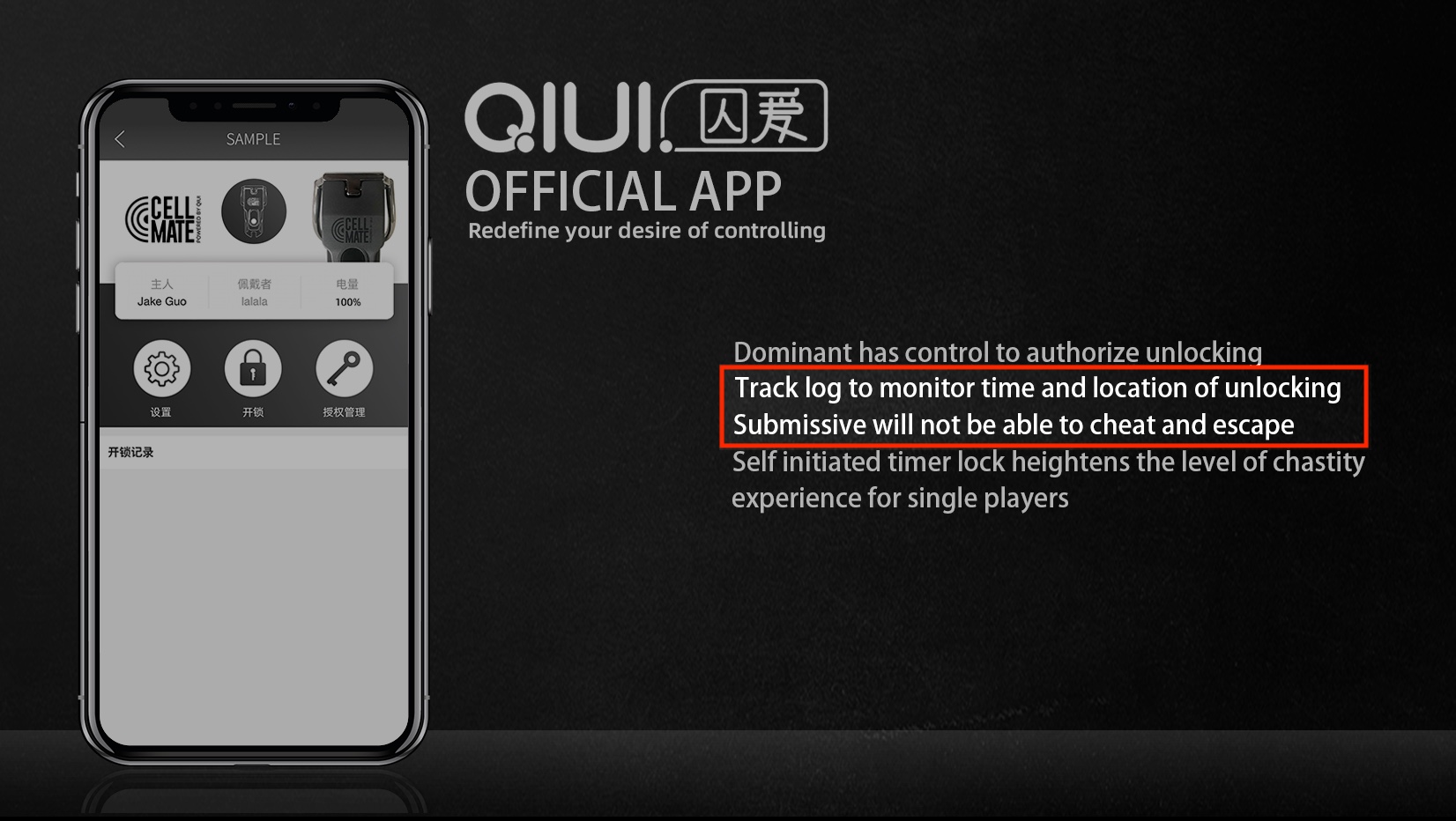
U.K.-based security firm Pen Test Partners said the flaw in the Qiui Cellmate internet-connected chastity lock, billed as the “world’s first app controlled chastity device,” could have allowed anyone to remotely and permanently lock in the user’s penis.

The Cellmate chastity lock works by allowing a trusted partner to remotely lock and unlock the chamber over Bluetooth using a mobile app. That app communicates with the lock using an API. But that API was left open and without a password, allowing anyone to take complete control of any user’s device.

Because the chamber was designed to lock with a metal ring underneath the user’s penis, the researchers said it may require the intervention of a heavy-duty bolt cutter or an angle grinder to free the user.

Alex Lomas, a researcher at Pen Test Partners, said in a blog post that an attacker could lock “everyone in or out” very quickly. “There is no emergency override function either, so if you’re locked in there’s no way out,” he wrote.

The unsecured API also allowed access to the private messages and the precise location from the user’s app.

A vulnerability in the Qiui’s Cellmate app allowed anyone unauthenticated access to the private messages and location of any user. The lock on the chastity device can also be remotely controlled, researchers said. (Image: Qiui)

TechCrunch first learned of the vulnerability in June. The researchers contacted Qiui, based in China, about the flawed API. Taking the vulnerable API offline would have locked in anyone using the device. The developer pushed out a new API for new users, but left the unsecured API up for existing users.

Qiui chief executive Jake Guo told TechCrunch that a fix would arrive in August, but that deadline came and went. “We are a basement team,” he said. In a follow-up email explaining the risks to users, Guo said: “When we fix it, it creates more problems.”

In the end, Qiui missed the three self-imposed deadlines to fix the vulnerable API, said Lomas.

The decision to go public was made after Pen Test Partners learned of a separate security issue from another researcher, who also found it difficult to get a response from Qiui. “This reinforced our decision to publish: clearly others were likely to find these issues independent of us, so the public interest case was made in our minds,” wrote Lomas.

It’s not known if anyone maliciously exploited the vulnerable API. Several user reviews of the app complained that the app had bugs that would cause the device to stay locked.

“The app stopped working completely after three days and I am stuck!” said one user. Another said they “got already stuck twice when wearing it due to the unreliable app.”

“It worked for about a month until I almost got stuck in it. Thankfully it unlocked itself randomly and I was able to get out of it. The device left a bad scar that took nearly a month of recovery,” said another review.

Qiui joins a long list of sex toys with security problems that inherently don’t exist in non-internet-connected devices. In 2016, researchers say a bug in a Bluetooth-powered “panty buster” let anyone remotely control the sex toy over the internet. In 2017, a smart sex toy maker settled a lawsuit after it was accused of collecting and recording “highly intimate and sensitive data” of its users.

Practice safe sex; don’t use a smart device.

Related stories:


Read Full Article

G Suite is now Google Workspace


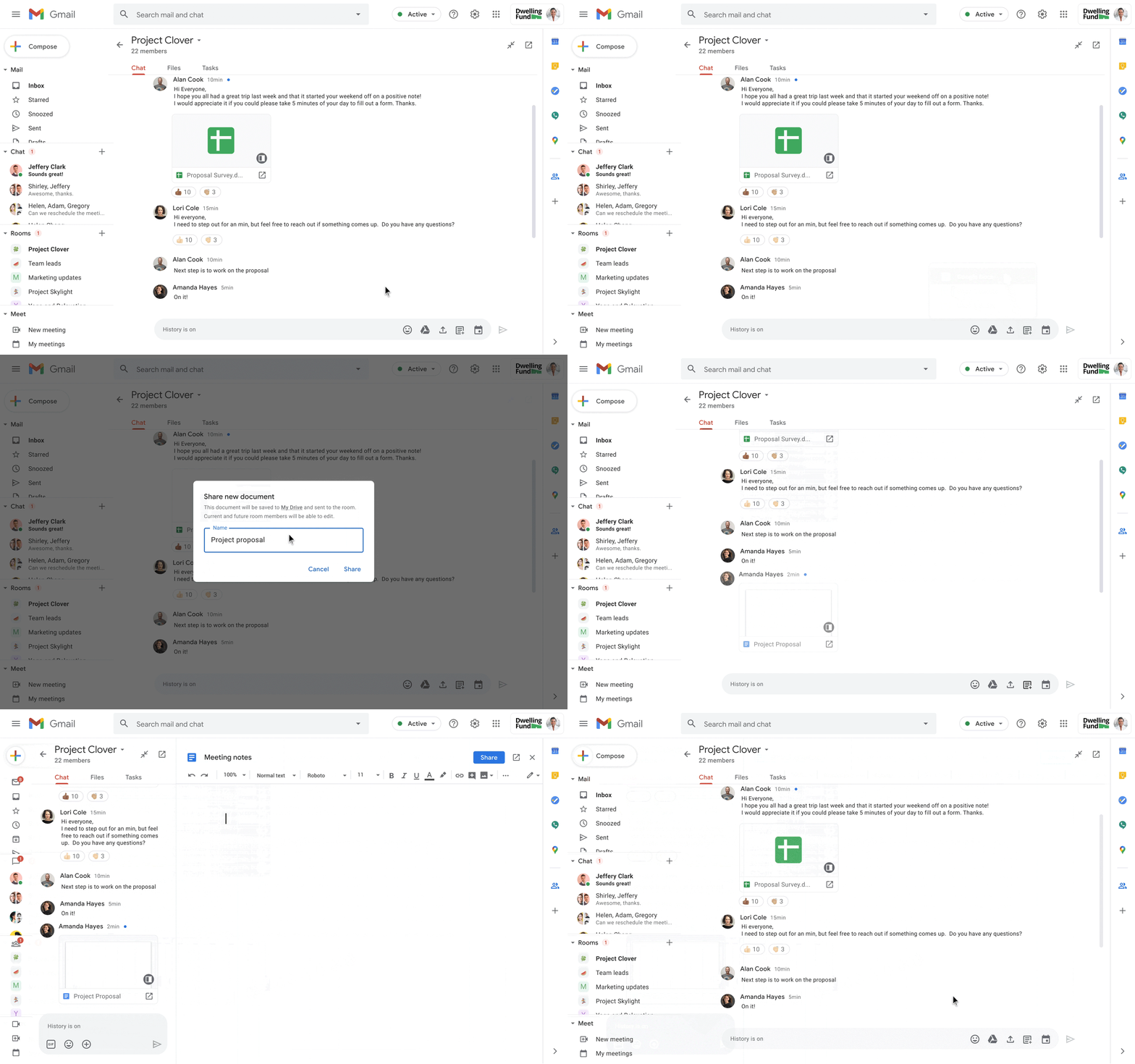
Google is rebranding G Suite, its set of online productivity and collaboration tools for businesses that include the likes of Gmail, Drive, Docs and Meet. The new name is Google Workspace, a name the company already hinted at when it first introduced a set of new collaboration tools and Google Meet integrations for the service earlier this year. Now those new tools are coming out of preview and with that, the company decided to also give the service a new name and introduce new logos for all the included productivity apps, which are now being used — and paid for — by more than 6 million businesses.

Image Credits: Google

G Suite, as the brand for Google’s paid offering, originally launched in 2016. In a press briefing ahead of today’s announcement, Google’s Javier Soltero, the company’s VP and GM for what is now Google Workspace, noted that the company wanted to ensure that the service that people use is the same thing that people buy.

Image Credits: Google

“By selecting Google Workspace, we get the brand association with Google, which is really important to us,” he said. “These products are flagship products for Google itself — and the ability to actually describe the product in the same way, whether it’s to a buyer or to a user.” Google, he added, wants its customers to see Workspace as a product that brings together all the tools they need to get their work done.

What’s maybe far more important than the brand, though, is that Google is also launching a few new features for G Suite Workplace today. For the most part, these are the Meet, Chat and Rooms integrations the company already announced earlier this summer. Google is now integrating all of these collaboration tools across its applications, with Gmail currently being the one service where they all come together.

Image Credits: Google

Among the new features that are coming soon are the ability to create and collaborate on documents with guests in Chat rooms and to preview linked files in Docs, Sheets and Slides without having to open them in a new tab. Whenever you @mention somebody in a document, Workplace will also pop up a smart chip, as Google calls it, to show you contact details and suggest actions (think starting a video call or chat — or to email them if you’re old school).

Gmail and Chat already feature a picture-in-picture mode that allows you to have Google Meet video calls in those services. This feature will roll out to Docs, Sheets and Slides in the coming months, too.

Pricing will mostly remain the same, though the naming is changing here a bit, too. The cheapest plan, Business Starter, starts at $6/month and users who need more storage and support for larger meetings can opt for the Business Standard plan for $12/user/month. What’s new is the $18/user/month Business Plus plan that includes additional security features and compliance tools like Vault and mobile device management capabilities.


Read Full Article

Instagram’s 10th birthday release introduces a Stories Map, custom icons and more


Instagram today is celebrating its 10th birthday with the launch of several new features, including a private “Stories Map,” offering a retrospective of the Stories you’ve shared over the last three years, a pair of well-being updates, and the previously announced IGTV Shopping update. There’s even a selection of custom app icons for those who have recently been inspired to redesign their home screen, as is the new trend.

The icons had been spotted earlier in development within Instagram’s code, and it was expected they would be a part of a larger “birthday release.” That turned out to be true.

With the update, Instagram users across both iOS and Android can opt between a range of icons in shades of orange, yellow, green, purple, black, white and more. There’s also a rainbow-colored Pride icon and several versions of classic icons, if you want a more nostalgic feel.

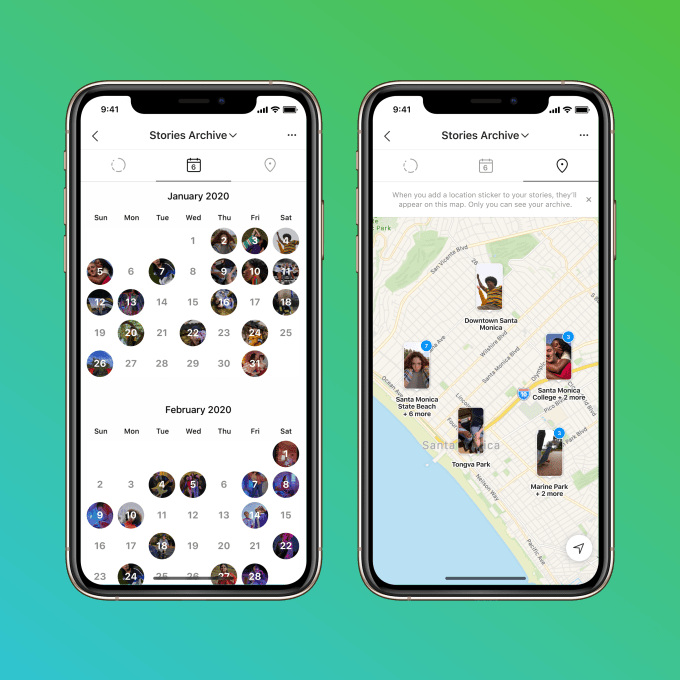
The new Stories Map feature, meanwhile, introduces a private map and calendar of the Instagram Stories you’ve shared over the past three years, so you can look back at favorite moments. Though this may surprise some users who thought Instagram Stories’ ephemeral nature meant they were deleted from Facebook servers over time, it’s not the first time Instagram has pulled up your old Stories to build out a new feature.

Instagram’s “Story Highlights,” for example, first introduced in 2017, allowed users to create a permanent home for some of their formerly ephemeral content.

Image Credits: Instagram

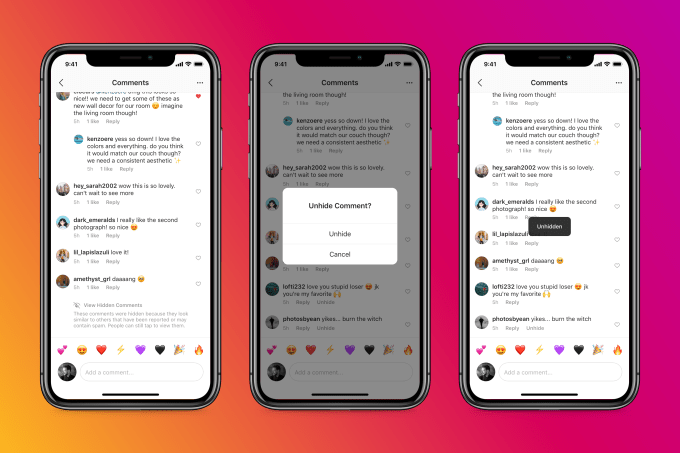
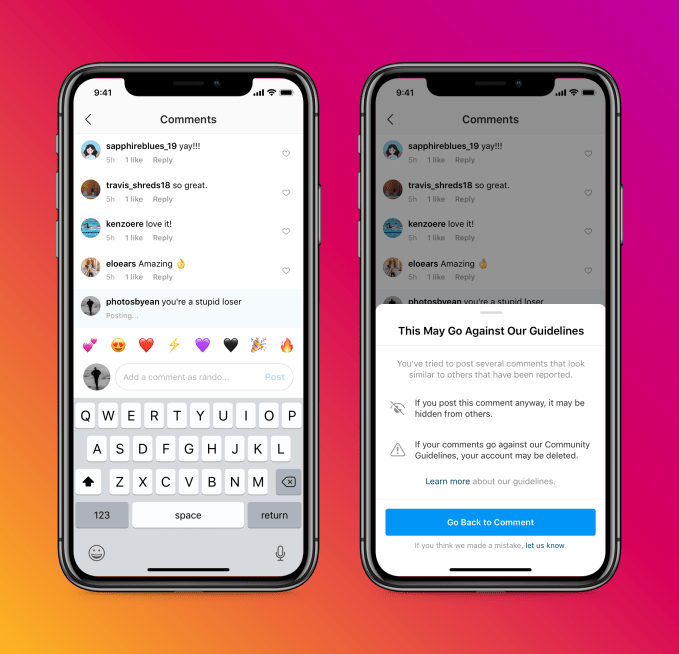
Two other new features also rolling out with the latest release are timed alongside the kickoff of National Bullying Prevention Month. The first, which will begin as a test, will automatically hide comments similar to others that have already been reported. These will still be visible under the label “View Hidden Comments” if you want to see what’s been removed from the main comment feed.

Image Credits: Instagram

This feature is somewhat similar to Twitter’s “Hide Replies” feature that launched globally last year. Like Twitter, the feature will place the inappropriate or abusive remarks behind an extra click, which supposedly helps to disincentivize this sort of content, as it could be hidden from view. Except in Twitter’s case, the original poster had to manually hide the replies. The Instagram feature, however, is attempting to automate this functionality.

Instagram says it’s also expanding its nudge warnings feature to include an additional warning when people repeatedly try to post offensive remarks. Already, Instagram provides an AI-powered feature that notifies people when their comment may be considered offensive by giving them a chance to reflect and make changes before posting. Now this feature will target repeat offenders, suggesting that they take a moment to step back and reflect on their words and the potential consequences.

Image Credits: Instagram

The company also released new data about trends across its platform as well as an editorial look back at Instagram’s major milestones.

Here, it revealed trends across music — like how KPOP is the No. 1 most-discussed genre — along with other trends, like top songs, AR effects, top Story Fonts and more. Instagram said more than a million posts mentioning “meme” are shared on its platform daily, 50% of users see a video on Instagram daily, there are over 900 million emoji reactions sent daily and the average person sends 3x more DMs than comments.

The updated app is available across iOS and Android.


Read Full Article

Daily Crunch: Venmo launches a credit card


Venmo’s first credit card is here, a former Amazon employee is arrested for fraud and we review the Nest Audio smart speaker. This is your Daily Crunch for October 5, 2020.

The big story: Venmo launches a credit card

PayPal-owned mobile payment app Venmo already offers a Mastercard-branded debit card, and it announced a year ago that it was planning to launch its first credit card as well. Today, it made good on that promise.

The Venmo Credit Card is a Visa card that offers personalized rewards and 3% cash back on eligible purchases. The cards come in five colors and include the user’s own Venmo QR code on the front.

Naturally, it also integrates with Venmo, allowing customers to track their spending and make payments from the mobile app. The card is currently available to select Venmo users, with plans to launch for the rest of the U.S. in the coming months.

The tech giants

Feds arrest former Amazon employee after company reported him to FBI for fraud — The company says it reported Vu Anh Nguyen to the Federal Bureau of Investigation in July 2020 over allegations of falsely issuing refunds for products ordered on Amazon.com to himself and his associates.

Nest Audio review — Brian Heater says it’s a welcome update to the Google Home.

Instagram expands shopping on IGTV, plans test of shopping on Reels — The product lets you watch a video, then purchase the featured product with a few taps.

Startups, funding and venture capital

Ola fails to get ride-hailing license renewed in London, says it will appeal and continues to operate — The India-based ride-hailing startup is not getting its Transport for London ride-hailing license renewed after failing to meet public safety requirements around licensing for drivers and vehicles.

Cooler Screens raises $80M to bring interactive screens into cooler aisles — Cooler Screens is led by co-founder and CEO Arsen Avakian, who previously was founder and CEO of Argo Tea.

GrubMarket raises $60M as food delivery stays center stage — The startup provides a platform for consumers to order produce and other food and home items for delivery, as well as a service supplying grocery stores, meal-kit companies and other food tech startups with products for resale.

Advice and analysis from Extra Crunch

Accel VCs Sonali De Rycker and Andrew Braccia say European deal pace is ‘incredibly active’ — De Rycker’s comments point to a future where there is no single center of startup gravity.

Two Kindred Capital partners discuss the firm’s focus and equitable venture model — The London-based VC, which backs early-stage founders in Europe and Israel, recently closed its second seed fund at £81 million.

(Reminder: Extra Crunch is our subscription membership program, which aims to democratize information about startups. You can sign up here.)

Everything else

Camera that will film a spacewalk in VR delivered to the International Space Station — The camera will be used to film a spacewalk in immersive, cinematic VR for the first time ever on an upcoming ISS astronaut mission.

Original Content podcast: Netflix’s ‘Away’ deftly balances space exploration and human drama — I worried that the show might be a bit too weepy and melodramatic, but I was wrong.

The Daily Crunch is TechCrunch’s roundup of our biggest and most important stories. If you’d like to get this delivered to your inbox every day at around 3pm Pacific, you can subscribe here.


Read Full Article
Airbnb nears IPO as Asana and Palantir land their direct listings


Editor’s note: Get this free weekly recap of TechCrunch news that any startup can use by email every Saturday morning (7 a.m. PT). Subscribe here.

The going has not always been easy but the tech IPOs keep coming. Airbnb itself is almost here, in what is likely to be the ultimate stock market listing of this dramatic year. After the pandemic triggered mass layoffs for the short-term rental marketplace, it has managed to make up all of the lost ground to pre-pandemic projections, TechCrunch and others have reported. Now, news is leaking out that it could seek to raise up to $3 billion at a $30 billion valuation.

The US presidential election in a month, Trump’s positive COVID-19 diagnosis, and various other world events have yet to stop the tech IPO momentum.

This past Wednesday, Palantir and Asana both opted to put a limited number of shares up for sale directly instead of working with a bank to pre-sell portions to favored clients, following in the direct-listings footsteps of Spotify and Slack.

Palantir, which is continuing to get political scrutiny around its government data businesses, and Asana both finished the first few days of trading without any pop to speak of for initial public investors (although other things have been impacting markets in the same time frame). However, both companies have already turned billions of paper funding rounds into liquid money that can start going back to the employees and investors, as intended. And now, each can sail the high seas of public markets with a smaller, friendlier group of stockholders than many, many other public companies have.

We’ve been covering Palantir in great detail recently, but Asana’s entrance provides a broader lesson for the many aspiring SaaS startups out there.

Dustin Moskovitz, who has retained a huge amount of control as a cofounder/investor, told Danny Crichton for Extra Crunch that more than 40% of the task-focused work management provider’s revenue is now coming from outside of North America, with ongoing growth, high customer loyalty and big integrations with other SaaS providers. The results bode well for other SaaS companies considering direct listings, as Alex Wilhelm analyzes for EC:

Asana grew 63% in the six months ending July 31, 2020, compared to the same period of 2019, though that growth rate decelerated to around 57% when only looking at the most recent quarter and its historical analog. Good growth then, if slowing. And Asana’s gross margins were good and improving, coming in at 86% in the six months ending July 31, 2019, and 87% in the same period of 2020. But the company’s net losses were rising in gross and relative terms at the same time. In the six months ending July 31, 2020, Asana lost $76.9 million, up from $30.5 million in the same period of 2019. And, the company’s 77% net loss as a percent of revenue in the two quarters ending in July of 2020 was up from a 50% loss during the same period of the preceding year. Asana also consumed more cash this year than last year, with its operating cash burn rising from $13.1 million during the six months ending July 31, 2019 to $40.3 million in the same period of 2020.

And yet, from a reference price of $21, valuing the company at around $4 billion on a fully diluted basis, shares of Asana have risen to $25.14 at the open of trading this morning (though Asana lost several points today thanks to general market carnage). Current market trackers value the company at $3.86 billion.

Now, on to Airbnb! (And also, Datto!)

Source: Getty Images

Pandemic upsides arrive for cannabis, mental health and language learning

As the world tries to make sense of fresh Q3 data, we took a closer look at a few fresh startup trends. First, the cannabis market seems to be as strong as you’d expect. Matt Burns caught up with a range of weed-tech founders, investors and analysts, who shared almost entirely good news for the emerging sector. Here’s a highlight from Andy Lytwynec, VP, Global Vape Business at Canopy Growth, the cannabis holding company for a range of brands, including the vaporizer preferred by your self-medicated correspondent:

Lytwynec points to Storz & Bickle as a barometer of sorts in judging the impact of COVID-19. The German-based vaporizer company saw an uptick in sales, as reported in Canopy Growth’s latest quarterly report. The company reported a 71% increase during the first quarter ending on June 30. The financial report pointed to Storz & Bickel’s increased sales and distribution expansion as a primary reason for the increase. 

Just try getting a replacement for that mouthpiece you tragically broke at the start of quarantine. And don’t fall for that fake stuff on Amazon or you’ll be huffing plastic. Anyway…

Alex also checked in on mental health funding, which were already coming into their own before the pandemic. The first half of the year was the sector’s biggest yet, with a focus on remote therapy, virtual coaching and anxiety alleviation, although Q2 was down slightly from Q1. More, from Extra Crunch:

Investors are putting dollars to work in 2020 to further the growth mental health startups managed in 2018 and 2019. Per the CB Insights dataset, in Q1 and Q2 2020, these startups saw 106 rounds worth $1.08 billion. In the year-ago period, the figures were 87 rounds worth $750 million. (Unlike some subcategories of wellness startups that CB Insights detailed, mental health upstarts have enough regular VC volume to make year-over-year comparisons reasonable.)

In a different sector of tech-powered mind improvement, Duolingo is now on track to hit $180 million bookings, chief executive Luis von Ahn tells Natasha Mascarenhas for EC. While the language-learning company has seen usage surge from 30 million to 42 million monthly active users this year, it only makes money from 3% of them (those who want to pay to avoid seeing ads, get download access, and other features).

The future of transportation

From Kirsten Korosec, our resident mobility expert and host of our next event:

If you’re interested in tech, transportation and startups — of course you are — you should make our next event a priority. And it’s coming up in just a few days. TechCrunch is hosting TC Sessions: Mobility 2020 on October 6 & 7, a virtual event that will bring together the best and brightest minds working on automated vehicle technology, shared micromobility and electrification. We’ll be talking to former Tesla co-founder and CTO JB Straubel about his new venture Redwood Materials, the CEOs of EV newcomers Polestar and Lucid Motors, Formula E driver Lucas di Grassi about a new kind of racing event (hint, scooters!), early stage-investors from Trucks VC, Hemi Ventures and Maniv as well as Uber’s director of policy for cities Shin-Pei Tsay, to name a few. Plus there will be a dedicated networking time, a pitch night on October 5 and a virtual expo. There are a variety of ticket prices to meet your budget, including one for students. But I’m also here bearing gifts: Startups Weekly readers can get 50% off the full price at this link. If you’d just like to check out the startups expo portion, Startups Weekly readers can get in free with this link.

Photographer: Anindito Mukherjee/Bloomberg via Getty Images

Top Indian app developers join global platform rebellion

Manish Singh, our lead reporter covering Indian startups, has been breaking news on the growing dissent against app platform policies. It’s getting epic:

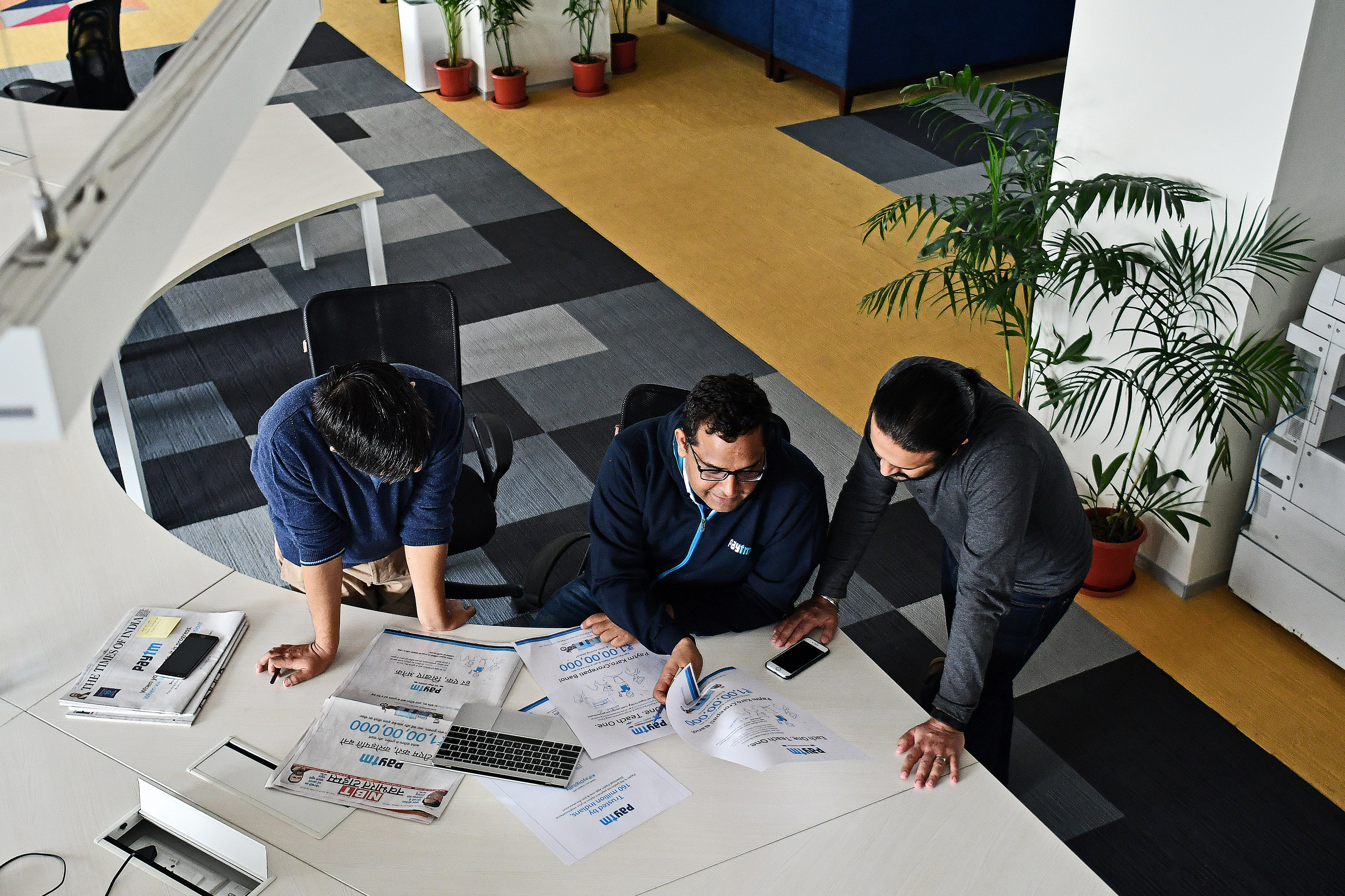
More than 150 startups and firms in India are working to form an alliance and toying with the idea of launching an app store to cut their reliance on Google, five people familiar with the matter told TechCrunch.

The list of entrepreneurs includes high-profile names, such as Vijay Shekhar Sharma, co-founder and chief executive of Paytm (India’s most valuable startup); Deep Kalra of travel ticketing firm MakeMyTrip; and executives from PolicyBazaar, RazorPay and ShareChat. The growing list of founders expressed deep concerns about Google’s “monopolistic” hold on India, home to one of the world’s largest startup ecosystems, and discussed what they alleged was unfair and inconsistent enforcement of Play Store’s guidelines in the country.

Their effort comes days after a small group of firms — including Epic Games, Spotify, Basecamp, Match Group and ProtonMail — forged their own coalition to pressure Apple and Google to make changes to their marketplace rules.

“Where else do these dollars go?”

Danny interviewed SF-based Index Ventures partners Nina Achadjian and Sarah Cannon about the latest trends in startup fundraising. Here’s a key part about the macro trends, that also explains why all those tech IPOs continue to happen (and do well):

TechCrunch: Given the amount of capital flowing into venture these days, have you noticed any LPs starting to pull back from the market?

Cannon: They’re not pulling back. In fact, it’s like, “Could you potentially take more allocation? And what do you think of these other seed managers?”

I think the way that I’ve got my mind around this is, where else would these dollars go? What are the alternatives for the dollars that are rushing into tech? I don’t know the latest numbers, but it was something like 40% of stock market returns are actually concentrated in Apple [and FAANG]. And then we’re seeing IPOs perform the same.

We’re in a global pandemic that could easily cause [another] recession. A lot of industries like airlines and travel have more exposure. Tech is just relatively more attractive. So if the interest rates are low, which they are, and [economists] have said that they’re going to be low for the coming decades, then you’re going to have lots of capital chasing returns.

Across the week

TechCrunch

Allbirds CEO Joey Zwillinger on the startup’s $100 million round, profitability and SPAC mania

How Twilio built its own conference platform

Working for social justice isn’t a ‘distraction’ for mission-focused companies

Apple removes two RSS feed readers from China App Store

Calling VCs in Rome and Milan: Be featured in The Great TechCrunch Survey of European VC

Extra Crunch

News apps in the US and China use algorithms to drive engagement, discovery

Which neobanks will rise or fall?

9 VCs in Madrid and Barcelona discuss the COVID-19 era and look to the future

Spain’s startup ecosystem: 9 investors on remote work, green shoots and 2020 trends

Healthcare entrepreneurs should prepare for an upcoming VC/PE bubble

#EquityPod

From Natasha:

Hello and welcome back to Equity, TechCrunch’s VC-focused podcast (now on Twitter!), where we unpack the numbers behind the headlines.

This week, Alex is on a much-deserved vacation (but not from Twitter, it seems) so Danny Crichton and I chatted through the news and happenings of the week. Somehow we winded our way through the latest tech controversies, gave Chris Wallace a shout out and ended with some funding rounds. I’ll be out next week so don’t miss me too much, but expect the entire Equity team to be back full-speed in mid-October. Thanks, as always, to our producer Chris Gates for his patience and diligence.

Now, onto a sneak peek of what we got into:

  • Moderation continues to be the root of all problems. We got into the anti-semitic comments that were spewed on Clubhouse, and what that means for the future of the audio-only platform. As Danny so eloquently put it: if Clubhouse is having moderation problems even with an exclusive invite-only user base, the problem will grow.
  • We also talked about Coinbase CEO Brian Armstrong’s blog post, which triggered a debate between us on whether tech companies can even choose to not be political. For the record, Black Lives Matter is not a political statement. It’s a human statement. Read this op-ed for more.
  • I wrote a piece about how a new program wants to be the Y Combinator for emerging fund managers. The whole “YC for X” model usually makes me roll my eyes, but listen to hear why I’m actually optimistic and bullish on programs like these taking off within tech.
  • Silver Lake added a $2 billion “long-term” hedge fund backed by Abu Dhabi to its tech finance toolkit. The strategy is a signal to privately backed startups, and potentially a slap in the face to SoftBank.
  • For a quick edtech note, I caught up with Duolingo’s CEO this week in one of his rare press interviews. Luis von Ahn explained the app’s surge in bookings, and there’s one key metric we pull out to noodle over.
  • Danny explained Gusto’s latest product launch with, wait for it, Gusto. In all seriousness, he brings up interesting points about the future of fintech feeling more full-suite, and free.
  • Funding round chatter continued when we unpacked Lee Fixel’s latest investment in India’s Inshorts.
  • Finally, we ended with LiquidDeath, which is not the name of a drinking game, but instead the name of a startup that has successfully attracted millions in venture capital for mountain water.

And with that, we will be back next week. Vote like your life depends on it, because it does.

Equity  drops every Monday at 7:00 a.m. PDT and Thursday afternoon as fast as we can get it out, so subscribe to us on Apple PodcastsOvercastSpotify and all the casts.


Read Full Article
This Week in Apps: Google Play gets new rules, Apple launches app marketing tools, EU looks to rein in tech giants


Welcome back to This Week in Apps, the TechCrunch series that recaps the latest OS news, the applications they support and the money that flows through it all.

The app industry is as hot as ever, with a record 204 billion downloads and $120 billion in consumer spending in 2019. People are now spending three hours and 40 minutes per day using apps, rivaling TV. Apps aren’t just a way to pass idle hours — they’re a big business. In 2019, mobile-first companies had a combined $544 billion valuation, 6.5x higher than those without a mobile focus.

In this series, we help you keep up with the latest news from the world of apps, delivered on a weekly basis.

Top Stories

Google changes its app store rules, too

Google Play Store screen

Google Play Store screen

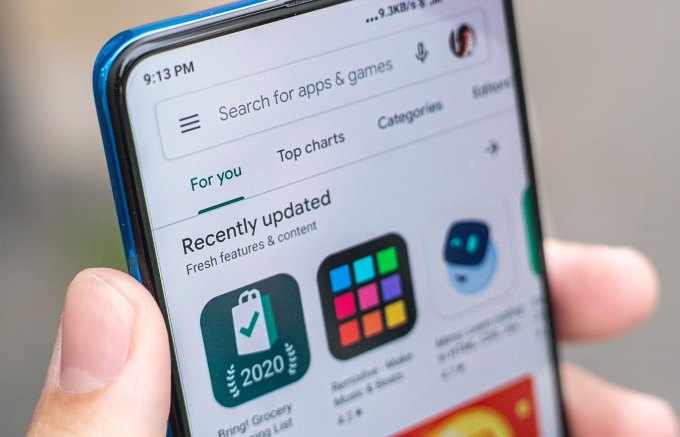
Just a couple of weeks ago, Apple revised its App Store rules to permit game streaming apps and clarify rules around in-app purchases, among other things. Now, Google has updated its rules, as well.

Under threat of regulation, Google announced this week it’s updating its Google Play billing policies to better clarify which types of transactions will be subject to Google’s commissions on in-app purchases. While the more detailed language doesn’t actually change the earlier policy’s intention, it will impact a percentage of developers who don’t currently use Google Play’s billing system when selling digital goods in their app.

In addition, the company announced it will make changes in Android 12 that will make it easier for users to install and use third-party app stores as an alternative to Google Play.

The company says that its current billing policies only apply to less than 3% of apps on Google Play. Of those apps, 97% already use Google Play’s billing library. That means there’s only a small percentage of apps that will need to come into compliance under the clarified terms.

The rules seem to want to bring into compliance larger services skirting in-app purchase rules, like Netflix and Spotify. But it’s not clear yet how permissive Google will be about allowing apps to communicate alternative ways to pay. Currently, Google says developers can tell users about how to sign up and use alternative payments outside of the Google Play app. But we don’t know if Google will allow such a link to be prominently placed on an app’s home screen, how it will allow such a link to be worded or whether an app can cater only to existing subscribers, and other key factors.

EU rule could force Apple and Google to share customer data, ban pre-installed apps

app store icon 2

Image Credits: TechCrunch

Major tech companies, including Apple and Google, may be required to share customer data with rivals, if a proposed EU rule, the Digital Services Act, comes to pass. The rule takes aim at anticompetitive business practices among tech’s top players, like Apple, Google, Amazon and Facebook. One measure, detailed by The Financial Times, says platforms can’t use the data they collect for their own commercial activities unless that’s shared with businesses pursuing the same activities.

The draft also currently recommends that big tech companies could be prohibited from favoring their own services on their websites and platforms, meaning they couldn’t pre-install their own apps on laptops or phones, or forced businesses to pre-install their apps to gain access to their platform. In practice, that could mean Android phones that ship without Google apps, like Gmail or Drive, or iPhones without stock apps beyond those that offer core functionality, like the Camera.

In addition, another clause would ban the tech companies from blocking rivals that offer their products to customers outside the gatekeeper’s own platform, Reuters reports. This could impact the current app store rules around payments and in-app purchases.

Anticipating regulatory pushback, Apple has made small concessions with iOS 14. Already, Apple had allowed users to delete some, but not all, of its stock apps. In iOS 14, Apple now lets users select their preferred web browser and email app, too. And both it and Google (see above) recently modified their app store guidelines to offer more clarity with regard to their right to collect platform fees in specific circumstances.

Apple and Google will, of course, object to any attempts at regulation. Google, in a submission to the Act, argued that a platform may only have market power in some sectors, but could be a new entrant or marginal player in others.

Weekly News Round-up

Platforms

Image Credits: Apple screenshot via TechCrunch

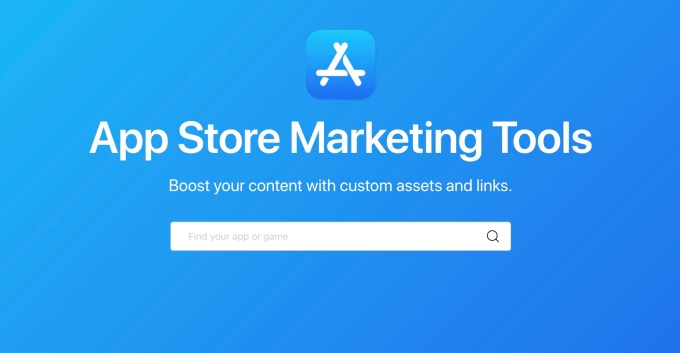
  • Apple releases new app marketing tools. Apple introduced new tools that allow developers to generate short links or embeddable codes that link to their App Store product page. These can also display your app icon, a QR code or an App Store badge.
  • Second public beta of iOS 14.2 and iPadOS 14.2 arrive. The releases bring new emoji (see below), plus changes to the Now Playing screen in the Control Center and the Home app.
  • Apple’s iOS 14.2 will bring new emoji. A new set of emoji are being tested in the beta version of iOS 14.2. The update will include the transgender flag, a smiling face with tear, pinched fingers, two people hugging, some insects and animals, a disguised face and more.
  • Google takes aim at beauty filters. Pixel phones will update to ensure face retouching features are off by default while labels and icons use “value-free” descriptions. The company said the decision to tweak the interface was based on expert recommendations over filters’ impact on people’s self-confidence and mental health.
  • Android Partner Vulnerability Initiative launches. The program will focus on managing security issues specific to Android OEMs, drive remediation and provide transparency to users about issues Google discovered that affect device models shipped by Android partners.
  • Apple bans more RSS readers in China App Store. Apple is still scouring its App Store for any services that don’t comply with Chinese censorship laws. This week, RSS reader apps — Reeder, Fiery Feeds and otherssaid their apps had been removed from the China App Store over content deemed “illegal.” Fiery Feeds only had around 1,000 MAUs, but Feedly’s latest app had 100K downloads.

Services

  • Google Play Pass launches in 24 new European countries. The deal brings Google’s subscription-based apps and games store to 34 total markets, including the U.S.
  • Twilio launches an app for frontline workers, a new IoT platform and a free video service, Video Web RTC Go. The latter allows you to add 1:1 video chat to mobile and web apps, like those aimed at distance learning or remote client consultations. It also launched Twilio Frontline, a React Native-based app for frontline workers who need to communicate with customers.

Trends

Image Credits: Sensor Tower

  • Designer earns six figures in six days for iOS 14 icon set. In a blog post, indie designer @traf details his experience building custom icons for the iOS home screen redesign trend. After a tweet showing off his home screen gained interest, he quickly created a website to sell his icon packs. Then YouTuber MKBHD linked to him and soon, he was making big sales. The day after the video, sales jumped from $6K to $40K, and as of the time of writing the post this week, the set had earned him $116,147.
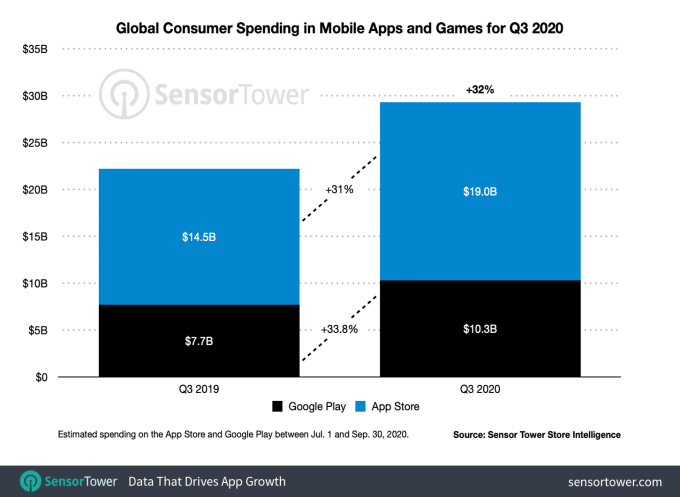
  • Global app revenue up 32% year-over-year in Q3. Sensor Tower reports worldwide consumer spend grew to $29.3B and installs reached 36.5B across the App Store and Google Play in the third quarter. TikTok aws the highest-earning non-game app globally and the most downloaded.

Other News

  • Indian startups explore alternative app store to fight Google’s monopoly. More than 150 startups and firms in India are working to form an alliance and toying with the idea of launching an app store to cut their reliance on Google, TechCrunch reported this week. Participants include Paytm co-founder and CEO Vijay Shekhar Sharma, Deep Kalra of travel ticketing firm MakeMyTrip, and executives from PolicyBazaar, RazorPay and ShareChat.
  • App Store fees legal battle to be tried by a judge, not jury. Apple and Epic Games agreed this week that their court battle should be decided in a bench trial by a judge, not a jury. Apple had previously been pushing for a jury trial, but withdrew its request. The judge suggested a jury trial is preferred, as it would have allowed real people to have a voice on what’s shaping up to be a major anti-trust case. She also had harsh words for many of Epic’s tactics and arguments presented so far, noting that walled gardens already exist elsewhere and Fortnite players have many other places to play besides iOS.
  • Astropad comes to Windows. A company sherlocked by Apple brought its Astropad system to Windows. The company’s dongle turns an iPad into a second display, now for a Windows PC, a market Apple’s Sidecar doesn’t address.
  • TikTok’s U.K. numbers revealed. A leaked marketing presentation revealed that 1 in 4 U.K. users now launch TikTok every months, with 17 million users spending over an hour per day on the app. That means the app has achieved a following almost half as big as Facebook in the market in just three years.
  • TikTok launches a U.S. elections guide. The company promised not to save users’ political affiliations for use in ad targeting or recommendations.
  • Google Maps rolls out improved AR directions. Google Maps updated Live View, its AR walking directions feature that launched last year. The feature, which uses the camera and GPS to help you navigate, can now be invoked from the transit tab, identify landmarks in major cities, and use Live View in combination with Google Maps’ location sharing feature.
  • Microsoft’s Bing search app will appear as a download prompt on new Android phones in Germany, the U.K. and France after it won slots in a Google auction for rivals.

Funding and M&A, Etc.

  • Jamf acquires Mondada. MDM solution provider Jamf bought Melbourne-based Mondada, the maker of patch management solutions, Kinobi and Kinobi Pro. The deal will allow Jamf to expand Jamf’s application lifecycle capabilities, it said.
  • Bloomscape raises $15 million, acquires plant care app Vera. Online garden shop Bloomscape raised a $15 million Series B from General Catalyst and others for its e-commerce business that ships live plants to customers’ homes. It also bought Vera, a plant care and tips app, for an undisclosed sum.
  • Homer raises $50 million. Early learning app maker raised $50 million from Lego, Sesame Workshop and Gymboree for its apps that focus on early literacy and soon, more.
  • Humane raises $30 million Series A to build the next iPhone…or something. Humane’s ex-Apple founders, Imran Chaudhri and Bethany Bongiorno, haven’t revealed what they’re working on, but are promising to build something that’s as groundbreaking as the iPhone. Chaudhri had worked on the original UI design of iPhone and iPad and Bongiorno helped launch iPad. They believe technology is a net negative for society as it’s been built today, and their idea is to come up with a new computing vision entirely.
  • Macrometa raises $7 million. An edge computing service for app developers, Macrometa raised a $7 million seed round led by DNX Ventures for its Global Data Network that allows developers to send app requests to regions closest to them.
  • Beijing-based Sina Corp. agrees to go private in $2.6 billion deal. The company is the latest to delist following growing scrutiny from U.S. regulators.

Downloads

HoloVista

Mixed reality storytelling developer Aconite launched its new, story-driven puzzle game HoloVista on iOS, where players explore environments with the iPhone’s 360-degree camera in a mysterious mansion full of secrets. The game combines elements of hidden object search, puzzles and social media as you play as Carmen, a junior architect and new hire at an exclusive firm. The game also touches on themes like society’s focus on social media, for example, and our relationship with technology ($4.99 on the App Store).


Read Full Article
The next big tech hearing is scheduled for October 28


A day after the Senate Commerce Committee moved forward with plans to subpoena the CEOs of Twitter, Facebook and Google, it looks like some of the most powerful leaders in tech will testify willingly.

Twitter announced late Friday that Jack Dorsey would appear virtually before the committee on October 28, just days before the U.S. election. While Twitter is the only company that’s openly agreed to the hearing so far, Politico reports that Sundar Pichai and Mark Zuckerberg also plan to appear.

Members of both parties on the committee planned to use the hearings to examine Section 230, the key legal shield that protects online platforms from liability from the content their users create.

As we’ve discussed previously, the political parties are approaching Section 230 from very different perspectives. Democrats see threatening changes to Section 230 as a way to force platforms to take more seriously toxic content like misinformation and harassment.

Many Republicans believe tech companies should be stripped of Section 230 protections because platforms have an anti-conservative bias — a claim that the facts don’t bear out.

Twitter had some choice words about that perspective, calling claims of political bias an “unsubstantiated allegation that we have refuted on many occasions to Congress,” and noting that those accusations have been “widely disproven” by researchers.

“We do not enforce our policies on the basis of political ideology,” the company added.

It sounds like the company and members of the Senate have very different agendas. Twitter indicated that it plans to use the hearing’s timing to steer the conversation toward the election. Politico also reports that the scope of the hearing will be broadened to include “data privacy and media consolidation” — not just Section 230.

A spokesperson tweeting on the company’s public policy account insisted that the hearing “must be constructive,” addressing how tech companies can protect the integrity of the vote.

“At this critical time, we’re committed to keeping our focus squarely on what matters the most to our company: joint efforts to protect our shared democratic conversation from harm — from both foreign and domestic threats,” a Twitter spokesperson wrote.

Regardless of the approach, dismantling Section 230 could prove potentially catastrophic for the way the internet as we know it works, so the stakes are high, both for tech companies and for regular internet users.


Read Full Article