21 September 2020

Thanks to Google, app store monopoly concerns have now reached India


Last week, as Epic Games, Facebook, and Microsoft continued to express concerns about Apple’s “monopolistic” hold over what a billion people can download on their iPhones, a similar story unfolded in India, the world’s second largest internet market, between a giant developer and the operator of the only other large mobile app store.

Google pulled Paytm, the app from India’s most valuable startup, off of the Play Store on Friday. The app returned to the store eight hours later, but the controversy and acrimony Google has stirred up in the country will linger for years.

TechCrunch reported on Friday that Google pulled Paytm app from its app store after a repeat pattern of violations of Google Play Store guidelines by the Indian firm.

Paytm, which is locked in a battle against Google to win India’s payments market, has been frustrated at Google’s policies — which it argues gives Google an unfair advantage — for several past quarters over how the Android-maker is limiting its marketing campaigns to acquire new users, sources familiar with the matter told TechCrunch.

The explanation provided by Google to Paytm for why it pulled the Indian firm’s app this week from its app store is the latest attempt by the company to thwart the Noida-headquartered firm’s ability to acquire new users, Paytm executives said.

In a blog post Paytm posted Sunday evening (local India time), the Indian firm said Google took issue with the company for giving customers cashbacks and scratch cards for initiating transactions over UPI, a government-backed payments infrastructure in India that has become the most popular way for people to exchange money digitally in the country.

Paytm said it rolled out this new version of scratch cards that are linked to cricket on September 11. Users collected these cricket-themed stickers for sending money to others, or making transactions such as topping up credit on their phone or paying their broadband or electricity bill.

In a statement on Sunday evening, a Google spokesperson said, “offering cashbacks and vouchers alone do not constitute a violation of our Google Play gambling policies” and that Play Store “policies are applied and enforced on all developers consistently.”

But it’s arguably anything but consistent.

On September 18, Google told Paytm that it had pulled its app for not complying with Play Store’s “gambling policy” as it offered games with “loyalty points.” Paytm said that Google had not expressed any concerns over Paytm’s new marketing campaign prior to its notice on Friday, in which it revealed that Paytm app had been temporarily removed from the Play Store.

But Google itself is running a similar campaign linked to cricket in India, Paytm argues. (Why cricket? Cricket is immensely popular in India and one of the biggest cricket tournaments globally, Indian Premier League, kicked off its latest season on Saturday.)
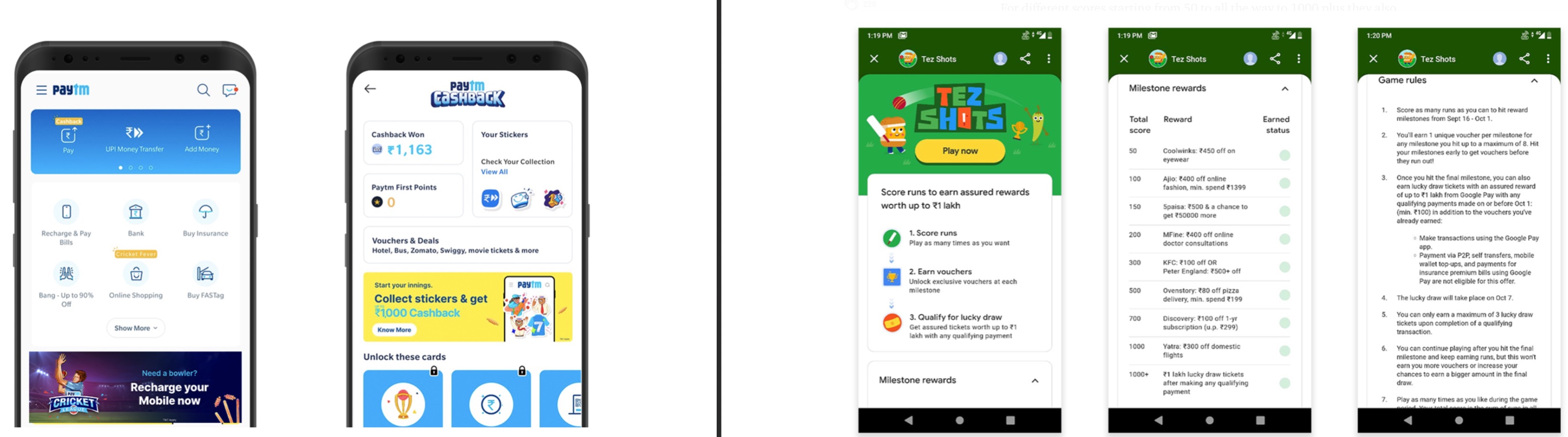
Cricket-themed cashback offered by Paytm (left) and Google Pay (right) in India

Google Play Store in India has long prohibited apps that promote gambling such as betting on sporting events, and Google has raised concerns about Paytm’s marquee app promoting Paytm First Games, a fantasy sports app run by Paytm, in the past.

Paytm executives argued that PhonePe, a Walmart-owned payments app in India, also promoted Dream11, the most popular fantasy sports app in the country, and got away without any action.

Google also permits fantasy sports app operators — including Paytm — to advertise on Search in India.

“This is bullshit of a different degree,” Paytm chief executive Vijay Shekhar Sharma said of Google’s objection to Paytm offering cashback in a televised interview Friday. The removal of Paytm app was only on the grounds of Paytm offering cricket-themed cashback, he claimed. “Google is not allowing us to acquire new customers right now. That’s all what this is,” he added.

Google’s payments app, Google Pay, competes with Paytm in India. In fact, Google Pay is the largest payments app for peer-to-peer transaction between users in India and holds the largest market share in UPI.

Without identifying any names, Sharma, the poster child of Indian startup ecosystem, claimed that many founders in India have just accepted that it is Google that has the final say on any matter in India — and not the country’s regulatory agencies.

For Google, which reaches more users than any other company in India and whose Android operating system commands 99% of the local smartphone market, this kind of accusation is exactly what it needs to avoid in the country. The Silicon Valley search and advertising giant has launched a charm offensive in India, including a recently commitment to invest $10 billion — more than any other American or Chinese technology firm.

The timing for Google’s parent company, Alphabet, couldn’t be worse. Google is currently the subject of an antitrust complaint in India over an allegation that it has abused its market position to unfairly promote its mobile payments app in the country; and in the U.S., Congress has intimidated that it may pursue antitrust regulatory action against Alphabet and Apple over app store concerns.

In India, Google’s moves could have a devastating impact on businesses and everyday consumers.

Paytm is not just a payments app. It is also a fully licensed digital bank. And just an eight-hour of absence from the Play Store created a panic among a portion of its users. A source familiar with the matter told TechCrunch that Paytm saw several people withdraw their fixed deposit in Paytm Payments Bank on Friday.

Anecdotally, TechCrunch heard of instances where vendors who previously preferred Paytm for accepting money digitally asked their customers to use a different payments method as they had heard that Paytm was “banned” in India.

Sharma said Google’s monopoly on Indian app ecosystem is of a magnitude unparalleled elsewhere in the world.

“If paying someone and getting a cashback is gambling, then the same rule should be applied to everyone,” said Sharma. “It’s disgraceful that we are standing here at the cusp of an internet revolution in India and we are being sanctioned by companies that are not governed by the law of this country.”

If this sentiment gained traction in India it could create challenges for Google’s future in the world’s second largest internet market.

Meanwhile, the U.S. is forcing a Chinese company to sell stakes to local firms to continue operations in the country. In a recent episode of Dithering podcast, Ben Thompson cautioned that Trump administration’s move — which some have argued is a long due tit for tat against Chinese companies (as China has long prevented U.S. firms from meaningfully operating in the world’s largest  internet market) — might encourage other open markets to do to American firms what it is doing to TikTok.

Several U.S. tech executives share these concerns.

“I’ve said this before, but a US TikTok ban would be quite bad for Instagram, Facebook, and the internet more broadly,” Instagram chief executive Adam Mosseri tweeted earlier this week. “If you’re skeptical keep in mind that most of the people who use Instagram are outside the US, as is most of our potential growth. The long term costs of moods countries making aggressive demands and banning us over the next decade outweigh slowing down one competitor today.”

India, which Google, Facebook, and many other tech giants count as their biggest market by users, has made several proposals in the past three years — including mandates that foreign firms store payments information of users locally in India and companies help local enforcement agencies identify the originator of questionable messages circulating on their platforms — that are widely seen as protectionist moves.

And India is not even that open anymore. New Delhi has also banned more than 200 Chinese apps including TikTok, UC Browser, and PUBG Mobile citing cybersecurity concerns in recent months. India has not made public what those cybersecurity concerns are and in its orders acknowledged that users had expressed concerns.

Enough noise against a foreign firm might just be enough to face an avalanche of serious troubles in India.


Read Full Article

Original Content podcast: ‘Wireless’ shows off Quibi’s Turnstyle technology


“Wireless” is probably the best showcase so far for Quibi’s Turnstyle technology.

That’s the technology that allows the streaming video app to switch seamlessly between landscape and portrait mode depending on the orientation of your phone. With other Quibi shows, you’re essentially getting two views of the same footage — but with “Wireless” (which is executive produced by Steven Soderbergh), you’re switching between traditional cinematic footage (in landscape) and a view of the protagonist’s phone (in portrait).

In this bonus episode of the Original Content podcast, director Zach Wechter told me that he and his co-writer Jack Seidman wrote the initial script — about a college student played by Tye Sheridan who gets trapped in the snow after a car crash, with only his iPhone to save him — before they decided on the phone-centric format. But when they heard about Turnstyle, “It just felt like a match made in heaven that would allow us to facilitate this idea.”

I wondered whether that required going back and adding a bunch of phone interactions to the story, but said Wechter said, “It was quite the opposite. One thing we found in testing was when the phone plot moved really fast, it would be hard, because there are these two perspectives happening at once.”

So that actually meant “reducing some fo the intriacy of the plot happening on the phone” to ensure that viewers didn’t get lost.

And if you’re wondering which mode to focus on as you watch, Wechter has some simple advice: “Go with your gut.” He said he had a “roadmap” for when he was hoping to nudge viewers to turn their phones — like when there’s a notification sound or Sheridan focuses on his phone — “but I think the most important part of the experience is that we’re not indicating when our viewers turn, that it becomes this sort of passive-but-active viewing experience.”

Wechter described making the show — essentially a feature length film divided into episodes of 10 minutes or less — as shooting “two films that had to dance together” in just 19 days. And he made things even more challenging by insisting that all the phone/FaceTime calls and even the text messages be filmed live, rather than just recording both ends separately.

“When I think about directing and my job, really the most fundamental part of it to me is making the actorss comfortable, and I think that having a scene partner is paramount,” he said. “It was a long conversation about why we couldn’t just have them act off of a recording and shoot it separately — because it took a lot of logistical effort and resources to do it — but it really makes the scenes feel very alive and realistic.”

You can listen to the full interview in the player below, subscribe using Apple Podcasts or find us in your podcast player of choice. If you like the show, please let us know by leaving a review on Apple. You can also follow us on Twitter or send us feedback directly. (Or suggest shows and movies for us to review!)


Read Full Article

20 September 2020

What Should Beginners Keep in Mind When Playing at An Online Casino


If you are a beginner in the world of digital gambling, then there is a lot that you need to learn. There is a variety of digital games in online casinos for virtual gambling which might seem a bit overwhelming initially, but as one explores different options and set particular interests, it gets into a […]

The post What Should Beginners Keep in Mind When Playing at An Online Casino appeared first on ALL TECH BUZZ.


19 September 2020

Voting


Voting

Unity Software has strong opening, gaining 31% after pricing above its raised range


Whoever said you can’t make money playing video games clearly hasn’t taken a look at Unity Software’s stock price.

On its first official day of trading, the company rose more than 31%, opening at $75 per share before closing the day at $68.35. Unity’s share price gains came after last night’s pricing of the company’s stock at $52 per share, well above the range of $44 to $48 which was itself an upward revision of the company’s initial target.

Games like “Pokémon GO” and “Iron Man VR” rely on the company’s software, as do untold numbers of other mobile gaming applications that use the company’s toolkit for support. The company’s customers range from small gaming publishers to large gaming giants like Electronic Arts, Niantic, Ubisoft and Tencent.

Unity’s IPO comes on the heels of other well-received debuts, including Sumo Logic, Snowflake and JFrog.

TechCrunch caught up with Unity’s CFO, Kim Jabal, after-hours today to dig in a bit on the transaction.

According to Jabal, hosting her company’s roadshow over Zoom had some advantages, as her team didn’t have to focus on tackling a single geography per day, allowing Unity to “optimize” its time based on who the company wanted to meet, instead, of say, whomever was free in Boston or Chicago on a particular Tuesday morning.

Jabal’s comments aren’t the first that TechCrunch has heard regarding roadshows going well in a digital format instead of as an in-person presentation. If the old-school roadshow survives, we’ll be surprised, though private jet companies will miss the business.

Talking about the transaction itself, Jabal stressed the connection between her company’s employees, value  and their access to that same value. Unity’s IPO was unique in that existing and former employees were able to trade 15% of their vested holdings in the company on day one, excluding “current executive officers and directors,” per SEC filings.

That act does not seemed to have dampened enthusiasm for the company’s shares, and could have helped boost early float, allowing for the two sides of the supply and demand curves to more quickly meet close to the company’s real value, instead of a scarcity-driven, more artificial figure.

Regarding Unity’s IPO pricing, Jabal discussed what she called a “very data-driven process.” The result of that process was an IPO price that came in above its raised range, and still rose during its first day’s trading, but less than 50%. That’s about as good an outcome as you can hope for in an IPO.

One final thing for the SaaS nerds out there. Unity’s “dollar-based net expansion rate” went from very good to outstanding in 2020, or in the words of the S-1/A:

Our dollar-based net expansion rate, which measures expansion in existing customers’ revenue over a trailing 12-month period, grew from 124% as of December 31, 2018 to 133% as of December 31, 2019, and from 129% as of June 30, 2019 to 142% as of June 30, 2020, demonstrating the power of this strategy.

We had to ask. And the answer, per Jabal, was a combination of the company’s platform strength and how customers tend to use more of Unity’s services over time, which she described as growing with their customers. And the second key element was 2020’s unique dynamics that gave Unity a “tailwind” thanks to “increased usage, particularly in gaming.”

Looking at our own gaming levels in 2020 compared to 2019, that checks out.

This post closes the book on this week’s IPO class. Tired yet? Don’t be. Palantir is up next, and then Asana.


Read Full Article

Daily Crunch: Partial US TikTok ban is imminent


The Trump administration moves forwards with plans to ban TikTok and WeChat (although TikTok gets a partial extension), Unity goes public and we announce the winner of this year’s Startup Battlefield. This is your Daily Crunch for September 18, 2020.

The big story: US TikTok ban is imminent

The U.S. Commerce Department has released details about how it will be implementing the Trump administration’s domestic ban of TikTok and WeChat. Both apps will no longer be available (and will not be able to distribute updates) in U.S. app stores starting this Sunday, September 20.

At the same time, TikTok will be able to continue operations in the country until November 12, leaving the door open for a deal with Oracle or another partner.

TikTok, WeChat and their users aren’t the only ones unhappy about this decision. Instagram CEO Adam Mosseri said a TikTok ban would be “bad for US tech companies which have benefited greatly from the ability to operate across borders,” while the ACLU said the order “violates the First Amendment rights of people in the United States.”

The tech giants

Salesforce announces 12,000 new jobs in the next year just weeks after laying off 1,000 — Salesforce CEO and co-founder Marc Benioff announced in a tweet that the company would be hiring 4,000 new employees in the next six months, and 12,000 in the next year.

It’s game on as Unity begins trading — Unity Software, which sells a game development toolkit primarily for mobile phone app developers, raised $1.3 billion in its initial public offering.

Apple will launch its online store in India on September 23 — Apple currently relies on third-party online and offline retailers to sell its products in India.

Startups, funding and venture capital

And the winner of Startup Battlefield at Disrupt 2020 is … Canix — After five days of fierce pitching in a wholly new virtual Startup Battlefield arena, we have a winner.

Amid layoffs and allegations of fraud, the FBI has arrested NS8’s CEO following its $100+ million summer financing — Adam Rogas, the co-founder and former executive at the Las Vegas-based fraud prevention company NS8 was arrested by the Federal Bureau of Investigation.

Outschool, newly profitable, raises a $45 million Series B for virtual small group classes — Outschool’s services, which range from engineering lessons through Lego challenges to Spanish teaching by Taylor Swift songs, are now high in demand.

Advice and analysis from Extra Crunch

Are high churn rates depressing earnings for app developers? — RevenueCat’s Jacob Eiting writes that for all the hype around Apple’s 85/15 split for subscription revenue, very few developers are going to see a meaningful increase.

The stages of traditional fundraising — What you think when you hear “seed funding” and “A rounds” might be different from what investors think.

3 VCs discuss the state of SaaS investing in 2020 — Commentary from Canaan’s Maha Ibrahim, Andreessen Horowitz’s David Ulevitch and Bessemer’s Mary D’Onofrio.

(Reminder: Extra Crunch is our subscription membership program, which aims to democratize information about startups. You can sign up here.)

Everything else

How the NSA is disrupting foreign hackers targeting COVID-19 vaccine research — “The threat landscape has changed,” the NSA’s director of cybersecurity Anne Neuberger said at Disrupt 2020.

NASA to test precision automated landing system designed for the moon and Mars on upcoming Blue Origin mission — The “Safe and Precise Landing – Integrated Capabilities Evolution” (SPLICE) system is made up of a number of lasers, an optical camera and a computer.

The Daily Crunch is TechCrunch’s roundup of our biggest and most important stories. If you’d like to get this delivered to your inbox every day at around 3pm Pacific, you can subscribe here.


Read Full Article

Are high churn rates depressing earnings for app developers?


Ever since Apple opened up subscription monetization to more apps in 2016 — and enticed developers with an 85/15 split on revenue from customers that remain subscribed for more than a year — subscription monetization and retention has felt like the Holy Grail for app developers. So much so that Google quickly followed suit in what appeared to be an example of healthy competition for developers in the mobile OS duopoly.

But how does that split actually work out for most apps? Turns out, the 85/15 split — which Apple is keen to mention anytime developers complain about the App Store rev share — doesn’t have a meaningful impact for most developers. Because churn.

No matter how great an app is, subscribers are going to churn. Sometimes it’s because of a credit card expiring or some other billing issue. And sometimes it’s more of a pause, and the user comes back after a few months. But the majority of churn comes from subscribers who, for whatever reason, decide that the app just isn’t worth paying for anymore. If a subscriber churns before the one-year mark, the developer never sees that 85% split. And even if the user resubscribes, Apple and Google reset the clock if a subscription has lapsed for more than 60 days. Rather convenient… for Apple and Google.

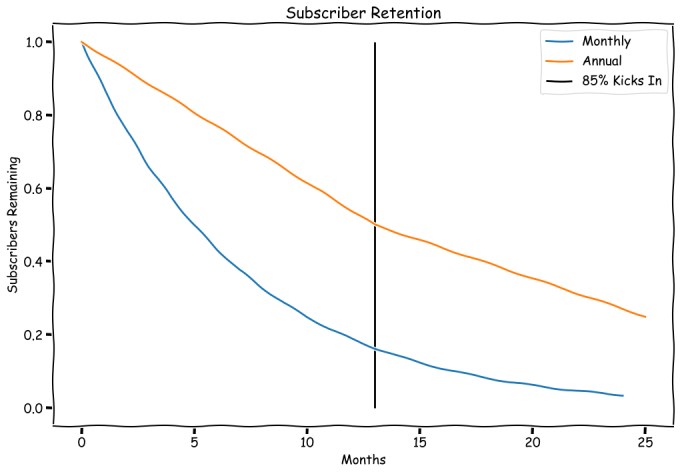
Top mobile apps like Netflix and Spotify report churn rates in the low single digits, but they are the outliers. According to our data, the median churn rate for subscription apps is around 13% for monthly subscriptions and around 50% for annual. Monthly subscription churn is generally a bit higher in the first few months, then it tapers off. But an average churn of 13% leaves just 20% of subscribers crossing that magical 85/15 threshold.

In practice, what this means is that, for all the hype around the 85/15 split, very few developers are going to see a meaningful increase in revenue:


Read Full Article

Improving the Accuracy of Genomic Analysis with DeepVariant 1.0


Sequencing genomes involves sampling short pieces of the DNA from the ~6 billion pairs of nucleobases — i.e., adenine (A), thymine (T), guanine (G), and cytosine (C) — we inherit from our parents. Genome sequencing is enabled by two key technologies: DNA sequencers (hardware) that "read" relatively small fragments of DNA, and variant callers (software) that combine the reads to identify where and how an individual's genome differs from a reference genome, like the one assembled in the Human Genome Project. Such variants may be indicators of genetic disorders, such as an elevated risk for breast cancer, pulmonary arterial hypertension, or neurodevelopmental disorders.

In 2017, we released DeepVariant, an open-source tool which identifies genome variants in sequencing data using a convolutional neural network (CNN). The sequencing process begins with a physical sample being sequenced by any of a handful of instruments, depending on the end goal of the sequencing. The raw data, which consists of numerous reads of overlapping fragments of the genome, are then mapped to a reference genome. DeepVariant analyzes these mappings to identify variant locations and distinguish them from sequencing errors.

Soon after it was first published in 2018, DeepVariant underwent a number of updates and improvements, including significant changes to improve accuracy for whole exome sequencing and polymerase chain reaction (PCR) sequencing.

We are now releasing DeepVariant v1.0, which incorporates a large number of improvements for all sequencing types. DeepVariant v1.0 is an improved version of our submission to the PrecisionFDA v2 Truth Challenge, which achieved Best Overall accuracy for 3 of 4 instrument categories. Compared to previous state-of-the-art models, DeepVariant v1.0 significantly reduces the errors for widely-used sequencing data types, including Illumina and Pacific Biosciences. In addition, through a collaboration with the UCSC Genomics Institute, we have also released a model that combines DeepVariant with the UCSC’s PEPPER method, called PEPPER-DeepVariant, which extends coverage to Oxford Nanopore data for the first time.

Sequencing Technologies and DeepVariant
For the last decade, the majority of sequence data were generated using Illumina instruments, which produce short (75-250 bases) and accurate sequences. In recent years, new technologies have become available that can sequence much longer pieces, including Pacific Biosciences, which can produce long and accurate sequences up to ~15,000 bases in length, and Oxford Nanopore, which can produce reads up to 1 million bases long, but with higher error rates. The particular type of sequencing data a researcher might use depends on the ultimate use-case.

Because DeepVariant is a deep learning method, we can quickly re-train it for these new instrument types, ensuring highly accurate sequence identification. Accuracy is important because a missed variant call could mean missing the causal variant for a disorder, while a false positive variant call could lead to identifying an incorrect one. Earlier state-of-the-art methods could reach ~99.1% accuracy (~73,000 errors) on a 35-fold coverage Illumina whole genome, whereas an early version of DeepVariant (v0.10) had ~99.4% accuracy (46,000 errors), corresponding to a 38% error reduction. DeepVariant v1.0 reduces Illumina errors by another ~22% and PacBio errors by another ~52% relative to the last DeepVariant release (v0.10).

DeepVariant Overview
DeepVariant is a convolutional neural network (CNN) that treats the task of identifying genetic variants as an image classification problem. DeepVariant constructs tensors, essentially multi-channel images, where each channel represents an aspect of the sequence, such as the bases in the sequence (called read base), the quality of alignment between different reads (mapping quality), whether a given read supports an alternate allele (read supports variant), etc. It then analyzes these data and outputs three genotype likelihoods, corresponding to how many copies (0, 1, or 2) of a given alternate allele are present.

Example of DeepVariant data. Each row of pixels in each panel corresponds to a single read, i.e., a short genetic sequence. The top, middle, and bottom rows of panels present examples with a different number of variant alleles. Only two of the six data channels are shown: Read base — the pixel value is mapped to each of the four bases, A, C, G, or T; Read supports variant — white means that the read is consistent with a given allele and grey means it is not. Top: Classified by DeepVariant as a "2", which means that both chromosomes match the variant allele. Middle: Classified as a “1”, meaning that one chromosome matches the variant allele. Bottom: Classified as a “0”, implying that the variant allele is missing from both chromosomes.

Technical Improvements in DeepVariant v1.0
Because DeepVariant uses the same codebase for each data type, improvements apply to each of Illumina, PacBio, and Oxford Nanopore. Below, we show the numbers for Illumina and PacBio for two types of small variants: SNPs (single nucleotide polymorphisms, which change a single base without changing sequence length) and INDELs (insertions and deletions).

  • Training on an extended truth set

    The Genome in a Bottle consortium from the National Institute of Standards and Technology (NIST) creates gold-standard samples with known variants covering the regions of the genome. These are used as labels to train DeepVariant. Using long-read technologies the Genome in a Bottle expanded the set of confident variants, increasing the regions described by the standard set from 85% of the genome to 92% of it. These more difficult regions were already used in training the PacBio models, and including them in the Illumina models reduced errors by 11%. By relaxing the filter for reads of lower mapping quality, we further reduced errors by 4% for Illumina and 13% for PacBio.

  • Haplotype sorting of long reads

    We inherit one copy of DNA from our mother and another from our father. PacBio and Oxford Nanopore sequences are long enough to separate sequences by parental origin, which is called a haplotype. By providing this information to the neural network, DeepVariant improves its identification of random sequence errors and can better determine whether a variant has a copy from one or both parents.

  • Re-aligning reads to the alternate (ALT) allele

    DeepVariant uses input sequence fragments that have been aligned to a reference genome. The optimal alignment for variants that include insertions or deletions could be different if the aligner knew they were present. To capture this information, we implemented an additional alignment step relative to the candidate variant. The figure below shows an additional second row where the reads are aligned to the candidate variant, which is a large insertion. You can see sequences that abruptly stop in the first row can now be fully aligned, providing additional information.

    Example of DeepVariant data with realignment to ALT allele. DeepVariant is presented the information in both rows of data for the same example. Only two of the six data channels are shown: Read base (channel #1) and Read supports variant (channel #5). Top: Shows the reads aligned to the reference (in DeepVariant v0.10 and earlier this is all DeepVariant sees). Bottom: Shows the reads aligned to the candidate variant, in this case a long insertion of sequence). The red arrow indicates where the inserted sequence begins.
  • Use a small network to post-process outputs

    Variants can have multiple alleles, with a different base inherited from each parent. DeepVariant’s classifier only generates a probability for one potential variant at a time. In previous versions, simple hand-written rules converted the probabilities into a composite call, but these rules failed in some edge cases. In addition, it also separated the way a final call was made from the backpropagation to train the network. By adding a small, fully-connected neural network to the post-processing step, we are able to better handle these tricky multi-allelic cases.

  • Adding data to train the release model

    The timeframe for the competition was compressed, so we trained only with data similar to the challenge data (PCR-Free NovaSeq) to speed model training. In our production releases, we seek high accuracy for multiple instruments as well as PCR+ preparations. Training with data from these diverse classes helps the model generalize, so our DeepVariant v1.0 release model outperforms the one submitted.

The charts below show the error reduction achieved by each improvement.

Training a Hybrid model
DeepVariant v1.0 also includes a hybrid model for PacBio and Illumina reads. In this case, the model leverages the strengths of both input types, without needing new logic.

Example of DeepVariant merging data from both PacBio and Illumina. Only two of the six data channels are shown: Read base (channel #1) and Read supports variant (channel #5). The longer PacBio reads (at the upper part of the image) span the region being called entirely, while the shorter Illumin reads span only a portion of the region.

We observed no change in SNP errors, suggesting that PacBio reads are strictly superior for SNP calling. We observed a further 49% reduction in Indel errors relative to the PacBio model, suggesting that the Indel error modes of Illumina and PacBio HiFi can be used in a complementary manner.

PEPPER-Deepvariant: A Pipeline for Oxford Nanopore Data Using DeepVariant
Until the PrecisionFDA competition, a DeepVariant model was not available for Oxford Nanopore data, because the higher base error rate created too many candidates for DeepVariant to classify. We partnered with the UC Santa Cruz Genomics Institute, which has extensive expertise with Nanopore data. They had previously trained a deep learning method called PEPPER, which could narrow down the candidates to a more tractable number. The larger neural network of DeepVariant can then accurately characterize the remaining candidates with a reasonable runtime.

The combined PEPPER-DeepVariant pipeline with the Oxford Nanopore model is open-source and available on GitHub. This pipeline was able to achieve a superior SNP calling accuracy to DeepVariant Illumina on the PrecisionFDA challenge, which is the first time anyone has shown Nanopore outperforming Illumina in this way.

Conclusion
DeepVariant v1.0 isn’t the end of development. We look forward to working with the genomics community to further maximize the value of genomic data to patients and researchers.


MIT engineers develop a totally flat fisheye lens that could make wide-angle cameras easier to produce


Engineers at MIT, in partnership with the University of Massachusetts at Lowell, have devised a way to build a camera lens that avoids the typical spherical curve of ultra-wide-angle glass, while still providing true optical fisheye distortion. The fisheye lens is relatively specialist, producing images that can cover as wide an area as 180 degrees or more, but they can be very costly to produce, and are typically heavy, large lenses that aren’t ideal for use on small cameras like those found on smartphones.

This is the first time that a flat lens has been able to product clear, 180-degree images that cover a true panoramic spread. The engineers were able to make it work by patterning a thin wafer of glass on one side with microscopic, three-dimensional structures that are positioned very precisely in order to scatter any inbound light in precisely the same way that a curved piece of glass would.

The version created by the researchers in this case is actually designed to work specifically with the infrared portion of the light spectrum, but they could also adapt the design to work with visible light, they say. Whether IR or visible light, there are a range of potential uses of this technology, since capturing a 180-degree panorama is useful not only in some types of photography, but also for practical applications like medical imaging, and in computer vision applications where range is important to interpreting imaging data.

This design is just one example of what’s called a ‘Metalens’ – lenses that make use of microscopic features to change their optical characteristics in ways that would traditionally have been accomplished through macro design changes – like building a lens with an outward curve, for instance, or stacking multiple pieces of glass with different curvatures to achieve a desired field of view.

What’s unusual here is that the ability to accomplish a clear, detailed and accurate 180-degree panoramic image with a perfectly flat metalens design came as a surprise even to the engineers who worked on the project. It’s definitely an advancement of the science that goes beyond what may assumed was the state of the art.


Read Full Article

18 September 2020

Instagram CEO, ACLU slam TikTok and WeChat app bans for putting US freedoms into the balance


As people begin to process the announcement from the U.S. Department of Commerce detailing how it plans, on grounds of national security, to shut down TikTok and WeChat — starting with app downloads and updates for both, plus all of WeChat’s services, on September 20, with TikTok following with a shut down of servers and services on November 12 — the CEO of Instagram and the ACLU are among those that are speaking out against the move.

The CEO of Instagram, Adam Mosseri, wasted little time in taking to Twitter to criticize the announcement. His particular beef is the implication the move will have for US companies — like his — that also have built their businesses around operating across national boundaries.

In essence, if the U.S. starts to ban international companies from operating in the U.S., then it opens the door for other countries to take the same approach with U.S. companies.

Meanwhile, the ACLU has been outspoken in criticizing the announcement on the grounds of free speech.

“This order violates the First Amendment rights of people in the United States by restricting their ability to communicate and conduct important transactions on the two social media platforms,” said Hina Shamsi, director of the American Civil Liberties Union’s National Security Project, in a statement today.

Shamsi added that ironically, while the U.S. government might be crying foul over national security, blocking app updates poses a security threat in itself.

“The order also harms the privacy and security of millions of existing TikTok and WeChat users in the United States by blocking software updates, which can fix vulnerabilities and make the apps more secure. In implementing President Trump’s abuse of emergency powers, Secretary Ross is undermining our rights and our security. To truly address privacy concerns raised by social media platforms, Congress should enact comprehensive surveillance reform and strong consumer data privacy legislation.”

Vanessa Pappas, who is the acting CEO of TikTok, also stepped in to endorse Mosseri’s words and publicly asked Facebook to join TikTok’s litigation against the U.S. over its moves.

We agree that this type of ban would be bad for the industry. We invite Facebook and Instagram to publicly join our challenge and support our litigation,” she said in her own tweet responding to Mosseri, while also retweeting the ACLU. (Interesting how Twitter becomes Switzlerland in these stories, huh?) “This is a moment to put aside our competition and focus on core principles like freedom of expression and due process of law.”

The move to shutter these apps has been wrapped in an increasingly complex set of issues, and these two dissenting voices highlight not just some of the conflict between those issues, but the potential consequences and detriment of acting based on one issue over another.

The Trump administration has stated that the main reason it has pinpointed the apps has been to “safeguard the national security of the United States” in the face of nefarious activity out of China, where the owners of WeChat and TikTok, respectively Tencent and ByteDance, are based:

“The Chinese Communist Party (CCP) has demonstrated the means and motives to use these apps to threaten the national security, foreign policy, and the economy of the U.S.,” today statement from the U.S. Department of Commerce noted. “Today’s announced prohibitions, when combined, protect users in the U.S. by eliminating access to these applications and significantly reducing their functionality.”

In reality, it’s hard to know where the truth actually lies.

In the case of the ACLU and Mosseri’s comments, they are highlighting issues of principles but not necessarily precedent.

It’s not as if the US would be the first country to take a nationalist approach to how it permits the operation of apps. Facebook and its stable of apps, as of right now, are unable to operate in China without a VPN (and even with a VPN things can get tricky). And free speech is regularly ignored in a range of countries today.

But the US has always positioned itself as a standard bearer in both of these areas, and so apart from the self-interest that Instagram might have in advocating for more free market policies, it points to wider market and business position that’s being eroded.

The issue, of course, is a little like an onion (a stinking onion, I’d say), with well more than just a couple of layers around it, and with the ramifications bigger than TikTok (with 100 million users in the U.S. and huge in pop culture beyond even that) or WeChat (much smaller in the U.S. but huge elsewhere and valued by those who do use it).

The Trump administration has been carefully selecting issues to tackle to give voters reassurance of Trump’s commitment to “Make America Great Again,” building examples of how it’s helping to promote U.S. interests and demote those that stand in its way. China has been a huge part of that image building, positioned as an adversary in industrial, defence and other arenas. Pinpointing specific apps and how they might pose a security threat by sucking up our data fits neatly into that strategy.

But are they really security threats, or are they just doing the same kind of nefarious data ingesting that every social app does in order to work? Will the US banning them really mean that other countries, up to now more in favor of a free market, will fall in line and take a similar approach? Will people really stop being able to express themselves?

Those are the questions that Trump has forced into the balance with his actions, and even if they were not issues before, they have very much become so now.


Read Full Article

What magic tricks can reveal about free will | Alice Pailhès

What magic tricks can reveal about free will | Alice Pailhès

Are you in control of your choices? Magic tricks might reveal otherwise, says scientist and illusionist Alice Pailhès. Watch closely as she performs magic tricks that unveil how your brain works, how you can be subtly influenced and what that means for free will and your day-to-day life. Did she guess your card right?

https://ift.tt/3mBhr9x

Click this link to view the TED Talk

Google pulls India’s Paytm app from Play Store for repeat policy violations


Google has pulled popular Indian financial services app Paytm from the Play Store for violating its gambling policies. Paytm is India’s most valuable startup and claims over 50 million monthly active users. Its marquee app, which competes with Google Pay in India, disappeared from the Play Store in the country earlier Friday.

Google said that Play Store prohibits online casinos and other unregulated gambling apps that facilitate sports betting in India. Paytm, which promotes fantasy sports service within its marquee app, repeatedly violated Play Store’s policies, two people familiar with the matter told TechCrunch. Paytm’s fantasy sports service Paytm First Games, which is also available as a standalone app, was also pulled from the Play Store.

The Android-maker, which maintains similar guidelines in most other markets, additionally noted that if an app leads consumers to an external website that allows them to participate in paid tournaments to win real money or cash prizes is also in violation of its Play Store policies.

In an email reviewed by TechCrunch, Google has told several companies in India to pause all advertising campaigns to drive users to websites that offer installation files of sports betting apps.

TechCrunch has reached out to Paytm for comment but has yet to hear back (see below). Google’s Pay app currently dominates the payments market in India.

The announcement today from Google is also a preemptive attempt from the company to remind other developers about its gambling policies a day before the popular cricket tournament Indian Premier League is scheduled to kick off.

Previous seasons of IPL, which last for nearly two months and attract the attention of hundreds of millions of Indians, have seen a surge in apps that look to promote or participate in sports betting.

Sports betting is banned in India, but fantasy sports where users select their favorite players and win if their preferred team or players play well is not illegal in most Indian states.

A person familiar with the matter told TechCrunch that Google has also asked Disney+ Hotstar, one of the most popular on-demand video streaming services in India, to display a warning before running ads about fantasy sports apps.

“We have these policies to protect users from potential harm. When an app violates these policies, we notify the developer of the violation and remove the app from Google Play until the developer brings the app into compliance,” wrote Suzanne Frey, Vice President, Product, Android Security and Privacy, in a blog post.

“And in the case where there are repeated policy violations, we may take more serious action which may include terminating Google Play Developer accounts. Our policies are applied and enforced on all developers consistently,” she added.


Read Full Article

Daily Crunch: Twitter tightens security ahead of election


Twitter takes preemptive steps to avoid election-related hacks, we check out the new Apple Watches and Facebook launches new business tools. This is your Daily Crunch for September 17, 2020.

The big story: Twitter tightens security ahead of election

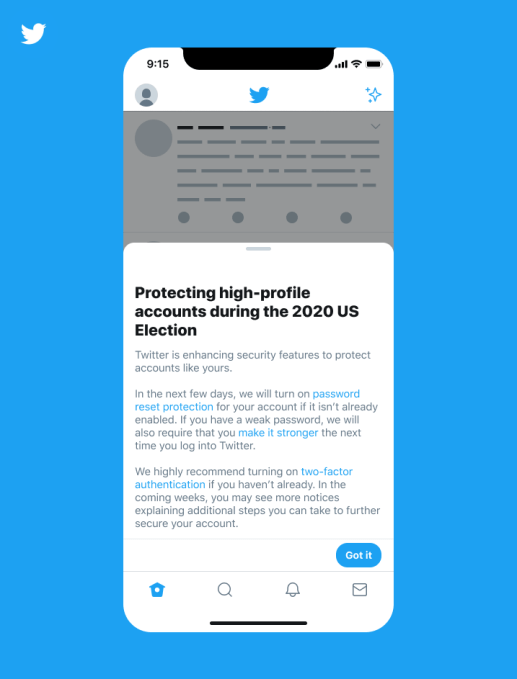
Twitter said today that “high-profile, election-related” accounts in the United States will be receiving notifications telling them they’re required to adopt strong passwords. The company will also be enabling password reset protections for those accounts, and encouraging them to adopt two-factor authentication.

And on top of the steps that it’s requiring candidates to take, Twitter also said it’s adopting additional “proactive internal security safeguards,” such as more sophisticated alerts.

This comes after Twitter was hacked in July, resulting in many high-profile accounts tweeting out a cryptocurrency scam. The company probably wants to avoid an election-related repeat.

The tech giants

A closer look at the new Apple Watches — This isn’t our full review, but rather Brian Heater’s first impressions of the Series 6 and SE.

Facebook launches Facebook Business Suite, an app for managing business accounts across Facebook, Instagram and Messenger — The app offers combined access to a business’s key updates and priorities across Facebook and Instagram.

Amazon makes Alexa Routines shareable — In the U.S., Alexa users will be able to visit the Routines section in the Alexa app, then click on the routine they want to share and grab a shareable URL.

Startups, funding and venture capital

Connected fitness startup Tonal raises another $110 million — It’s a pretty massive round for the strength training company, especially as the space has become increasingly crowded in recent years.

Amazon’s first five climate fund investments include Tesla co-founder JB Straubel’s startup Redwood Materials — Redwood Materials is a recycling startup aiming to create a circular supply chain.

With Goat Capital, Justin Kan and Robin Chan want to keep founding alongside the right teams — Goat Capital is a hybrid incubator, as opposed to a pure seed investment firm.

Advice and analysis from Extra Crunch

Superhuman’s Rahul Vohra asks 6 VCs how to raise funding when the sky is falling — Deal velocity has gone up!

Startup founders must overcome information overload — Entrepreneurs share their tips for weighing advice and data.

Does early-stage health tech need more ‘patient’ capital? — Steve O’Hear interviews Dr. Fiona Pathiraja of early-stage health tech fund Crista Galli Ventures.

(Reminder: Extra Crunch is our subscription membership program, which aims to democratize information about startups. You can sign up here.)

Everything else

Jennifer Doudna sees CRISPR gene-editing tech as a Swiss Army knife for COVID-19 and beyond — Doudna is one of the pioneers of the gene-editing technique known as CRISPR, and she discussed its potential at Disrupt.

Hulu tests its co-viewing feature ‘Watch Party’ with ad-supported viewers — Hulu Watch Party was initially only available for subscribers on the service’s ad-free tier.

The Daily Crunch is TechCrunch’s roundup of our biggest and most important stories. If you’d like to get this delivered to your inbox every day at around 3pm Pacific, you can subscribe here.


Read Full Article

Boston Robotics delivers plan for logistics robots as early as next year


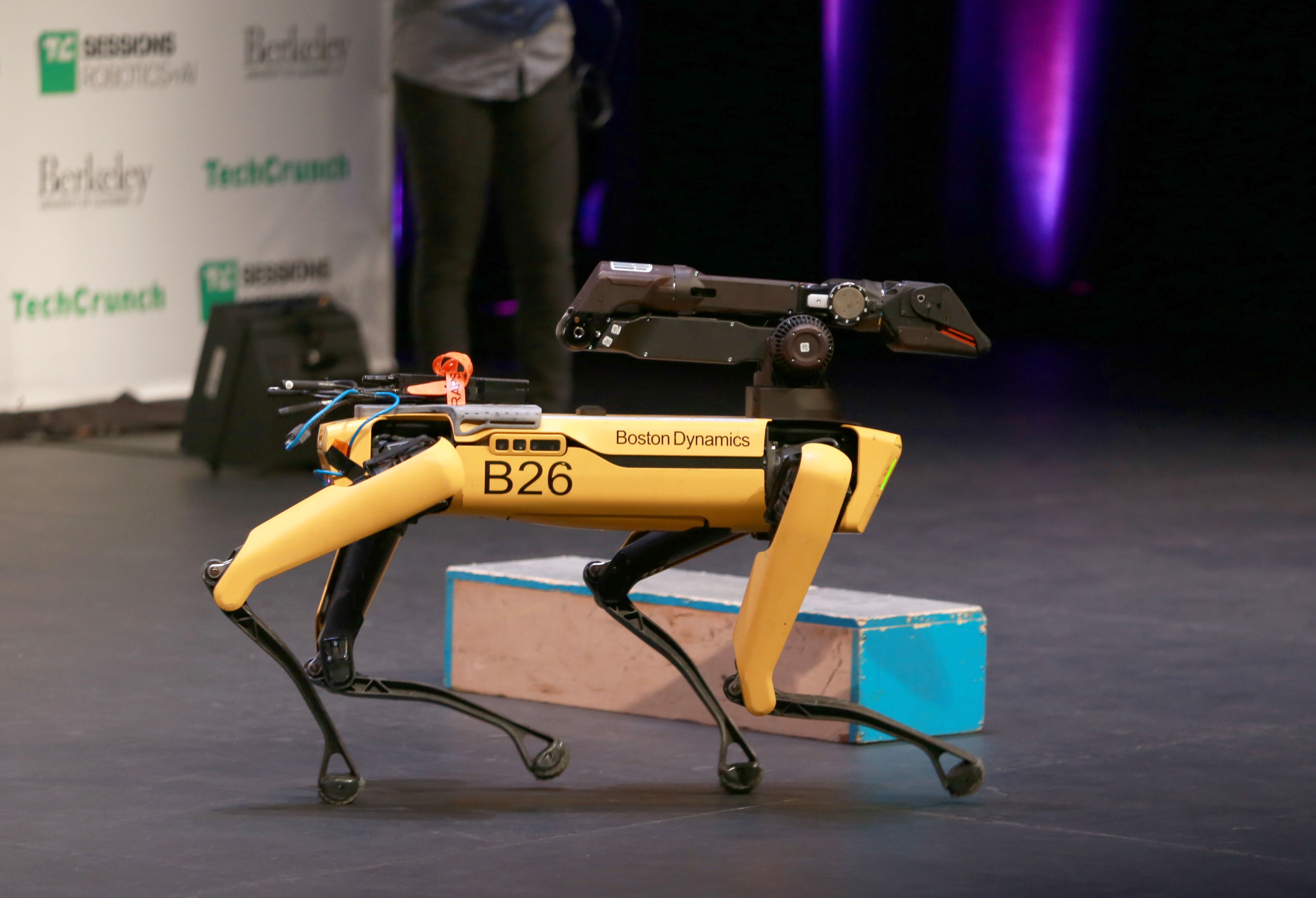
Boston Dynamics is just months away from announcing their approach to logistics, the first real vertical it aims to enter, after proving their ability to build robots at scale with the quadrupedal Spot. The company’s new CEO, Robert Playter, sees the company coming into its own after decades of experimentation.

Playter, interviewed on the virtual main stage of Disrupt 2020, only recently ascended from COO to that role after many years of working there, after longtime CEO and founder Marc Raibert stepped aside to focus on R&D. This is his Playter’s first public speaking engagement since taking on the new responsibility, and it’s clear he has big plans for Boston Robotics.

The recent commercialization of Spot, the versatile quadrupedal robot that is a distant descendant of the famous Big Dog, showed Playter and the company that there is a huge demand for what they’re offering, even if they’re not completely sure where that demand is.

“We weren’t sure exactly what the target verticals would be,” he admitted, and seemingly neither did the customers, who have collectively bought about 260 of the $75,000 robots and are now actively building their own add-ons and industry-specific tools for the platform. And the price hasn’t been a deterrent, he said: “As an industrial tool this is actually quite affordable. But we’ve been very aggressive, spending a lot of money to try to build an affordable way to produce this, and we’re already working on ways to continue to reduce costs.”

boston dynamics spot

Image Credits: TechCrunch

The global pandemic has also helped create a sense of urgency around robots as an alternative to or augmentation of manual labor.

“People are realizing that having a physical proxy for themselves, to be able to be present remotely, might be more important than we imagined before,” Playter said. “We’ve always thought of robots as being able to go into dangerous places, but now danger has been redefined a little bit because of COVID. The pandemic is accelerating the sense of urgency and, I think, probably opening up the kinds of applications that we will explore with this technology.”

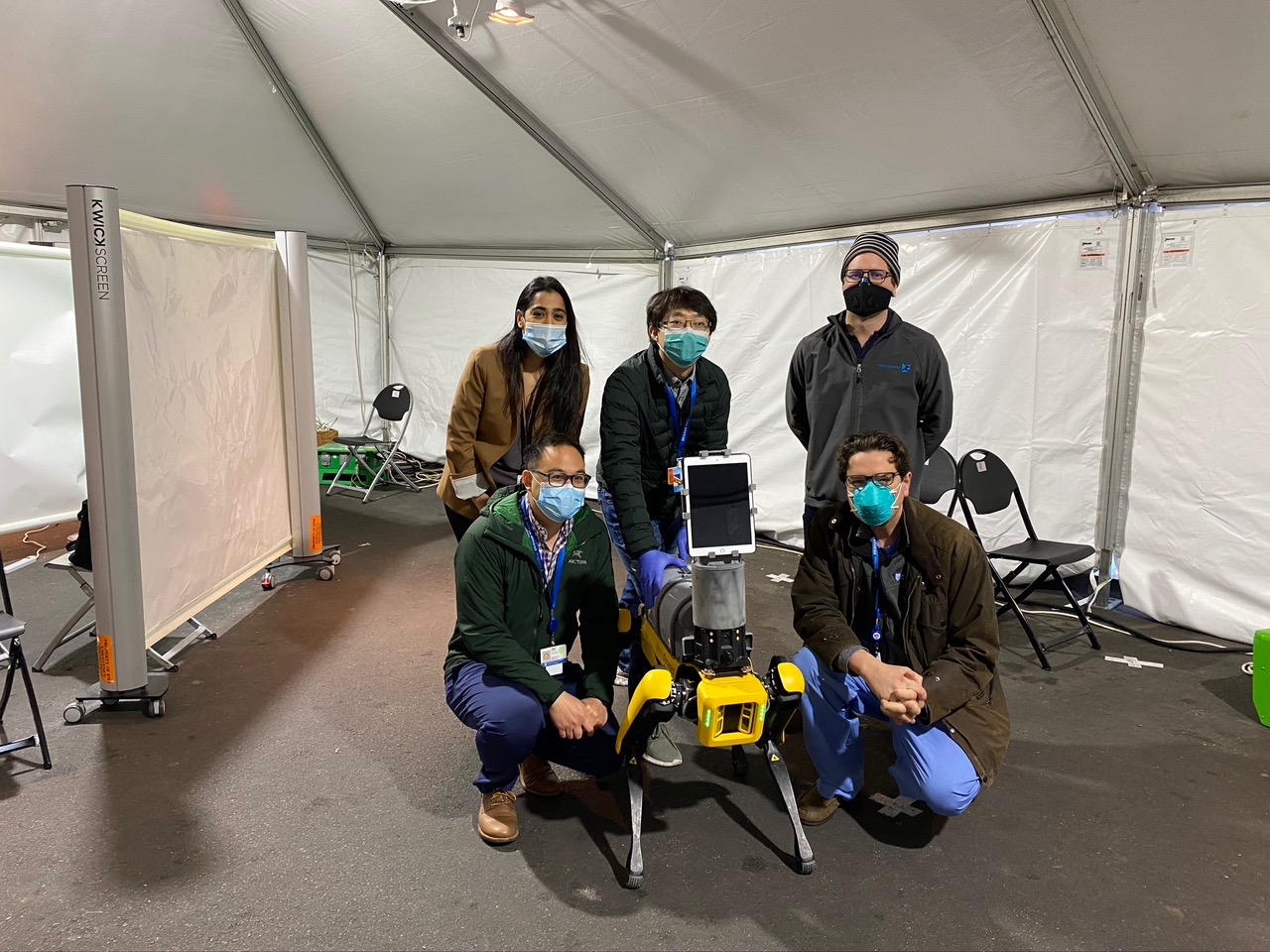
Among the COVID-specific applications, the company has fielded requests for collaboration on remote monitoring of patients, and automatic disinfection using spot to carry aerosol spray through a facility. “I don’t know whether that’ll be a big market going forward, but we thought it was important to respond at the time,” he said. “Partly out of a sense of obligation to the community and society that we do the right thing here.”

The “Dr Spot” remote vitals measurement program at MIT.

One of the earliest applications to scale successfully was, of course, logistics, where companies like Amazon have embraced robotics as a way to increase productivity and lower labor costs. Boston Dynamics is poised to jump into the market with a very different robot — or rather robots — meant to help move boxes and other box-like items around in a very different way from the currently practical “autonomous pallet” method.

“We have big plans in logistics,” Playter said. “we’re going to have some exciting new logistics products coming out in the next two years. We have customers now doing proof of concept tests. We’ll announce something in 2021, exactly what we’re doing, and we’ll have product available in 2022.”

The company already offers Pick, a more traditional, stationary item-picking system, and they’re working on the next version of Handle, a birdlike mobile robot that can grab boxes and move them around while taking up comparatively little space — no more than a person or two standing up. This mobility allows it to unload things like shipping containers, trucks, and other confined or less predictable spaces.

In a video shown during the interview (which you can watch above), Handle is also shown working in concert with an off-the-shelf pallet robot, and Playter emphasized the need for this kind of cooperation, and not just between robots from a single creator.

“We’ll be offering software that lets robots work together,” he said. “Now, we don’t have to create them all. But ultimately it will take teams of robots to do some of these tasks, and we anticipate being able to work with a heterogeneous fleet.”

This kinder, gentler, more industry-friendly Boston Dynamics is almost certainly a product of nudging from Softbank, which acquired the company in 2018, but also the simple reality that you can’t run a world-leading robotics R&D outfit for nothing. But Playter was keen to note that the Japanese tech giant understands that “we’re only in the position we’re in now because of the previous work we’ve done in the last two decades, developing these advanced capabilities, so we have to keep doing that.”

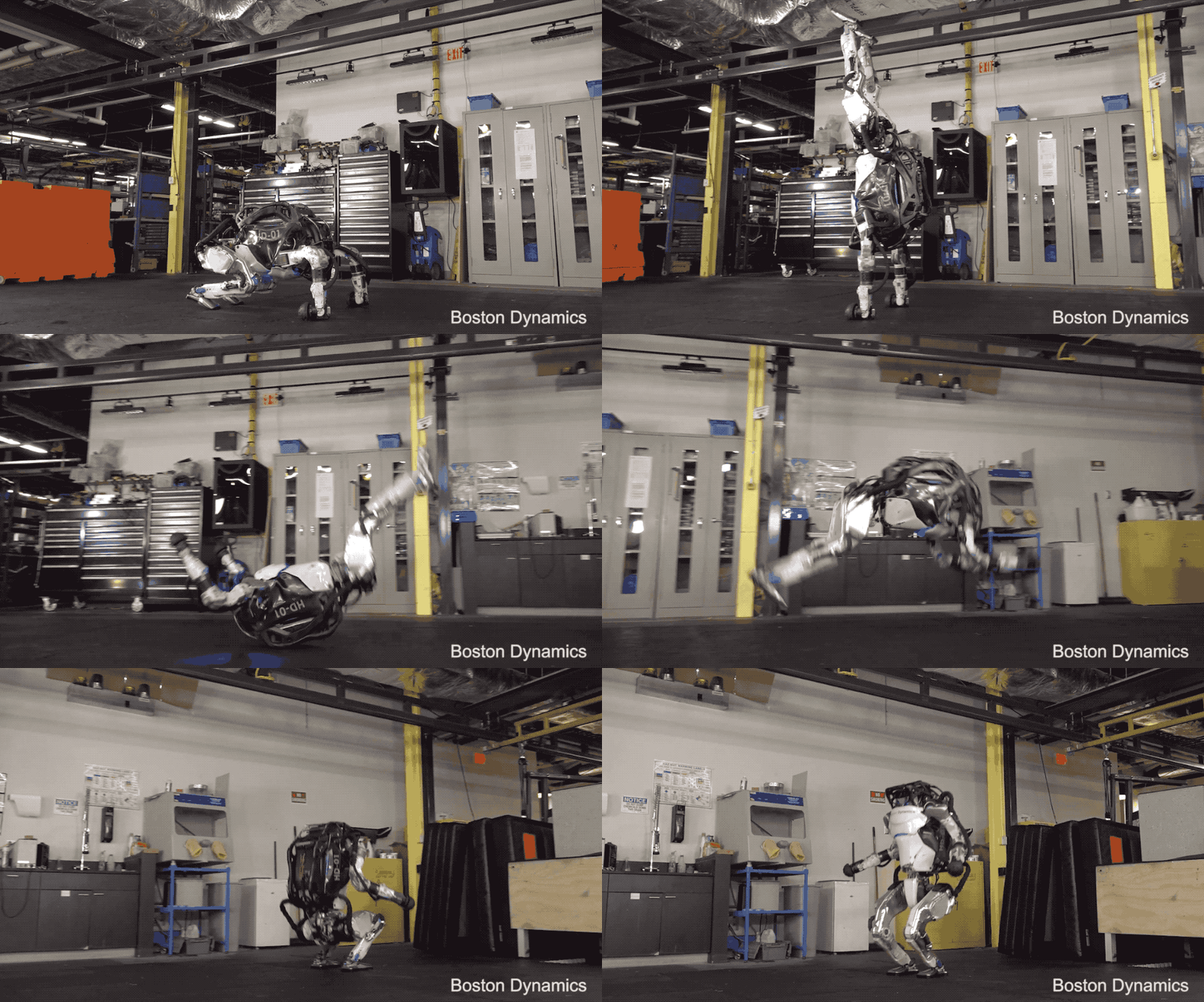
One thing you won’t likely seeing doing real work any time soon is Atlas, the company’s astonishingly agile humanoid robot. It’s just not practical for anything just yet, but instead acts as a kind of prestige project, forcing the company to constantly adjust its sights upward.

atlas gymnastics boston dynamics

“It’s such a complex robot, and it can do so much it forces us to create tools we would not otherwise. And people love it — it’s aspirational, it attracts talent,” said Playter.

And he himself is no exception. Once a gymnast, he recalled “a nostalgic moment” watching Atlas vault around. “A lot of the people in the company, including Marc, have inspiration from the athletic performance of people and animals,” Playter said. “That DNA is deeply embedded in our company.”


Read Full Article

Amazon makes Alexa Routines shareable


Amazon is making it easier for Alexa device owners to use Routines. The feature, which has been around for years, allows Alexa users to combine multiple tasks into a single voice command of their choosing. For example, you could make a routine that turns off your lights, plays relaxing music and locks your doors when you say, “Alexa, goodnight.” A morning routine could read you the headlines and weather forecast, as well as turn on your connected coffee maker. Now, Amazon will allow users to share their favorite routines with others.

Routines may still be considered something of a power-user feature. Because they take time to set up and aren’t necessarily well-highlighted in the Alexa mobile app where they’re under the “more” menu, it’s possible some Alexa device owners have never used them.

In the U.S., Alexa users will be able to visit the Routines section in the Alexa app, then click on the routine they want to share to grab a shareable URL. This URL can then be posted on social media, or sent in a text message, email or anywhere else.

When a user receives a shared routine, they simply click the URL while on the mobile device where they have the Alexa app installed. They’ll then follow the on-screen instructions in the app to complete the setup. Options that are shown in yellow text will indicate which fields can be customized — like specifying which smart light you want to turn off or on, for instance.

It would be useful if there was a larger online repository for Alexa routines where you could discover and activate those that have been shared by the wider community, similar to those directories created for sharing iOS Shortcuts. Also useful would be some sort of way to discover popular routines directly within the Alexa app. But these sorts of ideas are not included with the feature’s launch.

Instead, Amazon today introduced several new shareable routines created by Alexa Skill maker partners, like NPR, iHeartRadio, Headspace, Fitness Day, History Channel and others. These provide templates integrating their own voice app experiences for you to customize further.


Read Full Article

Designing Your Team’s Remote Workflow


Collaboration is an essential element of design. But what happens when your team suddenly has to work remotely? This phenomenon is nothing new, but it’s met with some trepidation. Even those businesses that relish the idea of harnessing global talent, aren’t crazy about the idea of not seeing the team face to face every day. […]

The post Designing Your Team’s Remote Workflow appeared first on ALL TECH BUZZ.


Twitter tightens account security for political candidates ahead of US election


Twitter is taking steps to tighten account security for a range of users ahead of the US presidential election, including by requiring the use of strong passwords.

“We’re taking the additional step of proactively implementing account security measures for a designated group of high-profile, election-related Twitter accounts in the US. Starting today, these accounts will be informed via an in-app notification from Twitter of some of the initial account security measures we will be requiring or strongly recommending going forward,” it said in a blog post announcing the pre-emptive step.

Image credit: Twitter

Last month Twitter said it would be dialling up efforts to combat misinformation and election interference, as well as pledging to help get out the vote — going on to out an election hub to help voters navigate the 2020 poll earlier this week.

Its latest election-focused security move follows an embarrassing account hack incident in July which saw scores of verified users’ accounts accessed and used to tweet out a cryptocurrency scam.

Clearly, Twitter won’t want a politically-flavored repeat of that.

Twitter said accounts that will be required to take steps to tighten their security are:

  • US Executive Branch and Congress

  • US Governors and Secretaries of State

  • Presidential campaigns, political parties and candidates with Twitter Election Labels running for US House, US Senate, or Governor

  • Major US news outlets and political journalists

As well as requiring users in these categories to have a strong password — prompting those without one to update it next time they log in — Twitter said it will also enable Password reset protection for the accounts by default.

“This is a setting that helps prevent unauthorized password changes by requiring an account to confirm its email address or phone number to initiate a password reset,” it noted.

It will also encourage the target types of users to enable Two-factor authentication (2FA) as a further measure to bolster against unauthorized logins. Although it will not be requiring 2FA be switched on.

The platform also said it would be implementing extra layers of what it called “proactive internal security safeguards” for the aforementioned accounts, including:

  • More sophisticated detections and alerts to help us, and account holders, respond rapidly to suspicious activity

  • Increased login defenses to prevent malicious account takeover attempts

  • Expedited account recovery support to ensure account security issues are resolved quickly

Also today, Twitter released more detail about how its platform manipulation and spam policies apply to groups seeking to coordinate to cause harm, giving the example of the conspiracy group QAnon. It began a crack down on the conspiracy group in July, when it banned thousands of accounts that had been spreading baseless BS which Twitter said had “the potential to lead to offline harm”.


Read Full Article