15 September 2020

N95 masks could soon be rechargeable instead of disposable


The pandemic has led to N95 masks quickly becoming one of the world’s most sought-after resources as essential workers burned through billions of them. New research could lead to an N95 that you can recharge rather than throw away — or even one that continuously tops itself up for maximum effectiveness.

The proposed system, from researchers at Technion-IIT in Israel and the Tata Institute of Fundamental Research in India, is not one of decontamination, as you might expect. Instead, it focuses on another aspect of N95 masks that renders them less effective over time.

N95s use both mechanical filtering, in which particles are caught in a matrix of microscopic fibers, and electrostatic filtering, in which particles are attracted to surfaces that carry a static charge. It’s like the old trick where you rub a balloon on your head and it sticks — but at the scale of microns.

The combination of these two methods makes N95 masks very effective, but the electrostatic charge, like any charge, dissipates after time as air and moisture pass over it. While decontamination via UV or high temperature may help keep the mechanical filter from becoming a tiny petri dish, they do nothing to restore the electrostatic charge that acted as a second barrier to entry.

In a paper published in the journal Physics of Fluids, Dov Levine and Shankar Ghosh (from Technion and Tata, respectively) show that it’s possible to recharge an N95’s filter to the point where it was close to off-the-shelf levels of efficacy. All that’s needed is to place the filter between two plate electrodes and apply a strong electric field.

“We find that the total charge deposited on the masks depends strongly on the charging time… with the pristine value almost reattained after a 60 min charge at 1000 V,” write the researchers in their paper.

A self-charging N95 mask prototype

It’s unlikely that healthcare workers are going to be disassembling their masks after every shift, though. While a service and special mask type could (and if it’s effective, should) be established to do this, the team also explored the possibility of a mask with a built-in battery that recharges itself constantly:

A solution that can help replenish the lost charge on the masks in real time would be desirable. In this section, we provide a proof-of-concept method of keeping the masks charged, which comes as a logical extension of our recharging method.

We tested a technique by which the filter material maintains its charge and thus its filtration efficiency… Since the currents required are extremely small, a large battery is not required, and it is possible that a small compact and practical solution may be feasible.

The image above shows a prototype, which the team found to work quite well.

Of course it’s not quite ready for deployment; IEEE Spectrum asked Peter Tsai, the creator of the N95 mask, for his opinion on it. He suggested that the team’s method for testing filtration efficacy is “likely questionable” but didn’t take issue with the rest of the study.

Though it won’t be in hospitals tomorrow or next week, the team notes that “crucially, our method can be performed using readily available equipment and materials and so can be employed both in urban and rural settings.” So once it’s thoroughly tested it’s possible these rechargeable masks could start showing up everywhere. Let’s hope so.


Read Full Article

Leaked memo excoriates Facebook’s ‘slapdash and haphazard’ response to global political manipulation


A former Facebook data scientist dropped a detailed, damning memo on her last day there, calling the social network out for what she describes as an arbitrary, slow, and generally inadequate response to fake accounts and activity affecting politics worldwide.

BuzzFeed News acquired the full memo and has published excerpts in this report, which is well worth reading in its entirety.

Zhang was reportedly fired earlier in September for, as she describes it, ongoing disagreement with management about the company’s priorities and response to widespread manipulation.

In the 6,600-word memo, Zhang describes a system where the focus is very much on ordinary spam — which is of course a major problem for the platform — while “coordinated inauthentic behavior” (CIB) attempting to influence elections is not awarded as much priority or resources. Unless it’s politically expedient, for example if a botnet needs to be rolled up before testimony in Congress or pressure from the press.

As the memo reported by BuzzFeed News reads:

It’s an open secret within the civic integrity space that Facebook’s short-term decisions are largely motivated by PR and the potential for negative attention… It’s why I’ve seen priorities of escalations shoot up when others start threatening to go to the press, and why I was informed by a leader in my organization that my civic work was not impactful under the rationale that if the problems were meaningful they would have attracted attention, became a press fire, and convinced the company to devote more attention to the space.

Overall, the focus of my organization – and most of Facebook – was on large-scale problems, an approach which fixated us on spam. The civic aspect was discounted because of its small volume, its disproportionate impact ignored.

I’ve asked Facebook for comment on the memo, including the following specific claims reportedly made by Zhang:

  • Large scale political manipulation returned in Honduras weeks after Facebook made attempts to stop it
  • Her report of coordinated manipulation campaigns in Azerbaijan was not investigated for a year afterwards
  • More than 10 million fake reactions and accounts were removed from the US and Brazil 2018 elections and never disclosed
  • A major political influence campaign in Delhi, India this February was never reported
  • Some 672,000 accounts were removed this spring from COVID-related misinformation campaigns in Spain and the U.S., also never disclosed
  • Whether to pursue a misinformation campaign at all is often left to mid-level employees like Zhang, who claimed she had “no oversight whatsoever”
  • Zhang’s push to dedicate more resources to civic platform problems led to her dismissal

Guy Rosen, Facebook’s VP of Integrity, attempted to play down the memo in a tweet, saying that Zhang was describing “fake likes”: “Like any team in the industry or government, we prioritize stopping the most urgent and harmful threats globally. Fake likes is not one of them,” he wrote. Certainly some of what Zhang describes is fake engagement, but far from all of it, and at any rate Facebook’s judgment in assigning priority is part of what the memo takes issue with.

The memo states outright what many have suspected is the case all along: That Facebook “projects an image of strength and competence… but the reality is that many of our actions are slapdash and haphazard accidents.” Not only that, but that the picture of Facebook’s efforts to combat this sort of thing is highly tailored by the company itself and not, it seems, in any way a complete or accurate one.

This post will be updated if we receive any substantial comment from Facebook. (It has been updated with Rosen’s tweet.)


Read Full Article

Evidence of Alien Life


Evidence of Alien Life

YouTube launches its TikTok rival, YouTube Shorts, initially in India


As TikTok’s fate in the U.S. remains murky, YouTube today announced the launch of a new short-form video experience it’s calling YouTube Shorts. The feature will allow users, initially in India, to upload 15-second or less short-form videos using a new set of creator tools, including a multi-segment camera, similar to TikTok, speed controls and a timer and a countdown feature. The videos can also be set to music, thanks to YouTube’s access to a large library of songs that it says will continue to grow over time.

The multi-segment camera lets users string together multiple video clips into one short clip. The other controls enable YouTube creators to be more creative than if they simply pressed a “record” button.

These are tools common to the TikTok video recording experience today and are the same features that Instagram recently cloned for its own TikTok rival, known as Reels.

The feature will be prominently highlighted within the YouTube app on Android, and will expand to iOS in time.

Image Credits: YouTube

YouTube says India — notably, a large market where Chinese-owned TikTok is already banned — will be the first to gain access to YouTube Shorts at launch. However, the plan is to bring the feature to more markets in time. YouTube didn’t offer a timeline for when that would happen, though.

Related to this, YouTube will introduce a new watch experience that lets you swipe through YouTube Shorts vertically — also, just like TikTok. The company had already added a new row on the YouTube homepage for watching short videos, and now the new watch experience will make it easier to watch that content and discover new short videos, too, YouTube says.

YouTube earlier this summer announced its plans to begin testing a short-form video feature, but hadn’t offered many details, or even the feature’s name. At the time, YouTube had said that the test would involve recording 15-second videos on both iOS and Android, but only among a small group of creators.

The company clarified to TechCrunch that this earlier experiment had been part of the Shorts product, and it had been experimenting with a multi-segment camera globally. But new today are the options to record with music, speed controls and a timer and countdown.

In addition, YouTube Shorts will feature hundreds of thousands of tracks from partners like T-Series and Believe Digital. It’s also working with music artists, labels and publishers to make more of their content available in YouTube Shorts’ catalog.

Image Credits: YouTube

The news of the larger launch of YouTube Shorts comes as the M&A deadline for TikTok’s U.S. operations is coming to an end. Microsoft has now announced it won’t be the buyer, and reports claim Oracle is winning the bid, but its deal isn’t structured as an outright sale.

TikTok’s potential exit had already seen many rival social platforms looking to woo TikTok users to their own app. Instagram, Snapchat and now YouTube are among those looking to gain an advantage by leveraging the instability around TikTok to launch their own short-form video products. More direct TikTok competitors, like Triller, Dubsmash, Byte and others, have picked up some new customers, as well.

YouTube says the new feature is rolling out in India over the next few days. It characterizes YouTube Shorts as a test it aims to learn from, with the goal of expanding access and improving the product over time.

If you have access to the Shorts camera, you can start creating videos by hitting the plus (+) icon (or soon, the video camera icon on iOS), then selecting “video.” If you see “create a short video” as an option, then you have the Shorts camera. For Android users in India, however, you’ll see the “create” icon has been moved to the bottom of the navigation bar for easier access, YouTube says.

Those without the feature can somewhat participate by tagging their shorter videos (under 60 seconds) as #Shorts in the title or description. These will be tested on the new YouTube home page, along with other short vertical videos.


Read Full Article

14 September 2020

As low-code startups continue to attract VC interest, what’s driving customer demand?


Investor interest in no-code, low-code apps and services advanced another step this morning with Airtable raising an outsized round. The $185 million investment into the popular database-and-spreadsheet service comes as it adds “new low-code and automation features,” per our own reporting.

The round comes after we’ve seen several VCs describe no- and low-code startups as part of their core investing theses, and observed how the same investors appear to be accelerating their investing pace into upstart companies that follow the ethos.


The Exchange explores startups, markets and money. You can read it every morning on Extra Crunch, or get The Exchange newsletter every Saturday.


Undergirding much of the hype around apps that allow users to connect services, mix data sources and commit visual programming is the expectation that businesses will require more customized software than today’s developers will be able to supply. Low-code solutions could limit required developer inputs, while no-code services could obviate some need for developer time altogether. Both no- and low-code solutions could help alleviate the global developer shortage.

But underneath the view that there is a market mismatch between developer supply and demand is the anticipation that businesses will need more apps today than before, and even more in the future. This rising need for more business applications is key to today’s growing divergence between the availability and demand for software engineers.

The issue is something we explored talking with Appian, a public company that provides a low-code service that helps companies build apps.

Today we’re digging a little deeper into the topic, chatting with Mendix CEO Derek Roos. Mendix has reached nine-figure revenues with its low-code platform that helps other companies build apps, meaning that it has good perspective into what the market is actually demanding of itself and its low-code competition.

We want to learn a bit more about why business need so many apps, how COVID-19 has changed the low-code market and if Mendix is accelerating in 2020. If we can get all of that in hand, we’ll be better equipped to understand the growing no- and low-code startup realm.

A growing market

Mendix, based in Boston, raised around $38 million in known venture capital across a few rounds, including a $25 million Series B back in 2014. In 2018, Mendix partnered up with IBM to bring its service to their cloud, and later sold to Siemens for around $700 million the same year.


Read Full Article

Google will announce a new Pixel, smart speaker and Chromecast September 30


Hardware season is in full swing. Apple’s big Watch event kicks off tomorrow and Samsung is readying itself for a third (!) Unpacked event on September 23. Now Google’s getting in on the fun. After opting to skip a virtual version of I/O earlier this year, the company has confirmed that it will be doing a big hardware reveal for members of the press at the tail end of the month.

On September 30, the company will be announcing a new Pixel phone, Chromecast and smart speaker. After launching the budget Pixel 4a earlier this summer, Google publicly acknowledged plans to release a 5G version of both the Pixel 5 and 4a this year, so that seems like a slam dunk for the big event. Google has had some shake-ups behind the scenes following some lackluster handset sales, but while the company is expected to go in a new direction, it’s not certain whether the approach will be in place for the arrival of the 5.

Also on the docket for the big event are a new version of the company’s popular TV streaming Chromecast device and a new smart speaker. A few members of the Google Home/Nest Home family are overdue for an update, most notably the original Google Home and the Home Max speaker — though the company seems a bit ambivalent toward the latter lately. I’m still a fan, however, and would love to see something new on that front. The Nest Hub could do with a refresh, as well.

We’ll be there virtually, bringing you the latest news.


Read Full Article

What to expect from Apple’s hardware event


If this was a normal year, we would be settling in for an iPhone event right about now. This is, however, very much not a normal year. And while we are, in fact, getting an Apple hardware event tomorrow at 10 a.m. PT/1 p.m. ET, it’s looking entirely possible — even likely — that we won’t be getting much face time with the iPhone 12.

If the handset even makes an appearance at all. After all, Apple’s been pretty upfront about the months or so delay of its long-awaited 5G handset (shareholders, you know), owing at least in part to some supply chain issues. It follows, then, that the company is planning another event in the not so distant future.

As we’ve seen from Samsung, the move toward virtual events during the pandemic seems to have made companies a bit bolder about holding more events, without the the obligation of travel. What we can expect this time, however, are some refreshes to a couple of other Apple tent-pole products — namely, the Apple Watch and an old iPad favorite. There are a handful of other possibilities, as well, including service bundles and some additions to the AirPods line.

Let’s start with the best bets.

Apple Watch

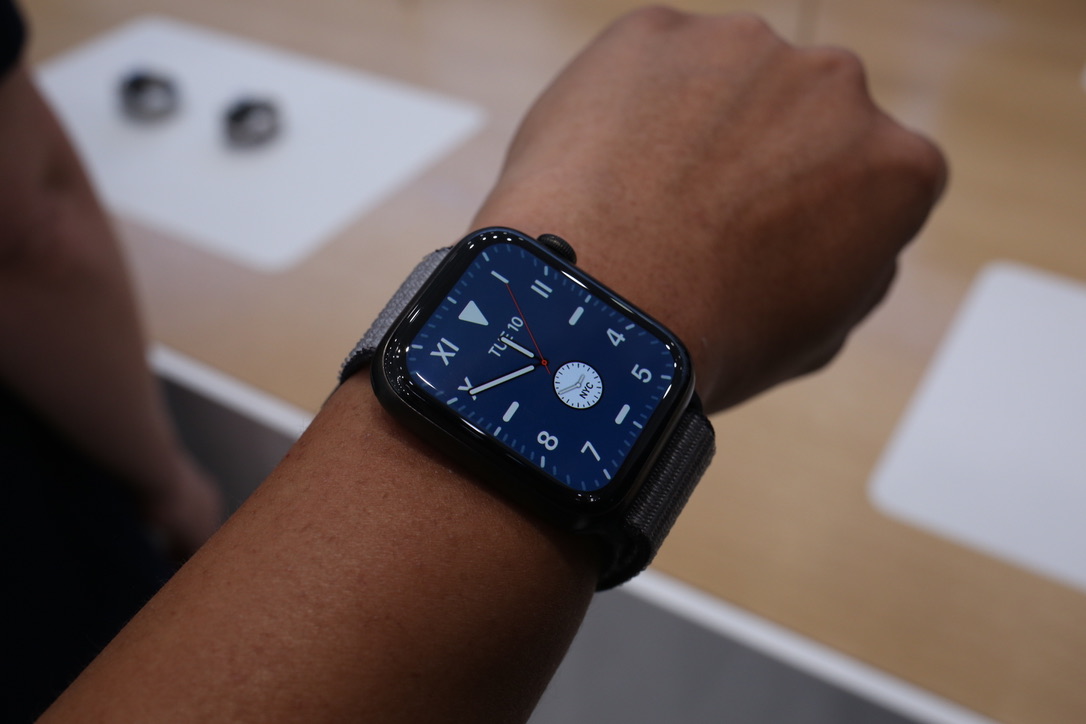
Apple Watch Series 5

Image Credits: Brian Heater

The “Time Flies” slogan is the clearest indication that we’re getting some Watch news. Again, in most years, we’d simply be able to look at the calendar. But this isn’t most years. A healthy combination of rumors, leaks and some of the new features from the latest version of watchOS give us a pretty healthy picture of what we’re in store for at tomorrow’s big event.

The Apple Watch Series 6 is likely to be the centerpiece of the show. One of the biggest pieces of news from the new model is actually a feature loss. The latest version of Apple’s ultra-popular wearable is expected to drop Force Touch, as support for the feature is out on watchOS 7. Such a move could help slim down the watch — or even more likely/hopefully leave room for more battery.

With the addition of sleep features in the new version of the OS, it behooves the company to find ways to make the device last longer on a charge, so users can wear it to bed. There are already some on-board power-saving features to track while the wearer sleeps, but a bigger battery would make a big difference — and help the company stay competitive on that front.

Otherwise, the device is set to continue Apple’s focus on health tracking improvements. That’s long been a key to the Watch’s success — and the success of wrist-worn devices, generally. Among the expected features is the addition of SpO2 tracking. The Apple Watch would be far from the first smartwatch to track blood oxygen levels, but the feature would come at a time when home tracking of health vitals feels all the more important.

Rumors also point to the addition of a low-cost model — specifically a new Watch designed to replace the Series 3, which has stuck around at $199. The product would answer the fair bit of demand for lower-priced smartwatches. That’s particularly the case during COVID-19, as users are looking for a reasonably priced entry into health tracking. That said, it seems likely that the lower-cost product won’t be nearly as sophisticated.

iPad

Image Credits: Apple

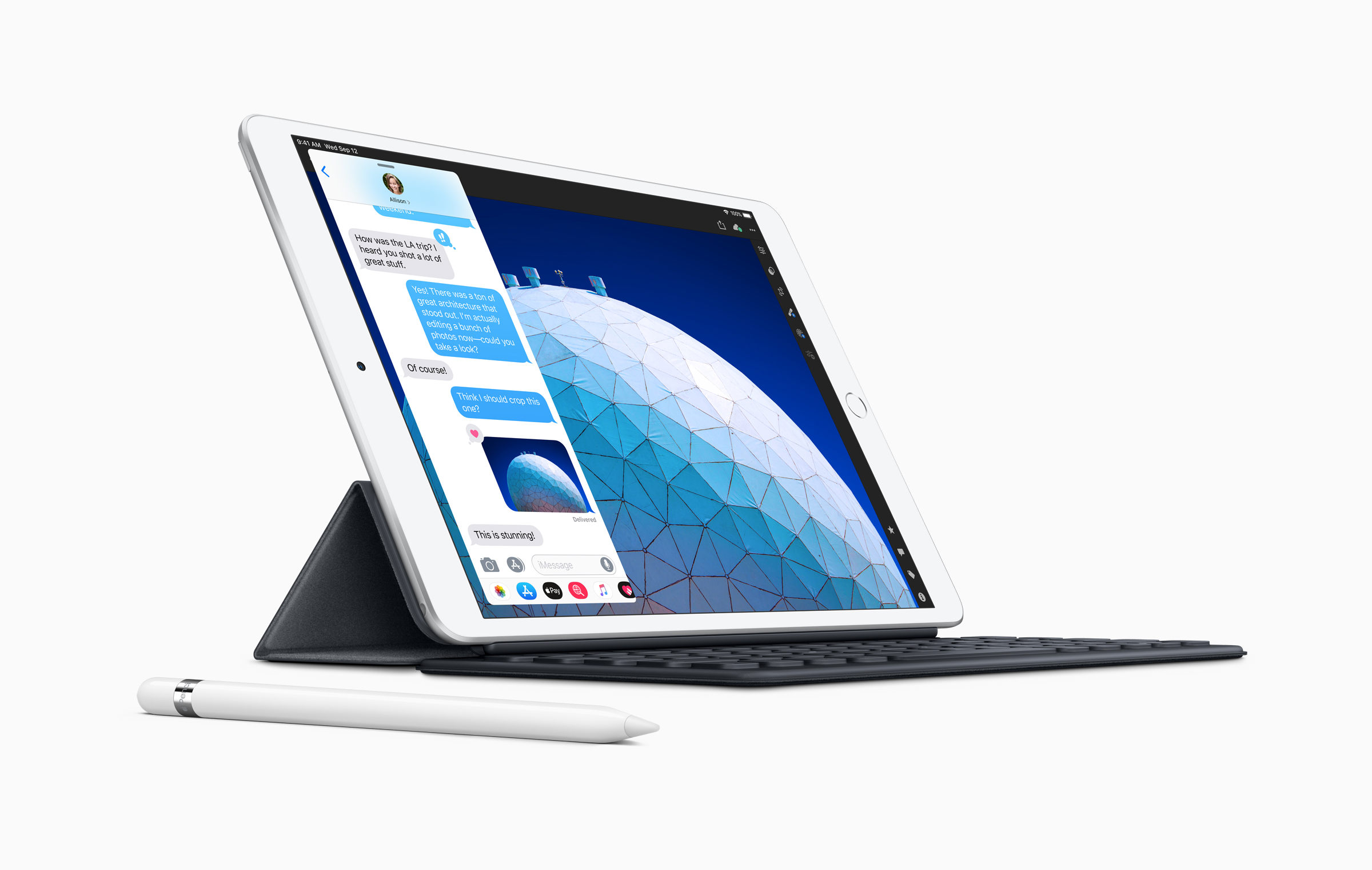
It seems likely there’s an iPad on the menu for tomorrow, too. The top candidate is the iPad Air, which saw its last refresh in March 2019. Rumors point to a significant reduction in bezels and a power button with Touch ID moved to the top of the device. Other features for the iPad Air 4 include a 10.8-inch display and Apple finally swapping the Lightning port for USB-C.

Misc

All of those operating systems announced back at WWDC (iOS, macOS, watchOS, TVOS) should be coming out of beta any week now. This could be the event — though, again, with the possible addition of an iPhone event, we can’t say for sure. The company is also rumored to be launching “Apple One,” an offering that would bundle in some of its key subscription services, including Apple TV+ and Music. Additional bundles could feature Arcade and News+, along with additional iCloud storage.

Some additional longstanding rumors include AirTags, the company’s Tile-like device tracker that plays nicely with its Find My application. The hardware offering would make it easier to locate lost objects in a fashion similar to Find My iPhone. New AirPods could be on the docket as well. AirPods 3, AirPods Pro 2 and the long-awaited over-ear AirPods Studio all seem like reasonable possibilities.


Read Full Article

How social inequality fuels political division | Keith Payne

How social inequality fuels political division | Keith Payne

"If we want to fix our politics, we have to do something about inequality," says social psychologist Keith Payne. Showing how economic inequality changes the way people see and behave towards one another, Payne helps explain the rise of the political polarization that's slicing up society -- and challenges us to think twice the next time we dismiss someone for the sake of politics.

https://ift.tt/2FkZXxH

Click this link to view the TED Talk

Microsoft’s Project Natick underwater datacenter experiment confirms viability of seafloor data storage


Microsoft has concluded a years-long experiment involving use of a shipping container-sized underwater data center, placed on the sea floor off the cost of Scotland’s Orkney Islands. The company pulled its ‘Project Natick’ underwater data warehouse up out of the water earlier this year at the beginning of the summer, and spent that last few months studying the datacenter, and the air it contained, to determine the model’s viability.

The results not only showed that using these offshore submerged data centers seems to work well in terms of performance, but also revealed that the servers contained within the data center proved to be up to eight times more reliable than their dry land counterparts. Researchers will be looking into exactly what was responsible for this greater reliability rate, in the hopes of also translating those advantages to land-based server farms for increase performance and efficiency across the board.

Other advantages included being able to operate with greater power efficiency, especially in regions where the grid on land is not considered reliable enough for sustained operation. That’s due in part to the decreased need for artificial cooling for the servers located within the data farm, because of the conditions at the sea floor. The Orkney Island area is covered by a 100% renewable grid supplied by both wind and solar, and while variances in the availability of both power sources would’ve proven a challenge for the infrastructure power requirements of a traditional, overland data center in the same region, the grid was more than sufficient for the same size operation underwater.

Microsoft’s Natick experiment was meant to show that portable, flexible data center deployments in coastal areas around the world could prove a modular way to scale up data center needs while keeping energy and operation costs low, all while providing smaller data centers closer to where customers need them, instead of routing everything to centralized hubs. So far, the project seems to have done specularly well at showing that. Next, the company will look into seeing how it can scale up the size and performance of these data centers by linking more than one together to combine their capabiilities.


Read Full Article

TikTok hits 100M users in Europe as the clock ticks on its US business


TikTok may or may not be making a deal for its US operations, which the US government says it will shut down over national security concerns come September 20th if its Chinese ownership is not resolved. But something that the US narrative has not really addressed is that the company is still growing like a weed in other markets. Today, TikTok announced that it had hit the 100 million month active user milestone in Europe, where it has officially launched in the UK, France, Germany, Italy, Russia and Spain.

“We’ve been humbled to see how Europe has embraced TikTok during the time we’ve been here,” said Rich Waterworth, the company’s head of Europe, in a blog post today. He also added that the Creator Fund for Europe, launched earlier this month with TikTok committing to pay out €250 million over the next three years to professional “creators” trying to make money producing video content for the app, has seen more than 40% of all eligible creators enrolling.

Notably, TikTok is putting this news out less than one month after it said it had reached 100 million users in the US.

The news comes at an interesting time for the company in other ways too.

It points to a kind of scale in the region that stands to become even more important for TikTok’s owner ByteDance, and specifically as a counter-balance to its future prospects in its biggest two markets. ByteDance is not only facing some tough times ahead in the US, but it’s also weathering some significant storms in its second-largest market, India, where the app has been banned and seems currently to have no prospective buyers or champions to get it out of that predicament.

Currently in the US, the company seems to have three options: the US might be shut down altogether; or TikTok sells the business to another company in whole or part and relinquishes making money or using US creators and audience to fuel its viral video machine; or ByteDance somehow manages to take the Trump administration to court and win to keep things operating as is or with some modifications.

All three are very painful in their own ways, making the growth and potential in Europe even more notable.

TikTok has been trying to take a “business as usual” approach to things despite all of this. In recent weeks, it has launched a number of new features both for consumers and for marketers in the US and elsewhere.

They have included an expansion of its marketing tools, to expand the variety and size of advertisers who use the platform to promote their brands. And new features like Stitch, which gives a way for users to sample content from other videos and then  “quoting” and sharing among users on the platform, adding in new ways to post more, and to create more viral videos.

The numbers also underscore an early thought experiment: What would TikTok life be like without input from the US market?

So far, it’s fair to say that the US TikTok explosion has been a major part of the global TikTok explosion. It has produced not just the biggest audience, but the app’s biggest stars. And if you take Facebook or any other social app as a benchmark, the US would stand to become TikTok’s biggest market for advertisers and revenues over time, too.

Still, it’s very notable that the 100 million milestone in Europe was put out today of all days. In the last 24 hours, we’ve seen conflicting reports about a possible buyer — Oracle — finally nearing a deal; as well as a separate report that the Chinese government is ready to shut down the whole process.

Putting out the European numbers so close timing-wise — less than three weeks apart — to posting about 100 million users in the US could be ByteDance’s way of saying that it might just have the last dance after all.


Read Full Article
YouTube hit with UK class action style suit seeking $3BN+ for ‘unlawful’ use of kids’ data


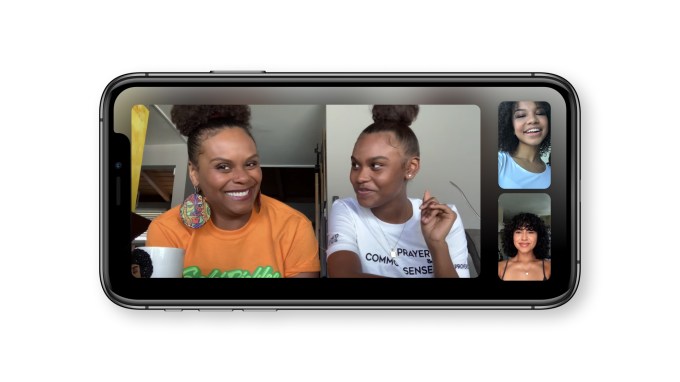
Another class action style lawsuit has been lodged against a tech giant in the UK alleging violations of privacy and seeking major damages. The latest representative action, filed against Google-owned YouTube, accuses the platform of routinely breaking UK and European data protection laws by unlawfully targeting up to five million under-13-year-olds with addictive programming and harvests their data for advertisers.

UK and EU law contain specific protections for children’s data, limiting the age at which minors can legally consent to their data being processed — in the case of the UK’s Data Protection Act to aged 13.

The suit is being brought by international law firm Hausfeld and Foxglove, a tech justice non-profit, which says they’re seeking damages from YouTube of more than £2.5BN (~$3.2BN).

Per the firms, it’s the first such representative litigation brought against a tech giant on behalf of children and among the largest such cases to date. (Last month a similar class style action was filed against Oracle in the UK alleging breaches of Europe’s General Data Protection Regulation (GDPR) related to cookie tracking.)

If the case succeeds, they say millions of British households whose kids watch YouTube may be owed “hundreds of pounds” in damages.

Duncan McCann, a researcher on the digital economy and father of three children all under 13 who watch YouTube and have their data collected and ads targeted at them by Google, is serving as representative claimant in the case.

Commenting in a statement, McCann said: “My kids love YouTube, and I want them to be able to use it. But it isn’t ‘free’ — we’re paying for it with our private lives and our kids’ mental health. I try to be relatively conscious of what’s happening with my kids’ data online but even so it’s just impossible to combat Google’s lure and influence, which comes from its surveillance power. There’s a massive power imbalance between us and them, and it needs to be fixed.”

“The [YouTube] website has no user practical age requirements and makes no adequate attempt to limit usage by youngsters,” notes Hausfeld in a press release about the lawsuit.

While a Foxglove release about the suit points to YouTube pitch materials intended for toy makers Mattel and Hasbro (and made public via an earlier FTC suit against Google) — in which it says the platform described itself as “the new Saturday morning cartoons”, “the number one website visited regularly by kids”, “today’s leader in reaching children age 6-11 against top TV channels”, and “unanimously voted as the favorite website of kids 2-12”.

Reached for comment, a YouTube spokesperson sent us this statement: “We don’t comment on pending litigation. YouTube is not for children under the age of 13. We launched the YouTube Kids app as a dedicated destination for kids and are always working to better protect kids and families on YouTube.”

The tech giant maintains that YouTube is not for under 13s — pointing to the existence of YouTube Kids, a dedicated kids’ app it launched in 2015 to offer what it called a “safer and easier” space for children to discover “family-focused content”, to back up the claim.

Although the company has never claimed that no children under 13 use YouTube. And last year the FTC agreed a $170M settlement with Google to end an investigation by the regulator and the New York Attorney General into alleged collection of children’s personal information by YouTube without the consent of their parents.

The rise in class action style lawsuits being filed in the UK seeking damages for breaches of data protection law follow a notable appeals court decision, just under a year ago, also against Google.

In that case the appeals court unblocked a class-action style lawsuit against the tech giant related to bypassing iOS privacy settings to track iPhone users.

In the US, Google paid $22.5M to the FTC back in 2012 to settle the same charge, and later paid a smaller sum to settle a number of US class action lawsuits. The UK case, meanwhile, continues.

While Europe has historically strong data protection laws, there has been — and still is — a lack of robust regulatory enforcement which is leaving a gap that litigation funders are increasingly willing to plug.

In the UK the challenge for those seeking damages for large scale violations is there’s no direct equivalent to a US class action. But last year’s appeals court ruling in the Safari bypass case has opened the door to representative actions.

The court also said damages could be sought for a breach of the law without needing to prove pecuniary loss or distress, establishing a route to redress for consumers that’s now being tested by several cases.


Read Full Article
Facebook introduces a co-viewing experience in Messenger, ‘Watch Together’


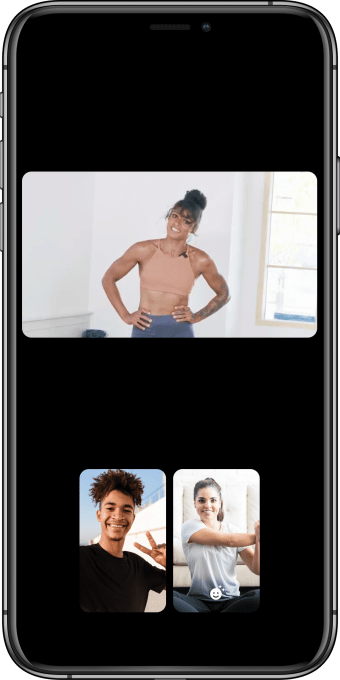
Facebook today is rolling out a new feature that will allow friends and family to watch videos together over Messenger. The feature, called “Watch Together,” works with all Facebook Watch video content, including its original programs, user uploads, creator content, live streams, and soon, music videos. At launch, the co-watching experience can be used by up to 8 people in a Messenger video chat on mobile, or by up to 50 people in Messenger Rooms.

The COVID-19 pandemic has encouraged a number of streaming services — including Hulu, Plex and Amazon Video — adopt similar co-viewing features, or at the very least, unofficially permit third-party apps that enable co-watching, like Netflix Party.

However, Facebook didn’t just jump on this bandwagon. It actually announced its plans to develop a co-viewing experience for Messenger at its F8 developer conference two years ago. And the product has been in development ever since.

Image Credits: Facebook

To roll out something like co-viewing across Messenger is a significant technical challenge. The service hooks into the Facebook Watch CDN (content distribution network), to pull the videos into Messenger. It also then developed a system that allows for tight synchronization between the various users’ streams of the same video. That, too, can be difficult, as someone in a rural area may have slower bandwidth speeds than someone in an urban metro, but the service has to make sure they’re seeing the same part of the video at the same time.

Image Credits: Facebook

To use the feature, users have to first be in a Messenger video call or a Messenger Room — it can’t be kicked off from the Facebook Watch tab or anywhere else. From Messenger, they’re able to start a co-watching session by selecting the new option from a drawer that pulls up from the bottom of the screen. Initially, this feature is only available on iOS and Android mobile devices, Facebook says.

From the interface that appears, users can then browse or search to find something to watch together. Facebook Watch content is organized into categories like “TV & Movies,” “Watched” (your recently watched content), “Uploaded” (your own videos), and “Suggested.”

While users can’t create playlists or queues, all participants can help choose videos. That is, there’s not one person directing the experience for others. Everyone can also stop, pause, jump forward or back in the videos, too.

Though many may use the feature for a sort of lean-back co-watching experience, it has other potential. For example, a group could get together to watch a fitness video and workout together.

Though official music videos recently became available on Facebook Watch, thanks to Facebook’s new deal with record labels, they’re not immediately available in this co-viewing experience. However, Facebook says that they’ll be added in the next few weeks, initially in the U.S., India and Thailand to start. Each market will also feature localized content under the “TV & Movies” section, too.

The feature will begin rolling out globally across iOS and Android, but Facebook intends to have web support ready in a matter of weeks, and other platforms, like desktop, will follow.


Read Full Article

YouTube hit with UK class action style suit seeking $3BN+ for ‘unlawful’ use of kids’ data


Another class action style lawsuit has been lodged against a tech giant in the UK alleging violations of privacy and seeking major damages. The latest representative action, filed against Google-owned YouTube, accuses the platform of routinely breaking UK and European data protection laws by unlawfully targeting up to five million under-13-year-olds with addictive programming and harvests their data for advertisers.

UK and EU law contain specific protections for children’s data, limiting the age at which minors can legally consent to their data being processed — in the case of the UK’s Data Protection Act to aged 13.

The suit is being brought by international law firm Hausfeld and Foxglove, a tech justice non-profit, which says they’re seeking damages from YouTube of more than £2.5BN (~$3.2BN).

Per the firms, it’s the first such representative litigation brought against a tech giant on behalf of children and among the largest such cases to date. (Last month a similar class style action was filed against Oracle in the UK alleging breaches of Europe’s General Data Protection Regulation (GDPR) related to cookie tracking.)

If the case succeeds, they say millions of British households whose kids watch YouTube may be owed “hundreds of pounds” in damages.

Duncan McCann, a researcher on the digital economy and father of three children all under 13 who watch YouTube and have their data collected and ads targeted at them by Google, is serving as representative claimant in the case.

Commenting in a statement, McCann said: “My kids love YouTube, and I want them to be able to use it. But it isn’t ‘free’ — we’re paying for it with our private lives and our kids’ mental health. I try to be relatively conscious of what’s happening with my kids’ data online but even so it’s just impossible to combat Google’s lure and influence, which comes from its surveillance power. There’s a massive power imbalance between us and them, and it needs to be fixed.”

“The [YouTube] website has no user practical age requirements and makes no adequate attempt to limit usage by youngsters,” notes Hausfeld in a press release about the lawsuit.

While a Foxglove release about the suit points to YouTube pitch materials intended for toy makers Mattel and Hasbro (and made public via an earlier FTC suit against Google) — in which it says the platform described itself as “the new Saturday morning cartoons”, “the number one website visited regularly by kids”, “today’s leader in reaching children age 6-11 against top TV channels”, and “unanimously voted as the favorite website of kids 2-12”.

Reached for comment, a YouTube spokesperson sent us this statement: “We don’t comment on pending litigation. YouTube is not for children under the age of 13. We launched the YouTube Kids app as a dedicated destination for kids and are always working to better protect kids and families on YouTube.”

The tech giant maintains that YouTube is not for under 13s — pointing to the existence of YouTube Kids, a dedicated kids’ app it launched in 2015 to offer what it called a “safer and easier” space for children to discover “family-focused content”, to back up the claim.

Although the company has never claimed that no children under 13 use YouTube. And last year the FTC agreed a $170M settlement with Google to end an investigation by the regulator and the New York Attorney General into alleged collection of children’s personal information by YouTube without the consent of their parents.

The rise in class action style lawsuits being filed in the UK seeking damages for breaches of data protection law follow a notable appeals court decision, just under a year ago, also against Google.

In that case the appeals court unblocked a class-action style lawsuit against the tech giant related to bypassing iOS privacy settings to track iPhone users.

In the US, Google paid $22.5M to the FTC back in 2012 to settle the same charge, and later paid a smaller sum to settle a number of US class action lawsuits. The UK case, meanwhile, continues.

While Europe has historically strong data protection laws, there has been — and still is — a lack of robust regulatory enforcement which is leaving a gap that litigation funders are increasingly willing to plug.

In the UK the challenge for those seeking damages for large scale violations is there’s no direct equivalent to a US class action. But last year’s appeals court ruling in the Safari bypass case has opened the door to representative actions.

The court also said damages could be sought for a breach of the law without needing to prove pecuniary loss or distress, establishing a route to redress for consumers that’s now being tested by several cases.


Read Full Article

Facebook introduces a co-viewing experience in Messenger, ‘Watch Together’


Facebook today is rolling out a new feature that will allow friends and family to watch videos together over Messenger. The feature, called “Watch Together,” works with all Facebook Watch video content, including its original programs, user uploads, creator content, live streams, and soon, music videos. At launch, the co-watching experience can be used by up to 8 people in a Messenger video chat on mobile, or by up to 50 people in Messenger Rooms.

The COVID-19 pandemic has encouraged a number of streaming services — including Hulu, Plex and Amazon Video — adopt similar co-viewing features, or at the very least, unofficially permit third-party apps that enable co-watching, like Netflix Party.

However, Facebook didn’t just jump on this bandwagon. It actually announced its plans to develop a co-viewing experience for Messenger at its F8 developer conference two years ago. And the product has been in development ever since.

Image Credits: Facebook

To roll out something like co-viewing across Messenger is a significant technical challenge. The service hooks into the Facebook Watch CDN (content distribution network), to pull the videos into Messenger. It also then developed a system that allows for tight synchronization between the various users’ streams of the same video. That, too, can be difficult, as someone in a rural area may have slower bandwidth speeds than someone in an urban metro, but the service has to make sure they’re seeing the same part of the video at the same time.

Image Credits: Facebook

To use the feature, users have to first be in a Messenger video call or a Messenger Room — it can’t be kicked off from the Facebook Watch tab or anywhere else. From Messenger, they’re able to start a co-watching session by selecting the new option from a drawer that pulls up from the bottom of the screen. Initially, this feature is only available on iOS and Android mobile devices, Facebook says.

From the interface that appears, users can then browse or search to find something to watch together. Facebook Watch content is organized into categories like “TV & Movies,” “Watched” (your recently watched content), “Uploaded” (your own videos), and “Suggested.”

While users can’t create playlists or queues, all participants can help choose videos. That is, there’s not one person directing the experience for others. Everyone can also stop, pause, jump forward or back in the videos, too.

Though many may use the feature for a sort of lean-back co-watching experience, it has other potential. For example, a group could get together to watch a fitness video and workout together.

Though official music videos recently became available on Facebook Watch, thanks to Facebook’s new deal with record labels, they’re not immediately available in this co-viewing experience. However, Facebook says that they’ll be added in the next few weeks, initially in the U.S., India and Thailand to start. Each market will also feature localized content under the “TV & Movies” section, too.

The feature will begin rolling out globally across iOS and Android, but Facebook intends to have web support ready in a matter of weeks, and other platforms, like desktop, will follow.


Read Full Article

Google claims net zero carbon footprint over its entire lifetime, aims to only use carbon-free energy by 2030


Google was at the leading edge of large technology companies seeking to go completely carbon neutral, having declared that status in 2007, and subsequently matching all of its global electricity consumption with renewable energy. Now, the company says that it is breaking new ground by becoming the first major company to effectively eliminate its entire carbon footprint – going back to its founding – something it has achieved through purchase of “high-quality carbon offsets” as of today. Further, it’s also setting a goal of employing entirely renewable energy sources by 2030.

The first achievement – eliminating its overall carbon footprint – is relatively easily achieved simply by spending a lot of cash. Google didn’t share exactly how much it had purchased in carbon offsets, but the idea behind those is that you could buy support of projects including renewable energy or energy efficiency initiatives or projects to offset your own impact. Google should be more or less aware of the impact of its operations from its founding until it became a carbon neutral operation in 2007, and hopefully its claim that it has purchased high-quality offsets means that a lot of meaningful projects got a sound investment to eliminate whatever that figure was.

Meanwhile, Google is taking on the much more challenging task of moving towards running its entire business on carbon-free energy sources everywhere it operates, 100 percent of the time. That means offices, campuses and data centres everywhere, for all of its products across Gmail, Search, YouTube and Maps. While Google already claims operations that match their total energy usage with 100 percent renewable use, that’s not actually through direct use of carbon-free sources. Instead, as is typical for companies seeking greener operations but with large and distributed physical footprints, Google purchases renewable energy elsewhere to offset the use of non-renewable power in places where there are no directly accessible sources available.

To commit to directly using only carbon-free energy all the time across its entire operations therefore means a huge undertaking, that will require the actual development of new clean energy sources. To that end, Google says it’ll be helping to bring 5 GW of new carbon-free energy sources online by 2030 across regions where it has physical resources that need access to clean power.

Funding the development of local clean energy sources to power its facilities isn’t new, and most major tech companies with a clean energy agenda pursue it. But Google’s specific target of making all of its power sources carbon-free by 2030 provides a fixed deadline for an unprecedented goal for a company of its size and influence.


Read Full Article

Samsung is holding yet another Unpacked Event on September 23


One thing I’ll say for in-person events: they compelled companies to cram in a lot of news. After all, if you’re going to ask an auditorium full of people to travel from around the country — or world — you want to give them a lot of bang for their buck.

Samsung did manage that with its Galaxy Note event in early August. We got a new phone, new earbuds, new watch, new tablet and a preview of an upcoming foldable. A couple of weeks ago, the company devoted an entire second event to the new Fold. And now here we are, a couple of weeks later, staring down yet another event.

The September 23 event will likely focus on the Galaxy S20 Fan Edition that’s been floating around in leaks for a few months now, the way Samsung devices tend to. I’m not saying there won’t be a bunch of other news at the event as well, but the Fold event lowered my expectations a bit with regard to what the company deems worthy of a standalone event in 2020, versus, say, issuing a press release or something.

Anyway, the so-called “Fan Edition” finds the company picking up a long-abandoned trend of issuing lower-cost alternatives to flagship devices (notably, a refurbished version of the Note 7).

Here it seems to be a lower-priced take on Samsung’s primary flagship, the Galaxy S20. From the sound of it, the device is essentially a rebranding of its “Lite” line — the latest take on an already confusing approach to its budget flagship offerings.

We’ll find out more September 23 at 7 a.m. PT/10 a.m. ET.


Read Full Article

13 September 2020

Bitcoin – Not As Easy As You May Think


The Introduction Many think that bitcoin is the easiest way to a quick buck. But, it is foolish to believe everything you hear. The truth is far from fiction. Bitcoin and most digital assets are volatile markets. But, before we discuss the few things you ought to be wary of when jumping on the bitcoin […]

The post Bitcoin – Not As Easy As You May Think appeared first on ALL TECH BUZZ.


Remove “Get The Free Outlook App On Your Phone” From Mail App In Windows 10


CLICK HERE TO SEE FULL POST

While using the built-in Mail app in Windows 10, the “Get the free Outlook app on your phone” link might appear on the left pane of the Mail app. Clicking on the link will bring up the Outlook app page in your default web browser. As you might already know, Microsoft offers a free email […]

The post Remove “Get The Free Outlook App On Your Phone” From Mail App In Windows 10 appeared first on Into Windows. Content from IntoWindows website.


20 Reasons To Use Adobe Xd Instead Of Photoshop For Designing Websites


Having recently switched from Photoshop to XD, this article aims to share with you the reasons for making the switch.  The author of the article works at a digital agency near Brighton, UK. 1.  Quick and lightweight Why load full photo editing software unless you need it?  XD is quick and lightweight.  It loads fast […]

The post 20 Reasons To Use Adobe Xd Instead Of Photoshop For Designing Websites appeared first on ALL TECH BUZZ.