14 September 2020

Microsoft’s Project Natick underwater datacenter experiment confirms viability of seafloor data storage


Microsoft has concluded a years-long experiment involving use of a shipping container-sized underwater data center, placed on the sea floor off the cost of Scotland’s Orkney Islands. The company pulled its ‘Project Natick’ underwater data warehouse up out of the water earlier this year at the beginning of the summer, and spent that last few months studying the datacenter, and the air it contained, to determine the model’s viability.

The results not only showed that using these offshore submerged data centers seems to work well in terms of performance, but also revealed that the servers contained within the data center proved to be up to eight times more reliable than their dry land counterparts. Researchers will be looking into exactly what was responsible for this greater reliability rate, in the hopes of also translating those advantages to land-based server farms for increase performance and efficiency across the board.

Other advantages included being able to operate with greater power efficiency, especially in regions where the grid on land is not considered reliable enough for sustained operation. That’s due in part to the decreased need for artificial cooling for the servers located within the data farm, because of the conditions at the sea floor. The Orkney Island area is covered by a 100% renewable grid supplied by both wind and solar, and while variances in the availability of both power sources would’ve proven a challenge for the infrastructure power requirements of a traditional, overland data center in the same region, the grid was more than sufficient for the same size operation underwater.

Microsoft’s Natick experiment was meant to show that portable, flexible data center deployments in coastal areas around the world could prove a modular way to scale up data center needs while keeping energy and operation costs low, all while providing smaller data centers closer to where customers need them, instead of routing everything to centralized hubs. So far, the project seems to have done specularly well at showing that. Next, the company will look into seeing how it can scale up the size and performance of these data centers by linking more than one together to combine their capabiilities.


Read Full Article

TikTok hits 100M users in Europe as the clock ticks on its US business


TikTok may or may not be making a deal for its US operations, which the US government says it will shut down over national security concerns come September 20th if its Chinese ownership is not resolved. But something that the US narrative has not really addressed is that the company is still growing like a weed in other markets. Today, TikTok announced that it had hit the 100 million month active user milestone in Europe, where it has officially launched in the UK, France, Germany, Italy, Russia and Spain.

“We’ve been humbled to see how Europe has embraced TikTok during the time we’ve been here,” said Rich Waterworth, the company’s head of Europe, in a blog post today. He also added that the Creator Fund for Europe, launched earlier this month with TikTok committing to pay out €250 million over the next three years to professional “creators” trying to make money producing video content for the app, has seen more than 40% of all eligible creators enrolling.

Notably, TikTok is putting this news out less than one month after it said it had reached 100 million users in the US.

The news comes at an interesting time for the company in other ways too.

It points to a kind of scale in the region that stands to become even more important for TikTok’s owner ByteDance, and specifically as a counter-balance to its future prospects in its biggest two markets. ByteDance is not only facing some tough times ahead in the US, but it’s also weathering some significant storms in its second-largest market, India, where the app has been banned and seems currently to have no prospective buyers or champions to get it out of that predicament.

Currently in the US, the company seems to have three options: the US might be shut down altogether; or TikTok sells the business to another company in whole or part and relinquishes making money or using US creators and audience to fuel its viral video machine; or ByteDance somehow manages to take the Trump administration to court and win to keep things operating as is or with some modifications.

All three are very painful in their own ways, making the growth and potential in Europe even more notable.

TikTok has been trying to take a “business as usual” approach to things despite all of this. In recent weeks, it has launched a number of new features both for consumers and for marketers in the US and elsewhere.

They have included an expansion of its marketing tools, to expand the variety and size of advertisers who use the platform to promote their brands. And new features like Stitch, which gives a way for users to sample content from other videos and then  “quoting” and sharing among users on the platform, adding in new ways to post more, and to create more viral videos.

The numbers also underscore an early thought experiment: What would TikTok life be like without input from the US market?

So far, it’s fair to say that the US TikTok explosion has been a major part of the global TikTok explosion. It has produced not just the biggest audience, but the app’s biggest stars. And if you take Facebook or any other social app as a benchmark, the US would stand to become TikTok’s biggest market for advertisers and revenues over time, too.

Still, it’s very notable that the 100 million milestone in Europe was put out today of all days. In the last 24 hours, we’ve seen conflicting reports about a possible buyer — Oracle — finally nearing a deal; as well as a separate report that the Chinese government is ready to shut down the whole process.

Putting out the European numbers so close timing-wise — less than three weeks apart — to posting about 100 million users in the US could be ByteDance’s way of saying that it might just have the last dance after all.


Read Full Article

TikTok hits 100M users in Europe as the clock ticks on its US business


TikTok may or may not be making a deal for its US operations, which the US government says it will shut down over national security concerns come September 20th if its Chinese ownership is not resolved. But something that the US narrative has not really addressed is that the company is still growing like a weed in other markets. Today, TikTok announced that it had hit the 100 million month active user milestone in Europe, where it has officially launched in the UK, France, Germany, Italy, Russia and Spain.

“We’ve been humbled to see how Europe has embraced TikTok during the time we’ve been here,” said Rich Waterworth, the company’s head of Europe, in a blog post today. He also added that the Creator Fund for Europe, launched earlier this month with TikTok committing to pay out €250 million over the next three years to professional “creators” trying to make money producing video content for the app, has seen more than 40% of all eligible creators enrolling.

Notably, TikTok is putting this news out less than one month after it said it had reached 100 million users in the US.

The news comes at an interesting time for the company in other ways too.

It points to a kind of scale in the region that stands to become even more important for TikTok’s owner ByteDance, and specifically as a counter-balance to its future prospects in its biggest two markets. ByteDance is not only facing some tough times ahead in the US, but it’s also weathering some significant storms in its second-largest market, India, where the app has been banned and seems currently to have no prospective buyers or champions to get it out of that predicament.

Currently in the US, the company seems to have three options: the US might be shut down altogether; or TikTok sells the business to another company in whole or part and relinquishes making money or using US creators and audience to fuel its viral video machine; or ByteDance somehow manages to take the Trump administration to court and win to keep things operating as is or with some modifications.

All three are very painful in their own ways, making the growth and potential in Europe even more notable.

TikTok has been trying to take a “business as usual” approach to things despite all of this. In recent weeks, it has launched a number of new features both for consumers and for marketers in the US and elsewhere.

They have included an expansion of its marketing tools, to expand the variety and size of advertisers who use the platform to promote their brands. And new features like Stitch, which gives a way for users to sample content from other videos and then  “quoting” and sharing among users on the platform, adding in new ways to post more, and to create more viral videos.

The numbers also underscore an early thought experiment: What would TikTok life be like without input from the US market?

So far, it’s fair to say that the US TikTok explosion has been a major part of the global TikTok explosion. It has produced not just the biggest audience, but the app’s biggest stars. And if you take Facebook or any other social app as a benchmark, the US would stand to become TikTok’s biggest market for advertisers and revenues over time, too.

Still, it’s very notable that the 100 million milestone in Europe was put out today of all days. In the last 24 hours, we’ve seen conflicting reports about a possible buyer — Oracle — finally nearing a deal; as well as a separate report that the Chinese government is ready to shut down the whole process.

Putting out the European numbers so close timing-wise — less than three weeks apart — to posting about 100 million users in the US could be ByteDance’s way of saying that it might just have the last dance after all.


Read Full Article

YouTube hit with UK class action style suit seeking $3BN+ for ‘unlawful’ use of kids’ data


Another class action style lawsuit has been lodged against a tech giant in the UK alleging violations of privacy and seeking major damages. The latest representative action, filed against Google-owned YouTube, accuses the platform of routinely breaking UK and European data protection laws by unlawfully targeting up to five million under-13-year-olds with addictive programming and harvests their data for advertisers.

UK and EU law contain specific protections for children’s data, limiting the age at which minors can legally consent to their data being processed — in the case of the UK’s Data Protection Act to aged 13.

The suit is being brought by international law firm Hausfeld and Foxglove, a tech justice non-profit, which says they’re seeking damages from YouTube of more than £2.5BN (~$3.2BN).

Per the firms, it’s the first such representative litigation brought against a tech giant on behalf of children and among the largest such cases to date. (Last month a similar class style action was filed against Oracle in the UK alleging breaches of Europe’s General Data Protection Regulation (GDPR) related to cookie tracking.)

If the case succeeds, they say millions of British households whose kids watch YouTube may be owed “hundreds of pounds” in damages.

Duncan McCann, a researcher on the digital economy and father of three children all under 13 who watch YouTube and have their data collected and ads targeted at them by Google, is serving as representative claimant in the case.

Commenting in a statement, McCann said: “My kids love YouTube, and I want them to be able to use it. But it isn’t ‘free’ — we’re paying for it with our private lives and our kids’ mental health. I try to be relatively conscious of what’s happening with my kids’ data online but even so it’s just impossible to combat Google’s lure and influence, which comes from its surveillance power. There’s a massive power imbalance between us and them, and it needs to be fixed.”

“The [YouTube] website has no user practical age requirements and makes no adequate attempt to limit usage by youngsters,” notes Hausfeld in a press release about the lawsuit.

While a Foxglove release about the suit points to YouTube pitch materials intended for toy makers Mattel and Hasbro (and made public via an earlier FTC suit against Google) — in which it says the platform described itself as “the new Saturday morning cartoons”, “the number one website visited regularly by kids”, “today’s leader in reaching children age 6-11 against top TV channels”, and “unanimously voted as the favorite website of kids 2-12”.

Reached for comment, a YouTube spokesperson sent us this statement: “We don’t comment on pending litigation. YouTube is not for children under the age of 13. We launched the YouTube Kids app as a dedicated destination for kids and are always working to better protect kids and families on YouTube.”

The tech giant maintains that YouTube is not for under 13s — pointing to the existence of YouTube Kids, a dedicated kids’ app it launched in 2015 to offer what it called a “safer and easier” space for children to discover “family-focused content”, to back up the claim.

Although the company has never claimed that no children under 13 use YouTube. And last year the FTC agreed a $170M settlement with Google to end an investigation by the regulator and the New York Attorney General into alleged collection of children’s personal information by YouTube without the consent of their parents.

The rise in class action style lawsuits being filed in the UK seeking damages for breaches of data protection law follow a notable appeals court decision, just under a year ago, also against Google.

In that case the appeals court unblocked a class-action style lawsuit against the tech giant related to bypassing iOS privacy settings to track iPhone users.

In the US, Google paid $22.5M to the FTC back in 2012 to settle the same charge, and later paid a smaller sum to settle a number of US class action lawsuits. The UK case, meanwhile, continues.

While Europe has historically strong data protection laws, there has been — and still is — a lack of robust regulatory enforcement which is leaving a gap that litigation funders are increasingly willing to plug.

In the UK the challenge for those seeking damages for large scale violations is there’s no direct equivalent to a US class action. But last year’s appeals court ruling in the Safari bypass case has opened the door to representative actions.

The court also said damages could be sought for a breach of the law without needing to prove pecuniary loss or distress, establishing a route to redress for consumers that’s now being tested by several cases.


Read Full Article

Facebook introduces a co-viewing experience in Messenger, ‘Watch Together’


Facebook today is rolling out a new feature that will allow friends and family to watch videos together over Messenger. The feature, called “Watch Together,” works with all Facebook Watch video content, including its original programs, user uploads, creator content, live streams, and soon, music videos. At launch, the co-watching experience can be used by up to 8 people in a Messenger video chat on mobile, or by up to 50 people in Messenger Rooms.

The COVID-19 pandemic has encouraged a number of streaming services — including Hulu, Plex and Amazon Video — adopt similar co-viewing features, or at the very least, unofficially permit third-party apps that enable co-watching, like Netflix Party.

However, Facebook didn’t just jump on this bandwagon. It actually announced its plans to develop a co-viewing experience for Messenger at its F8 developer conference two years ago. And the product has been in development ever since.

Image Credits: Facebook

To roll out something like co-viewing across Messenger is a significant technical challenge. The service hooks into the Facebook Watch CDN (content distribution network), to pull the videos into Messenger. It also then developed a system that allows for tight synchronization between the various users’ streams of the same video. That, too, can be difficult, as someone in a rural area may have slower bandwidth speeds than someone in an urban metro, but the service has to make sure they’re seeing the same part of the video at the same time.

Image Credits: Facebook

To use the feature, users have to first be in a Messenger video call or a Messenger Room — it can’t be kicked off from the Facebook Watch tab or anywhere else. From Messenger, they’re able to start a co-watching session by selecting the new option from a drawer that pulls up from the bottom of the screen. Initially, this feature is only available on iOS and Android mobile devices, Facebook says.

From the interface that appears, users can then browse or search to find something to watch together. Facebook Watch content is organized into categories like “TV & Movies,” “Watched” (your recently watched content), “Uploaded” (your own videos), and “Suggested.”

While users can’t create playlists or queues, all participants can help choose videos. That is, there’s not one person directing the experience for others. Everyone can also stop, pause, jump forward or back in the videos, too.

Though many may use the feature for a sort of lean-back co-watching experience, it has other potential. For example, a group could get together to watch a fitness video and workout together.

Though official music videos recently became available on Facebook Watch, thanks to Facebook’s new deal with record labels, they’re not immediately available in this co-viewing experience. However, Facebook says that they’ll be added in the next few weeks, initially in the U.S., India and Thailand to start. Each market will also feature localized content under the “TV & Movies” section, too.

The feature will begin rolling out globally across iOS and Android, but Facebook intends to have web support ready in a matter of weeks, and other platforms, like desktop, will follow.


Read Full Article

YouTube hit with UK class action style suit seeking $3BN+ for ‘unlawful’ use of kids’ data


Another class action style lawsuit has been lodged against a tech giant in the UK alleging violations of privacy and seeking major damages. The latest representative action, filed against Google-owned YouTube, accuses the platform of routinely breaking UK and European data protection laws by unlawfully targeting up to five million under-13-year-olds with addictive programming and harvests their data for advertisers.

UK and EU law contain specific protections for children’s data, limiting the age at which minors can legally consent to their data being processed — in the case of the UK’s Data Protection Act to aged 13.

The suit is being brought by international law firm Hausfeld and Foxglove, a tech justice non-profit, which says they’re seeking damages from YouTube of more than £2.5BN (~$3.2BN).

Per the firms, it’s the first such representative litigation brought against a tech giant on behalf of children and among the largest such cases to date. (Last month a similar class style action was filed against Oracle in the UK alleging breaches of Europe’s General Data Protection Regulation (GDPR) related to cookie tracking.)

If the case succeeds, they say millions of British households whose kids watch YouTube may be owed “hundreds of pounds” in damages.

Duncan McCann, a researcher on the digital economy and father of three children all under 13 who watch YouTube and have their data collected and ads targeted at them by Google, is serving as representative claimant in the case.

Commenting in a statement, McCann said: “My kids love YouTube, and I want them to be able to use it. But it isn’t ‘free’ — we’re paying for it with our private lives and our kids’ mental health. I try to be relatively conscious of what’s happening with my kids’ data online but even so it’s just impossible to combat Google’s lure and influence, which comes from its surveillance power. There’s a massive power imbalance between us and them, and it needs to be fixed.”

“The [YouTube] website has no user practical age requirements and makes no adequate attempt to limit usage by youngsters,” notes Hausfeld in a press release about the lawsuit.

While a Foxglove release about the suit points to YouTube pitch materials intended for toy makers Mattel and Hasbro (and made public via an earlier FTC suit against Google) — in which it says the platform described itself as “the new Saturday morning cartoons”, “the number one website visited regularly by kids”, “today’s leader in reaching children age 6-11 against top TV channels”, and “unanimously voted as the favorite website of kids 2-12”.

Reached for comment, a YouTube spokesperson sent us this statement: “We don’t comment on pending litigation. YouTube is not for children under the age of 13. We launched the YouTube Kids app as a dedicated destination for kids and are always working to better protect kids and families on YouTube.”

The tech giant maintains that YouTube is not for under 13s — pointing to the existence of YouTube Kids, a dedicated kids’ app it launched in 2015 to offer what it called a “safer and easier” space for children to discover “family-focused content”, to back up the claim.

Although the company has never claimed that no children under 13 use YouTube. And last year the FTC agreed a $170M settlement with Google to end an investigation by the regulator and the New York Attorney General into alleged collection of children’s personal information by YouTube without the consent of their parents.

The rise in class action style lawsuits being filed in the UK seeking damages for breaches of data protection law follow a notable appeals court decision, just under a year ago, also against Google.

In that case the appeals court unblocked a class-action style lawsuit against the tech giant related to bypassing iOS privacy settings to track iPhone users.

In the US, Google paid $22.5M to the FTC back in 2012 to settle the same charge, and later paid a smaller sum to settle a number of US class action lawsuits. The UK case, meanwhile, continues.

While Europe has historically strong data protection laws, there has been — and still is — a lack of robust regulatory enforcement which is leaving a gap that litigation funders are increasingly willing to plug.

In the UK the challenge for those seeking damages for large scale violations is there’s no direct equivalent to a US class action. But last year’s appeals court ruling in the Safari bypass case has opened the door to representative actions.

The court also said damages could be sought for a breach of the law without needing to prove pecuniary loss or distress, establishing a route to redress for consumers that’s now being tested by several cases.


Read Full Article

Facebook introduces a co-viewing experience in Messenger, ‘Watch Together’


Facebook today is rolling out a new feature that will allow friends and family to watch videos together over Messenger. The feature, called “Watch Together,” works with all Facebook Watch video content, including its original programs, user uploads, creator content, live streams, and soon, music videos. At launch, the co-watching experience can be used by up to 8 people in a Messenger video chat on mobile, or by up to 50 people in Messenger Rooms.

The COVID-19 pandemic has encouraged a number of streaming services — including Hulu, Plex and Amazon Video — adopt similar co-viewing features, or at the very least, unofficially permit third-party apps that enable co-watching, like Netflix Party.

However, Facebook didn’t just jump on this bandwagon. It actually announced its plans to develop a co-viewing experience for Messenger at its F8 developer conference two years ago. And the product has been in development ever since.

Image Credits: Facebook

To roll out something like co-viewing across Messenger is a significant technical challenge. The service hooks into the Facebook Watch CDN (content distribution network), to pull the videos into Messenger. It also then developed a system that allows for tight synchronization between the various users’ streams of the same video. That, too, can be difficult, as someone in a rural area may have slower bandwidth speeds than someone in an urban metro, but the service has to make sure they’re seeing the same part of the video at the same time.

Image Credits: Facebook

To use the feature, users have to first be in a Messenger video call or a Messenger Room — it can’t be kicked off from the Facebook Watch tab or anywhere else. From Messenger, they’re able to start a co-watching session by selecting the new option from a drawer that pulls up from the bottom of the screen. Initially, this feature is only available on iOS and Android mobile devices, Facebook says.

From the interface that appears, users can then browse or search to find something to watch together. Facebook Watch content is organized into categories like “TV & Movies,” “Watched” (your recently watched content), “Uploaded” (your own videos), and “Suggested.”

While users can’t create playlists or queues, all participants can help choose videos. That is, there’s not one person directing the experience for others. Everyone can also stop, pause, jump forward or back in the videos, too.

Though many may use the feature for a sort of lean-back co-watching experience, it has other potential. For example, a group could get together to watch a fitness video and workout together.

Though official music videos recently became available on Facebook Watch, thanks to Facebook’s new deal with record labels, they’re not immediately available in this co-viewing experience. However, Facebook says that they’ll be added in the next few weeks, initially in the U.S., India and Thailand to start. Each market will also feature localized content under the “TV & Movies” section, too.

The feature will begin rolling out globally across iOS and Android, but Facebook intends to have web support ready in a matter of weeks, and other platforms, like desktop, will follow.


Read Full Article

Google claims net zero carbon footprint over its entire lifetime, aims to only use carbon-free energy by 2030


Google was at the leading edge of large technology companies seeking to go completely carbon neutral, having declared that status in 2007, and subsequently matching all of its global electricity consumption with renewable energy. Now, the company says that it is breaking new ground by becoming the first major company to effectively eliminate its entire carbon footprint – going back to its founding – something it has achieved through purchase of “high-quality carbon offsets” as of today. Further, it’s also setting a goal of employing entirely renewable energy sources by 2030.

The first achievement – eliminating its overall carbon footprint – is relatively easily achieved simply by spending a lot of cash. Google didn’t share exactly how much it had purchased in carbon offsets, but the idea behind those is that you could buy support of projects including renewable energy or energy efficiency initiatives or projects to offset your own impact. Google should be more or less aware of the impact of its operations from its founding until it became a carbon neutral operation in 2007, and hopefully its claim that it has purchased high-quality offsets means that a lot of meaningful projects got a sound investment to eliminate whatever that figure was.

Meanwhile, Google is taking on the much more challenging task of moving towards running its entire business on carbon-free energy sources everywhere it operates, 100 percent of the time. That means offices, campuses and data centres everywhere, for all of its products across Gmail, Search, YouTube and Maps. While Google already claims operations that match their total energy usage with 100 percent renewable use, that’s not actually through direct use of carbon-free sources. Instead, as is typical for companies seeking greener operations but with large and distributed physical footprints, Google purchases renewable energy elsewhere to offset the use of non-renewable power in places where there are no directly accessible sources available.

To commit to directly using only carbon-free energy all the time across its entire operations therefore means a huge undertaking, that will require the actual development of new clean energy sources. To that end, Google says it’ll be helping to bring 5 GW of new carbon-free energy sources online by 2030 across regions where it has physical resources that need access to clean power.

Funding the development of local clean energy sources to power its facilities isn’t new, and most major tech companies with a clean energy agenda pursue it. But Google’s specific target of making all of its power sources carbon-free by 2030 provides a fixed deadline for an unprecedented goal for a company of its size and influence.


Read Full Article

Samsung is holding yet another Unpacked Event on September 23


One thing I’ll say for in-person events: they compelled companies to cram in a lot of news. After all, if you’re going to ask an auditorium full of people to travel from around the country — or world — you want to give them a lot of bang for their buck.

Samsung did manage that with its Galaxy Note event in early August. We got a new phone, new earbuds, new watch, new tablet and a preview of an upcoming foldable. A couple of weeks ago, the company devoted an entire second event to the new Fold. And now here we are, a couple of weeks later, staring down yet another event.

The September 23 event will likely focus on the Galaxy S20 Fan Edition that’s been floating around in leaks for a few months now, the way Samsung devices tend to. I’m not saying there won’t be a bunch of other news at the event as well, but the Fold event lowered my expectations a bit with regard to what the company deems worthy of a standalone event in 2020, versus, say, issuing a press release or something.

Anyway, the so-called “Fan Edition” finds the company picking up a long-abandoned trend of issuing lower-cost alternatives to flagship devices (notably, a refurbished version of the Note 7).

Here it seems to be a lower-priced take on Samsung’s primary flagship, the Galaxy S20. From the sound of it, the device is essentially a rebranding of its “Lite” line — the latest take on an already confusing approach to its budget flagship offerings.

We’ll find out more September 23 at 7 a.m. PT/10 a.m. ET.


Read Full Article

13 September 2020

Bitcoin – Not As Easy As You May Think


The Introduction Many think that bitcoin is the easiest way to a quick buck. But, it is foolish to believe everything you hear. The truth is far from fiction. Bitcoin and most digital assets are volatile markets. But, before we discuss the few things you ought to be wary of when jumping on the bitcoin […]

The post Bitcoin – Not As Easy As You May Think appeared first on ALL TECH BUZZ.


Remove “Get The Free Outlook App On Your Phone” From Mail App In Windows 10


CLICK HERE TO SEE FULL POST

While using the built-in Mail app in Windows 10, the “Get the free Outlook app on your phone” link might appear on the left pane of the Mail app. Clicking on the link will bring up the Outlook app page in your default web browser. As you might already know, Microsoft offers a free email […]

The post Remove “Get The Free Outlook App On Your Phone” From Mail App In Windows 10 appeared first on Into Windows. Content from IntoWindows website.


20 Reasons To Use Adobe Xd Instead Of Photoshop For Designing Websites


Having recently switched from Photoshop to XD, this article aims to share with you the reasons for making the switch.  The author of the article works at a digital agency near Brighton, UK. 1.  Quick and lightweight Why load full photo editing software unless you need it?  XD is quick and lightweight.  It loads fast […]

The post 20 Reasons To Use Adobe Xd Instead Of Photoshop For Designing Websites appeared first on ALL TECH BUZZ.


12 September 2020

This Week in Apps: The App Store’s new rules, Epic’s battle continues, TikTok’s time is up


Welcome back to This Week in Apps, the TechCrunch series that recaps the latest OS news, the applications they support and the money that flows through it all.

The app industry is as hot as ever, with a record 204 billion downloads and $120 billion in consumer spending in 2019. People are now spending three hours and 40 minutes per day using apps, rivaling TV. Apps aren’t just a way to pass idle hours — they’re a big business. In 2019, mobile-first companies had a combined $544 billion valuation, 6.5x higher than those without a mobile focus.

In this series, we help you keep up with the latest news from the world of apps, delivered on a weekly basis.

Top Stories

App Store get new rules
app store icon 2

Image Credits: screenshot via TechCrunch

Apple on Friday released updated App Store Guidelines with the goal of clarifying how it will approach new technologies, like game streaming services, App Clips and widgets, in addition to better detailing its stance over how and when it will collect in-app purchases from certain categories of apps. The changes arrive at a time when Apple is battling in court with Epic over its requirements regarding the use of in-app purchases. The company is also seeing its App Store business scrutinized by regulators over monopolistic practices in the  U.S., E.U. and Australia, and elsewhere.

Among the most critical changes is the new rule that effectively permits game streaming services like Microsoft’s xCloud and Google Stadia. These services will now be allowed so long as each individual app that can be streamed has its own App Store listing offering a playable (even if a demo), experience. A separate “catalog” app can also be offered where users sign up and subscribe. Who wants to bet Facebook will soon use this new permission to its advantage with Facebook Gaming?

Other notable changes involve clarifications around in-app purchases, including exceptions for enterprise apps, app companions for some web apps and a rule that says one-to-one experiences (think: telehealth) aren’t required to use only IAP. Another rule says personal loan apps must spell out their terms more clearly and puts restrictions on the max APR.

Apple and Epic continue fight

The Apple vs. Epic battle continued to heat up this week. Epic tweeted on Wednesday that Apple will no longer allow Fortnite users to sign in using “Sign In with Apple” starting on September 11, 2020. That meant Apple was using its power to make sure that even those iOS users who already had Fortnite installed before the game’s ban from the App Store could no longer log in.

Less than a day later, Epic announced that Apple decided to provide an indefinite extension on blocking players from logging in. However, the company warned that players should prepare their accounts for the eventual removal of “Sign In with Apple” support.

The move, if true, is another example of how Apple can use its ecosystem power to harm businesses, and ultimately its own customers — in this case, Fortnite players — in the process. As a result, iOS developers are beginning to realize that all the technologies Apple pushes them to use could become ways to control them, as Apple can easily yank them away the minute they cross the line. This move on Apple’s part (if true and not an exaggeration by Epic), could impact developers’ desire to adopt future Apple technologies.

Apple has the legal right to enforce the App Store terms that Epic agreed to, but doing so in the middle of multiple antitrust investigations around the world is surprisingly bold.

Plus, the approach Apple has been taking also comes across as incredibly petty — to the point that it’s burning through its own developer community’s goodwill in the process.

Developers are tuning into this courtroom drama, which this week includes Apple also suing for damages on breach of contract, and noticing the callous language Apple is using in its legal documents. As former Tumblr CTO and developer Marco Arment pointed (see above), people buy iPhone for its ability to run apps.

Ultimately, Apple needs a thriving developer community to succeed, so it’s not clear why Apple — which already offered a discounted commission to Amazon — won’t negotiate with other large players of significance, like Epic.

That said, Epic doesn’t come off too great in this fight, either. It has leveraged its own user base as a weapon, for starters, knowing that Apple would likely act aggressively and ban its app and maybe even worse. Meanwhile, Epic acts as if it’s on some great crusade against developer abuse, when really this battle is about Epic’s desire to keep more money. If Apple cut it Epic deal, it’s not like Epic would hold out until all other developers were treated fairly, too.

Still, Epic’s response to Apple’s claims that it wants a “free ride” makes a good point.

Epic has paid out $257 million in commission fees in two years’ time over in-app purchases that Apple doesn’t help to generate, beyond being the platform where they occur and the way they’re processed. Epic could have generated that money itself, via alternative payment mechanisms, if allowed. Apple gets its cut because it ties IAP to the App Store. And you can’t distribute to iPhone without the App Store.

Even Mark Zuckerberg this week suggested the App Store is a monopoly (isn’t that rich?), because of its control over the App Store.

“Well I certainly think that they have the unilateral control of what gets on the phones in terms of apps,” Zuckerberg said. “So, I do think that there are questions that people should be looking into about that control of the App Store and whether that is enabling as robust of a competitive dynamic,” he said.

TikTok’s time is up

Trump says TikTok won’t get an extension. The Beijing-based social video app still has only until September 20 to sell off TikTok’s U.S. operations in order for its app to remain in the country. The app will be banned if TikTok isn’t able to reach an agreement with a potential buyer before the deadline passes. And from the latest reports, it seems China doesn’t even want that to happen.

TikTok had run into new complications in recent days that would make a sale to Microsoft, Oracle or any other buyer more challenging. China introduced restrictions on the export of AI technology, which forced TikTok owner ByteDance to re-evaluate how it could even proceed with a sale. In light of the news, ByteDance began discussing possible agreements with the U.S. government that would allow TikTok to avoid a full sale of its U.S. operations. It’s not clear those have had any success, as Trump has said the deadline stands.

As it stands now, ByteDance will likely miss the September 20th deadline. And according to Reuters, Beijing would rather see the app shut down in the U.S. than a forced sale.

Despite TikTok’s troubles, which also include a ban in India, demand for the app remains strong. The app was the most downloaded non-gaming app in August 2020, according to Sensor Tower data. The company also this week revealed more about how its algorithm works, claiming it wanted to be transparent about its use of machine learning techniques and other technologies.

Weekly News
Image Credits: Apple

  • Apple to host an event on September 15, where it’s expected to focus on iPad and Apple Watch.
  • Android 11 makes its debut. The new OS was in public preview and will now roll out to select devices, including Pixel phones, to start. The updated OS is not a major overhaul, but offers several new consumer-facing features around messaging, privacy and smart devices. Built-in screen recording and revamped media controls are also included. (Frederic Lardinois/TechCrunch)
  • Android Go 11, meanwhile, now works better on budget devices, up to 2GB of RAM, up from 1.5GB in Android Go 10. (Steve Dent/Engadget)
  • Apple confirms the “Apple One” subscription bundle in its own Apple Music app’s code. The subscription will bundle Apple Music and Apple TV+. In higher tiers, consumers can bundle in other Apple services like Apple News+, Apple Arcade and iCloud. (Kyle Bradshaw/9to5Google)
  • Apple releases iOS 14 and iPadOS 14 beta 8 to developers, followed by a release to public testers. We’re getting closer! (Apple)
  • U.S. homebuying app installs grew 21% year-over-year in August, setting 2020 record. (Stephanie Chan/Sensor Tower)
  • Google and Apple’s app stores are being investigated by Australia’s competition watchdog. (Josh Taylor/The Guardian)
  • Apple agrees to meet with advertising coalition over iOS 14 concerns. The news follows last week’s announcement that the changes to IDFA were to be delayed. (Stephen Warwick/iMore)
  • Apple announces enhancements to sandbox testing. Developers can now test upgrades, downgrades and cancellations for subscriptions, as well as reset the introductory offer eligibility for a test account from Settings on devices running iOS 14 or later, and more. (Apple)
  • U.S. holiday shopping season on mobile expected to be largest to date, topping 1B hours on Android. (Sarah Perez/TechCrunch)
  • AppsFlyer launches an ad spend tool designed to help app marketers better budget. (AppsFlyer)
  • Ahead of Apple’s expected launch of AirTags, Tiles launches a subscription that reimburses for lost items. (Nicole Lee/Engadget)
  • PUBG Mobile Generates $500 million in just over 2 months, passes $3.5 billion in lifetime revenue. (Craig Chapple/Sensor Tower)
  • Smart banners in iOS 14 beta now point users to open stories in the Apple News app, at least for Apple News+ partners, not third-party publisher apps. (Mike Peterson/AppleInsider)
  • Developers behind popular mobile game Alto’s Adventure have started a new studio, Land & Sea. The team describes the first, yet to be announced, game as “an accessible, coming-of-age folktale set against an ancient pastoral landscape.” (Andrew Webster/Verge)

Funding and M&A

  • Groww, an investment app for millennials in India, raises $30 million led by YC Continuity
  • Lokalise raises $6 million to make it easier to localize your product
  • Curio, a curated audio platform for journalism, raises $9 million Series A led by Earlybird

Downloads

Poolside.fm

Image Credits: Poolside.fm

If you mashup feel-good summer music, ridiculous 80s-inspired imagery and retro tech, you’ll get the lighthearted and fun web radio service Poolside.fm. The service was already available on the web and, recently, as a Mac app. With the iOS launch, the team created a new design that references old mobile devices, like the Nokia 3310, and doused it in pink. It’s the most fun you’ll have with an app all week. Check it out via cellular.poolside.fm.

Google Maps returns to Apple Watch

Image Credits: 9to5Google (photo of Google Maps app)

But why? Google Maps first launched on Apple Watch in 2015 but was pulled two years later without explanation. Now it’s back, 9to5Google spotted this week. The new version doesn’t let you search for new locations from the Watch — you still have to use your phone. The app can then provide navigation instructions by car, bike, public transport or walking.

NewNew
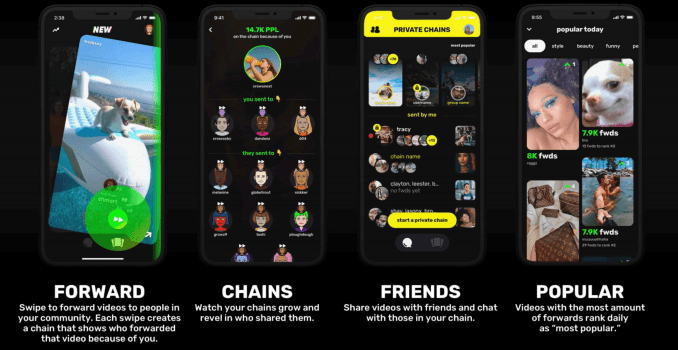
Image Credit: NewNew

Former Drake personal assistant Courtne Smith launches NewNew, a social network based on the video its users like and share. The app, a combination of TikTok and Facebook, allows users to create networks based on the videos, memes and images they’re sharing.


Read Full Article

China may kill TikTok’s US operations rather than see them sold


The controversial push to force Chinese tech unicorn ByteDance to divest part or all of its smash-hit TikTok social media service to a U.S.-based company could be in doubt after a report today indicated that China’s government may oppose the transaction. According to reporting by Reuters, the Chinese government may prefer TikTok to simply shutter its U.S. operations instead of allowing it to be sold to an American company.

The potential divestment of TikTok is not a regular business transaction. Instead, the deal is being demanded by the U.S. government, as President Donald Trump directs foreign and economic policymaking via executive fiat. Leaning on his own fabled business acumen, the American premier has also demanded that his government receive a portion of any final sale price. It is not clear if that concept is legal.

As the U.S. and China spar around the globe for both economic and political supremacy, the deal is a flashpoint between the countries with a muddle of companies stuck in the middle. ByteDance is in the mix, along with Microsoft, Walmart and other companies to a lesser degree, like Oracle. The Trump administration has set a mid-September timeline for a deal being struck, though as the month burns away it is not clear if that timeline could be met.

The United States is not alone in taking steps to curb Chinese influence inside its borders, as the TikTok sale comes after India banned the app, along with dozens of other China-based applications.

The deal is also under pressure from a changing regulatory environment in China, with the country’s autocratic leadership changing its export rules to possibly include elements of TikTok that could limit a transaction, and perhaps scuttle its sale.

For ByteDance, the situation is a nightmare. For lead-suitor Microsoft, the transaction is a shotgun marriage that it might not be entirely enthused about. For the Trump administration, it’s an attempt at a power play. And for China’s increasingly authoritarian government, the deal could feel like submission. So, if the deal does manage to come together it will be more surprise than eventuality.


Read Full Article

As COVID-19 era drags on, VCs look beyond Zoom calls for due diligence and sourcing


While the coronavirus has accelerated the dealmaking pace for many early-stage startups, activity has not come without adaptation.

Remote investment struggles for investors were clear from the get go: it’s challenging to invest millions in someone you have never met, and there’s not a lot to learn from “off-the-cuff” conversations that are calendared days in advance. Some investors said the pandemic was forcing them to stick with people they know in categories where they have experience, limiting the network that one can push money into.

Over six months into a global pandemic, though, new techniques are emerging to address some of these woes. The very art of a deal, from due diligence to sourcing, is changing from a cultural and technological standpoint.

One of the new places that recreates informal bonding and camaraderie is Matchbox.VC, formerly Fortnite.VC.

The service connects founders and investors over video games to network and source deals in a low-stress environment. Matchbox.VC was inspired from a tweet by Founders Fund principal Delian Asparouhov and has garnered interest from investors like Arjun Sethi from Tribe Capital, Ryan Shea, the ex-founder of Blockstack, Jake Chapman from AlphafundVC and Peter Rojas from Betaworks. Its last game night was backed by Yac, Tribe Capital and Shrug Capital.

The pitch is simple: founders and investors sign up on the website, answer basic questions about their focus, company and stage before picking three game choices from eight options that include Fortnite, COD: Warzone and Valorant.


Read Full Article

Daily Crunch: Apple revises App Store rules


Apple’s making App Store changes, China might stop TikTok’s acquisition and we talk to Polish venture capitalists about the startup scene. This is your Daily Crunch for September 11, 2020.

The big story: Apple revises App Store rules

Apple announced a bunch of changes to its App Store guidelines today, with details about how it will support new iOS features like App Clips and much more.

For one thing, it sounds like the App Store will now support game-streaming services like Microsoft’s xCloud and Google’s Stadia. The main caveat is that games available through these services must have their own listings in the App Store and be available as a separate download.

In addition, Apple is also offering more flexibility to “reader” apps like Netflix, and said it’s supporting a new category called “free stand-alone” apps, which could include email apps like the disputed Hey.

The tech giants

Facebook launches poll worker recruitment push in the News Feed — With the election looming and a pandemic still raging through the U.S., a shortage of poll workers is one of many threats to voting this November.

Elon Musk says Tesla will ‘one day’ produce ‘super efficient home HVAC’ with HEPA filtering — While primarily an automaker, Tesla is also already in the business of home energy and power generation, thanks to its acquisition of SolarCity.

Startups, funding and venture capital

China may kill TikTok’s U.S. operations rather than see them sold — According to reporting by Reuters, the Chinese government may prefer if TikTok simply shutters its U.S. operations instead of allowing it to be sold to an American company.

Santander spins out its $400M fintech venture capital arm, now called Mouro Capital — Santander, the Spanish multinational banking giant, is announcing that its fintech venture arm is to be spun out and will be managed more autonomously going forward.

Toucan raises $3 million to teach you new languages as you browse the web — The startup has developed a Chrome browser extension designed for anyone who wants to learn a new language but hasn’t found the motivation or the time.

Advice and analysis From Extra Crunch

10 Poland-based investors discuss trends, opportunities and the road ahead — The first in a two-part survey series about the nation’s startup ecosystem.

VCs pour funding into edtech startups as COVID-19 shakes up the market — 2020 should crush 2018’s edtech fundraising record.

(Reminder: Extra Crunch is our subscription membership program, which aims to democratize information about startups. You can sign up here.)

Everything else

England’s long-delayed COVID-19 contact-tracing app to launch on September 24 — Scotland and Northern Ireland already have their own COVID-19 contact-tracing apps.

TechCrunch still brings the fun to Disrupt 2020 — Disrupt may be virtual this year, but we’re still making time for levity, swag and kick-ass entertainment.

The 2019 TechCrunch Include Report — TechCrunch is reporting our 2019 events and staff diversity numbers, the fourth report since we started tracking.

The Daily Crunch is TechCrunch’s roundup of our biggest and most important stories. If you’d like to get this delivered to your inbox every day at around 3pm Pacific, you can subscribe here.


Read Full Article

5 Common Problems That Gamers Encounter While Playing Games


We all know that in today’s era, gaming is popular among the young and young at heart. For a gamer, playing games is more than just a game to them. It brings joy and entertainment today, but games have evolved more than what we anticipated. Now, you can earn money while enjoying the games you […]

The post 5 Common Problems That Gamers Encounter While Playing Games appeared first on ALL TECH BUZZ.


How Technology Enhances the Home-Buying Experience


Different types of technology have helped enhance the home-buying experience for realtors and buyers. The combination comprises machine learning, geolocation, and big data technology; these forms of technology have been combined to ensure the buyer can understand what they are looking for in a home. The technology has also helped to ensure the home-buying process […]

The post How Technology Enhances the Home-Buying Experience appeared first on ALL TECH BUZZ.


Daily Crunch: Facebook launches a college-only network


Facebook returns to its college roots, Alexa gets a printing feature and we take a deep dive into Unity’s business. This is your Daily Crunch for September 10, 2020.

The big story: Facebook launches a college-only network

If you’re old and decrepit like me, you remember when Facebook was only for college students and required a college email address to join. Well, it seems everything old is new again, because the company is piloting a new feature called Facebook Campus … which is only for college students and requires a college email address to join.

Facebook’s Charmaine Hung argued that the product is particularly relevant now: “With COVID-19, we see that many students aren’t returning to campus in the fall. Now, classes are being held online and students are trying to react to this new normal of what it’s like to connect to clubs and organizations that you care about, when you’re not together.”

Of course, this could also be a way for Facebook to try to stay relevant to a younger demographic, before they move on to other apps.

The tech giants

Amazon launches Alexa Print, a way to print lists, recipes, games and educational content using your voice — The feature works with any second-generation Echo device or newer, as well as a range of printers.

Google says it’s eliminating Autocomplete suggestions that target candidates or voting — The company says that it will now remove any Autocomplete predictions that seem to endorse or oppose a candidate or a political party, or that make a claim about voting or the electoral process.

Microsoft Surface Duo review — Brian Heater calls it a beautiful, expensive work in progress.

Startups, funding and venture capital

Orchard real estate platform raises $69 million Series C led by Revolution Growth — Orchard (formerly Perch) launched in 2017 with a mission to digitize the entire experience of buying and selling a home.

How Unity built a gaming engine for the future — Eric Peckham offers an in-depth look at the company’s financials as it prepares to go public.

India’s Zomato raises $100M from Tiger Global, says it is planning to file for IPO next year — In an email to employees, CEO Deepinder Goyal said the food delivery startup has about $250 million cash in the bank, with several more “big name” investors preparing to join the current round.

Advice and analysis from Extra Crunch

Use ‘productive paranoia’ to build cybersecurity culture at your startup — We asked Casey Ellis, founder, chairman and chief technology officer at Bugcrowd, to share his ideas for how startups can improve their security posture.

What’s driving API-powered startups forward in 2020? — It’s not hard to find startups with API-based delivery models that are doing well this year.

(Reminder: Extra Crunch is our subscription membership program, which aims to democratize information about startups. You can sign up here.)

Everything else

Announcing the Startup Battlefield companies at TechCrunch Disrupt 2020 — This is our most competitive batch to date.

$3 million Breakthrough Prize goes to scientist designing molecules to fight COVID-19 — David Baker’s work over the last 20 years has helped validate the idea that computers can help us understand and create complex molecules like proteins.

Recorded music revenue is up on streaming growth, as physical sales plummet — With vastly more people stuck inside seeking novel methods of entertainment, paid subscriptions are up 24% year-over-year.

The Daily Crunch is TechCrunch’s roundup of our biggest and most important stories. If you’d like to get this delivered to your inbox every day at around 3pm Pacific, you can subscribe here.


Read Full Article

Gravitational Wave Pulsars


Gravitational Wave Pulsars