Amazon is ready to challenge Apple with a cheaper, Alexa-powered set of wireless earbuds. If successful it would carve out a space for the popular digital assistant, and its deep connections to the rest of Amazon’s ecosystem, in the mobile world Amazon has hitherto largely failed to penetrate. But that’s a big if.
A report from Bloomberg details the upcoming hardware, which sounds a lot like Airpods (and the handful of other wireless sets that have appeared): a pair of small wireless in-ear buds, a case that doubles as a charger, and built-in controls and a mic so you can control your music, talk to friends, and ask Alexa things on the go.
Of course, the obvious question is how exactly this will work, given that Airpods have special privileges as first-party Apple hardware that let them perform tasks others can’t yet do. If your phone is locked, non-Airpod headphones (for instance Galaxy Buds) can’t connect through their associated app to look stuff up or provide services. You can of course set up a “Hey Siri, OK Google” situation, but that’s a bit sad.
Bloomberg’s report says that the Alexa headphones let you “order goods, access music, weather and other information,” but it isn’t clear under what circumstances. If you have to have the phone unlocked and an app open for it to work, the whole thing is a non-starter. And it seems unlikely that Apple would grant Amazon some kind of clearance to do the kind of things only Airpods can do.
It’s conceivable that the headphones will, when possible, connect instead on detection of a command to a compatible Alexa device nearby with an internet connection — and there’s no shortage of those in many a tech-savvy home. But if you’re walking down the street and need to ask directions, you may have to pull the phone out, which rather negates the already somewhat limited convenience of owning a pair of wireless headphones.
A cheaper price tag and potentially better audio quality may not be enough to make this particular endeavor a winner, but we’ll know more if and when Amazon goes official.
Political ads on social networks have become a lot more complicated in France after the French parliament passed the so-called “fake news law” in late 2018. But the French government didn’t expect Twitter to refuse an ad telling you to register to vote for the European election in May.
Among other things, the fake news law says that you can’t run a political ad without complying to a new set of rules. For instance, social networks have to display who is paying for those campaigns. Social networks also have to say how much money they receive for those campaigns.
As Next INpact noted, Twitter updated its terms of service on February 1 to say that all political campaigning ads are forbidden in France.
Maybe Twitter isn’t ready yet to display this information. Maybe Twitter thinks public interest campaigns related to an election are political ads. But there’s one thing for sure — Twitter can refuse any ad on its own website.
But the minister of culture, the minister of digital and the minister of the interior all complained about Twitter’s decision… on Twitter.
Il faut mettre fin à l’irresponsabilité des plateformes : @Twitter fait mine de ne pas comprendre une loi permettant simplement une meilleure information des citoyens en période électorale… alors que @facebook a décidé de l’appliquer, en anticipation, dans tous les pays ! https://t.co/b3PzSZhE6i
Le vote est sacré. Il est inacceptable qu’une campagne du gouvernement pour l’inscription sur les listes électorales soit bloquée par une plateforme. Je recevrai les dirigeants de @twitter europe dans les heures à venir. https://t.co/JySyN9mGfv via @Le_Figaro
La priorité de Twitter devrait être de combattre les contenus faisant l'apologie du terrorisme.
Pas les campagnes incitant à s’inscrire sur les listes électorales d'une république démocratique.
Ce sujet sera abordé jeudi avec les GAFA lors du G7 des ministres de l'Intérieur.
This morning, Cédric O, the newly appointed digital minister, talked with Twitter executives to convince them to change their mind. And it worked — Twitter has updated its terms of service and this decision could have broader consequences in other European countries.
A Twitter spokesperson sent me the following statement:
Promoting and protecting the integrity of #EUelection2019 is a core part of our mission for the next few months. That includes encouraging voter participation. Following enactment of the “Manipulation de l’information” law, we decided to prohibit all issue based advertising targeting France, which included Get Out The Vote type campaigns. Following consideration, we have now decided to allow campaigns aimed at encouraging voter participation. We are please to make this clarification and will continue to promote and protect the integrity of the #EUelection2019 conversation in the coming months.
I interviewed Cédric O yesterday and he thinks terms of service give too much power to social networks. “When Facebook updates its terms of service, it has regulatory effects — it nearly becomes legislation — for 2 billion people,” he said. Maybe it’s time to end the big lie of terms of service.
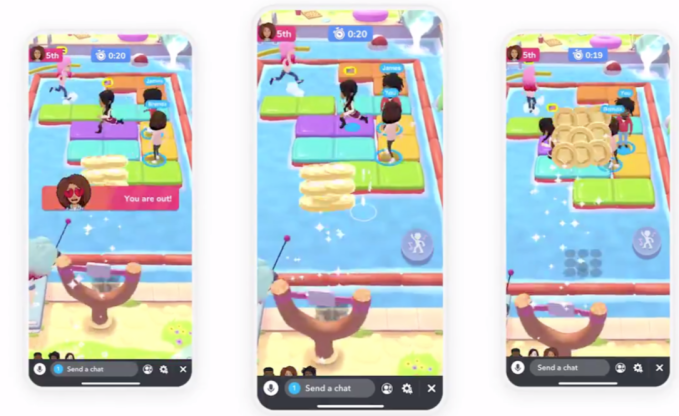
Snap is unlocking a new revenue stream while giving you something to do in between chats and Stories. Today Snapchat debuts its Snap Games platform that lets you play real-time, multiplayer games while texting and talking with your friends. The platform is based off Snap’s secret late-2017 acquisition of PrettyGreat, an Australian game studio with talent from HalfBrick which built Fruit Ninja. That team built Bitmoji Party, a Mario Party-style mini-game fest, to show off the platform that includes five games from developers like Zynga and ZeptoLab. The games are rolling out worldwide on iOS and Android starting today.
To monetize the platform, Snapchat will let users opt in to watching six-second unskippable commercials that reward them with a power up or bonus in-game currency. Snapchat will share revenue from the ads with developers, though it refused to specify the split. It could be a little weird watching ads to more easily beat your friends. But down the line it’s easy to imagine Snapchat selling cosmetic upgrades via in-app purchases akin to Fortnite.
Snap announced the new Snap Games platform at its first-ever press event, the Snap Partner Summit in Los Angeles where it also announced an augmented reality utility platform called Scan, an ads network, and a way to put its Stories in other apps. “We wanted to build something that makes us feel like we’re playing a board game with a family of over a long holiday weekend. Something that makes us feel like we’re sitting with friends, controllers in hand, looking at the same screen” says Snap’s head of gaming Will Wu. The Information’s Tom Dotan and Amir Efrati first reported Snap was building a gaming platform and Cheddar’s Alex Heath reported it would end up launching today.
Snap Games could be considered a real-time spin on Facebook Messenger’s Instant Games platform, which has focused on porting well-known asynchronous games like Pac-Man and other arcade titles to HTML5. Similarly, Snap Games don’t have to be downloaded separately as they’re piped in from the web. Users can browse available games by tapping a new rocket ship button in the chat bar.
With Bitmoji Party, your avatar competes with up to 7 friends simultaneously in a series of mini games where you have to stay balanced on a giant record as a DJ scratches it, or avoid getting knocked in the pool. You can also have another 24 friends spectate and rotate in. Winners earn coins they can use to buy dances to stunt on their competition. And with an ever-present chat bar, users can use text or voice to talk trash.
Rather than port in known IP, Snap recruited developers to build games exclusively for its vertical, real-time multiplayer format. Those include:
Alphabear Hustle from SpryFox – a fast-paced word puzzler
C.A.T.S. (Crash Arena Turbo Stars) Drift Race from ZeptoLab – a cutesy racing game
Snake Squad from Game Closure – a reimagining of the classic Snake game set in outer space
Tiny Royale from Zynga – a top-down battle royale shooter game that feels like a Game Boy version of Fortnite top-down battle royale game
Zombie Rescue Squad from PikPok – A zombie shooter
Snap’s game platform has huge potential to boost time spent in the app and the ads views that generates because gaming is perfect for its demographic. “In the United States, Snapchat now reaches nearly 75 percent of all 13-34 year-olds, and we reach 90 percent of 13-24 year-olds. In fact, we reach more 13-24 year-olds than Facebook or Instagram in the United States, the UK, France, Canada, and Australia” Snap CEO Evan Spiegel revealed today. This is the age group with the free time and dense social graphs to make use of multiplayer real-time games.
The big question is whether Snap’s reward-incentivized video ad views will generate enough cash to keep developers coming to the platform. If not, a limited line of titles could get old quick. Snap has entirely avoided in-app purchases since shutting down its Lens Store in early 2016. There’s understandable concerns that kids could rack up huge bills on their parents’ credit cards. But given how Fortnite has normalized paying for no-utility cosmetic upgrades for this same demographic, with the right controls Snapchat could do the same to make itself and its partners a lot more money. And given you’re always playing with your friends, not strangers, there’s an even deeper urge to buy funny costumes and dances to impress them.
Snapchat’s overarching strategy right now is to build an orbit of time-wasters surrounding chat. What began with Stories now includes Discover publications, premium Shows, augmented reality toys, and now games. It may never become a favorite with the 35+ age group. But since messaging is the top mobile behavior, Snap can use it to keep people coming back and then distract them while they’re waiting for a reply or need a social alternative to small talk.
Snap is unlocking a new revenue stream while giving you something to do in between chats and Stories. Today Snapchat debuts its Snap Games platform that lets you play real-time, multiplayer games while texting and talking with your friends. The platform is based off Snap’s secret late-2017 acquisition of PrettyGreat, an Australian game studio with talent from Halfbrick which built Fruit Ninja. That team built Bitmoji Party, a Mario Party-style mini-game fest, to show off the platform that includes five games from developers like Zynga and ZeptoLab. The games are rolling out worldwide on iOS and Android starting today.
To monetize the platform, Snapchat will let users opt in to watching six-second unskippable commercials that reward them with a power up or bonus in-game currency. Snapchat will share revenue from the ads with developers, though it refused to specify the split. It could be a little weird watching ads to more easily beat your friends. But down the line it’s easy to imagine Snapchat selling cosmetic upgrades via in-app purchases akin to Fortnite.
Snap Games could be considered a real-time spin on Facebook Messenger’s Instant Games platform, which has focused on porting well-known games like Pac-Man and other arcade titles to HTML5. Similarly, Snap Games don’t have to be downloaded separately as they’re piped in from the web. Users can browse available games by tapping a new rocket ship button in the chat bar.
With Bitmoji Party, your avatar competes with up to 7 friends simultaneously in a series of mini games where you have to stay balanced on a giant record as a DJ scratches it, or avoid getting knocked in the pool. You can also have another 24 friends spectate and rotate in. Winners earn coins they can use to buy dances to stunt on their competition. And with an ever-present chat bar, users can use text or voice to talk trash.
Rather than port in known IP, Snap recruited developers to build games exclusively for its vertical, real-time multiplayer format. Those include:
Alphabear Hustle from SpryFox – a fast-paced word puzzler
C.A.T.S. (Crash Arena Turbo Stars) Drift Race from ZeptoLab – a cutesy racing game
Snake Squad from Game Closure – a reimagining of the classic Snake game set in outer space
Tiny Royale from Zynga – a top-down battle royale shooter game that feels like a Game Boy version of Fortnite top-down battle royale game
Zombie Rescue Squad from PikPok – A zombie shooter
Bumble is the latest digital brand to try to extend its reach through a print publication. The dating app maker today announced the launch of Bumble Mag, a lifestyle publication it produced in partnership with Hearst that offers stories and advice about dating, careers, friendship and more to Bumble’s over 50 million users.
On the cover of the 100-page premiere issue is Lauren Chan, a fashion entrepreneur behind the plus-size workwear line called Henning.
Inside, the magazine is organized into four sections that align with the Bumble app’s different modes: “You First,” “You + BFFs,” “You + Dating” and “You + Bizz.” Here, readers will find celebrity interviews, features, advice, product guides, “daily mantras,” and more.
Contributors in this month’s debut issue include Bumble advisor and the star of the brand’s first Super Bowl campaign, Serena Williams; writers, actresses and Bumble Creative Directors Erin and Sara Foster; Man Repeller founder Leandra Medine; jewelry designer Jennifer Meyer; and Away luggage co-founder Jen Rubio.
A digital brand taking to print is no longer a unique occurence.
For Bumble, the magazine offers the company a way to introduce its brand to new customers as well as extend its relationship with existing users out in the real world. This is part of Bumble’s larger efforts in developing an offline component to its business. The company also runs pop-ups, hosts events, and has spoken of plans to launch more physical locations – “Hives,” in Bumble lingo – sometime this year.
These moves also speak to Bumble’s aspiration to be more than just another dating app and Tinder rival.
The company instead wants to be known more broadly as a women-centric lifestyle brand where its users can network online and off, in all aspects of their lives – not just dating. For example, its Bumble BFF service helps women make new friends, while Bumble Bizz is focused on business networking.
The company says the new magazine will be distributed by its 3,000+ brand ambassadors – marketers and event hosts who work with Bumble to promote its brand. Users can also request a free copy of the first issue within the app.
For Hearst, print efforts from online brands like Bumble represent a new line of business at a time when print is being challenged by digital solutions, like Kindle Unlimited or Apple News+, which are trying to transition print magazine subscribers to go digital-only.
“Bumble is at the forefront of inspiring women to make connections and take initiative in all aspects of their lives with its positive message of empowerment,” said HearstMade Editorial Director, Brett Hill, in a statement. “The magazine is a perfect example of how HearstMade is changing the face of custom publishing with hyper-targeted content that reflects the brand’s ethos in the most authentic way.”
Bumble Mag becomes available nationwide on Friday, April 5, says Bumble.
Bumble is the latest digital brand to try to extend its reach through a print publication. The dating app maker today announced the launch of Bumble Mag, a lifestyle publication it produced in partnership with Hearst that offers stories and advice about dating, careers, friendship and more to Bumble’s over 50 million users.
On the cover of the 100-page premiere issue is Lauren Chan, a fashion entrepreneur behind the plus-size workwear line called Henning.
Inside, the magazine is organized into four sections that align with the Bumble app’s different modes: “You First,” “You + BFFs,” “You + Dating” and “You + Bizz.” Here, readers will find celebrity interviews, features, advice, product guides, “daily mantras,” and more.
Contributors in this month’s debut issue include Bumble advisor and the star of the brand’s first Super Bowl campaign, Serena Williams; writers, actresses and Bumble Creative Directors Erin and Sara Foster; Man Repeller founder Leandra Medine; jewelry designer Jennifer Meyer; and Away luggage co-founder Jen Rubio.
A digital brand taking to print is no longer a unique occurence.
For Bumble, the magazine offers the company a way to introduce its brand to new customers as well as extend its relationship with existing users out in the real world. This is part of Bumble’s larger efforts in developing an offline component to its business. The company also runs pop-ups, hosts events, and has spoken of plans to launch more physical locations – “Hives,” in Bumble lingo – sometime this year.
These moves also speak to Bumble’s aspiration to be more than just another dating app and Tinder rival.
The company instead wants to be known more broadly as a women-centric lifestyle brand where its users can network online and off, in all aspects of their lives – not just dating. For example, its Bumble BFF service helps women make new friends, while Bumble Bizz is focused on business networking.
The company says the new magazine will be distributed by its 3,000+ brand ambassadors – marketers and event hosts who work with Bumble to promote its brand. Users can also request a free copy of the first issue within the app.
For Hearst, print efforts from online brands like Bumble represent a new line of business at a time when print is being challenged by digital solutions, like Kindle Unlimited or Apple News+, which are trying to transition print magazine subscribers to go digital-only.
“Bumble is at the forefront of inspiring women to make connections and take initiative in all aspects of their lives with its positive message of empowerment,” said HearstMade Editorial Director, Brett Hill, in a statement. “The magazine is a perfect example of how HearstMade is changing the face of custom publishing with hyper-targeted content that reflects the brand’s ethos in the most authentic way.”
Bumble Mag becomes available nationwide on Friday, April 5, says Bumble.
Snapchat’s found an answer to the revenue problem stemming from its halted growth: it will show its ads in other apps with the launch of Snapchat Ad Kit and the Snapchat Audience Network. And rather than watching as other apps spin up their own knock-off versions of its camera and Stories, it will let apps like Tinder and Houseparty host Stories inside their own products that users can share to from the Snapchat camera with Stories Kit. They’ll both be launching later this year, and developers interested in monetization and engagement help can apply for access.
Snapchat debuted the big new additions to its Snap Kit at its first-ever press event in Los Angeles, the Snap Partner Summit where it also announced a new augmented reality utility platform called Scan. Over 200 apps have already integrated the privacy-safe Snap Kit that lets users login to other apps with Snapchat, bring their Bitmoji, view Our Stories content, and share stickers back to Snapchat.
But later this year, developers will be able to earn money off of Snap Kit with Ad Kit. Developers will integrate Snapchat’s SDK, and then Snap’s advertisers will be able to extend their ad buys to reach both Snapchat users and non-users in other apps. Snapchat will split the ad revenue with developers, but refused to hint at what the divide will be, as it’s still gauging developer interest. The move is straight out of Facebook’s playbook, essentially copying the functionality and name of Facebook’s Audience Network.
There are still big questions about exactly how Snapchat will reach and track ad views of non-users, and how it will be able to provide brands with the analytics they need while maintaining user privacy. But simply by making Snapchat’s somewhat proprietary vertical vdieo ad units reusable elsewhere, it could prove it has a scale to be worth advertisers’ time. The lack of scale has often scared buyers away from Snapchat. But now Snap CEO Evan Spiegel says that “In the United States, Snapchat now reaches nearly 75 percent of all 13-34 year-olds, and we reach 90 percent of 13-24 year-olds. In fact, we reach more 13-24 year-olds than Facebook or Instagram in the United States, the UK, France, Canada, and Australia.”
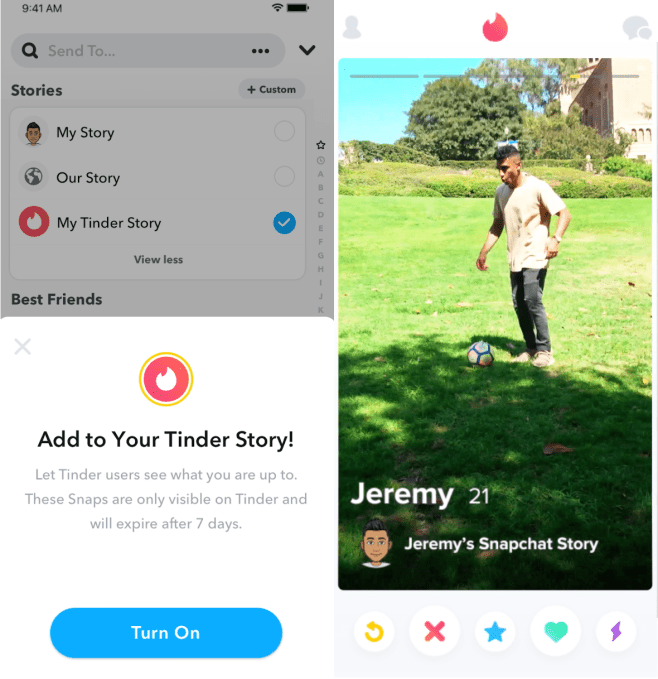
To keep those users engaged even outside of Snapchat, it’s adding App Stories through Story Kit. Snapchat users will see an option to share to integrated apps after they create a photo or video. Those Stories will then appear in custom places in other apps. You’ll see Snaps injected alongside people’s photos when you’re browsing potential matches in Tinder. You can see what friends on group chat social network Houseparty are doing when they not on the app. And you can see video recommendations from explorers on AdventureAide.
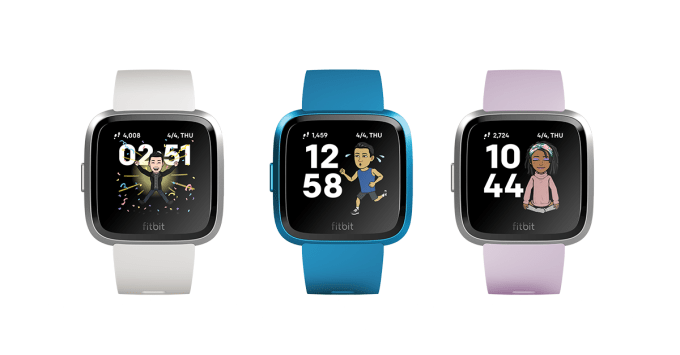
Snap also has some other fun new integrations and big name partnerships. Bitmoji Kit will bring your personalized avatar off your phone and onto FitBit’s smart watches and Venmo transactions. Netflix will let you share preview images (but not trailers) from its shows to your Snapchat Story. A new publisher sharing button for the web will let you share articles from the Washington Post and others to your Story.
By colonizing other apps with its experience, Snapchat decreases the need for them to copy it. Instead they get the original, and a lot less development work. And the platform makes your Snapchat account more valuable around the web. These integrations might not grow Snapchat too much, but it could help it keep its existing users happy and squeeze more cash out of them.
Snapchat’s found an answer to the revenue problem stemming from its halted growth: it will show its ads in other apps with the launch of Snapchat Ad Kit and the Snapchat Audience Network. And rather than watching as other apps spin up their own knock-off versions of its camera and Stories, it will let apps like Tinder and Houseparty host Stories inside their own products that users can share to from the Snapchat camera with Stories Kit. They’ll both be launching later this year, and developers interested in monetization and engagement help can apply for access.
Snapchat debuted the big new additions to its Snap Kit at its first-ever press event in Los Angeles, the Snap Partner Summit where it also announced a new augmented reality utility platform called Scan. Over 200 apps have already integrated the privacy-safe Snap Kit that lets users login to other apps with Snapchat, bring their Bitmoji, view Our Stories content, and share stickers back to Snapchat.
But later this year, developers will be able to earn money off of Snap Kit with Ad Kit. Developers will integrate Snapchat’s SDK, and then Snap’s advertisers will be able to extend their ad buys to reach both Snapchat users and non-users in other apps. Snapchat will split the ad revenue with developers, but refused to hint at what the divide will be, as it’s still gauging developer interest. The move is straight out of Facebook’s playbook, essentially copying the functionality and name of Facebook’s Audience Network.
There are still big questions about exactly how Snapchat will reach and track ad views of non-users, and how it will be able to provide brands with the analytics they need while maintaining user privacy. But simply by making Snapchat’s somewhat proprietary vertical vdieo ad units reusable elsewhere, it could prove it has a scale to be worth advertisers’ time. The lack of scale has often scared buyers away from Snapchat. But now Snap CEO Evan Spiegel says that “In the United States, Snapchat now reaches nearly 75 percent of all 13-34 year-olds, and we reach 90 percent of 13-24 year-olds. In fact, we reach more 13-24 year-olds than Facebook or Instagram in the United States, the UK, France, Canada, and Australia.”
To keep those users engaged even outside of Snapchat, it’s adding App Stories through Story Kit. Snapchat users will see an option to share to integrated apps after they create a photo or video. Those Stories will then appear in custom places in other apps. You’ll see Snaps injected alongside people’s photos when you’re browsing potential matches in Tinder. You can see what friends on group chat social network Houseparty are doing when they not on the app. And you can see video recommendations from explorers on AdventureAide.
Snap also has some other fun new integrations and big name partnerships. Bitmoji Kit will bring your personalized avatar off your phone and onto FitBit’s smart watches and Venmo transactions. Netflix will let you share preview images (but not trailers) from its shows to your Snapchat Story. A new publisher sharing button for the web will let you share articles from the Washington Post and others to your Story.
By colonizing other apps with its experience, Snapchat decreases the need for them to copy it. Instead they get the original, and a lot less development work. And the platform makes your Snapchat account more valuable around the web. These integrations might not grow Snapchat too much, but it could help it keep its existing users happy and squeeze more cash out of them.
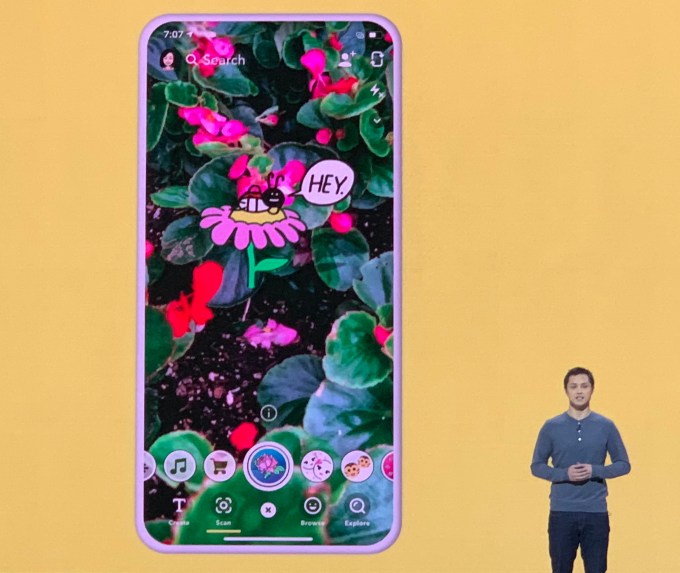
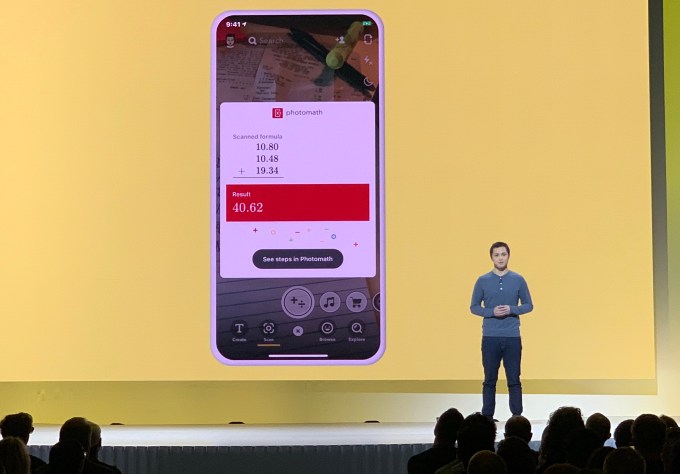
Point and shoot? No, point and interact. Snapchat can now help with your homework. The app’s camera is becoming the foundation of an augmented reality developer platform known as “Scan”. Snap today announced partnerships with Photomath to add the ability to solve math problems, and Giphy for detecting objects which then spawn related GIFs on screen. Scan will roll out to all Snapchat users soon, and developers interested in joining the platform can contact Snap.
Snapchat Scan spawns Giphy GIFs based on what’s around you
Previously, Snapchat’s camera could identify songs with Shazam and recognize objects so you could buy them on Amazon. But now instead of just offering a few scattered tools, Snapchat is crystallizing its plan to let you reveal hidden information about the world around you.
“Our camera lets the natural light from our world penetrate the darkness of the Internet . . . as we use the Internet more and more in our daily lives, we need a way to make it a bit more human” said Snap CEO Evan Spiegel at the company’s first ever press event, the Snap Partner Summit. There it also announced it would launch an ad network and power Stories in other apps.
Scan with Photomath solves math problems
Others like Blippar have tried to build AR utility platforms, but they lacked the community and daily use necessary to already be top of mind when people want to scan something. But Snap CEO Evan Spiegel today revealed that “In the United States, Snapchat now reaches nearly 75 percent of all 13-34 year-olds, and we reach 90 percent of 13-24 year-olds. In fact, we reach more 13-24 year-olds than Facebook or Instagram in the United States, the UK, France, Canada, and Australia.”
The comparison data comes Facebook’s ad manager estimates which aren’t always totally accurate. Still, the stats demonstrate that amongst the audience likely to explore the world via augmented reality, Snapchat is huge.
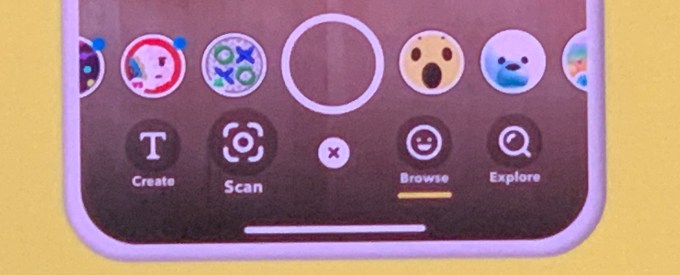
When users tap and hold on the Snapchat camera, they’ll start to Scan their surroundings. Answers to math equations will magically appear. If you view a $10 bill, Hamilton will come alive and sing a song from the musical. Scan a slice of pizza and a dancing Giphy pizza slice appears. Users will also see the new Snapchat AR Bar with dedicated buttons to Scan, create a lens, or explore the 400,000 AR Lenses created by Snapchat’s community. 75 percent of Snap’s 186 million daily users play with Lenses each day, combining into 15 billion total plays to date. Scan was built off the acquisition of a startup called Scan.me, which until now has powered Snap’s QR Snapcodes that let people add friends or unlock Lenses.
Snap’s new AR Bar
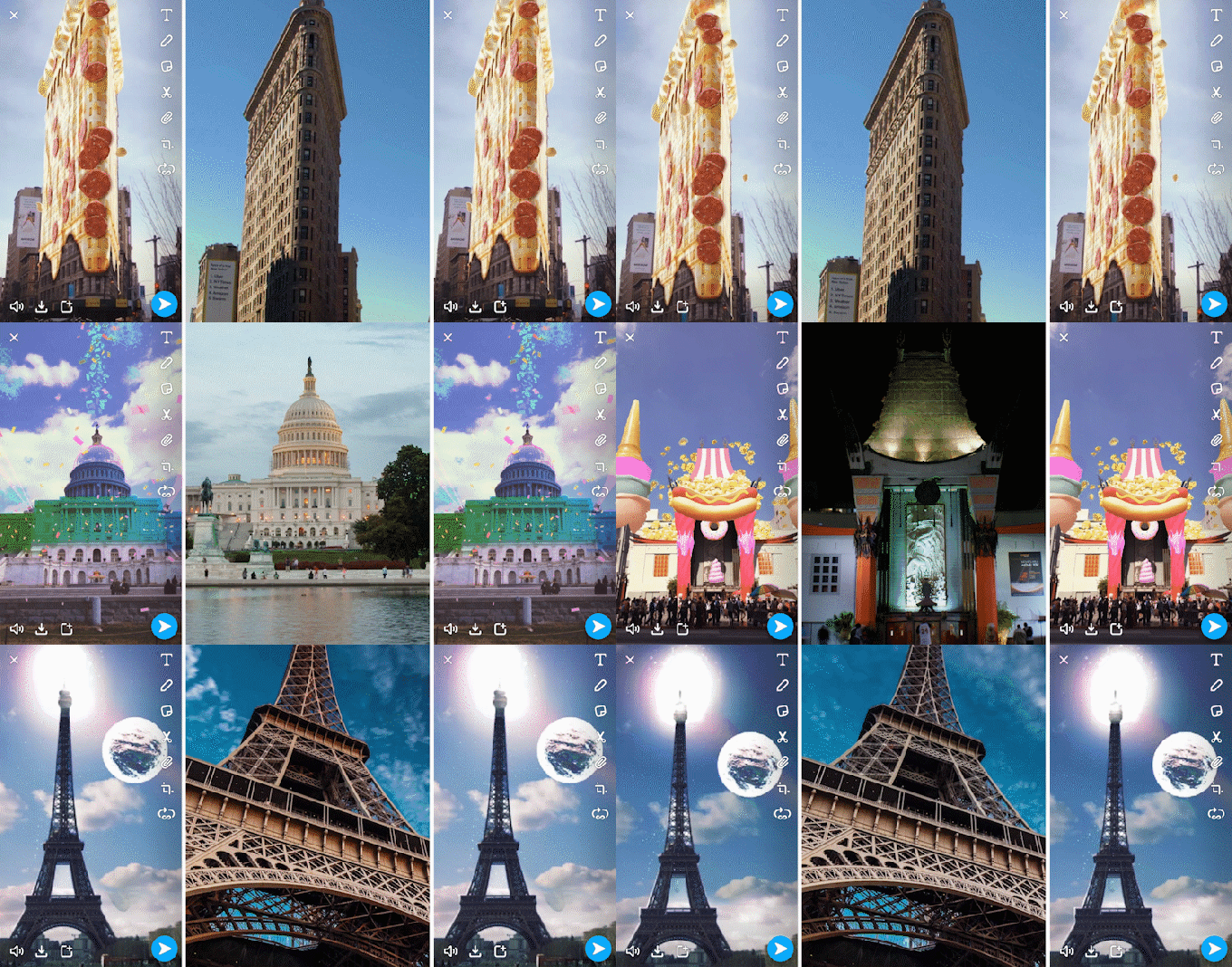
Outside of utility, Snapchat is also adding a slew of new creative AR features to keep that audience entertained and loyal that are launching today. For example, it’s launching Landmarkers, which uses point cloud data from user submitted Our Stories of major landmarks to power animated AR transformations of famous places. Now the Eiffel Tower, Buckingham Palace, LA’s Chinese Theater, DC’s Capitol Building, and NYC’s Flatiron Building can spew rainbows, shoot lightning, and more.
Snapchat’s new Landmarkers
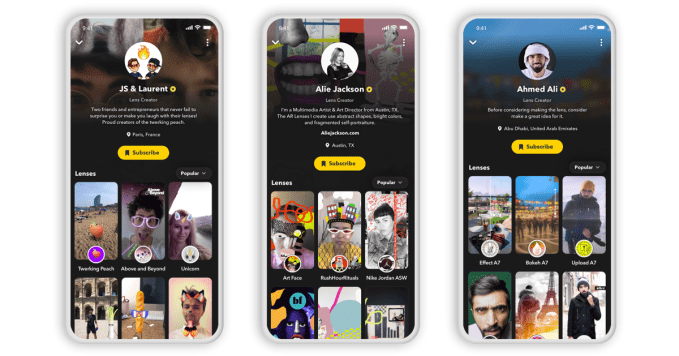
For developers and Lens creators using Snap’s Lens Studio tools, Snap is launching new Creator Profiles where they can show off all the Lenses they’ve contributed. They’ll all have access to new AR templates for hand, body, and pet effects that take care of all the hardcore computer science. Creators just add in their graphical assets like a mustache for dogs, fireballs that shoot out of people’s hands, or rainbows that appear over someone when they hold their arms out.
Snapchat’s new Lens Creator profiles
Snap will even surface relevant community Lenses in the Lens Carousel based on what its Scans pick up. One place it falls short though is there’s no direct monetization opportunities for independent Lens creators, beyond Snap occasionally connecting the best AR artists to brands for paid Lens development deals. Snapchat admits it will need to create better incentives long-term.
At a big press briefing yesterday, the company’s top execs explained that growth isn’t Snapchat’s success metric any more. That’s convenient considering the launch of Instagram Stories cut Snap’s growth from 17 percent per quarter to it actually losing users and only stabilizing this quarter. Instead he says deepening user engagement, and thereby the ad revenue users generate, is Snap’s path forward.
The more Snap gets users playing with augmented reality filters and the better development tools it provides, the more brands and devs will pay to promote their Lenses in the Lens Carousel or through video ads where users swipe up to try a Lens.
But that engagement is also critical to beating Facebook and Instagram to the next phase of AR. Instagram Stories might have 500 million daily users, but they’re mostly applying AR to their face, not to interact with the world. Snapchat needs as many fun AR entertainment experiences like Landmarkers as possible to normalize AR exploration, which will unlock the potential of the Scan platform. That could one day fuel affiliate fees from AR commerce sales and other revenue streams.
Plus, Snapchat says Lenses are coded to be compatible with not just iOS and Android, but future AR hardware platforms. To build the biggest repository of AR experiences, Snapchat needs help, as I wrote two years ago that Snap’s anti-developer attitude was an augmented liability. Now it’s finally building the tools and platform to harness a legion of developers to fill the physical world with imaginary wonder. “If we can show the right Lens in the right moment, we can inspire a whole new world of creativity” concludes Snap co-founder Bobby Murphy
Point and shoot? No, point and interact. Snapchat can now help with your homework. The app’s camera is becoming the foundation of an augmented reality developer platform known as “Scan”. Snap today announced partnerships with Photomath to add the ability to solve math problems, and Giphy for detecting objects which then spawn related GIFs on screen. Scan will roll out to all Snapchat users soon, and developers interested in joining the platform can contact Snap.
Snapchat Scan spawns Giphy GIFs based on what’s around you
Previously, Snapchat’s camera could identify songs with Shazam and recognize objects so you could buy them on Amazon. But now instead of just offering a few scattered tools, Snapchat is crystallizing its plan to let you reveal hidden information about the world around you.
“Our camera lets the natural light from our world penetrate the darkness of the Internet . . . as we use the Internet more and more in our daily lives, we need a way to make it a bit more human” said Snap CEO Evan Spiegel at the company’s first ever press event, the Snap Partner Summit. There it also announced it would launch an ad network and power Stories in other apps.
Scan with Photomath solves math problems
Others like Blippar have tried to build AR utility platforms, but they lacked the community and daily use necessary to already be top of mind when people want to scan something. But Snap CEO Evan Spiegel today revealed that “In the United States, Snapchat now reaches nearly 75 percent of all 13-34 year-olds, and we reach 90 percent of 13-24 year-olds. In fact, we reach more 13-24 year-olds than Facebook or Instagram in the United States, the UK, France, Canada, and Australia.”
The comparison data comes Facebook’s ad manager estimates which aren’t always totally accurate. Still, the stats demonstrate that amongst the audience likely to explore the world via augmented reality, Snapchat is huge.
When users tap and hold on the Snapchat camera, they’ll start to Scan their surroundings. Answers to math equations will magically appear. If you view a $10 bill, Hamilton will come alive and sing a song from the musical. Scan a slice of pizza and a dancing Giphy pizza slice appears. Users will also see the new Snapchat AR Bar with dedicated buttons to Scan, create a lens, or explore the 400,000 AR Lenses created by Snapchat’s community. 75 percent of Snap’s 186 million daily users play with Lenses each day, combining into 15 billion total plays to date. Scan was built off the acquisition of a startup called Scan.me, which until now has powered Snap’s QR Snapcodes that let people add friends or unlock Lenses.
Snap’s new AR Bar
Outside of utility, Snapchat is also adding a slew of new creative AR features to keep that audience entertained and loyal that are launching today. For example, it’s launching Landmarkers, which uses point cloud data from user submitted Our Stories of major landmarks to power animated AR transformations of famous places. Now the Eiffel Tower, Buckingham Palace, LA’s Chinese Theater, DC’s Capitol Building, and NYC’s Flatiron Building can spew rainbows, shoot lightning, and more.
Snapchat’s new Landmarkers
For developers and Lens creators using Snap’s Lens Studio tools, Snap is launching new Creator Profiles where they can show off all the Lenses they’ve contributed. They’ll all have access to new AR templates for hand, body, and pet effects that take care of all the hardcore computer science. Creators just add in their graphical assets like a mustache for dogs, fireballs that shoot out of people’s hands, or rainbows that appear over someone when they hold their arms out.
Snapchat’s new Lens Creator profiles
Snap will even surface relevant community Lenses in the Lens Carousel based on what its Scans pick up. One place it falls short though is there’s no direct monetization opportunities for independent Lens creators, beyond Snap occasionally connecting the best AR artists to brands for paid Lens development deals. Snapchat admits it will need to create better incentives long-term.
At a big press briefing yesterday, the company’s top execs explained that growth isn’t Snapchat’s success metric any more. That’s convenient considering the launch of Instagram Stories cut Snap’s growth from 17 percent per quarter to it actually losing users and only stabilizing this quarter. Instead he says deepening user engagement, and thereby the ad revenue users generate, is Snap’s path forward.
The more Snap gets users playing with augmented reality filters and the better development tools it provides, the more brands and devs will pay to promote their Lenses in the Lens Carousel or through video ads where users swipe up to try a Lens.
But that engagement is also critical to beating Facebook and Instagram to the next phase of AR. Instagram Stories might have 500 million daily users, but they’re mostly applying AR to their face, not to interact with the world. Snapchat needs as many fun AR entertainment experiences like Landmarkers as possible to normalize AR exploration, which will unlock the potential of the Scan platform. That could one day fuel affiliate fees from AR commerce sales and other revenue streams.
Plus, Snapchat says Lenses are coded to be compatible with not just iOS and Android, but future AR hardware platforms. To build the biggest repository of AR experiences, Snapchat needs help, as I wrote two years ago that Snap’s anti-developer attitude was an augmented liability. Now it’s finally building the tools and platform to harness a legion of developers to fill the physical world with imaginary wonder. “If we can show the right Lens in the right moment, we can inspire a whole new world of creativity” concludes Snap co-founder Bobby Murphy
Viva la revolution! And by that we mean the tech revolution taking place in mobility and transportation. If you’re an early-stage startup founder in either field, don’t miss your chance to demo your company in front of top influencers at TC Sessions: Mobility 2019. It’s a prime opportunity to showcase your tech startup in front of a very large, very targeted audience — the mobility and transportation industry’s movers and shakers. Why wait? Book a demo table right now.
TC Sessions: Mobility 2019 takes place on July 10 in San Jose, Calif. More than 1,000 members of the mobility community — founders, technologists, engineering students and investors — will gather for a day-long intensive event featuring speakers, panel discussions, demos, workshops and world-class networking.
TechCrunch editors will interview some of the best minds and makers in this rapidly evolving field. They’ll challenge assumptions and deflate the hype to provide a clearer understanding of the current state of mobility — and what the future holds.
Exciting as it may be, mobility raises complex issues and challenges — from human impact and infrastructure to regulatory concerns and capital investment. We won’t shy away from the big issues — we’ll dig in and hear from the people who are making it happen.
Case in point, we recently announced our first speaker — Dave Ferguson, the CEO of the autonomous delivery startup Nuro. An early pioneer of self-driving vehicle technology, Ferguson has worked on robotics and machine learning for nearly 20 years, owns more than 100 patents and served as the machine learning and computer vision team lead on Google’s self-driving program (now known as Waymo).
The auto industry alone is undergoing a seismic shift toward investing in car sharing, ride hailing, on-demand shuttles and even subscription services. Traditional paradigms around producing, selling and buying cars are changing and — along with a serious uptick in electric vehicle ownership — creating huge opportunities for tech startups.
Things start to get exponential when you add breakthroughs in AI, robotics, drone technology and autonomous delivery bots. What started as the horseless carriage may soon be a flying taxi. TC Sessions Mobility 2019 is the place to explore the intricacies of these topics and connect with the best minds in your community.
We’re still building our agenda and adding to our roster of speakers, many of whom will demonstrate their technology on our stage. Here’s a radical thought. If you want to be considered for a spot — or nominate someone else — submit your application right here. We’ll announce the participants of our fireside chats, panels and workshops in the coming weeks.
TC Sessions: Mobility 2019 takes place on July 10, and this is your chance to showcase your early-stage mobility startup in front of mobility’s best and brightest founders, investors and technologists. Reserve your demo table today.
Looking for sponsorship opportunities? Contact our TechCrunch team to learn about the benefits associated with sponsoring TC Sessions: Mobility 2019.
Last month, it became widely known that Myspace has lost much of the user data uploaded to it before 2016, including potentially millions of music tracks from between 2003 to 2015. This is a significant loss for people who may not have used the site anymore, but took for granted that it would remain an online scrapbook of the years when Myspace was the go-to social network, including for musicians promoting their work. A new collection of MP3s hosted by the Internet Archive, however, may help some users recover lost music (and memories).
ANNOUNCING THE MYSPACE MUSIC DRAGON HOARD, a 450,000 song collection of mp3s from 2008-2010 on MySpace, gathered before they were all “deleted” by mistake. https://t.co/oIunuHF7wc includes a link to a special custom search and play mechanism that lets you search and play songs. pic.twitter.com/aGkFPDBN7r
Called the MySpace Music Dragon Hoard, the collection contains 450,000 songs. While this is just a small percentage of the tracks reportedly lost (according to estimates, up to 53 million songs from 14 million artists were deleted), it contains early work from now-famous artists including Donald Glover and Katy Perry, as Twitter user @pinkpushpop discovered:
This is so cool! I’ve already found early clips from Donald Glover, 2 Chainz, Katy Perry, Nicki Minaj, Jeffree Star, Rza, Pitbull and others.
There’s even some that you can’t find anywhere else, that would have been lost to the interwebs. This is amazing!
Jason Scott of the Internet Archivesaid on Twitter that the set was compiled by “an anonymous academic group who were studying music networks and grabbed 1.3 terabytes of mp3s to study from MySpace in roughly 2008-2010 to do so.” After learning about the data loss, they offered the collection to Scott.
Amazon is officially joining the race to create a network of satellites in low earth orbit that will provide high-speed terrestrial internet services.
The company has filed its first papers with the U.S. government for approval to launch a network of 3,236 satellites through a subsidiary called Kuiper Systems LLC, according to a report in GeekWire.
“Project Kuiper is a new initiative to launch a constellation of Low Earth Orbit satellites that will provide low-latency, high-speed broadband connectivity to unserved and underserved communities around the world,” Amazon confirmed in a statement. “This is a long-term project that envisions serving tens of millions of people who lack basic access to broadband internet. We look forward to partnering on this initiative with companies that share this common vision.”
Space satellite orbiting the earth. Elements of this image furnished by NASA.
Named for an astronomer who’s considered “the father of modern planetary science“, Gerard Kuiper; Kuiper Systems is the latest foray into space-based internet networking by a U.S. tech giant.
In February, OneWeb, another company that’s expecting to create a network of satellites to provide high-speed internet access successfully launched its first satellites. The company has raised at least $3 billion, according to CrunchBase, from investors including Virgin, Coca Cola, and the Bharti Group — and they’re not the only company to raise several billion dollars to develop these services.
In December, the company set out to raise another $500 million to support its Starlink program, which would create a network of 11,000 satellites to cover the globe with internet connectivity. To date, the company has launched just two prototype satellites, even though earlier reports stated SpaceX, at one time, projected it would have 400 satellites in orbit by the end of 2018.
Finally, the social networking giant, Facebook has been working on satellite capabilities of its own. In a May report, the IEEE Spectrum laid out how Facebook had set up a small subsidiary called PointView Tech, which was developing a new satellite called “Athena” that could deliver data ten times faster than SpaceX’s Starlink satellites.
Amazon’s journey Kuiper satellite service compliments the work that another Jeff Bezos company, Blue Origin, is conducting on the design, development and production of launch vehicles to take payloads into orbit.
Blue Origin has already signed contracts for a multi-launch agreement with Telesat — another company that’s . developing a low earth orbit constellation of satellites that will deliver fiber-like broadband services across the globe.








 These moves also speak to Bumble’s aspiration to be more than just another dating app and Tinder rival.